Substitute for vegetable oil in baking (and what each swap does to the crumb)
You are standing in front of a mixing bowl with the dry ingredients already in it, and the vegetable oil bottle is empty. This is a solvable problem. Nearly everything in your kitchen can stand in — the only question is which trade-off you want, because a substitute for vegetable oil in baking is never quite a swap. It’s a decision about texture.
Here’s the thing almost nobody tells you: vegetable oil isn’t in your cake for flavor — it’s neutral on purpose. It’s in there for two specific jobs, and once you know what they are, every swap on every list sorts itself. Some stand-ins do both jobs, some do one, and some do neither, which is exactly why a cake made with all applesauce comes out gummy and a little rubbery — and why nobody warns you about that until after you’ve served it.
So: the ratio for each swap, what it does to the crumb, and the one limit that keeps the healthy-sounding swaps from wrecking a good recipe.
The short answer: the best substitute for vegetable oil in baking is whatever’s already in your kitchen
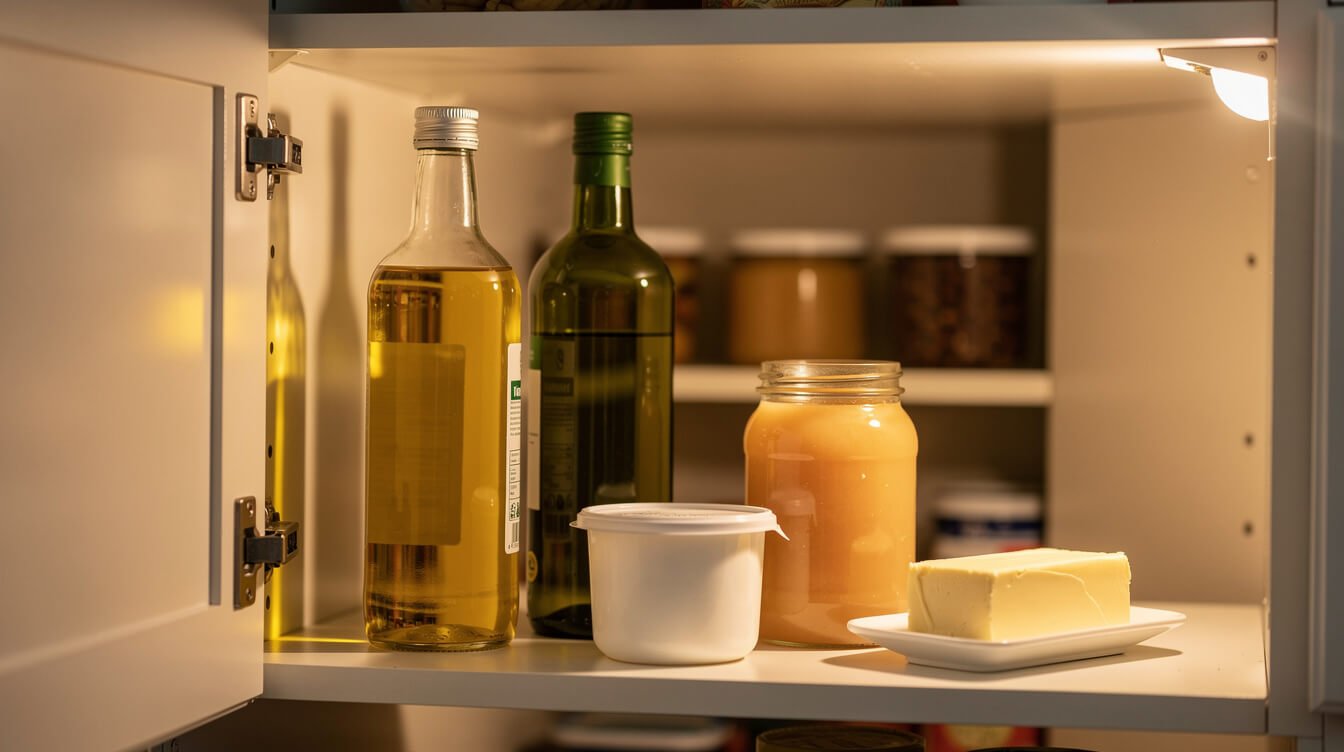
Open the cupboard and the fridge. Work down this list and stop at the first thing you have:
- Any other neutral oil — canola, sunflower, safflower, grapeseed, corn, avocado. Use the same amount. Nothing changes. This is a non-event, and you can stop reading.
- Melted butter — same amount. Best flavor of anything on this list, slightly firmer and drier crumb. The most common swap and a genuinely good one.
- Melted coconut oil or melted shortening — same amount. Behaves like melted butter but without the water, so it’s a cleaner fat match.
- Light or refined olive oil — same amount, essentially neutral. Extra virgin also works, but it brings flavor, so it depends on the recipe.
- Mayonnaise — same amount. Sounds absurd. Works beautifully in chocolate cake. More on this below.
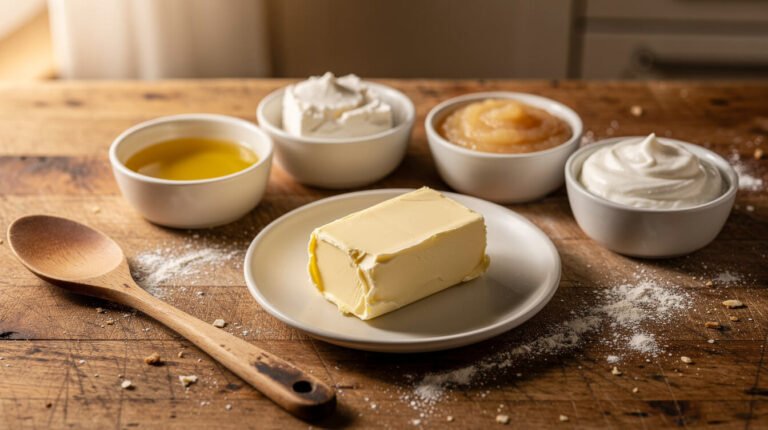
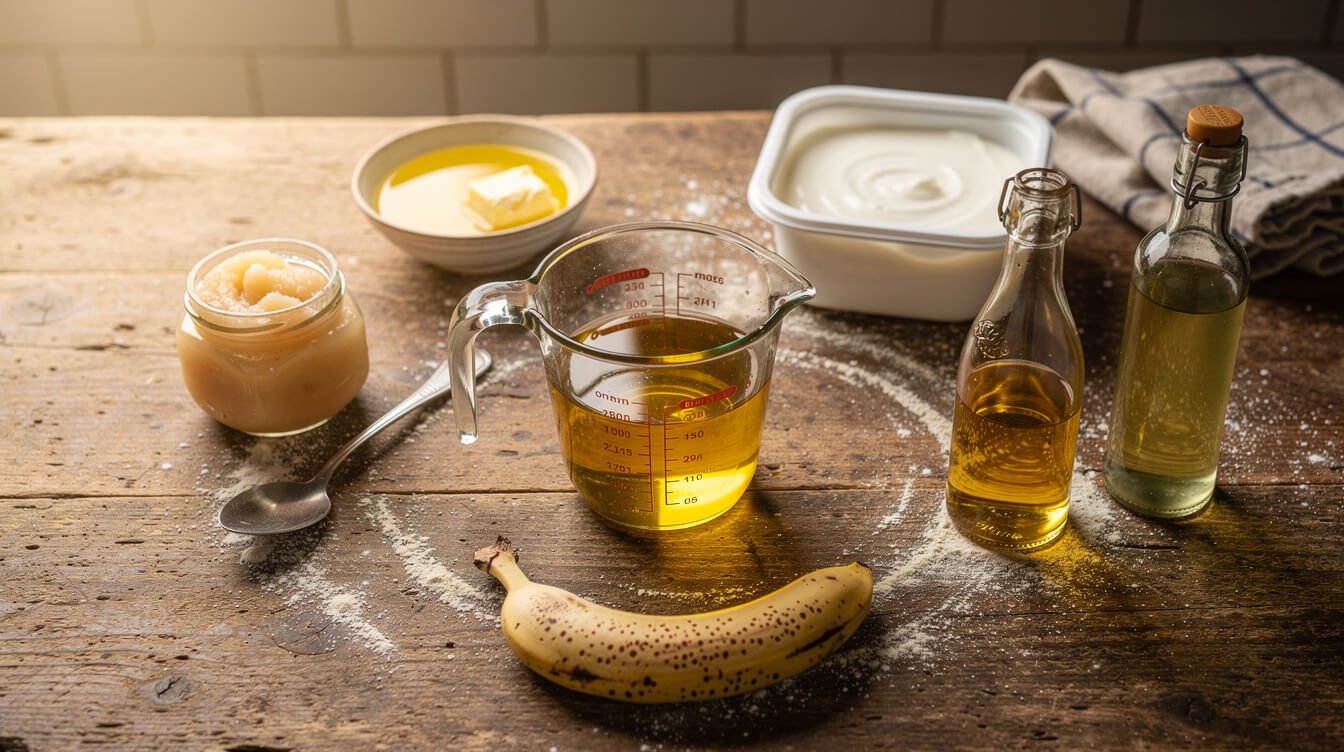
- Applesauce, plain yogurt, sour cream, or mashed banana — half the oil, not all of it. This is the one with a limit, and the limit is the whole reason this post exists.
That’s the quick version. If you want to understand why the last one has a ceiling and the rest don’t, it comes down to two jobs.
The two jobs oil is doing in your batter
Job one: it keeps things tender. Fat coats flour particles so water can’t fully hydrate them, which keeps gluten strands short — and short gluten strands are a soft crumb. That’s literally what shortening means: it shortens gluten. Any fat does this, and oil does it efficiently because it’s liquid and spreads easily.
Job two: it stays liquid at room temperature. This one gets skipped on every list and it’s the more interesting half. Butter is solid in your kitchen; oil is not. So an oil-based cake keeps its fat in liquid form in the finished crumb, permanently — which is why oil cakes read as moist days later, and why boxed mixes and most quick breads call for oil rather than butter.
You can verify it tonight with no equipment. Put a slice of butter cake and a slice of oil cake in the fridge for an hour. The butter cake comes out firm and a little waxy on the tongue; the oil cake comes out soft. That’s job two, and it’s the one you give up when you reach for a solid fat.
So grade every candidate on two questions: does it bring the same amount of fat? and does that fat stay liquid at room temperature? Three groups fall out, and the rest of this post is those three groups in order.
Group one: the straight 1:1 oil swaps (and why smoke point doesn’t matter here)
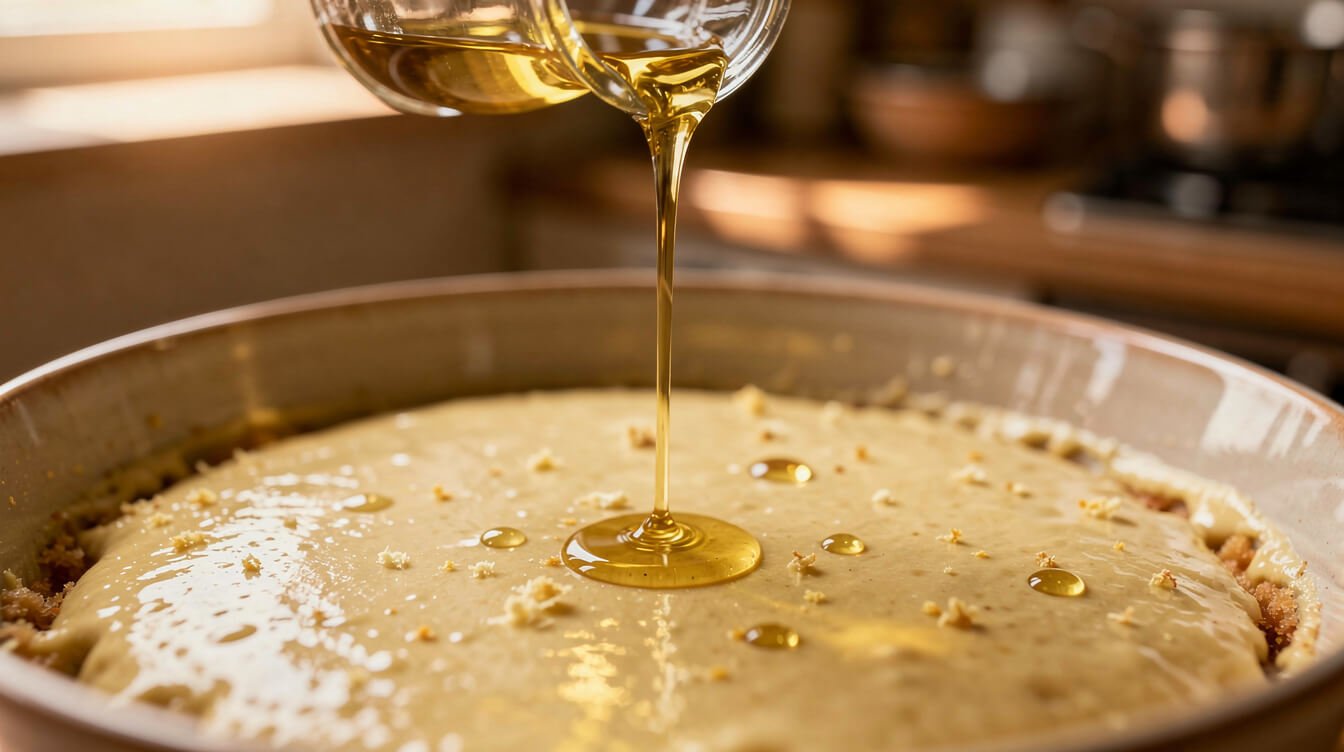
This is the easy group: every substitute for vegetable oil in baking listed here does both jobs, so you measure the same amount and carry on. The only variable is flavor.
It helps to know what you’re replacing: “vegetable oil” on a US shelf is a refined blend, usually soybean-based, sometimes with canola or corn, and its defining quality is that it tastes like nothing. So any other neutral refined oil is a true like-for-like.
- Canola — the closest thing to a perfect match, and often one of the components of the bottle you ran out of. Same amount. You will not be able to tell.
- Sunflower, safflower, grapeseed, corn — all neutral, all 1:1, all invisible in the finished bake.
- Avocado oil — neutral, 1:1, fine. Mostly just expensive for something that disappears into a cake.
- Peanut oil — 1:1 and nearly neutral when refined. Don’t use it if anyone eating is avoiding peanuts, and say so if you’re baking for other people.
The smoke-point confusion, cleared up
If you’ve been searching this, you have probably already hit three articles ranking cooking oils by smoke point. Those articles are about frying. They are not about your cake, and the advice doesn’t transfer.
When you fry, the oil is the cooking medium and it climbs with nothing to buffer it, so its smoke point is the number that matters. In a batter, the oil is dispersed through a mixture that’s mostly water and starch, and the inside of a cake stays at or just under boiling until it’s done — the water has to evaporate before anything can get hotter. The oil in the crumb never comes near its smoke point.
So pick your baking oil on flavor, not on smoke point. Unrefined coconut oil has a modest smoke point and is still a perfectly good cake fat. Save the charts for the skillet.
Group two: melted butter and the solid fats — better flavor, firmer crumb
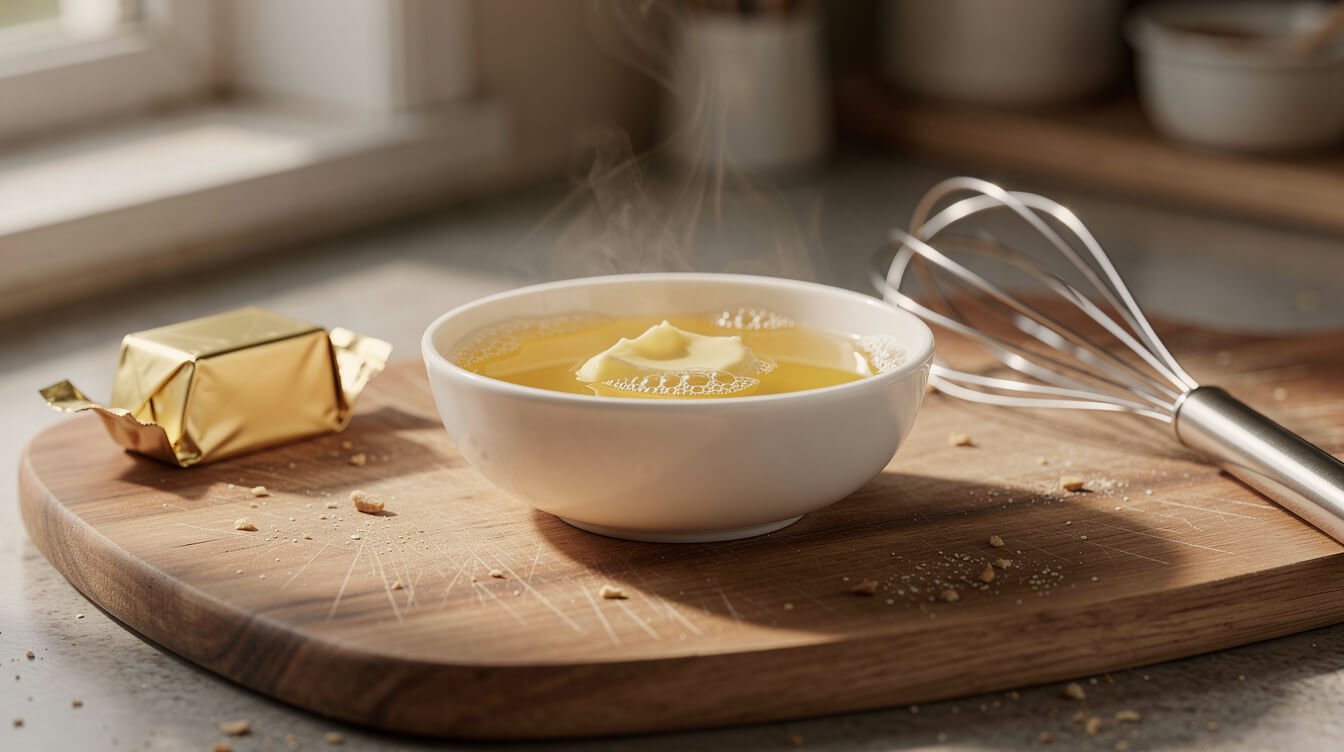
These bring the fat but fail job two — they set firm as the cake cools. It’s the group most people reach for, and the trade-off is real, consistent, and almost never stated: you gain flavor and lose a little softness. Not a disaster, not a secret upgrade. A trade.
Melted butter
Use the same amount and it will work. Melt it, let it cool until it’s warm rather than hot, and stir it in where the oil would have gone. The cake will taste noticeably better and eat a touch firmer and drier, especially on day two and especially from the fridge. Two details make the difference between a fine swap and a good one.
Butter isn’t all fat. It’s roughly 80% fat, and most of the rest is water — so a straight cup-for-cup swap quietly removes about a fifth of the fat and replaces it with water. For one cup of oil, about 1 cup plus 3 tablespoons of melted butter actually matches the fat. In a sturdy batter (banana bread, muffins, a chocolate sheet cake) the plain 1:1 is fine. In something lean and delicate, the extra three tablespoons are worth measuring.
If your butter is salted, take salt out of the recipe. A stick of salted butter carries roughly a quarter teaspoon of salt, so a cup is about half a teaspoon — subtract that from whatever the recipe calls for. An oil recipe was written assuming the fat brought no salt at all, and this is the most common reason a sensible swap tastes slightly off rather than wrong.
This street runs both ways, incidentally. Going the other direction — oil into a creamed-butter recipe — is a different problem with a different answer, and we worked through it in our guide to choosing a butter substitute by what you’re making. Short version: a recipe that tells you to cream butter and sugar is using the butter as a solid, and oil can’t do that job at all.
Melted coconut oil
Same amount, and it’s a cleaner fat swap than butter because it’s essentially pure fat with no water. One genuine trap: coconut oil turns solid below about 76°F, so if your eggs, milk, or yogurt are fridge-cold, the melted oil will hit them and seize into little white specks that never disperse. Let cold ingredients sit out for twenty minutes first. Refined coconut oil tastes of nothing; virgin tastes distinctly of coconut, which is lovely in some things and odd in others.
Melted shortening, ghee, or lard
All three are 1:1, and because shortening and lard are 100% fat with ghee close behind, they’re the most accurate fat-for-fat replacements on this page. Shortening is flavorless with a slightly coating mouthfeel. Ghee is nutty and wonderful in anything spiced. Lard is excellent in cornbread and reads faintly savory in a vanilla cake. One note on ghee if you’re baking around a dairy allergy: it’s butter with the water and most of the milk solids cooked off, so trace milk protein remains and it is not a dairy-free fat — read the allergen statement on the package and follow the guidance you already have for that allergy.
Group three: applesauce, yogurt, sour cream, and banana — the half rule
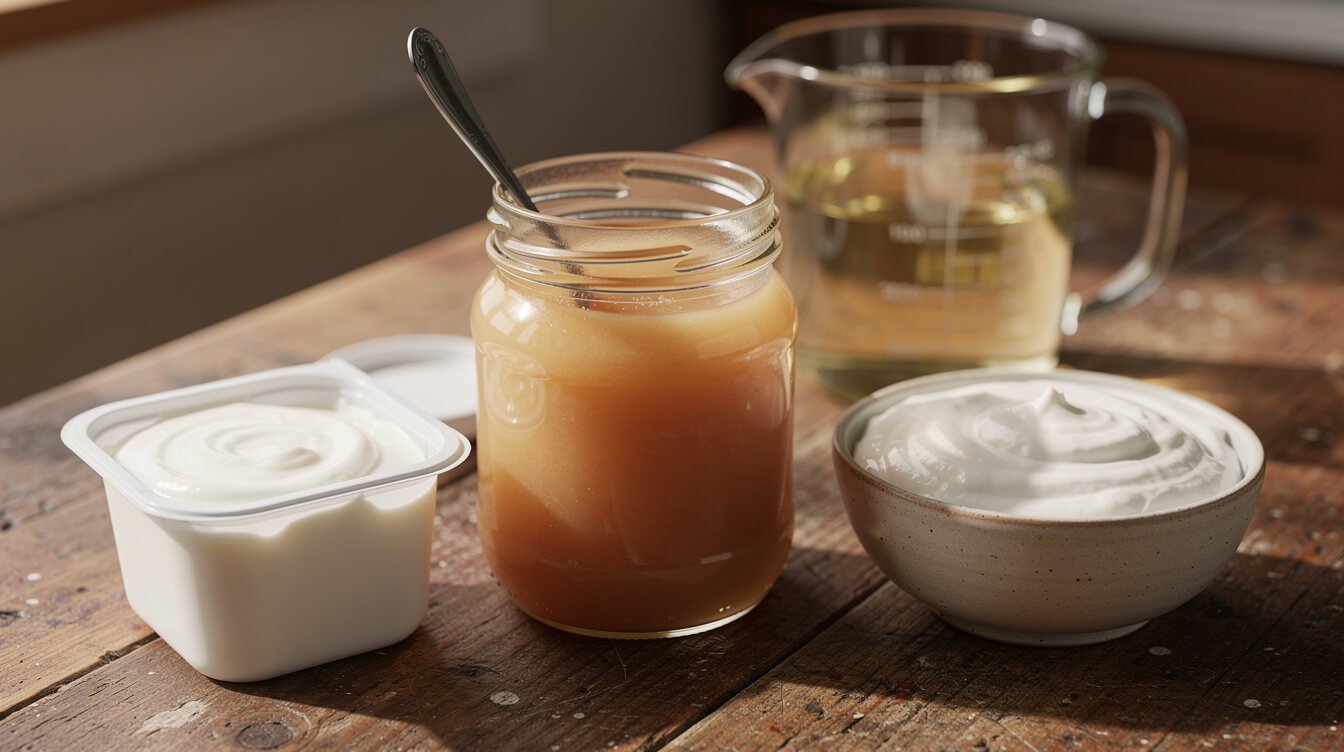
Now the group that gets people into trouble — the only substitute for vegetable oil in baking that comes with a hard ceiling — because these aren’t fat. Applesauce is fruit purée; yogurt is mostly water and protein. They do a convincing impression of oil in a batter — thick, wet, stirs in the same way — and then behave completely differently in the oven.
The rule: replace up to half the oil, not all of it. In a forgiving recipe you can sometimes push to two-thirds. Going all the way is where cakes go wrong — and almost every list you’ll find online says “substitute one-for-one” with no ceiling at all. That advice is the most reliable way to get a bad cake out of a good recipe.
What actually goes wrong at a full swap
Remove the fat entirely and you’ve removed the thing keeping gluten short and the crumb soft. Now there’s more free water hydrating the flour, so you get more gluten development and more starch gelatinization with nothing to interrupt it. The result is specific and recognizable: gummy, slightly rubbery, denser than it should be, paler on top, and stale by tomorrow. Fat also carries flavor, so the whole thing tastes muted.
If you’ve met that crumb before, you’ll recognize it from our breakdown of what a dense banana bread’s crumb is telling you — same tight, damp texture, by almost exactly the same mechanism.
Which one to pick
- Unsweetened applesauce — the default. Up to half, flavor-neutral, genuinely good at that ratio in muffins, banana bread, and spice cakes. Use unsweetened; the sweetened kind drags extra sugar into a recipe that was already balanced.
- Plain full-fat or Greek yogurt — up to half, and better than applesauce because it brings a little fat of its own plus protein and tang. Great with lemon, berries, or warm spices. Skip the fat-free version; you’d be giving away its only advantage.
- Full-fat sour cream — up to half, and the best of this group. Around 20% fat, so it’s doing part of oil’s real job rather than just filling volume.
- Mashed ripe banana — up to half, and it brings loud flavor and real sweetness. Only use it where banana belongs. It’s also why a four-ingredient banana bread holds together on so little added fat — the fruit purée is already doing part of the work by design, not as a substitution.
- Pumpkin purée — up to half, same rules, and it’s at its best in the kind of spiced batter where its flavor is a feature. It’s the same logic behind a good pumpkin chocolate chip bread.
One practical note: these are all thicker than oil, so stir a touch more gently and stop as soon as the batter comes together. You’re already running a higher gluten risk than the recipe intended. If you’re kitting out a kitchen and want a plain-English take on which measuring and mixing tools actually earn their shelf space, our 100 Essential Tools Every Chef Has in Their Kitchen guide covers what’s worth buying first and what you can skip.
From the Eat Cafe kitchen
One good recipe a week, straight to your inbox
The recipe we're actually cooking this week, plus the one tip that saves it when it goes sideways. No spam. Unsubscribe anytime.
Mayonnaise, buttermilk, and the swaps people second-guess
Three odd ones that come up constantly, and they deserve honest answers rather than a shrug.
Mayonnaise: yes, genuinely
Mayonnaise is roughly three-quarters oil, emulsified with egg yolk and a little vinegar or lemon. Read that again: it’s oil, plus two things already in most cake recipes. Use it 1:1 and it works — and in a chocolate cake it’s better than working, because the egg yolk adds richness and the acid buys a little extra tenderness. It does not taste like mayonnaise. This is a swap with decades of quiet use behind it, not a stunt.
The honest caveat: at about 75% oil rather than 100%, a cup of mayo brings a bit less fat and some extra egg. In a sturdy chocolate or spice batter that’s a net win. In a pale, delicate vanilla cake the faint savory-tangy note can show up, so it’s not the one I’d pick there.
Buttermilk: not actually an oil substitute
You’ll see buttermilk on these lists and it shouldn’t be there on its own. Buttermilk is about 1% fat — a liquid, not a fat. Swap it straight in and you’ve simply deleted the fat and added water, which lands you in the gummy territory from the previous section with extra tang on top.
The old advice comes from a combination: roughly three-quarters of a cup of buttermilk plus a third of a cup of melted butter for one cup of oil. Read that way it makes sense — it’s a Group Two swap with a flavor bonus. Buttermilk is a wonderful thing to have in a batter. It just isn’t doing oil’s job.
Half and half, when you’re only a little short
The most common real-life version of this problem: if you have some oil, just top it up. Two tablespoons short on a half-cup? Make up the difference with melted butter, yogurt, or applesauce and move on. Every rule on this page relaxes when you’re patching a gap rather than replacing the whole thing.

Know what’s worth buying before you buy it
Half of baking well is just having the few tools that make measuring and mixing easy. Our 100 Essential Tools guide walks through what earns its drawer space, what to skip, and what to buy first — written for a home kitchen, not a restaurant one.
Boxed cake mix and brownie mix: the rules tighten a little
Plenty of people looking for a substitute for vegetable oil in baking are holding a box, not a recipe card, and a mix cuts both ways. It’s less forgiving because the flour, sugar, leavening, and emulsifiers are pre-balanced, so whatever you pour in is the only variable you control. It’s more forgiving because mixes are engineered to be hard to ruin — sweeter, softer, and more emulsifier-heavy than a scratch recipe, so they tolerate a changed fat better than a lean scratch cake would. In practice:
- Melted butter for the oil, 1:1 — do this. It’s the single best thing you can do to a box mix and the reason the “tastes homemade” doctoring tricks all start here. Same amount, melted and cooled. If you’re going all in, replacing the water with whole milk at the same time is the other half of that trick.
- Any neutral oil, 1:1 — completely fine, no adjustment, no thought required.
- Applesauce or yogurt — half, maximum. The half rule holds here and arguably matters more, because you can’t rebalance anything else to cover for it. Expect a slightly cakier, less rich result even at half.
- Mayonnaise, 1:1 — works, and it’s especially at home in a boxed chocolate cake.
Brownie mix is the one to be careful with
Brownies are the hardest case on this page. A fudgy brownie is fudgy because of its high fat-to-flour ratio — the fat isn’t a background player there, it’s the entire texture.
Melted butter at 1:1 in a brownie mix is excellent and tastes better than the oil did. Applesauce in a brownie mix is where people report the worst results of any swap in this category, and the reports are accurate: even at half, expect a distinctly cakier, drier brownie, and at a full swap something closer to a thin chocolate bread. If fudgy is the point, keep the fat.
Ratio table: every substitute for vegetable oil in baking, from one cup
One cup of vegetable oil, and what to use instead. The last column is the one no other list gives you: whether the swap keeps that room-temperature softness, or sets firm as the cake cools.
| Instead of 1 cup vegetable oil | Use | Stays soft when cool? | What changes |
|---|---|---|---|
| Canola, sunflower, safflower, grapeseed, corn | 1 cup | Yes | Nothing. True like-for-like. |
| Light or refined olive oil | 1 cup | Yes | Nothing noticeable. |
| Extra virgin olive oil | 1 cup | Yes | Fruity, peppery flavor. A feature or a problem depending on the bake. |
| Avocado oil | 1 cup | Yes | Nothing. Just pricier. |
| Melted butter | 1 cup, or 1 cup + 3 tbsp to match the fat | No | Much better flavor, firmer and drier crumb. Cut ½ tsp salt if salted. |
| Melted coconut oil | 1 cup | No | Clean fat match. Keep other ingredients at room temp or it specks. |
| Melted shortening | 1 cup | No | Flavorless, slightly coating mouthfeel. Accurate fat swap. |
| Melted ghee | 1 cup | No | Nutty, rich. Not dairy-free. |
| Melted lard | 1 cup | No | Faintly savory. Excellent in cornbread. |
| Mayonnaise | 1 cup | Mostly | Adds egg and a little acid. Great in chocolate, risky in pale vanilla. |
| Unsweetened applesauce | ½ cup applesauce + ½ cup oil or melted butter | n/a | Lighter, less rich. Gummy and rubbery if you use a full cup. |
| Plain full-fat or Greek yogurt | ½ cup yogurt + ½ cup oil or melted butter | n/a | Tangy, tender. Better than applesauce at the same ratio. |
| Full-fat sour cream | ½ cup sour cream + ½ cup oil or melted butter | n/a | Richest of this group. The best not-fat option. |
| Mashed ripe banana | ½ cup banana + ½ cup oil or melted butter | n/a | Strong banana flavor and extra sweetness. |
| Pumpkin purée | ½ cup purée + ½ cup oil or melted butter | n/a | Earthy and faintly sweet. Best in spiced batters. |
| Buttermilk alone | Don’t | n/a | It’s 1% fat. Pair ¾ cup buttermilk with ⅓ cup melted butter instead. |
If you measure by weight, a cup of vegetable oil is about 218 grams and a cup of butter about 227 — which sounds like a wash until you remember only 80% of that butter is fat. The densities are nearly identical; the water is the difference. That’s the whole reason the 1-cup-plus-3-tablespoons number exists.
Why your swap came out gummy, dense, greasy, or oddly savory
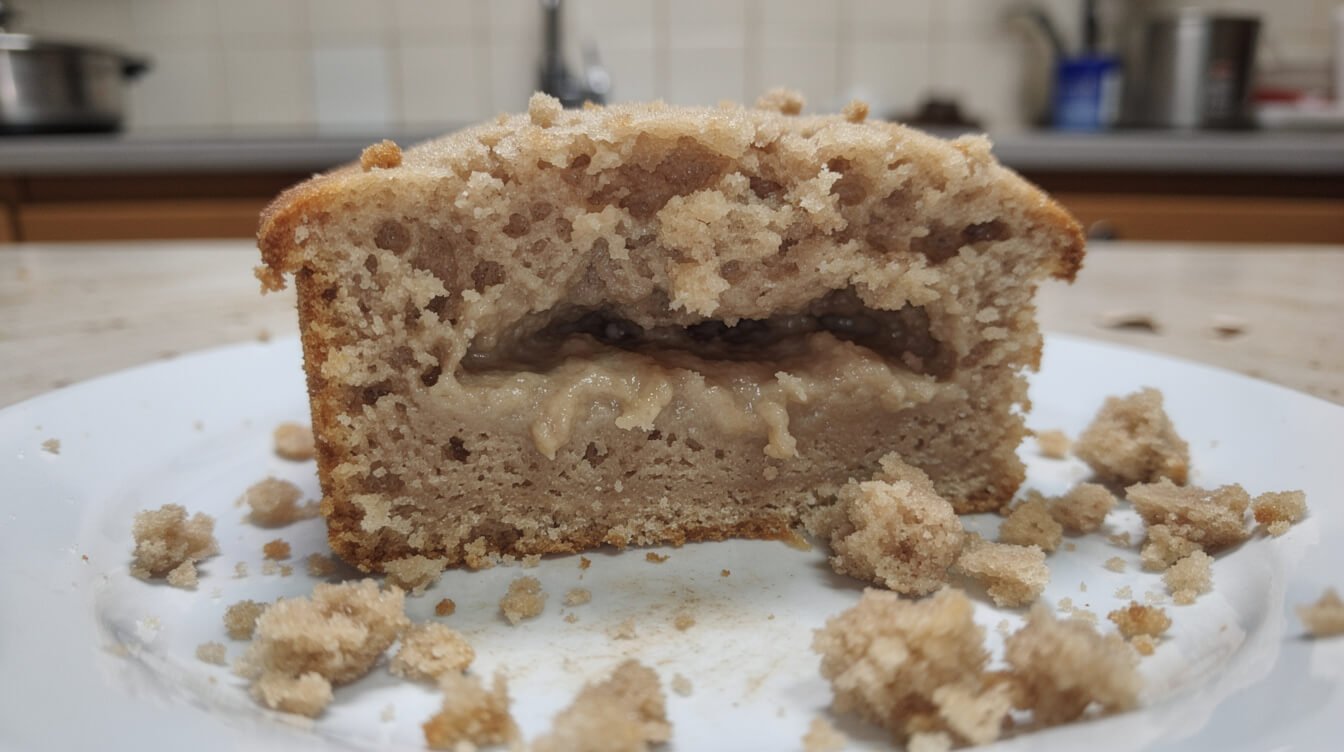
Cut it open and the crumb will tell you which swap went sideways. Nearly every complaint about a substitute for vegetable oil in baking traces back to one of these seven. Read these as questions, because that’s how they arrive.
“It’s gummy and a bit rubbery, and it’s dense”
You replaced all of the oil with applesauce, yogurt, banana, or purée. This is the headline failure of this whole topic and it’s nearly always a full swap rather than a half one. The fat that was keeping the gluten short is gone, so the crumb went tight and wet. There’s no rescue once it’s baked — next time cap it at half. The same crumb, from the same cause, is covered in more depth in our walk-through of why a banana bread turns out dense.
“The middle looks underdone no matter how long I bake it”
Also the full not-fat swap. A low-fat crumb holds water differently and reads wet on a skewer long past the point where it’s actually baked, so people keep extending the time and dry out the edges chasing a clean toothpick. Judge it on whether the top springs back when pressed and the edges have pulled slightly from the pan. Our notes on the doneness test that actually works go through this properly, and the same logic applies to a cake that sinks or bakes unevenly.
“It’s firmer and drier than usual, especially cold”
You used melted butter, coconut oil, shortening, or ghee. Nothing went wrong — that’s job two, exactly as described: the fat set as the cake cooled. Serve it at room temperature rather than from the fridge and it reads much softer. If you want the old texture back, go half-and-half — half melted butter for flavor, half oil for softness. That’s the best-of-both move, and what I’d do in most sturdy cakes.
“There are little white specks through it”
Melted coconut oil met cold eggs or cold milk and solidified on contact. Harmless, slightly waxy on the tongue. Let refrigerated ingredients come to room temperature before you mix next time.
“It tastes savory, or vaguely like salad”
Robust extra virgin olive oil in a delicate vanilla or white cake, or mayonnaise somewhere too pale to hide it. Both are genuinely good swaps in the right bake — olive oil is magnificent with chocolate, citrus, carrot, and cornmeal — but they need a flavor to stand next to. For a plain vanilla cake, use light olive oil or melted butter instead.
“It tastes flat, like something’s missing”
Check the salt. Salted butter swapped in with the recipe’s salt left intact reads muddy rather than salty. And if you swapped a full cup of oil for applesauce, fat was carrying the flavor and now nothing is.
“It’s greasy and heavy”
Usually a measuring error rather than a swap problem — oil is easy to over-pour, so measure it into a cup rather than straight into the bowl. It can also come from over-mixing after adding a thick purée: the extra agitation builds gluten, and then the fat works against it. Mix until just combined, then stop. The same restraint keeps cookies from running together into one sheet, which we got into with bakery-style chocolate chip cookies.
The one thing worth remembering
Every substitute for vegetable oil in baking falls into one of three buckets, and you only need to know which one you’re in. Another liquid oil is a non-event — pour and go. A melted solid fat is a straight trade: better flavor for a firmer crumb, and you can split it fifty-fifty if you want both. And anything that isn’t fat at all — applesauce, yogurt, sour cream, banana, purée — goes in at half, because at a full swap you’re not substituting anymore. You’re writing a different recipe, and you’ll taste it.
That’s the whole decision. Now go finish your cake.

Before you go
Want the next one?
We post a new recipe or kitchen guide every day. The best of the week lands in one short email, no life story attached.