Best Stand Mixer for Home Cooks (How Much Mixer You Actually Need)
Standing in the mixer aisle, or fifteen browser tabs deep in reviews, and still not sure if you need a $130 mixer or a $500 one? You’re not alone. Most best stand mixer guides start with “here are the top testers’ picks” and skip the question that actually matters first: do you need one at all, and if you do, how big?
Here’s the honest answer, sorted by how often you actually bake — not by which model has the shiniest lab review.
The quick answer, if you’re in a hurry: bake a few times a month? A basic tilt-head mixer (roughly $130–250) is plenty. Bake weekly, including bread? Step up to a mid-tier mixer with real torque (roughly $300–450). Baking multiple loaves a week or feeding a crowd? A heavy-duty dough mixer (roughly $500 and up) earns its keep. The rest of this guide walks through why, and what to actually look for in each tier.
Do You Actually Need a Stand Mixer?
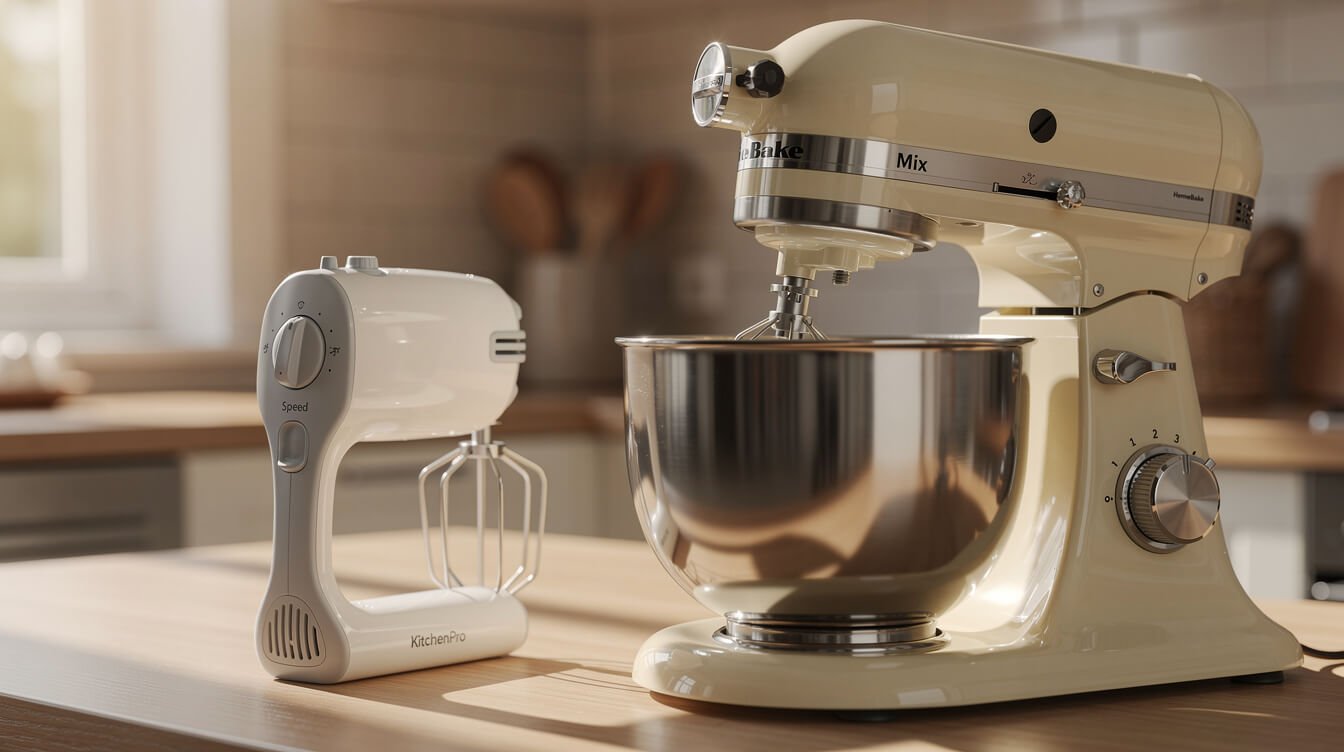
If you bake a batch of cookies twice a year, no — a hand mixer or a wooden spoon and some elbow grease will get you through. A stand mixer earns its counter space when you’re doing one of three things regularly: kneading bread dough (this is where it saves your arms the most), whipping anything that takes more than two minutes by hand (meringue, whipped cream, buttercream), or mixing heavy batters and doughs that fight back, like cookie dough packed with mix-ins.
A good gut check: if you’ve made a layer cake and your arm gave out on the buttercream before it got fluffy, that’s the exact job a stand mixer solves. If your baking is mostly stirring together a quick batter or folding dry ingredients into wet, you genuinely don’t need one yet.
If none of that sounds like your kitchen, save the money. If even one of those sounds like a weekly thing, keep reading — because the mixer that’s right for you depends entirely on which of those three you’re doing, and how often.
How to Match a Stand Mixer to How Often You Actually Bake

Every mixer buying guide sorts by brand. We’re sorting by something more useful: how often the mixer will actually get used, because that’s what decides whether you need a $150 machine or a $500 one.
Think about it in three tiers:
- Occasional baker: cookies a few times a month, the occasional cake. You need something reliable, not industrial.
- Regular home baker: weekly bread, cakes, or big cookie batches. You need real kneading power and a bowl big enough for double batches.
- Serious bread baker: multiple loaves, stiff doughs, or you’re feeding a crowd. You need a motor built to run hot dough for a long stretch without straining.
Be honest about which one you are today, not which one you might become “someday.” You can always upgrade later — buying too much mixer up front just means paying for power you won’t use for years, if ever. Buying too little means you’ll be back here in a year, frustrated, googling the same question.
For Occasional Bakers: the Entry-Level Tier
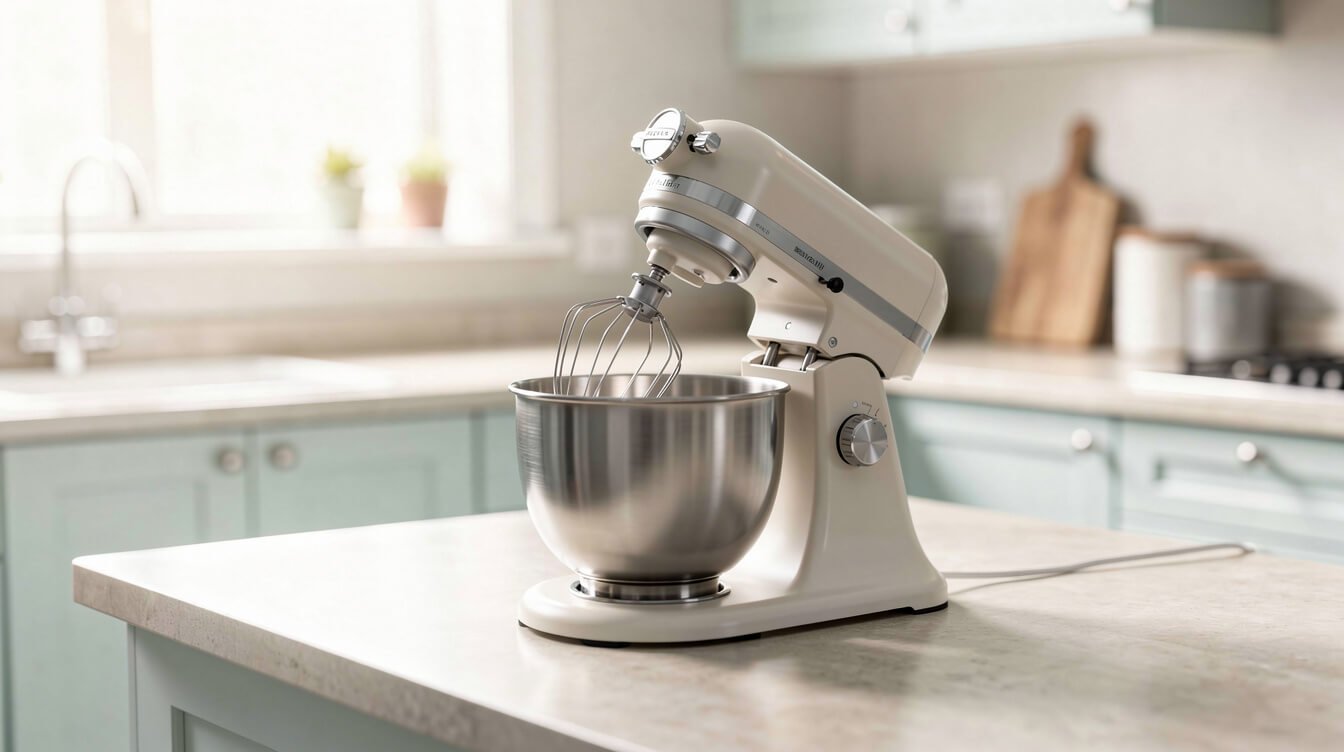
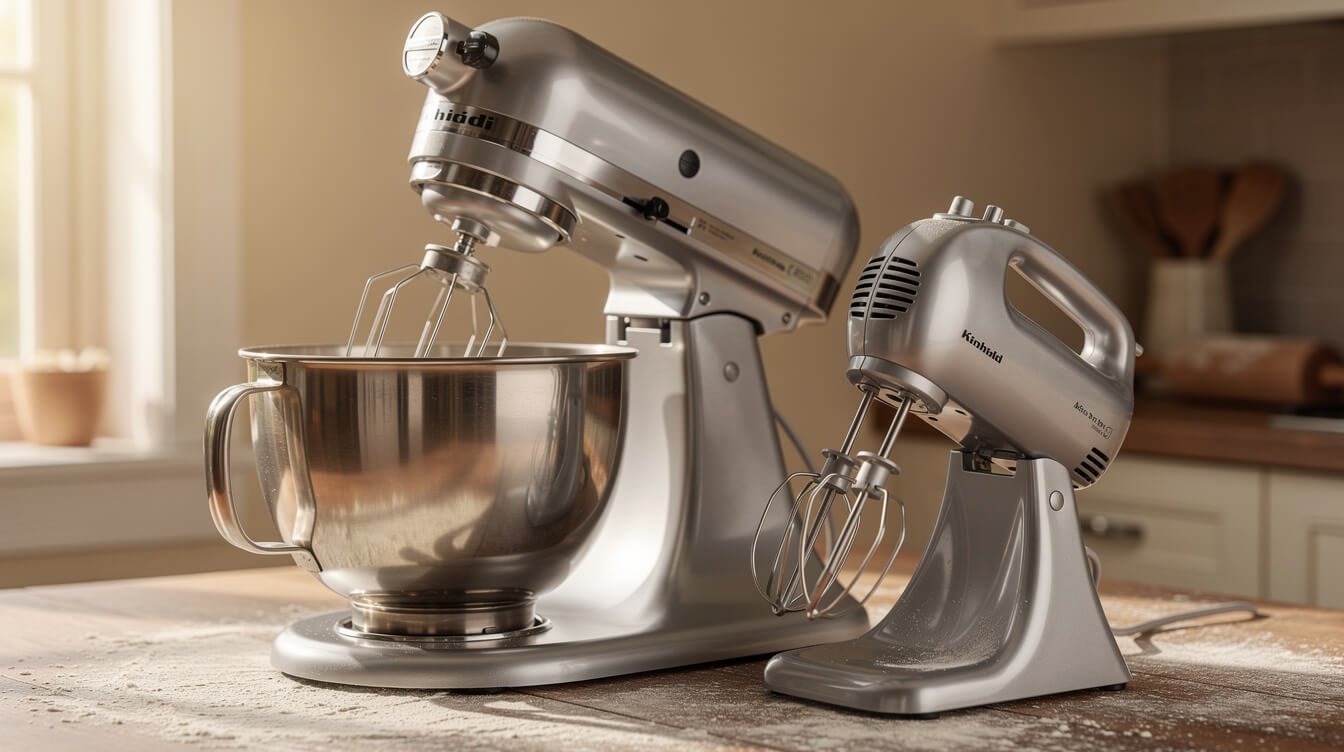
If you’re in this tier, look for a tilt-head mixer in the 4.5 to 5-quart range — this is the classic “starter” stand mixer size, and it’s genuinely enough for cookies, cakes, muffins, and the occasional light bread dough. A basic tilt-head KitchenAid (the Classic or Artisan lines) or a similarly-sized Cuisinart mixer will cover this tier without overspending.
What you’re paying less for here is motor strength and bowl capacity — fine, because you’re not asking it to knead 5 pounds of bagel dough. What you shouldn’t skip even at this tier: a stainless bowl (plastic scratches and stains over time), and a splash guard, which saves you from a flour cloud every single time you turn it on.
Skip anything marketed as “compact” beyond the standard tilt-head size — the smaller bowls fill up fast, and you’ll end up doing double batches in two rounds instead of one, which defeats the point of owning a mixer.
For Regular Home Bakers: the Step-Up Tier
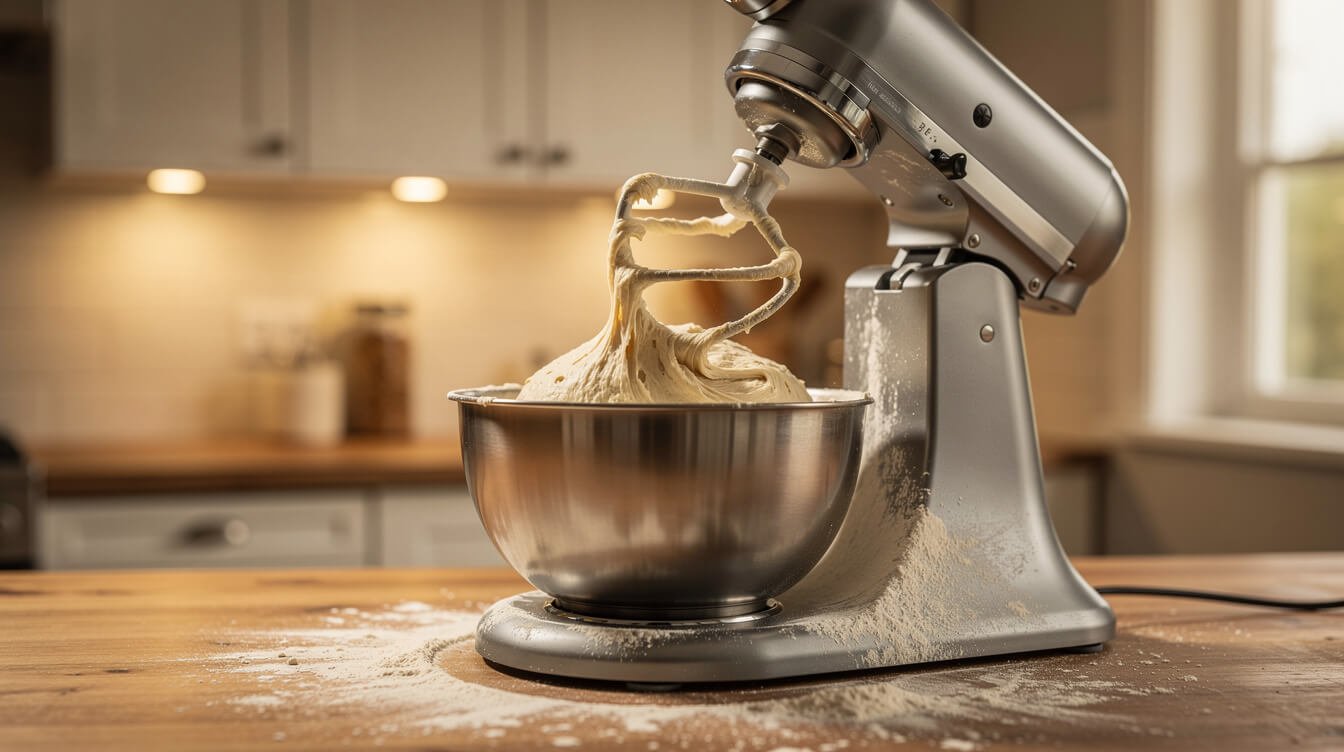
Baking weekly changes the math. You want a mixer with more torque (the actual kneading power, not just top speed) and a bowl in the 5.5 to 6-quart range, so a double batch of bread dough — or a big batch of banana bread batter for the freezer — doesn’t climb out over the sides.
This is where a mid-tier KitchenAid (the Professional or bowl-lift 6-quart models) or a Bosch Universal Plus earns its higher price. Bosch in particular is worth a look here — its motor sits below the bowl rather than above it, which means it handles dense dough without the straining hum you’ll hear from a tilt-head mixer pushed past its comfort zone.
If you’re kneading bread dough weekly and your current mixer sounds strained, gets hot, or walks across the counter, that’s your sign you’ve outgrown the entry tier — not that you’re doing something wrong.
From the Eat Cafe kitchen
One good recipe a week, straight to your inbox
The recipe we're actually cooking this week, plus the one tip that saves it when it goes sideways. No spam. Unsubscribe anytime.
For Serious Bread Bakers: the Heavy-Duty Tier
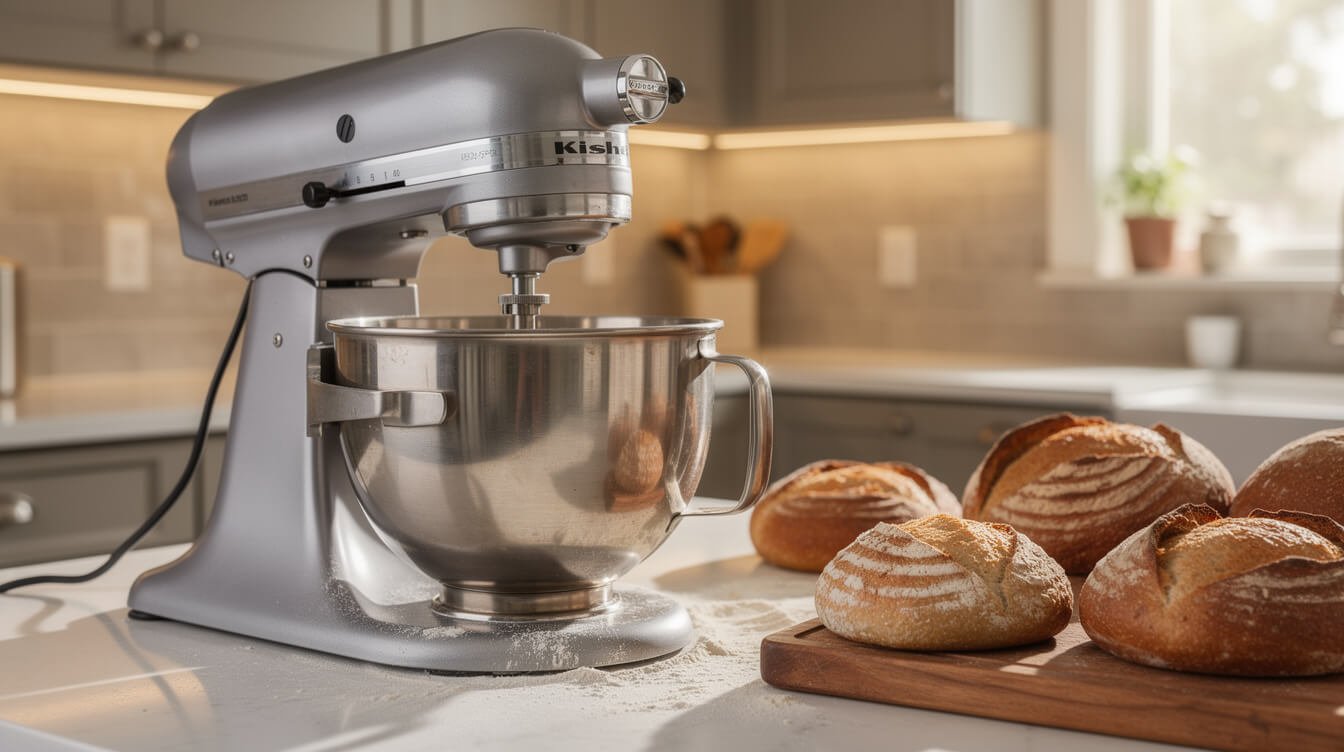
If you’re baking multiple loaves at once, working with high-hydration or whole-grain doughs, or feeding a big household, this is where a purpose-built dough mixer — an Ankarsrum, or a large bowl-lift KitchenAid (the 7-quart Pro Line) — makes sense. These are built to run at a low, steady speed for long stretches without overheating, which matters more than top speed when you’re developing gluten in a stiff dough.
This tier costs real money, so it’s worth it only if you’re actually there: multiple bakes a week, doughs that would strain a smaller motor, or a household that eats a loaf every couple of days. If that’s not your kitchen yet, the step-up tier above will serve you well past the point most home bakers ever reach — don’t let a gear-review site talk you into buying for a hobby you don’t have yet.
The Attachments That Come Standard (and the Ones You Add On)
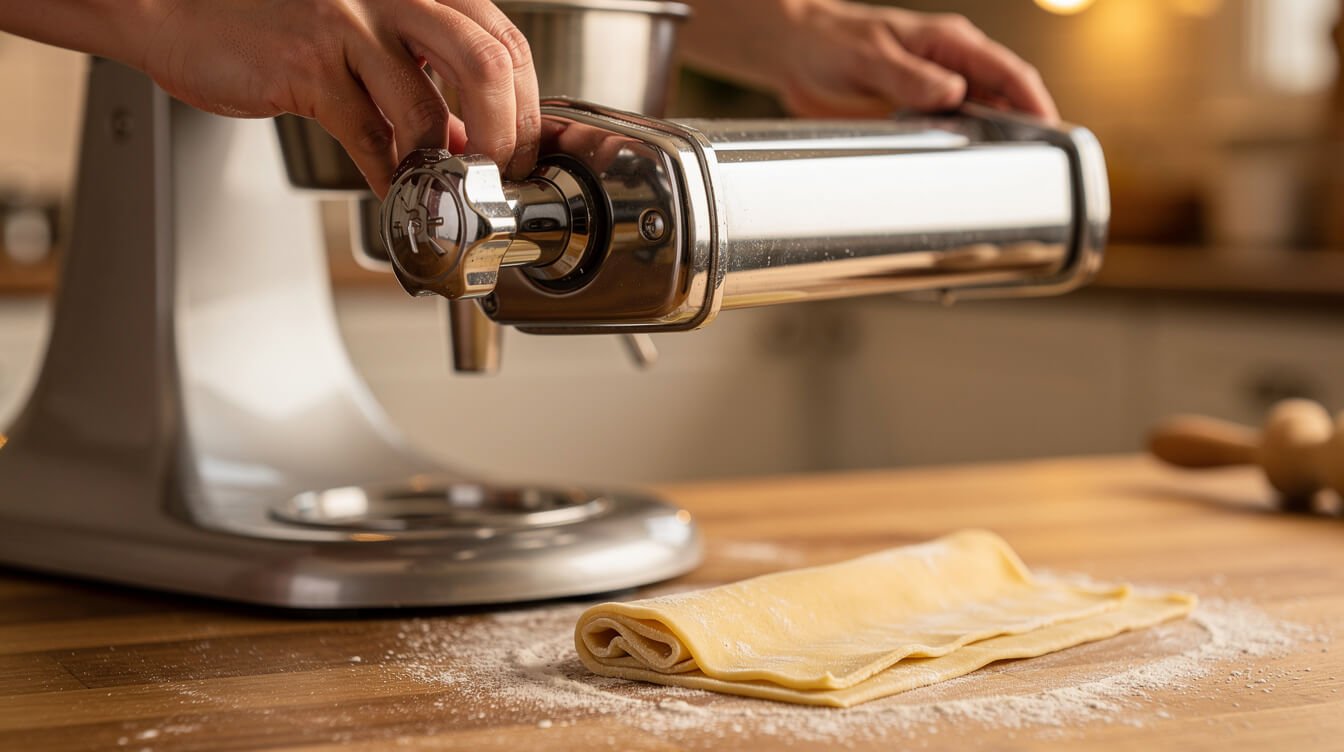
Every stand mixer, regardless of tier, comes with three attachments you’ll use constantly: the flat beater (cookie dough, cake batter, buttercream), the wire whisk (whipped cream, meringue, anything that needs air folded in), and the dough hook (bread and pizza dough). If a “deal” doesn’t include all three, it’s not actually a deal.
Beyond that, most mixers have a power hub on the front that accepts optional attachments — and the two pitched hardest are the pasta roller and the meat grinder. Here’s the honest read on both.
Pasta roller: worth it if you actually make fresh pasta more than once or twice a year. It turns a tedious hand-rolling job into a five-minute one, and it’s the optional attachment home cooks tend to use most after buying it.
Meat grinder: worth it only if you already grind your own meat for burgers or sausage by hand or with a separate tool. If you don’t currently do this, buying the attachment “just in case” usually means it sits in a drawer.
A good rule: buy the mixer for what you already do, and add an optional attachment later if a specific project keeps coming up — not as a bundle deal for something you’re guessing you’ll want.
A few less-common attachments worth knowing about if you see them bundled: a food processor attachment (handy for slicing/shredding if you don’t already own a separate processor, but usually clunkier than a dedicated one), a grain mill (only relevant if you’re milling your own flour from whole grains — a genuinely niche use), and an ice cream maker bowl (fun if you make ice cream a few times a summer, dead weight in a cabinet if you don’t). None of these should be a deciding factor in which mixer you buy — they’re a “nice if it’s already included” detail, not a reason to size up a tier.
Common Mistakes When Buying a Stand Mixer
A few patterns show up again and again in mixer regret:
- Buying on watts alone. A higher-watt motor with a badly designed gear system can still strain on stiff dough. Torque and gear quality matter more than the number on the box.
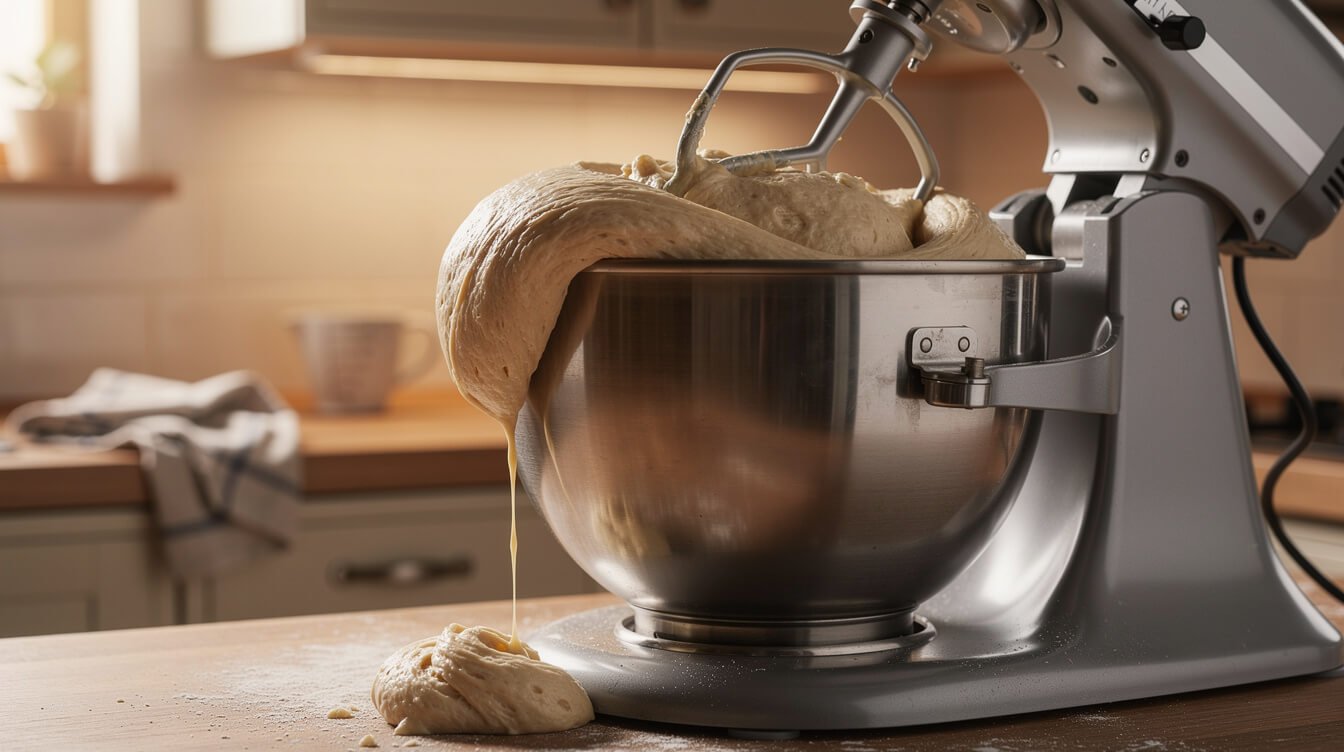
- Ignoring bowl size until it’s too late. If you regularly double recipes, a 4.5-quart bowl will have you scraping flour off the counter mid-mix.
- Buying the color, not the tier. A gorgeous mixer in the wrong size for your baking habits is still the wrong mixer — pick the tier first, then pick a color you like within it.
- Assuming “commercial-style” means better for home use. Bigger isn’t always better if it means the bowl is now too heavy to lift comfortably or too tall to fit under your cabinets.
The same “buy for what you actually use” logic applies across the kitchen, by the way — it’s the same reasoning behind why we tell people to start with one good knife instead of a full block set.
Care, Noise, and How Long a Mixer Should Last
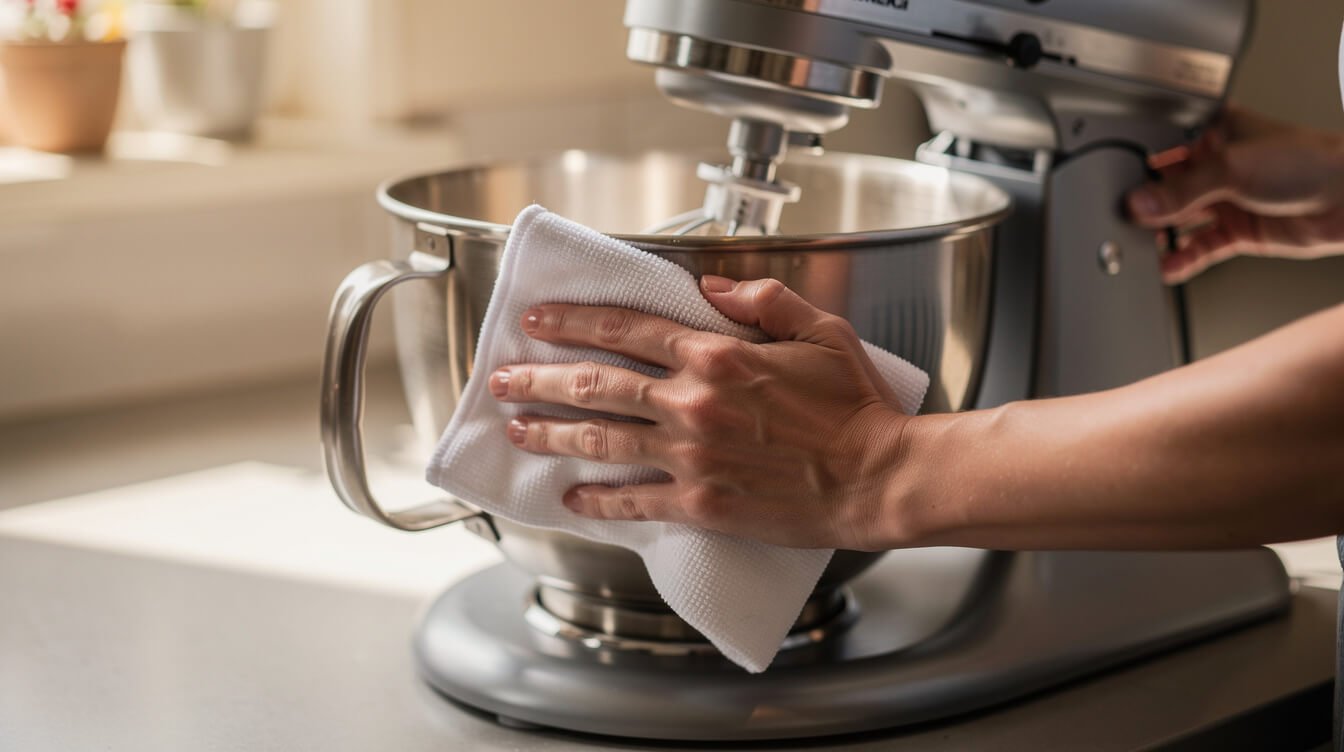
A well-cared-for stand mixer should last well over a decade — these are simple machines mechanically, and most repairs (a worn gear, a frayed cord) are fixable rather than a reason to replace the whole thing. A few habits keep it running that long:
- Wipe the body with a damp cloth; don’t submerge the base or run water over the motor housing.
- Hand-wash the bowl and attachments unless the manual says otherwise — some finishes dull in the dishwasher over time.
- Don’t run it empty or overload it past the recommended dough capacity; that’s the fastest way to strain the motor.
- If it’s genuinely loud or straining on a normal load, that’s usually a sign it’s undersized for what you’re asking it to do, not that something’s broken.
On counter space: if you use it at least weekly, leave it out — a mixer that lives in a cabinet quietly stops getting used. If it’s occasional, a corner with an appliance cover works fine.
Repair or replace? If a mixer trips a breaker, smells like burning, or the bowl no longer locks securely, stop using it and have it looked at rather than pushing through — those are motor or gear symptoms, not cosmetic ones. A cracked bowl or a worn drive coupling (the small rubber piece that connects the motor to attachments) are both common, inexpensive fixes that don’t mean the whole machine is done. Genuine end-of-life usually looks like a motor that no longer holds speed under normal load even after a rest — that’s the point to replace rather than repair.
FAQ: Stand Mixer Questions, Answered Plainly
Do I need a stand mixer to make bread?
No — bread has been made by hand for thousands of years, and hand-kneading works fine. A mixer just saves your arms and time if you’re doing it often.
Is a more expensive mixer always better?
No. A $500 heavy-duty mixer is wasted power if you bake cookies twice a month. Match the tier to your actual habits, not the biggest number on the spec sheet.
Tilt-head or bowl-lift — does it matter?
Tilt-head is easier to add ingredients on the fly and takes less vertical space; bowl-lift is more stable for heavy, stiff doughs. Occasional bakers usually prefer tilt-head; serious bread bakers usually prefer bowl-lift.
How loud are stand mixers?
Most run at a normal kitchen-appliance volume on low-to-medium speeds. If yours is straining and loud on a normal load, it’s likely undersized for the job, not just “a loud mixer.”
Can I use a hand mixer instead?
For light batters and whipping, yes. For kneading bread dough or heavy cookie dough, a hand mixer will overheat and struggle — that’s exactly the job a stand mixer is built for.
Do I need to buy the biggest bowl available?
Only if you regularly bake for a crowd or double recipes often. A too-large bowl just means more counter space used and more effort to clean for everyday single batches.
Are off-brand stand mixers worth considering?
Some are fine for the occasional-baker tier, but weak gears and thin motor housings tend to show up first in lesser-known brands — this is one appliance where sticking to an established name pays off once you’re past light, occasional use.
How much should I actually expect to spend?
Roughly $130–250 for a solid entry-level tilt-head mixer, $300–450 for a mid-tier mixer with real bread-kneading torque, and $500 and up for a heavy-duty dough mixer. Sales are common around the winter holidays, so if you’re not in a rush, that’s often the best time to buy up a tier for less.
Is it normal for a new mixer to smell a little like burning the first few uses?
A faint smell from the motor “breaking in” during the first couple of uses is common and should fade. If it persists past a handful of uses or gets stronger, stop and contact the manufacturer — that’s not normal.
From the Eat Cafe shop
100 Essential Tools Every Chef Has in Their Kitchen eBook and Guide
$7.99
See it in the shopFinal Thoughts
The best stand mixer isn’t the one with the most 5-star reviews — it’s the one sized to what you actually bake. Be honest about your tier, buy accordingly, and you’ll get a machine that earns its counter space for years instead of one that’s either straining under your dough or gathering dust because it was more than you needed.
Save this one for the next time you’re standing in the mixer aisle — and if you want more honest, no-fuss kitchen gear picks, start with our take on kitchen knife sharpeners, another gear question with more hype than straight answers.

Before you go
Want the next one?
We post a new recipe or kitchen guide every day. The best of the week lands in one short email, no life story attached.