Best Kitchen Knife Sharpener for Home Cooks (Not Hunters, Not Chefs)
If your knife is sliding off a tomato instead of through it, you don’t need a new knife — you need to fix the edge you already have. That’s the part most kitchen shopping guides skip. They hand you eleven products to compare and never answer the question you actually showed up with: do I even need a sharpener, or is my knife just fine and I’ve been doing this wrong the whole time?
Short answer: probably both are a little true. Here’s how to sort it out, pick the best kitchen knife sharpener for how you actually cook, and stop white-knuckling your way through onions with a dull blade.
Do you need a sharpener, or just a honing steel? (they’re different)
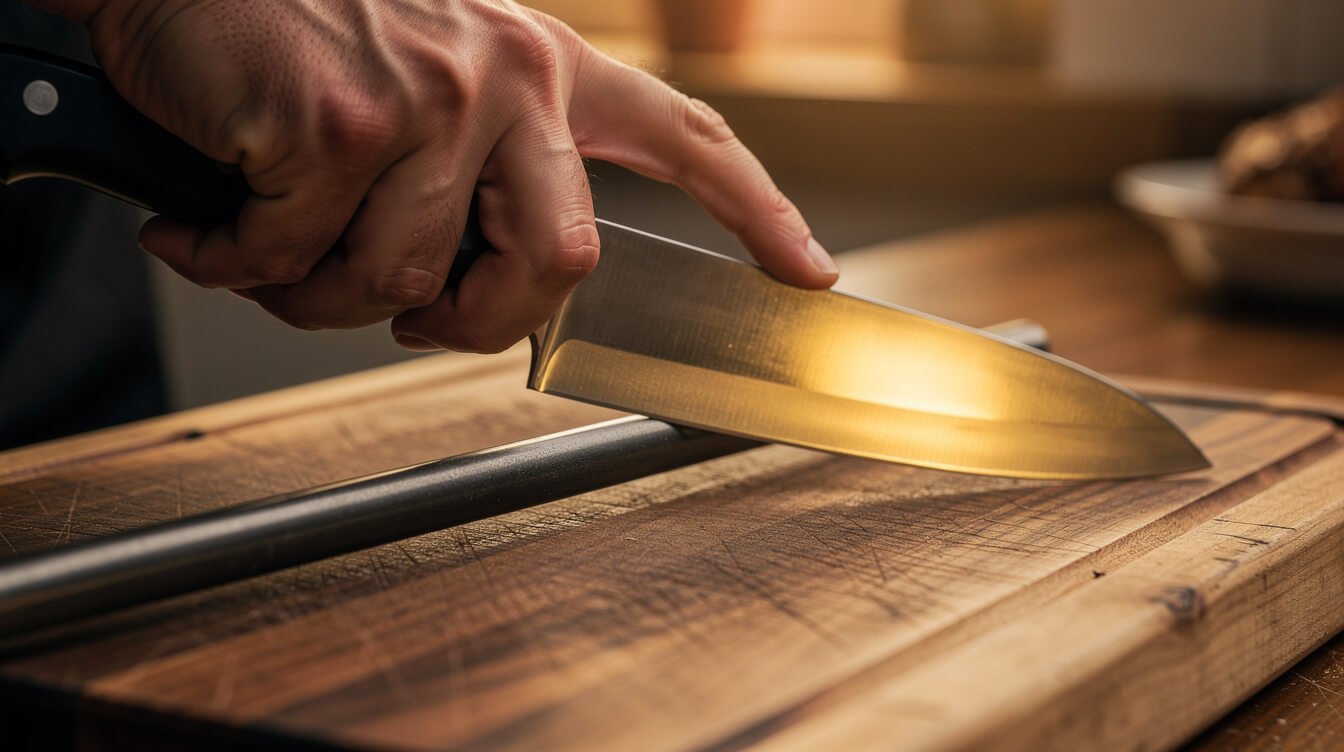
This is the mix-up that trips up almost everyone, including plenty of people who’ve been cooking for years: a honing steel and a sharpener do two completely different jobs.
Honing doesn’t remove any metal. It just straightens the microscopic edge of the blade back into alignment after it’s rolled slightly sideways from normal cutting. Run your knife across a honing steel before you cook — or every few uses — and you’ll feel the edge “come back” almost instantly. It’s fast, it’s free once you own the rod, and it should be part of your regular routine no matter what else you do.
Sharpening actually grinds away a thin layer of metal to create a brand-new edge. You need this when honing stops helping — when the knife still feels dull even right after you’ve run it over the steel. That’s usually every few months for a home cook who cooks often, not every week.
If you own a honing steel and use it regularly, you may only need real sharpening two to four times a year. If you don’t hone at all, you’ll be sharpening far more often than necessary, and grinding away more of your knife’s life than you need to.
Why does the edge roll in the first place? Every time your blade hits a cutting board, the thin, delicate line at the very edge flexes a tiny bit sideways — invisible to the eye, but enough that the knife stops biting cleanly into food and starts sliding across it instead. Honing doesn’t create a new edge; it just pushes that flex back into line, the same way you’d straighten a bent paperclip rather than cutting off the bent part. That’s why it works in seconds and why it’s not a substitute for real sharpening once the edge is actually worn down rather than just misaligned.
A quick way to tell which one you need: if the knife felt sharp yesterday and dull today, that’s honing. If it’s felt gradually duller over weeks or months no matter how often you hone it, that’s sharpening.
The 3 types of knife sharpeners, explained simply
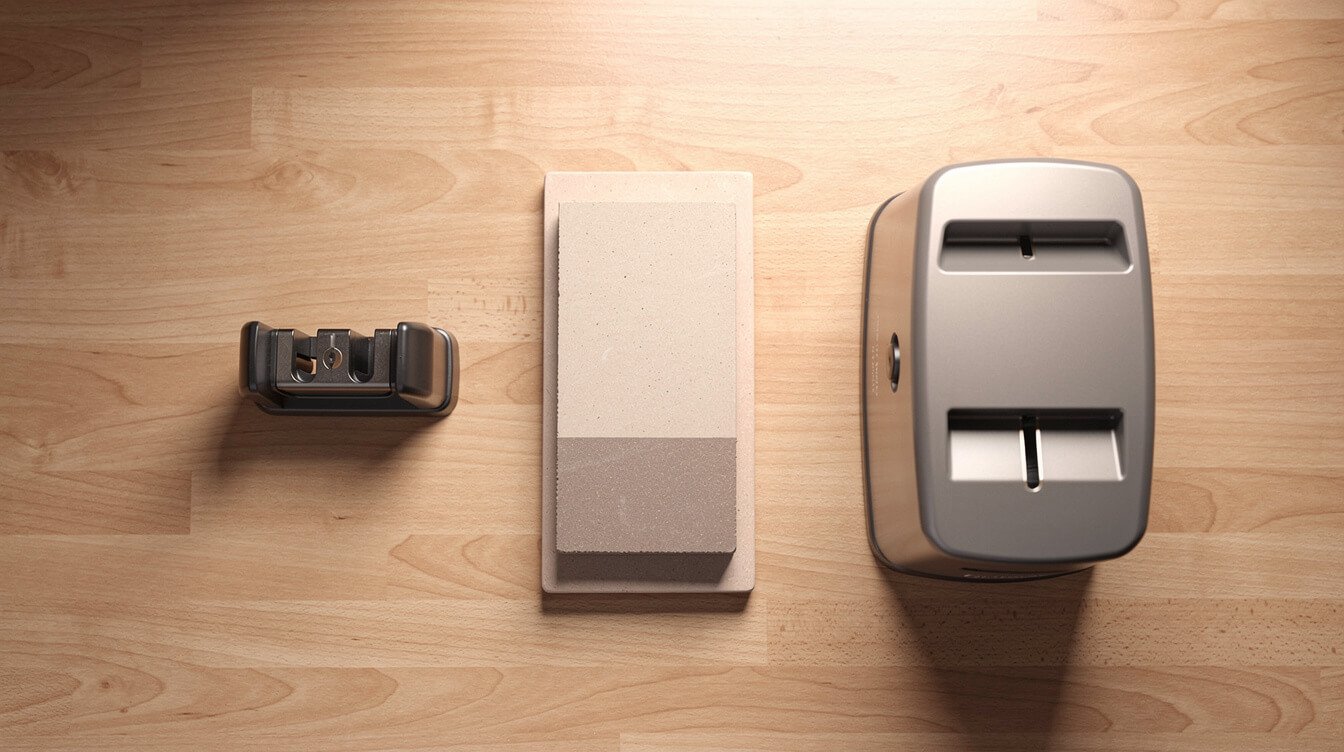
Every sharpener on the market is really one of three types. Once you know which bucket you’re choosing from, the shopping part gets a lot less overwhelming.
Pull-through sharpeners
You drag the knife through a slot a few times and it’s done. Cheap, fast, no skill required. The tradeoff: they take off more metal than you strictly need, and a bad one can round off a good edge instead of refining it. Fine for most kitchen knives; skip it for an expensive Japanese blade you actually care about.
Whetstones
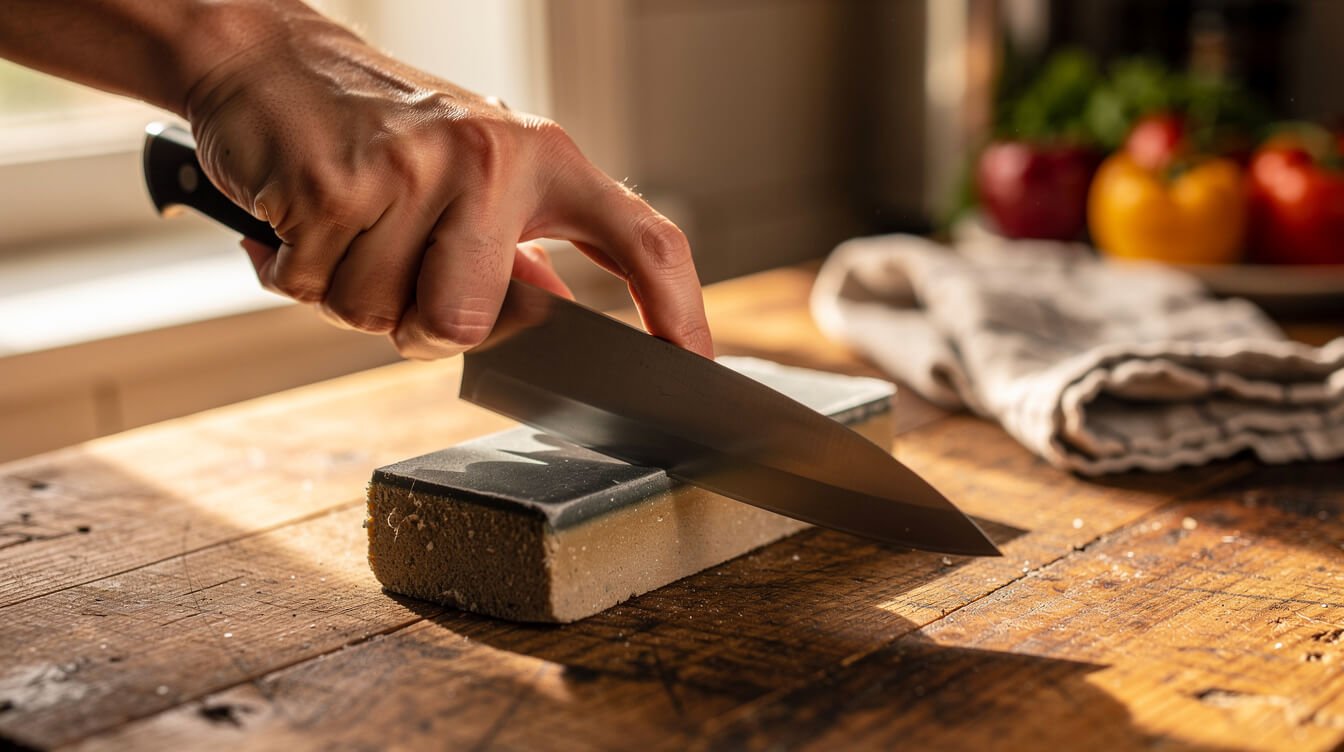
A flat sharpening stone you draw the blade across at an angle, by hand. This is the “real” method — the one that gives you the sharpest, longest-lasting edge, and the one every serious cook eventually gravitates toward. It also takes practice, patience, and a spare fifteen minutes you have to actually want to spend.
Electric sharpeners
Motorized slots that do the whetstone’s job for you, guided by preset angles. The middle ground: better results than a pull-through, none of the learning curve of a stone. This is where most home cooks land, and it’s not a compromise pick — it’s often the right one.
Quick comparison
- Pull-through: Fastest, cheapest, zero skill needed. Removes the most metal per use; can round a good edge if used too often.
- Whetstone: Sharpest, longest-lasting result; takes the most metal off only where you actually need it. Requires practice and patience.
- Electric: Close to whetstone results with none of the technique; costs more than a pull-through, less than most people expect.
Our pick for most home kitchens
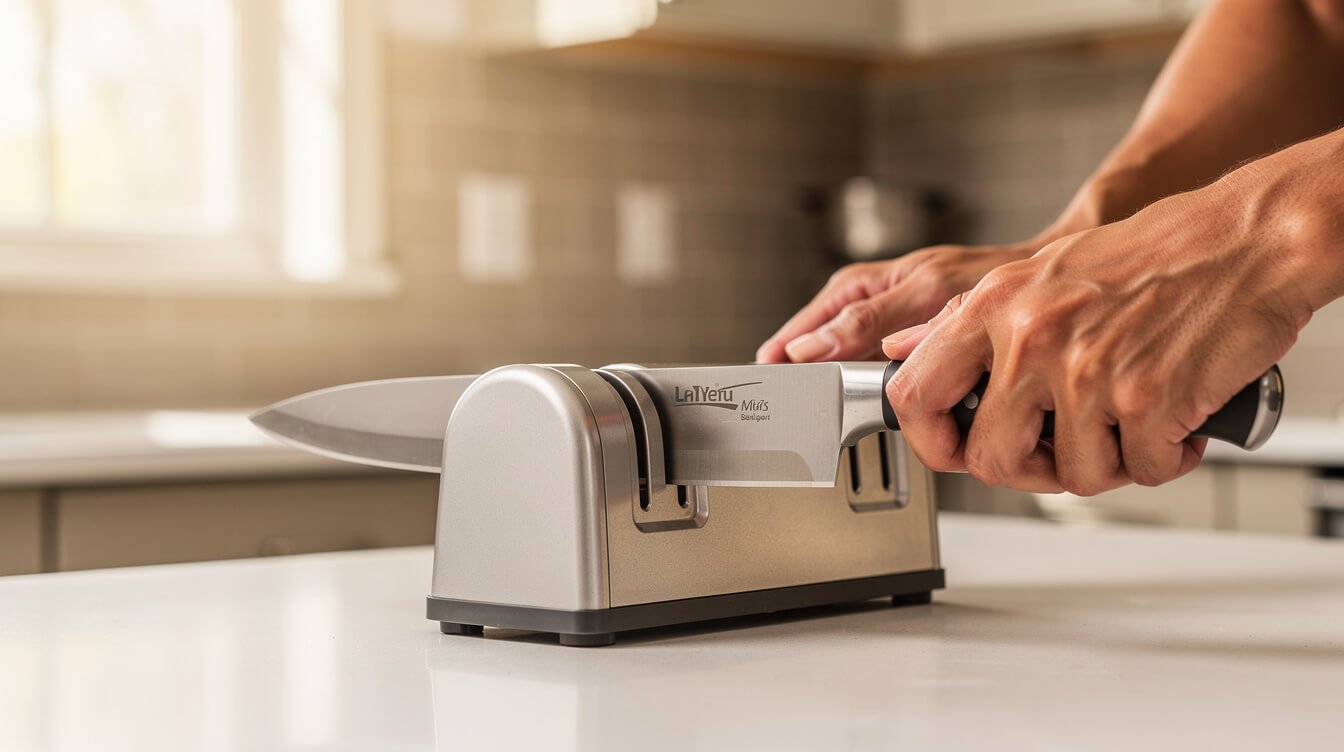
For most people reading this, a decent electric sharpener is the answer. Look for one with 15–20° angle guides for Western knives (steeper Japanese knives are closer to 15°, so check what your knives actually are before you buy), a coarse-then-fine two-stage setup, and a stable, non-slip base. That combination gets you close to whetstone sharpness with almost none of the learning curve.
If you cook constantly, care about your knives the way some people care about their cast iron, and genuinely want to learn a hands-on skill, a whetstone is worth the jump — see below. If you just want your knife to cut a tomato without a fight, a pull-through will do in a pinch, but it’s the one we’d upgrade away from first.
We’re not naming a specific product here — the honest answer depends on your knives and your patience for the learning curve more than any one “best” pick, and we’d rather you choose the right type for you than chase a single winner. When you’re comparing options, these are the features that actually matter more than the brand name on the box:
- Correct angle guides for your knives. Most Western knives sit around 15–20°; many Japanese knives are closer to 15° or even a single-sided bevel. A sharpener built for the wrong angle will fight your knife’s actual geometry.
- A two-stage (coarse/fine) process. One-stage sharpeners can leave an edge rougher than it needs to be. Two stages get you closer to a whetstone finish.
- A base that won’t slide around your counter. Rubber feet or a suction base matter more than they sound like they should — a sharpener that skates while you’re using it is both less effective and less safe.
Is whetstone sharpening worth learning? (honest answer)
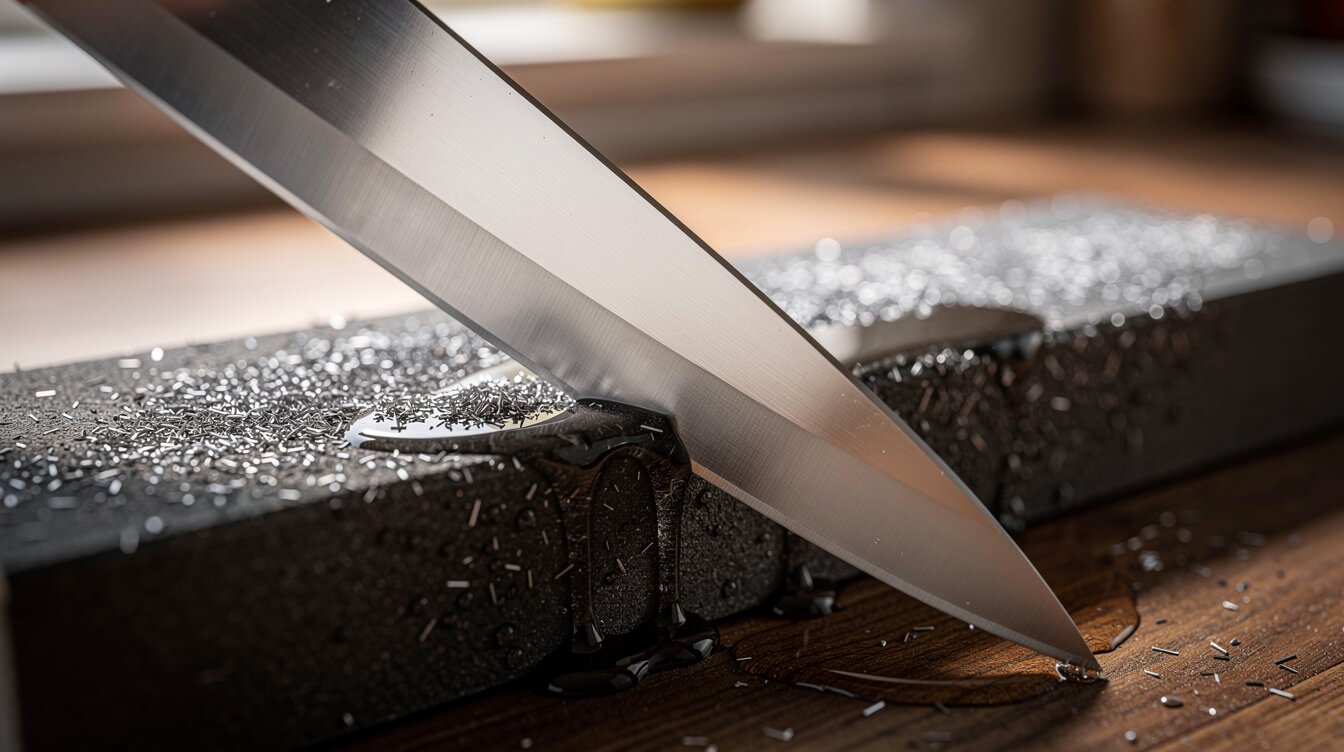
Yes, eventually — but not because you’ll fail without it. A well-used electric sharpener will keep a knife plenty sharp for everyday cooking. A whetstone is worth learning if any of this sounds like you:
- You own one knife you genuinely love and want to keep for decades, not years
- You find kitchen skills satisfying to learn for their own sake, the same way people fall for sourdough or knife cuts
- You want full control over the exact angle and finish of your edge
If none of that describes you, that’s completely fine. Nobody’s grading you on it. An electric sharpener used consistently will out-perform a whetstone used badly or not at all, every time.
If you do go the whetstone route: grit, decoded
Whetstones are labeled by grit number, and the number just tells you how coarse or fine the stone is — same idea as sandpaper. You don’t need a shelf of them. Two stones cover almost everything a home cook needs:
- Coarse (around 400–1000 grit): for a knife that’s genuinely dull or has a small chip. This does the heavy work of building a new edge.
- Fine (around 3000–6000 grit): for polishing that new edge to a clean, sharp finish once the coarse stone has done its job.
Start on the coarse side only when the edge actually needs rebuilding, finish on the fine side every time, and you’ll get most of the benefit without needing a specialist’s full stone collection.
From the Eat Cafe kitchen
One good recipe a week, straight to your inbox
The recipe we're actually cooking this week, plus the one tip that saves it when it goes sideways. No spam. Unsubscribe anytime.
How often you actually need to sharpen (less than you think)
This is where most people either over-sharpen (wearing down a good knife for no reason) or under-sharpen (fighting a dull one for months). A rough guide for a knife you use most days:
- Honing: every few uses, or right before you cook if you use your knife daily
- Real sharpening: every 2–4 months for a knife in regular use, less often if you’re careful about honing and storage
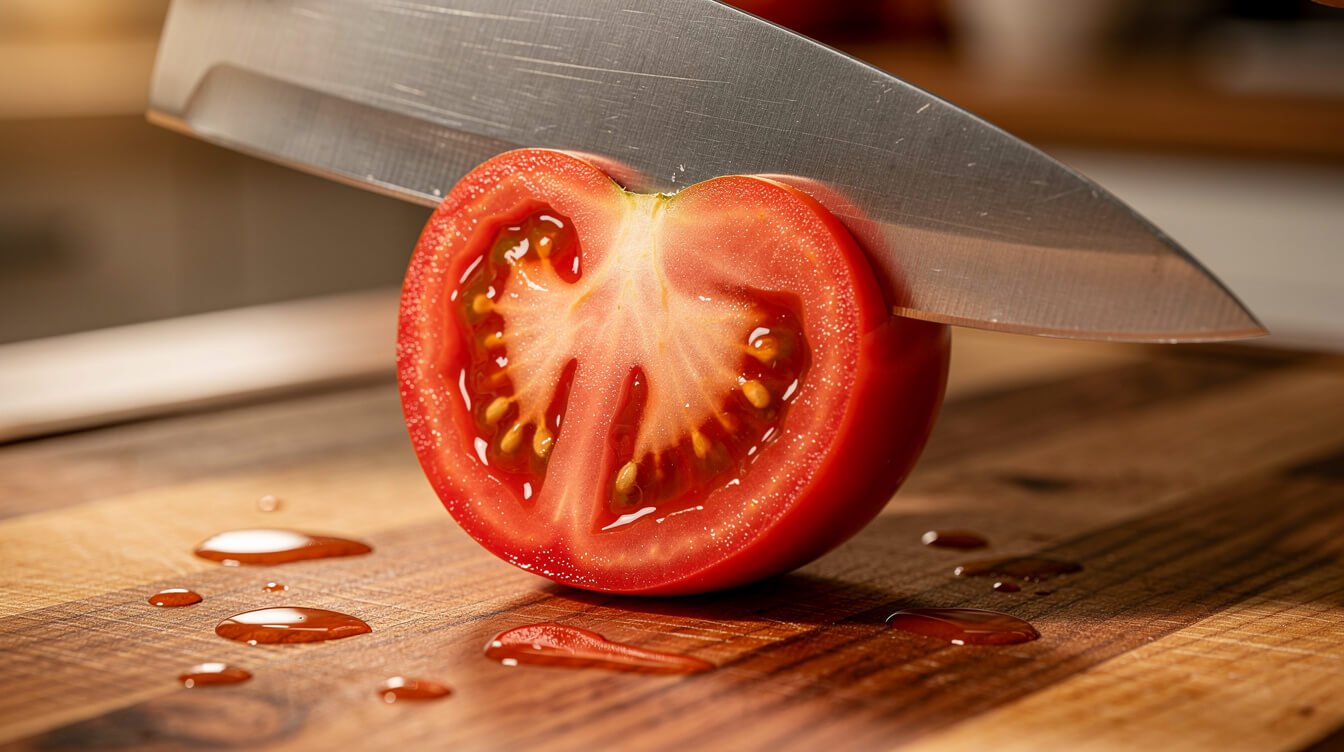
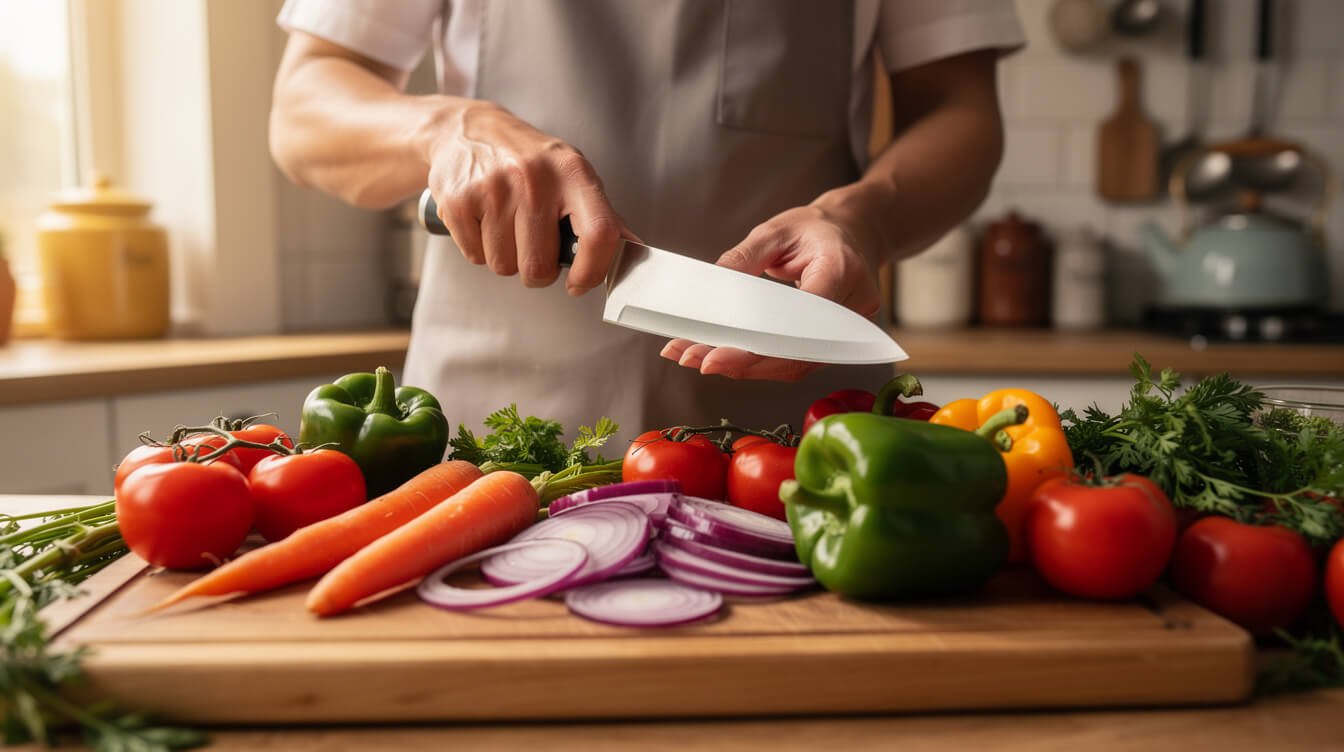
- The real test: forget the calendar — try the tomato test. Rest the blade tip on the skin of a ripe tomato and let gravity pull it down. A sharp knife slices in under its own weight. A dull one just dents the skin.
Sharpen when the test fails, not on a fixed schedule. Your actual usage will always be a better guide than a generic timeline.
A few things shift that timeline in either direction. If you cook almost every day, or you’re breaking down a lot of squash, hard bread, or bone-in cuts, you’ll land on the more-frequent end. If you mostly slice soft produce and cook a few nights a week, you might stretch real sharpening to twice a year and barely notice a difference. Carbon-steel knives also tend to hold an edge slightly longer between sharpenings than stainless, though they need more attention to drying and rust prevention in exchange.
Mistakes that ruin your knife edge faster
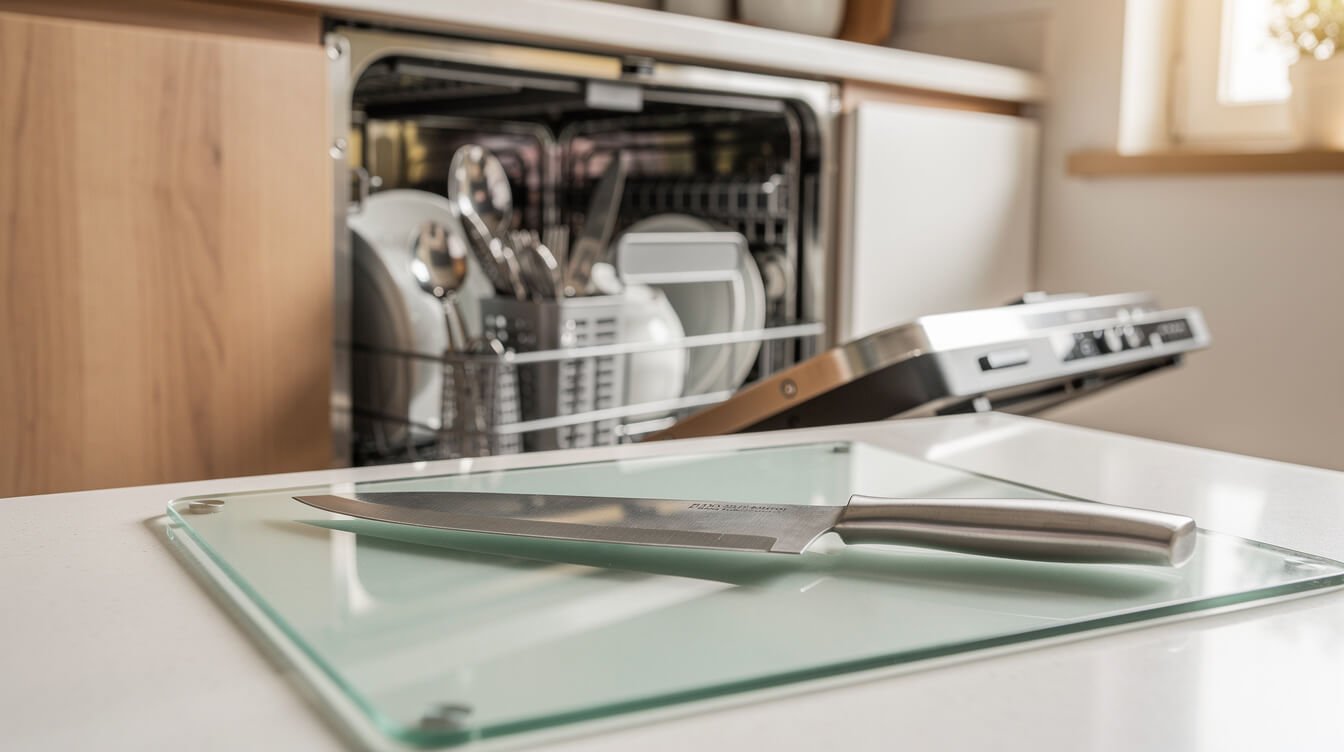
A sharpener can only do so much if these habits are working against it every day:
- Cutting on glass, granite, or ceramic. These boards feel sturdy, but they’re harder than your blade and dull it fast. Stick to wood or plastic.
- Running your knife through the dishwasher. Heat, moisture, and other utensils banging against the blade all damage the edge — and can pit or discolor the handle. Hand-wash and dry immediately.
- Tossing it loose in a drawer. Every time it knocks against another utensil, the edge takes a tiny hit. Use a knife block, a magnetic strip, or at minimum a blade guard.
- Using it as a can opener, bottle opener, or bone crusher. If it wasn’t built for the job, it’ll pay for it in edge life.
- Twisting or prying with the blade. Popping open a stuck jar lid or twisting to separate frozen food can chip or bend the tip — a knife edge is built to slice forward, not lever sideways.
- Letting a wet blade sit. Even a quick soak in the sink can dull the edge faster through corrosion, especially on carbon steel, and it’s an easy habit to fix with a thirty-second hand-dry.
Fix these habits and you’ll sharpen less often — and whatever sharpener you land on will have an easier job to do.
Caring for your knives between sharpenings
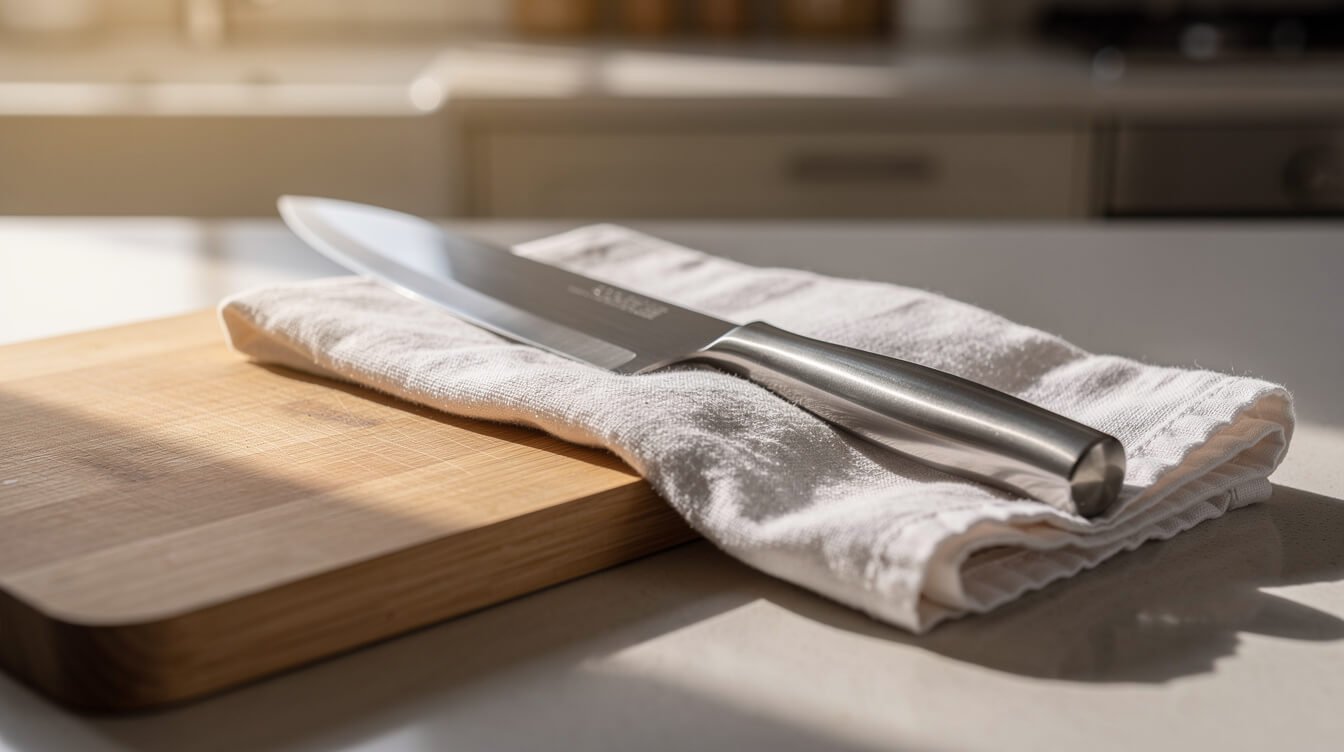
A little routine care goes a long way between real sharpenings:
- Hand-wash and dry your knife right after use — don’t let it soak
- Hone every few uses to keep the edge aligned
- Store it somewhere the blade doesn’t touch other metal
- Keep it on a wood or plastic board, never glass or stone
If you’re just getting your kitchen basics in order, our guide to choosing your first chef’s knife and our walkthrough on slicing, dicing, and julienning like a pro both pair naturally with keeping that knife sharp once you’ve got it.
Frequently asked questions
Can I use the same sharpener for all my knives?
Mostly, yes — a two-stage pull-through or electric sharpener works fine across most Western kitchen knives. Serrated knives and specialty Japanese blades (which are often sharpened to a steeper single-bevel angle) are the exceptions; check your sharpener’s specs before running those through.
Do expensive knife sharpeners actually work better?
Past a certain point, price buys you sturdier guides and more consistent angles, not magic. A mid-range electric sharpener with real angle guides will out-perform a flimsy $10 pull-through, but you don’t need to spend a fortune to get a genuinely sharp edge.
Is it safe to sharpen a knife myself?
Yes, with normal care — keep fingers clear of the blade path, work slowly, and let the tool (or the stone technique) do the work rather than forcing it. A freshly sharpened knife is actually safer to cook with than a dull one, since a dull blade is more likely to slip.
What if my knife has a chip or a bent tip?
A small chip can usually be ground out by a whetstone or a good electric sharpener over a few passes — it just takes more material removal than routine maintenance. A seriously bent or badly damaged blade is a job for a professional sharpening service, not a home tool.
Can I sharpen a serrated bread knife?
Not with a standard pull-through or whetstone — the wavy edge needs a specialty tapered sharpening rod that fits into each individual scallop. Most home cooks skip sharpening serrated knives altogether and just replace them every few years, and that’s a perfectly reasonable call; the scalloped edge stays functional far longer than a straight blade before it’s noticeably duller.
How do I know when to replace a knife instead of sharpening it?
Sharpening only works if there’s enough healthy metal left to shape. If a blade has been sharpened so many times the edge has visibly thinned, wobbles, or has a permanent wave along its length, you’re better off replacing it than continuing to grind it down. For a normal home knife used and cared for reasonably, though, that point is usually decades away, not years.
From the Eat Cafe shop
100 Essential Tools Every Chef Has in Their Kitchen eBook and Guide
$7.99
See it in the shopFinal thoughts
You don’t need to become a whetstone purist to keep a good edge. Hone often, sharpen when the tomato test tells you to, keep your knife off glass and out of the dishwasher, and pick a sharpener that matches how much patience you actually want to spend on the process — not the one with the most five-star reviews. That’s really the whole system.
Save this one for the next time your knife feels like it’s fighting you back — and if you’re building out the rest of your knife drawer, our guide to Japanese kitchen knives is a good next stop.

Before you go
Want the next one?
We post a new recipe or kitchen guide every day. The best of the week lands in one short email, no life story attached.