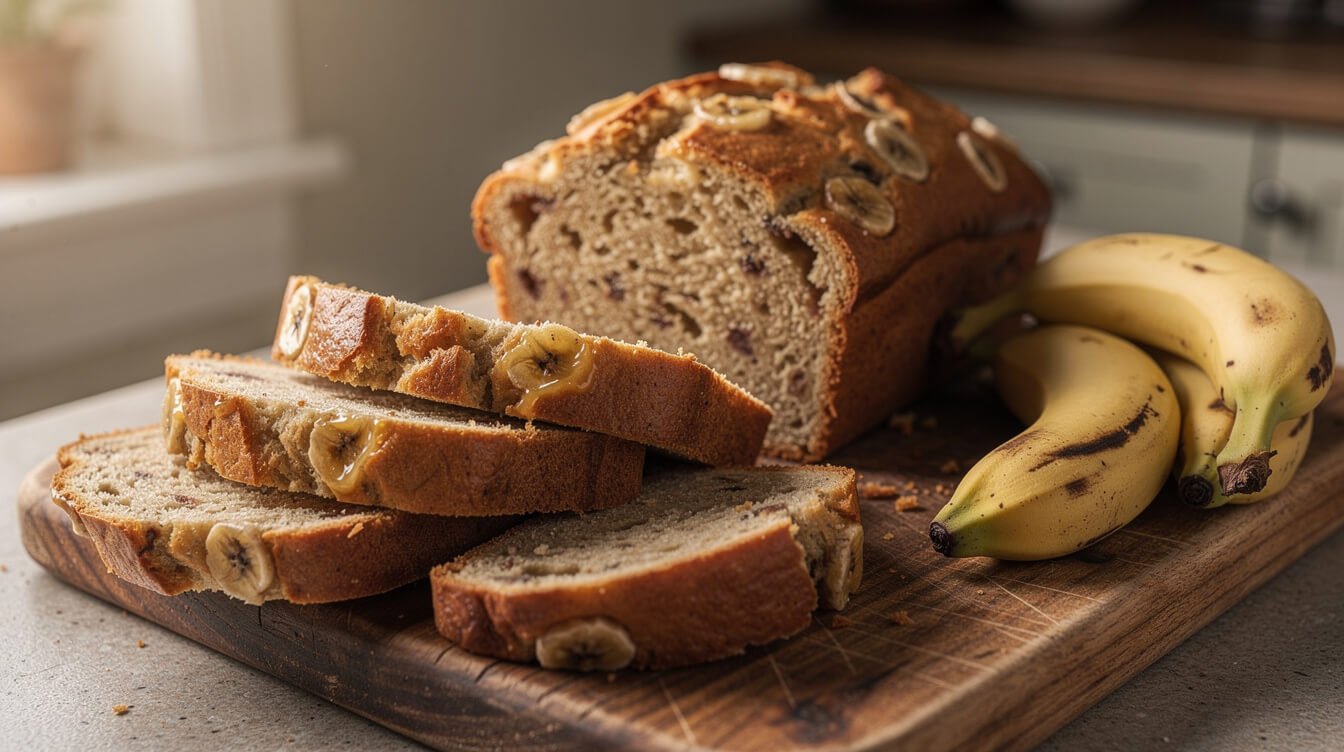
Easy Moist Banana Bread Recipe — the Doneness Test That Actually Works
If you’ve ever pulled a banana bread out of the oven, watched the toothpick come out clean, sliced into it anyway, and found a wet, gummy center staring back at you — you’re not alone, and you’re not doing anything wrong. This easy moist banana bread recipe fixes that exact problem: a genuinely tender, moist crumb from edge to edge, plus the doneness test that actually tells you when it’s done. (The toothpick, it turns out, can lie to you.)
Here’s the full recipe, the ingredients that build real moisture, and the one test that will save your next loaf from coming out underbaked in the middle.
This isn’t a stripped-down, minimalist version of banana bread — it’s the classic buttery loaf, the kind with a golden crackled top and a crumb that’s soft enough to eat plain but sturdy enough to hold mix-ins if you want them. Nothing here requires special equipment beyond a loaf pan and two mixing bowls, and you likely already have every ingredient in the pantry. What makes this version worth bookmarking isn’t a secret ingredient — it’s a doneness test most recipes skip entirely, and it’s the difference between a loaf you’re proud of and one you quietly hope nobody notices the middle of.
What makes an easy moist banana bread recipe actually moist (not underbaked)
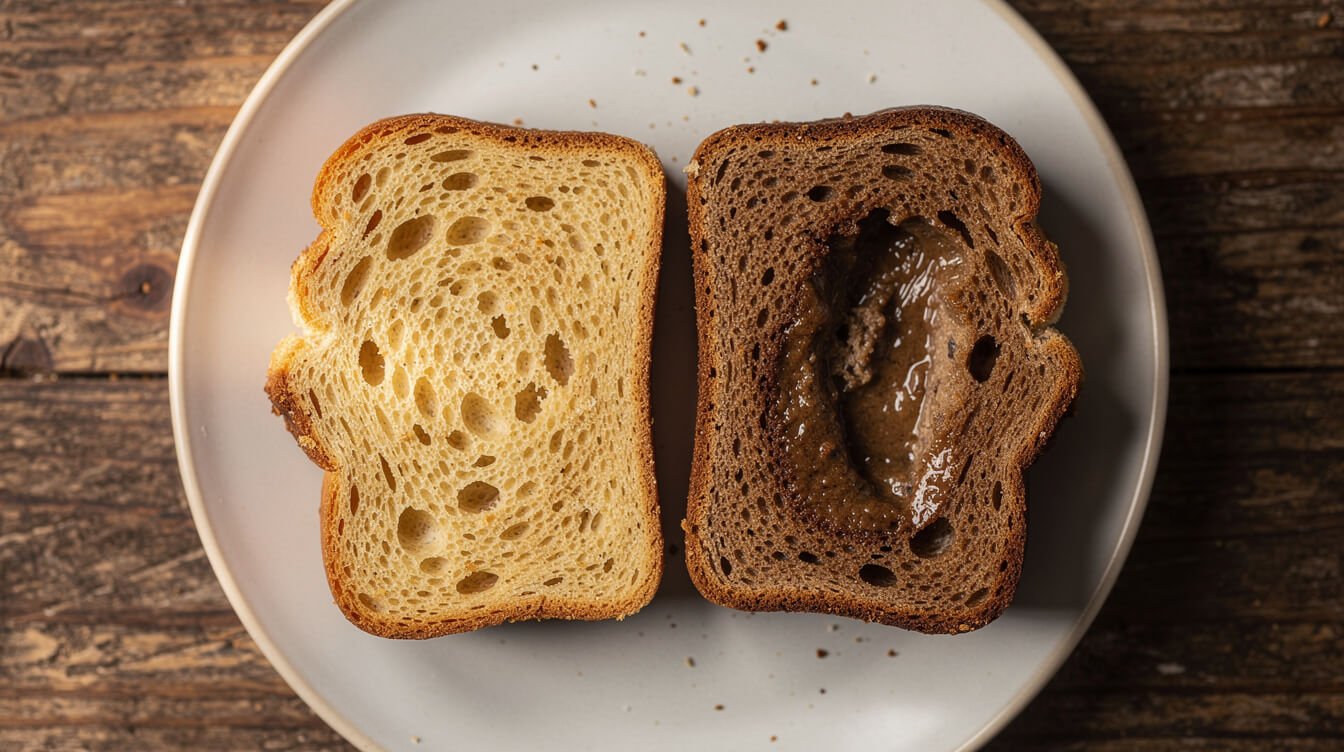
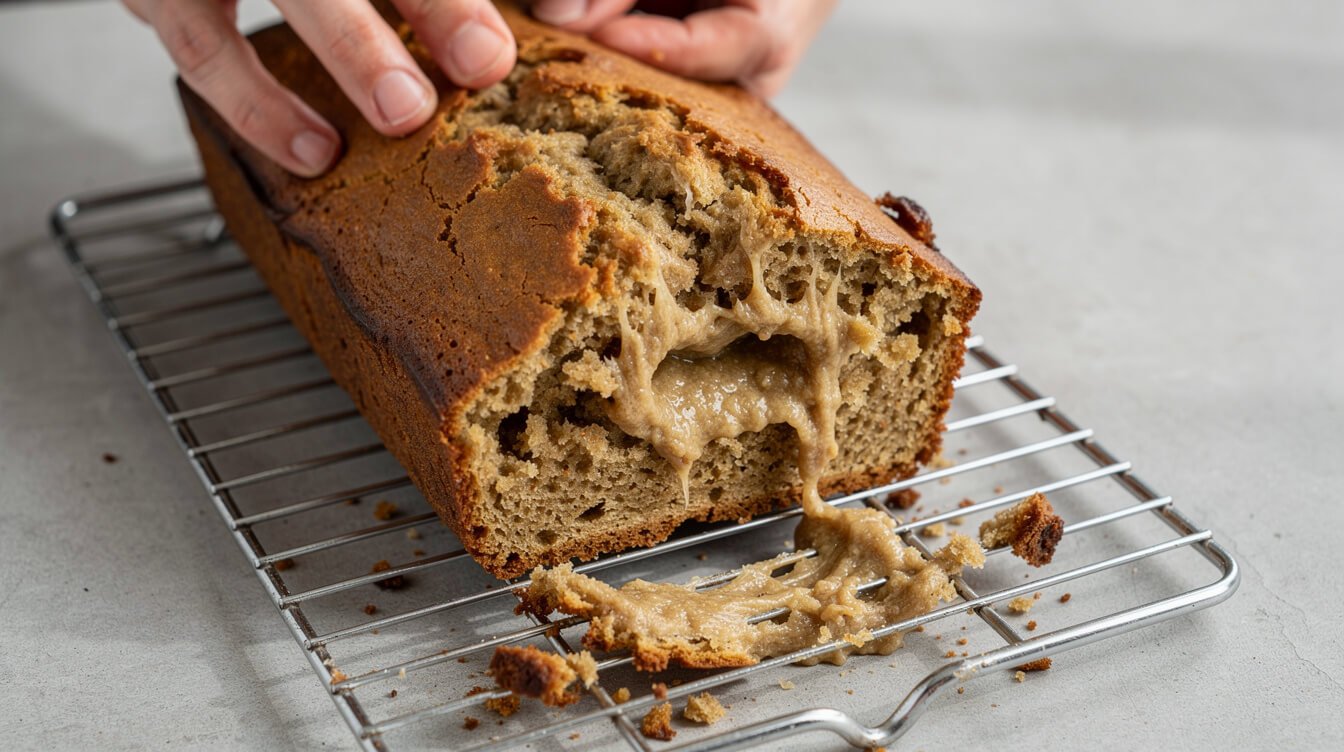
“Moist” and “underbaked” look almost identical if you’re not sure what you’re looking for — that’s the whole problem. A properly moist crumb is soft, dense in a good way, and holds together when you slice it. An underbaked center is heavier, slightly shiny, and it clings to the knife instead of releasing cleanly. The bread hasn’t finished setting; it’s still raw batter wearing a baked crust.
Banana bread is more prone to this mix-up than most quick breads because mashed banana adds a lot of extra liquid to the batter. That wet base means the middle of the loaf takes noticeably longer to set than the edges, so a toothpick pulled from an inch off-center can come out clean while the true center is still wet. It’s not that the toothpick test is wrong — it’s that banana bread needs a more careful version of it, which we’ll get to in a few minutes.
The good news: once you know the difference, fixing it is straightforward. It’s mostly about where you check for doneness and how long you let the loaf rest before you cut it — not a completely different recipe.
It also helps to know that “moist” isn’t a texture you’re chasing by accident — it’s built into the recipe on purpose, through specific ingredients and ratios. A loaf that’s genuinely moist stays that way for days on the counter; a loaf that was pulled early might taste fine warm, straight out of the oven, and then turn gummy and dense by the time it’s fully cooled, because it never actually finished baking in the first place. That’s the trap: warm banana bread forgives a lot. Cooled banana bread doesn’t.
The ingredients that build real moisture
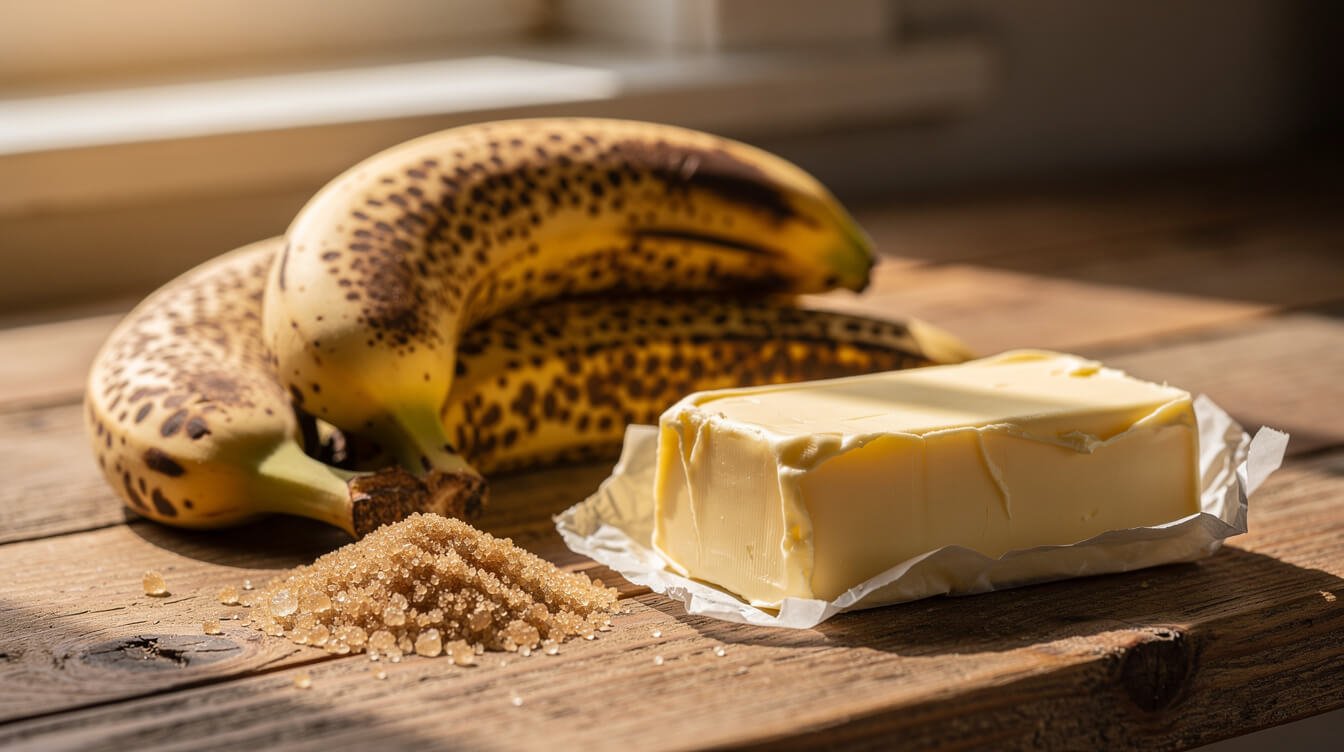
Moisture in banana bread comes from three places, and getting all three right matters more than any fancy technique.
Ripe bananas. You want bananas that are heavily spotted, almost more brown than yellow. Under-ripe bananas are starchy and don’t mash down into the wet, sweet purée the batter needs — you’ll end up with a drier loaf even if you nail everything else. If your bananas aren’t there yet, roast them whole at 300°F (150°C) for 15–20 minutes until the skins are black; they’ll soften and sweeten almost as well as if they’d ripened on the counter for another week.
Melted butter, not oil. Oil produces a technically moist crumb, but butter gives you moisture with flavor and a slightly richer texture that holds up better on day two and three. Melt it rather than creaming it — this is a quick bread, not a cake, and you don’t need to trap air in the batter.
Brown sugar over white. Brown sugar carries molasses, and molasses is hygroscopic — it holds onto water. Swapping even half the sugar in a recipe from white to brown noticeably extends how long the loaf stays soft. Zero downside here: it’s a flavor upgrade and a moisture upgrade in one move.
One more thing worth saying plainly: don’t skip the egg for a “healthier” version or double up on banana to compensate. That’s exactly the kind of substitution that throws off the wet-to-dry ratio and lands you back in gummy-center territory.
Flour, measured correctly. This one surprises people: too much flour is one of the sneakiest causes of a dry, dense loaf that then gets over-baked to compensate. If you scoop the measuring cup straight into the flour bag, you can easily pack in 20–25% more flour than the recipe intends. Spoon the flour into the cup instead, then level it off with the back of a knife — or better, weigh it if your kitchen scale is handy (1 1/2 cups is roughly 190 grams). It’s a five-second habit that fixes a mistake most people don’t even know they’re making.
The recipe: step by step
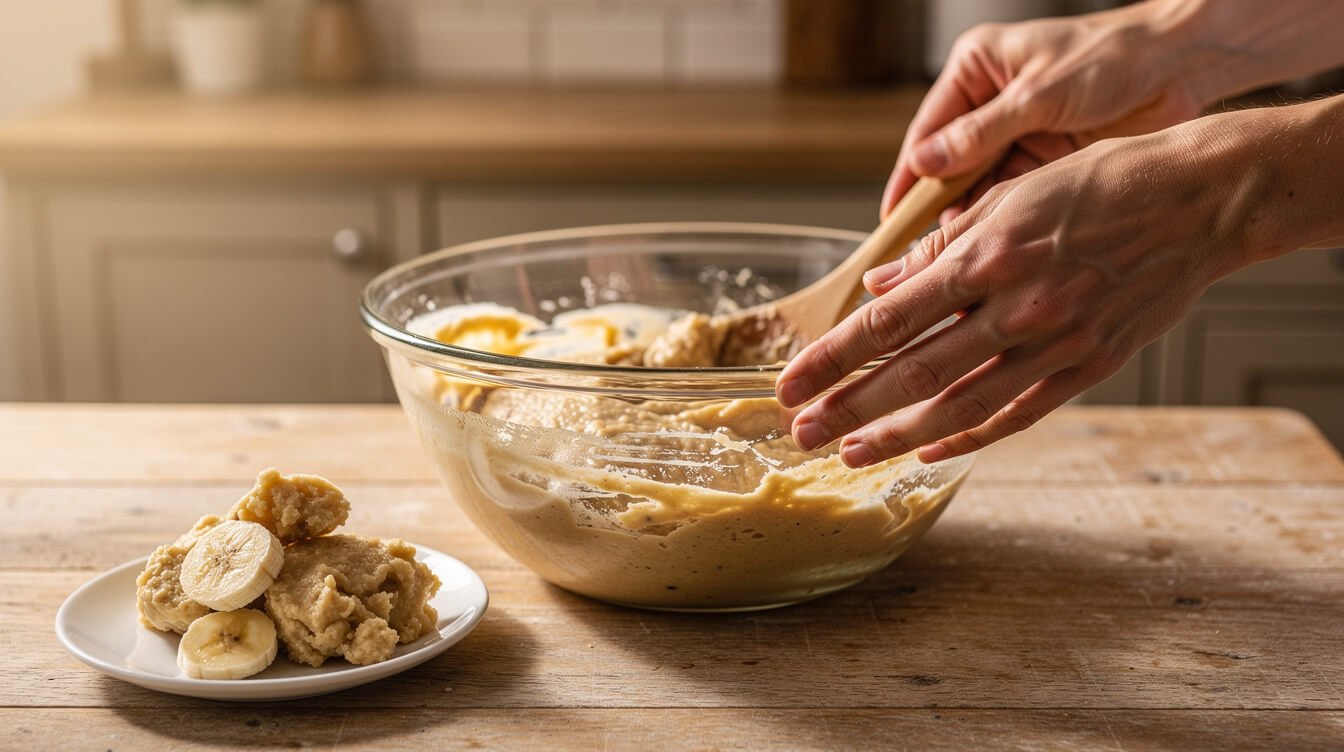
Makes: one 9×5-inch loaf (about 10 slices) | Prep: 15 minutes | Bake: 55–65 minutes
Ingredients
- 3 large very ripe bananas, mashed (about 1 1/3 cups)
- 1/2 cup unsalted butter, melted and slightly cooled
- 3/4 cup brown sugar, packed
- 1 large egg, room temperature
- 1 teaspoon vanilla extract
- 1 1/2 cups all-purpose flour
- 1 teaspoon baking soda
- 1/2 teaspoon salt
- 1/2 teaspoon ground cinnamon (optional)
Method
- Preheat the oven to 350°F (175°C) — a full preheat, not a “close enough” one. Grease a 9×5-inch loaf pan or line it with parchment.
- In a large bowl, whisk the mashed banana, melted butter, brown sugar, egg, and vanilla until smooth and glossy.
- In a separate bowl, whisk the flour, baking soda, salt, and cinnamon if using.
- Add the dry ingredients to the wet ingredients and fold together with a spatula just until no dry streaks remain. A few small lumps are fine — stop before the batter looks smooth and elastic.
- Pour the batter into the prepared pan and smooth the top. If you’re adding mix-ins (more on that below), fold them in now.
- Bake for 55–65 minutes, checking doneness the way we cover in the next section rather than by time alone — ovens and pan materials vary enough that time is only ever a starting estimate.
- Cool the loaf in the pan for 10 minutes, then turn it out onto a wire rack and let it cool for at least 30 minutes more before slicing. This resting time is doing real work: the center keeps setting as it cools.
The doneness test that actually works
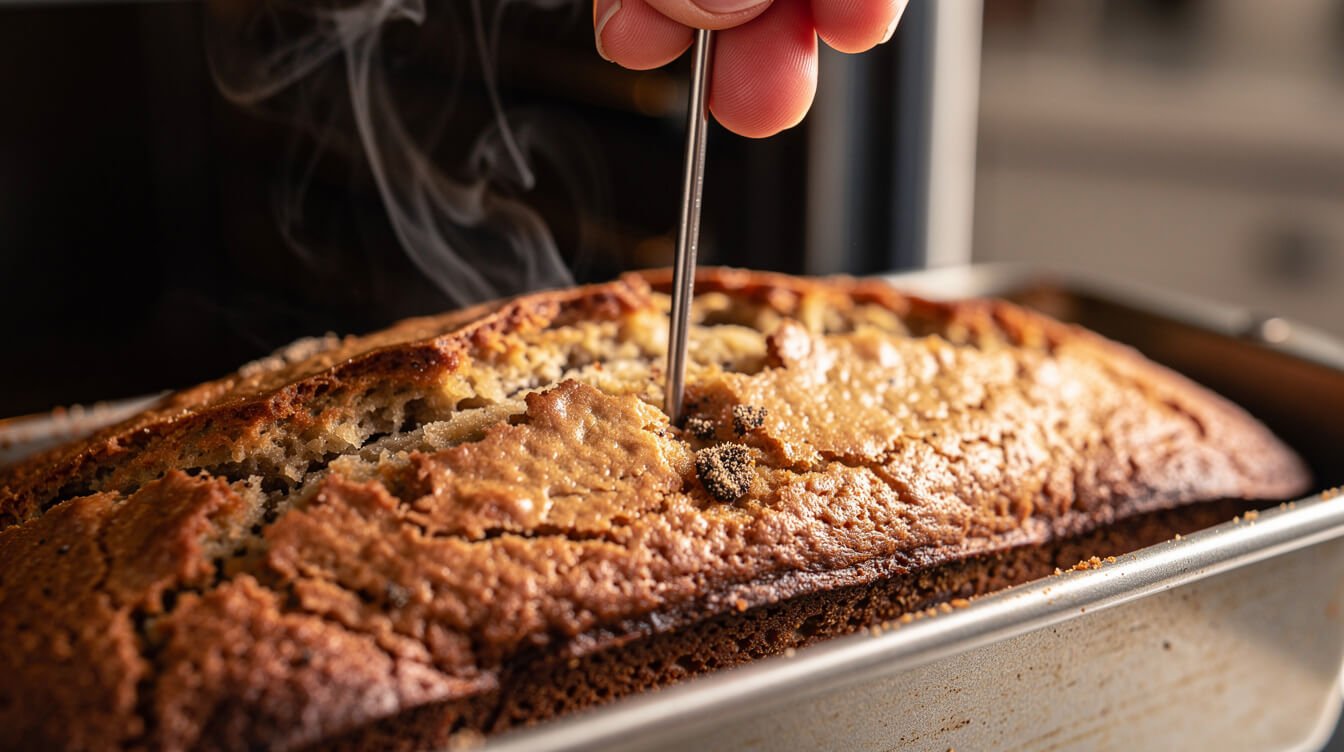
Here’s the fix for the toothpick problem: check the actual center of the loaf, not an inch off to the side, and check it twice, a couple of minutes apart, once you’re in the target window. Insert a thin skewer or toothpick straight down into the deepest part of the loaf. You’re looking for a few moist crumbs clinging to it — that’s normal and good. Wet batter clinging to the pick means it needs more time.
If you want a test that doesn’t rely on interpretation at all, use an instant-read thermometer. Fully baked quick breads like banana bread are done when the center reads 200–205°F (93–96°C). That’s a reliable, unambiguous number — no guessing about what “a few moist crumbs” looks like versus wet batter. If you bake banana bread often, a $10 instant-read thermometer is one of the cheapest ways to stop the gummy-center problem for good.
One more visual cue: a fully baked loaf pulls slightly away from the sides of the pan and the center dome springs back gently when you press it, rather than leaving a dent. If it dents and stays dented, give it another 5–8 minutes and test again.
From the Eat Cafe kitchen
One good recipe a week, straight to your inbox
The recipe we're actually cooking this week, plus the one tip that saves it when it goes sideways. No spam. Unsubscribe anytime.
Common mistakes that turn moist into underbaked
Overmixing the batter. Working the batter too long develops gluten in the flour, which makes the loaf denser and, confusingly, can make an underbaked center even harder to spot because the whole loaf is already heavy. Fold just until the flour disappears.
Using a pan that’s too small. A deeper, narrower loaf than the recipe expects means a longer bake time for the center to catch up to the edges. If your pan runs smaller than 9×5, tent the loaf loosely with foil after the top is golden so the outside doesn’t overbake while the middle finishes.
Skipping the preheat. Sliding the pan into an oven that hasn’t hit temperature yet means the loaf spends its first several minutes rising slowly at the wrong temperature, which throws off both the total time and how evenly it bakes.
Cutting into it too soon. This is the most common one. A loaf can look and even test done at the 10-minute cooling mark and still firm up considerably in the next 20 minutes as it finishes setting. Impatience is the number one cause of a “gummy” slice from a loaf that was actually baked through.
Using bananas that are too wet. Very dark, almost-liquefying bananas are great for flavor but can add more liquid than the recipe accounts for, especially if you’re using more than the recipe calls for “to use them up.” If your mashed bananas look more like a thin purée than a thick mash, stir in an extra tablespoon of flour to bring the batter back into balance.
How to keep it moist for days
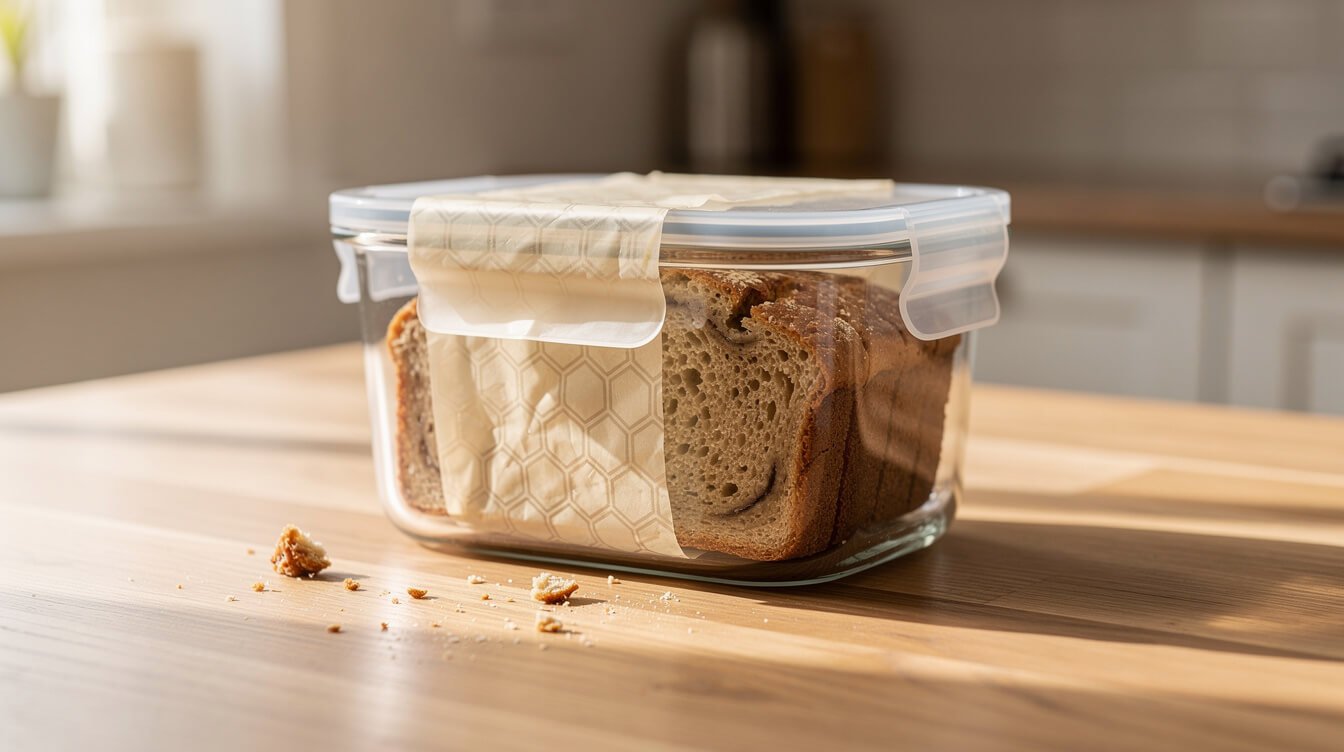
Once it’s fully cooled, wrap the loaf tightly in plastic wrap or store it in an airtight container at room temperature — it’ll stay good for about 3 to 4 days. Don’t refrigerate it; the fridge actually dries banana bread out faster than the counter does.
For longer storage, banana bread freezes beautifully. Wrap the whole loaf or individual slices tightly and freeze for up to 3 months. Thaw slices at room temperature for about 20 minutes, or give them a quick 15-second zap in the microwave straight from frozen — it comes back tasting close to fresh-baked.
If you like a little extra moisture insurance, tuck a piece of parchment paper between the bread and the wrap; it keeps condensation from making the crust soggy without trapping too much moisture out.
Mix-in ideas worth trying
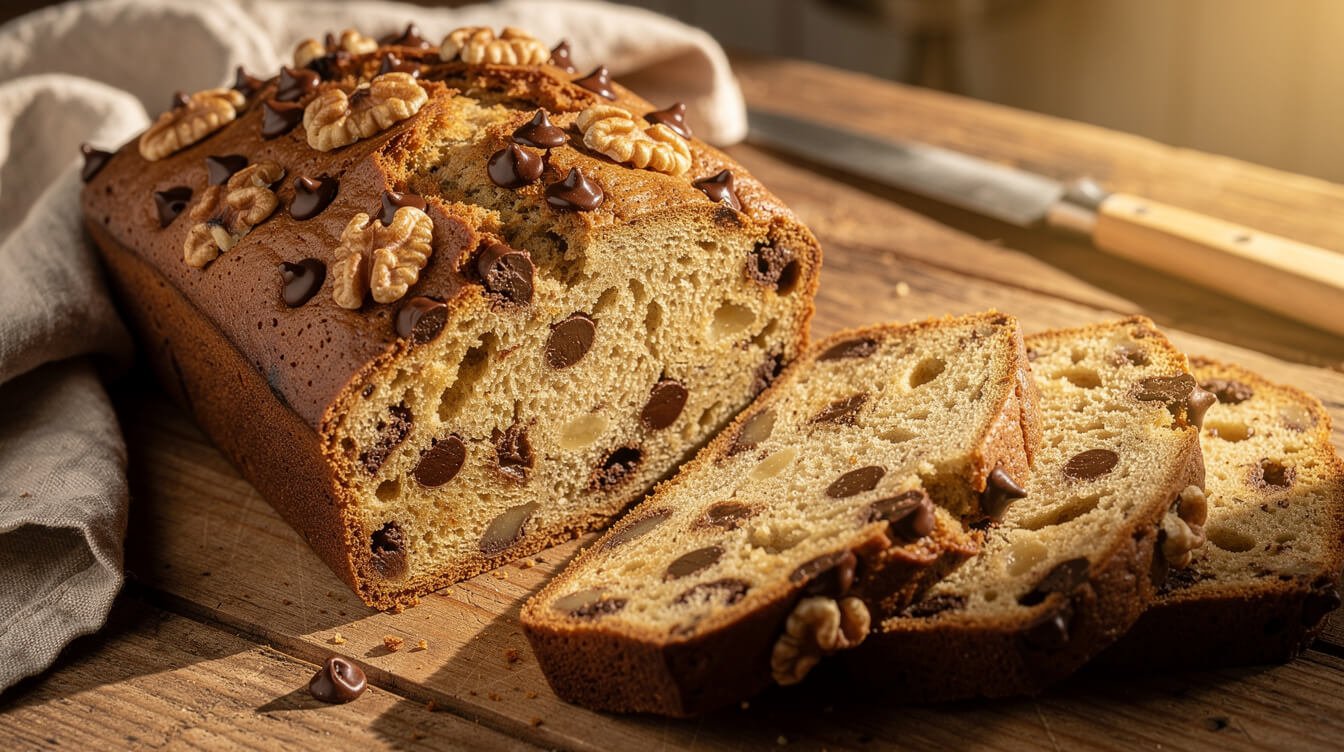
This recipe is a great base for add-ins — just keep the total to about 3/4 cup so you don’t throw off the wet-to-dry balance and end up back in underbaked territory.
- Chocolate chips: semi-sweet or dark, folded in right before the batter goes into the pan.
- Toasted walnuts or pecans: toast them first for a few minutes in a dry pan — it makes a real difference in flavor.
- Cinnamon-sugar swirl: mix 2 tablespoons sugar with 1 teaspoon cinnamon and swirl it through the batter with a knife before baking.
- Shredded coconut: unsweetened, folded in with a handful of chopped macadamia nuts if you want a tropical variation.
Frequently asked questions
Can I use frozen bananas?
Yes — in fact, very ripe bananas freeze well specifically for this. Thaw them fully first and drain off a tablespoon or two of the liquid that separates out, or your batter will end up too wet.
Why did my banana bread sink in the middle?
Usually one of two things: the oven door was opened too early (before the structure had set), or the loaf was pulled out before the center was actually done and it collapsed as it cooled. Check the internal temperature next time rather than relying on time alone.
Can I substitute oil for the butter?
You can, at a 1:1 swap — the loaf will still be moist, just a little less rich in flavor. Butter is the better pick if you want the loaf to taste as good on day three as it does fresh.
How ripe should the bananas really be?
Mostly brown-spotted, verging on more brown than yellow. If they still have green on the stem, they’re not ready — give them a few more days or use the oven-roasting shortcut above.
Can I double this recipe?
Yes, in two separate loaf pans rather than one large one — a single oversized loaf runs into the exact underbaked-center problem this whole post is about, just at a bigger scale.
My banana bread is moist but seems dense — is that normal?
A little denseness is completely normal for banana bread; it’s a heavier batter than most cakes by design. What you don’t want is gumminess or a wet sheen when you slice it. If it’s dense but the crumb looks matte and holds its shape, it’s simply a well-baked, hearty loaf.
What size loaf pan works best?
A standard 9×5-inch pan is the sweet spot for this recipe’s bake time. An 8×4-inch pan will work too, but expect to add roughly 8–10 minutes to the bake and check the center a little more carefully, since the loaf will sit taller and take longer to set all the way through.

From the Eat Cafe shop
100 Essential Tools Every Chef Has in Their Kitchen eBook and Guide
$7.99
See it in the shopFinal thoughts on this easy moist banana bread recipe
The difference between a banana bread that’s moist all the way through and one with a gummy surprise in the middle usually comes down to two small habits: checking the true center of the loaf instead of an inch off to the side, and giving it the full resting time before you cut in. Get those right, along with ripe bananas and a little brown sugar, and you’ll have a loaf worth making on repeat.
If you liked the doneness-test approach here, you’ll probably enjoy our 4-ingredient banana bread for the minimalist version of this same loaf, or how to bake a cake that doesn’t sink, dry out, or turn dense for the same doneness logic applied to cake pans.
Save this recipe for the next time your bananas go spotty, and if you want a good weeknight-baking recipe in your inbox every so often, our newsletter is a low-key way to keep them coming.

Before you go
Want the next one?
We post a new recipe or kitchen guide every day. The best of the week lands in one short email, no life story attached.