Butter substitute in baking: pick by what you’re making, not off a list
You’re already in the kitchen. The flour is measured, the oven is heating, and there’s a quarter stick of butter in the fridge door where there should have been two. So you go looking for a butter substitute in baking, and every list you find hands you the same ten things in the same flat order — oil, applesauce, yogurt, mashed banana — with a ratio beside each one and no hint of which ones will actually survive the thing you’re making.
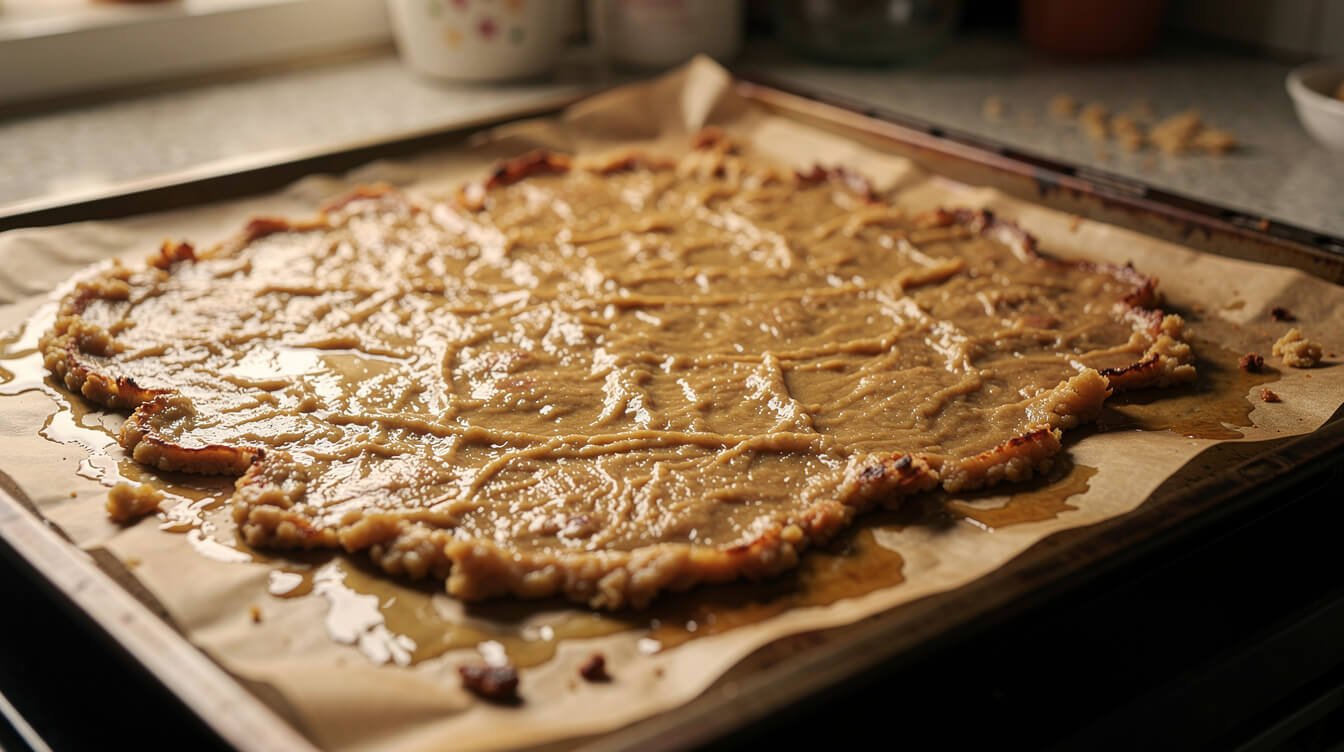
Here’s what those lists leave out. Butter doesn’t do one job in baking. It does three completely different ones, and the swap that’s perfect for one of them will wreck the other two. Oil is a genuinely good stand-in for melted butter in banana bread. Put that same oil into a cookie recipe that opens with “cream the butter and sugar,” and you’ll pull one wide, greasy sheet of cookie out of the oven.
So let’s sort this the useful way — not by what the swap is, but by what you’re baking. One question up front tells you which group you’re in. After that, the choice is easy, and the ratios are at the bottom. Pick your butter substitute in baking the way the recipe would — by job, not off a list.
First, what is the butter actually doing in your recipe?
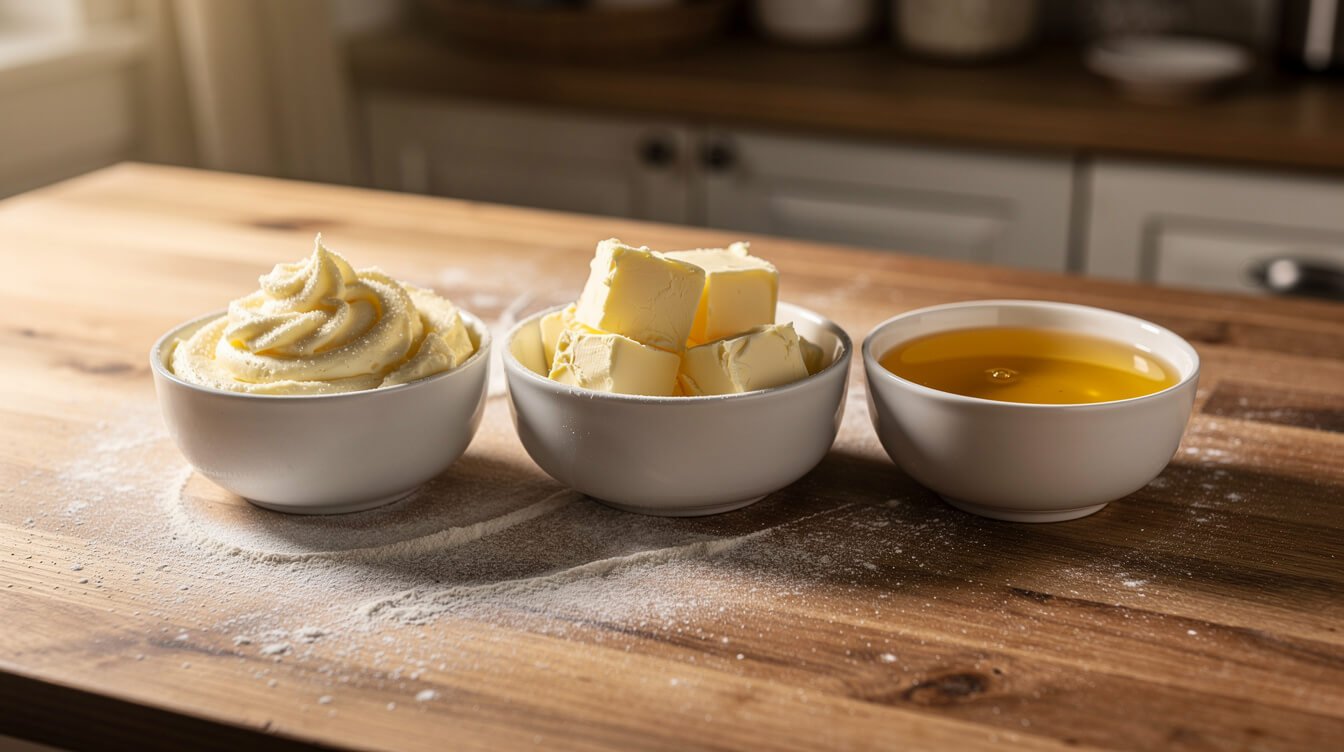
Butter is about 80% fat, 16 to 18% water, and a small remainder of milk solids. That mix is why it can do three jobs that no single swap can cover at once.
Job one: solid fat that gets creamed (air)
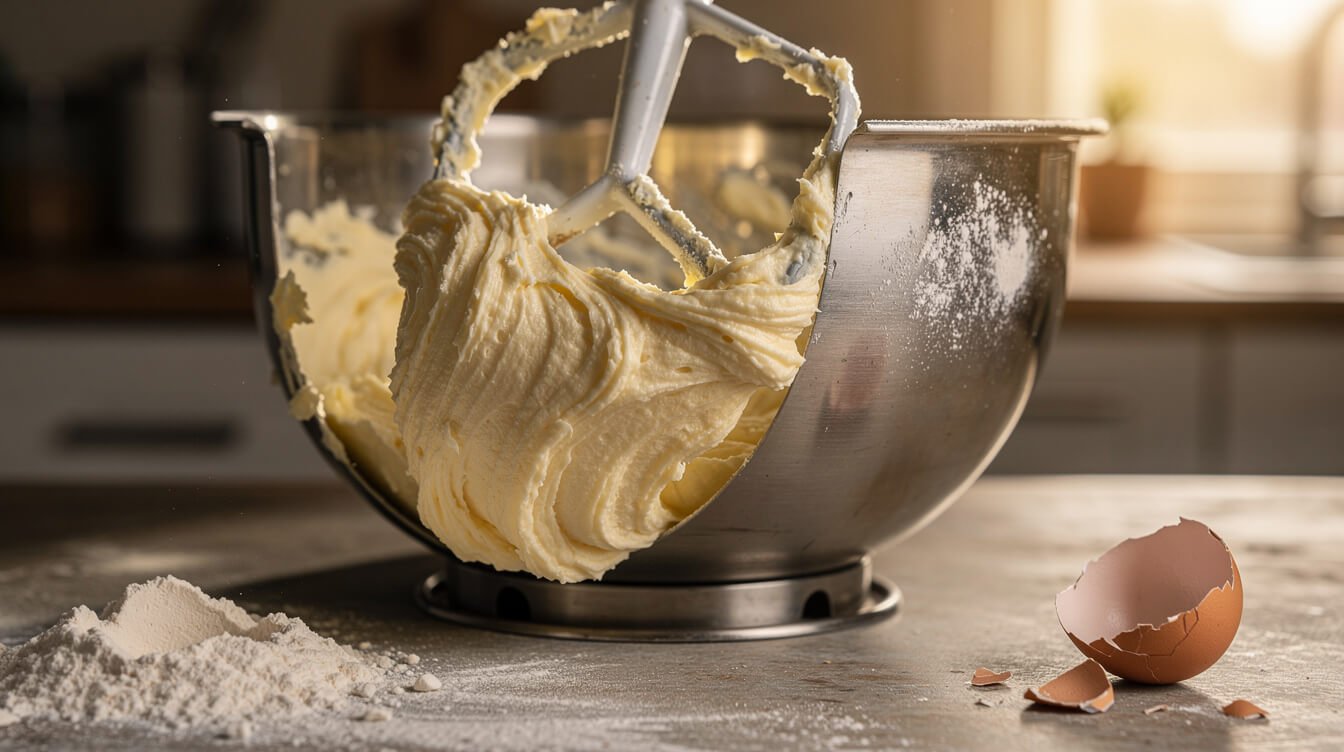
This is cookies, butter cakes, pound cake, shortbread. When you beat room-temperature butter with sugar, the sugar crystals act like tiny blades, dragging air pockets into the soft fat. That’s the part people miss: baking powder and baking soda don’t create bubbles, they only inflate bubbles that are already there. So if your fat can’t hold air in the first place, the leavening has nothing to work with, and the structure never happens.
Job two: cold solid fat that gets cut in (layers)
This is biscuits, scones, pie crust, and anything described as flaky. You leave the fat in distinct cold pieces through the dough. In the oven those pieces melt and the water inside them flashes to steam, and the steam pries the dough apart into layers. No discrete pieces, no steam pockets, no flakes.
Job three: fat and moisture, just stirred in (tenderness)
This is muffins, quick breads, brownies, most bar cookies — anything where the butter is melted or whisked into the wet ingredients. Here the fat coats the flour proteins so less gluten forms, which is what makes the crumb tender rather than bready. There’s no air to protect and no layers to build, so this is the forgiving category.
Now the question that decides everything. Look at the first step of your recipe:
“Cream the butter and sugar” → job one. You need a solid fat.
“Cut in cold butter” or “work in butter until pea-sized” → job two. You need a cold solid fat.
“Melt the butter” or “whisk the wet ingredients” → job three. Almost anything works.
One more thing to expect across all three: butter browns because of its milk solids. Shortening and plain oils have none, so whatever you bake will come out paler than the photo. That’s cosmetic, not a failure.
Butter substitute in baking for cookies and creamed cakes
If your recipe starts with creaming, you need something that is solid and pliable at room temperature. That’s the whole requirement. Here’s what fits, best first.
- Stick margarine or baking sticks (80% fat or more) — 1:1. The closest behavior to butter, because the composition is close to butter. It creams, it holds air, it spreads about the same. Sticks only, never the tub.
- Vegan butter blocks and sticks — 1:1. Miyoko’s, plant-butter sticks, Earth Balance sticks. These cream properly and taste the most like butter of anything on this list. Water content varies by brand, so some spread a little more; chill the dough 30 minutes and you’ll never notice.
- Shortening — 1:1 by volume. Shortening melts around 117°F, where butter gives up at about 90 to 95°F. The dough sets before the fat melts, so cookies stay taller, softer, and rounder, and spread less. No butter flavor and no browning. The classic move is half butter, half shortening — you keep the flavor and borrow the height.
- Solid coconut oil (refined, for neutral flavor) — 1:1, measured solid. It creams, though it holds less air than butter. It melts at about 76°F, so a warm kitchen will defeat you — chill the bowl, the fat, and the dough. It also sets very firm when cold, which gives cookies a shortbread-like snap. Some people love that.
- Lard — 1:1. It works and it creams, but it leans faintly savory. Save it for crust, where it’s unbeatable.
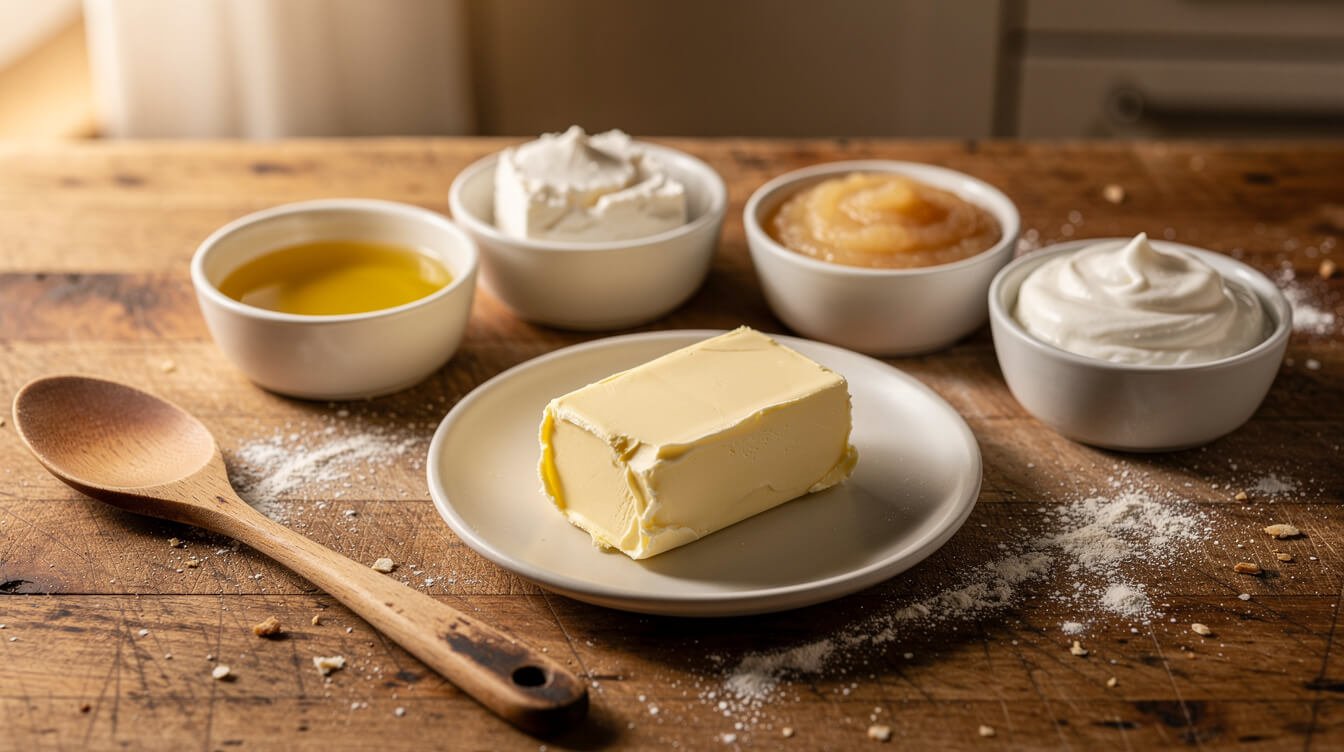
What does not work here, no matter what the listicles say: oil, applesauce, mashed banana, yogurt, sour cream, avocado, pumpkin purée. Every one of those is liquid or wet purée. There is nothing to cream, so there is no air, and you’ll get the single greasy sheet. If your cookies have gone wrong before, our breakdown of why chocolate chip cookies go flat walks through the same physics from the other direction.
One honest note on shortening, since nobody mentions it: butter is roughly 80% fat and 18% water, while shortening is pure fat. Swapping 1:1 by volume gives you slightly more fat and no water at all, which usually just reads as richer. If a dough comes out stiff and dry, use ⅞ cup shortening plus 3 tablespoons of water for each cup of butter and you’ve matched the original almost exactly. Creamed butter cakes are the fussiest of the bunch — if that’s what you’re baking, our guide to baking a cake covers the mixing order that keeps all that air in.
Biscuits, scones, and pie crust: cold solid fat, nothing else
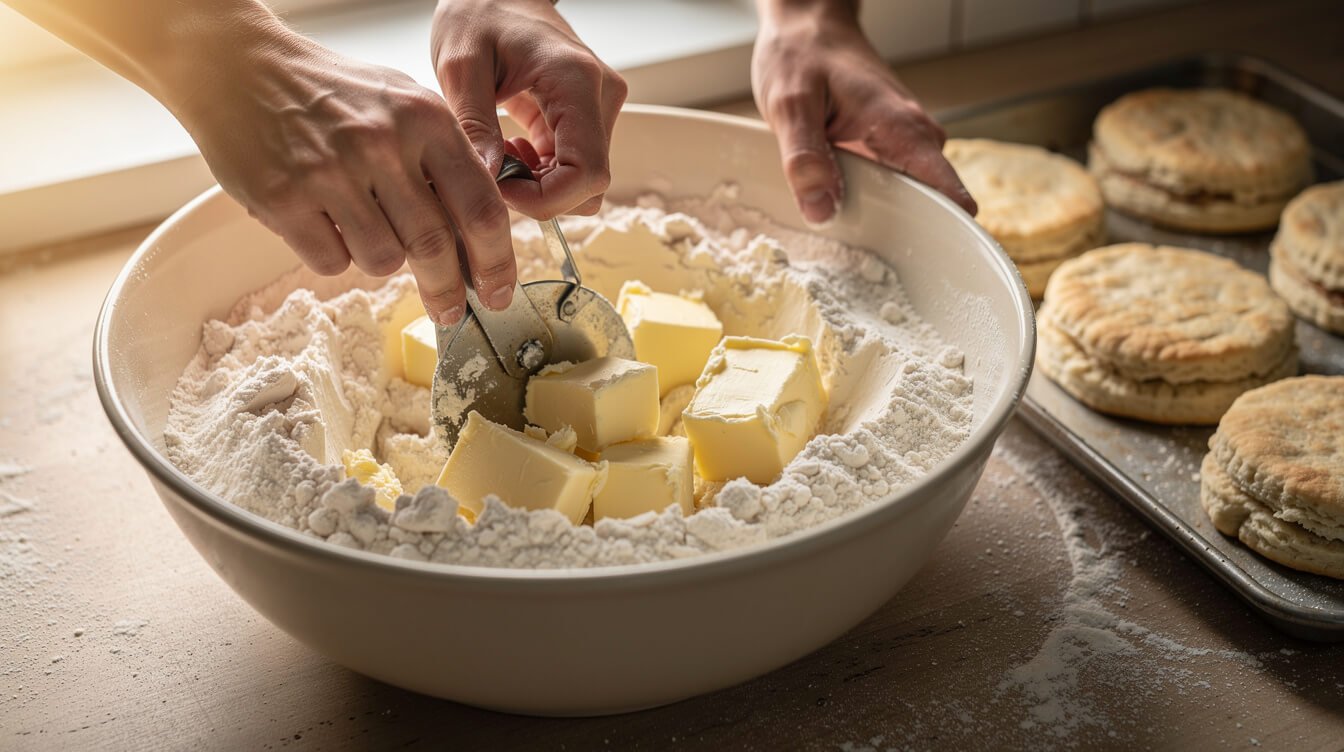
This is the strictest category for a butter substitute in baking, and the shortest list. You need a fat that stays in solid pieces until it hits the oven heat. That rules out every liquid, and it rules out anything that has gone soft on the counter.
- Shortening — 1:1. The most forgiving choice for a beginner, because it softens far more slowly than butter. You get a reliably flaky, tender crust with no flavor of its own.
- Lard — 1:1. The flakiest crust there is, with a faint savory note that’s lovely in a pot pie or a hand pie and perfectly fine in a fruit one.
- Vegan butter block — 1:1, frozen and grated. The closest to real butter flavor. It’s softer than shortening, so freeze it solid first.
The technique that saves all three: freeze the fat, then grate it on a box grater straight into the flour. You get evenly sized cold shreds in about twenty seconds, with no warm hands involved. Toss, don’t rub, and stop while the pieces are still pea-sized and visible.
Two adjustments. Shortening and lard have no water, while butter brought about 18% of its weight in water to the party, so add 1 to 2 teaspoons of extra ice water per cup of flour and let the dough rest 20 minutes before you judge it. And chill the shaped dough 30 minutes before it goes in the oven, every time.
About oil here: it can’t make a flaky crust, and that isn’t an opinion. Oil is already liquid, so it coats the flour instead of sitting in pieces, and there are no steam pockets to make layers. What you get is a sandy, crumbly, press-in-the-pan crust. That’s a real thing and it’s genuinely good for a quick tart shell or a crumb base — it’s just a different pastry, so plan for it rather than being disappointed by it.
Muffins, quick bread, and brownies: the forgiving category
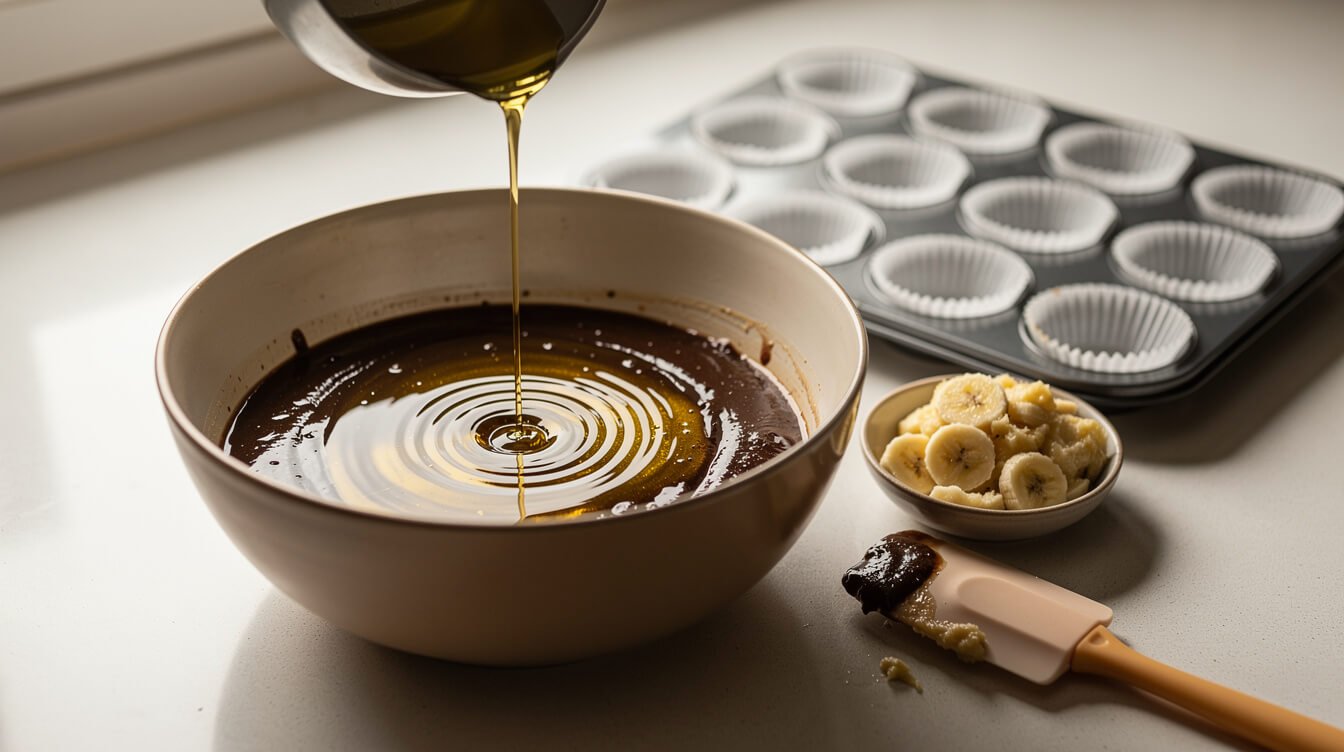
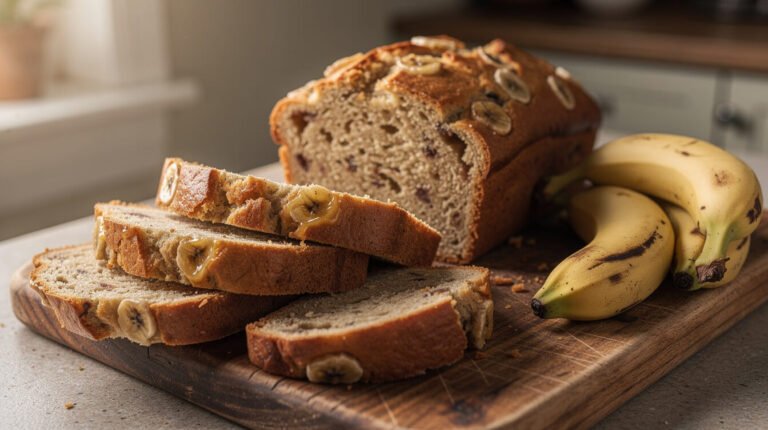
Here the butter is only fat and moisture, so you have real freedom. This is the one group where almost any butter substitute in baking will give you something good. In some cases the swap is actually the better bake — oil stays liquid at room temperature while butter sets firm, which is why oil-based banana bread is still soft on day three.
- Neutral oil (canola, vegetable, grapeseed) — ¾ cup per cup of butter. You’re matching fat to fat, and butter was only 80% fat. Add a tablespoon or two of milk or water to replace the moisture butter would have brought.
- Olive oil — ¾ cup per cup. Excellent with chocolate, citrus, and olive oil cake. Use a mild or light one; a grassy extra-virgin reads savory in a sweet crumb.
- Melted coconut oil — ¾ cup to 1:1. Refined is neutral; unrefined leaves a clear coconut note, which is either the point or a problem.
- Greek yogurt or sour cream — ½ cup, replacing no more than half the butter. Tangy, very tender, slightly denser. Keep real fat in for the other half.
- Applesauce, mashed banana, or pumpkin purée — ½ cup, replacing no more than half the butter. Be clear-eyed about these: they’re water and fiber, not fat. Half and half gives you a soft, moist, slightly spongier crumb, and that’s a fair trade. Replacing all of it is exactly where gummy, rubbery muffins come from.
- Buttermilk — ½ cup for half the butter, and reduce the other liquid in the recipe by the same amount.
- Nut butter — ½ cup nut butter plus ¼ cup oil per cup of butter. Dense, rich, obviously nutty. Great in brownies.
Quick breads are also where a swap is easiest to test, because the gear list is a bowl, a whisk, and a loaf pan — no mixer required. Our 4-ingredient banana bread and this easy moist banana bread both take an oil swap without changing anything else. If you’re still filling out your kitchen, our 100 Essential Tools Every Chef Has in Their Kitchen guide walks through what’s genuinely worth buying first and what can wait.
From the Eat Cafe kitchen
One good recipe a week, straight to your inbox
The recipe we're actually cooking this week, plus the one tip that saves it when it goes sideways. No spam. Unsubscribe anytime.
Butter substitute in baking: the ratios, at a glance
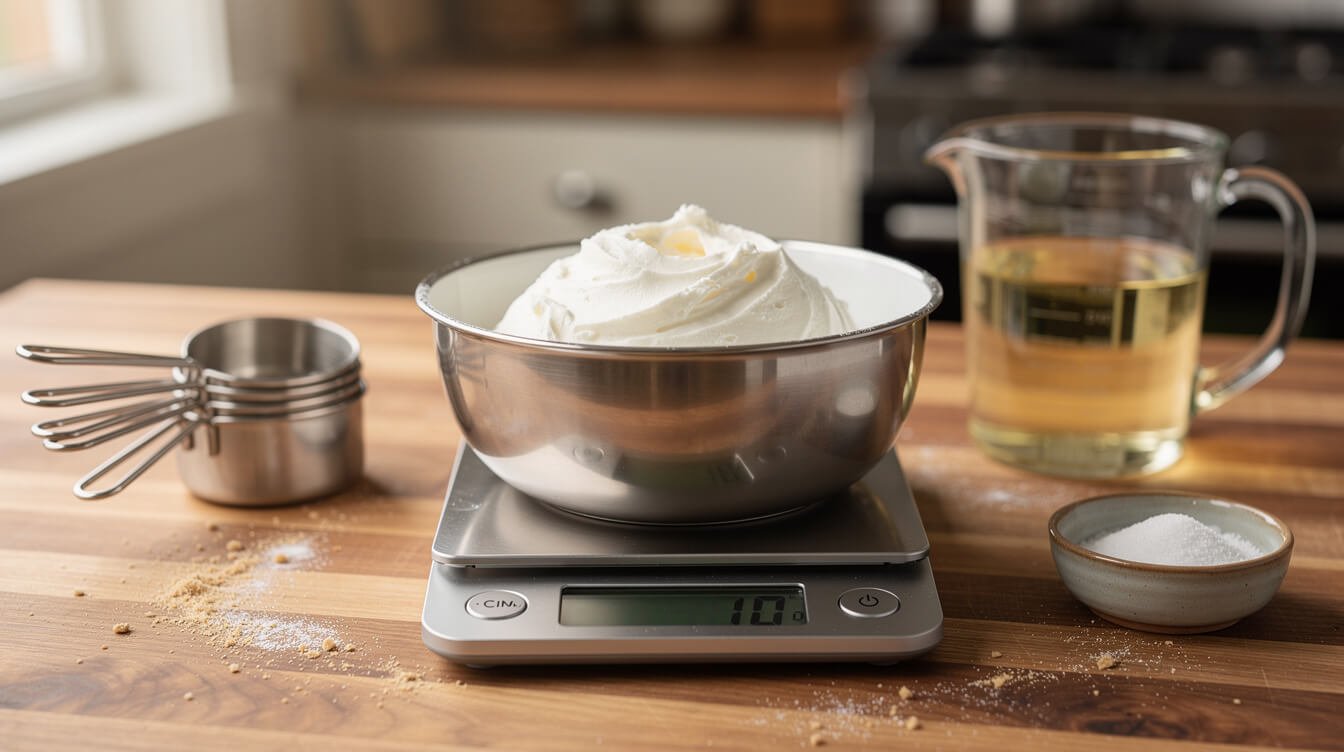
Everything above, in one place. All amounts replace 1 cup of butter (2 sticks, 227 g). The last column is the part the other lists skip — which of the three jobs the swap can actually do.
| Swap | Use this much | Creamed | Cut in | Stirred |
|---|---|---|---|---|
| Stick margarine (80%+ fat) | 1 cup / 227 g | Yes | Yes | Yes |
| Vegan butter block or sticks | 1 cup / 227 g | Yes | Yes, frozen | Yes |
| Shortening | 1 cup / ~205 g | Yes | Yes | Yes |
| Lard | 1 cup / ~205 g | Yes | Best in class | Yes |
| Coconut oil, solid | 1 cup / ~218 g | Yes, keep cold | Yes, frozen | Yes |
| Neutral oil | ¾ cup | No | No | Yes |
| Olive oil, mild | ¾ cup | No | No | Yes |
| Ghee | ⅞ cup | No | No | Yes |
| Greek yogurt | ½ cup, half the butter max | No | No | Yes |
| Sour cream | ½ cup, half the butter max | No | No | Yes |
| Buttermilk | ½ cup, cut other liquid | No | No | Yes |
| Applesauce, unsweetened | ½ cup, half the butter max | No | No | Yes |
| Mashed banana | ½ cup, half the butter max | No | No | Yes |
| Pumpkin purée | ¾ cup, half the butter max | No | No | Yes |
| Nut butter | ½ cup + ¼ cup oil | No | No | Yes |
The salt adjustment nobody mentions
Baking recipes are written for unsalted butter, and salted butter carries roughly 1.5 to 2% salt — about a quarter to a third of a teaspoon per stick. So:
- Recipe says unsalted and all you have is salted? Cut the added salt by about ¼ teaspoon per stick.
- Swapping in shortening, oil, or anything unsalted where salted butter used to be? Add about ¼ teaspoon of salt per stick. This is the single most common reason a perfectly good swap tastes flat and nobody can say why.
- Margarine and most vegan butter sticks are already salted. Check the label so you don’t double up.
Weigh solid fats if you can
Packing a measuring cup with shortening or solid coconut oil is a guess — press it in firmly versus loosely and you can be 10 to 15% apart, which is a lot of fat. A cup of butter is 227 g, and matching that on a scale takes five seconds. If you only ever use a kitchen scale for one thing, make it solid fats.

100 Essential Tools Every Chef Has in Their Kitchen
A scale, a box grater, a pastry cutter — the small things that make swaps work. Our guide runs through the 100 tools worth having, what each one is actually for, and which ones you can put off buying.
Dairy-free and lactose-free swaps that behave like butter
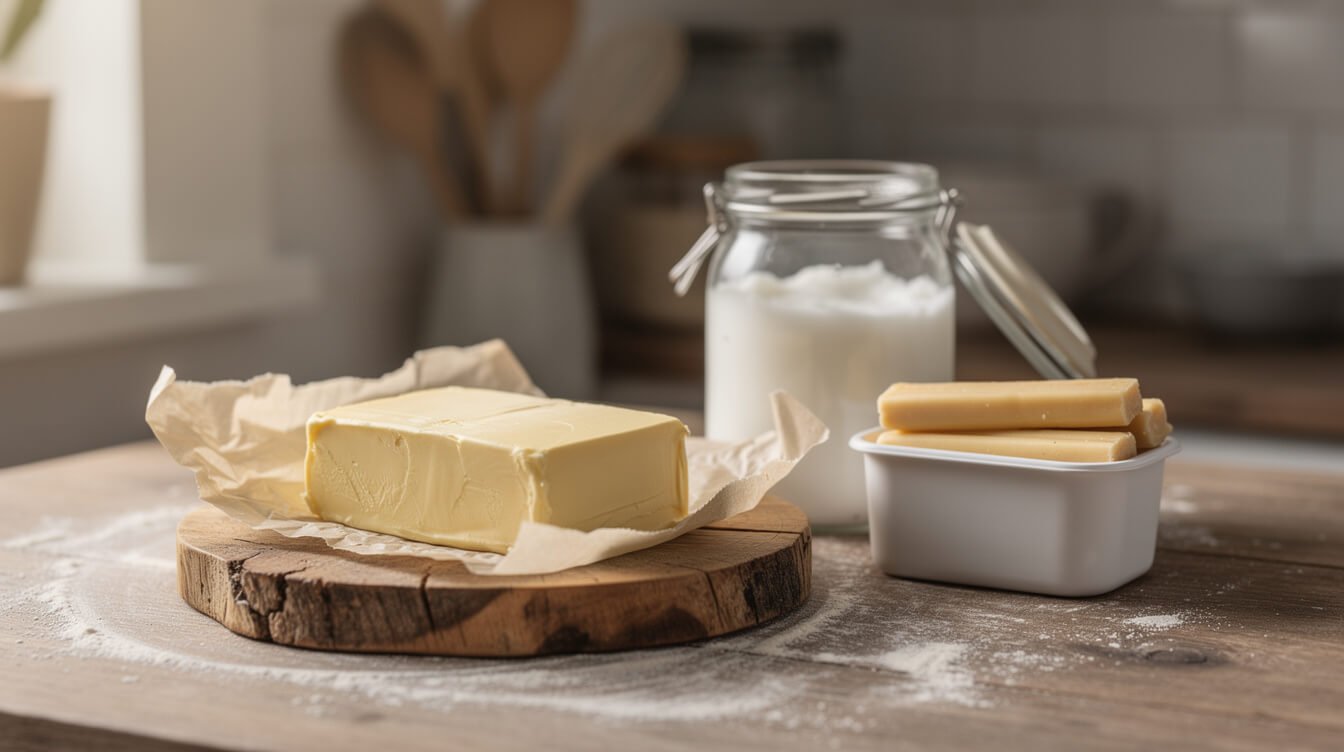
Worth separating two things that often get lumped together. Lactose intolerance is about the milk sugar. A milk allergy is about the milk protein. The baking swaps overlap a lot, but the label-reading is stricter for an allergy, so it’s worth knowing which problem you’re solving.
The best butter substitute in baking when you’re cooking around dairy is whichever one is still a solid fat. Ranked by how closely they actually behave like butter:
- Vegan butter blocks and sticks. The best of the bunch by a wide margin. They’re a real solid fat with a butter-like water content, usually salted, and they handle all three jobs at 1:1 — creaming, cutting in, and stirring.
- Refined coconut oil. Solid at cool room temperature, neutral in flavor, 1:1 measured solid. Firms up hard when chilled, so baked goods can feel brittle straight from the fridge. Let them come to room temperature.
- Shortening. Dairy-free by composition, 1:1, flaky in pastry, no flavor to work around.
- Neutral oil. Reliable, but stirred recipes only — see the table.
Two traps to name out loud.
Ghee is not a dairy-free swap. It’s butter with the water and most of the milk solids cooked off, so trace milk protein remains. In the kitchen it’s great — nutty, nearly pure fat, use about ⅞ cup per cup of butter — but it does not belong in a dairy-free bake. If you’re baking for someone with a milk allergy, read the full allergen statement on the back of the package rather than the “dairy-free” claim on the front, and follow whatever guidance that person has already been given for their allergy.
Tub spreads and “light” butter are the quiet failure. They’re whipped with water and air, and some are only 35 to 60% fat. In baking, that missing fat shows up as a flat, wet, strangely tough result, and most people blame the recipe. Check the nutrition panel: you want something close to 11 g of fat per tablespoon, which is what 80% fat looks like. If it’s well under that, keep it for toast.
Why your butter substitute went wrong (and the fix)
Nearly every butter substitute in baking failure comes down to one of seven things, and each one tells you exactly what went wrong.
Why did my cookies spread into one giant sheet?
You used a liquid or very soft fat in a recipe that wanted creaming. There was no solid structure and no trapped air, so the dough relaxed and ran the moment it warmed. Switch to a solid fat, chill the dough 30 to 60 minutes, and start on a cool baking sheet — a hot one from the last batch melts the bottoms before they set. The bakery-style cookie method leans on this same principle on purpose.
Why are my cookies domed, dry, and pale?
Shortening or coconut oil, most likely. Both set at a higher temperature than butter, so the dough firms up before the cookie can spread, and neither has milk solids to brown. Go half butter and half shortening, flatten the dough balls slightly before baking, and give them an extra minute or two of color.
Why is my cake greasy and dense with a dip in the middle?
Oil went into a creamed butter cake. Without a solid fat there was no aeration, so the baking powder had no bubbles to inflate and the crumb collapsed under its own weight while the fat pooled. Use a solid fat, or switch to a recipe written for oil in the first place — plenty of very good cakes are.
Why are my muffins rubbery or gummy?
All the butter got replaced with applesauce, banana, or yogurt. Those are water, not fat, and without enough fat to coat the flour the gluten tightens and the crumb steams instead of baking. Go back to half real fat, half purée. The same logic shows up in our walkthrough of how to fix dense banana bread.
Why are my biscuits flat and tough with no layers?
The fat was too warm, or it was liquid. Either way the pieces smeared into the flour instead of staying separate, so there was nothing to turn to steam. Freeze the fat, grate it in, stop while the pieces are pea-sized, and chill the shaped biscuits before baking.
Why does everything taste flat?
You swapped an unsalted fat in for salted butter and didn’t adjust. Add about ¼ teaspoon of salt per stick of butter the recipe called for. It’s a tiny fix and it changes everything.
Why is there a savory or soapy aftertaste in my dessert?
A grassy extra-virgin olive oil, or unrefined coconut oil, in something delicate. Both are lovely in the right bake and distracting in the wrong one. Use a mild or light olive oil and refined coconut oil when you don’t want the fat announcing itself.
The one question to remember
Forget the ranked lists. When you’re standing in front of a recipe with no butter in the house, read step one and ask what the butter was being asked to do.
If it says cream, you need a solid fat — margarine sticks, vegan butter, shortening, or cold coconut oil. If it says cut in, you need a cold solid fat and nothing else will do. If it says melt or whisk, you’re free: oil, yogurt, purée, half-and-half combinations, whatever’s in the fridge. Then check the ratio in the table, add a quarter teaspoon of salt per stick if you’ve gone from salted butter to something unsalted, and expect a slightly paler bake.
That’s genuinely the whole system for choosing a butter substitute in baking. It takes ten seconds to run, it works on a recipe you’ve never seen before, and it’s a much better tool than memorizing fifteen swaps you’ll never look up in time. Most of these substitutions are not a compromise at all — oil-based quick breads stay soft longer than butter ones, lard makes a flakier crust than butter does, and half butter and half shortening is how a lot of bakeries get cookies that are tall and chewy at the same time.
Swap with confidence, make a note of what you did on the recipe card, and go bake the thing.

Before you go
Want the next one?
We post a new recipe or kitchen guide every day. The best of the week lands in one short email, no life story attached.