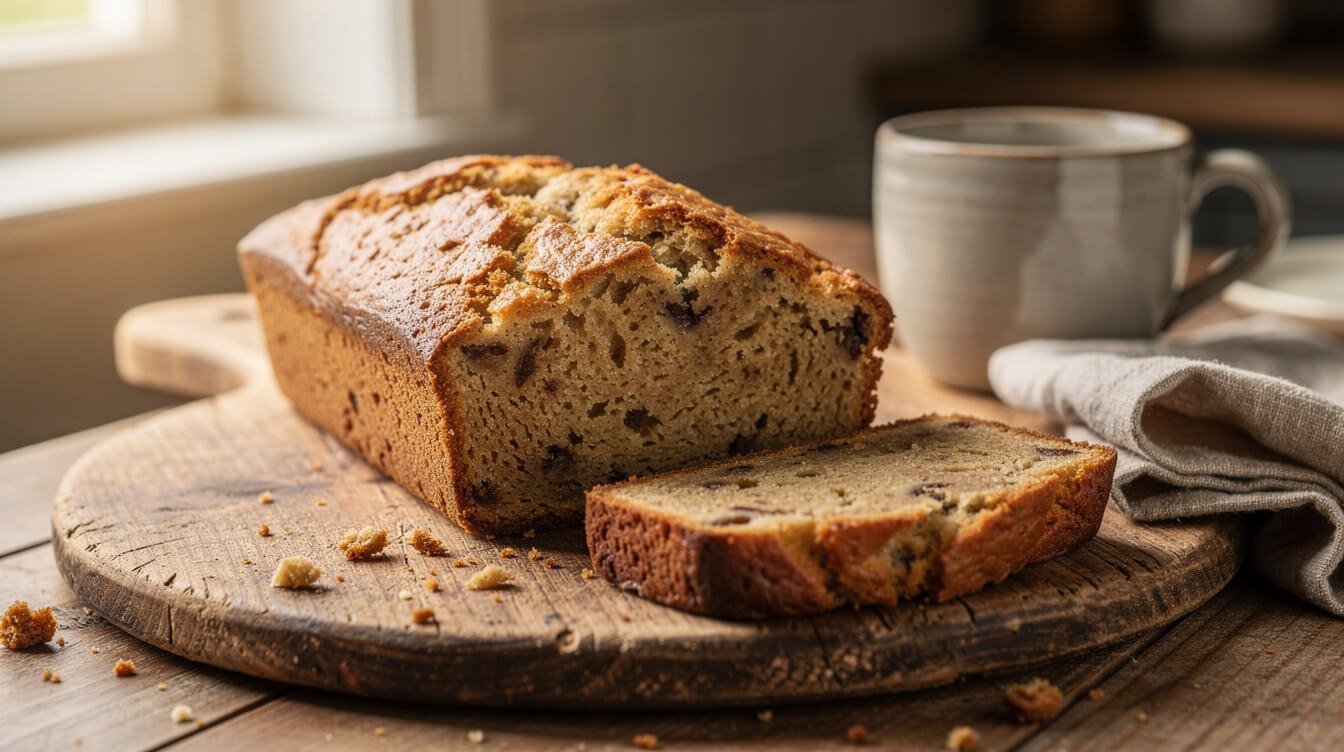
Easy Banana Bread Recipe for 2 Bananas (No Third Banana Needed)
Got exactly two ripe bananas on the counter and a craving for banana bread? Good — that’s plenty. This easy banana bread recipe for 2 bananas is built around what you actually have, no run to the store for a third banana and no scaling math on a recipe written for four. One bowl, about an hour start to finish, and a loaf with real banana flavor in every slice.
Most recipes assume you’re standing over a fruit bowl with three or four spotty bananas. If you’ve only got two, you’re either stuck doing fraction math on the rest of the ingredients, or you bake it as written and end up with a loaf that tastes more like “sweet bread” than banana bread. Here’s the fix for both problems, plus the one trick that makes two bananas taste like three, and the troubleshooting you need if it doesn’t come out right the first time.
Why 2 bananas is actually all you need
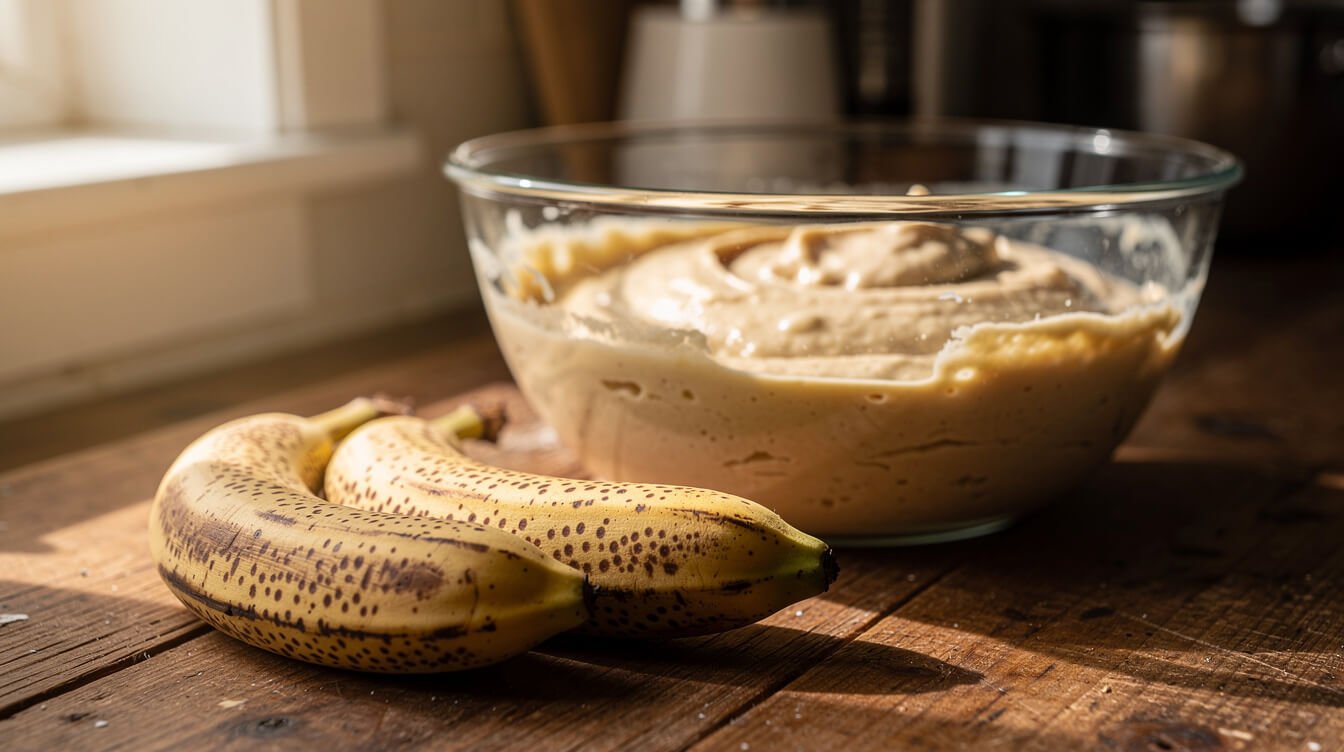
Here’s the thing most recipes don’t tell you: banana bread doesn’t need a specific number of bananas. It needs about 1 cup of mashed banana, and two medium-to-large ripe bananas get you there almost every time. Recipes that call for three or four bananas are usually just chasing a bigger, wetter loaf, or they were written for a bigger pan — not necessarily a more flavorful one.
The real risk with two bananas isn’t structure, it’s flavor. Banana flavor comes from ripeness, not quantity, so the fix isn’t more bananas — it’s riper ones. A banana that’s just turned yellow with no brown spots is still mostly starch; its sugars haven’t converted yet, and it tastes closer to a raw plantain than the sweet, almost caramel flavor you want in a loaf. A banana that’s heavily speckled or fully black has converted nearly all of that starch to sugar, and it mashes into something closer to jam than fruit — that’s the banana you want here.
If your two bananas are barely spotted, you can speed-ripen them: bake them whole, unpeeled, on a sheet pan at 300°F for 15–20 minutes until the skins are black and they feel soft all the way through when you squeeze them (use a towel — they’re hot). Let them cool for a few minutes, then peel and mash. They’ll be a soft, deeply sweet, almost caramelized mash that punches well above what two barely-ripe bananas from the grocery store would give you.
No time for that? A tablespoon of brown sugar in place of white sugar, plus an extra minute of mashing to fully break down the fruit, gets you most of the way there too. The extra mashing matters more than people think — bigger banana chunks mean pockets of concentrated flavor in some bites and none in others, instead of banana flavor running evenly through the whole slice.
Easy banana bread recipe for 2 bananas
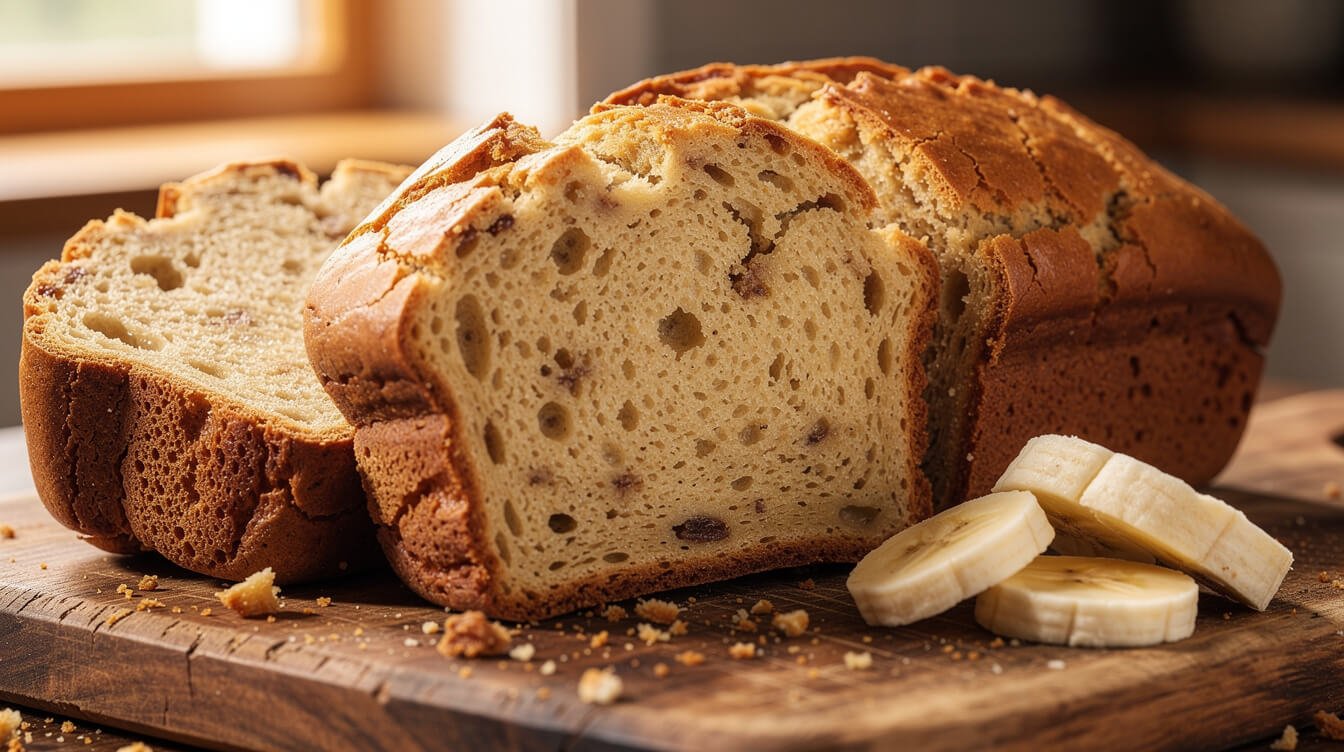
This is the one-bowl version — no mixer, no fuss, and it uses exactly what a 2-banana kitchen has on hand. It makes one standard 9×5-inch loaf, about 10 slices.
Ingredients
- 2 ripe bananas, mashed (about 1 cup)
- 1/3 cup butter, melted and slightly cooled
- 3/4 cup sugar (or 1/2 cup for a less sweet loaf — see the flavor section below)
- 1 large egg, room temperature
- 1 teaspoon vanilla extract
- 1 teaspoon baking soda
- Pinch of salt
- 1 1/2 cups all-purpose flour
Instructions
- Preheat the oven to 350°F (175°C) and grease a 9×5-inch loaf pan, or line it with parchment for easy lifting later.
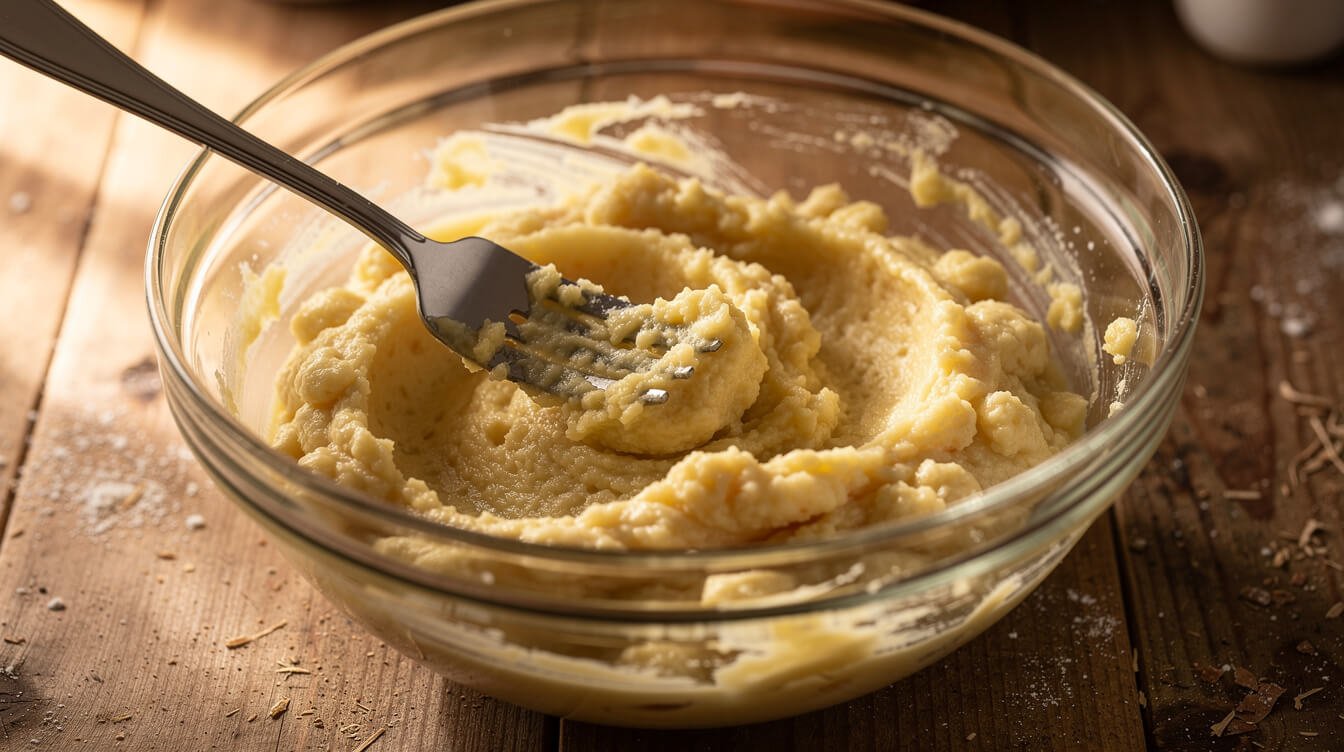
- Mash the bananas well in a large mixing bowl with a fork — the smoother the mash, the more evenly the flavor spreads through the loaf. A few small lumps are fine.
- Stir in the melted butter until combined, then whisk in the sugar, egg, and vanilla.
- Sprinkle the baking soda and salt evenly over the surface of the batter and stir them in — sprinkling first instead of dumping them in one spot helps them distribute without a bitter pocket in one bite.
- Add the flour and fold gently, just until no dry streaks remain. Overmixing is the number one cause of a tough, rubbery loaf — stop as soon as it’s combined, even if the batter still looks a little lumpy.
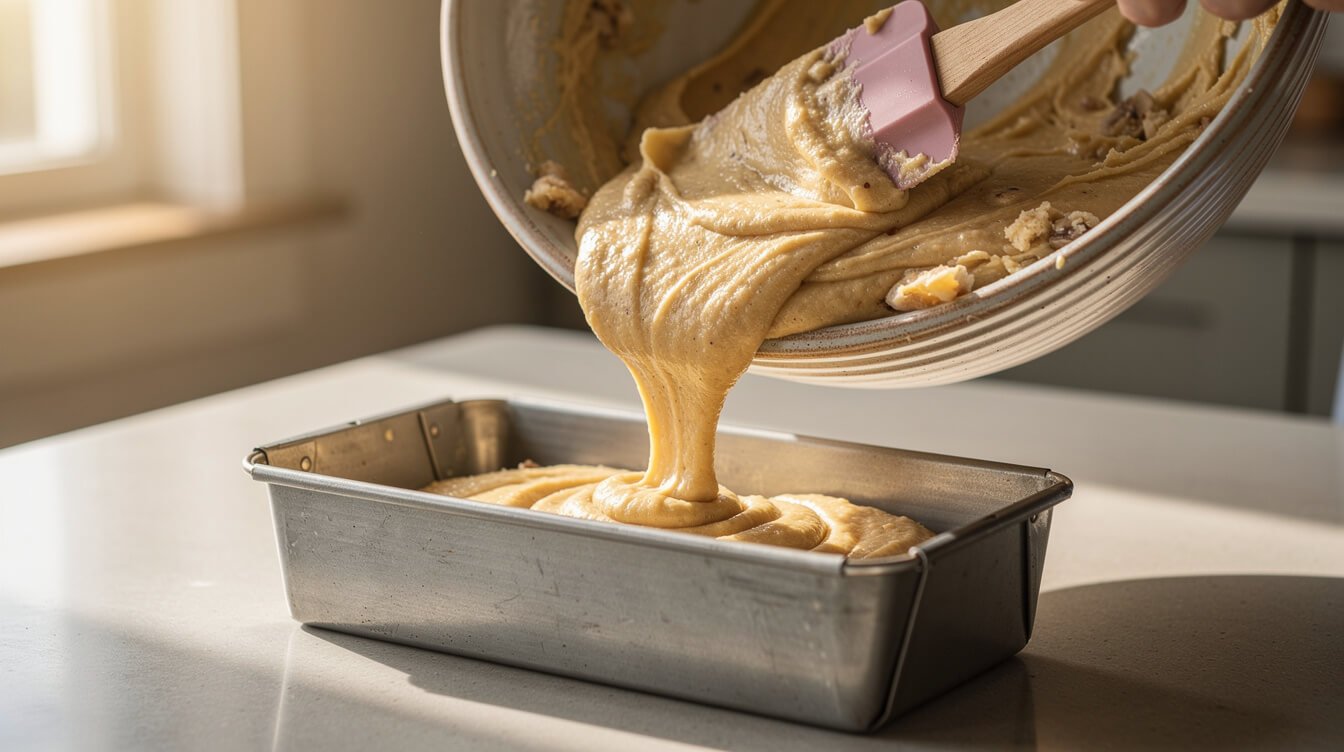
- Pour the batter into the pan and smooth the top. Bake 55–60 minutes, tenting loosely with foil after about 35 minutes if the top is browning faster than the inside is cooking.
- Cool in the pan for 10 minutes, then turn out onto a wire rack to finish cooling before slicing. Cutting into it warm is the most common reason a fully-baked loaf looks “gummy” in the middle — it needs the cooling time to finish setting.
That’s the whole recipe — no third banana required, and no need to eyeball a fraction of someone else’s four-banana version.
The one trick that makes 2 bananas taste like 3
If you’ve made a 2-banana loaf before and found it tasted a little thin compared to the bakery version, it’s almost always one of these two things — and both are free fixes, no extra banana required.
Your bananas weren’t ripe enough
This is the single biggest lever you have. A banana that’s just yellow with no spots is mostly starch, not sugar — it hasn’t fully converted yet, and baking with it is like trying to bake with a slightly underripe peach. The blacker the peel, the sweeter and more banana-forward the flesh underneath. If yours are underripe, the oven-roasting trick from the last section (whole bananas, unpeeled, at 300°F until the skins go black) is the biggest flavor upgrade you can make to this recipe, and it takes 20 minutes while your oven preheats anyway.
You’re not tasting the banana over the sugar
Cutting sugar helps more than adding banana would. Dropping to 1/2 cup of sugar — or swapping half of it for brown sugar, which brings its own caramel note that complements banana instead of masking it — lets the banana flavor come through instead of hiding behind straight sweetness. This is also why bakery banana bread often tastes “more banana-y” than homemade: many bakeries use less sugar than home recipes, not more banana.
Add a splash of something banana-adjacent
If you happen to have banana extract in the baking cabinet, 1/4 teaspoon added with the vanilla rounds out the flavor without changing the texture. It’s optional — most people don’t keep it on hand, and the ripeness trick above works just as well without it.
What to do about the missing “third banana”
Some recipes lean on that third or fourth banana for moisture as much as flavor — banana is mostly water, so more banana usually means a wetter, denser crumb. If your 2-banana loaf comes out slightly less moist than a bakery version, one of these swaps makes up the difference without watering down the flavor you worked to build in the last section:
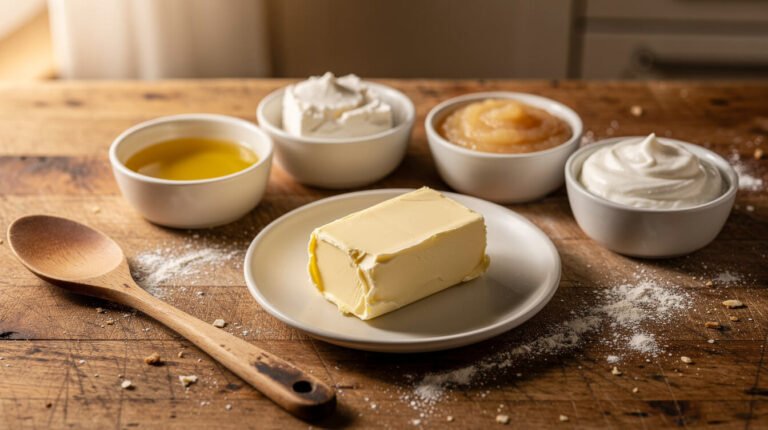
- 2 tablespoons plain yogurt or sour cream — the easiest fix, stirred in with the wet ingredients. Adds moisture and a very slight tang that plays well with banana.
- 1 tablespoon unsweetened applesauce — adds moisture without a noticeable apple flavor at this small amount, and it’s a common pantry item even if you’re out of dairy.
- An extra tablespoon of melted butter — the simplest option if that’s all you’ve got, and it adds richness along with moisture.
You don’t need all three, or even one — pick whichever is already in your fridge, or skip this step entirely. None of these are required for the recipe to work as written; they’re just there if you want a slightly richer, more bakery-style crumb.
From the Eat Cafe kitchen
One good recipe a week, straight to your inbox
The recipe we're actually cooking this week, plus the one tip that saves it when it goes sideways. No spam. Unsubscribe anytime.
Troubleshooting: fixing a loaf that didn’t turn out right
Even a simple recipe can go sideways. Here’s what’s actually happening when a 2-banana loaf doesn’t come out the way you expected, and what to change next time.
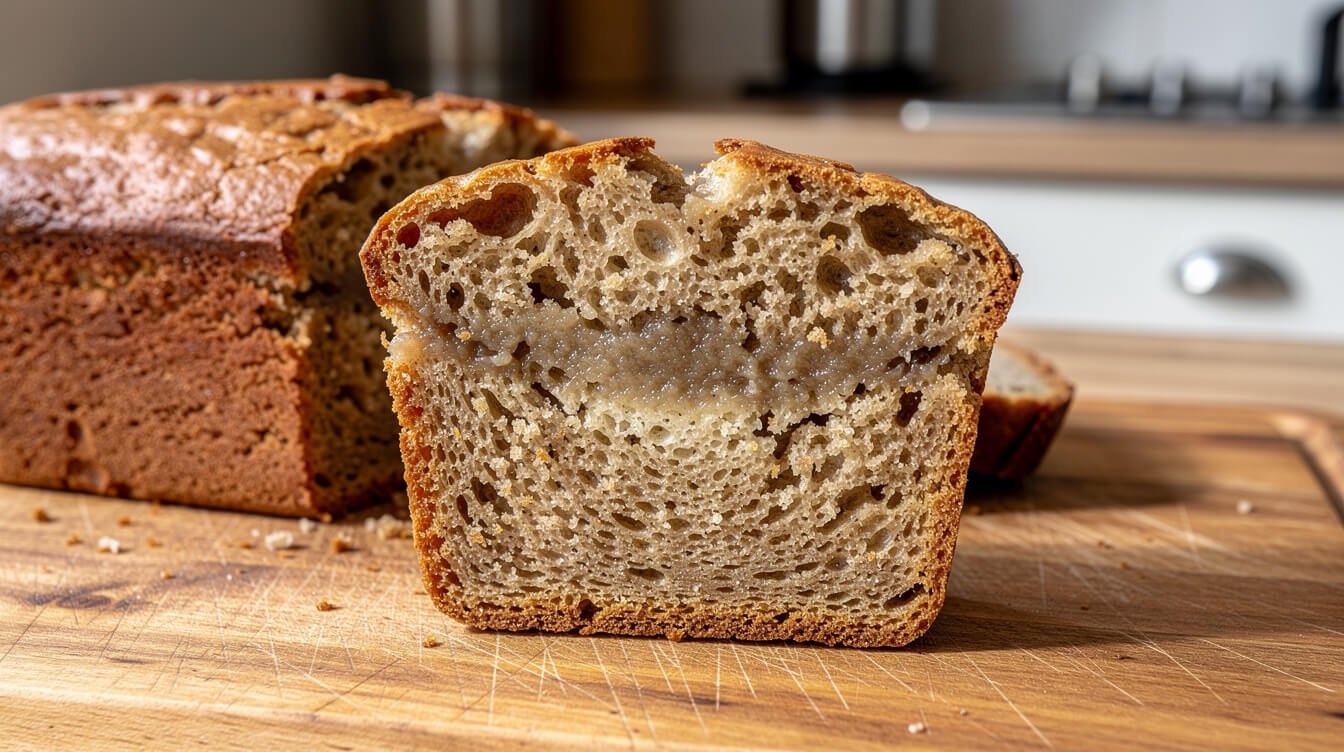
The center is dense or gummy
This is almost always underbaking, not a recipe problem. Because a 2-banana loaf has slightly less batter than a 4-banana one, it can look golden and smell done several minutes before the center is actually finished. Give it the extra time and confirm with a thermometer (more on that below) rather than trusting the clock alone.
It sank in the middle after baking
Usually one of three culprits: the oven wasn’t fully preheated when the loaf went in, the oven door was opened before the 35-minute mark (a rush of cold air can deflate a loaf that hasn’t set yet), or it came out of the oven before the center was fully baked through and the structure collapsed as it cooled.
It’s dry instead of moist
Overbaking is the most common cause, followed by measuring flour by scooping the cup directly into the bag — that packs in extra flour you didn’t mean to add. Spoon the flour into the measuring cup and level it off with a knife instead, and start checking doneness at the 50-minute mark rather than waiting the full hour.
It didn’t rise much
Check the age of your baking soda — if it’s been open more than six months, it may have lost enough potency to matter. Also make sure you didn’t overmix the batter after adding the flour, which can knock out the air that helps the loaf rise in the oven.
How to tell it’s actually done
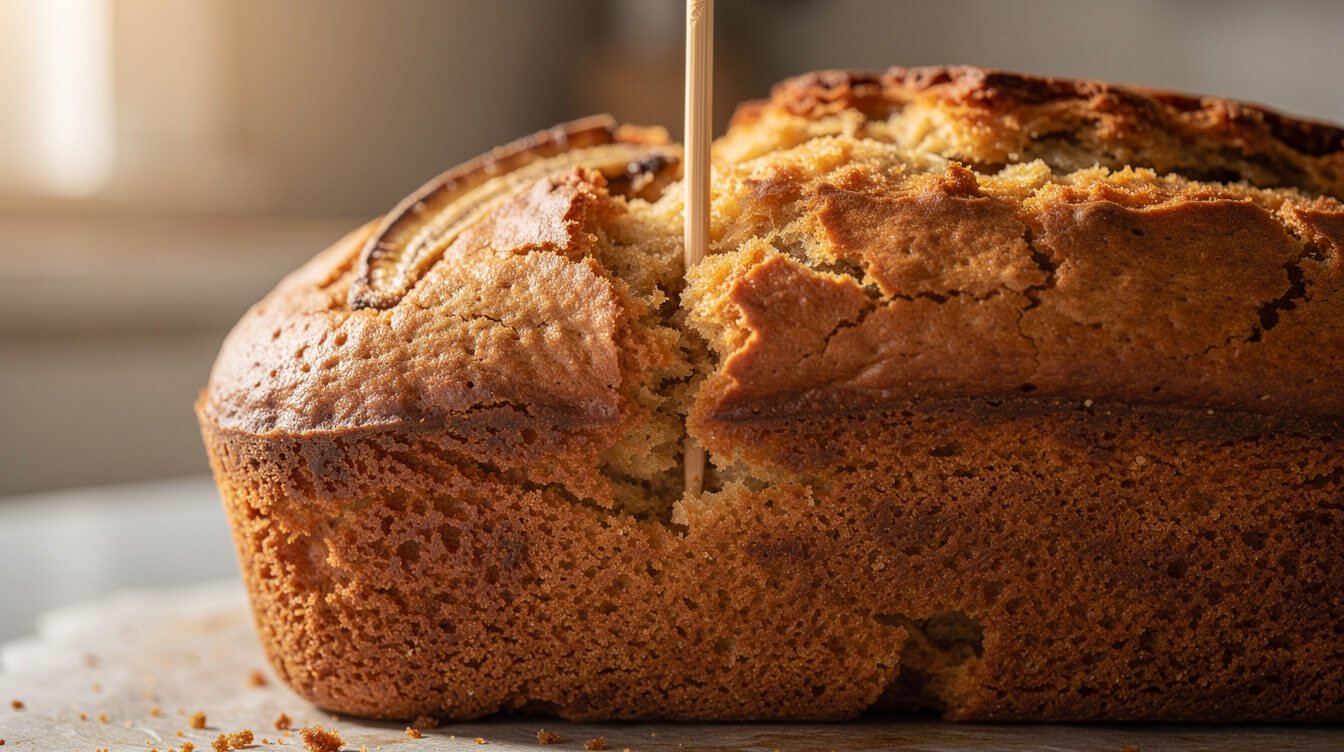
A 2-banana loaf is shallower and less wet than a 4-banana one, so it can look and smell done a few minutes before the center actually is. The toothpick test still works, but it’s not foolproof on banana bread — a toothpick can come out looking clean while the very center is still slightly gummy, because banana batter clings to a toothpick less than a plain cake batter would.
If you want a sure thing, an instant-read thermometer inserted into the center should read 200–205°F when the loaf is fully baked through. Below that, tent it with foil if it’s browning too fast, give it another 5 minutes, and check again. This is the same benchmark we use for every quick bread on Eat Cafe — it doesn’t change based on how many bananas are in the batter, because it’s measuring whether the starches and egg have actually set, not how the top looks.
Let it cool in the pan for a full 10 minutes before turning it out, then finish cooling on a rack for at least 20 more minutes before slicing. Banana bread firms up noticeably as it cools, and slicing it hot is the most common reason people think a fully-baked loaf is “underdone” when it’s actually fine — it just hasn’t finished setting yet.
Mix-ins and variations
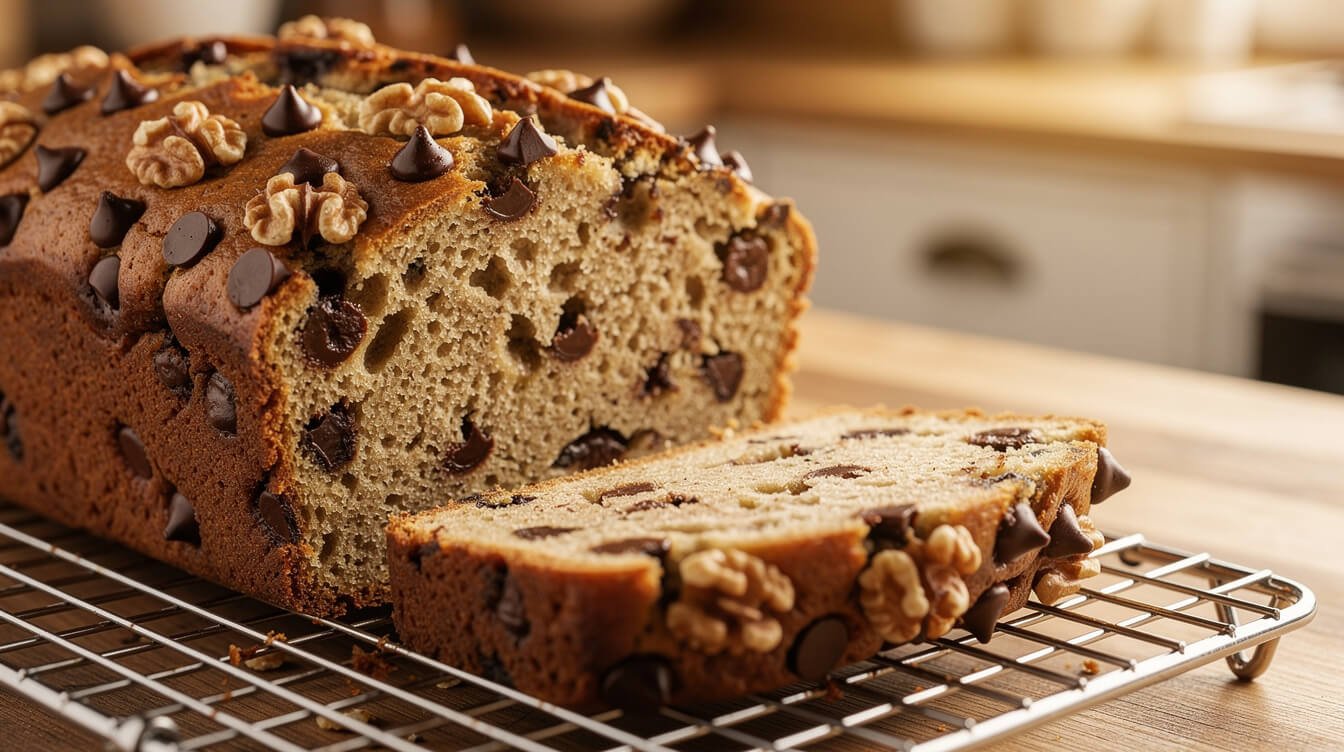
The base recipe is deliberately plain so you can make it your own. Fold in any of these with the flour in step 5, keeping the total add-ins to about a cup:
- 1/2 cup chocolate chips — the classic. Toss them in a spoonful of the flour first so they don’t all sink to the bottom.
- 1/2 cup chopped walnuts or pecans — toast them in a dry pan for 5 minutes first for more crunch and a deeper, less raw nut flavor.
- 1/2 teaspoon cinnamon plus a pinch of nutmeg — warms up the loaf without changing the texture, good for fall baking.
- A simple streusel topping — 2 tablespoons each of flour, brown sugar, and cold butter, rubbed together with your fingers until crumbly, sprinkled over the batter before baking, for a bakery-style crackly top.
Whatever you add, keep it to roughly a cup total — much more than that and the loaf won’t rise properly around the mix-ins, and you’ll end up with a dense band running through the middle of the slice.
Storing and freezing your loaf
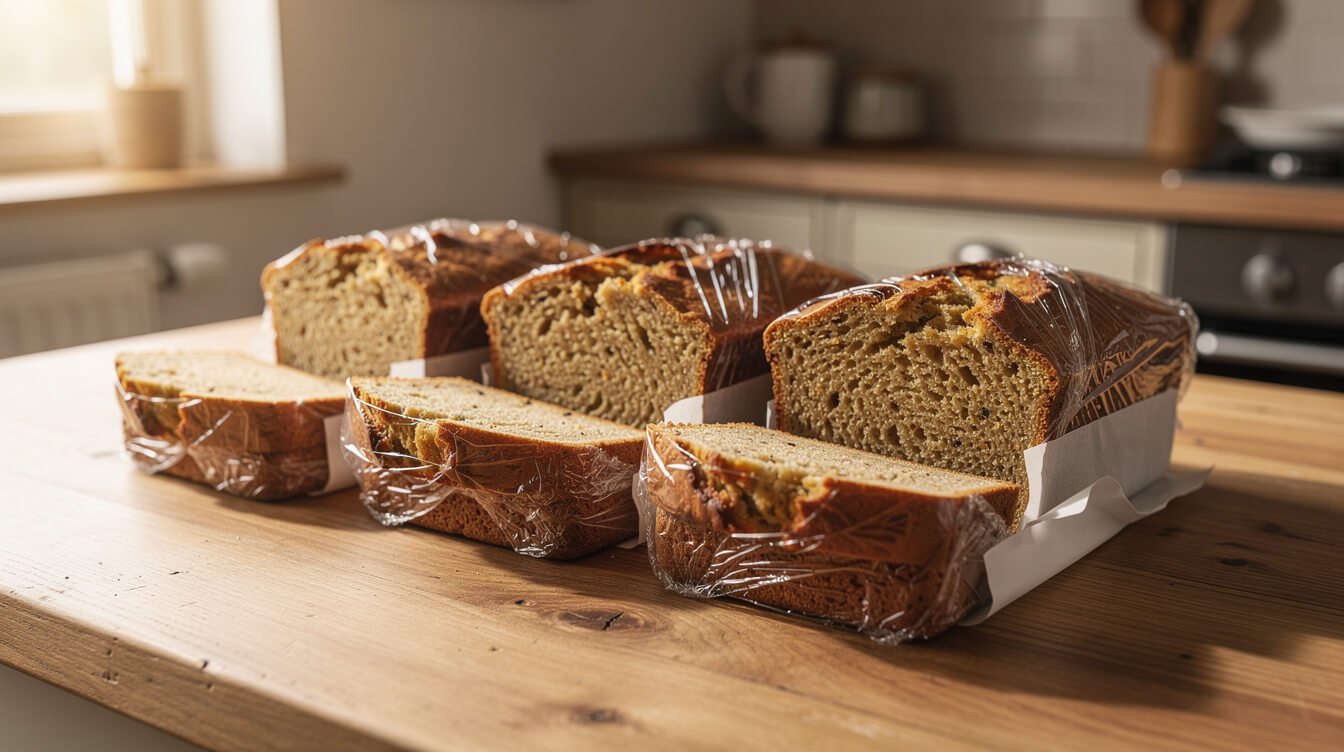
A 2-banana loaf is a little smaller than most banana breads, so it tends to disappear fast — but if you do have leftovers, here’s how to keep them good:
- Room temperature: wrapped tightly in plastic wrap or in an airtight container, 3–4 days. Keep it out of direct sunlight and away from the stove.
- Refrigerator: up to a week, tightly wrapped. It will firm up in the fridge; a few seconds in the microwave brings back the soft crumb.
- Freezer: slice it first, then wrap individual slices or the whole loaf tightly and freeze up to 3 months. Thaw slices at room temperature for about 30 minutes, or give them a quick 10-second zap straight from frozen.
Don’t refrigerate or freeze it while it’s still warm — trapped steam makes the crust soggy and can encourage condensation inside the wrapping.
Frequently asked questions
Can I use just 1 banana instead of 2?
You can, but the loaf will be noticeably less banana-flavored and slightly drier. If it’s all you have, add one of the moisture swaps from earlier in this post and lean hard into the roasting trick for maximum flavor from that single banana.
Do I need to adjust the flour if my bananas are extra large?
Only if your mashed banana measures well over 1 cup. If it’s close — even a little over — the recipe is forgiving enough to handle it without adjusting the flour.
Why does my banana bread sink in the middle?
Usually one of three things: the oven wasn’t fully preheated, the pan was opened too early (before the 35-minute mark), or the loaf came out of the oven before the center hit 200–205°F. All three can cause the structure to collapse as it cools. See the troubleshooting section above for the full breakdown.
Can I make this into muffins instead?
Yes — same batter, divided into a lined 12-cup muffin tin, baked at 350°F for 18–22 minutes instead of the full hour. Check doneness the same way, with a toothpick or a thermometer reading 200–205°F.
Can I use frozen bananas instead of fresh?
Yes, and it’s a great use for bananas you froze when they got too ripe to eat. Thaw them fully first, then drain off any excess liquid that separates before mashing — otherwise the batter can end up too wet.
How long does it keep?
Wrapped tightly at room temperature, 3–4 days. In the fridge, up to a week. It also freezes well, sliced, for up to 3 months — see the storage section above for the full breakdown.

Final thoughts
Two bananas is a perfectly good starting point for banana bread — you don’t need to wait for a third one to go spotty, and you don’t need to do math on someone else’s recipe written for a bigger batch. Ripen what you’ve got, watch the sugar, and trust the thermometer over the clock, and this loaf comes out right every time, not just when you happen to have a full bunch on hand.
If you liked the doneness trick in this one, we use the exact same test in our 4-ingredient banana bread and our easy moist banana bread recipe — both worth a look for the next time you do end up with extra bananas on the counter. And if quick-bread and cake doneness is a recurring question in your kitchen, our how to bake a cake guide covers the same internal-temperature trick in more detail.
Save this one for the next time your fruit bowl has exactly two ripe bananas and nothing else to show for it — that’s really all it takes.

Before you go
Want the next one?
We post a new recipe or kitchen guide every day. The best of the week lands in one short email, no life story attached.