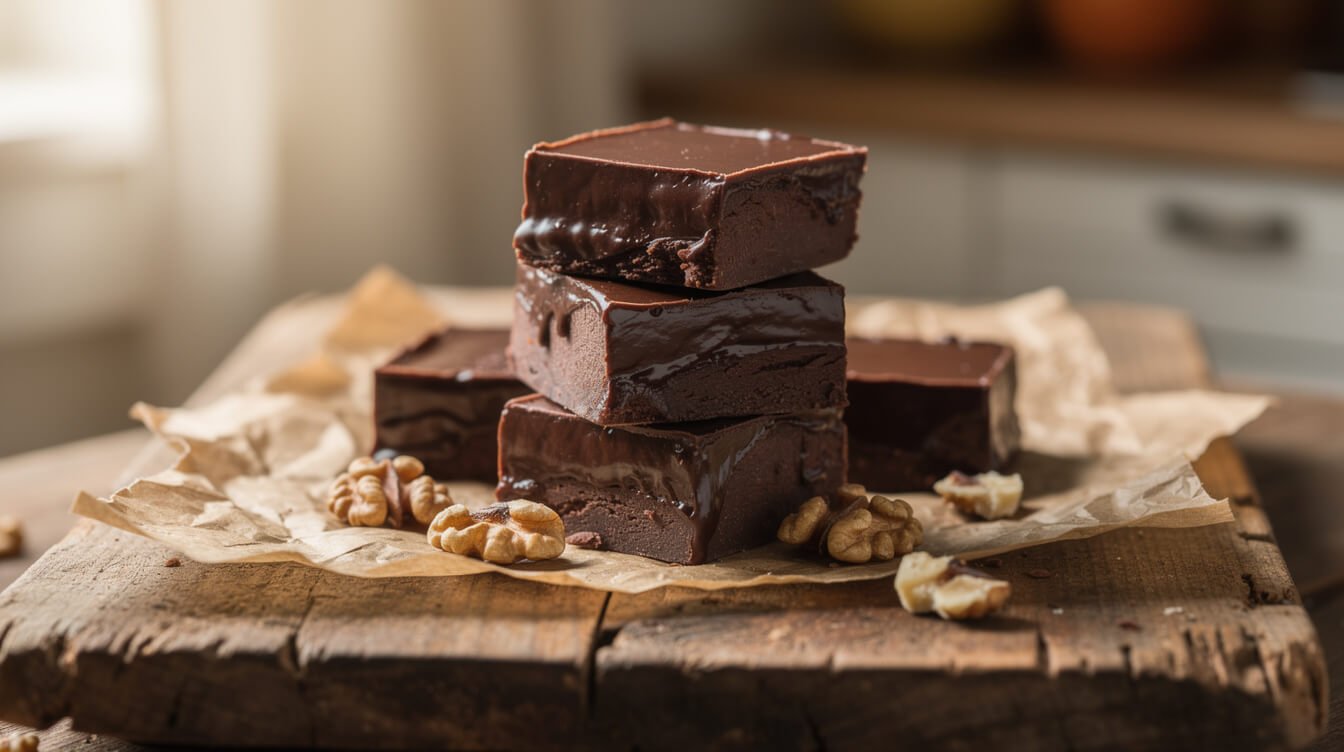
Sweetened condensed milk fudge (the chocolate ratio that makes it set every time)
Your fudge came out soft enough to eat with a spoon? It’s almost never your stove, and you didn’t need a candy thermometer. Sweetened condensed milk fudge sets or doesn’t set based on one thing: how much chocolate you melt into the can. Get that ratio right, keep the heat low, and it’s one of the easiest holiday treats there is. It takes about 10 minutes of work and two hours of waiting.
Here’s the recipe first. After that we’ll cover the ratio (with a chart for semi-sweet, milk, and white chocolate), stovetop vs. microwave, a fix for every way fudge goes sideways, flavor swaps, and how to store and gift it.
Sweetened condensed milk fudge: the recipe
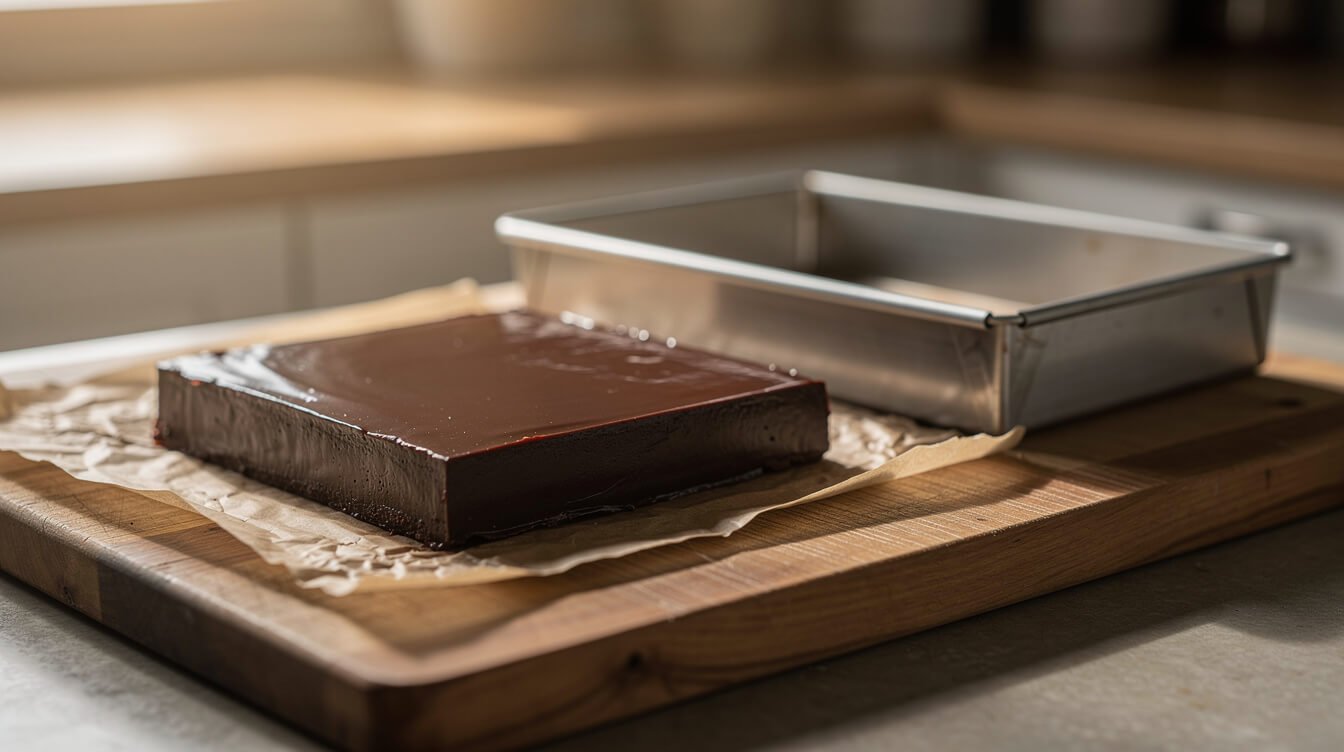
This is the classic chocolate-chips-and-a-can method. There’s no boiling sugar, no soft-ball stage, and no thermometer. You’re just melting chocolate into sweetened condensed milk, which already holds all the sugar and milk solids fudge needs. The proportions match Eagle Brand’s own Foolproof Chocolate Fudge: 18 ounces of chocolate chips to one 14-ounce can. That’s the ratio that sets firm.
Ingredients
Makes one 8-inch square pan, about 64 one-inch pieces.
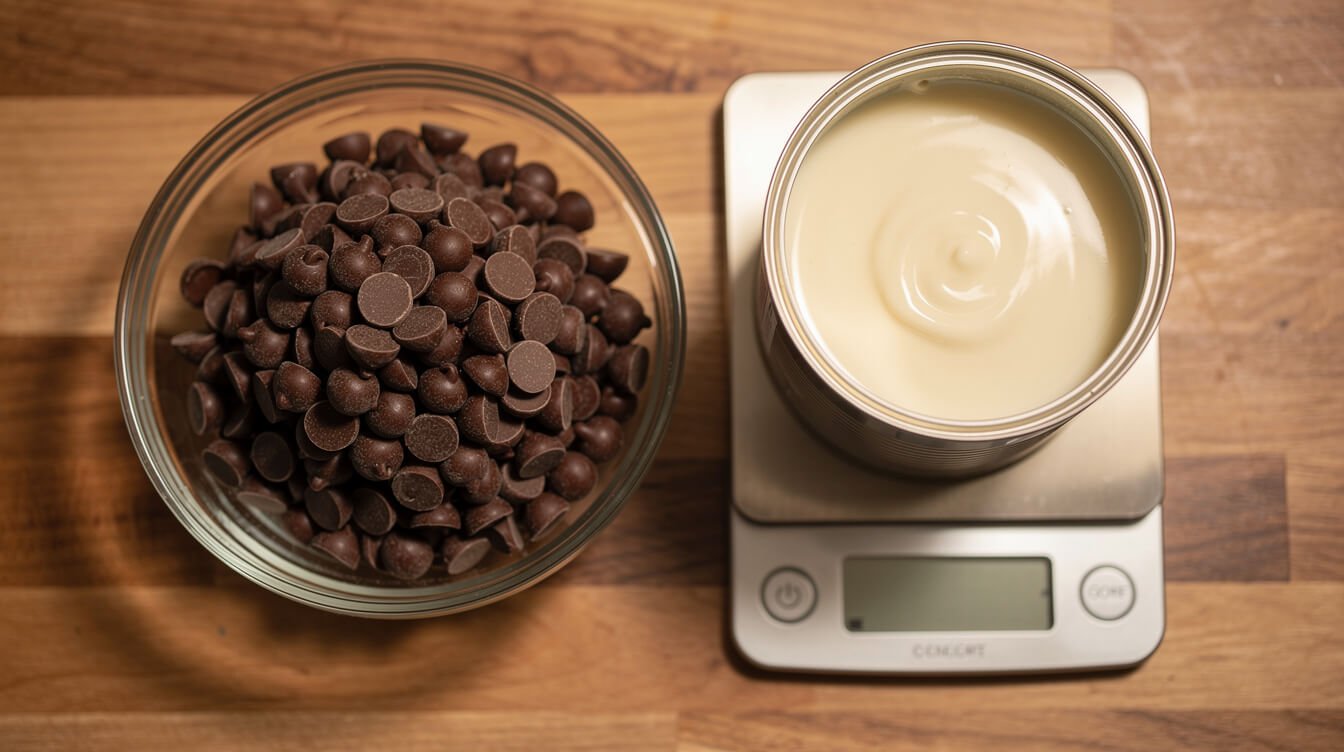
- 18 oz (510 g) semi-sweet chocolate chips (about 3 cups; one 12-oz bag plus half of another)
- 1 can (14 oz / 397 g) sweetened condensed milk (not evaporated milk)
- 1½ tsp vanilla extract
- ⅛ tsp fine salt (a generous pinch)
- Optional: ½ to 1 cup chopped walnuts or pecans, toasted if you have 5 minutes
- Optional: flaky salt for the top
Equipment
- 8-inch square pan (a 9-inch works and gives thinner pieces)
- Parchment paper or foil
- Heavy-bottomed saucepan, or a large microwave-safe glass bowl
- Silicone spatula
Instructions
- Line the pan. Line the pan with parchment or foil, leaving a couple of inches hanging over two sides. Those are your handles later.
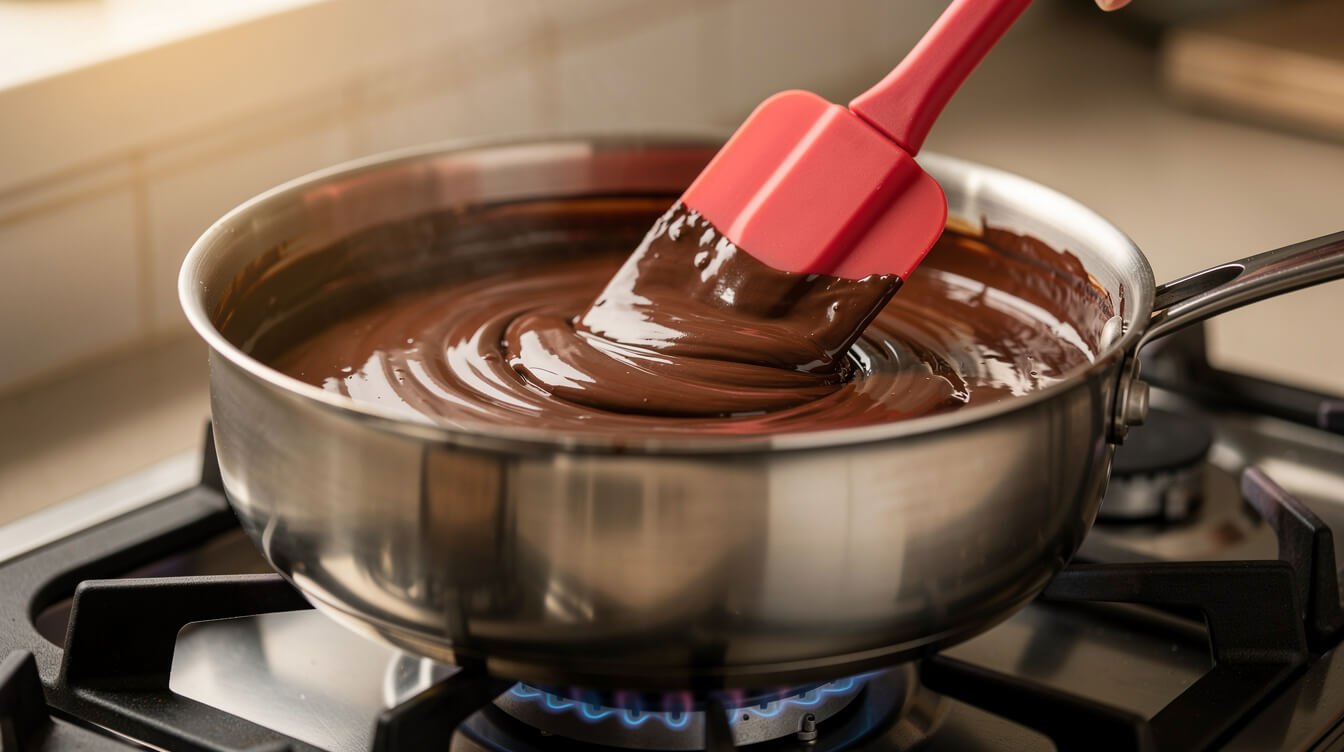
- Melt low and slow. Put the chocolate chips, condensed milk, and salt in a heavy saucepan over low heat. Stir constantly with a silicone spatula, scraping the bottom and corners, until the chips are just melted and the mixture is smooth and glossy. That’s usually 4 to 6 minutes. (Microwave method below.)
- Take it off the heat right away. As soon as it’s smooth, take it off the burner. Stir in the vanilla, then the nuts if you’re using them.
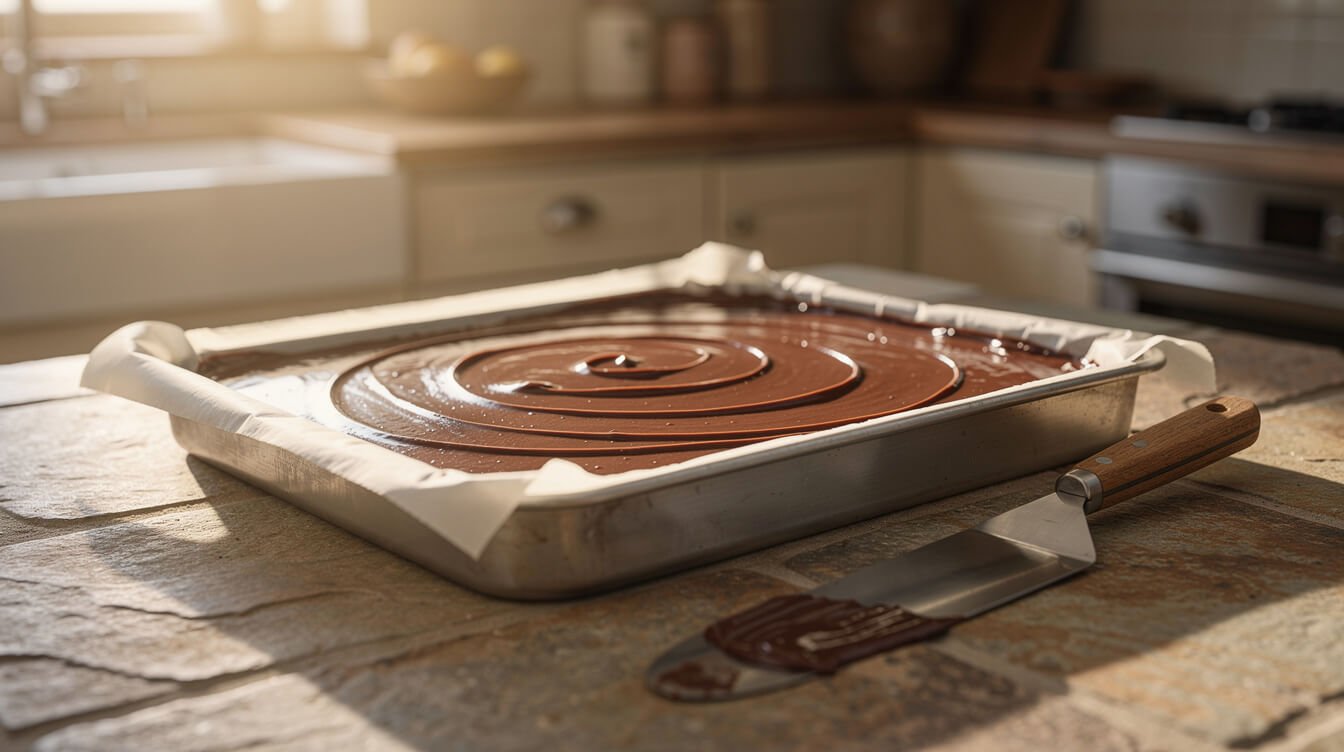
- Spread it fast. The mixture thickens quickly as it cools. Scrape it into the pan and press it into an even layer with the spatula or an offset spatula. Sprinkle flaky salt on top now if you want it.
- Let it set. Chill for 2 hours, or until firm. If you’d rather leave it on the counter, it takes closer to 4 hours at room temperature.
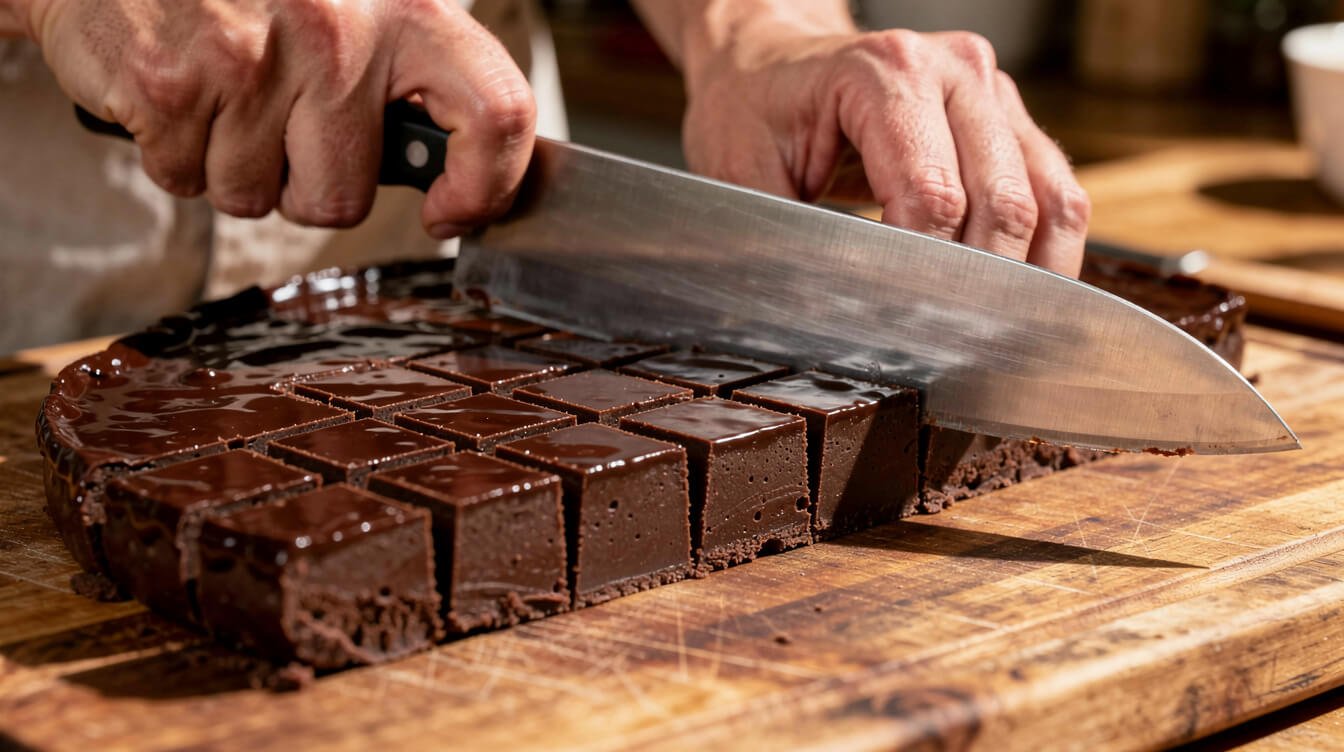
- Cut it. Lift the slab out by the parchment handles, peel off the paper, and cut it into squares with a large knife. Warm the knife under hot water and wipe it dry between cuts for clean edges.
The microwave version
Combine the chips, condensed milk, and salt in a large microwave-safe glass bowl or 1-quart glass measuring cup. Eagle Brand’s method is 3 minutes on HIGH, stirring after 1½ minutes, until the chips melt. Microwaves vary a lot, though, so check and stir early. Stop as soon as only a few soft lumps remain. They’ll melt as you stir. Then add the vanilla and nuts and continue from step 4.
That’s the whole recipe. The rest of this post is about why it works, and what to do when it doesn’t.
The chocolate-to-milk ratio that decides whether it sets
Most sweetened condensed milk fudge recipes say “a bag of chips and a can of milk,” and that’s where the trouble starts. Bags come in different sizes, and different chocolates set differently. Here’s what’s really going on.
The can is mostly sugar, milk solids, and some water. On its own it’s a thick syrup. The chocolate is what turns it into a sliceable square, because cocoa solids and cocoa butter firm up as they cool. More chocolate per can means firmer fudge. Less chocolate means softer fudge, and below a certain point it won’t hold a clean edge at all.
The two recipes that show the difference
Compare two manufacturer recipes side by side:
- Eagle Brand’s chocolate fudge uses 18 oz of semi-sweet chips per 14-oz can. That’s about 1.3 parts chocolate to 1 part milk by weight, and it sets firm after a 2-hour chill.
- Nestlé Toll House’s Easy Chocolate Fudge uses one 12-oz bag per 14-oz can. That’s less chocolate than milk, about 0.86 to 1. Read the reviews and you’ll see the pattern: “doesn’t set up,” “had to eat it with a spoon,” “way too soft.” Some reviewers who loved it added marshmallows or extra chocolate.
Same method, same can, same chips. The only real difference is 6 ounces of chocolate. That’s the whole secret, and the reason this recipe calls for 18 oz instead of one standard bag.
Ratio chart by chocolate type
| Chocolate | Amount per 14-oz can | What to expect |
|---|---|---|
| Semi-sweet chips | 18 oz (510 g), about 3 cups | Firm, clean-cutting, classic fudge. This is the recipe above. |
| Half semi-sweet, half milk chocolate | 12 oz semi-sweet + 6 oz milk chocolate | Sweeter and a little softer. This is how Eagle Brand does its milk chocolate version: it swaps just one of the three cups. |
| Bittersweet (60–70%) | 18 oz | Firmer, darker, and less sweet. Good if you find classic fudge too sugary. |
| White chocolate | 24 oz (1½ lb / 680 g) | White chocolate has no cocoa solids, so it needs more to set. Eagle Brand’s Creamy White Fudge uses a full 1½ pounds per can. |
| One 12-oz bag of semi-sweet | 12 oz | Soft, fudgy-spoonable. Fine as a topping, but not for neat squares. |
Why milk and white chocolate set softer
Milk chocolate has fewer cocoa solids and more milk and sugar than semi-sweet. White chocolate has no cocoa solids at all, just cocoa butter, sugar, and milk. Cocoa solids do much of the firming, so the lighter the chocolate, the more of it you need. That’s why you can’t just swap milk chocolate chips one-for-one and expect the same square. If you love milk chocolate, keep at least two-thirds of the chocolate semi-sweet, the way Eagle Brand does.
Weigh it if you can. Chocolate chips pack differently, so “3 cups” can be off by an ounce or two. A kitchen scale takes the guesswork out, and it’s the same reason we bake by weight in our cake flour vs. all-purpose flour guide. No scale? Most standard bags are 10 to 12 oz, so check the label and add up the ounces.
Stovetop or microwave: how to melt it without scorching or splitting
Both methods work. What matters is gentle heat, because sweetened condensed milk is mostly sugar and scorches fast. Chocolate also doesn’t like getting too hot.
Stovetop: the more forgiving choice
A heavy-bottomed saucepan over low heat gives you the most control. Thin pans have hot spots, and that’s where condensed milk catches and browns. Stir the whole time and scrape the bottom with a silicone spatula. You’re not cooking the fudge, only melting it. The moment the mixture is smooth, it’s done. Leaving it on the heat “to be safe” is how fudge turns greasy or stiff.
Low means low. If your stove’s lowest setting still runs hot, pull the pan off the burner for a few seconds every so often while you stir. If you see brown flecks, stop scraping the bottom and pour the fudge into a clean bowl. Brown flecks mean the milk is starting to scorch.
Microwave: fast, but stir more than you think
Use a large glass bowl so the mixture has room. Heat in short bursts and stir well between each one. Chocolate holds its shape in the microwave even when it’s melted inside, so a chip that looks whole may be ready to collapse. Stir before you add more time. If your microwave runs hot, use 50% power. It’s slower but much harder to overdo.
The bowl and the fudge get very hot. Use an oven mitt to take the bowl out, and stir carefully.
What about a double boiler?
A double boiler (a heatproof bowl set over a pot of barely simmering water) is the gentlest method of all. There’s one catch: keep every drop of water and steam out of the chocolate. Even a little water can make chocolate seize into a thick, grainy paste. Dry your spatula and bowl, and don’t let the water boil up around the bowl.
Add the vanilla off the heat
Vanilla extract contains alcohol and a little water. Stir it in after the pan is off the heat. Added to a very hot mixture, it can sputter, and some of the flavor cooks off.
Sweetened condensed milk fudge troubleshooting: soft, greasy, grainy, or crumbly
Most sweetened condensed milk fudge problems come down to one of three things: too little chocolate, too much heat, or water getting into the chocolate. Here’s how to tell which one you’ve got, and what to do about it.
| What you see | Most likely cause | Fix |
|---|---|---|
| Won’t set, or too soft to slice | Not enough chocolate (often a single 12-oz bag), too much milk or white chocolate, or a warm kitchen | Re-melt and add chocolate (see below). Or keep it chilled and serve it cold. |
| Greasy, with an oily film on top | Overheated, so the cocoa butter separated. Butter added to the recipe can do it too. | Off the heat, stir hard. If it stays split, stir in warm milk 1 teaspoon at a time until it comes back together. |
| Grainy, or suddenly thick and pasty | Overheated, or water or steam got into the chocolate (seized) | Hard to fully undo. It’s still good to eat. Next time, use lower heat and dry tools. |
| Bitter, with brown specks | Condensed milk scorched on the pan bottom | Pour into a clean bowl without scraping the bottom. If the whole batch tastes burnt, it’s best to start over. |
| Crumbly or cracks when you cut it | Too much chocolate, or cut straight from the fridge | Let it sit at room temperature for 20–30 minutes before cutting. Use a warm knife. |
| Dull surface or white streaks after a few days | Fat bloom from temperature swings (fridge to counter and back) | Cosmetic only. It’s safe to eat. Store it in one place, airtight. |
How to rescue fudge that didn’t set
This is the most common problem, and the good news is it’s fixable. Scrape the soft fudge back into a heavy saucepan, add more chocolate, and melt it again over low heat. Stir until smooth, then pour it back into a freshly lined pan and chill. How much to add:
- Used one 12-oz bag of semi-sweet? Add 6 oz (about 1 cup) more chips. That brings you to the 18-oz ratio.
- Used all milk chocolate? Add semi-sweet or bittersweet rather than more milk chocolate. It firms faster.
- White chocolate fudge? Check the total against the 24-oz ratio and make up the difference.
If you’d rather not re-melt, soft fudge still has a good life. Keep it in the fridge and cut it cold, or roll small spoonfuls into balls and dust them with cocoa powder. Call them truffles. Nobody will argue.
Why it’s soft at room temperature but firm from the fridge
This one’s normal. Cocoa butter softens as it warms, so all fudge is a little softer at room temperature. If yours holds its shape on the counter but goes slumpy in a warm kitchen, store it in the fridge and take it out 15 minutes before serving.
From the Eat Cafe kitchen
One good recipe a week, straight to your inbox
The recipe we're actually cooking this week, plus the one tip that saves it when it goes sideways. No spam. Unsubscribe anytime.
Easy flavor swaps and mix-ins (and when to add them)
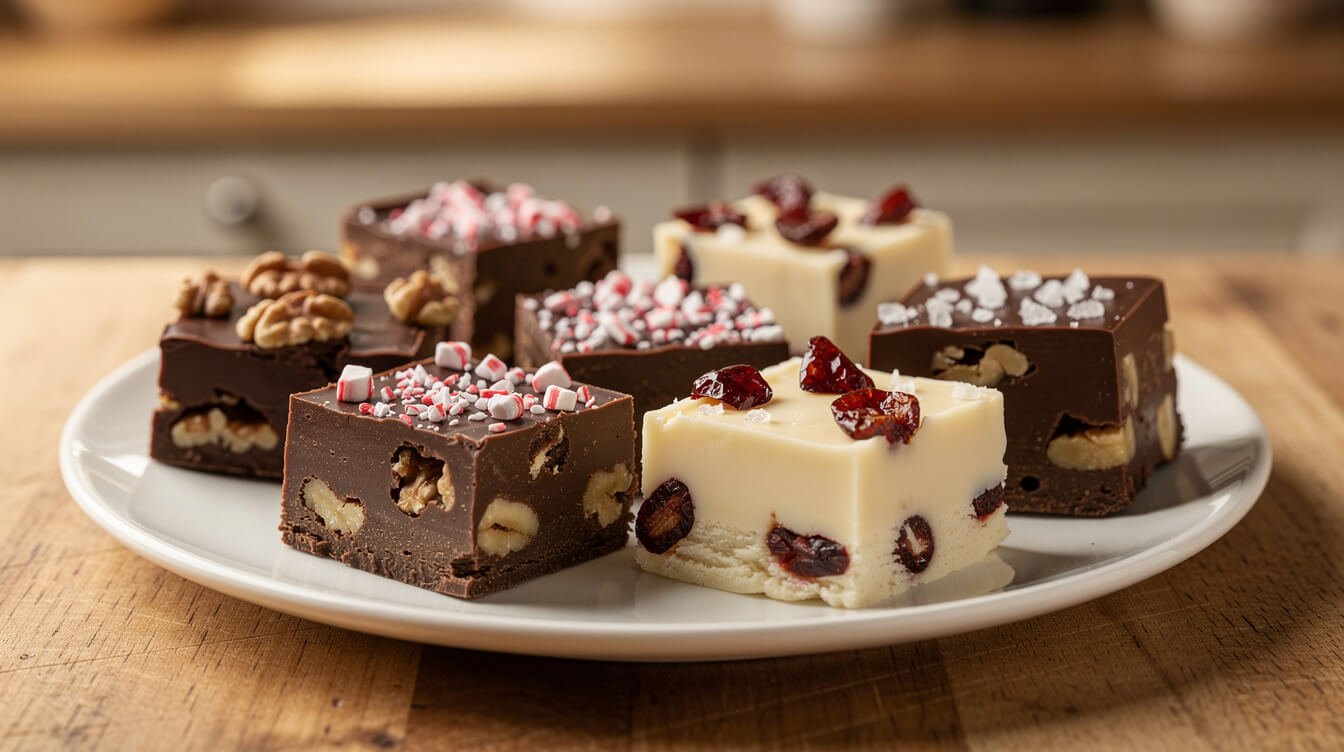
Once you’ve got the base down, sweetened condensed milk fudge is a blank canvas. The rule: add solids off the heat, after the vanilla, and keep extra liquids to a teaspoon or two so you don’t throw off the ratio.
Mix-ins (stir in)
- Nuts: ½ to 1 cup chopped walnuts, pecans, or almonds. Toasting them for 5–8 minutes in a dry skillet makes a big difference.
- Rocky road: let the fudge cool for 2–3 minutes first, then fold in 1 cup mini marshmallows and ½ cup chopped nuts. Too hot and the marshmallows melt into streaks.
- Peppermint: swap the vanilla for ½ tsp peppermint extract (start with less, since it’s strong). Press crushed candy canes onto the top right after spreading.
- White chocolate cranberry: use the 24-oz white chocolate ratio, then fold in ¾ cup dried cranberries and a little orange zest.
- Mocha: dissolve 1–2 tsp instant espresso powder in the vanilla before stirring it in.
Toppings (press on before it sets)
- Flaky salt: the easiest upgrade there is. A little salt cuts the sweetness. If you’re wondering whether salted butter or table salt changes things, our salted vs. unsalted butter guide covers how salt works in sweets.
- Swirl: melt 2–3 oz white chocolate, drop spoonfuls on top of the chocolate fudge, and drag a knife through it.
- Sprinkles or chopped candy: press them in gently with your palm so they stick.
Should you add butter?
Some recipes add 2 tablespoons of butter for shine. It’s optional. Butter softens the set a little, and it’s often the reason a batch looks oily on top. If you add it, you may want to bump the chocolate by an ounce or so. Skipping it keeps things simple.
Fudge is one of those things people make in big batches for bake sales, cookie swaps, and holiday trays. If you’re making one for a good cause this year, our Support Our Charities Donor Membership T-Shirt is a comfy one to cook in, and it’s a nice way to support the kitchen.

A shirt for bake-sale season
The Eat Cafe Support Our Charities tee is a soft, sturdy black cotton shirt with a small logo over the heart and a big one on the back. Wear it while you stir, and help support the kitchen.
How to cut, store, and gift fudge
Cutting clean squares
Lift the whole slab out by the parchment and cut it on a board, not in the pan. Use your largest knife, run it under hot water, wipe it dry, and press straight down instead of sawing. Wipe and re-warm the knife every few cuts. For perfectly square edges, trim a thin strip off all four sides first. That’s the baker’s snack.
An 8-inch pan cut 8 by 8 gives you 64 one-inch pieces. Fudge is rich, and small pieces go further on a tray.
Storing fudge
- Room temperature: in an airtight container with parchment or wax paper between layers, in a cool spot, for about 1 week. If your kitchen runs warm, use the fridge.
- Fridge: airtight, for 2 to 3 weeks. Let it sit out 15 minutes before serving so it’s creamy, not hard.
- Freezer: wrap squares tightly in plastic wrap, then put them in a freezer bag or container, for up to 3 months. Thaw in the fridge overnight, still wrapped, so condensation doesn’t form on the fudge.
Airtight is the important part. Fudge picks up fridge smells easily and dries out at the edges when it’s left open.
Gifting fudge
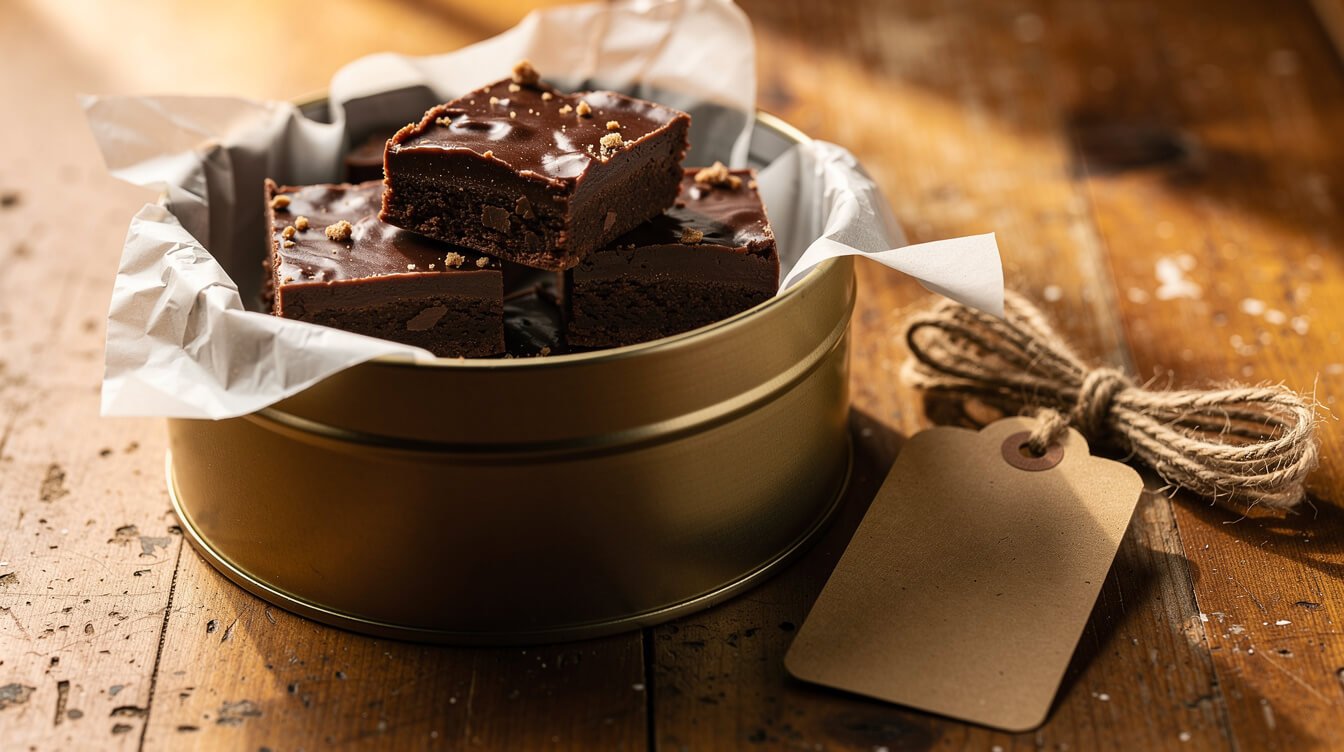
Fudge is a great gift because it travels well and keeps for days. Line a tin with parchment, set the squares in mini paper cups or in single layers with parchment between them, and close the lid tight. If it’s going in the mail or a hot car, chill it first and pack it next to something cold.
Making a full holiday tray? Fudge sits nicely next to snickerdoodles, chocolate chip cookies, and decorated sugar cookies with meringue powder royal icing. And it’s the only one of the bunch that doesn’t need an oven.
A note on allergens: this fudge contains milk, and many chocolate chips also contain soy or milk and are made on shared lines with nuts. If you’re gifting to someone with a food allergy, check every label, and label your tin with what’s inside.
Frequently asked questions
Can I use evaporated milk instead of sweetened condensed milk?
No. They’re different products. Evaporated milk has no added sugar and much more water, so your fudge won’t set and won’t be sweet. Sweetened condensed milk is thick because it’s cooked down with sugar, and that’s what makes this no-thermometer method work.
Do I need a candy thermometer?
Not for this recipe. Old-fashioned fudge cooks sugar to the soft-ball stage, which takes a thermometer and some nerve. Sweetened condensed milk fudge skips that step. You’re only melting chocolate into an already-sweetened base.
Can I use chocolate bars instead of chips?
Yes. Chop them finely and use the same weight. Baking bars often melt even more smoothly than chips, which are made to hold their shape in cookies. Watch the heat closely, since finely chopped chocolate melts fast.
How long does fudge take to set?
About 2 hours in the fridge, or around 4 hours at room temperature. If it’s still soft after 4 hours in the fridge, the problem is the ratio, not the time. See the rescue steps above.
Can I double the recipe?
Yes. Use two cans and 36 oz of chips, and spread it in a 9-by-13-inch pan. The fudge comes out about the same thickness. Melt it in a large saucepan so you can stir without spilling, and give it a little extra time to set.
Why is my fudge too sweet?
Condensed milk is very sweet. Swap some or all of the semi-sweet for bittersweet (60–70%) chocolate, and finish with flaky salt. Both cut the sweetness without changing the method.
Can I make it with peanut butter?
Yes. For chocolate peanut butter fudge, stir ½ cup creamy peanut butter into the melted base off the heat. It softens the set a little, so it’s a good time to use the full 18 oz of chocolate and chill it well.
How far ahead can I make fudge for the holidays?
Up to a week ahead if you’re storing it at cool room temperature, or 2 to 3 weeks in the fridge. For longer than that, freeze it, well wrapped, for up to 3 months.
Final thoughts: one can, one scale, and the right ratio
Sweetened condensed milk fudge has a reputation for being easy, and it is. It also has a reputation for being hit-or-miss, and that part is fixable. Use 18 oz of semi-sweet chocolate per 14-oz can (24 oz for white chocolate), melt it over low heat just until smooth, and give it time to set. That’s the difference between squares you can stack in a tin and something you eat with a spoon.
If your first batch went soft, it isn’t wasted. Re-melt it with a little more chocolate and try again. And if it came out perfect, make a second pan. Somebody always asks for the recipe.

Before you go
Want the next one?
We post a new recipe or kitchen guide every day. The best of the week lands in one short email, no life story attached.