Substitute for buttermilk in baking: match the swap to what you’re making
The best substitute for buttermilk in baking depends on what you’re making. For cakes, muffins, and quick breads, milk soured with a tablespoon of lemon juice or vinegar works fine, and nobody will taste the difference. For biscuits, pancakes, and soda bread, where buttermilk is front and center, reach for plain yogurt or sour cream thinned with milk, kefir, or powdered buttermilk instead. Plain milk on its own is the one swap that reliably lets you down.
That’s the whole answer in three sentences. The rest of this guide is the detail that keeps it from going sideways: a swap chart by bake, the ratios (and why every site gives a different one), how thick your substitute should be, whether to touch the baking soda, and what to do when you need it dairy-free.
The best substitute for buttermilk in baking, by what you’re making
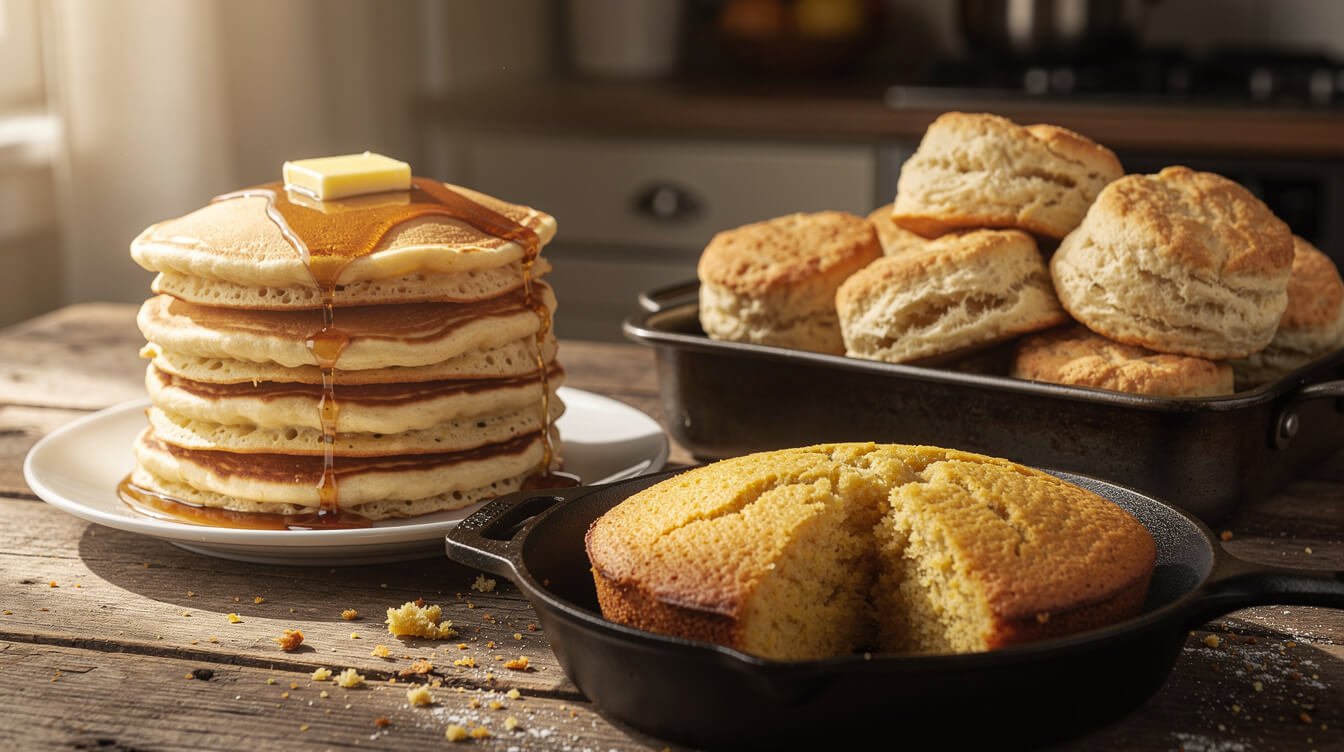
Here’s the chart to save. “Best” is the swap that gets you closest to the real thing. “Works in a pinch” is what you can use with a straight face if that’s all you’ve got.
| What you’re baking | Best swap | Works in a pinch | Watch out for |
|---|---|---|---|
| Pancakes and waffles | Powdered buttermilk, or Greek yogurt thinned with milk | Milk + vinegar | Thin swaps make flat, pale pancakes |
| Biscuits and scones | Plain yogurt or sour cream thinned with milk, or kefir | Whole milk + vinegar or lemon | Runny swaps make sticky dough that spreads |
| Cakes and cupcakes | Any acidic swap; powdered buttermilk is great in chocolate cake | Milk + lemon or vinegar | Plain milk turns a soda-leavened cake darker and denser |
| Muffins and quick breads (banana bread) | Milk + lemon or vinegar | Thinned yogurt | Overmixing matters more than the swap |
| Cornbread | Milk + lemon or vinegar | Thinned yogurt | Plain milk leaves a bitter, soapy edge |
| Soda bread and no-yeast loaves | Real buttermilk or kefir | Soured whole milk (slightly denser loaf) | Lots of buttermilk = hardest to fake |
The two rules behind the chart
The more buttermilk a recipe uses, the more the swap matters. If a chocolate cake calls for ¼ cup, almost anything acidic will do. If a soda bread calls for 1¾ cups and the only leavening is baking soda, the buttermilk is the recipe, and you want the closest stand-in you can get.
The simpler the recipe, the more you’ll taste the swap. Biscuits are flour, fat, salt, leavening, and buttermilk. There’s nowhere for a sharp vinegar note to hide. A spiced carrot cake with brown sugar and vanilla, on the other hand, will happily cover for soured milk. King Arthur’s test kitchen found the same thing: in their farmhouse cake, every acidic substitute worked, and only plain milk failed.
So the quick decision is: a small amount, or a busy recipe? Sour some milk and move on. A big pour in a plain recipe? Use thinned yogurt, kefir, or powder, or pick up a quart of buttermilk if you can.
What buttermilk actually does (and why plain milk lets you down)
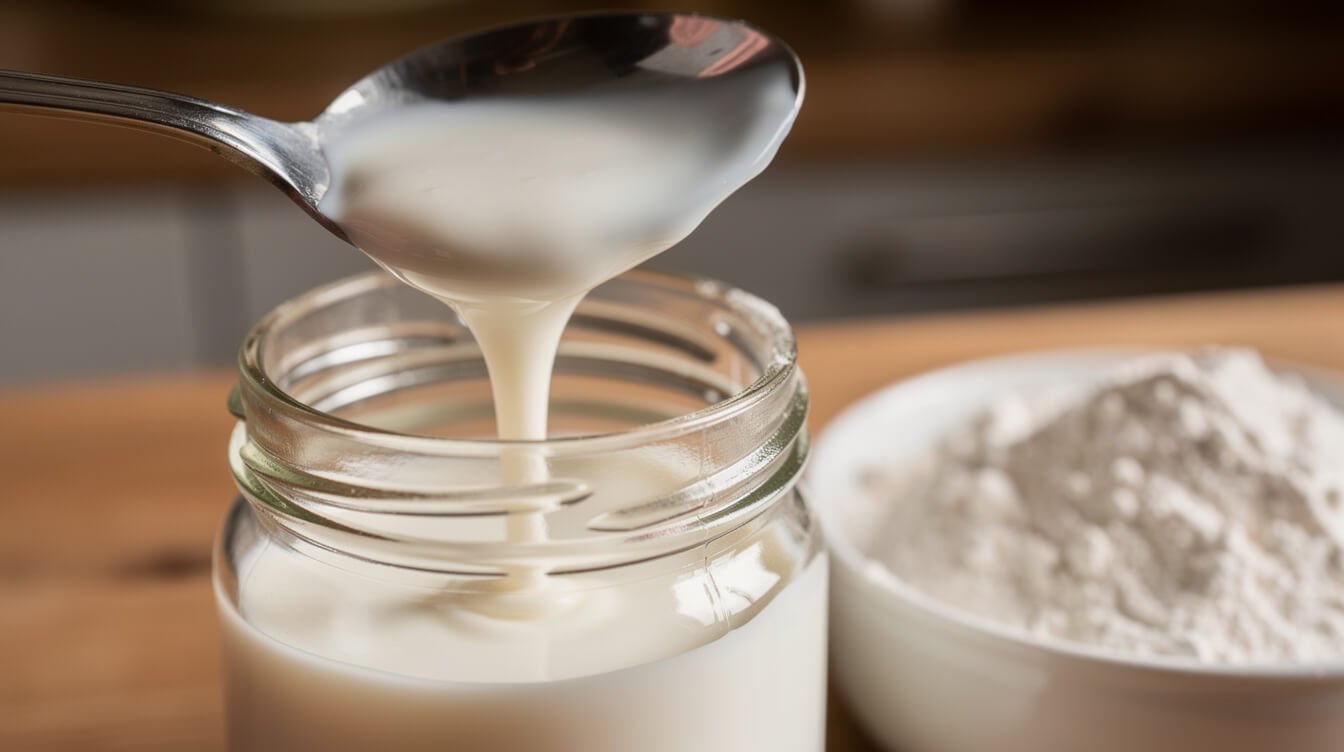
The buttermilk in a carton today is cultured: milk (usually low-fat) with friendly bacteria added, which turn some of the milk sugar into lactic acid. That acid is why it’s tangy and why it’s thicker than milk. It does three jobs in a bake, and a good substitute needs to cover at least the first two.
1. Acid, which feeds the baking soda
Baking soda is a base. It only makes bubbles when it meets an acid, and in most buttermilk recipes, buttermilk is that acid. That’s why so many buttermilk recipes use baking soda rather than (or alongside) baking powder. Most of them pair about ½ teaspoon of baking soda with each cup of buttermilk, which is roughly what that cup’s acid can handle.
Swap in plain milk and the soda has nothing to react with. You get less rise, a denser crumb, and leftover soda that tastes faintly bitter or soapy. Leftover soda also makes the batter more alkaline, and alkaline batters brown faster, which is why a plain-milk cake often comes out darker than the original.
2. Body, which shapes the batter
Buttermilk is thicker than milk. Recipes are written around that thickness, so a runny substitute gives you a looser batter or a stickier dough than the recipe expects. In pancakes that means thin, flat rounds. In biscuits it means dough that slumps and spreads instead of rising tall. Bon Appétit’s food editors go as far as saying thin substitutes make bakes “more gummy and more dense,” and in a high-buttermilk recipe, they have a point.
3. Flavor, which you’ll notice in plain bakes
Lactic acid tastes mild and round. Vinegar is acetic acid and tastes sharper; lemon juice tastes, well, lemony. In a cake, you won’t notice. In a plain biscuit, you might. Cultured swaps like yogurt, sour cream, and kefir carry the same kind of tang, which is why they win in the simple recipes.
Do you need to change the baking soda?
No, as long as your substitute is acidic. Soured milk, yogurt, sour cream, kefir, and powdered buttermilk all bring acid, so leave the baking soda and baking powder exactly as written. The only time to touch the leavening is when you’re stuck with plain milk and nothing acidic at all (more on that in the troubleshooting section).
Milk plus lemon juice or vinegar: the ratio, and when it’s enough
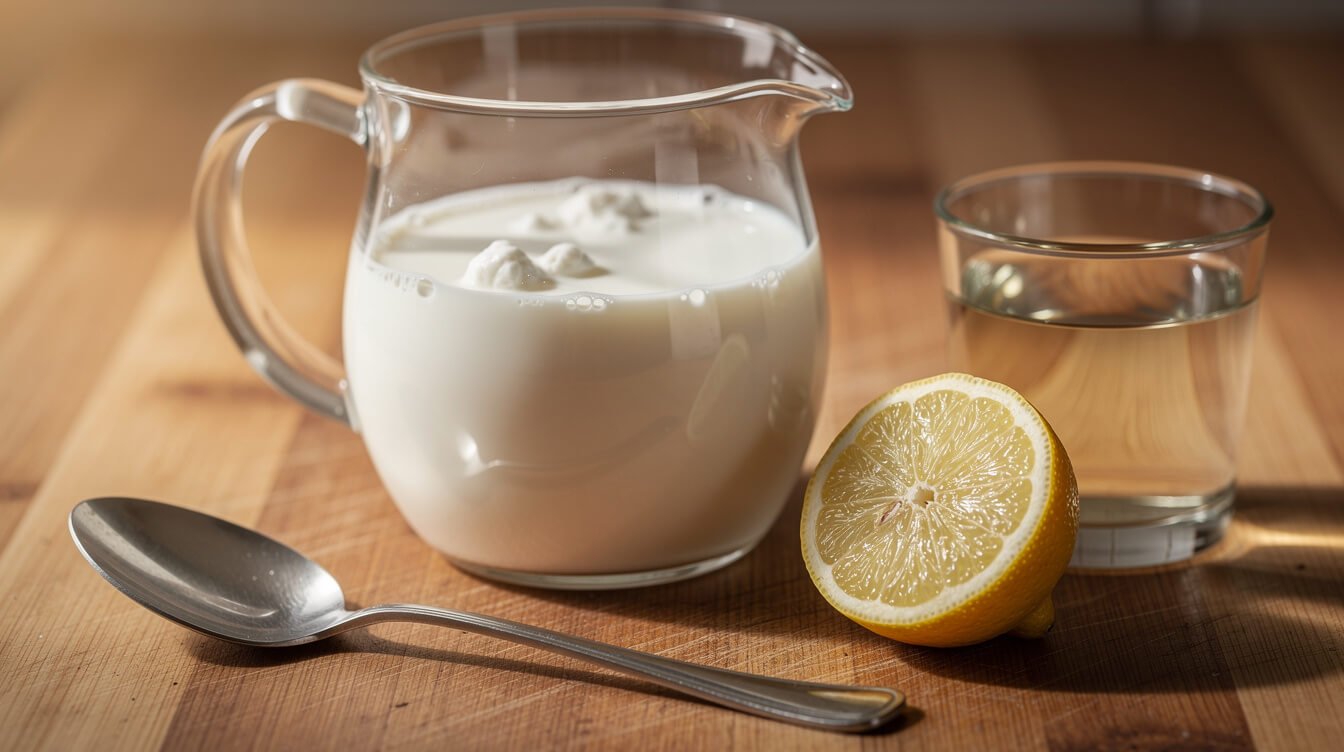
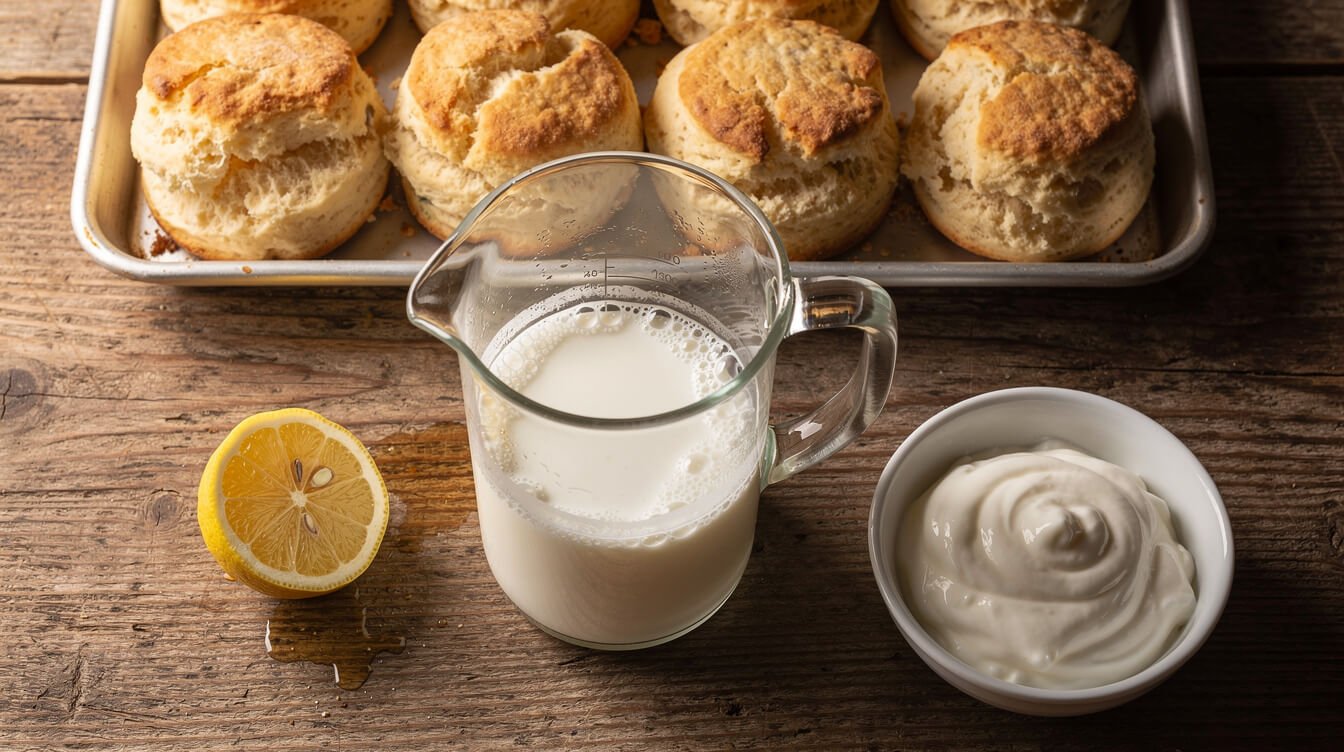
This is the substitute for buttermilk in baking that everyone has the ingredients for, and it’s the right call for most cakes, muffins, quick breads, and cornbread.
How to make it
- Put 1 tablespoon of lemon juice or white vinegar in a liquid measuring cup.
- Add milk up to the 1-cup line (240 ml). Whole milk is best; 2% is fine.
- Stir and let it sit 5 to 10 minutes. It’ll thicken slightly and look a little curdled. That’s what you want.
- Stir again and use it exactly like buttermilk, cup for cup.
Room-temperature milk curdles faster than milk straight from the fridge, so if you’re in a hurry, pour the milk first and let it sit on the counter while you measure everything else. Don’t worry if lemon juice gives you only a few soft curds. It’s working anyway.
Why every recipe gives a different amount
You’ll see anywhere from 2 teaspoons to 1½ tablespoons of acid per cup of milk, which is confusing when you’re standing at the counter. Here’s the honest version: the range doesn’t matter much. Any amount in it is enough acid to react with the baking soda in a normal recipe. Vinegar curdles milk more noticeably than lemon juice does, which is why some test kitchens call for a little extra lemon. One tablespoon of either is the easy middle, and it’s what our buttermilk cornbread recipe uses.
Which acid? White vinegar is the most neutral. Lemon juice adds a faint citrus note that’s nice in a lemon cake and a little out of place in cornbread. Apple cider vinegar works too, with a slightly fruity edge.
When soured milk isn’t enough
Soured milk does the chemistry but not the body. It’s thinner than real buttermilk. That’s fine in muffins and cakes, but in recipes that lean hard on buttermilk, like biscuits, pancakes, and soda bread, it shows. In side-by-side tests, Sally’s Baking Addiction found soured milk a close second to buttermilk in biscuits and cornbread muffins, with the soda bread coming out a touch denser. The Kitchn’s pancake test rated milk and vinegar a middling 5 out of 10, and milk and lemon a 3, mostly because the batter was too thin to puff. If you’re making one of those recipes, use whole milk and hold back a tablespoon or two of the liquid, or move on to the yogurt option below.
One note: “soured milk” here means fresh milk plus acid. It doesn’t mean milk that has gone off in the fridge. Spoiled milk isn’t cultured buttermilk, so pour it out.
Yogurt, sour cream, and kefir: thin them to the right thickness
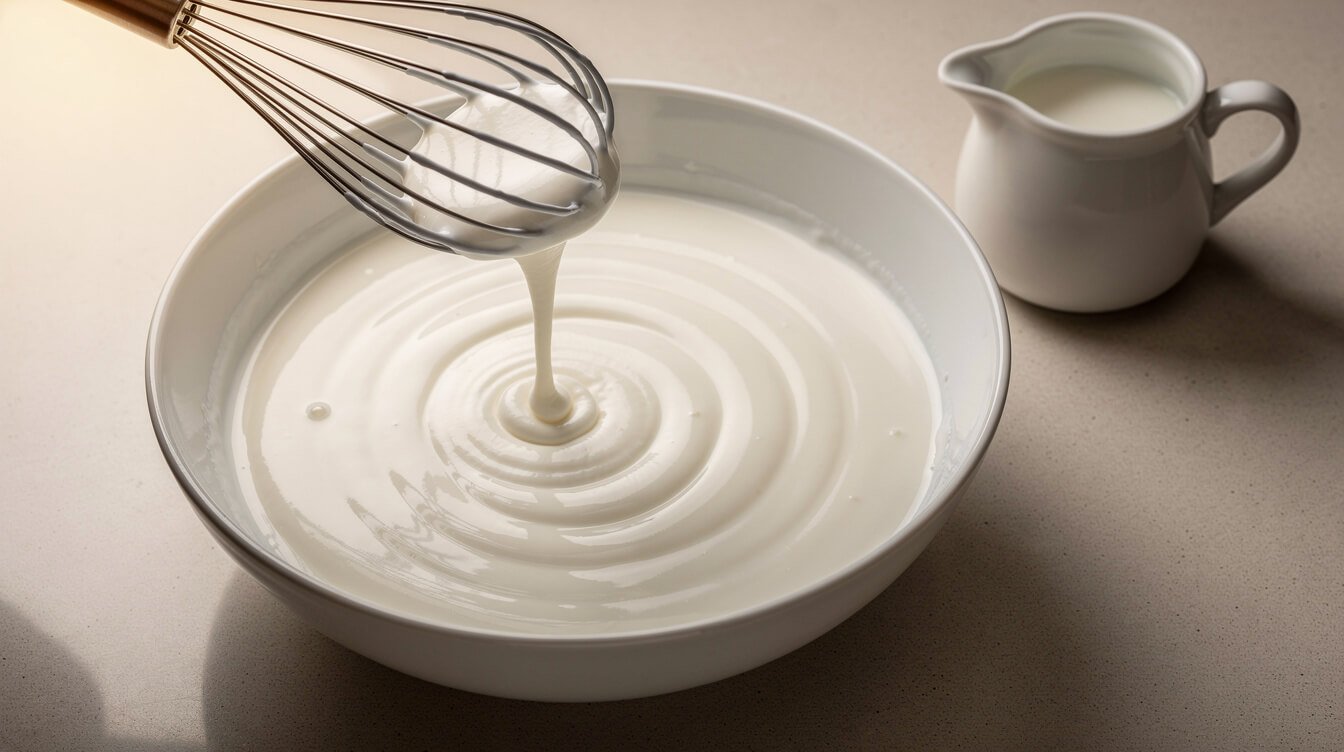
When buttermilk is the star of the recipe, these make the best substitute for buttermilk in baking. They’re already cultured, so they bring both the acid and the tang. Their only problem is that they’re too thick, so you thin them.
The ratios (per 1 cup of buttermilk)
- Plain regular yogurt: ¾ cup yogurt + ¼ cup milk or water.
- Plain Greek yogurt: ⅓ cup Greek yogurt (about 85 g) + ⅔ cup milk. Greek yogurt is strained and much thicker, so it takes more thinning.
- Sour cream: ½ cup sour cream + ½ cup milk, or ¾ cup sour cream + ¼ cup water.
- Kefir: 1 cup kefir, straight swap. It’s already about the right thickness. If yours is extra thick, add a splash of milk.
Use plain and unsweetened. Vanilla yogurt will make your biscuits taste like breakfast cereal.
The thickness check that beats any ratio
Yogurts and sour creams vary a lot by brand, so here’s the test that works with any of them: whisk until smooth, then lift the whisk. It should pour in a steady ribbon and coat a spoon, about like heavy cream. If it plops off in clumps, add milk a tablespoon at a time. If it runs off like milk, you’ve gone too far; whisk in a spoonful more yogurt.
Getting this right is the difference between pancakes that puff and pancakes that sit there. In The Kitchn’s test, Greek yogurt thinned with milk scored a 9 out of 10, and the batter was so thick it barely spread. If you like your pancakes a bit thinner, add another splash of milk to the batter itself.
A kitchen scale makes these ratios painless, especially Greek yogurt, which is a mess to pack into a measuring cup. Our 100 Essential Tools guide covers the scale and the other small tools that are worth buying first.
Which one where
- Biscuits and scones: thinned yogurt or kefir. Sally’s test found sour cream made a fluffier, less flaky biscuit. It was still good, just softer.
- Pancakes and waffles: thinned Greek yogurt or kefir.
- Soda bread: kefir, if you have it. It’s the closest match in both flavor and pour.
- Cakes: any of them. Sour cream makes an extra-tender, rich crumb.
From the Eat Cafe kitchen
One good recipe a week, straight to your inbox
The recipe we're actually cooking this week, plus the one tip that saves it when it goes sideways. No spam. Unsubscribe anytime.
Powdered buttermilk and cream of tartar: the pantry options
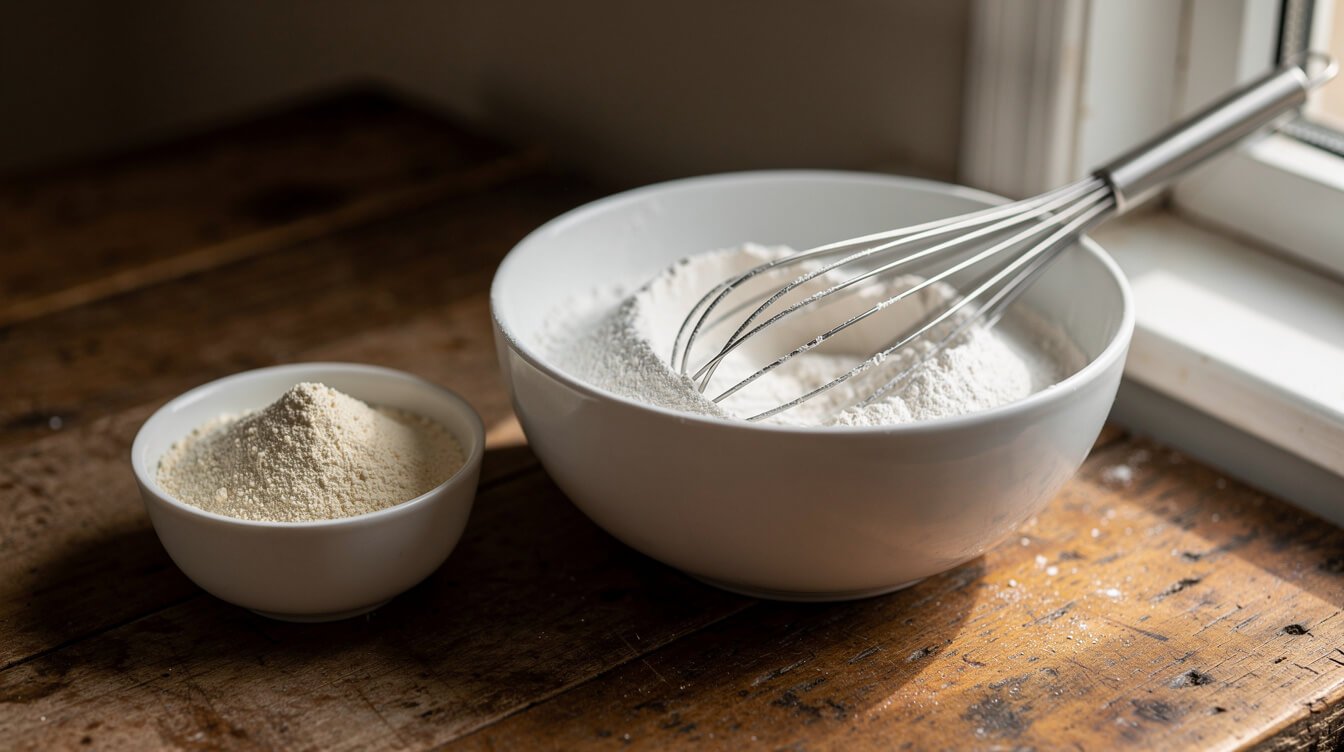
Powdered buttermilk: worth keeping around
If you bake with buttermilk a few times a year and hate tossing most of a quart, a canister of buttermilk powder is the fix. It’s real buttermilk, dried, so it has the right lactic tang. It won The Kitchn’s pancake test outright, and America’s Test Kitchen found it the best swap in chocolate cake.
Follow the conversion on the canister. Most say to whisk the powder into the dry ingredients and add the water where the recipe adds the buttermilk. The catch is clumping. Sally’s Baking Addiction tried it that way and found undissolved clumps of powder in the biscuits and soda bread. Two ways around that:
- Whisk it hard into the flour, pressing out any lumps with the back of a spoon before the liquid goes in.
- Or dissolve it in the water first, then use it like liquid buttermilk. It’ll be thinner than the carton stuff, so in biscuits, hold back a tablespoon of the water.
Store it the way the canister says once it’s open.
Cream of tartar: chemistry only, last resort
Cream of tartar is a dry acid, so it can stand in for buttermilk’s acid: about 1¾ teaspoons per cup of milk. It brings no tang and no body, though, and it doesn’t like to dissolve in cold milk. The Kitchn rated it 2 out of 10 in pancakes, which came out rubbery underneath. If it’s what you have, whisk the cream of tartar into the dry ingredients and use plain milk as the liquid. It’s fine in a cake, but skip it for biscuits.

Measure it right, swap it right
Our 100 Essential Tools eBook covers the measuring cups, scale, whisks, and pans that earn their spot in a home kitchen, so you buy the useful stuff first. PDF or Kindle.
Dairy-free buttermilk substitutes that actually work
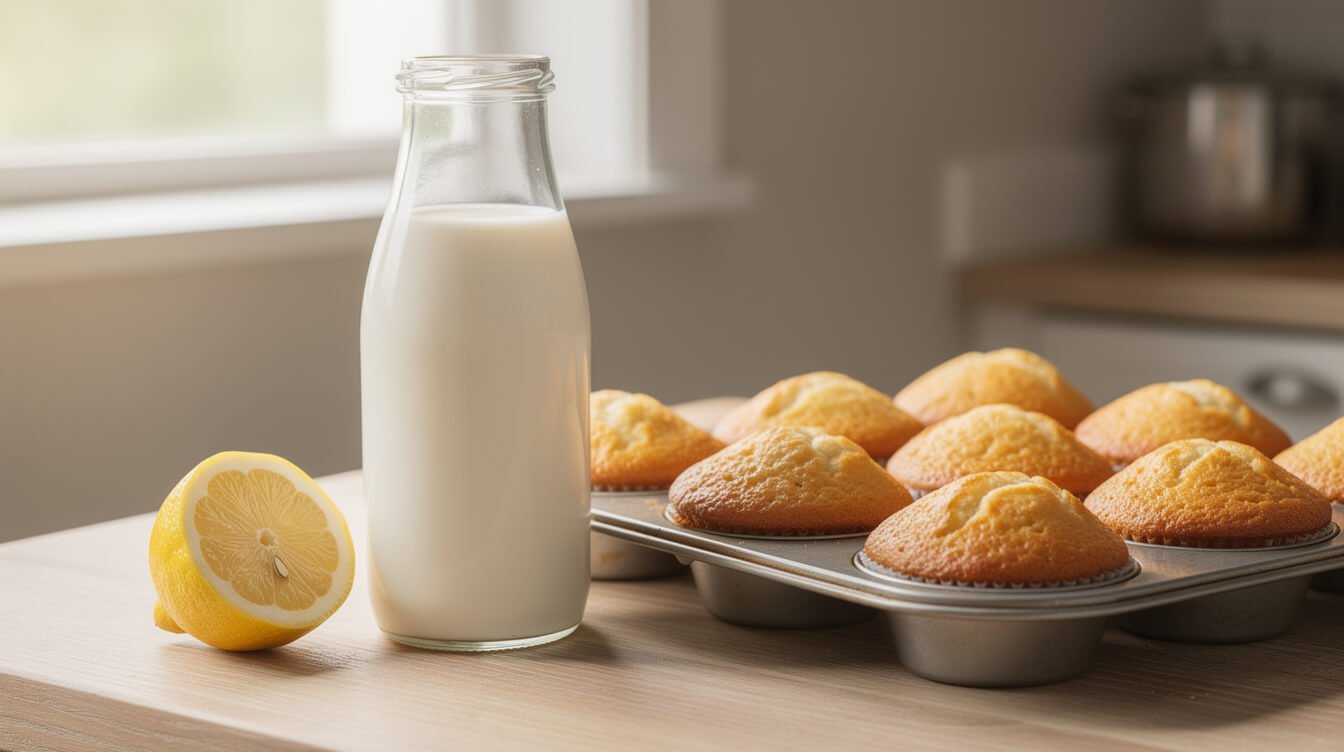
A dairy-free substitute for buttermilk in baking is easy to get right, as long as you pick the right milk. Plant milks don’t all behave the same once you add acid, and the difference comes down to protein. Milk curdles because acid makes its proteins clump, and that clumping is what gives soured milk its bit of body. Unsweetened soy milk has roughly as much protein as dairy milk (around 6 to 8 grams a cup on most labels), so it thickens nicely. Almond, rice, and most oat milks have far less, so they barely change at all.
You can see it in the results. The Kitchn’s almond milk and cider vinegar version scored 1 out of 10 in pancakes: thin batter, no rise, a dense and spongy stack.
Best dairy-free options
- Unsweetened soy milk + acid: 1 tablespoon lemon juice or vinegar, topped up to 1 cup with soy milk, rested 5 to 10 minutes. This is the one to use for most bakes.
- Plain unsweetened dairy-free yogurt, thinned: about ¾ cup yogurt + ¼ cup plant milk, adjusted to the heavy-cream thickness check above. Coconut- and soy-based yogurts work. Read the label for added sugar.
- Low-protein milks (almond, oat, rice) + acid: fine in muffins, quick breads, and cakes, where the batter has eggs and fat to carry it. Avoid them for pancakes and biscuits.
Expect a slightly less tender crumb than with dairy. That’s the fat and the protein, not your technique. Our butter substitute guide covers the other half of a dairy-free bake.
Baking for someone with a milk allergy? Check every label in the recipe, not just the milk. Butter, chocolate chips, and some products sold as “non-dairy” can contain milk ingredients. If you’re not sure, ask the person you’re baking for.
Troubleshooting: flat, gummy, bitter, or spread out
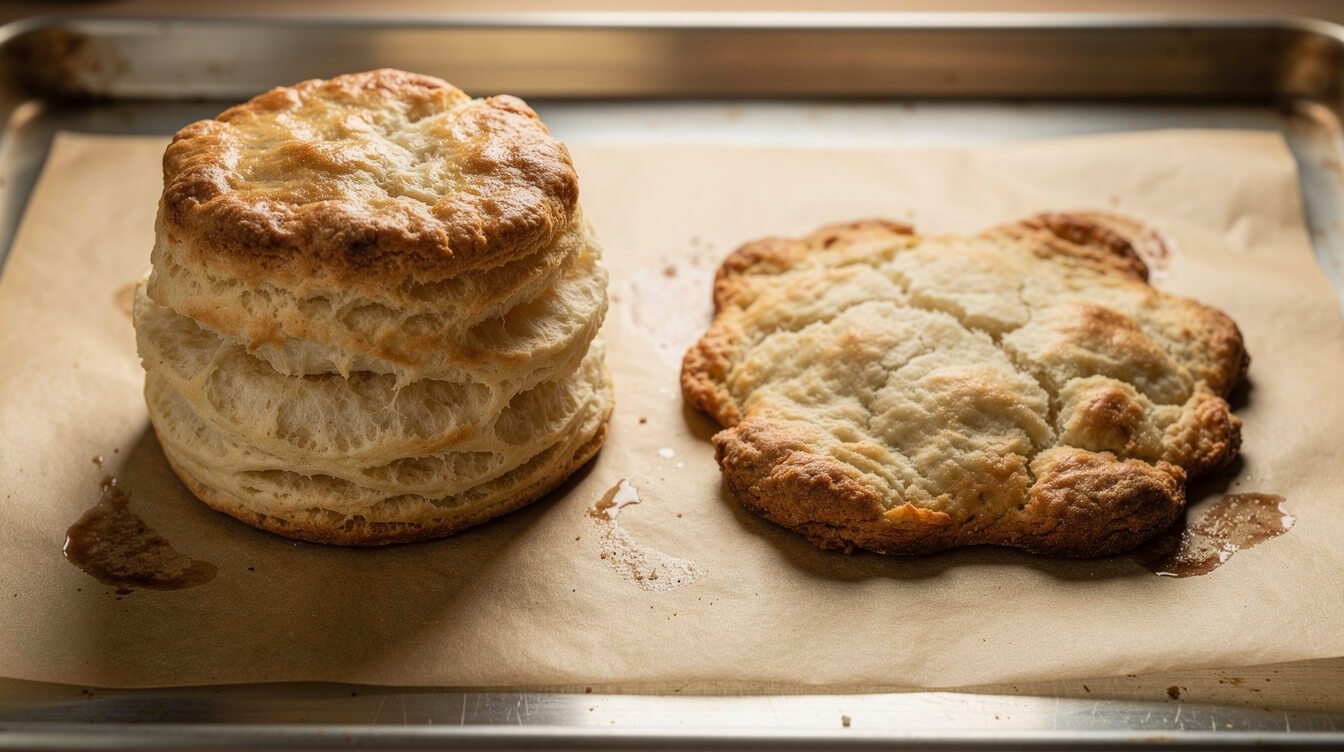
If a bake with a substitute went wrong, it’s usually one of these.
Flat and dense
The likely cause is plain milk with no acid, so the baking soda never fired. Next time, sour the milk. Overmixing can do it too, swap or no swap: stir buttermilk batters just until the flour disappears. Our guide to fixing dense banana bread walks through the mixing mistakes in detail.
A bitter, soapy, or metallic aftertaste
That’s leftover baking soda with no acid to neutralize it. Sally’s test found exactly this in cornbread muffins made with plain milk. The fix is the same: an acidic swap.
Biscuits that spread instead of rising
The substitute was too thin. Soured milk is runnier than buttermilk, so the dough comes out wetter than the recipe intended. Hold back 1 to 2 tablespoons of the liquid and add it only if the dough is too dry to come together, or use thinned yogurt instead.
Gummy or wet in the middle
Again, too much thin liquid, especially in loaves. Hold back a little liquid, and bake until a toothpick comes out clean, even if that means a few extra minutes.
Pancakes that won’t spread
The opposite problem: the yogurt or sour cream wasn’t thinned enough. Whisk a splash of milk into the batter until it pours.
Clumps of powder in the crumb
The powdered buttermilk didn’t get worked into the flour. Next time, whisk it in harder or dissolve it in the water first.
Only plain milk, no acid in the house?
You can still rescue a recipe that uses baking soda. Swap each ½ teaspoon of baking soda for about 1½ teaspoons of baking powder, which carries its own acid. Keep any baking powder the recipe already calls for. You’ll lose the tang and a little tenderness, but you’ll get the rise. Our simple no-yeast bread is a good example of a loaf built on baking powder that doesn’t need buttermilk at all.
Substitute for buttermilk in baking: quick questions
Can I just use regular milk instead of buttermilk?
Only if the recipe uses a small amount (¼ cup or less) or has no baking soda. Otherwise, add 1 tablespoon of lemon juice or vinegar per cup first. It takes 5 minutes and saves the bake.
Is lemon juice or vinegar better?
For most bakes, it’s a tie. Vinegar is more neutral in flavor and curdles the milk more visibly. Lemon adds a light citrus note that suits lemon cakes and blueberry muffins.
Can I use skim milk?
It works, but your bake won’t be as rich or tender. Whole milk makes the closest substitute because it has more body, which helps make up for being thinner than buttermilk.
Can I use Greek yogurt without thinning it?
Not cup for cup. It’s far thicker than buttermilk and will make a stiff, dry dough. Use ⅓ cup Greek yogurt with ⅔ cup milk for each cup of buttermilk.
Does the substitute change the baking time?
Usually not. Thinner swaps can need a few extra minutes in loaves and dense cakes, so go by the toothpick test, not just the timer.
What do I do with the rest of a carton of buttermilk?
Freeze it in measured portions (½ cup is handy) or in an ice cube tray. It separates when it thaws, so thaw it in the fridge and whisk it smooth before using. It’s perfect for baking, though not for drinking.
Can I use a substitute in a recipe that’s named for buttermilk?
Yes, with the right swap. Buttermilk pancakes and biscuits are exactly where thinned yogurt, kefir, or powder earn their keep. Our cornbread and banana bread both handle soured milk well, and so does a classic from-scratch cake.
The bottom line
A substitute for buttermilk in baking needs two things: acid for the baking soda, and enough body to keep the batter where the recipe expects it. For cakes, muffins, quick breads, and cornbread, a tablespoon of lemon juice or vinegar topped up to a cup with milk does both well enough. For biscuits, pancakes, and soda bread, use thinned yogurt, sour cream, kefir, or powdered buttermilk, and check that it coats a spoon like heavy cream. Skip plain milk unless the amount is tiny.
This is part of our substitution series. If tonight’s recipe needs another swap, we’ve also covered vegetable oil in baking, heavy cream, and salted vs unsalted butter. Save the chart up top, and go make the thing.

Before you go
Want the next one?
We post a new recipe or kitchen guide every day. The best of the week lands in one short email, no life story attached.