What can substitute heavy cream? It depends on whether you’re whipping, simmering, or baking
The recipe says heavy cream, the carton in your fridge is empty (or quietly expired), and the store is twenty minutes away. So what can substitute heavy cream? The honest answer is that it depends on what the cream is doing in that recipe. Is it getting whipped into peaks? Simmering in a pan sauce? Going into biscuit dough? Each of those jobs has a different best swap, and the one that’s perfect in scones will curdle in a tomato cream sauce. Below is a chart by job, the fat math behind the classic milk-and-butter swap (it isn’t what most people think), the swaps that hold up to heat and acid, an honest answer on whipping, dairy-free options, and how to rescue a substitute that split or went thin.
What can substitute heavy cream? The quick answer by job
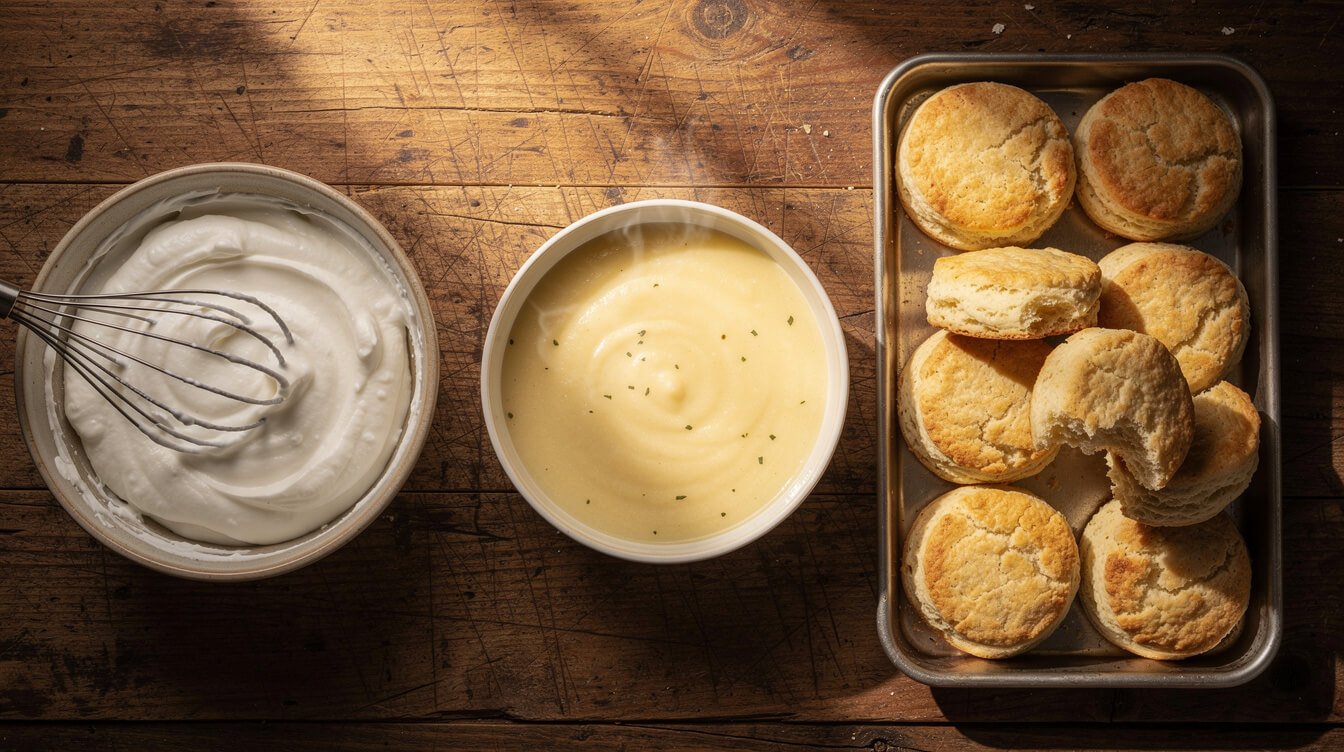
Start here. Find the job, grab the swap, and scroll down only if you want the why.
| What the cream is doing | Best swap (for 1 cup heavy cream) | Also works | Skip |
|---|---|---|---|
| Whipping (topping, mousse, frosting) | Light whipping cream, 1 cup | Chilled coconut cream; a store-bought “whippable” plant cream | Milk and butter, half-and-half, evaporated milk if you need peaks that hold |
| Hot soups and sauces (no acid) | ¾ cup whole milk + ¼ cup melted butter, plus 1 tablespoon flour | Evaporated milk, 1 cup; half-and-half, 1 cup | Plain milk on its own (thin and likely to break) |
| Sauces with tomato, wine, or lemon | Evaporated milk, or milk and butter thickened with flour, added off the boil | Cream cheese whisked in off the heat | Greek yogurt or sour cream at a simmer |
| Baking (scones, biscuits, quick breads, cakes) | ¾ cup whole milk + ¼ cup melted butter | Half-and-half; evaporated milk | Anything sweetened (like sweetened condensed milk) unless you cut the sugar |
| Dairy-free | Full-fat coconut cream, 1 cup | Cashew cream; silken tofu blended with soy milk | Thin plant milks straight from the carton |
A quick note on names, because labels make this harder than it needs to be. In the US, heavy cream and heavy whipping cream are the same thing: at least 36% milkfat. Whipping cream (sometimes labeled “light whipping cream”) is 30–36%. It’s lighter, but it still whips and it still cooks well, so if that’s what you have, use it 1:1 and stop reading. Everything below is for when you don’t have any of the above.
If you’ve worked through our other substitution guides, like the butter substitute in baking one, you’ll recognize the pattern. The right answer is never one magic ingredient off a list. It’s whichever swap does the same job.
The fat math: why milk and butter isn’t really heavy cream
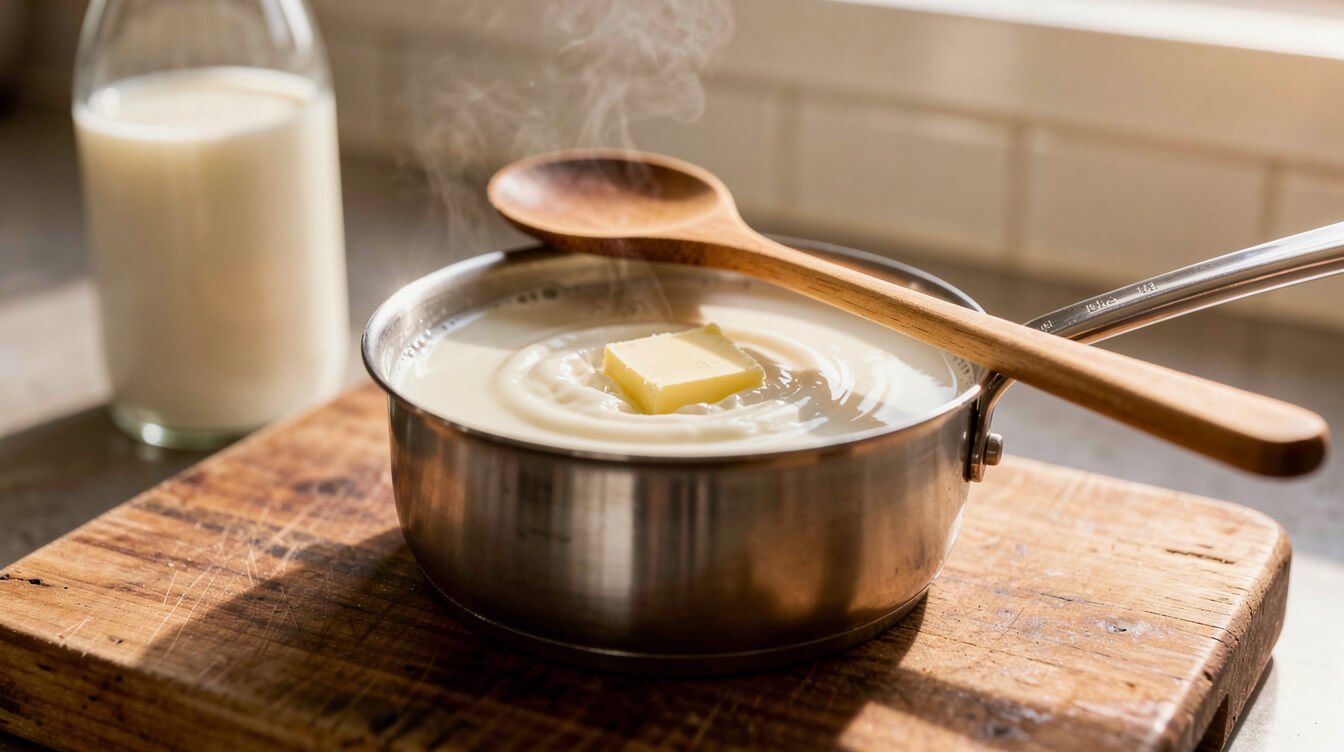
Ask anyone what can substitute heavy cream and almost every answer starts with the same swap: ¾ cup milk plus ¼ cup melted butter equals 1 cup heavy cream. It’s a good swap. It just isn’t heavy cream, and knowing why explains almost every way it can go wrong.
Here’s the arithmetic, using US standards (butter is at least 80% milkfat, whole milk is about 3.25%):
- ¼ cup butter is about 57 grams, which carries roughly 45 grams of fat.
- ¾ cup whole milk is about 183 grams, which carries roughly 6 grams of fat.
- Together that’s about 240 grams of liquid with about 51 grams of fat, or roughly 21–22% fat.
Heavy cream is 36% or more. So the classic swap lands at about light cream strength, not heavy cream. Use 2% or skim milk and you drop to around 19–21%. Half-and-half plus a couple tablespoons of butter comes out in the same neighborhood, roughly 20–25%, depending on the brand of half-and-half.
What that missing fat changes
That gap matters for three reasons:
- It won’t whip. Cream needs about 30% fat, in the form of tiny fat globules that are still whole, to trap air and hold it. Melted butter stirred into milk has neither. More butter won’t fix this, either. Even if you push the ratio up to 36% fat, you’ve made a rich liquid, not whippable cream.
- It’s more likely to curdle. In heavy cream there’s so much fat compared to milk protein that the protein is protected. That’s why you can boil cream hard, or add it to a tomato sauce, and it stays smooth. At 20% fat there’s more exposed protein, and heat plus acid makes that protein clump. More on that in the next section.
- It’s thinner. Heavy cream thickens a sauce as it reduces. A lower-fat swap gives you a looser sauce unless you add a little starch.
You can get closer to heavy cream by using more butter. 1 cup whole milk with 8 tablespoons (a full stick) of butter comes to roughly 28–29% fat. That’s a lot of butter for one cup, and for most baking and soups the ¾-and-¼ version is plenty. Save the richer ratio for something like a ganache or a pan sauce where the cream is the star.
The butter also tends to float back to the top as the mix cools. The fix is in the baking section below.
For soups and sauces: what can substitute heavy cream without curdling
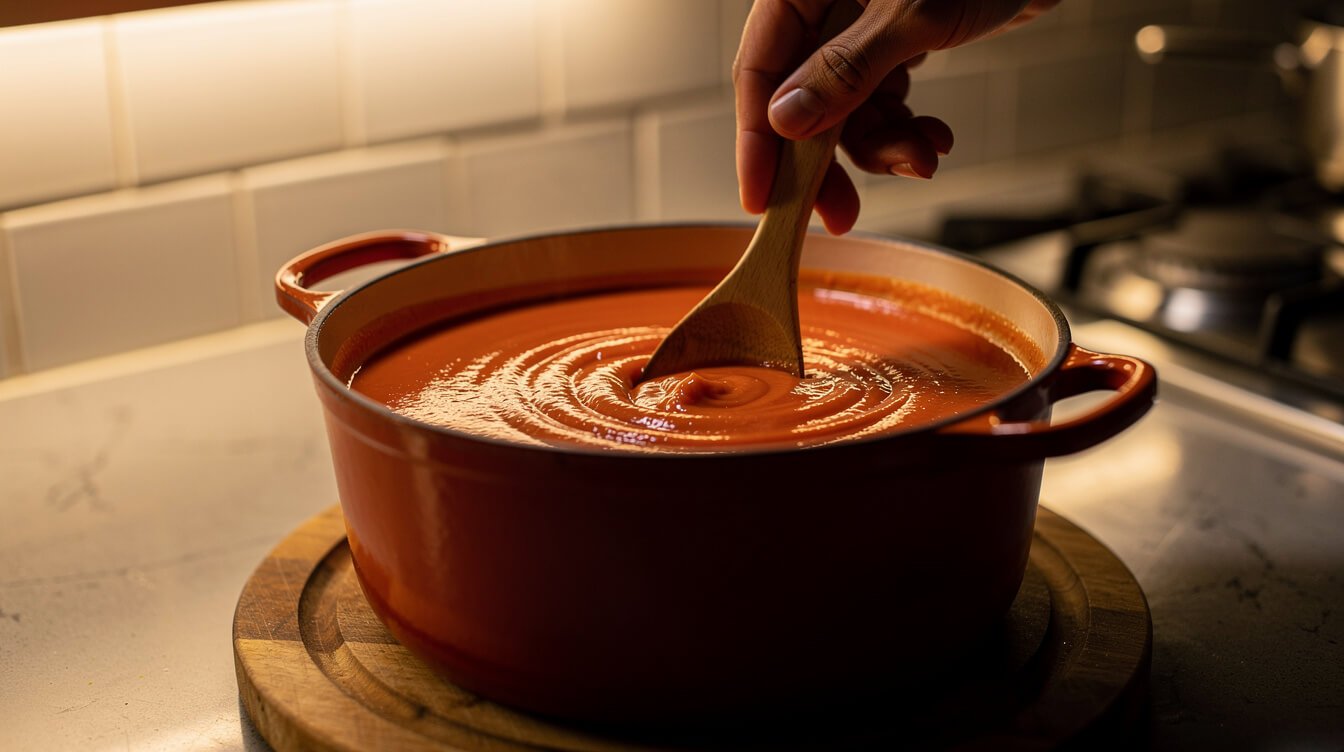
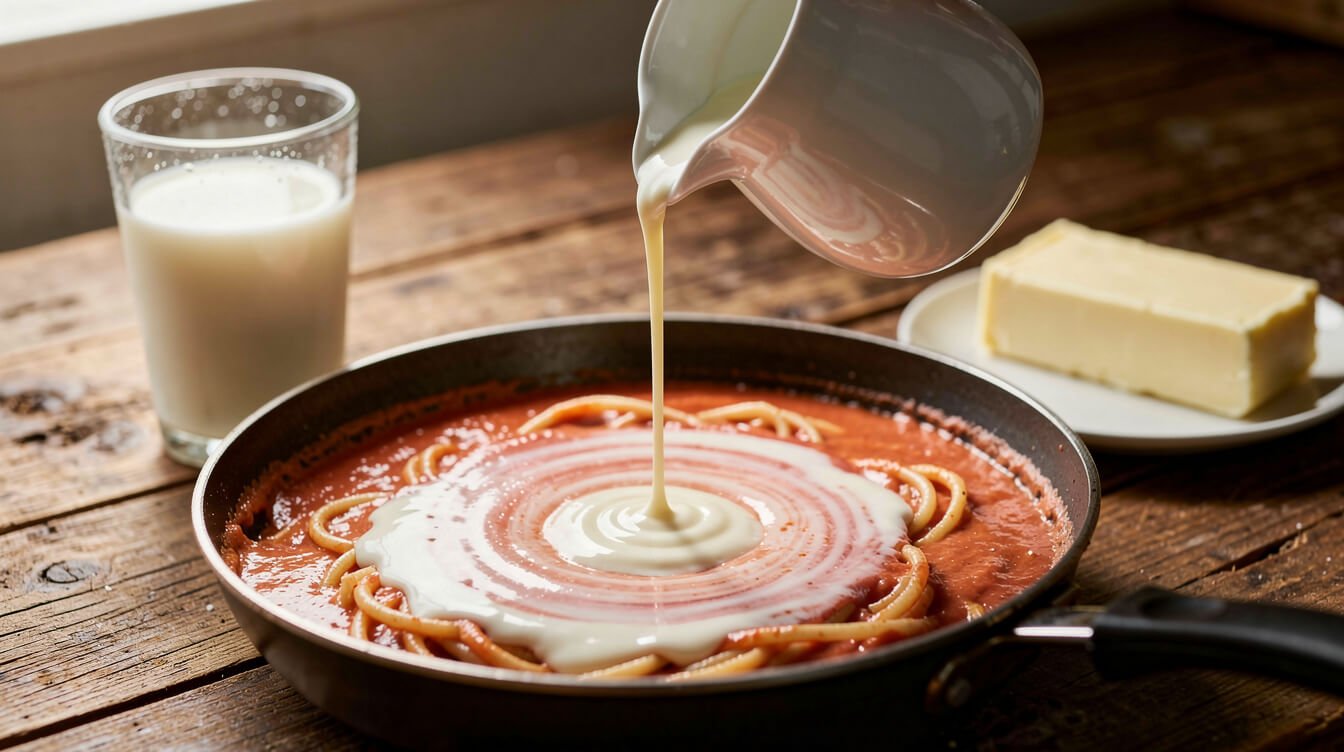
This is the job where swaps fail most often, so it gets the most detail. The usual failure: you stir milk or half-and-half into a simmering tomato cream sauce, a wine pan sauce, or a lemony chicken dish, and it turns grainy, with little white flecks floating in watery sauce. That’s curdling. Two things cause it, and they’re worse together: high heat and acid (tomatoes, wine, citrus, even some cheeses).
The swaps, from most to least forgiving
- Evaporated milk (1 cup for 1 cup). About 60% of the water has been cooked off, so it has more body than milk. It also holds up to simmering better than fresh milk does. It has a faint cooked-milk sweetness that disappears in chowder, mac and cheese, or a creamy casserole. It’s shelf-stable, so it’s the one to keep in the pantry. Make sure it’s evaporated and not sweetened condensed milk, which is loaded with sugar.
- Milk and butter with a little flour. Melt the ¼ cup butter in the pan, whisk in 1 tablespoon flour, cook it for a minute, then slowly whisk in the ¾ cup milk. That’s a quick roux, and the cooked flour is what keeps the sauce from breaking. Bring it to a gentle simmer so the flour fully thickens.
- Half-and-half (1 cup for 1 cup). Fine in a soup or sauce that won’t boil and has no acid. Keep it at a gentle bubble at most.
- Cream cheese. Soften 3–4 ounces with a few tablespoons of the hot liquid, whisk it smooth, then stir it in off the heat. It’s thick and tangy, great in a creamy tomato soup or a pasta sauce.
- Greek yogurt or sour cream. Use only at the very end, off the heat, after tempering. These are the most likely to split. If you’re working with mascarpone instead, our mascarpone substitute guide covers how to keep that from splitting too.
Four habits that prevent curdling
- Cook the acid first. Reduce the wine or simmer the tomatoes before any dairy goes in. Raw wine is harsher than wine that’s cooked down.
- Take the pan off the boil. Turn the heat down to low, or off, before adding the dairy. A rolling boil is the fastest way to break a lower-fat swap.
- Temper it. Whisk a ladle of the hot sauce into the dairy in a separate bowl, then pour that warmed mixture back into the pan. This keeps the dairy from hitting a sudden temperature jump.
- Give it a little starch. Flour (as above) or a slurry of 1–2 teaspoons cornstarch stirred into the cold milk first. Starch is the best insurance against curdling.
Want some ideas for finishing that soup once it’s smooth? These cream soup topping ideas are a good place to start.
For baking: milk and butter, done the right way
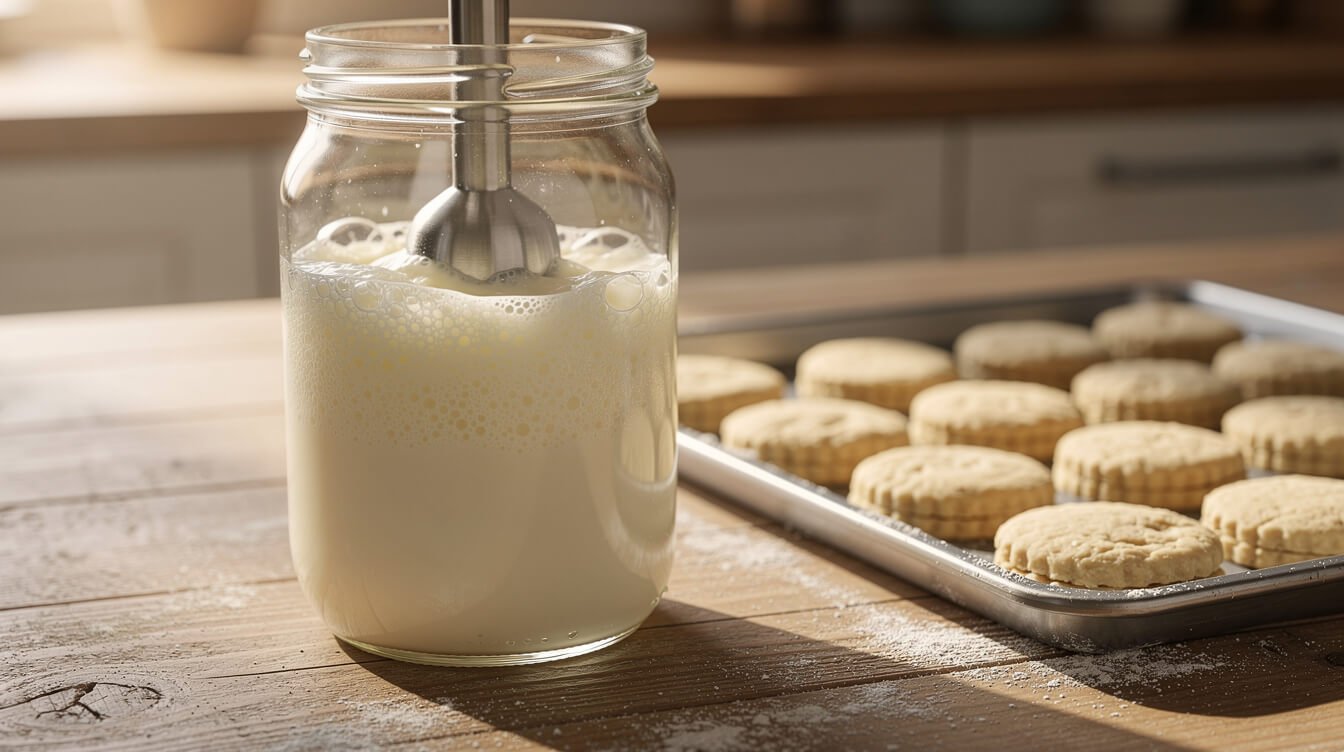
Good news: baking is the easiest job to fill. If you’re asking what can substitute heavy cream in scones, biscuits, quick breads, muffins, cakes, and casseroles, you’re in luck, because the cream is mostly there for fat and moisture, and ¾ cup milk with ¼ cup melted butter covers both. In most recipes nobody will notice.
The one step most people skip: emulsify it
If you just stir melted butter into cold milk, the butter firms up into little flecks and floats. That’s fine if it’s going straight into a batter. But if you’re making it ahead or using it in something smooth, blend it:
- Warm the milk and butter together until the butter just melts. Don’t boil it.
- Let it cool for a few minutes so it’s warm, not hot.
- Blend it with an immersion blender or a regular blender for about a minute, until it’s foamy and fully combined.
Blending breaks the butter into tiny droplets that stay suspended much longer. If you make it ahead, keep it covered in the fridge, use it within 2 days, and whisk it before using, since some separation is normal. Like any dairy, don’t leave it out at room temperature for more than 2 hours. If you’re kitting out a kitchen, our 100 Essential Tools guide covers which small appliances, like a stick blender, are actually worth buying first.
Where the swap needs a small adjustment
- Cream scones and cream biscuits. When cream is the only fat and liquid in the dough, the swap makes a slightly stickier dough. Hold back a tablespoon or two of the liquid and add it only if the dough looks dry.
- Ganache. It works, but it sets a little softer. Use the richer 1 cup milk and 1 stick butter version, or use a bit less liquid than the recipe says.
- Custards, panna cotta, and ice cream. Here the cream’s fat is the texture. A 20% swap gives you a looser custard and an icier ice cream. It’s edible, but it isn’t the same dessert. If you can, wait until you have cream for these.
The same logic applies when you’re swapping other fats. Our guide to substitutes for vegetable oil in baking breaks down what each swap does to the crumb.
From the Eat Cafe kitchen
One good recipe a week, straight to your inbox
The recipe we're actually cooking this week, plus the one tip that saves it when it goes sideways. No spam. Unsubscribe anytime.
If you need to whip it: the honest answer
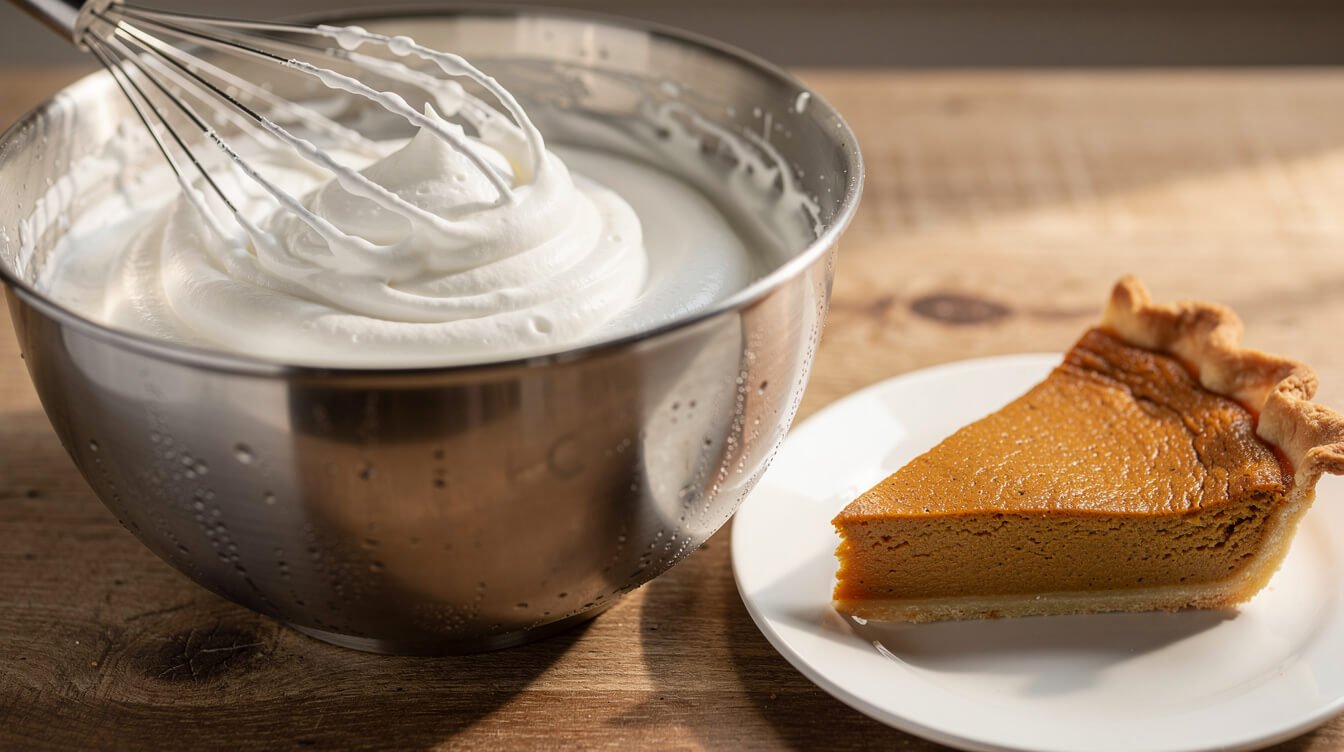
Here’s the part most lists blur when they answer what can substitute heavy cream: almost nothing whips like cream. Whipping depends on cream’s fat (30% or more) in its natural form, which partly sticks together around air bubbles and holds them in place. Milk and butter can’t do it. Half-and-half can’t hold peaks. If your recipe is whipped cream, a mousse, or a whipped frosting, here’s what actually works:
- Light whipping cream. If the store has it, this is the only true 1:1 swap. It whips a little softer and deflates a little faster, so whip it cold and serve it soon.
- Chilled full-fat coconut cream. Chill a can of full-fat coconut cream (or coconut milk) in the fridge overnight, scoop off the thick solid top layer, and whip it in a cold bowl. It makes soft peaks with a clear coconut flavor. That flavor is great on pumpkin pie and less great on a strawberry shortcake. Brands vary a lot. Some cans stay runny no matter how long they’re chilled, so if one brand fails, try another.
- Store-bought plant-based whipping cream. Look for “whipping” or “whippable” on the carton. These are designed for the job and are the most predictable dairy-free option.
- Very cold evaporated milk. Chill the can and the bowl until both are very cold, then whip. You’ll get a light, foamy topping, not stable peaks, and it loses volume fairly quickly. Make it right before serving.
If dessert is pie, here’s a practical tip: a pie with a good crust, like one from our blind-baking guide, still tastes great with a scoop of ice cream or a spoonful of plain thick yogurt on top instead.

Know which tools earn their spot
A whisk, a stick blender, a cold metal bowl, and a heavy saucepan do most of the work on this page. Our 100 Essential Tools guide walks through what’s worth having in a home kitchen, what you can skip, and what to buy first. It’s a PDF or Kindle download.
Dairy-free heavy cream substitutes (and a note on allergies)
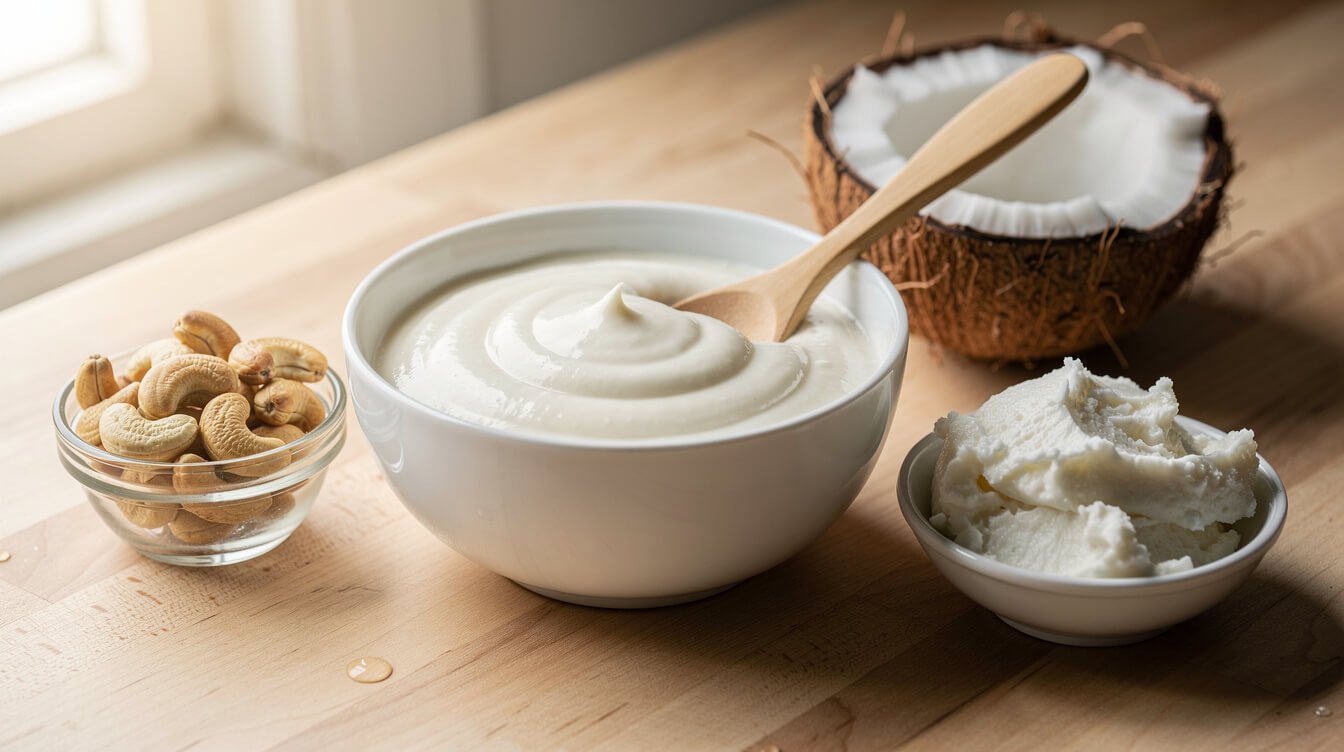
If you’re cooking for someone who avoids dairy, the job still decides the swap.
- Full-fat coconut cream (1 cup for 1 cup). The richest option. It’s great in curries, soups, and desserts and whips when chilled (see above). It tastes like coconut, so pick dishes where that fits. For the lighter canned version, our coconut milk substitute guide goes the other direction.
- Cashew cream. Soak 1 cup raw cashews in water for a few hours (or in hot water for 30 minutes), drain, then blend with about ¾ cup fresh water until completely smooth. It’s neutral and rich, great in pasta sauces and creamy soups. It won’t whip.
- Silken tofu blended with soy milk. Blend equal parts until smooth. Neutral, high in protein, good in soups and blended sauces. It doesn’t love a hard boil, so add it toward the end.
- Oat or soy milk with a neutral oil or vegan butter. Roughly ¾ cup plant milk to ¼ cup fat, blended the same way as the dairy version. It’s fine in baking, but thinner in sauces, so add a teaspoon of cornstarch.
- Store-bought plant-based cooking cream. The easiest route. Check whether the carton says it’s for cooking, for whipping, or both.
If you’re cooking around a food allergy
Every swap here is made from a common allergen or a near neighbor. Here’s what each one contains: cashew cream is a tree nut, tofu and soy milk are soy, and many plant creams are made from nuts, soy, or oats, which may also be processed with wheat. Coconut is a separate question, and some people with tree-nut allergies are told to avoid it too. Ask whoever manages the allergy, and don’t assume. Ingredients and factory practices change, so read the full label every time you buy, even for a brand you’ve bought before.
Why your substitute curdled or went thin (and how to rescue it)
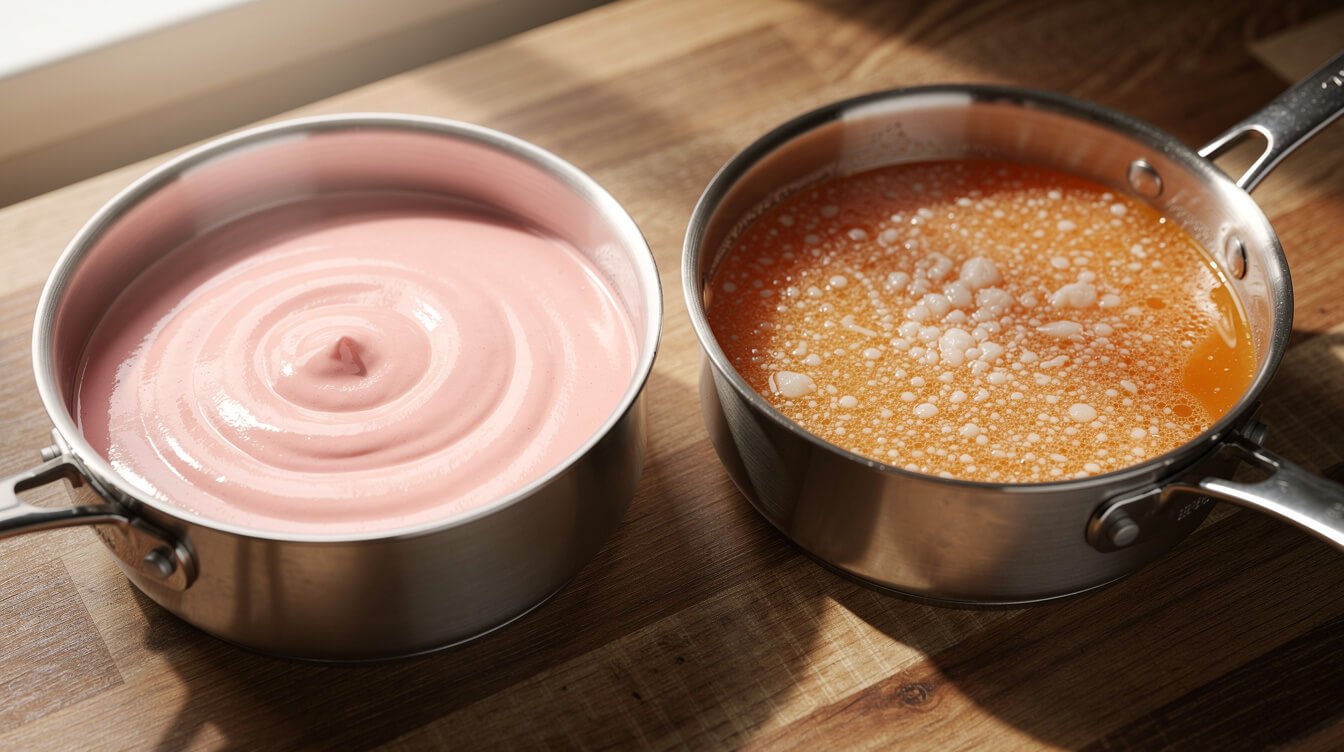
Something went wrong. Here’s how to tell what happened and what to do next.
It’s grainy, with white flecks
What happened: the swap curdled. Usually the heat was too high, the sauce was acidic, or both, and a lower-fat dairy couldn’t handle it.
The rescue: pull the pan off the heat right away. Whisk hard, or blend it with an immersion blender. In a soup, blending usually makes it fully smooth again. In a sauce, whisk in a splash of cold milk and a teaspoon of cornstarch stirred into a little cold water, then rewarm gently without letting it boil. Be honest with yourself: a badly split sauce won’t come back glossy. But a smooth, slightly less silky sauce is still a good dinner. Next time, follow the four habits from the soups section.
It’s thin and watery
What happened: the swap has less fat and less body than heavy cream, so it doesn’t thicken as it reduces.
The rescue: stir 1–2 teaspoons cornstarch into a few tablespoons of cold milk, whisk it into the sauce, and bring it to a gentle simmer for a minute. Cornstarch needs that simmer to thicken. A handful of finely grated Parmesan helps too, stirred in off the heat. For next time, start with the flour version of the milk-and-butter swap.
There’s a greasy layer on top
What happened: the butter separated out of the milk, usually because the mix wasn’t blended or it boiled.
The rescue: lower the heat and whisk steadily, or give it a quick pulse with a stick blender. A spoonful of flour or cornstarch slurry helps hold it together.
The whipped topping went flat
What happened: the swap didn’t have enough fat to whip (see the honest answer above), or it got warm.
The rescue: there isn’t one, so don’t keep whipping. Use it as a pourable sauce over cake or fruit instead. For a topping that holds, use light whipping cream, chilled coconut cream, or a whippable plant cream.
Heavy cream vs. whipping cream vs. half-and-half
Here’s one chart for when you’re standing in the dairy aisle. The fat ranges are the US federal standards (the FDA’s standards of identity for cream and milk products).
| Product | Milkfat | Whips? | Handles a boil? |
|---|---|---|---|
| Heavy cream / heavy whipping cream | 36% or more | Yes, firm peaks | Yes, very forgiving |
| Whipping cream / light whipping cream | 30–36% | Yes, softer peaks | Mostly; gentler with acid |
| Light cream (coffee cream) | 18–30% | No | Gently; can split with acid |
| Half-and-half | 10.5–18% | No | Gently; splits easily with acid |
| Milk + butter (¾ cup + ¼ cup) | About 21–22% | No | Gently; add flour for insurance |
| Evaporated milk | At least 6.5% (whole) | Only a soft foam, very cold | Yes, holds up to simmering |
| Whole milk | About 3.25% | No | Gently; thin on its own |
The pattern is simple: the more fat, the more forgiving. Fat is what makes heavy cream whip, resist curdling, and thicken a sauce as it reduces. Every swap is a trade-off against that number, and that’s why the job matters so much.
Quick questions about heavy cream substitutes
What can substitute heavy cream if I only have milk?
Milk alone works in some baking and in a soup that’s already thickened, but it’s thin and more likely to curdle. Add butter (¾ cup milk + ¼ cup melted butter) or thicken it with flour or cornstarch. If you have butter, use the milk-and-butter swap.
Can I use half-and-half instead of heavy cream?
Yes, 1:1 in baking and in gentle soups and sauces without much acid. It won’t whip, and it can split at a hard boil. If you have a couple tablespoons of butter, whisk them in for a richer result.
What’s a substitute for 1 cup of heavy cream in pasta sauce?
For a plain cream sauce (Alfredo-style): ¾ cup whole milk, ¼ cup butter, and 1 tablespoon flour made into a quick roux, plus extra Parmesan off the heat. For a tomato cream sauce: simmer the tomatoes first, take the pan off the boil, and stir in evaporated milk or softened cream cheese.
Can I freeze heavy cream so I stop throwing it away?
Yes. Freeze it in an ice cube tray, about 2 tablespoons per cube, then move the cubes to a freezer bag. Thawed cream can look a bit grainy and won’t whip well, but it’s fine stirred into soups, sauces, and baking. Thaw it in the fridge. Frozen food stays safe at 0°F, but use it within a few months for the best texture. Once you open a carton of cream, follow the “use within” guidance on the carton.
Is there a shelf-stable option to keep on hand?
Evaporated milk is the most useful one: it covers soups, casseroles, and baking. Some stores also sell shelf-stable (UHT) cream in boxes. It keeps unopened in the pantry, but refrigerate it once it’s open, like regular cream.
Is sweetened condensed milk the same as evaporated milk?
No. Both have water cooked off, but sweetened condensed milk has a lot of added sugar. Don’t use it in savory cooking. In desserts, you’d have to cut the recipe’s sugar way down. Look for the word “evaporated” on the can.
That’s the whole thing: name the job, pick the swap, and keep the heat gentle when there’s acid in the pan. Save this chart for the next time the carton’s empty. And if you’re on a substitution streak, our ricotta cheese substitute guide is the next one to bookmark.

Before you go
Want the next one?
We post a new recipe or kitchen guide every day. The best of the week lands in one short email, no life story attached.