Ricotta cheese substitute: what to use for lasagna, cannoli, and baking
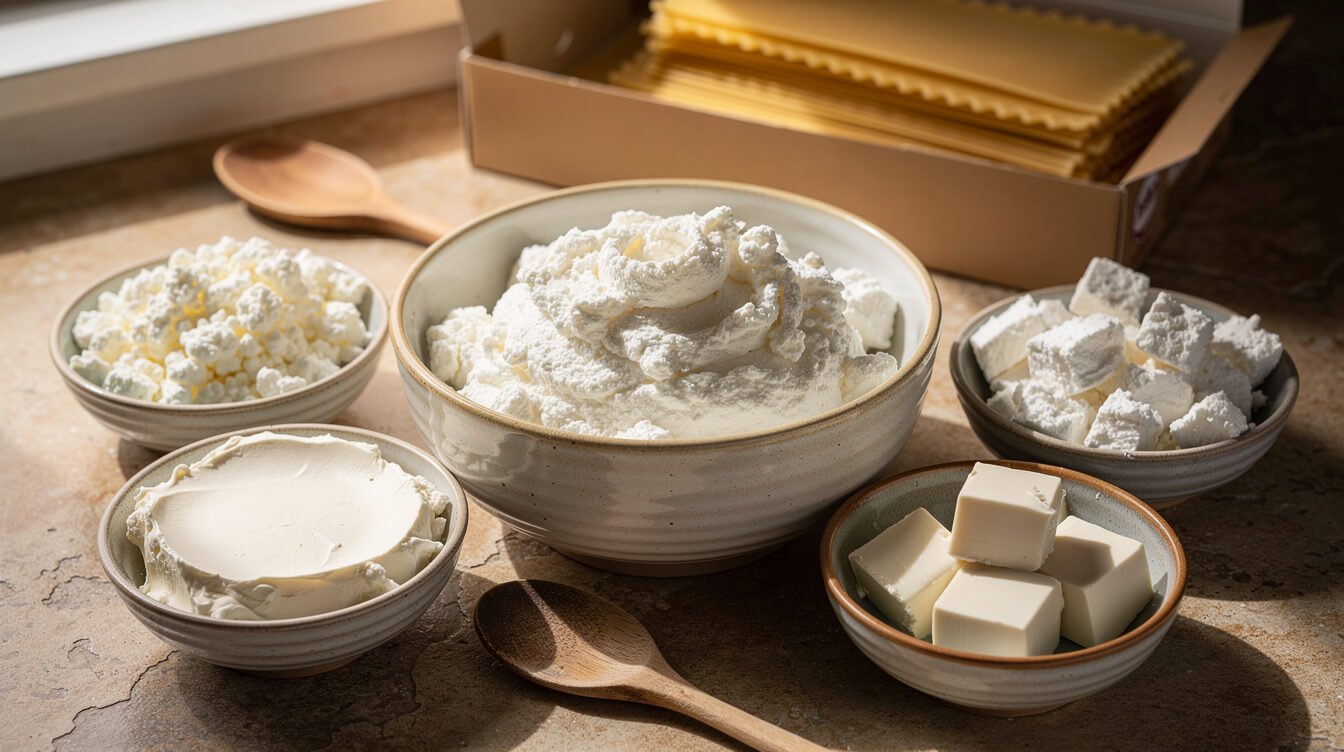
You’re halfway into a lasagna, the noodles are boiling, and the ricotta tub in the fridge is either empty or has gone fuzzy. Good news: you almost certainly have a decent ricotta cheese substitute already. Cottage cheese, cream cheese, mascarpone, a pot of milk and a lemon, even a block of tofu can all stand in. The catch is that the right swap depends on what you’re making. And most of them need one small step that nobody bothers to mention.
Here’s the short version. Then I’ll walk through lasagna, sweet fillings, homemade ricotta in 20 minutes, dairy-free options, and the reason substitutes so often turn a dish watery.
The quick answer: the best ricotta cheese substitute for what you’re making
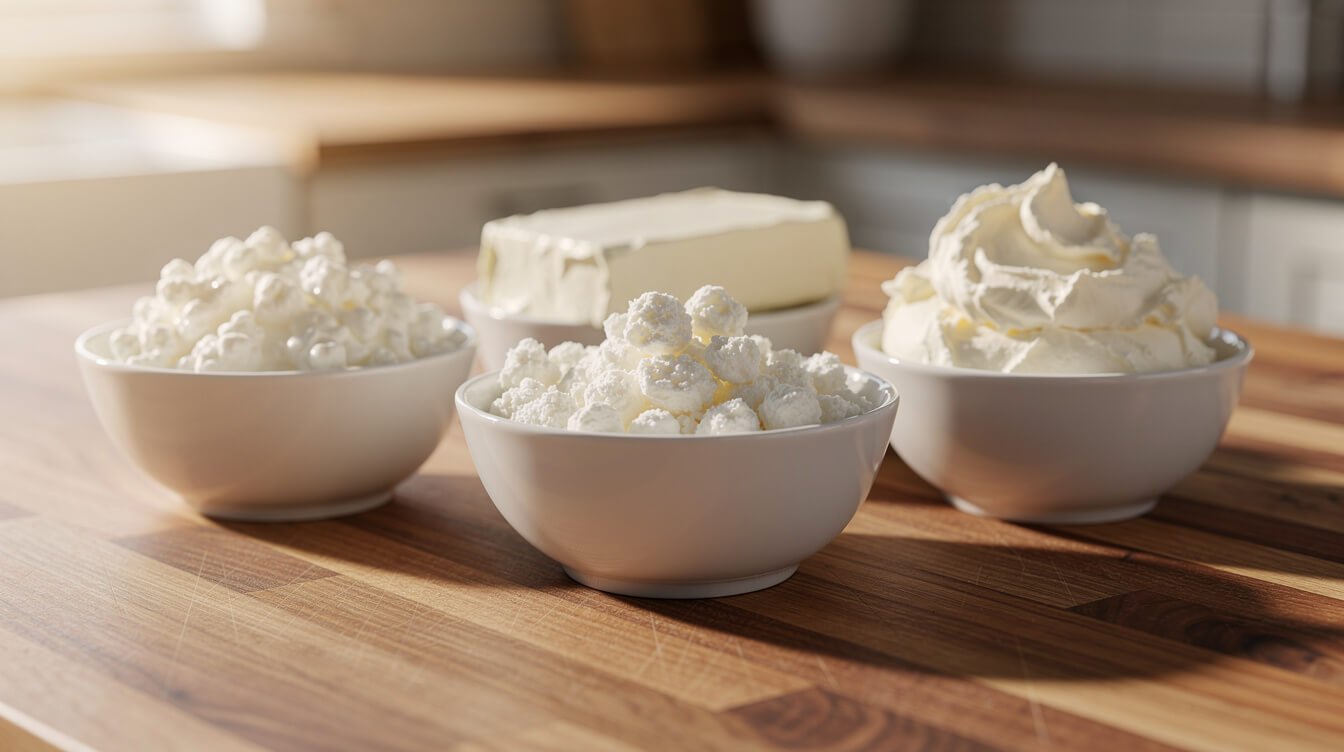
Ricotta does two jobs at once. It’s mild, so it doesn’t fight the other flavors, and it’s soft but thick, so it holds its shape in a layer or a filling without running. A good substitute has to cover whichever of those jobs your recipe actually depends on. That’s why “just use cottage cheese” is right for one dish and wrong for the next.
Use this table to find your swap. Every option below is 1:1 by volume unless the note says otherwise.
| What you’re making | Best swap | Runner-up | The one thing to do |
|---|---|---|---|
| Lasagna, stuffed shells, manicotti | Cottage cheese, drained and blended | Béchamel sauce | Drain it and add an egg to bind |
| Cannoli or other no-bake sweet filling | Mascarpone + cream cheese, half and half | Drained, blended cottage cheese + mascarpone | Keep it cold and fill just before serving |
| Ricotta cake or cheesecake | Cream cheese, softened | Very well-drained, blended cottage cheese | Never use cottage cheese unblended |
| Pancakes, muffins, quick breads | Plain Greek yogurt (full-fat) | Blended cottage cheese | Expect a little more tang |
| Toast, pizza, pasta dollops | Fresh goat cheese or whipped feta | Mascarpone with a pinch of salt | Use less; these are stronger |
| Ricotta gnocchi | Homemade ricotta, strained thick | Cottage cheese pressed very dry | The drier, the better |
| Dairy-free anything | Firm tofu, crumbled and seasoned | Blended soaked cashews | Check allergens (soy, tree nuts) |
If you only remember one thing from this post, make it this. Most ricotta swaps are wetter or lumpier than ricotta, and draining plus blending fixes both. Five minutes in a sieve and thirty seconds in a blender or food processor turn cottage cheese from “close enough” into something most people won’t notice.
Three kinds of ricotta, three different jobs
Before you swap, check which ricotta your recipe means, because they don’t behave the same way:
- Tub ricotta (the supermarket kind, whole-milk or part-skim): soft, spoonable, a little wet. Most American recipes mean this one.
- Basket or deli ricotta: firmer, drier, and more crumbly. Italian bakeries use it for cannoli and baked ricotta.
- Ricotta salata: a completely different cheese. It’s salted, pressed, and aged until it’s firm enough to grate. If your recipe says ricotta salata, skip ahead to the FAQ, because none of the soft swaps work for it.
Cottage cheese: the closest ricotta cheese substitute, if you drain and blend it
Cottage cheese is the swap most people reach for, and they’re right to. It’s mild, it’s sold everywhere, it costs less than ricotta, and its fat and protein levels are in the same neighborhood. It has two differences, and both are easy to fix.
It’s wetter. Cottage cheese curds sit in a loose, milky dressing. In a lasagna, that liquid leaks out in the oven and pools in the bottom of the pan.
It’s lumpy. Ricotta’s curds are fine and small. Cottage cheese curds are big and bouncy, and you’ll notice them in a cannoli or a cheesecake.
How to turn cottage cheese into a ricotta stand-in
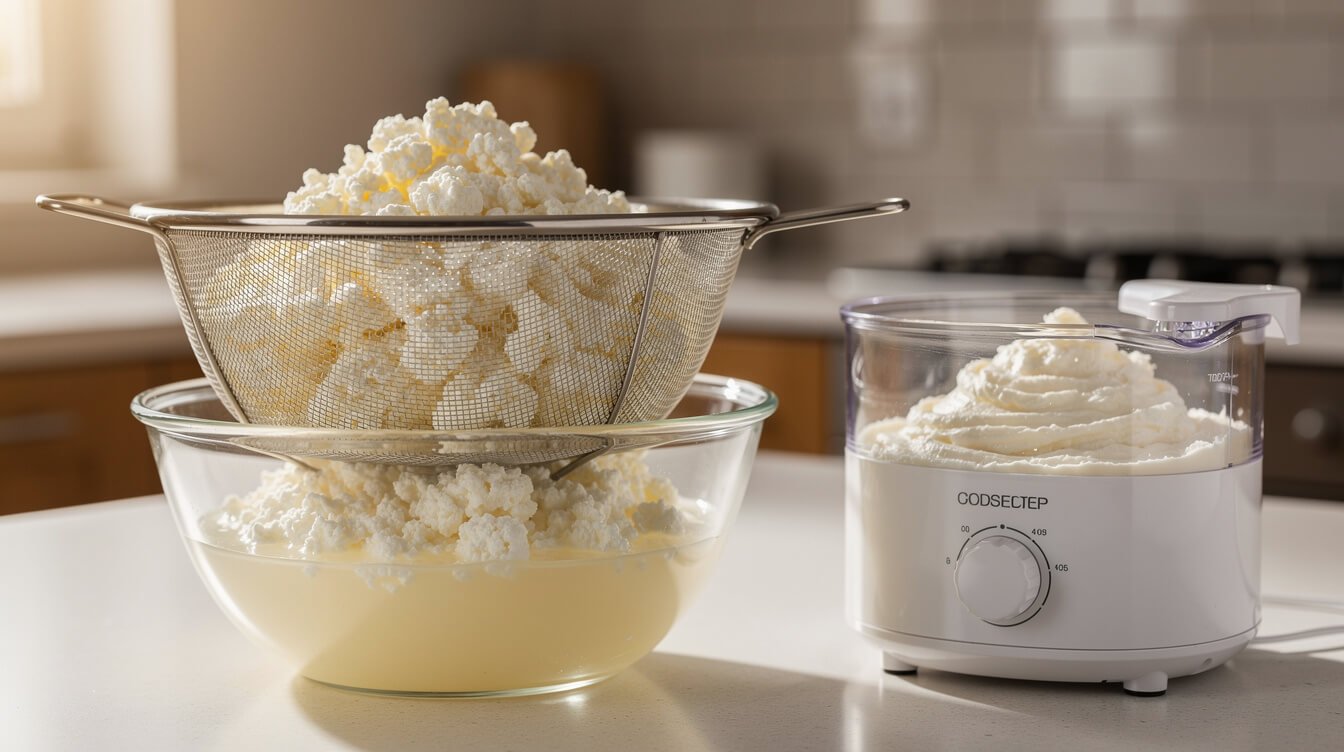
- Drain it. Tip the cottage cheese into a fine-mesh sieve set over a bowl. Let it sit for 15 to 30 minutes in the fridge, pressing gently with a spoon now and then. For gnocchi or cheesecake, where dryness really matters, line the sieve with a paper towel or cheesecloth and give it an hour.
- Blend it. Pulse the drained curds in a food processor or blender for 20 to 30 seconds, until they look like ricotta: smooth with just a little texture left. No food processor? Press the curds through the sieve with the back of a spoon. It takes longer but works.
- Taste for salt. Cottage cheese is usually saltier than ricotta. For savory dishes, ease off the salt in the rest of the filling. For sweet ones, choose an unsalted or low-sodium tub if you can find it.
Buy a little more than the recipe’s ricotta amount, because you’ll lose some liquid. A 16-ounce tub of cottage cheese, drained, comfortably stands in for a 15-ounce tub of ricotta.
Small-curd, full-fat (4%) cottage cheese gives the closest result. Low-fat versions work, but they’re wetter and a little chalky once baked. If you want cottage cheese for its own sake, it’s also the backbone of our high-protein lunch meal prep.
Ricotta cheese substitute for lasagna and stuffed shells (and the watery-lasagna fix)
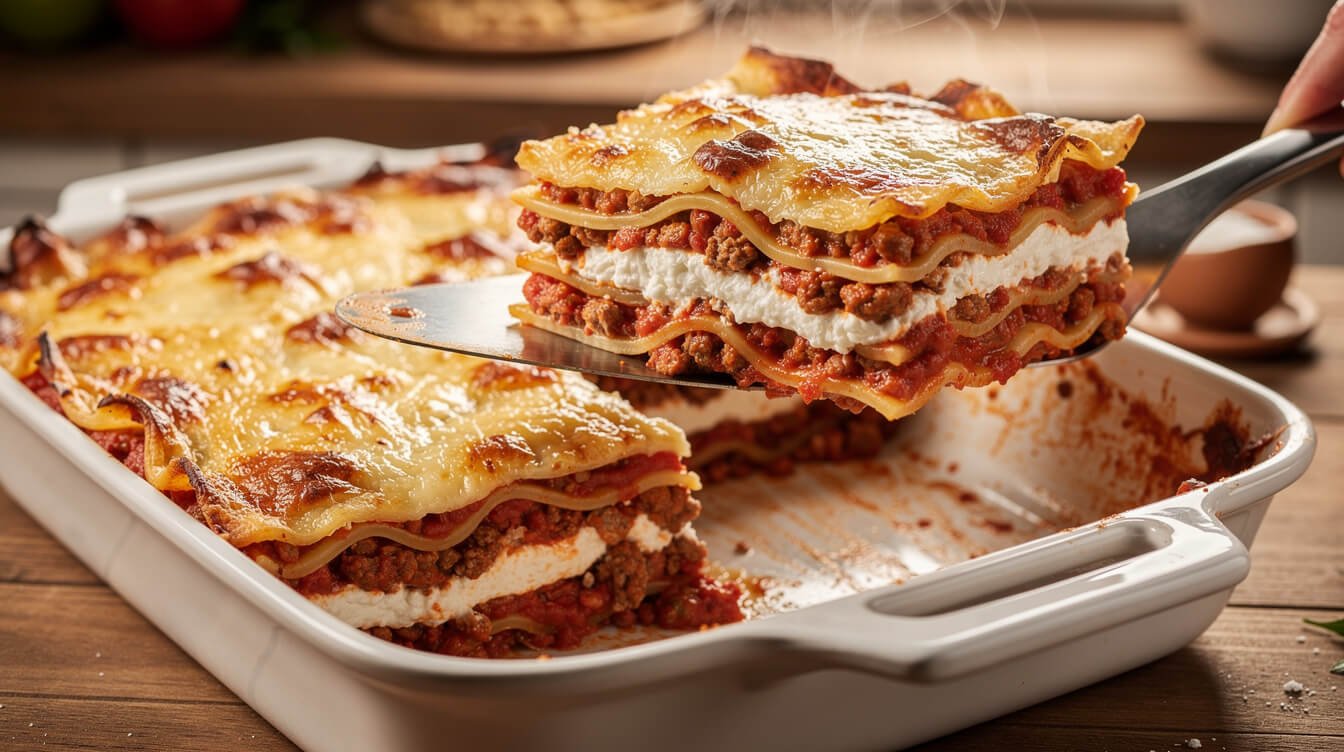
Lasagna is where most people go looking for a ricotta swap, and it’s also where a bad one shows most. You cut the first square, and a puddle of pinkish liquid floods the space it left. That puddle is almost always one of three things: a wet cheese substitute, undrained spinach or vegetables, or a sauce that was too thin to begin with. A substitute is only to blame for the first. Here’s how to keep it from happening.
Option 1: drained, blended cottage cheese (my pick)
Make the filling exactly as your recipe says, just with the prepared cottage cheese in place of the ricotta. A typical filling for one 9×13 lasagna is:
- 15–16 oz cottage cheese, drained and blended
- 1 large egg
- ½ cup grated Parmesan
- 2 tablespoons chopped parsley or 1 teaspoon dried Italian herbs
- Black pepper, and salt only after tasting
Don’t skip the egg. It sets in the oven and holds the filling together as a distinct layer, so it doesn’t melt into the sauce. That’s why so many lasagna recipes include it even with real ricotta. Because there’s an egg in the filling, bake the lasagna until the center reaches 165°F (74°C) on an instant-read thermometer. That’s the USDA target for casseroles, and a covered 9×13 usually gets there in 45 to 60 minutes at 375°F.
Option 2: half cottage cheese, half cream cheese
Cream cheese alone is too dense and tangy for lasagna. It bakes into a heavy, almost cheesecake-like layer. Mixed half and half with drained cottage cheese, it adds richness and helps the filling stay put. Soften the cream cheese first so it mixes in without streaks.
Option 3: béchamel instead of a ricotta layer
This isn’t a cheat. In Bologna, classic lasagne alla bolognese is layered with béchamel (a simple white sauce of butter, flour, and milk), not ricotta. If you have milk, butter, and flour, you have a lasagna that won’t be missing anything. Use about 3 cups of béchamel for a 9×13 and stir a handful of Parmesan into it.
Option 4: more mozzarella
If you’re truly out of everything, an extra cup of shredded mozzarella between the layers works. You’ll lose the creamy, soft layer, but the lasagna will still be very good. Low-moisture mozzarella (the shredded bag kind) is the safe choice here, because fresh mozzarella adds water.
Three more ways to stop watery lasagna
- Squeeze your spinach. Thawed frozen spinach holds about half a cup of water per 10-ounce box. Wring it out in a clean towel until it stops dripping.
- Let it rest. Give the lasagna 15 to 20 minutes out of the oven before cutting. The layers firm up as it cools a little, and that alone fixes a lot of runny slices.
- Don’t drown no-boil noodles. They need some liquid to soften, but if your sauce is already loose, they can’t absorb it all.
Lasagna and a pan of homemade garlic bread is one of the best weeknight-to-weekend dinners there is. For more ideas in that spirit, see our easy weeknight dinners for family.
Sweet uses: cannoli, ricotta cake, cheesecake, and pancakes

Sweet ricotta recipes are less forgiving than savory ones, because there’s no sauce or mozzarella to hide behind. Texture is the whole point. Here’s what works for each.
Cannoli and no-bake fillings
Classic cannoli filling is drained ricotta beaten with powdered sugar, plus maybe some vanilla, orange zest, or mini chocolate chips. The best substitute is equal parts mascarpone and cream cheese, beaten with powdered sugar until smooth. Mascarpone gives the soft, creamy richness, and cream cheese gives it enough body to hold in a shell. On its own, mascarpone can turn grainy if you overbeat it (we cover why in our mascarpone substitute guide), so stop mixing as soon as it’s smooth.
For a lighter filling, use drained, blended cottage cheese with an equal amount of mascarpone. Drain the cottage cheese for the full hour here, because any extra liquid will soften the shells.
Whatever filling you use, keep it in the fridge and fill the shells just before serving. Filled cannoli go soggy within a couple of hours, and a dairy filling shouldn’t sit out at room temperature for more than two hours anyway.
Ricotta cake and ricotta cheesecake
This is the one place to be strict: don’t use cottage cheese straight from the tub in a cake. The extra moisture makes the crumb heavy and damp, and the curds leave little rubbery pockets. Blended and very well drained, cottage cheese is acceptable. Softened cream cheese is better, though it makes a denser, tangier cake, closer to a New York cheesecake than an airy Italian one. To lighten it, swap a quarter of the cream cheese for plain full-fat Greek yogurt.
Swapping the cheese changes the fat in the recipe, so a cake can bake a little differently than written. Start checking for doneness 5 to 10 minutes early. If you’re also out of butter or oil for the same cake, our guides to butter substitutes in baking and vegetable oil substitutes cover those swaps, and how to bake a cake walks through doneness tests that work for any of them.
Ricotta pancakes, muffins, and quick breads
These are the easy ones. Full-fat plain Greek yogurt swaps in 1:1 and keeps pancakes tender. They’ll taste slightly tangier, which most people like. Blended cottage cheese also works and gives a bit more body. Either way, mix the batter just until combined, since overmixing does more damage to pancakes than any cheese swap.
Most of these swaps come down to having a decent sieve, a food processor, and a good spatula. If you’re building out a kitchen, our 100 Essential Tools Every Chef Has in Their Kitchen guide covers what’s worth buying first.
From the Eat Cafe kitchen
One good recipe a week, straight to your inbox
The recipe we're actually cooking this week, plus the one tip that saves it when it goes sideways. No spam. Unsubscribe anytime.
Make your own ricotta in 20 minutes (the best ricotta cheese substitute of all)
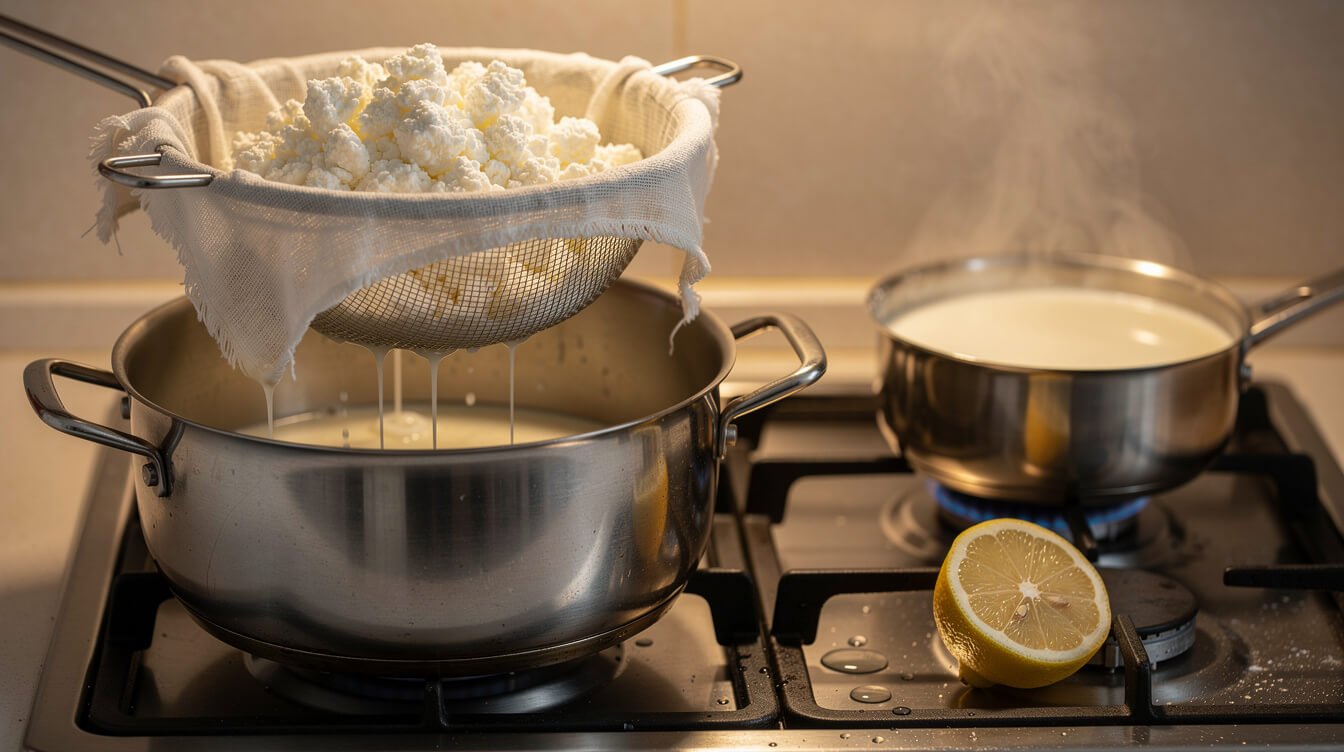
If you have a quart of milk and a lemon, you can skip substituting altogether. Homemade ricotta takes about 20 minutes of mostly hands-off time, and it tastes fresher than most tubs you can buy. Strictly speaking, it’s a whole-milk cheese rather than true ricotta, which is made from leftover whey. In practice it looks, tastes, and cooks like the creamiest ricotta you’ve had.
Homemade ricotta
Makes: about 1 to 1¼ cups | Time: 10 minutes to heat, 10 to rest, 10 to 60 to drain
Ingredients
- 4 cups (1 quart) whole milk, pasteurized but not ultra-pasteurized
- ½ cup heavy cream (optional, for a richer result)
- ½ teaspoon salt
- 3 tablespoons fresh lemon juice or distilled white vinegar
Steps
- Line a sieve with a double layer of cheesecloth (or a clean, thin cotton kitchen towel) and set it over a bowl.
- Pour the milk, cream, and salt into a heavy saucepan. Warm over medium heat, stirring often so the bottom doesn’t scorch, until it reaches 185–190°F (85–88°C). You’ll see steam and small bubbles at the edges, but it shouldn’t boil.
- Take it off the heat. Add the lemon juice or vinegar and stir slowly, just two or three times. Curds will start forming right away.
- Leave it alone for 10 minutes. Stirring now breaks the curds and gives you a grainier, smaller yield.
- Gently ladle or pour the curds into the lined sieve. Drain for 10 minutes for a soft, spreadable ricotta (toast, pancakes), 20 to 30 for a lasagna-ready texture, or up to an hour for firm, cannoli-ready ricotta.
- Move it to a covered container and refrigerate. Use within 3 to 5 days.
Why your homemade ricotta didn’t curdle
Nine times out of ten, the milk was ultra-pasteurized (labeled “UP” or “UHT”). The high heat used to make it shelf-stable changes the milk proteins so they don’t form good curds. Check the carton, buy regular pasteurized whole milk, and the recipe works. If your curds are very small and the liquid still looks milky, the milk probably didn’t get hot enough. Put it back on the heat for a minute or two, then add another tablespoon of acid.
Don’t pour out the leftover whey. It’s lovely in bread dough in place of water, and it makes a good cooking liquid for rice or soup. Refrigerate it and use it within a few days.

A sieve, a thermometer, and a few other things worth owning
Homemade ricotta takes a heavy saucepan, a fine-mesh sieve, cheesecloth, and an instant-read thermometer, and the same few tools handle most of the swaps on this page. Our 100 Essential Tools guide covers what earns its drawer space in a home kitchen, what you can skip, and what to buy first.
Dairy-free ricotta substitutes that actually work
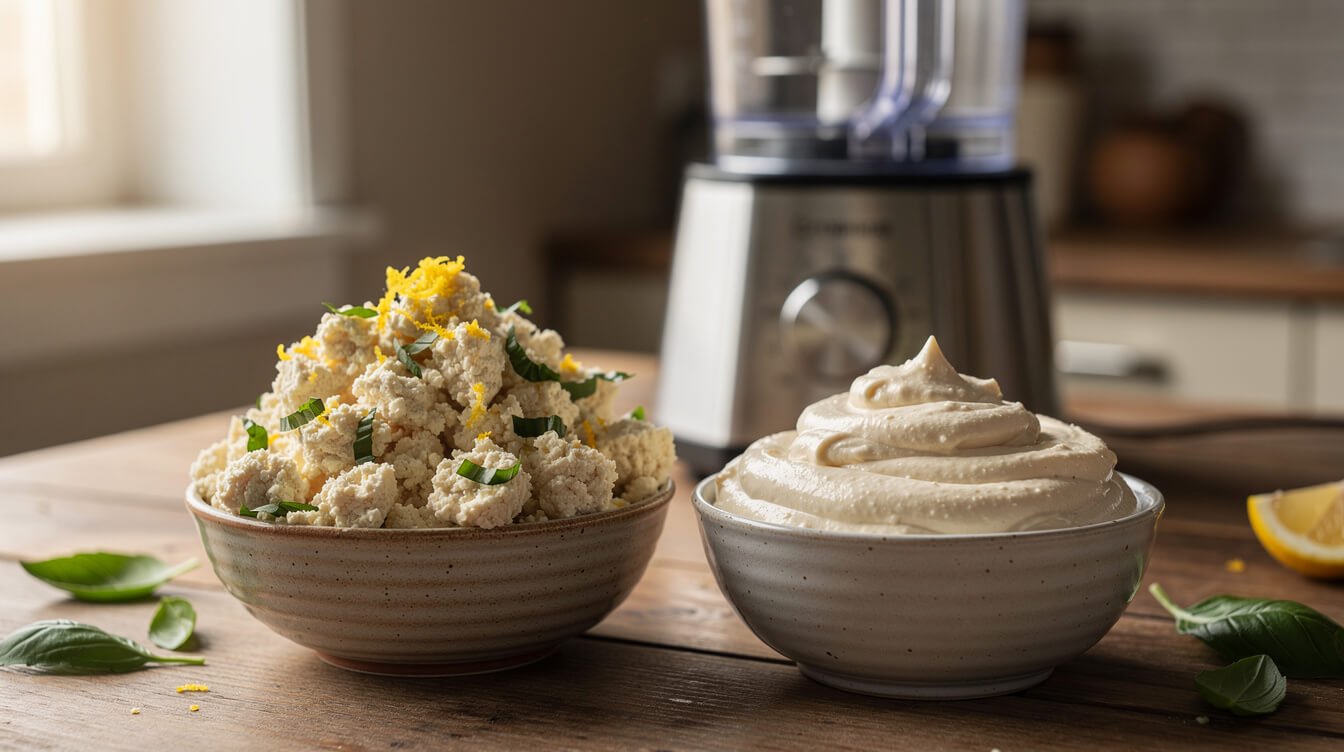
If you’re cooking without dairy, two homemade options make a better dairy-free ricotta cheese substitute than most store-bought ones. One allergy note first: dairy-free isn’t the same as allergen-free. Tofu is soy, and cashews and almonds are tree nuts. If you’re cooking for someone with a food allergy, read every label, including the store-bought versions.
Tofu ricotta (best for lasagna and stuffed shells)
Firm tofu has a surprisingly ricotta-like crumble. For one 9×13 lasagna:
- 1 block (14–16 oz) firm or extra-firm tofu, pressed for 15 minutes
- 2 tablespoons lemon juice
- 2 tablespoons olive oil
- 2 tablespoons nutritional yeast (for a savory, cheesy note)
- 1 garlic clove, grated
- ¾ teaspoon salt, plus pepper and chopped basil or parsley
Crumble the tofu into a bowl with your hands, add everything else, and mash with a fork until it looks like ricotta. Pulse it a few times in a food processor for a smoother texture. Plain tofu tastes of almost nothing, so be generous with the salt and lemon, and taste as you go.
Cashew ricotta (best for spreading and no-bake uses)
Soak 1½ cups raw, unsalted cashews in hot water for 30 minutes (or cold water for 4 hours), then drain. Blend with 2 tablespoons lemon juice, ½ teaspoon salt, and ⅓ to ½ cup water. For a ricotta-like texture, stop blending while it still has a slight grain. For sweet uses, leave out most of the lemon and add a little maple syrup or powdered sugar. Keep it covered in the fridge and use within 4 to 5 days.
Store-bought dairy-free ricotta
Almond- and cashew-based ricottas show up in more grocery stores every year, and they’re fine for convenience. They tend to be softer and tangier than dairy ricotta. Drain them in a sieve for 10 minutes before you use them in anything baked.
Ricotta cheese substitute FAQ
Is cottage cheese the same as ricotta?
No, but they’re close relatives. Ricotta is traditionally made by reheating the whey left over from making other cheeses. Cottage cheese is made from milk and has larger curds in a creamy dressing. Drained and blended, cottage cheese is the most dependable everyday swap.
Can I use cream cheese instead of ricotta?
Yes, especially in cheesecakes, dips, and sweet fillings. It’s denser and tangier, so for lasagna, cut it half and half with drained cottage cheese, or thin it with a splash of milk.
Can I use Greek yogurt instead of ricotta?
Yes in pancakes, muffins, dips, and no-bake spreads. Use full-fat plain yogurt. It’s not my pick as a solo swap in lasagna, because it’s tangier and looser than ricotta and can turn the layer soft and sour during a long bake.
What can I use instead of ricotta salata?
Ricotta salata is a firm, salty, aged cheese, so the soft swaps on this page won’t work. Feta is the closest match. Choose a firm block, pat it dry, and use a little less, since it’s saltier. Grated Pecorino Romano works where you’d shave ricotta salata over pasta.
Can you freeze ricotta or a ricotta substitute?
You can, but thawed ricotta turns grainy and weepy. That’s fine in lasagna or baked shells, where it gets mixed and cooked, and not fine in cannoli or anything served cold. Freeze it in an airtight container, thaw it overnight in the fridge (not on the counter), and drain off any liquid before using. An already assembled, unbaked lasagna freezes better than plain ricotta does.
How long does ricotta keep once it’s open?
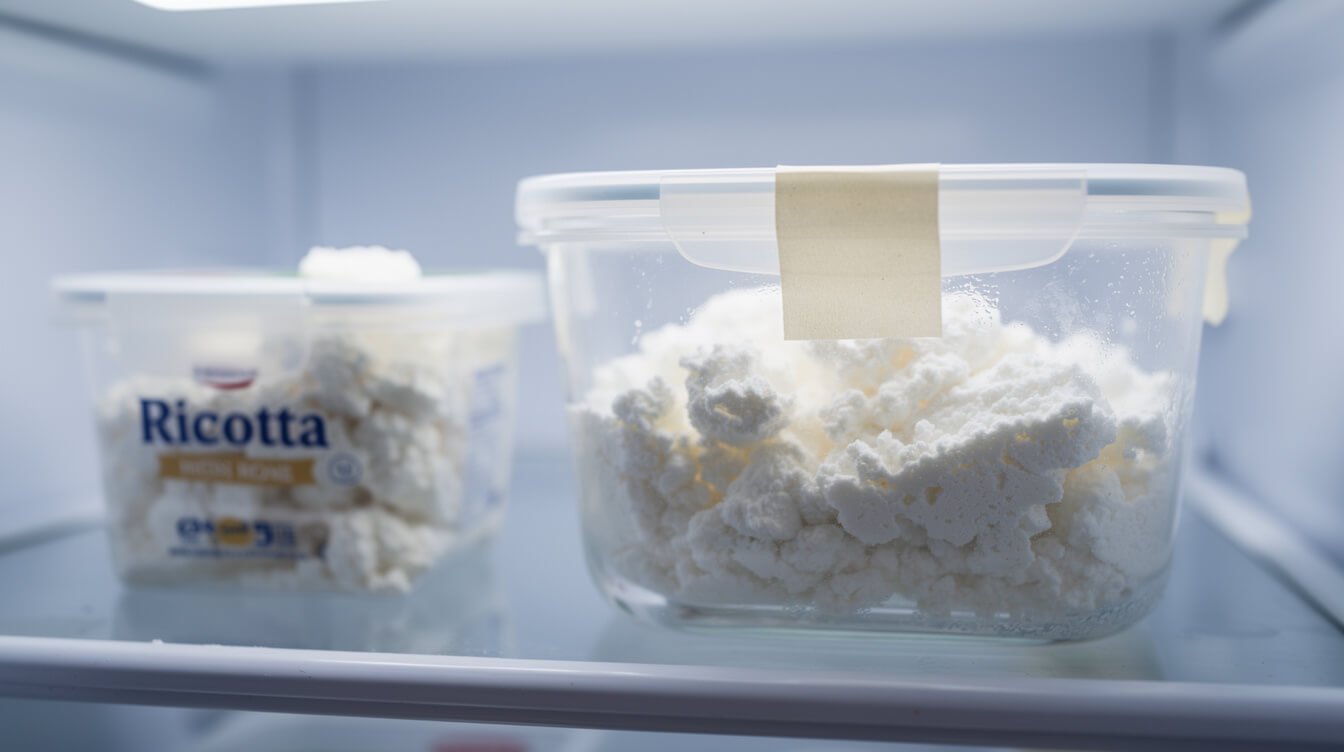
Keep it covered in the fridge and use it within about a week of opening, or sooner if the tub’s label says so. Homemade ricotta keeps 3 to 5 days. If it smells sour, looks yellowed or slimy, or shows any mold, throw out the whole container. Don’t scoop around soft cheese mold the way you might with a hard cheese. If you’re using queso fresco or another fresh cheese as a swap, check that the label says it’s made with pasteurized milk.
How should I store leftover lasagna made with a substitute?
Store it the same way as any lasagna. Get it into the fridge within 2 hours of coming out of the oven, eat it within 3 to 4 days, and reheat slices until they’re steaming hot all the way through (165°F / 74°C).
Final thoughts: the swap is easy once you know the trick
An empty ricotta tub doesn’t have to change dinner plans. For lasagna and shells, drain and blend cottage cheese, add an egg, and bake to 165°F. For cannoli and sweet fillings, beat mascarpone and cream cheese together. For cakes, use softened cream cheese and never unblended cottage cheese. If you’ve got milk and a lemon and 20 minutes, make your own and you won’t need a substitute at all.
Most failed ricotta swaps fail for the same reason: too much water. Drain it, blend it, give it a rest before you slice, and the dish will come out fine. Now go finish that lasagna.

Before you go
Want the next one?
We post a new recipe or kitchen guide every day. The best of the week lands in one short email, no life story attached.