Easy weeknight dinners for two — genuinely scaled for two, no half-onion graveyard
Cooking for two isn’t the problem. The half onion is.
Search “easy weeknight dinners for two” and you’ll mostly get family recipes wearing a weeknight hat — six servings, quietly. That’s not what you need on a Tuesday. You need a dinner that actually stops at two plates, doesn’t leave you staring into a fridge full of odds and ends, and gets on the table in about 30 minutes. This is that guide: real one-pan dinners genuinely portioned for two, built so the leftover half of everything becomes tomorrow’s lunch instead of a science experiment in the crisper drawer.
The real problem with “dinner for two” (it’s waste, not recipes)
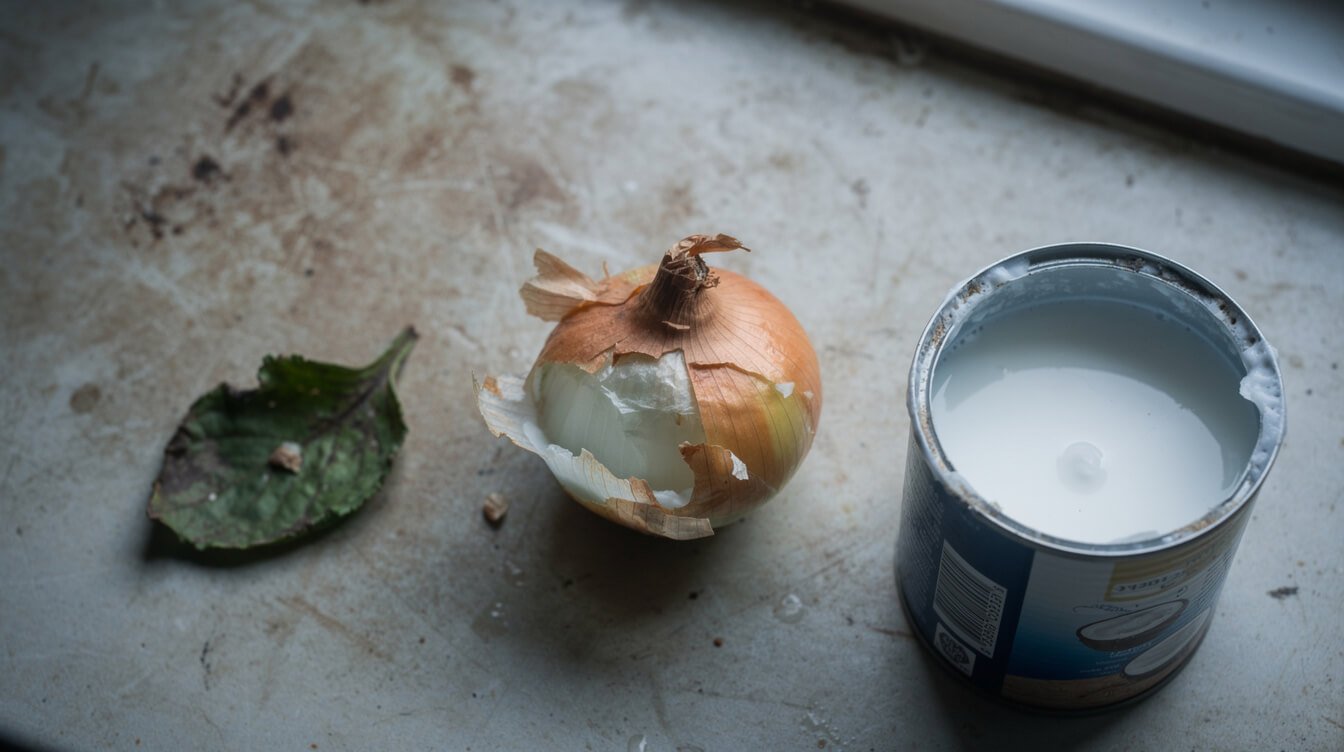
Here’s what actually happens when you cook a “family” recipe for two people: you buy a whole onion and use half. A whole bell pepper, use half. A can of coconut milk, use a third. A pound of chicken thighs, cook two. Six days later you’re either eating sad risotto-of-regret or tossing shriveled produce that did nothing wrong except exist in a package sized for four.
The recipe itself was never the hard part — most weeknight dinners are inherently simple: protein, a vegetable, a starch, one pan, 30 minutes. The hard part is that grocery stores, recipe developers, and can sizes are all built around families of four, and nobody adjusts the plan for two people. So this guide does three things differently: every recipe below is genuinely sized for two (not a family recipe with “or halve it” tacked on), every recipe tells you exactly what to do with the leftover half of anything you open, and the pantry section below exists specifically to shrink your waste before you even start cooking.
If you’ve ever bought a bag of spinach for one recipe and found it liquefied in the crisper a week later, this is for you.
A tiny pantry that makes two-person cooking easy
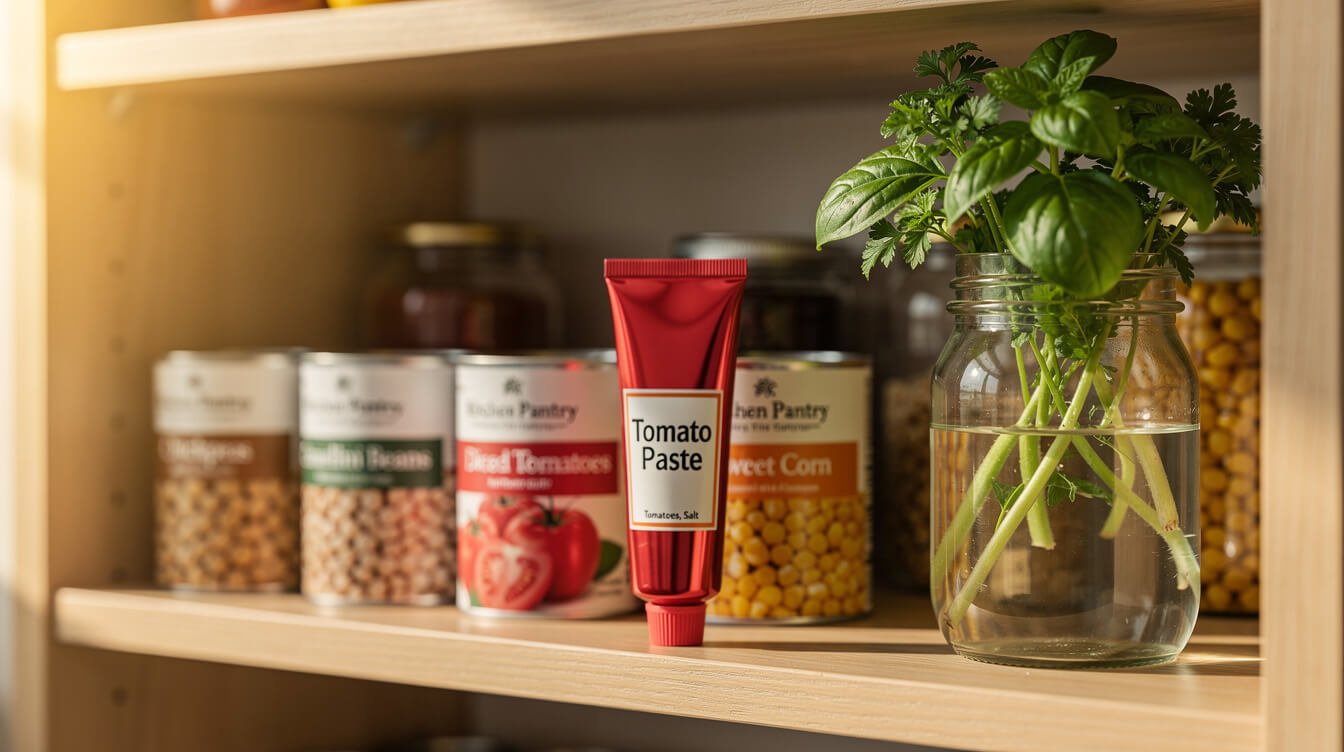
Some ingredients just don’t scale down gracefully — a can of tomato paste is a can of tomato paste, whether the recipe needs a tablespoon or the whole thing. The fix isn’t heroics, it’s buying smart for two people from the start:
- Tomato paste in a tube, not a can. Squeeze out a tablespoon, cap it, keeps in the fridge for months. No more half-used cans going green in the back.
- Frozen chopped onion and garlic, alongside one fresh onion. Fresh for flavor when a dish needs it raw or caramelized; frozen for the recipes where a quarter-cup is all you need and you don’t want a whole onion aging on the counter.
- Coconut milk in the small 5.4 oz cans, not the 13.5 oz. Most Asian-inspired braises for two need less than a cup — the small can is usually the exact right amount, one can, zero leftover.
- Herbs you actually use, kept alive longer. Stand cut herbs in a jar of water like flowers, loosely bagged, in the fridge — parsley and cilantro last close to two weeks that way instead of wilting in three days.
- Broth in a resealable carton or bouillon paste, not just the big box. A dinner for two rarely needs 4 cups of stock. Bouillon paste lets you make exactly what you need, no waste.
- A bag of frozen mixed vegetables as backup, alongside fresh. When half a fresh vegetable would otherwise go unused, frozen fills the gap without commitment.
None of this requires a special trip — it’s a shopping-list swap you make once, and it quietly removes half your future food waste before dinner even starts.
6 easy weeknight dinners for two (one pan, about 30 minutes)
Each of these serves exactly two, uses one pan or sheet, and comes with a note on what to do with whatever you’ve got left over — because that’s the part every other list skips.
1. Sheet-pan lemon chicken thighs with green beans
Toss 2 bone-in chicken thighs and 8 oz green beans with olive oil, a sliced lemon, salt, and pepper. Roast at 425°F for 25–30 minutes until the chicken hits 165°F internal. Leftover-half tip: buy a 4-pack of thighs, freeze the other two raw in a labeled bag flat (they thaw faster and stack neatly) for next week’s dinner.
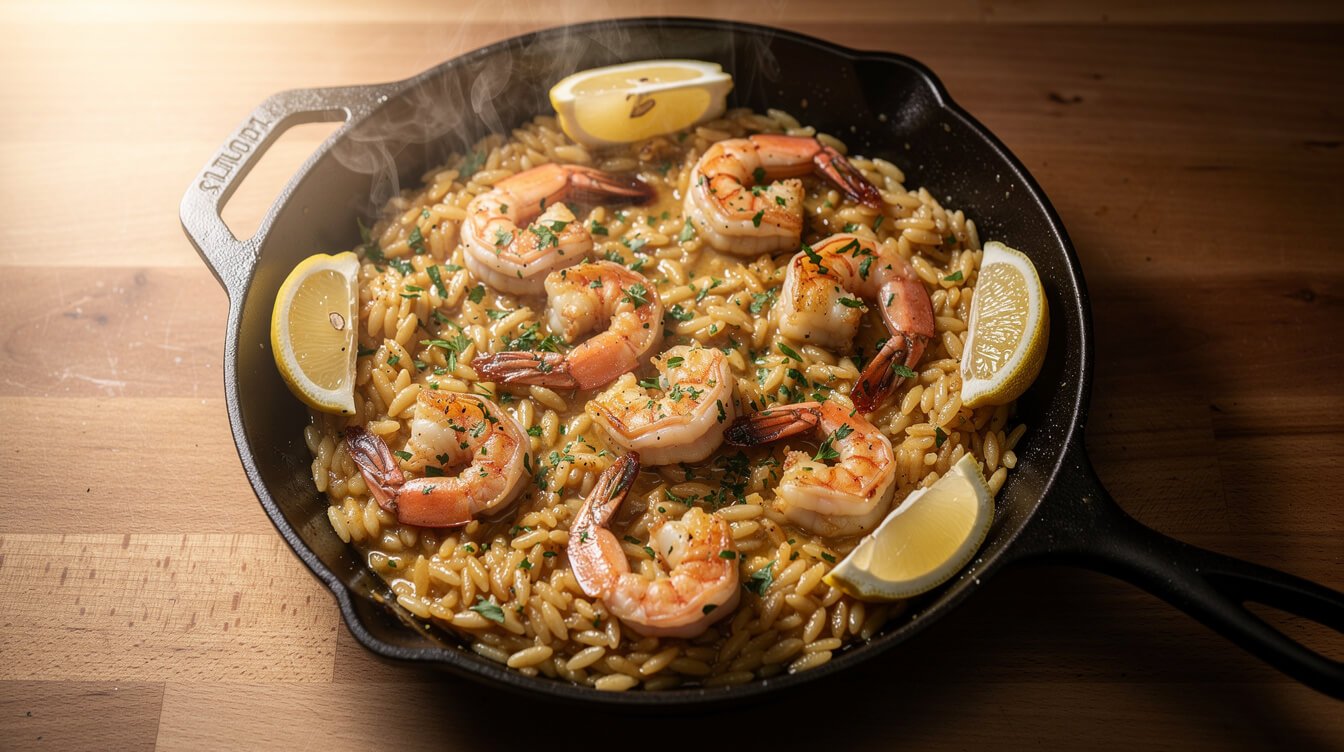
2. Skillet garlic shrimp with orzo
Sauté ½ lb shrimp in butter and garlic, toss with cooked orzo, a squeeze of lemon, and the frozen peas already in your freezer. Ready in 15 minutes. Leftover-half tip: shrimp usually comes frozen in 1 lb bags — portion out exactly ½ lb, reseal the rest tightly, and it keeps well in the freezer for your next skillet night.
3. One-pan sausage and peppers
Slice 2 Italian sausages and 1 bell pepper, sauté with a sliced onion until browned and soft, about 15 minutes. Leftover-half tip: this is the one place a whole onion and pepper actually get used up in a single dinner — no leftovers to manage here, which is worth knowing when you’re stocking the tiny pantry above.
4. Coconut curry with chickpeas
Simmer a small (5.4 oz) can of coconut milk with 1 cup canned chickpeas, a spoon of curry paste, and whatever vegetable needs using up, 15 minutes over rice. Leftover-half tip: the small coconut milk can is sized so there’s nothing left to store — that’s the whole point of buying it.
5. Pan-seared salmon with roasted broccoli
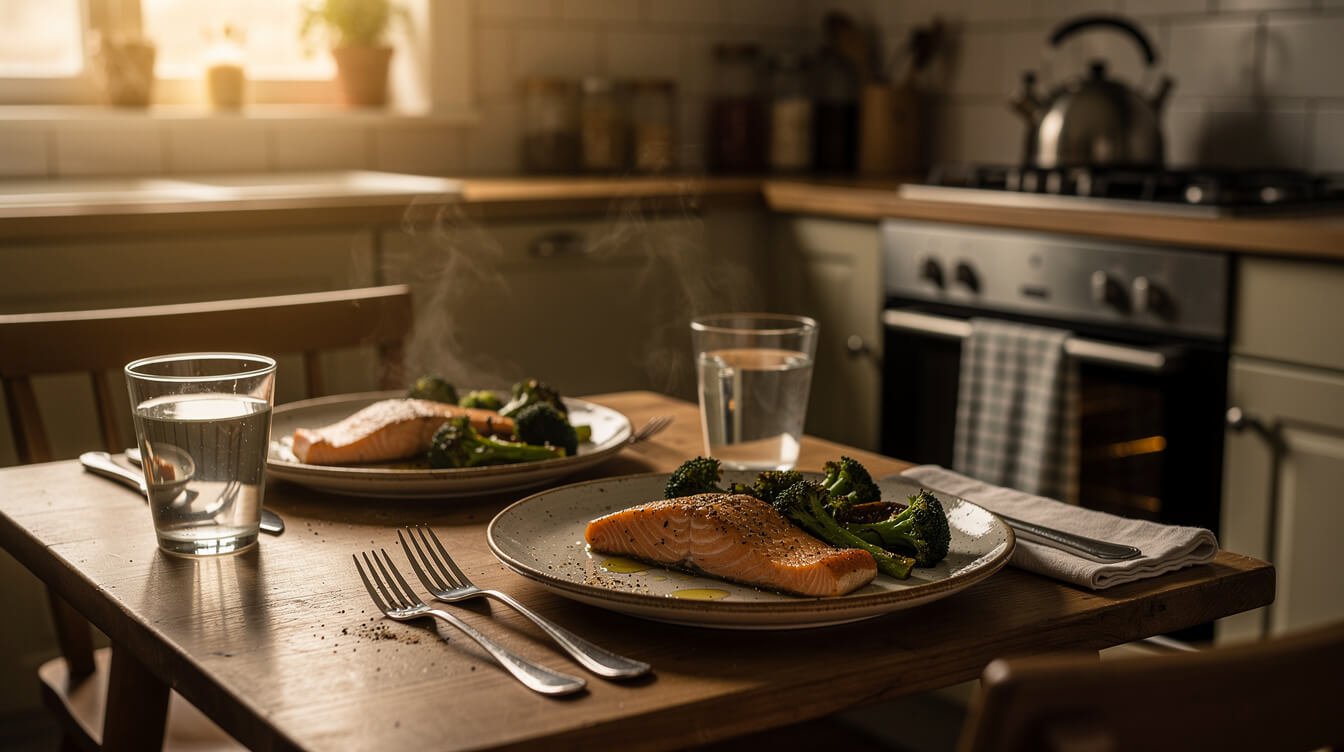
Two 5–6 oz salmon fillets, pan-seared skin-side down 4 minutes, flipped 2 minutes, alongside a sheet of roasted broccoli at 425°F. Leftover-half tip: salmon is usually sold in 1 lb portions of 2–3 fillets — freeze any extra fillet individually wrapped so you can pull just one out later, not the whole package.
6. Beef and broccoli stir-fry
Slice ½ lb flank steak thin against the grain, stir-fry hot and fast with broccoli florets, soy sauce, garlic, and a spoon of cornstarch-slurry to thicken. Ready in 20 minutes. Leftover-half tip: buy the steak already cut small if your store sells stir-fry strips — it’s usually sold in the exact quantity a two-person stir-fry needs, so there’s no cutting a bigger cut in half and freezing the rest.
7. Sheet-pan sausage, sweet potato, and broccoli
Cube 1 medium sweet potato and toss with 2 sausages (sliced into coins) and a cup of broccoli florets, olive oil, salt, and pepper. Roast at 425°F for 25 minutes, stirring once. Leftover-half tip: sweet potatoes don’t keep well raw once cut, so roast the whole potato even if a recipe calls for less — the extra cubes fold into breakfast hash or a grain bowl the next morning.
8. Chickpea and spinach skillet with feta
Sauté a can of drained chickpeas with a few handfuls of fresh spinach, garlic, and a pinch of red pepper flakes until the spinach wilts, about 8 minutes, then crumble feta on top and serve over toasted bread or rice. Leftover-half tip: this is a good home for the “lonely half-bag of spinach” that’s wilting in the crisper — it cooks down so fast that a whole bag disappears into one skillet with room to spare.
Proteins that portion well for two (and how to freeze the rest safely)
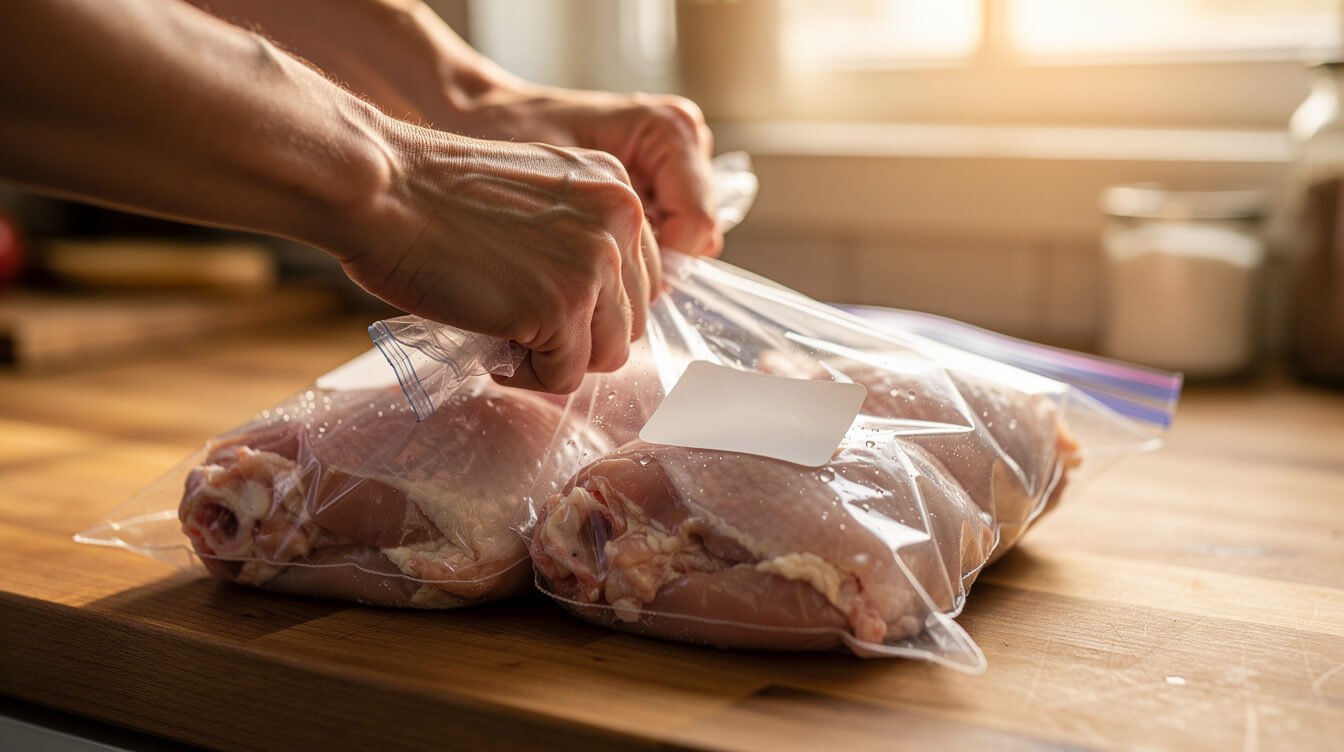
The single biggest lever for waste-free cooking for two isn’t the recipe — it’s how you handle the protein the moment you get home from the store. A few rules that make this painless:
- Portion and freeze the day you buy it, not the day before you plan to cook it. Split a family-size package into two-person portions immediately, wrap tightly or vacuum-seal, and label with the date. Frozen the same day, it stays highest quality; forgotten in the fridge for four days first, it won’t.
- Freeze flat in a bag, not in a block. Ground meat and thin cuts freeze and thaw faster laid flat — you can even snap off a portion straight from frozen for a quick weeknight dinner.
- Use within 3–4 months for best quality. Frozen meat and poultry stays safe indefinitely at 0°F, but flavor and texture hold up best within about 3 months for ground meat and up to 4 months for chicken pieces.
- Thaw in the fridge, not the counter. A day-ahead move to the fridge is the safest way to thaw — it keeps the protein below 40°F the whole time, out of the temperature range where bacteria grow quickly.
Do this once at the grocery store checkout counter (mentally, or with a Sharpie in the car) and your freezer stops being a graveyard and starts being an actual meal-prep tool.
From the Eat Cafe kitchen
One good recipe a week, straight to your inbox
The recipe we're actually cooking this week, plus the one tip that saves it when it goes sideways. No spam. Unsubscribe anytime.
Sides that don’t leave you with a lonely half-vegetable
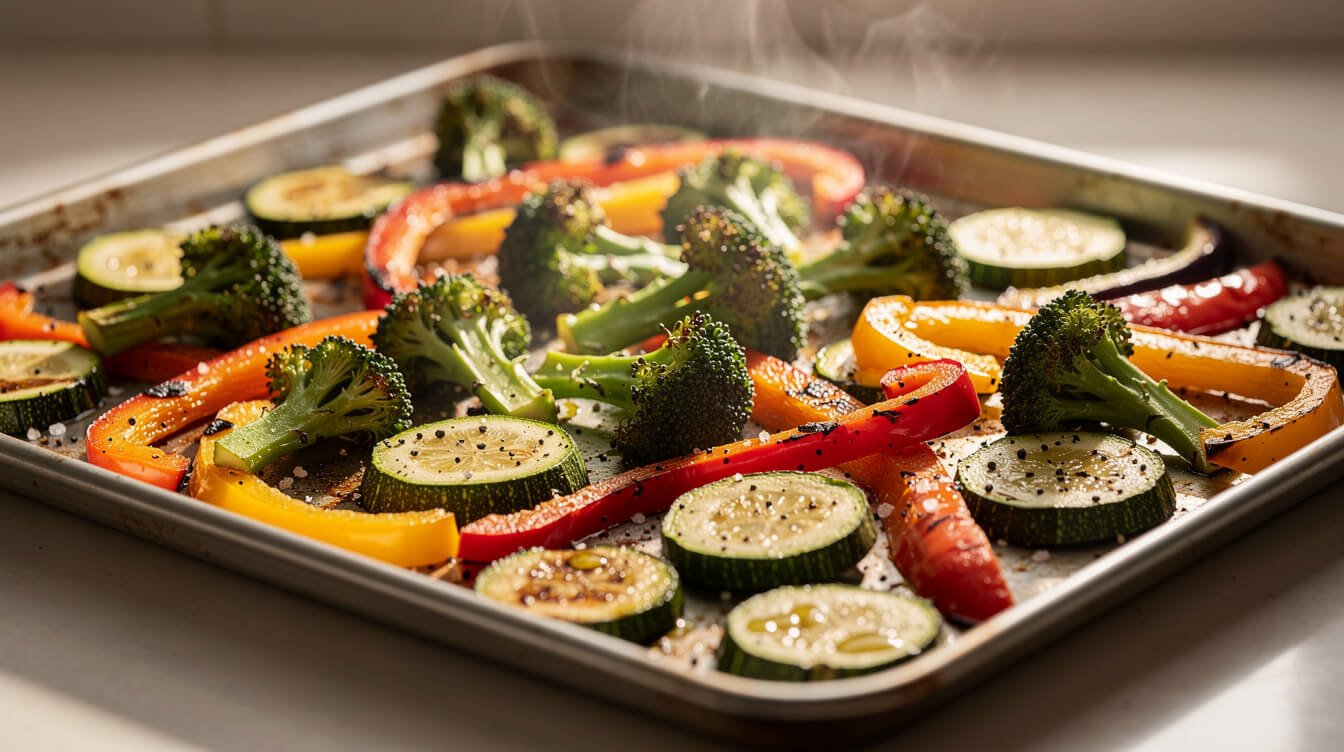
Vegetables are where the “for two” math falls apart fastest — most produce is sold in quantities built for a family salad, not a weeknight side for two. A few fixes:
- Buy loose, not bagged, when your store allows it. Two carrots and one zucchini instead of a 2 lb bag means you use everything you bought.
- Lean on frozen for the vegetables you use in small amounts. Frozen peas, corn, and spinach let you scoop exactly ½ cup with zero waste — genuinely one of the best swaps for two-person cooking.
- Roast a full sheet pan even when a recipe only needs half. Roasted vegetables reheat beautifully — roast the whole zucchini and bell pepper, eat half tonight, and fold the rest into eggs or a grain bowl tomorrow (see the leftovers section below).
- Quick-pickle what you can’t use fast enough. Sliced cucumber, onion, or radish in vinegar, salt, and a little sugar keeps for two weeks in the fridge and turns “I’ll never finish this” into a condiment you actually want.
Smart leftovers: turn tonight’s extras into tomorrow’s lunch
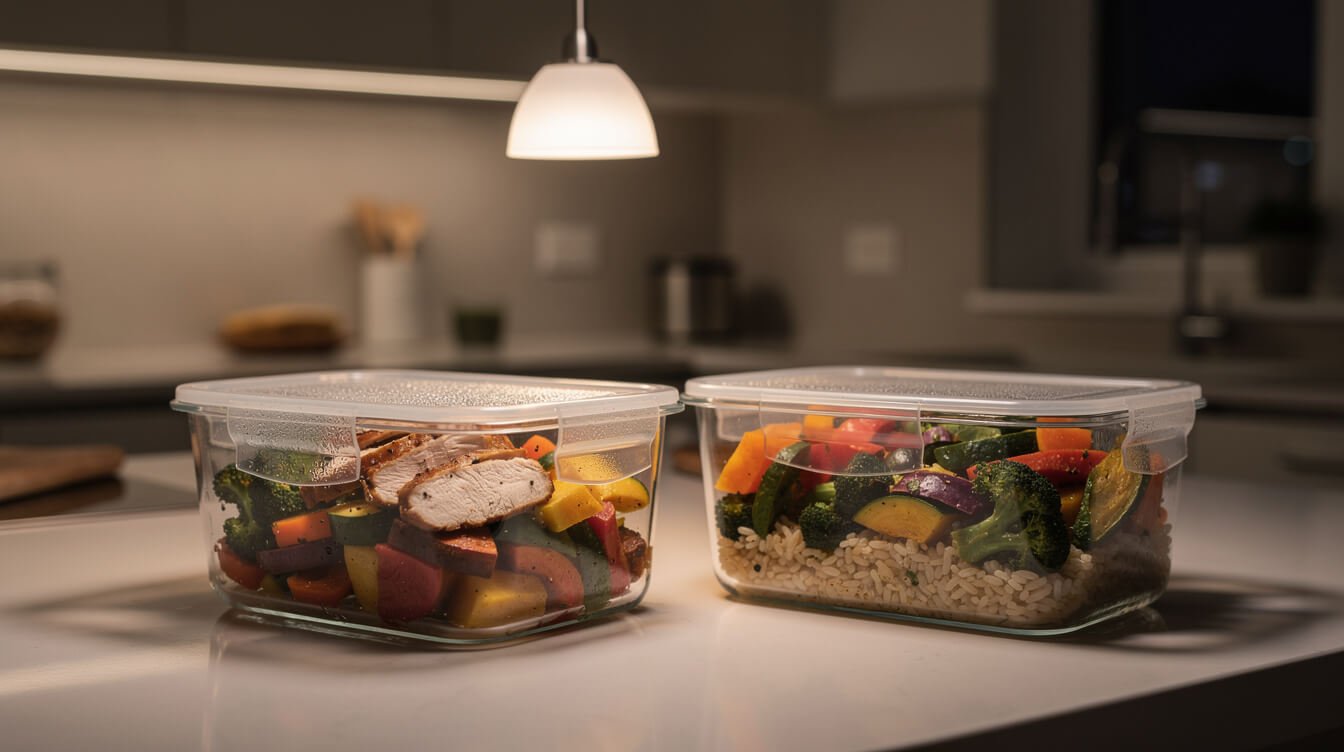
This is the step every other “dinner for two” list skips entirely, and it’s the one that actually solves the waste problem. Build tomorrow’s lunch into tonight’s cooking:
- Roast extra protein and vegetables on purpose. If you’re already heating the oven for 2 chicken thighs, add 2 more — one dinner becomes a lunch bowl the next day with zero extra effort.
- Cook a double batch of grains. Rice, orzo, and quinoa reheat well; cook once, use half tonight, and the other half becomes the base of tomorrow’s grain bowl with whatever vegetables are left.
- Save the “odd half” for a Friday clean-out bowl. Half an onion, a few broccoli florets, the last of the shrimp — end-of-week stir-fries or fried rice exist specifically to use up whatever’s hanging around. Keep a mental (or literal) running list on the fridge.
- Pack lunch the same night, while the kitchen’s already dirty. Portioning leftovers into containers right after dinner, rather than the next morning, is the single easiest habit that keeps food actually getting eaten instead of forgotten.
Storing it right (quick, accurate, and actually safe)
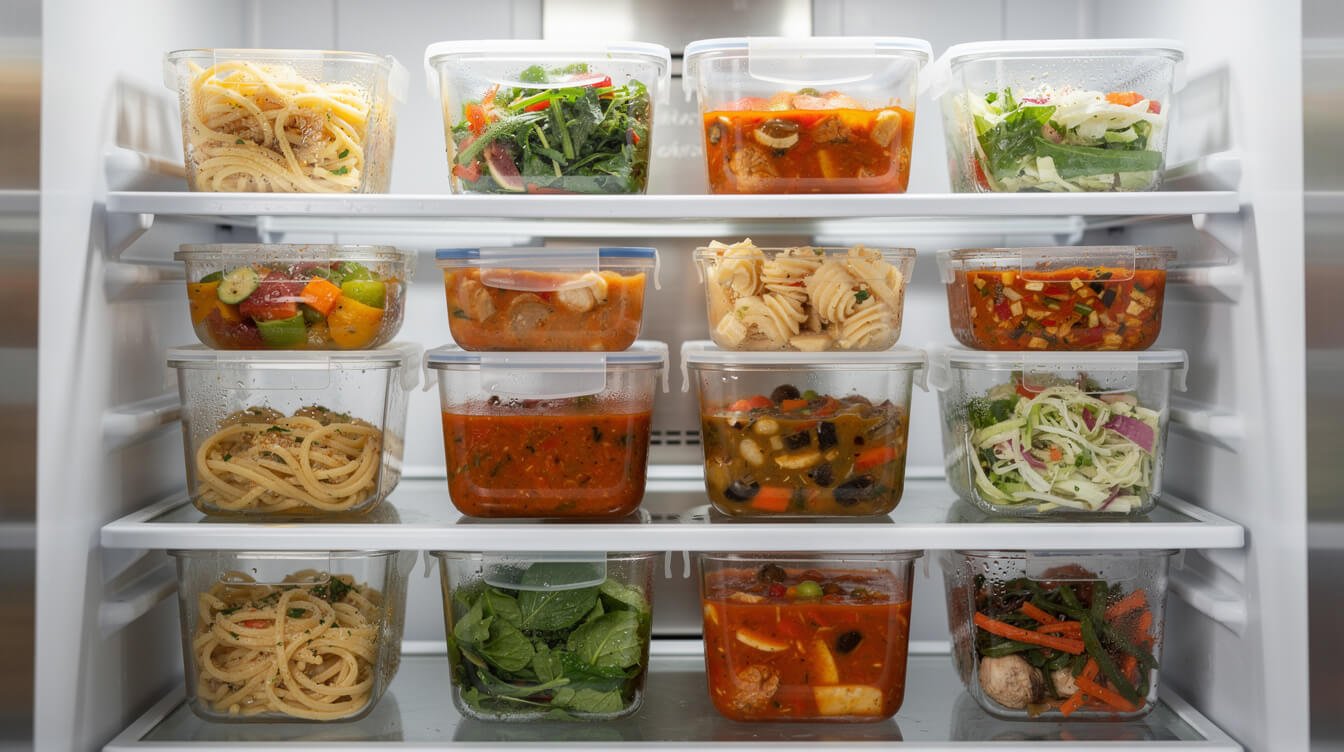
None of this waste-free cooking works if the food goes bad before you get to it — so here’s the plain, accurate version of the storage rules, no guessing:
- Refrigerate leftovers within 2 hours of cooking (1 hour if your kitchen is hotter than about 90°F). Bacteria grow fastest between 40°F and 140°F, so the sooner food’s out of that zone, the safer it is.
- Eat refrigerated leftovers within 3–4 days. After that, freeze them or let them go — reheating past that window is a food-safety risk, not just a quality one.
- Reheat leftovers to 165°F internal before eating — the microwave, stovetop, or oven all work, but if you want the roasted vegetables and sheet-pan chicken from this list to actually crisp back up instead of turning soggy, our air fryer reheating rules are worth a look. A food thermometer takes the guessing out of “is this hot enough.”
- Frozen leftovers stay safe indefinitely but are best used within 2–3 months for flavor and texture — label with the date so you’re not playing freezer archaeology.
- Label everything. A piece of tape and a Sharpie with the date turns “I think this is still good?” into an actual answer.
Get this part right and the rest of the system holds — nothing you cook for two goes to waste, because it either gets eaten this week or frozen properly for next week.
Frequently asked questions about easy weeknight dinners for two
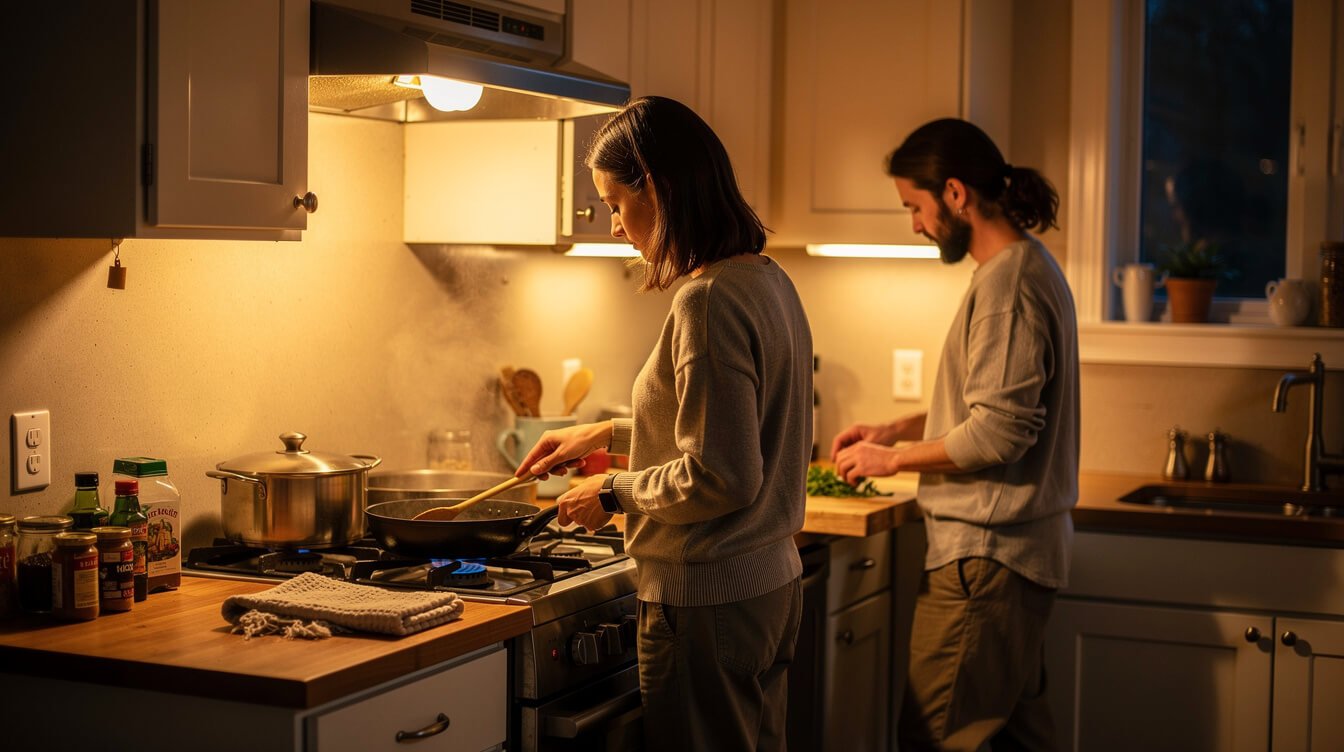
Can I just halve a family recipe instead of using one built for two?
Sometimes, but it’s why so many “for two” searches end in frustration — halving works fine for a soup or stir-fry, but it falls apart for anything with a fixed can size, a whole spice packet, or a bake time that assumes a bigger pan. A recipe actually written for two (like the ones above) accounts for that instead of leaving you to do the math and guess at the pan size.
Is it worth buying “family size” packages if it’s just the two of us?
Sometimes — if you portion and freeze it the day you get home (see the proteins section above), a family-size package of chicken thighs or ground beef is often cheaper per pound and gives you two or three future dinners for free. The mistake isn’t buying the bigger pack; it’s leaving it whole in the fridge until it’s too late to use.
What’s the fastest dinner on this list?
The skillet garlic shrimp with orzo, at about 15 minutes start to finish — shrimp cooks in minutes and orzo boils fast, so it’s the one to reach for on the nights you’re cooking at 7pm and hungry now.
Do I need any special equipment for two-person cooking?
No — everything above works in one skillet or one sheet pan, the kind you probably already own. A smaller (8-10 inch) skillet does make sense for two-person portions if you’re shopping for one, since it heats faster and uses less oil than a 12-inch pan built for a family.
How do I stop buying too much produce?
Shop for the week’s dinners with a short list in hand, buy loose vegetables instead of pre-bagged multi-packs when your store allows it, and lean on the freezer aisle for anything you use in small amounts (peas, corn, spinach). The tiny pantry section above covers this in more detail.

From the Eat Cafe shop
Eat Cafe - Support Our Charities Donor Membership T-Shirt
$24.99
See it in the shopFinal thoughts
Cooking for two doesn’t need a shrunk-down family recipe or a spreadsheet — it needs a handful of dinners actually built for the size of your household, a pantry stocked in real two-person quantities, and one habit: always ask what happens to the other half before you even start cooking. Do that, and the half-onion graveyard in your crisper drawer becomes a thing of the past.
If you’re building out that tiny two-person pantry, our guide to choosing one good starter knife pairs well with this — you don’t need a full knife block to prep any of the dinners above. And if the batch-cooking habit in the leftovers section sounds appealing, our meal prep ideas for the week post takes that same “cook once, eat twice” logic and runs with it for a full week.
Save this list, and next time someone asks what’s for dinner, you’ll actually know — and so will your fridge.

Before you go
Want the next one?
We post a new recipe or kitchen guide every day. The best of the week lands in one short email, no life story attached.