What is the difference between yams and sweet potatoes? (And which one you’re actually buying)
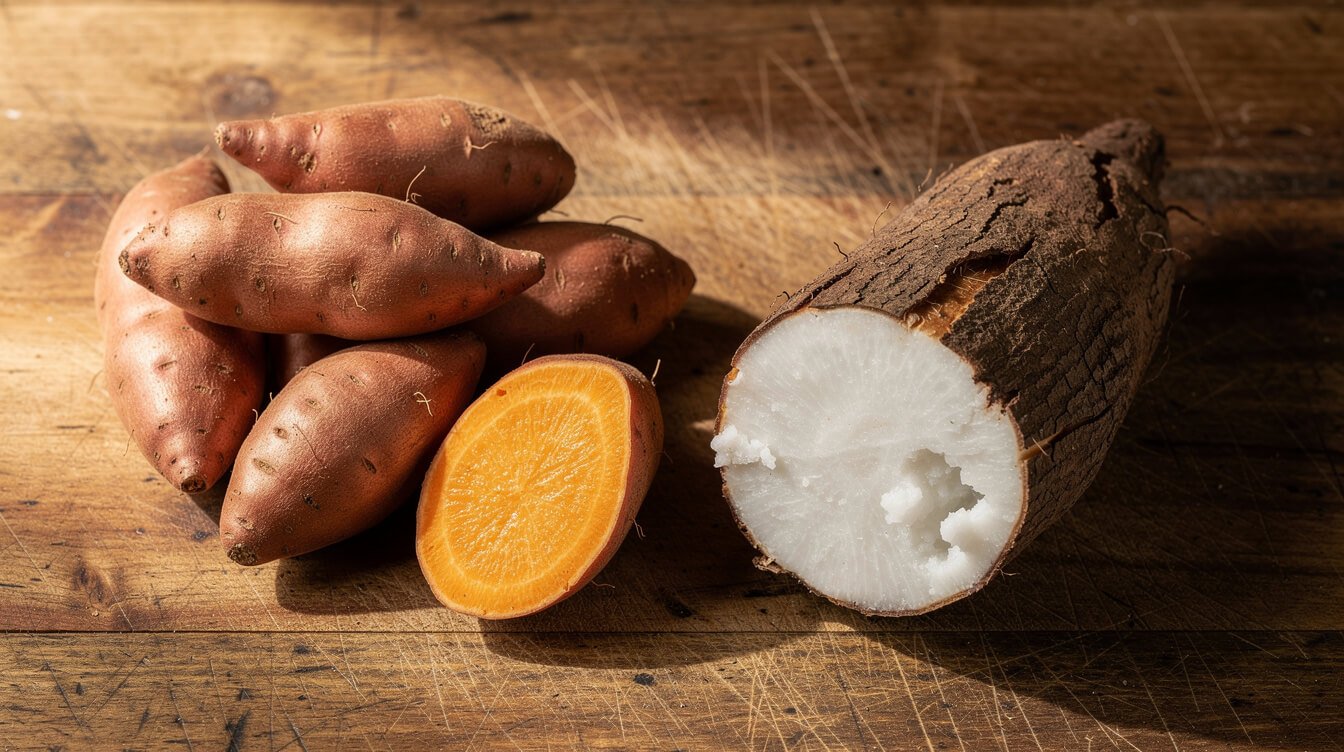
What is the difference between yams and sweet potatoes? Short version: they’re two different plants, and the “yams” in a US supermarket are almost always sweet potatoes. A true yam is a big, rough-skinned, white-fleshed tuber you’ll usually only find at an African, Caribbean, or international market. So if your Thanksgiving recipe says “candied yams,” buy orange sweet potatoes and don’t think twice.
That’s the answer for most people. The rest of this post is about what to do with it: how to tell them apart at the store, which sweet potato to buy for casserole, pie, or fries, what “yams” in a can really are (and the sugar fix that keeps them from turning cloying), and how to cook a real yam if you bring one home.
What is the difference between yams and sweet potatoes? The quick comparison
They aren’t even close relatives. Sweet potatoes (Ipomoea batatas) are in the morning glory family and come from the Americas. True yams (Dioscorea) are tubers grown mostly in West Africa, plus parts of Asia and the Caribbean. The Library of Congress puts it plainly: unless you went looking for yams at an international market, you’re probably eating sweet potatoes.
Here’s how they compare in the kitchen, which is the part that matters when you’re cooking:
| Sweet potato (often labeled “yam”) | True yam | |
|---|---|---|
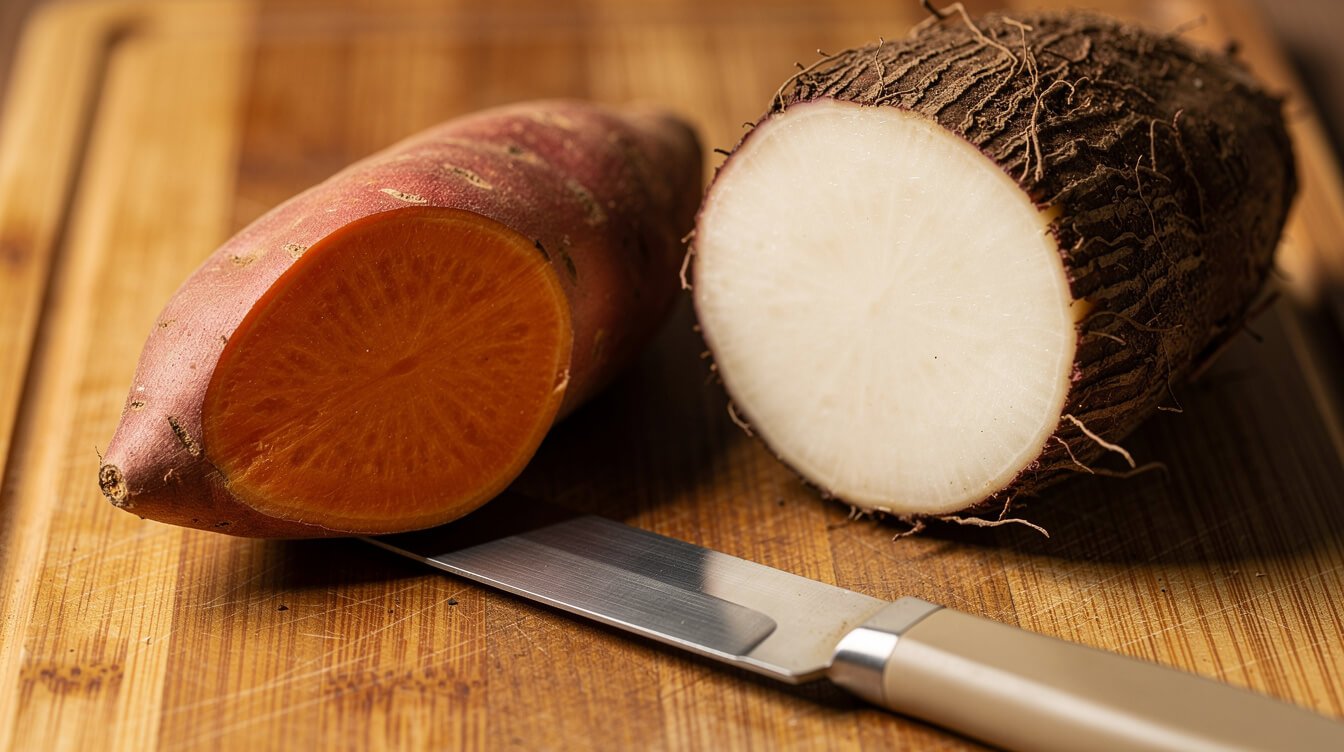
| Skin | Thin and smooth; copper, red, tan, or purple | Thick, rough, and bark-like; dark brown |
| Shape and size | Blocky with tapered ends; usually under a pound | Long and cylindrical; often several pounds, sometimes far more |
| Flesh | Orange, white, or purple | White to pale yellow (a few are purple) |
| Cooked texture | Moist and creamy (orange types) or drier and fluffy (white types) | Dry, starchy, and dense, a lot like a russet potato or cassava |
| Flavor | Sweet, caramelizes in the oven | Mild and earthy, barely sweet |
| Where to buy (US) | Every grocery store | African, Caribbean, Latin, and Asian markets |
| How it’s sold | By the pound, loose or bagged | Often by the piece or cut into sections |
| Best for | Casseroles, pie, roasting, fries, mash | Boiling, frying, stews, pounded yam |
The quickest tell in the store: look at the skin. If it’s smooth and thin enough to scratch with a fingernail, it’s a sweet potato, whatever the sign says. If it looks like a log of tree bark, that’s a yam.
One more thing to clear up: neither of them is a regular potato. Sweet potatoes aren’t related to russets or Yukon Golds either. They just share a name and a spot on the Thanksgiving table.
Why US stores call sweet potatoes “yams”
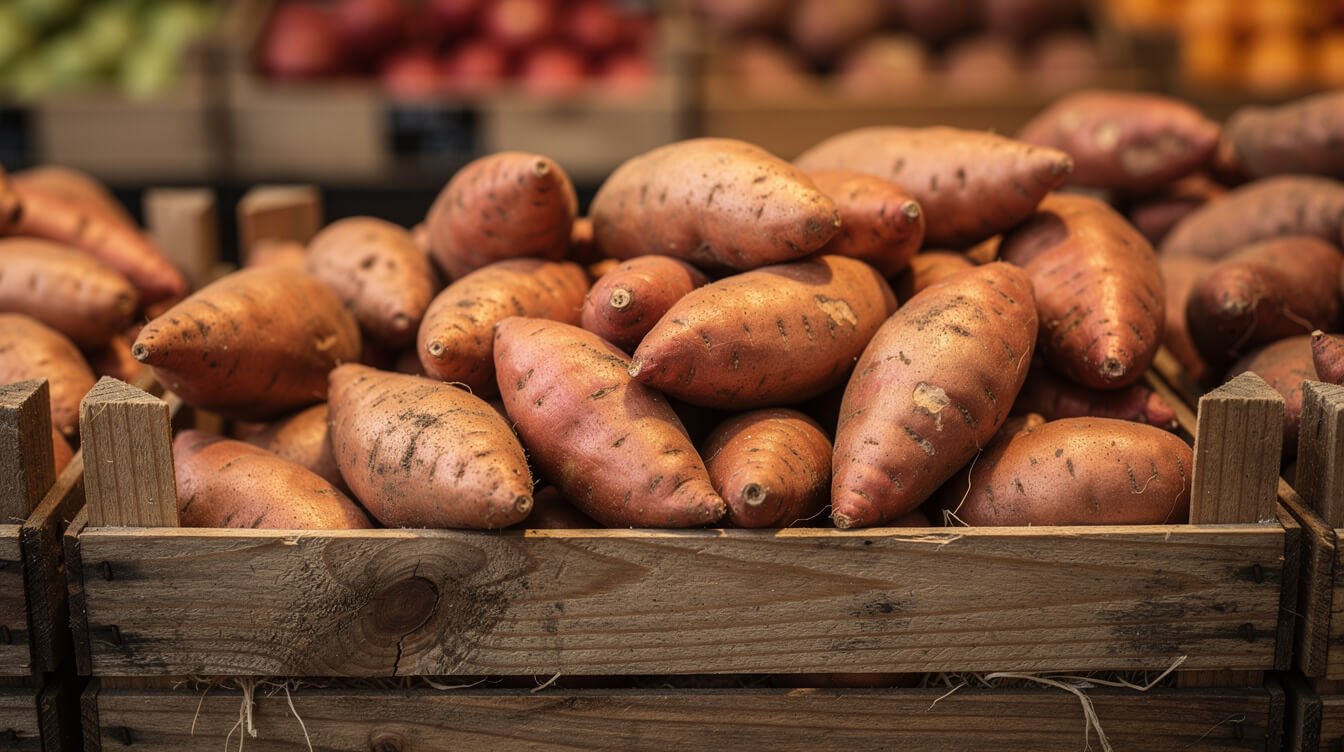
It’s a naming habit that stuck. Back when most American sweet potatoes were the firm, pale, drier kind, softer orange-fleshed varieties started showing up in stores. Growers and sellers needed a way to tell the two apart, and “yam” was already in use. The Library of Congress traces the word to enslaved Africans, who called the soft sweet potatoes “yams” because they resembled the yams of West Africa. Marketing campaigns later leaned into it, and the label never went away.
Today the USDA requires anything labeled “yam” to also say “sweet potato,” so check the fine print on the sign or the can. You’ll almost always find both words. Some growers and state commissions even spell it as one word, “sweetpotato,” to make the point that it isn’t a kind of potato.
What this means for your recipes
Any American recipe that calls for “yams” (candied yams, yam casserole, yams with marshmallows) was written for orange-fleshed sweet potatoes. That’s what the recipe developer bought, and it’s what the sugar, bake time, and texture are built around. Use a true yam in its place and you get something dry and starchy that won’t turn creamy no matter how much butter goes in.
It works the other way too. A West African or Caribbean recipe that calls for yam means the real thing, and sweet potatoes will make it softer and much sweeter. More on swaps below.
Recipe writers outside the US use the words differently again. In New Zealand, “yam” usually means a small tuber called oca, a third plant entirely. If an overseas recipe says yam, check what it means before you shop.
What you’re actually buying: sweet potato varieties by color
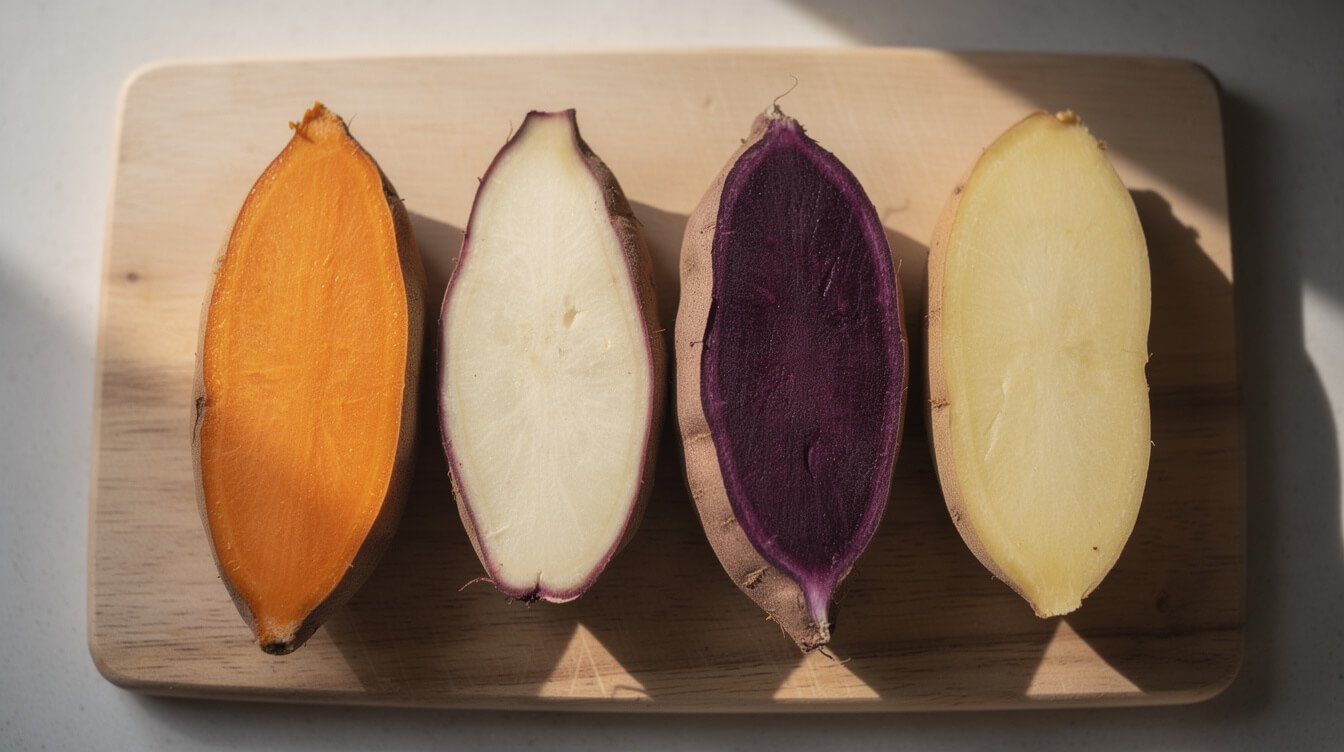
Once you know the “yam” bin holds sweet potatoes, the next question is which sweet potato. This one matters more than the name, because the varieties cook very differently. The Library of Congress sorts them into two groups: “soft” types that turn moist and creamy when cooked (the ones labeled yams) and “firm” types that hold their shape and stay drier. Color is a pretty good shortcut.
Orange flesh: moist and sweet
Beauregard, Jewel, Garnet, and Covington are the ones you’ll see most. Beauregard is the leading US variety. Skins run from copper (Jewel, Beauregard, Covington) to deep red-purple (Garnet). They’re the sweetest and moistest of the bunch, and they caramelize hard in a hot oven. Reach for these for casseroles, pie, candied sweet potatoes, and anything mashed and sweet.
White or cream flesh: drier and nutty
Japanese sweet potatoes (often Murasaki) have purple-red skin and pale flesh. Hannah has tan skin and cream flesh. They’re starchier, less sugary, and fluffier, closer to a baked potato with a chestnut-like sweetness. They’re great roasted, as fries, or in savory mash, and they won’t go mushy. If you’ve ever cut into a sweet potato and wondered why it’s white inside, this is why. It’s a different variety, not a bad one. We have a whole post of white sweet potato recipe ideas and another on what makes their flavor different.
Purple flesh: dense and earthy
Stokes Purple (purple skin, purple flesh) and Okinawan (beige skin, violet flesh) are the dense ones. They’re mildly sweet, a little dry, and they keep their color when baked. They’re beautiful roasted or mashed, and they make a striking pie. They need a bit more liquid when mashed than orange types do.
The labels you’ll actually see
Many stores don’t name the variety at all. Signs might just say “sweet potato,” “red yam,” “garnet yam,” or “Japanese sweet potato.” Go by the skin and, if you can, a cut end. Copper or red skin is almost always orange inside. Purple-red skin can go either way, so a store that cuts a few open for display is doing you a favor.
What a real yam is, and how to cook one
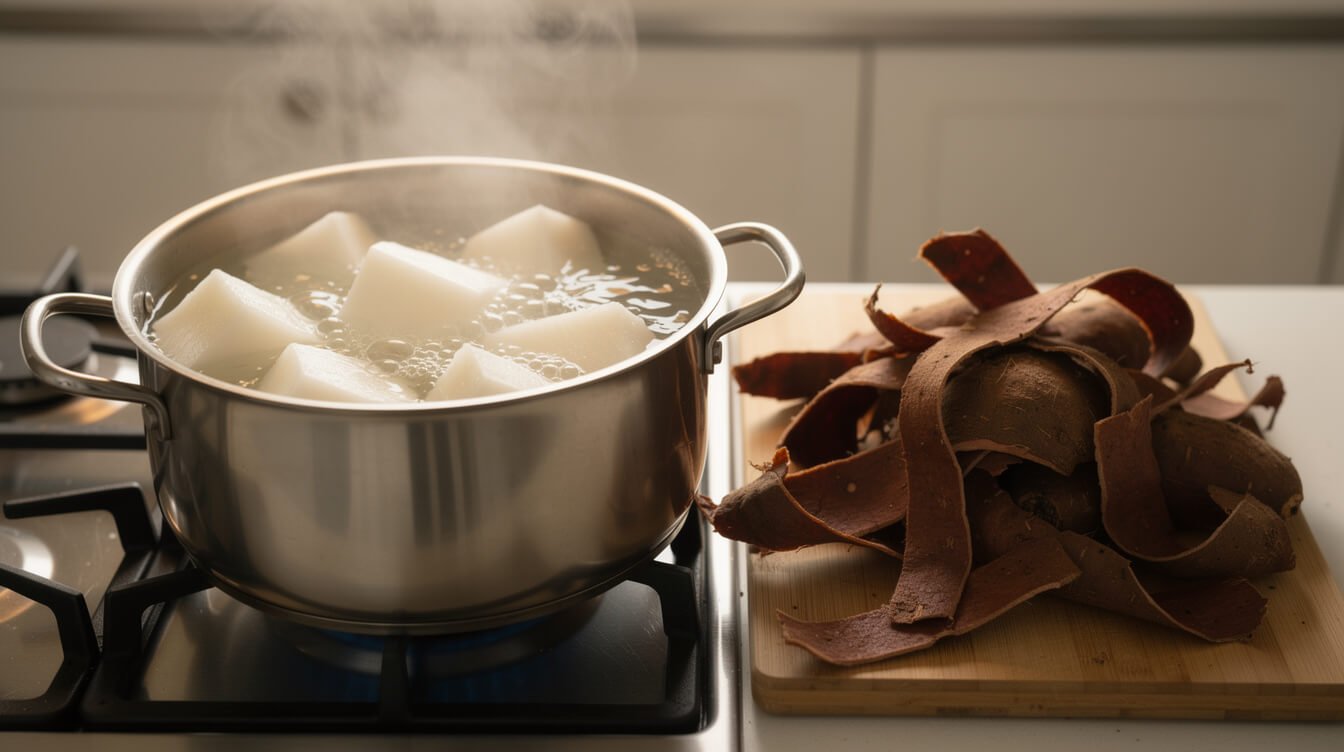
True yams are staples in West African and Caribbean cooking. You’ll find them at African, Caribbean, and Latin markets, and sometimes in an international aisle. They might be labeled name (pronounced NYAH-meh), ñame, puna yam, white yam, or African yam. Because a whole one can be huge, markets often sell them cut into sections and wrapped. Pick a piece with firm, pale, damp-looking flesh at the cut end and no soft spots, mold, or dark streaks.
Always cook them all the way through
Treat a true yam like a potato or cassava: it gets cooked before it gets eaten, every time. Don’t snack on it raw or add it to a salad raw. (Wild yam species can contain a bitter compound called dioscorine, which University of Florida IFAS Extension notes makes many of them inedible. Market yams are cultivated food yams, but the rule for the kitchen stays the same: cook them.)
Fair warning on peeling: some people get itchy hands from raw yam. It’s annoying and it doesn’t last, but it’s easy to dodge. Wear thin kitchen gloves, or rub a little oil on your hands first.
How to prep and boil a yam
- Cut it into rounds about 1½ inches thick. A heavy, sharp chef’s knife makes this much easier. The flesh is dense, and the bark won’t bother a good blade.
- Peel each round by standing it flat and slicing the bark off in strips, the way you’d peel a pineapple. Cut a little deeper than you think, past the brownish layer under the skin.
- Drop the pieces into cold water as you go. Peeled yam is slippery and can darken in the air.
- Boil in salted water until a knife slides in with no resistance, roughly 15 to 25 minutes depending on the size of the pieces. Taste one. It should be soft and fluffy all the way through, with no hard center.
From there, boiled yam goes with stews and sauces just like boiled potatoes. You can fry the boiled slices until golden, mash them with butter and black pepper, or cube them into a pepper soup. Pounded yam is a whole technique of its own, and it’s worth learning from a cook who grew up making it.
The knife really does matter here. A dull one skids on the bark, and that’s how fingers get nicked. Our guide to choosing one good chef’s knife helps if yours is struggling. And if you’re kitting out a kitchen, our 100 Essential Tools guide covers what’s worth buying first.
From the Eat Cafe kitchen
One good recipe a week, straight to your inbox
The recipe we're actually cooking this week, plus the one tip that saves it when it goes sideways. No spam. Unsubscribe anytime.
Can you swap yams and sweet potatoes in recipes?
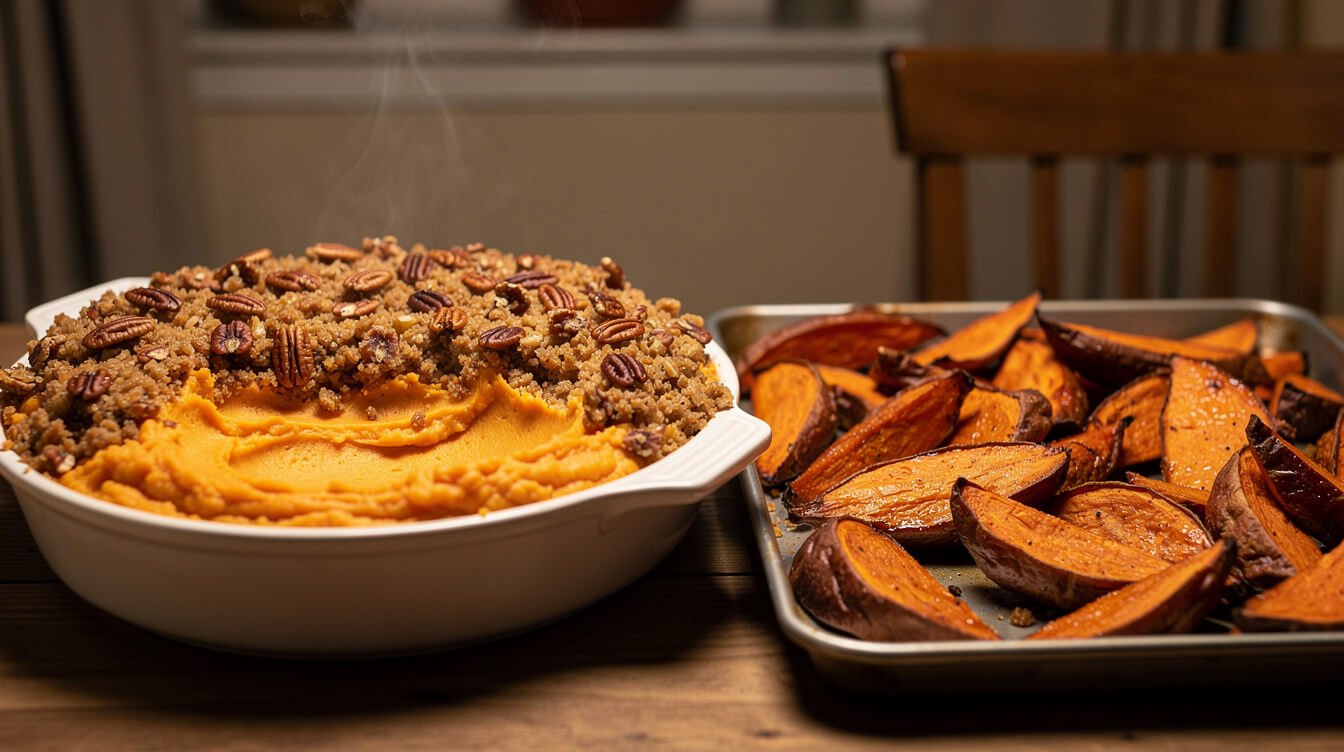
Here’s the honest answer, recipe by recipe. Most of the time the real question isn’t “yam or sweet potato” at all. It’s which sweet potato.
A US recipe says “yams”
Use orange-fleshed sweet potatoes, 1:1 by weight. It’s not really a swap, because that’s what the recipe meant all along.
A West African or Caribbean recipe says “yam”
Use true yam if you can find it. If you can’t, a white or Japanese sweet potato is the closest stand-in: it’s drier and less sweet than the orange kind. Cut the pieces bigger, since sweet potatoes cook faster and fall apart sooner. Pounded yam doesn’t work with sweet potatoes, so look for yam flour (sold for that purpose) instead.
Which sweet potato for which dish
| Dish | Best pick | Why |
|---|---|---|
| Casserole, candied sweet potatoes | Orange (Beauregard, Jewel, Garnet) | Moist, sweet, goes creamy |
| Sweet potato pie | Orange | Smooth custard and classic color |
| Roasted cubes or wedges | Any; white types hold their shape best | Orange ones caramelize more but soften faster |
| Fries (oven or air fryer) | White or Japanese | Drier flesh crisps instead of going limp |
| Savory mash | White, Japanese, or purple | Less sugar, fluffier, pairs with garlic and herbs |
| Stews and soups | True yam, or a firm white sweet potato | Holds together through a long simmer |
The two common failures (and the fixes)
Watery casserole. This usually comes from boiling the sweet potatoes first. They soak up water, and it all seeps out in the oven. Bake them whole instead: prick the skins, set them on a foil-lined sheet at 400°F, and roast until they’re completely soft and leaking syrup, about 45 to 60 minutes depending on size. Scoop out the flesh, and you get a thicker, sweeter base with no extra water.
Stringy pie filling. Some sweet potatoes are fibrous. Push the cooked flesh through a ricer or a mesh strainer, or blend it, before you add the eggs and sugar. Pie is a custard, so bake it until the center is set and refrigerate leftovers once it’s cool. Our butter pie crust is the one we use under it.
For fries, the air fryer is the easy route. The same rules from our air fryer guide apply: dry the pieces well, don’t crowd the basket, and shake halfway.

The knife, the peeler, and the rest of the short list
Our 100 Essential Tools eBook walks through the knives, peelers, pans, and sheet pans that actually earn their spot in a home kitchen, so you buy the useful stuff first. PDF or Kindle.
Canned “yams” and candied sweet potatoes: the sugar math
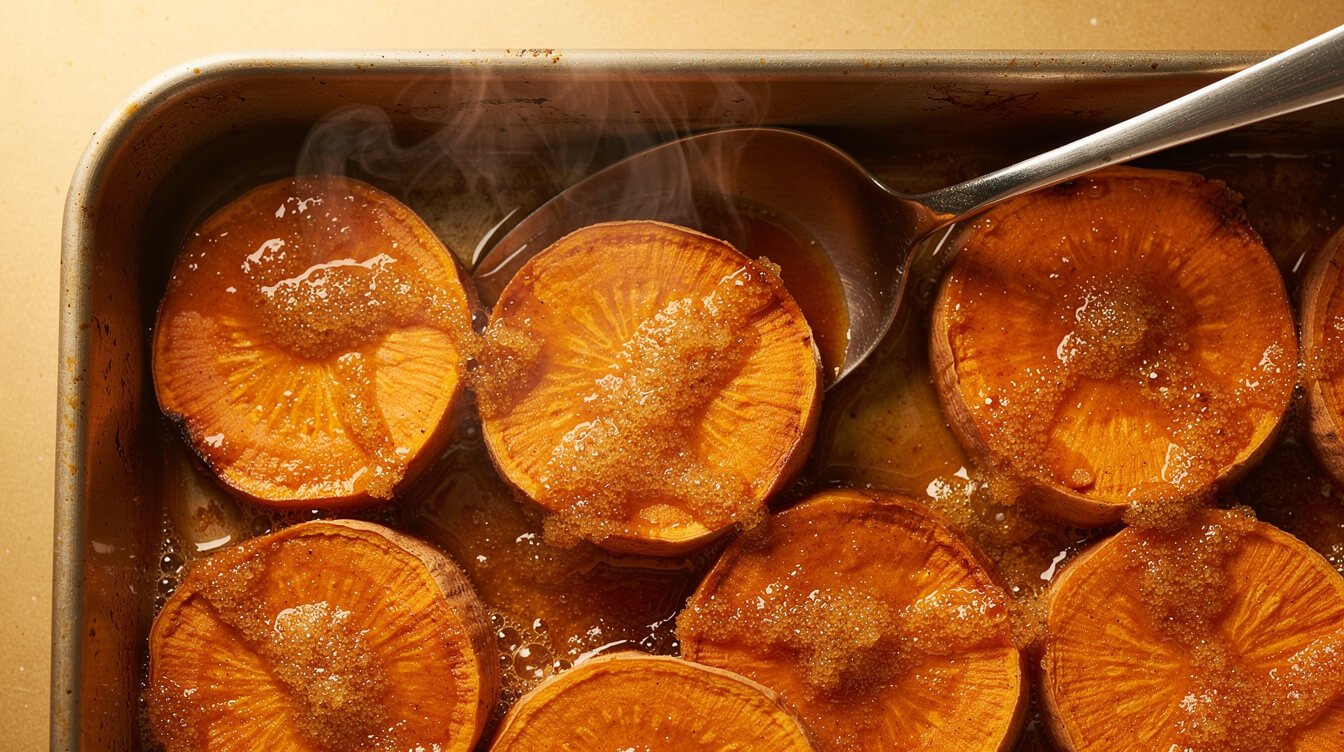
Canned “yams” are sweet potatoes too. Read the label and you’ll see “sweet potatoes” right there in the name or the first ingredient. They save real time on a busy holiday. Nobody’s grading you for opening a can.
The catch is that most are packed in syrup (the label will say light or heavy syrup), and they’re already fully cooked. Those two facts explain why canned-yam casseroles so often come out cloyingly sweet and mushy. Here’s the fix:
- Drain them well and give them a quick rinse if they’re in heavy syrup. Pat them dry.
- Cut the recipe’s sugar. Recipes written for fresh sweet potatoes count on adding all the sweetness. With syrup-packed cans, start with about half the brown sugar, taste the glaze, and add more only if it needs it.
- Bake to heat and glaze, not to cook. They only need about 20 to 25 minutes, enough to get hot all the way through and thicken the glaze. Longer than that and they break down into mush.
- Swap by weight. Use roughly the same drained weight as the peeled fresh sweet potatoes the recipe calls for.
Easy candied sweet potatoes (the “candied yams” everyone means)
This is the fresh version: tender rounds in a glossy, buttery brown-sugar glaze, with no marshmallows required (though nobody’s stopping you). Serves 6 to 8.
- 3 pounds orange sweet potatoes (about 4 medium), peeled and cut into ¾-inch rounds
- 6 tablespoons butter, melted
- ⅔ cup packed brown sugar
- 2 tablespoons orange juice or maple syrup
- 1 teaspoon ground cinnamon
- ¼ teaspoon ground nutmeg
- ½ teaspoon kosher salt (use a pinch less if your butter is salted; here’s when that matters)
- 1 teaspoon vanilla extract
- Heat the oven to 375°F. Spread the sweet potato rounds in a 9×13-inch baking dish, overlapping a little.
- Whisk the butter, brown sugar, juice, cinnamon, nutmeg, salt, and vanilla together. Pour it over the potatoes and toss to coat.
- Cover tightly with foil and bake for 30 minutes.
- Uncover, spoon the syrup over the top, and keep baking, basting every 10 minutes, until a knife slides through the thickest round easily and the glaze is thick and bubbling, 20 to 30 minutes more.
- Let it sit 10 minutes before serving. The glaze thickens as it cools.
Using canned instead? Use about 3 pounds drained weight, cut the brown sugar to ⅓ cup, skip the foil, and bake uncovered for 20 to 25 minutes, basting once or twice.
It goes on the same table as our slow cooker green bean casserole (which frees up the oven for this) and a pan of properly thick gravy. For the rest of the menu, here’s our Thanksgiving dinner roundup.
How to buy and store sweet potatoes (and yams)
Buying
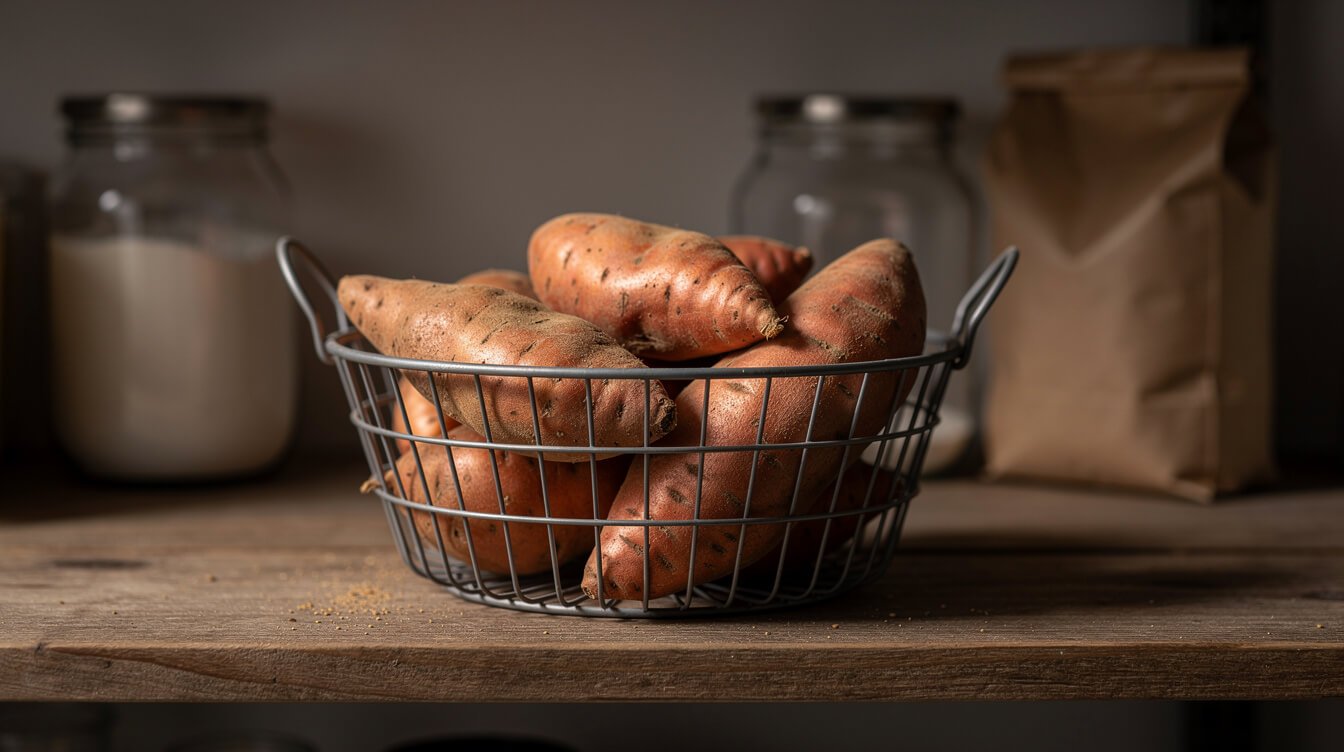
Pick sweet potatoes that feel heavy for their size, with tight, smooth skin and no soft, wet, or sunken spots. Small surface scuffs are fine. Medium ones about the same size cook evenly, which matters more than you’d think for casseroles and roasting. Skip any with sprouts, deep cracks, or a shriveled, wrinkly end.
Storing
Keep raw sweet potatoes out of the fridge. Cold damages them. Purdue Extension notes they’re subject to chilling injury, and they keep best somewhere dark at about 55 to 60°F. A cool pantry, a basement, or an unheated closet is ideal. Leave them unwashed and loose, in a basket or a paper bag, not sealed in plastic. On a warm kitchen counter they’ll still be fine for a while, but use them sooner and check for soft spots.
True yams store the same way: cool, dark, dry, and out of the fridge. A cut section won’t last like a whole one, so cook it within a few days. Wrap the cut end, and trim off any dried or discolored layer before cooking.
Leftovers
Once they’re cooked, it’s the opposite. Casseroles, mash, and candied sweet potatoes go in the fridge within 2 hours, the standard rule for any cooked leftovers. Reheat until steaming hot all the way through.
Frequently asked questions
Are yams and sweet potatoes the same thing?
No. They’re two unrelated plants. But in a US grocery store, anything labeled “yam” is almost always a sweet potato, which is why the words get used interchangeably.
What is the difference between yams and sweet potatoes when you cook them?
Sweet potatoes (especially orange ones) cook up moist, sweet, and creamy, and they caramelize in the oven. True yams cook up dry, starchy, and mild, closer to a russet potato. That’s why they aren’t interchangeable in a casserole.
Are canned yams actually yams?
No, canned “yams” are sweet potatoes, and the label has to say so. Most are packed in syrup, so drain them and cut back on the recipe’s sugar.
Is a red yam or garnet yam a sweet potato?
Yes. “Red yam” and “garnet yam” are store names for orange-fleshed sweet potatoes with reddish skin.
Why are my sweet potatoes white inside?
You bought a white-fleshed variety, like a Japanese sweet potato or Hannah. Nothing’s wrong with it. It’ll be drier and less sweet than an orange one, which makes it great for fries, roasting, and savory mash.
Can I eat sweet potato skin?
Yes, sweet potato skin is perfectly edible. Scrub it well and leave it on for roasted wedges and fries. True yam bark is a different story: always peel it.
Where do I buy real yams?
Try African, Caribbean, and Latin markets, and some large international grocery stores. Look for names like name, ñame, puna yam, or white yam. Soul food cooking uses the word “yams” for sweet potatoes too. Our soul food Sunday dinner ideas lean on them.
So, what is the difference between yams and sweet potatoes? The short version
If someone at the table asks what is the difference between yams and sweet potatoes, you can tell them: two unrelated plants, and the store “yams” are sweet potatoes. If you’re standing in the produce aisle the week before Thanksgiving, here’s all you need: the “yams” in front of you are sweet potatoes, and that’s exactly what your candied yam recipe wants. Grab orange ones for anything sweet and creamy. Pick white or Japanese ones for fries and savory roasting. If you open cans, drain them and halve the sugar. Store the raw ones somewhere cool and dark, never in the fridge.
True yams are worth trying too, as long as you shop at a market that sells them, peel them thick, and cook them all the way through. They’re a different ingredient with their own dishes, not a substitute for the sweet potato casserole. Want more potato ideas? Here are five easy ways to cook potatoes for the rest of the week.

Before you go
Want the next one?
We post a new recipe or kitchen guide every day. The best of the week lands in one short email, no life story attached.