Best Dutch oven for home cooks: honest picks at every price (and what size to get)
Looking for the best Dutch oven and stuck between a $400 French pot and a $50 one with thousands of five-star reviews? Here’s the honest version: they all make good stew. A heavy pot with a tight lid browns meat, simmers chili, and bakes a crackly loaf whether it cost a week’s groceries or a tank of gas. What the money buys is thicker, better-checked enamel, a lighter pot for its size, handles you can grab in oven mitts, and a warranty that means something.
So this guide does three things. It gives you our picks at every budget. It tells you which size to get, because that’s the mistake people actually regret. And it walks you through what to check the day it arrives, so a chipped pot goes back in the box instead of into your kitchen.
The best Dutch oven for most home cooks: the short answer
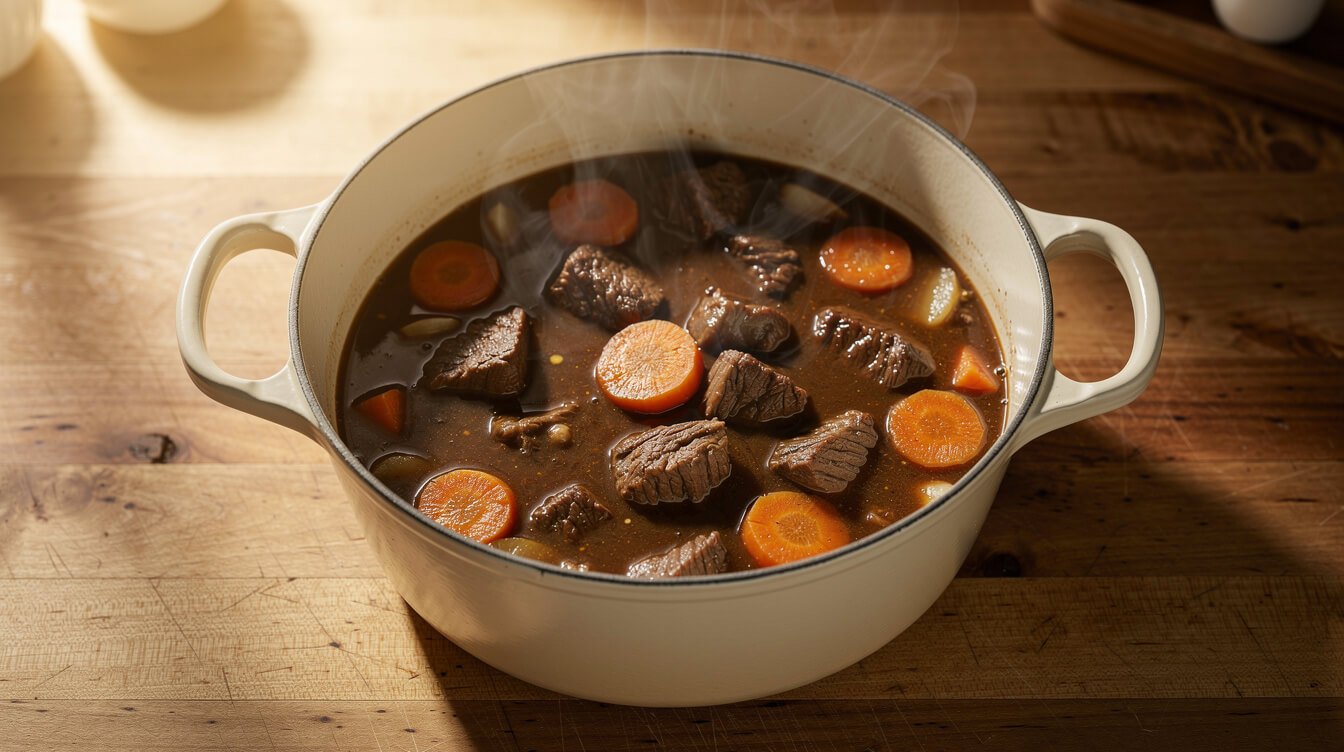
If you only read one section, read this one. The best Dutch oven for most home cooks is a 5.5- to 6-quart round enameled cast iron pot. That size holds a pot roast, a whole chicken, a family batch of chili, or a round loaf of bread. Enamel means no seasoning, no rust, and no worrying about tomatoes or wine.
Here’s how we’d spend the money:
- Buy-it-once pick: Le Creuset Signature 5.5-quart round. Light interior, lighter than most rivals, lifetime warranty.
- If you love a hard sear: Staub 5.5-quart round cocotte. Dark matte interior, heavy flat lid, also a lifetime warranty.
- Middle ground: Made In 5.5-quart. A step up from budget enamel for a lot less than the French pair.
- Best value: Goldilocks 6-quart. Wide, roomy, lifetime warranty, around a quarter of the Le Creuset price.
- Tightest budget: Zulay or Amazon Basics 6-quart. Fine pots. Inspect them carefully the day they arrive.
- Camping, frying, or bread only: a bare cast iron Dutch oven like Lodge’s pre-seasoned 5-quart.
Not sure which camp you’re in? Ask yourself one question: is this the last pot you want to buy, or do you just need dinner in it by Sunday? Both are good answers. They just lead to different pots.
The best Dutch ovens, ranked by what you’ll spend
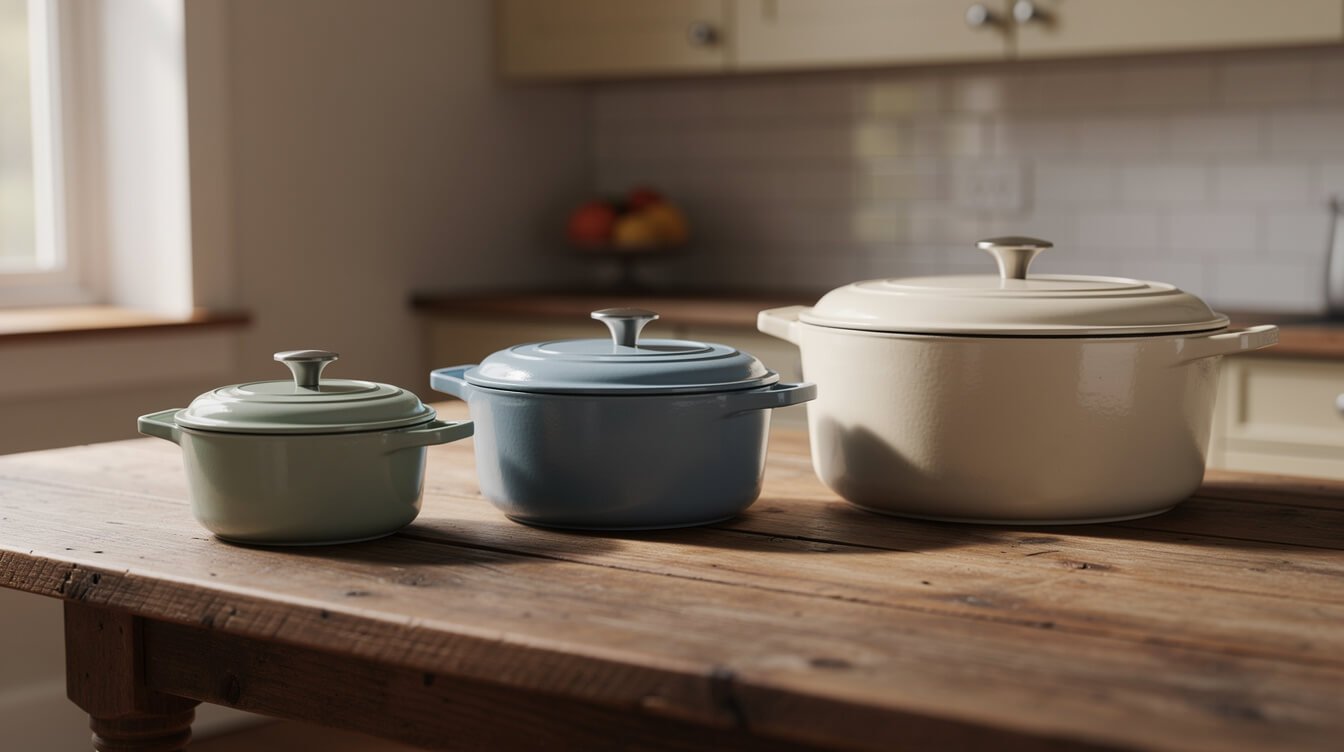
Prices on these pots swing a lot with sales and colors, so treat the numbers below as rough ranges for the 5.5- to 6-quart size, not quotes.
1. Le Creuset Signature round (about $400+): the one to buy once
There’s a reason it’s on every wedding registry. The sand-colored interior makes it easy to watch onions turn gold and the browned bits (the fond) build up without burning. That’s genuinely useful if you’re still learning when “brown” tips into “scorched.” It’s also lighter than most enameled pots its size, about 11.6 pounds for the 5.5-quart, and the loop handles are easy to grip with mitts on. The enameled cast iron is still made in France, and the warranty is a limited lifetime one.
The honest catch: it’s expensive, and the light interior will stain and pick up fine cosmetic lines over the years. That’s normal wear, not a defect. Some testers also find the lid sputters a little at a full boil.
2. Staub round cocotte (about $300–$430): the searing pick
Staub’s interior is black and slightly textured. It soaks up heat, browns hard, and hides stains, so it still looks good after ten years of short ribs. The lid is heavy and flat, it seals well, and you can flip it over to stack the pot for storage. The small bumps under the lid are supposed to “self-baste” your food. Testers have argued about whether they do much. Buy it for the pot, not the bumps.
The honest catch: it’s heavier (about 12.6 pounds at 5.5 quarts), the handles are a bit smaller, and that dark interior makes browning harder to judge. Cook with a good overhead light on.
3. Made In 5.5-quart (about $230–$300): the middle ground
Made In sits right between the budget brands and the French pair. The enamel is better finished than the bargain pots, and it’s priced well under Le Creuset. It’s heavier than both French brands, though, and its wide, flat handles split opinion. Some cooks find them easy to hold when the pot is full. Others find there isn’t much room for knuckles in an oven mitt. If you can, hold one in a store first.
4. Goldilocks 6-quart (about $110): the best value
This is the one we’d point most people to if $400 isn’t happening. It’s wider than it is tall, which gives you more floor to brown meat without crowding it (crowded meat steams instead of searing). The handles are big, and it comes with a lifetime warranty, which is rare at this price. The catch is that it’s a newer brand, so nobody can tell you yet how the enamel holds up over 15 years. It also comes in one size and a few colors.
5. Zulay or Amazon Basics 6-quart (about $45–$70): the tightest budget
Both are perfectly good pots that will make the same beef stew as the fancy ones. Their weak spots are the same as most budget enamel: narrower handles, and enamel quality that varies from pot to pot. Zulay offers a limited lifetime warranty. Amazon Basics comes with a one-year warranty, so check it over the day it arrives (more on that below).
6. Lodge pre-seasoned bare cast iron (about $50–$70): for fire, frying, and bread
No enamel at all, just cast iron like a skillet. It’s nearly indestructible, works over a campfire, and is great for deep frying and bread. It’s not the pot for tomato sauce or wine braises (see the enameled-or-bare section below). Lodge also sells enameled Dutch ovens. They’re popular and affordable, but customers report chipping on both its budget and its USA-made enamel lines, so we’d pick Goldilocks or Zulay at that price instead.
What the extra $300 actually buys you
This is the part most “best of” lists skip. Put a cheap pot and a pricey pot on the same burner with the same stew, and you’ll get nearly the same stew. Cast iron is cast iron. It heats slowly, holds heat for a long time, and keeps a simmer gentle. Where the expensive pots pull ahead is everything around the cooking.
Enamel quality control
Enamel is a layer of glass fused onto the iron. The big French brands lay it on evenly and reject pots with flaws before they ship. Budget brands are more hit-or-miss. Tiny chips, pinholes, or thin spots out of the box are the most common complaint, and those are where rust and chipping start. Most budget pots are fine. A few aren’t, and you won’t know which kind you got until you look.
Weight for the size
A full 6-quart Dutch oven of stew can top 20 pounds. Thinner, more precise castings shave a pound or two off the pot itself, and you’ll feel it every time you lift it out of a 350°F oven. If you have wrist or grip trouble, weight and handle size matter more than any other spec on this list.
Handles and knobs
You’ll be grabbing this pot with oven mitts, when it’s hot and heavy. Big loop handles beat narrow ones every time. Check the knob too. Metal knobs are oven-safe at bread-baking temperatures. Some black plastic-style knobs have a lower oven limit, so check the rating before you bake bread at 450°F or hotter. Most brands sell a cheap stainless replacement knob.
A warranty that means it
A lifetime warranty on enamel is the maker saying “we expect this to outlive you.” A one-year warranty isn’t a red flag by itself, but it does mean the first few weeks are your window to catch a defect.
Our honest take: if you cook braises, soups, and bread every week, the French pots earn their price over 20 years. If you make chili four times a winter, a $110 pot with a lifetime warranty is the smarter buy. That’s the same logic we used in our guide to cast iron skillet brands. The cheap one cooks; the expensive one is nicer to live with.
Light or dark interior: the choice that changes how you cook
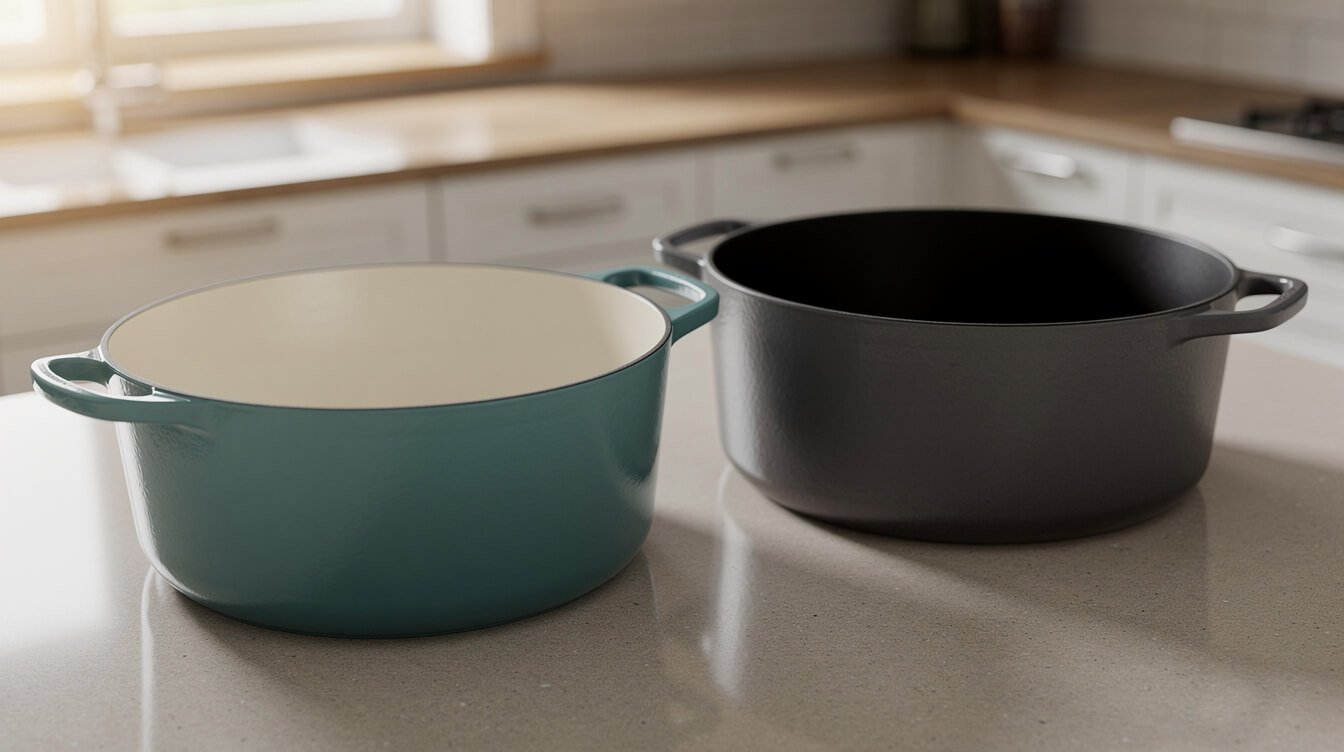
This is the one design choice that actually changes your cooking, and it’s more about you than about the pot.
Light (cream or sand) interiors
You can see everything: butter going nutty, onions turning gold, fond building up on the bottom. That makes it much easier to stop before something burns. If you’re newer to braising, or you’ve ever had a stew taste faintly scorched, a light interior is the forgiving choice. The trade-off is looks. It stains and develops fine surface lines over time. They’re cosmetic, but the pot won’t stay showroom-white.
Dark (black matte) interiors
Dark enamel hides stains and scuffs, and its slightly rough surface browns meat aggressively. Some cooks find food releases better as the pot gets broken in. The trade-off is that you’re cooking a little blind. Fond goes from deep brown to burnt quickly, and it’s hard to see the difference against black. Turn on the overhead light, and lean on your nose.
Either way, enamel isn’t nonstick. It looks glossy, but it’s glass, not a coating. Preheat it, use enough fat, and let meat release on its own before you flip it. If it’s sticking, it usually isn’t ready to turn yet. That’s the same rule we lean on in our beef stew guide, where a good sear is half the flavor.
From the Eat Cafe kitchen
One good recipe a week, straight to your inbox
The recipe we're actually cooking this week, plus the one tip that saves it when it goes sideways. No spam. Unsubscribe anytime.
What size Dutch oven should you buy?
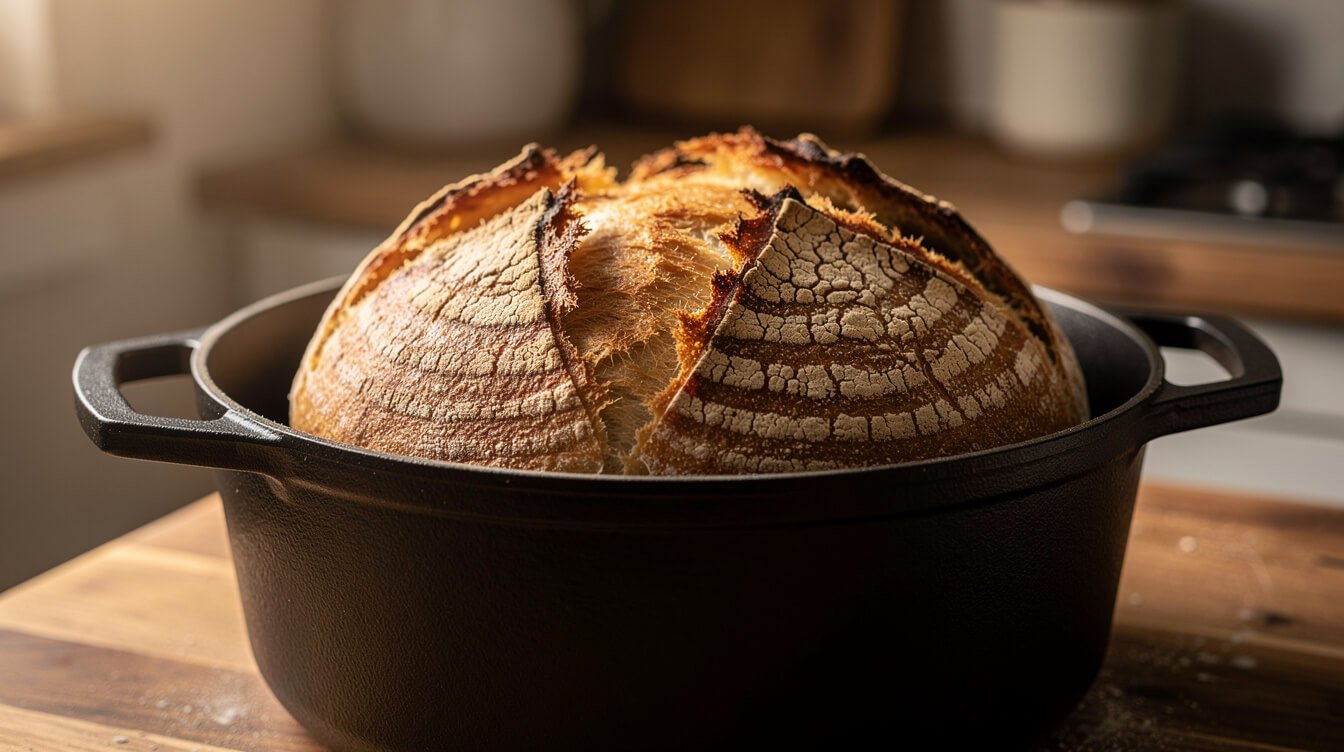
Size is the decision people regret most, more than brand. Too small and your chili boils over. Too big and you’re heaving 15 pounds of iron around for two portions of soup. Here’s how we’d pick:
| Size | Good for | Notes |
|---|---|---|
| 2–3.5 quarts | 1–2 people, side dishes, sauces, a small batch of rice or beans | Handy second pot. Too small to be your only one. |
| 4–4.5 quarts | 2–3 people, small soups, half-batch stews | Lighter and easier to lift. Tight for a whole chicken. |
| 5.5–6 quarts | Most households (2–5 people), pot roast, whole chicken, chili, bread | The sweet spot. Start here if you’re unsure. |
| 7–7.25 quarts | Families of 5–6, big batches, freezer cooking | Heavy when full. Check that it fits your oven and sink. |
| 9 quarts and up | Holiday crowds, big hams, double batches | Specialty pot. Most kitchens don’t need one. |
Round or oval?
Get round unless you have a specific reason not to. A round pot sits evenly over a round burner (this matters even more on induction and electric coils), and it’s the shape for a round loaf of bread. Oval pots are great for a whole chicken or a long roast, but on a round burner the ends cook cooler than the middle.
If you bake bread
A 5.5- to 6-quart round fits a standard boule made with about 500 grams of flour. That’s the size most recipes are written for, including our sourdough-style loaf without a starter and the homemade French bread that bakes beautifully under a lid. The lid traps steam for the first part of the bake, which is what gives you that crackly crust at home. If bread is your main reason for buying, a bare cast iron pot or a “combo cooker” is a cheaper way in. If you want one pot for bread and stew, enameled 5.5 quarts is the answer. And once you’re baking regularly, it’s worth reading up on the best flour for sourdough bread too.
If you’re kitting out a kitchen rather than buying just one pot, our 100 Essential Tools Every Chef Has in Their Kitchen guide covers what’s worth buying first and what can wait.

100 Essential Tools Every Chef Has in Their Kitchen
A Dutch oven is one pot. If you’re working out what else belongs in your kitchen and what you can happily skip, this eBook and guide runs through the whole list the same way this post handles pots: what earns its place, and what’s just nice to own.
Enameled or bare cast iron?
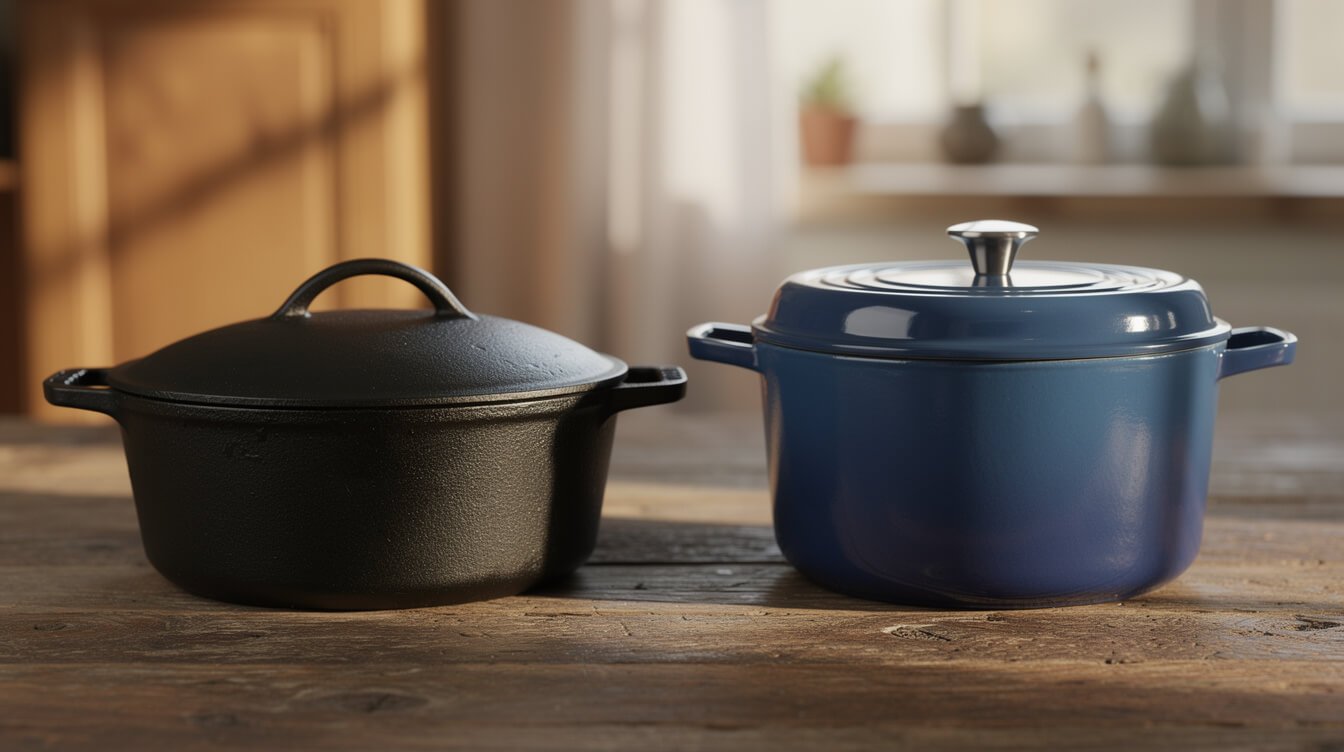
For most home kitchens, go enameled. Here’s the plain comparison.
Enameled cast iron
- No seasoning, no rust, and it’s fine with tomatoes, wine, vinegar, and long simmers.
- Easy to clean: soak, then wash with a soft sponge.
- Can chip if it’s dropped, banged, or shocked with cold water when hot.
- Costs more for the same size.
Bare (pre-seasoned) cast iron
- Cheap and nearly indestructible. It goes on a campfire, in a 500°F oven, or under coals.
- Great for deep frying, cornbread, and bread.
- Needs the same care as a skillet: dry it right away and oil it lightly. Our guides to the best way to clean cast iron and the best oil for seasoning it apply here too.
- Not ideal for long acidic cooking. Hours of tomato sauce or wine can strip the seasoning and leave a metallic taste. The lid also tends to rust, because it gets wet with condensation but never gets the oily heat that builds seasoning.
So if your pot is mostly for chili, white bean chicken chili, braises, and tomato-y soups, enameled is the easier life. If it’s mostly for frying, camping, and bread, bare iron is a bargain.
What to check the day it arrives (and how to keep the enamel happy)
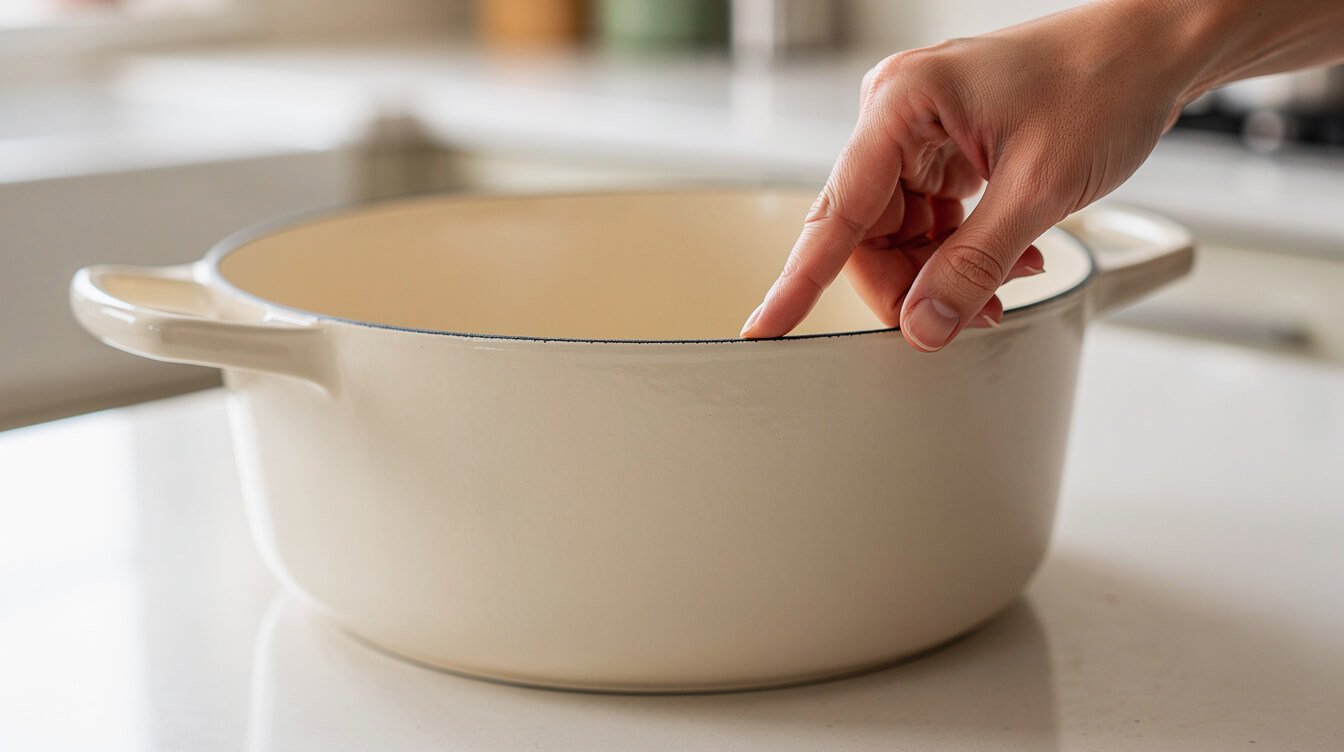
This matters most for budget pots, but do it with any Dutch oven. It takes two minutes.
The two-minute inspection
- Look inside under a bright light. Check the bottom and walls for chips, pinholes, bubbles, or bare black spots in the enamel.
- Run a finger around the rim. Many rims are left as bare black iron on purpose. That’s normal. What you’re feeling for is a chip or rough patch where the enamel should be smooth.
- Check the lid fit. Set it on and give it a gentle push. It should sit flat and not rock or rattle.
- Look at the outside bottom. It should sit flat on the counter without wobbling.
Find a flaw in the interior enamel? Don’t cook in it. Contact the seller or maker right away. That’s exactly what the return window and warranty are for.
Keeping the enamel happy for 20 years
- Heat it gradually. Start on low to medium heat and give it a few minutes. Cast iron holds heat so well that you rarely need high heat, even for searing.
- Avoid thermal shock. Don’t take it from the fridge straight onto a hot burner, and don’t plunge a hot pot into cold water. Sudden temperature swings are what crack enamel.
- Don’t heat it empty on the stovetop. Always have a little fat or liquid in it on the burner.
- Use wood or silicone tools. Metal won’t wreck it in one go, but repeated scraping wears the enamel over time.
- Lift, don’t slide, on glass and induction cooktops. It protects both the cooktop and the pot.
- Hand-wash it. Even pots sold as dishwasher-safe last longer washed by hand, because harsh detergents slowly dull the enamel.
Best Dutch oven: frequently asked questions
Is a Le Creuset really worth it?
If you cook in it every week for years, yes. You’re paying for even, carefully checked enamel, a lighter pot for its size, and a warranty that lasts a lifetime. If you’ll use it a handful of times a winter, a $110 pot with a lifetime warranty gets you 90% of the way there. Nobody tasting your stew will know the difference.
What’s the best Dutch oven size for a family of four?
A 5.5- to 6-quart round. It holds a full batch of stew or chili with room to stir, fits a whole chicken, and still fits in most ovens and sinks. Go up to 7 quarts if you batch-cook for the freezer.
Can I bake bread in an enameled Dutch oven?
Yes. Many no-knead and sourdough recipes preheat the pot in a 450–500°F oven. Check your pot’s maximum oven temperature first, and check the knob’s rating too, since that’s often the weak spot. Use oven mitts that cover your wrists. A heavy iron pot at 475°F is no joke.
How do I get stuck-on food or stains out of enamel?
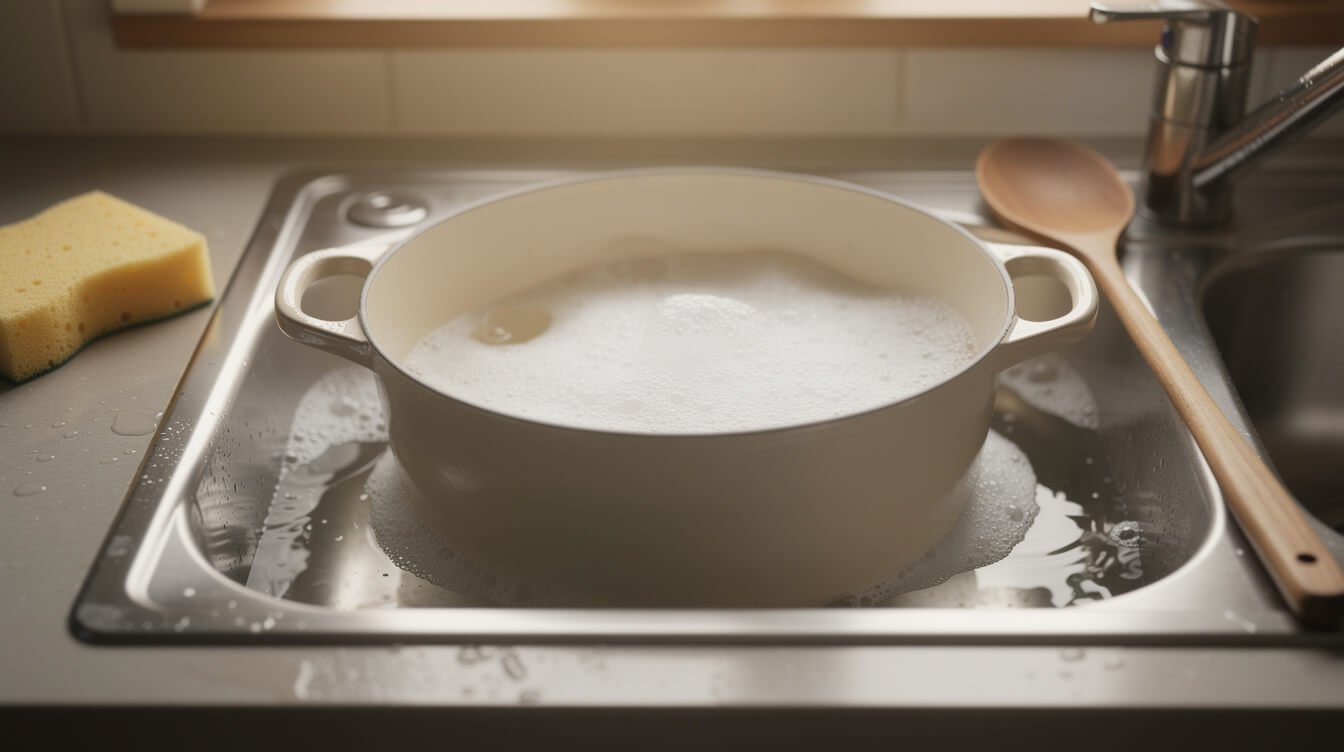
Fill the pot with warm soapy water and let it soak for 20–30 minutes, then wash it with a soft sponge. For stubborn spots, simmer a little water with a spoonful of baking soda, let it cool, and wipe. Skip steel wool and harsh abrasive powders. They scratch the glossy surface, and then food sticks more.
Can you deep fry in a Dutch oven?
Yes, it’s one of the best pots for it, because the heavy iron keeps the oil temperature steady. Fill it no more than about halfway with oil, so there’s room for bubbling when food goes in. Use a clip-on thermometer, and keep the lid nearby in case you need to smother a flare-up. Never use water on an oil fire.
Can a Dutch oven go on an induction cooktop?
Cast iron, enameled or bare, works on induction. Round pots heat more evenly over a round induction zone than oval ones. Bring it up to temperature gradually, and lift it rather than sliding it across the glass.
My enamel chipped. Is the pot ruined?
A chip on the outside is usually cosmetic. A chip on the inside cooking surface is a different story. Stop using it for cooking and contact the maker, because interior chips are what warranties are for. Many brands will replace a pot with a covered defect.
Final thoughts: the short version
The best Dutch oven is the one sized right for your household that you’ll actually reach for on a Tuesday. For most people, that’s a 5.5- to 6-quart round enameled pot. Buy Le Creuset or Staub if you want to buy once and hand it down. Buy Goldilocks if you want great value with a real warranty. Buy Zulay or Amazon Basics if budget is everything, and check it over the day it lands. Pick a light interior if you want to see your fond, and a dark one if you want stains to disappear.
Then use it. Start with a pot of easy chili, a cozy braise, or your first round loaf of bread. A Dutch oven gets better the more you cook in it. Not because the pot changes, but because you get to know it.

Before you go
Want the next one?
We post a new recipe or kitchen guide every day. The best of the week lands in one short email, no life story attached.