Sourdough cinnamon rolls recipe: an overnight schedule for Christmas morning (plus what to do with discard)
This sourdough cinnamon rolls recipe is built around one schedule: mix the dough in the afternoon, shape the rolls after dinner, let them sit in the fridge overnight, and bake them in the morning. If your sourdough rolls have come out flat, dense, or sour enough to make the kids suspicious, the recipe is rarely the problem. The usual causes are a sleepy starter and a cold kitchen. Both are easy to fix once you know what to look for.
Here’s what’s below: the recipe card first, then an honest answer on using discard (and a version that works with it), a Christmas-morning timeline plus a same-day one, the step-by-step, why rolls don’t rise and how to make a warm spot, how to control the tang, storing and freezing, and a troubleshooting table.
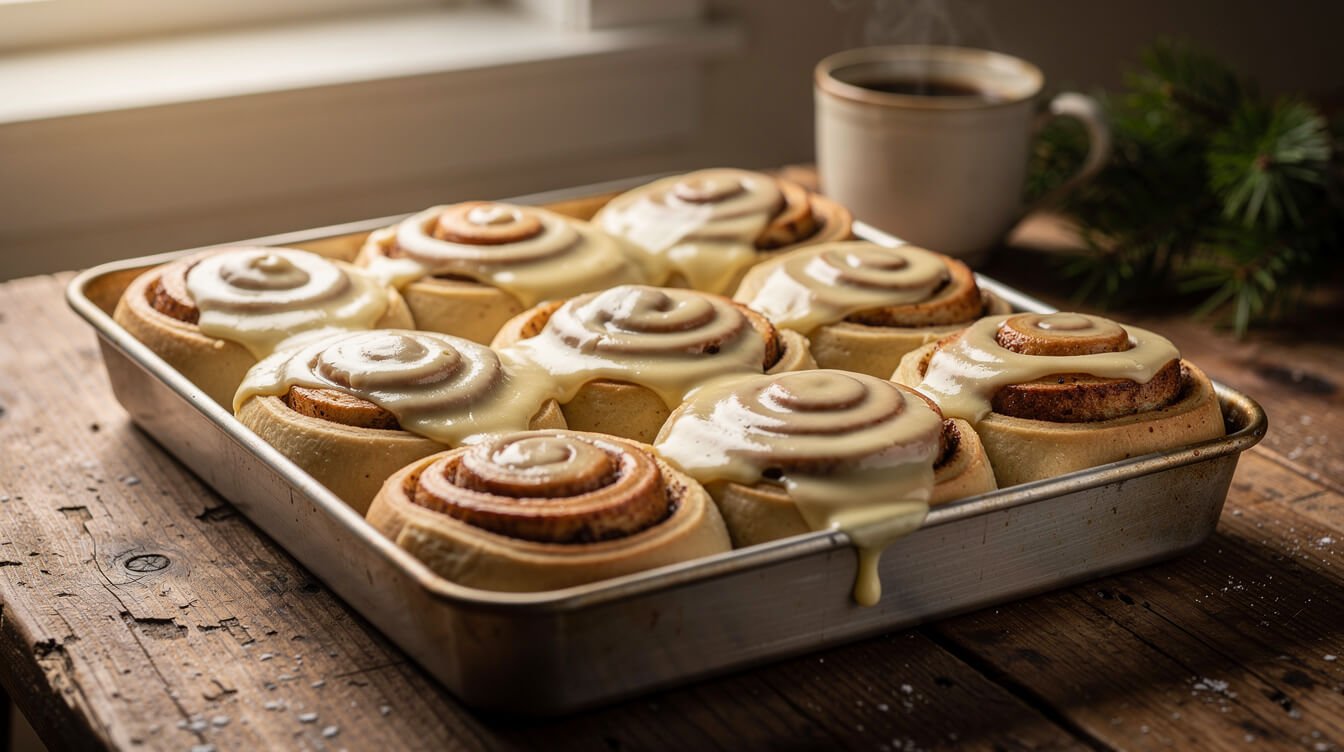
Sourdough cinnamon rolls recipe: the overnight version
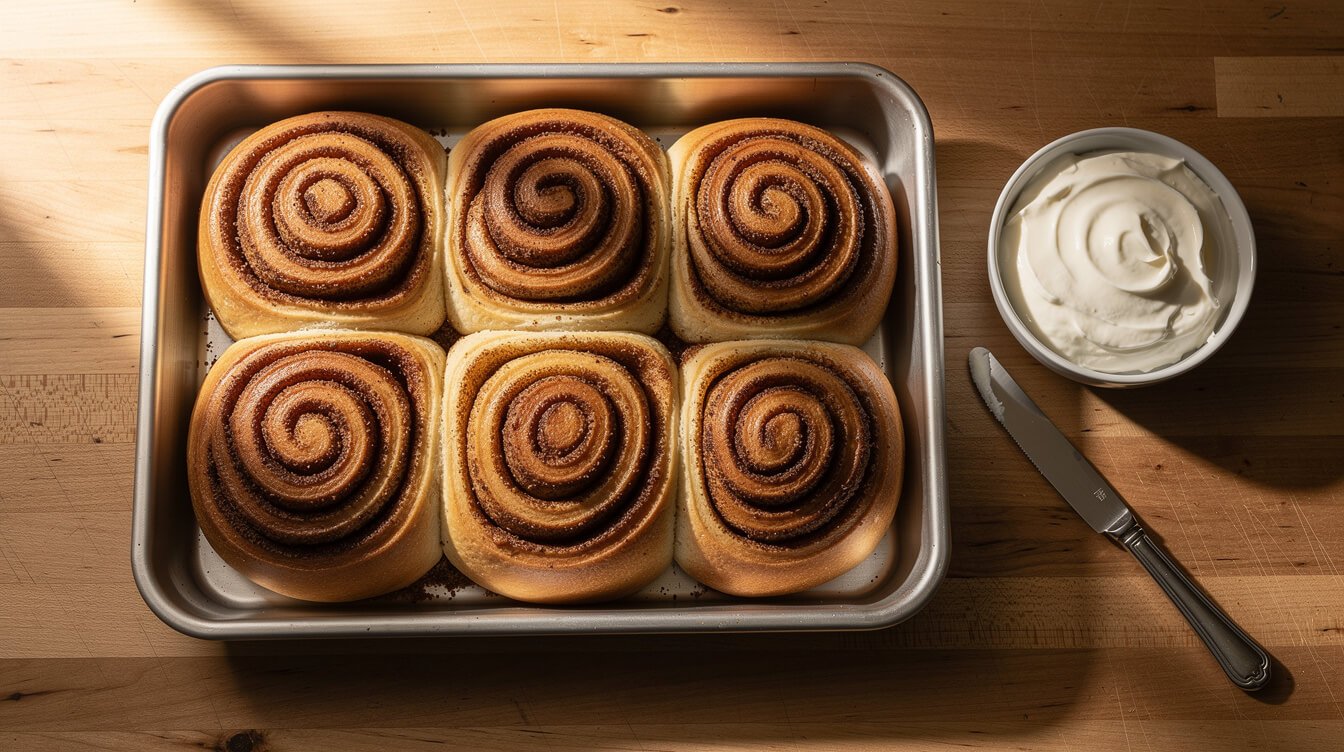
This makes 12 soft rolls in a 9×13-inch pan. You’ll work with the dough for about 45 minutes in total. The rest is waiting while the starter does its job.
For the dough
- 100 g (a scant 1/2 cup) active sourdough starter, bubbly and at its peak (more on that below)
- 240 g (1 cup) whole milk, lukewarm
- 1 large egg, at room temperature
- 57 g (4 tablespoons) unsalted butter, melted and cooled
- 50 g (1/4 cup) granulated sugar
- 420 g (3 1/2 cups) all-purpose flour, spooned and leveled, plus a little for the counter
- 6 g (1 teaspoon) fine salt
For the filling
- 70 g (5 tablespoons) unsalted butter, very soft but not melted
- 110 g (1/2 cup packed) brown sugar, light or dark
- 1 tablespoon ground cinnamon
- A pinch of salt
For the cream cheese frosting
- 113 g (4 ounces) cream cheese, softened
- 42 g (3 tablespoons) unsalted butter, softened
- 120 g (1 cup) powdered sugar
- 1 teaspoon vanilla extract and a pinch of salt
- 1 to 2 teaspoons milk, only if it’s too thick to spread
The method in brief
- Mix: whisk the starter, milk, egg, melted butter, and sugar. Add the flour and salt, then knead for 6 to 8 minutes in a stand mixer, or about 10 by hand, until the dough is smooth, soft, and a little tacky.
- Bulk rise: cover it and leave it somewhere around 75°F until it’s grown by about 75% and looks puffy. That usually takes 4 to 6 hours, and longer in a cool kitchen.
- Shape: roll it to about 12 x 18 inches. Spread on the filling, roll it up from the long side, and cut 12 rolls. Pack them into a greased 9×13 pan.
- Chill: cover the pan and refrigerate it overnight, 8 to 16 hours.
- Morning rise: let the covered pan sit somewhere warm for 1 to 3 hours, until the rolls are puffy and pressing into each other.
- Bake: 375°F for 22 to 28 minutes, until golden and the center roll reads about 190°F. Frost while warm.
Want the details that keep each step from going wrong? They’re all in the step-by-step section below. If this is your first enriched dough, read that part once before you start.
Active starter or discard? What you can actually use
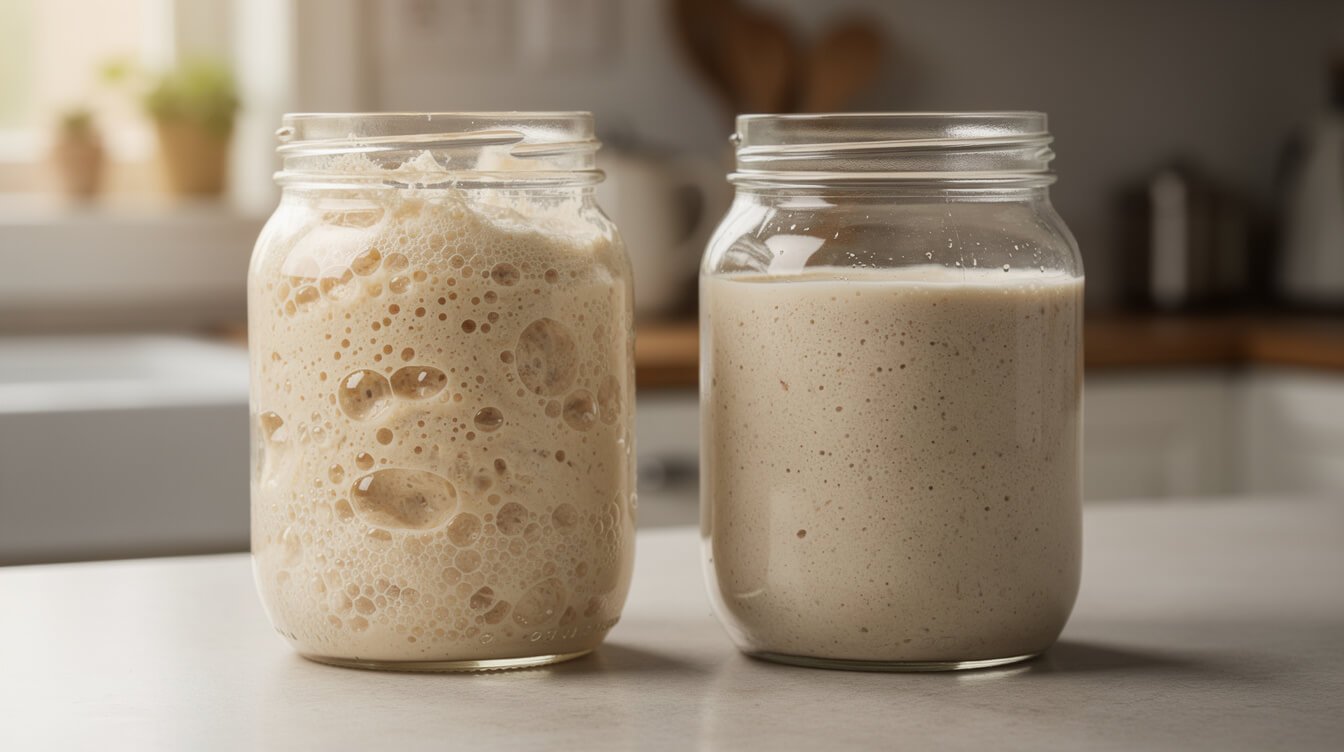
This is the question most people searching for sourdough cinnamon rolls have, so here’s the straight answer: discard on its own won’t reliably raise this kind of dough.
Cinnamon roll dough is an enriched dough. It’s full of milk, butter, egg, and sugar, and all of those slow yeast down. An active starter, fed a few hours earlier and at its peak, has enough lively yeast to push through that. Discard is starter that’s been sitting unfed, often in the fridge for days. Its yeast are hungry and sluggish. Ask it to raise a rich dough and you’ll often wait 12 hours or more, and you can still end up with tight, heavy rolls.
How to tell your starter is ready
Feed it, then watch. King Arthur Baking’s guideline is that a starter is ripe enough to raise dough when it doubles or triples in volume within 6 to 8 hours of being fed. It should be domed, full of bubbles, and smell pleasantly yeasty and tangy. A starter straight from the fridge usually needs two or three feedings at room temperature, 12 hours apart, before it gets there. Plan for that.
If your starter isn’t rising like that, our guide to making a sourdough starter from scratch (and why it’s not rising) walks through the usual fixes.
The discard version: add a little yeast
If all you have is discard, you can still make these. Use 100 g of discard in place of the active starter, and add 1 teaspoon of instant yeast with the flour. The yeast does the lifting. The discard brings the sourdough flavor, a mild tang and a little extra tenderness.
Everything goes faster with the yeast. King Arthur notes that adding a teaspoon of yeast to their sourdough rolls shortens the first rise to about 2 to 2 1/2 hours and the second to about 1 1/2 to 2 hours. You can still shape the rolls and chill them overnight. They’ll just need less time to puff in the morning.
You’ll also see discard cinnamon rolls that skip rising and use baking soda and baking powder instead. Those can be good, but they’re a different roll: closer to a tender biscuit than a soft, stretchy bun. If that’s what you’re after, our 1-hour cinnamon rolls with no yeast are built for exactly that.
The Christmas-morning schedule (and a same-day one)
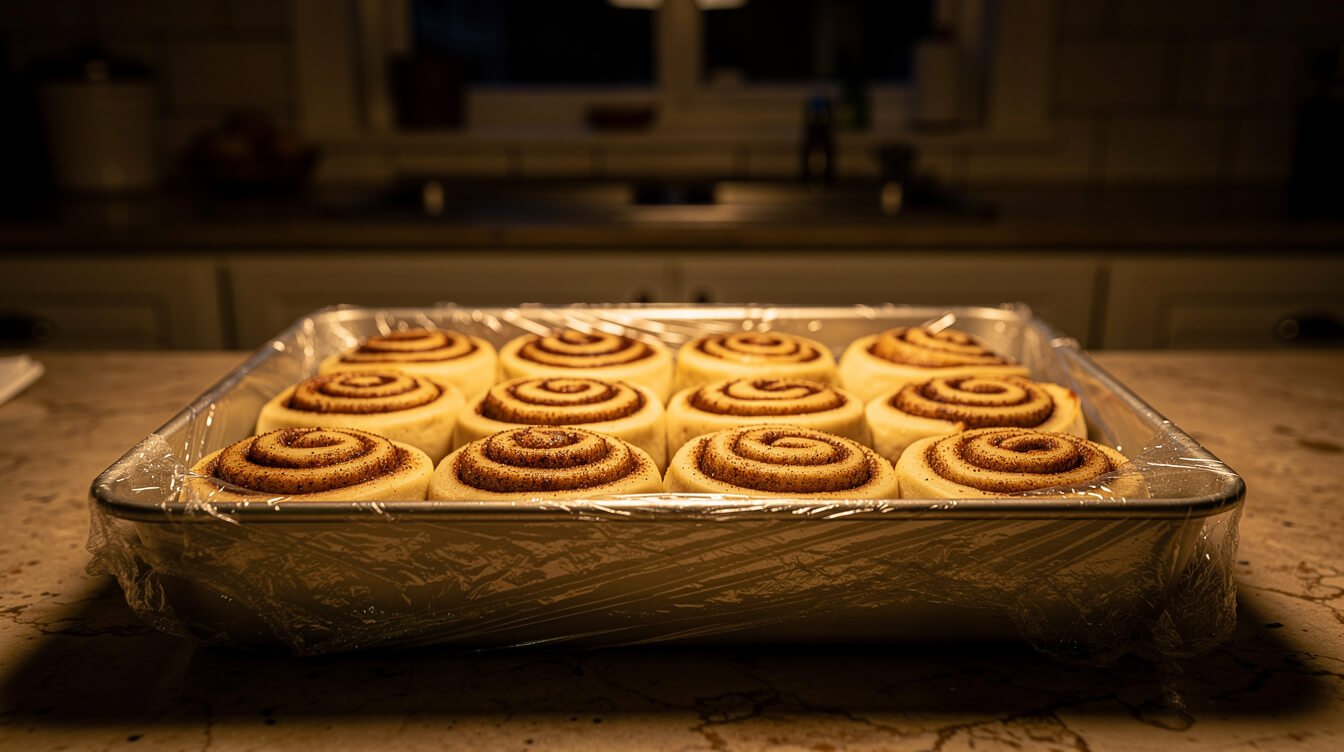
Sourdough is slow, and that’s the whole trick. The overnight chill lets you do the work the day before, so all you have to do in the morning is turn on the oven. Here’s a timeline that works for a 9 a.m. breakfast. Shift every step by the same amount if you eat earlier or later.
The overnight timeline
- The morning before, about 8 a.m.: feed your starter. If it’s been in the fridge all week, start this a day or two earlier with a couple of extra feedings.
- About 1 p.m.: the starter should be doubled and bubbly. Mix and knead the dough.
- 1 p.m. to about 6 p.m.: bulk rise somewhere warm. Peek at it now and then. You’re watching for growth, not the clock.
- About 6 to 7 p.m.: shape the rolls, pack them into the pan, cover tightly, and put the pan in the fridge.
- Christmas morning, about 6:30 a.m.: take the pan out and set it somewhere warm, still covered. Go back to bed if you like.
- About 8 a.m.: if the rolls are puffy and touching, heat the oven to 375°F. If they still look small and tight, give them another 30 to 60 minutes. Mix the frosting while you wait.
- About 8:15 to 8:45 a.m.: bake. Frost them warm and serve.
The overnight part happens in the fridge, not on the counter. The dough has milk, butter, and egg, and the cold also keeps it from over-rising while you sleep. King Arthur says shaped rolls can wait in the fridge for up to 24 hours, so a late night or a slow morning won’t ruin anything.
The same-day timeline (with a little yeast)
No time for an overnight? Use the discard-plus-yeast version above, or add the teaspoon of instant yeast to the active-starter dough. Then:
- 8 a.m.: mix and knead.
- 8 to about 10:30 a.m.: first rise, until puffy and grown by about 75%.
- 10:30 a.m.: shape and pan the rolls.
- 10:30 a.m. to about 12:30 p.m.: second rise, until puffy and touching.
- 12:30 p.m.: bake. They’ll be warm and frosted by about 1:15.
Without any yeast, a same-day sourdough version is possible, but it takes most of the day: 4 to 6 hours of bulk rise, then another 2 to 4 hours after shaping. That’s why the overnight plan is the one we’d pick.
Step by step: dough, rise, shape, chill, bake, frost
1. Mix and knead the dough
Whisk the starter, lukewarm milk, egg, cooled melted butter, and sugar together in a large bowl or your stand mixer bowl. The milk should feel just warm on your wrist, not hot. Add the flour and salt and stir until there’s no dry flour left.
Knead with the dough hook on medium-low for 6 to 8 minutes, or by hand on a lightly floured counter for about 10 minutes. It’ll start sticky and become smooth, soft, and slightly tacky. Resist adding much more flour. Extra flour is the quickest way to dry, tight rolls. If it’s sticking to your hands, a little oil or a bench scraper works better than another handful of flour.
Weighing the flour helps a lot here. A cup of flour can weigh anywhere from 120 g to over 150 g depending on how you scoop it, and that’s the difference between soft rolls and bready ones. Our baking basics for beginners covers how to measure without a scale if you don’t have one. If you do this kind of baking often, a stand mixer takes the kneading off your hands, but it’s not required.
2. Let it rise (bulk)
Cover the bowl and put it somewhere around 75°F. King Arthur’s sourdough cinnamon rolls rise for about 4 hours at 75°F. In a cooler 68°F kitchen, expect 6 to 8 hours or more. It’s ready when it has grown by about 75% (close to doubled), looks domed and airy, and jiggles a little when you shake the bowl.
Optional: for a stronger dough, do a quick stretch and fold every hour for the first 3 hours. With wet hands, lift one side of the dough, fold it over itself, turn the bowl, and repeat four times. It’s not required, but it helps the rolls stand tall.
3. Shape the rolls
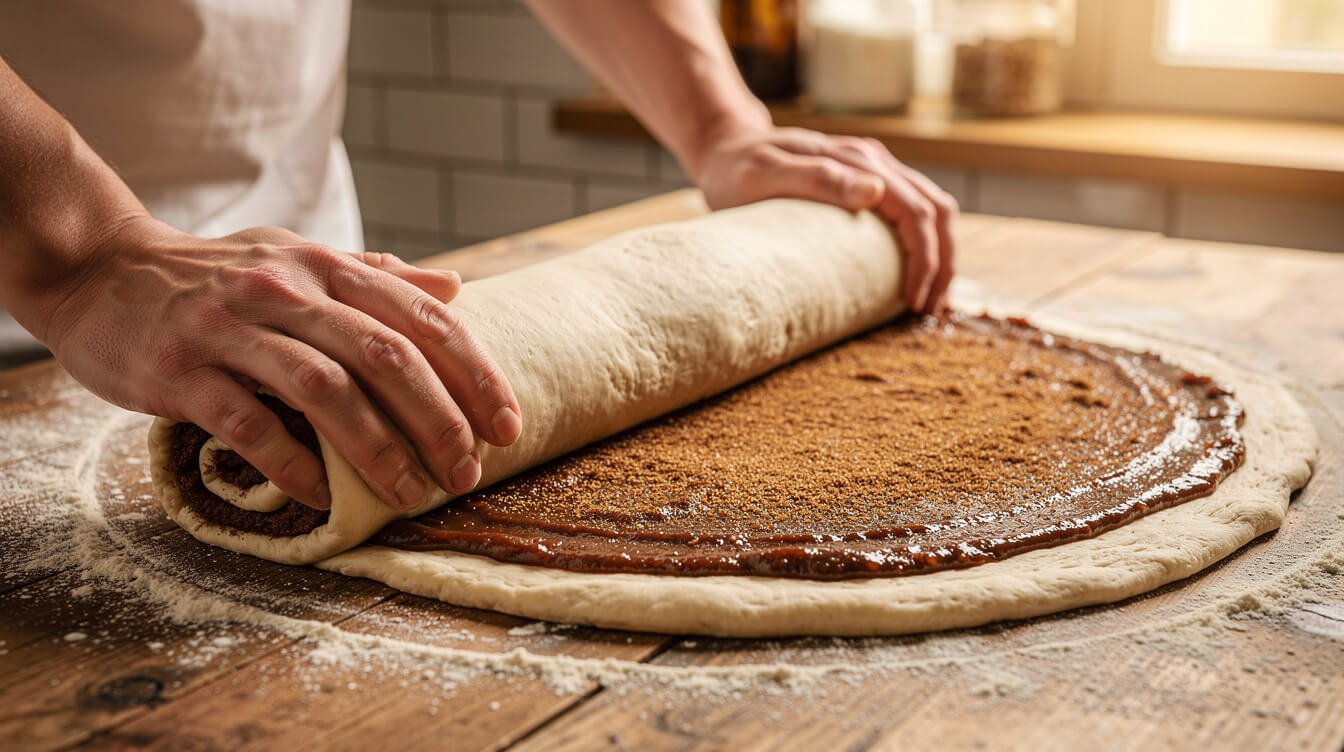
Turn the dough out onto a lightly floured counter. Press it down gently and roll it into a rectangle about 12 x 18 inches, with a long side facing you. Spread the soft butter all over it, leaving a 1/2-inch bare strip along the far edge. Mix the brown sugar, cinnamon, and salt, then sprinkle it evenly and press it in lightly with your hand.
Roll it up firmly from the long side closest to you, keeping the log snug but not stretched. Pinch the seam closed. Then cut it into 12 equal rolls, each about 1 1/2 inches wide. Unflavored dental floss slid under the log, crossed over the top, and pulled tight cuts a cleaner spiral than a knife. A very sharp serrated knife with a gentle sawing motion works too.
Use very soft butter in the filling, not melted. Melted butter slides out of the spiral and pools in the bottom of the pan.
4. Pan and chill
Grease a 9×13-inch pan, or line it with parchment. Arrange the rolls cut-side up in 3 rows of 4. They don’t need to touch yet, but they will. Cover the pan tightly with plastic wrap or a lid and refrigerate overnight, 8 to 16 hours.
Raw dough has raw egg and raw flour in it, so don’t taste it. The CDC notes that raw flour and raw eggs can both carry germs that make people sick, and that those germs are only killed once the flour is baked or cooked. Wash your hands, bowl, and counter after handling it.
5. Bake
In the morning, take the covered pan out and let the rolls rise somewhere warm for 1 to 3 hours. Cold sourdough is slow, so don’t rush this. They’re ready when they’ve puffed noticeably, they’re pressing against each other, and a gentle poke springs back slowly.
Heat the oven to 375°F and bake on the middle rack for 22 to 28 minutes. They’re done when the tops are golden and an instant-read thermometer in the center of the middle roll reads about 190°F. That’s the doneness target in King Arthur’s recipe. Always check the middle roll, because the outer ones finish first. If the tops brown before the center is done, lay a sheet of foil loosely over the pan for the last few minutes.
6. Frost
Beat the softened cream cheese and butter until smooth, then beat in the powdered sugar, vanilla, and salt. Add a splash of milk only if it’s too stiff to spread. Let the rolls cool for 5 to 10 minutes, then spread on the frosting so it melts into the swirls. Too hot, and it all runs off. A few minutes is enough.
If baking day is a family event in your house, our Support Our Charities T-shirt is a soft tee to bake in, and it helps support the kitchen too.
From the Eat Cafe kitchen
One good recipe a week, straight to your inbox
The recipe we're actually cooking this week, plus the one tip that saves it when it goes sideways. No spam. Unsubscribe anytime.
Why your sourdough cinnamon rolls didn’t rise (and how to fix a cold kitchen)
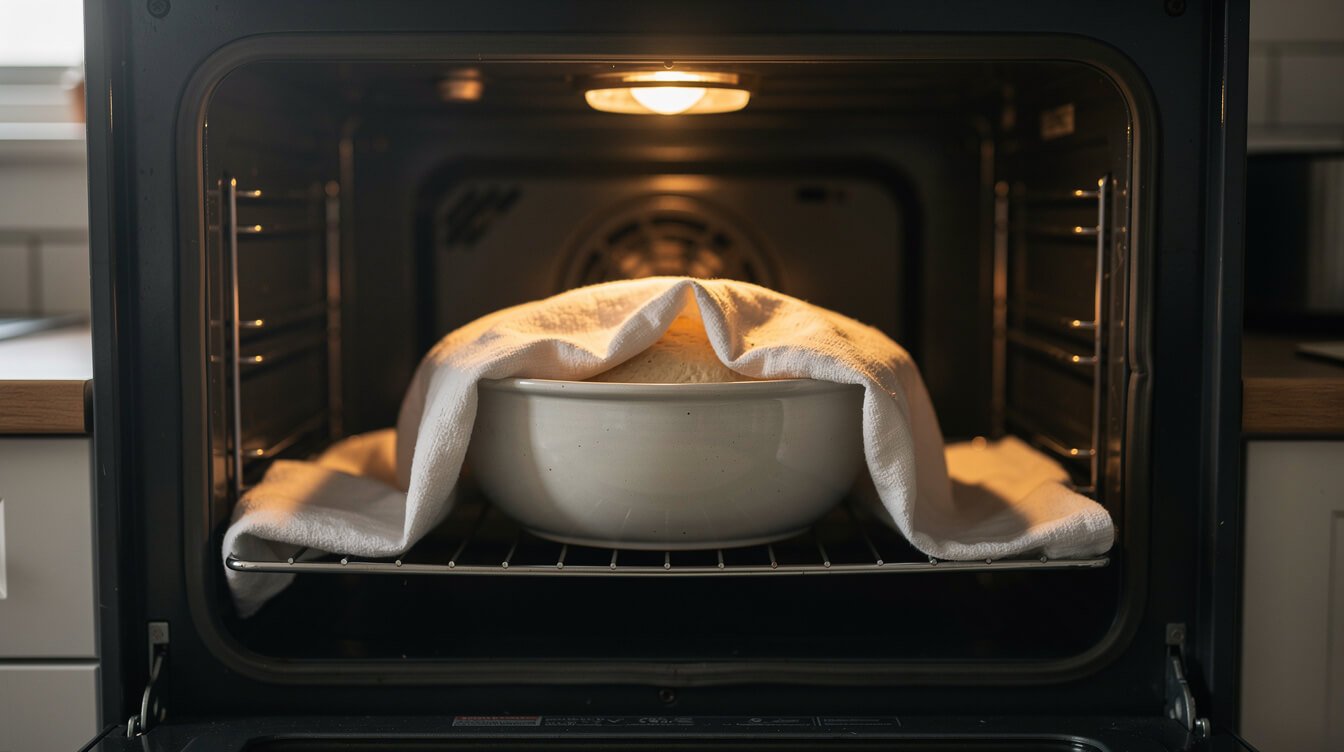
Flat, dense sourdough cinnamon rolls almost always come down to one of these five things. Work down the list.
1. The starter wasn’t ready
This is the most common cause. If your starter didn’t double after its last feeding, it doesn’t have the yeast to lift a rich dough. Feed it on a schedule for a day or two first, and use it at its peak, when it’s domed and bubbly, not after it has collapsed. If you’re short on time, add the teaspoon of instant yeast and the problem goes away.
2. Your kitchen is cold
Winter is when this recipe fails the most. Sourdough yeast slow way down below about 70°F. A dough that rises in 4 hours at 75°F can take twice as long in a chilly kitchen, and if you shape it on the clock rather than by how it looks, the rolls go into the fridge under-risen.
Easy warm spots:
- The oven with only the light on. The bulb warms the box gently. Ovens vary a lot, so put a thermometer inside the first time. You’re aiming for about 75 to 80°F. If it climbs higher, crack the door open. Stick a note on the oven door so nobody preheats it with the dough inside.
- The microwave with a mug of just-boiled water in the corner. Swap in fresh hot water every hour or so.
- The top of the fridge, or near (not on) a radiator or heating vent.
- A cooler with a pot of warm water set beside the bowl and the lid closed.
3. You judged by time, not by the dough
Every time in this recipe is a range, because every kitchen and every starter is different. Before you shape, the dough should be clearly bigger and airy. Before you bake, the rolls should be puffy and touching. If they aren’t, wait. Another hour is better than baking dense rolls.
4. Too much flour
A stiff dough can’t rise well, and it bakes into dry, bready rolls. The dough should feel soft and slightly tacky when you finish kneading. Weighing the flour solves this.
5. The rolls went into the oven cold and small
Straight from the fridge, the rolls look about the same as when you put them in. They need their morning rise to puff up. If you’re short on time, put them in the warm spot right away and check them every 30 minutes.

A tee for baking morning
The Eat Cafe Support Our Charities tee is a soft black cotton shirt with a small logo over the heart and a big one on the back. Wear it while the rolls bake, and help support the kitchen while you’re at it.
Mild or tangy: how to control the sour
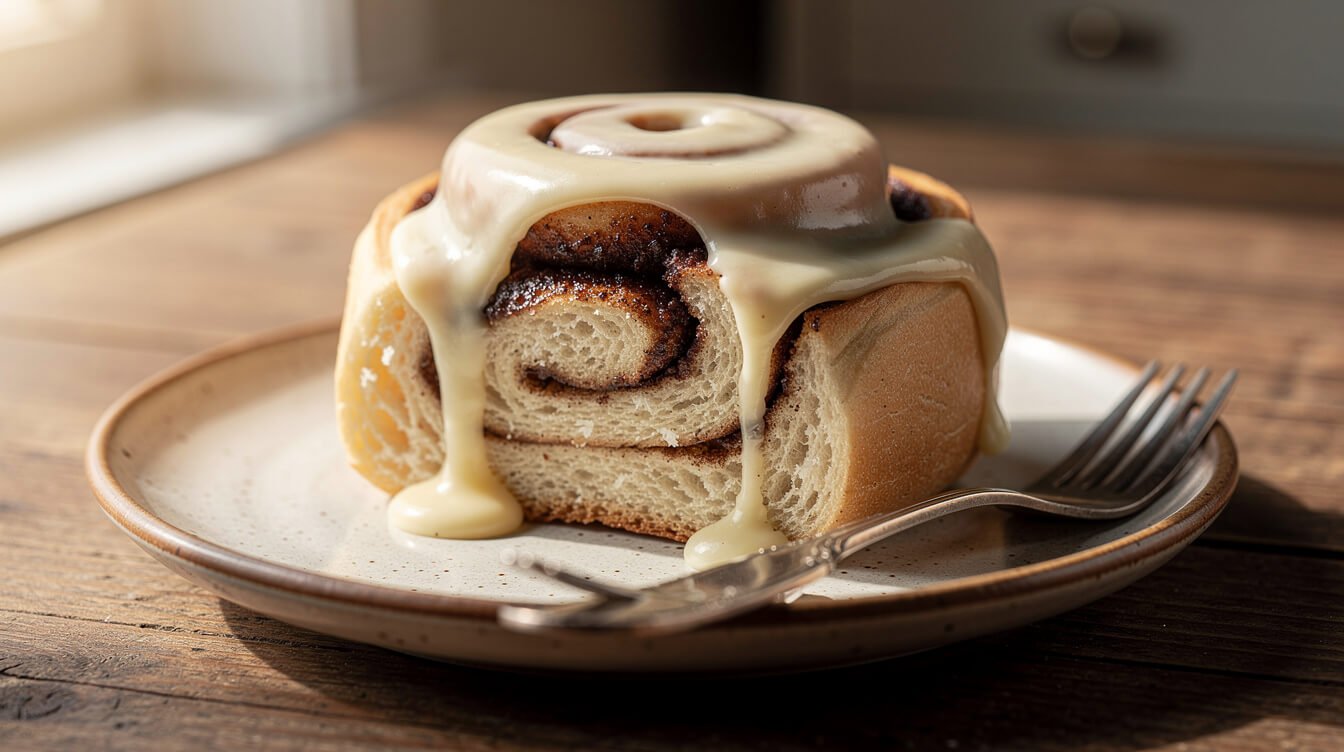
Some people want their cinnamon rolls to taste clearly like sourdough. Others, often the kids at the table, want them to taste like regular cinnamon rolls that just happen to be extra soft. You can steer it either way. The tang comes from the acids the starter makes as it ferments, so time, temperature, and the starter’s age are your dials.
For mild rolls (most crowds)
- Use the starter right at its peak, not after it has collapsed and turned sharp.
- Keep the bulk rise warm, around 75 to 78°F, so it rises faster and has less time to sour.
- Keep the fridge time on the short side, about 8 to 12 hours rather than a full day.
- Don’t skip the frosting. Sweet, creamy cream cheese frosting balances the little bit of tang that’s left.
For tangier rolls
- Use the starter a little past its peak.
- Let the shaped rolls stay in the fridge longer, up to about 24 hours.
- Feed the starter with some whole wheat or rye flour the day before.
We go deeper on all of this in how to make sourdough bread more sour without wrecking the rise. The same ideas work in reverse when you want less tang. Flour choice matters a little too. Bread flour gives a chewier roll, and our guide to the best flour for sourdough bread explains how protein changes the crumb.
Storing, reheating, and freezing
Leftover baked rolls
- Unfrosted rolls: keep them in an airtight container at room temperature for a day or two. Sourdough rolls stay soft a little longer than plain yeasted ones.
- Rolls with cream cheese frosting: cream cheese is perishable. Follow the FoodSafety.gov 2-hour rule: don’t leave them at room temperature for more than 2 hours (1 hour if it’s above 90°F). Then cover them and refrigerate. We’d eat them within 3 days. If you’d rather keep leftovers on the counter, frost only what you’ll serve and keep the rest of the frosting in the fridge.
Reheating
Warm a whole pan, covered with foil, in a 325°F oven for 10 to 15 minutes. For a single roll, microwave it for about 15 to 20 seconds. A damp paper towel over the top keeps it soft. Frost after reheating, not before.
Freezing baked rolls
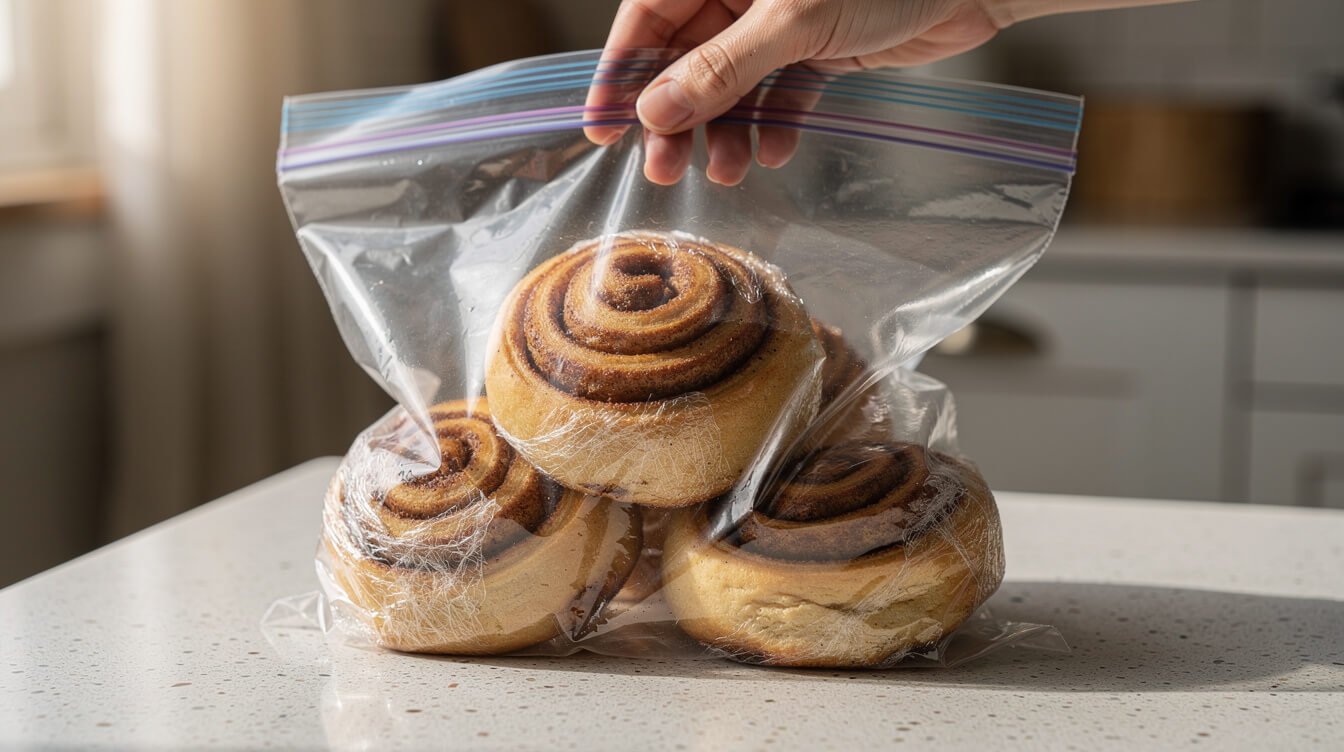
Let the rolls cool completely, leave them unfrosted, and wrap them individually or as a block in plastic wrap. Then put them in a freezer bag. They keep their best texture for about 2 to 3 months. Thaw them in their wrapping on the counter, then reheat and frost.
Freezing unbaked rolls
Shape the rolls, pan them, cover them tightly with two layers of plastic wrap, and freeze them right away, before they rise. Once they’re frozen solid, you can pop them out and keep them in a freezer bag. To bake, put them back in a greased pan and thaw them, covered, in the fridge overnight. Then let them rise somewhere warm until puffy and touching, which can take 2 to 4 hours, and bake as usual. Starters vary, so expect frozen sourdough dough to rise a bit more slowly than fresh.
Troubleshooting and frequently asked questions
| Problem | Likely cause | Fix |
|---|---|---|
| Dough barely rose in bulk | Sluggish starter or a cold kitchen | Use a starter that doubles within 6 to 8 hours of feeding; find a 75 to 80°F spot; or add 1 teaspoon instant yeast |
| Rolls still small after the fridge | Not enough morning rise | Give them 1 to 3 hours somewhere warm, until puffy and touching |
| Dense, bready texture | Too much flour or under-risen dough | Weigh the flour; keep the dough soft and tacky; wait for the dough, not the clock |
| Dry rolls | Overbaked or too much flour | Pull them when the center roll hits about 190°F |
| Gummy center | Underbaked middle roll | Check the center roll, not the edges; tent with foil and keep baking |
| Filling leaked out and burned | Melted butter in the filling, or a loose roll | Use very soft butter; roll the log snugly; pinch the seam |
| Squashed spirals when cutting | Dull knife pressing down | Use unflavored floss or a sharp serrated knife |
| Too sour | Starter past its peak, long cold proof | Use the starter at its peak; keep fridge time to 8 to 12 hours |
| Rolls collapsed in the oven | Over-risen dough | Bake when they’re puffy and the poke springs back slowly, before they look bloated |
| Tops browned before the middle was done | Oven running hot or rack too high | Middle rack; loose foil for the last few minutes |
How long does this sourdough cinnamon rolls recipe take from start to finish?
About 18 to 24 hours with the overnight chill, including feeding the starter, but only about 45 minutes of that is hands-on. The same-day version with a teaspoon of instant yeast takes about 5 hours.
Can I let the rolls rise on the counter overnight instead of in the fridge?
We don’t. The dough has milk, butter, and egg, so we keep the overnight stretch in the fridge. It’s also more forgiving: on the counter, 8 to 12 unattended hours can over-rise the rolls until they collapse. In the fridge, they wait for you.
Can I make these without a stand mixer?
Yes. Knead by hand for about 10 minutes, or use the stretch-and-fold method during the bulk rise to build strength without much kneading at all.
Can I use bread flour?
Yes. Bread flour makes a chewier, slightly taller roll. It absorbs a bit more liquid, so add a tablespoon or two of extra milk if the dough feels stiff.
Can I make the dough and shape the rolls the next morning?
You can. Once the bulk rise is about three-quarters done, refrigerate the covered bowl overnight. In the morning, shape the cold dough (it’s easier to roll), then let the rolls rise somewhere warm until puffy, which can take 2 to 3 hours. Bake as usual. It just means more work in the morning.
Do I have to use cream cheese frosting?
Not at all. A simple glaze of 1 cup powdered sugar, a pinch of salt, and 2 to 3 tablespoons of milk is lovely too. Brown butter in the glaze is even better. If you want a soft whipped topping, our guide to whipping cream vs heavy cream explains which carton to buy.
No starter at all?
Start one. It takes about a week, and our starter guide walks you through it day by day. In the meantime, try our no-yeast cinnamon rolls or the easy dinner rolls dough. For something cozy with no baking at all, there’s cinnamon roll overnight oats. And if you’re curious what a “sourdough” bake looks like without a starter, here’s the honest answer.
The short version
This sourdough cinnamon rolls recipe comes down to five things:
- Use an active starter at its peak. It should double within 6 to 8 hours of feeding. If you only have discard, add 1 teaspoon of instant yeast.
- Give the dough warmth. Around 75°F is ideal. In winter, use the oven with the light on, and check it with a thermometer.
- Watch the dough, not the clock. Shape when it’s grown by about 75%. Bake when the rolls are puffy and touching.
- Do the overnight part in the fridge. Shape at night and bake in the morning.
- Bake to about 190°F in the center roll, then frost while warm. Refrigerate cream-cheese-frosted leftovers within 2 hours.
Feed your starter tomorrow morning and you’ll have a pan of soft, golden, swirly rolls the morning after. Save this one for Christmas, or try it this weekend as a practice run.

Before you go
Want the next one?
We post a new recipe or kitchen guide every day. The best of the week lands in one short email, no life story attached.