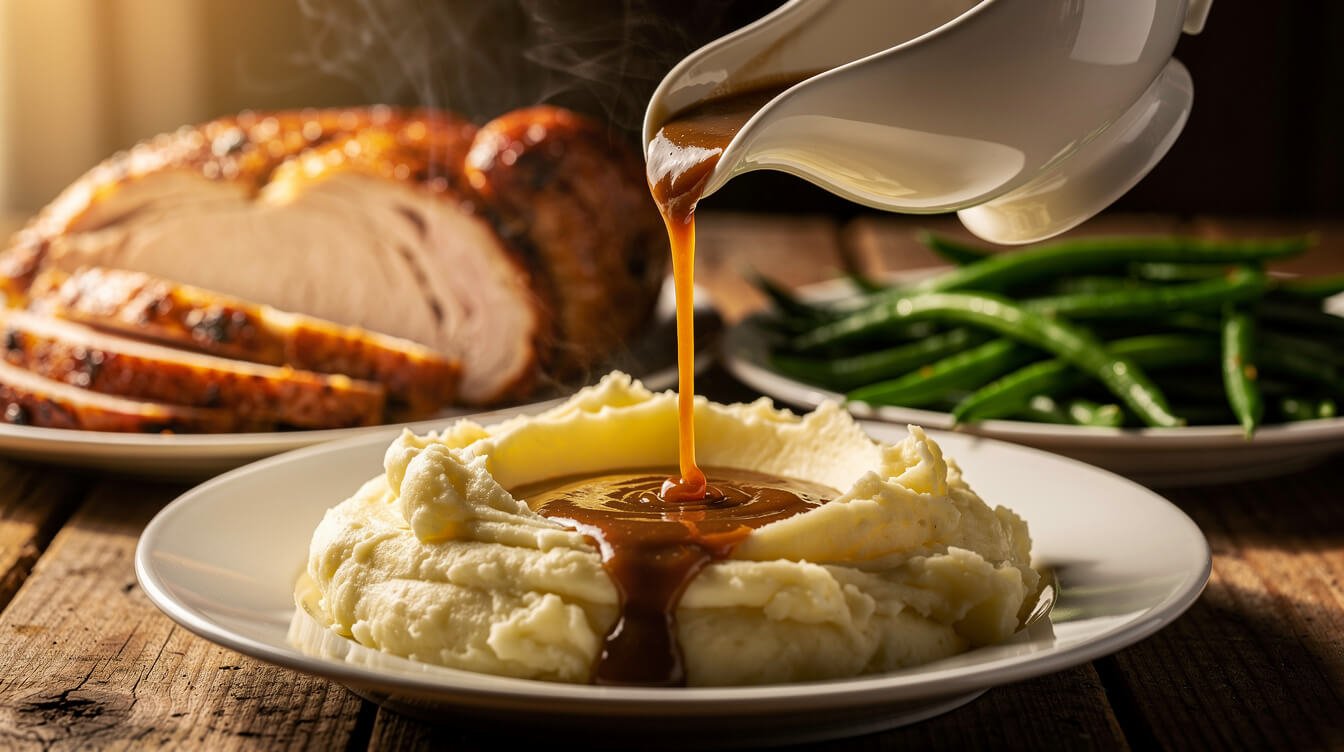
How do you thicken gravy? 4 ways that work (and how to rescue lumpy gravy)
How do you thicken gravy when it’s sitting in the pan like brown water and the turkey’s already resting? Bring it to a simmer, then whisk in a little cornstarch mixed with cold water, or a paste of soft butter and flour. Give it a minute or two at a bubble and it’ll tighten up. That’s the whole rescue. The rest of this post covers how much to use, which thickener fits which gravy, and how to fix the gravy that goes lumpy, gluey, or greasy instead.
Fair warning: thin gravy almost never means you did something wrong. Usually the pan just gave you more juice than the recipe expected. It’s a two-minute fix.
How do you thicken gravy? The quick answer (and how much to use)
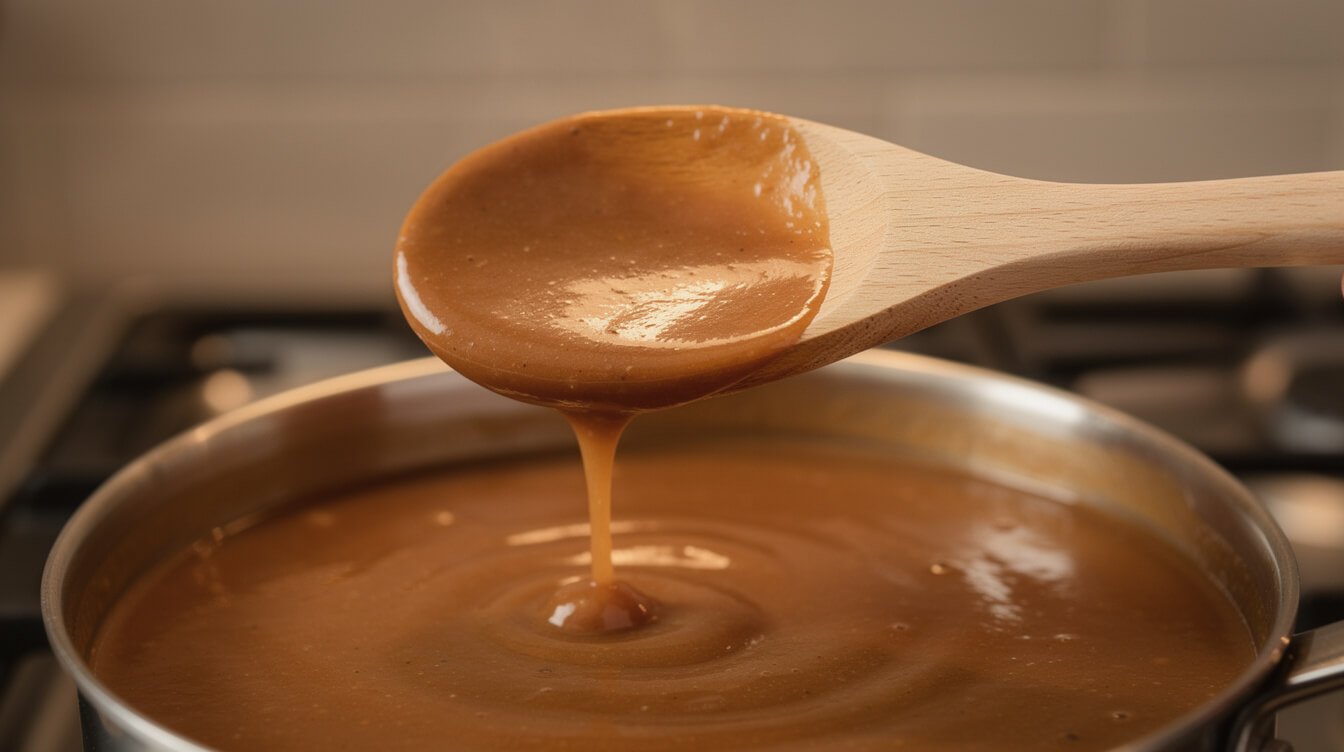
Every way to thicken gravy comes down to one of three moves: add a starch, cook some water off, or blend something thick into it. Starch is the fast one. The thing people get wrong is that starch only thickens once it gets hot. Cornstarch needs the gravy at a real bubble, not just steaming. If you stir in a slurry and nothing happens, the gravy isn’t hot enough yet. Keep going.
Here’s how much thickener to use for each cup of liquid. These amounts give you a classic gravy: it pours, but it clings to mashed potatoes instead of running off them.
| Thickener | Per 1 cup of liquid | How to add it | Looks like |
|---|---|---|---|
| All-purpose flour (roux) | 1½–2 Tbsp flour + the same amount of fat | Cook in fat first, then whisk the liquid in | Opaque, velvety |
| All-purpose flour (slurry) | 1½–2 Tbsp whisked into ¼ cup cold water or stock | Whisk into simmering gravy, simmer 5 minutes | Opaque |
| Cornstarch | 2 tsp–1 Tbsp mixed with 2 Tbsp cold water | Whisk into gravy at a full simmer, simmer 1 minute | Glossy, a little translucent |
| Arrowroot or potato starch | 2 tsp–1 Tbsp mixed with 2 Tbsp cold water | Add at the end, take it off the heat once thick | Glossy, clear |
| Beurre manié (butter-flour paste) | 1 Tbsp each soft butter and flour, mashed | Whisk in bit by bit, simmer 3 minutes | Opaque, rich |
| Instant mashed potato flakes | 1 Tbsp at a time | Whisk straight in, wait 1 minute | Opaque, slightly rustic |
Cornstarch has roughly twice the thickening power of flour, which is why the flour amounts are double. Start at the low end of the range. You can always add another spoonful, but taking thickness back out means adding more liquid and re-seasoning.
The spoon test
Dip a spoon in, turn it over, and run your finger across the back. If the line stays clean for a second or two, the gravy is ready. Remember that gravy keeps thickening as it cools, in the gravy boat and on the plate. Stop when it’s slightly looser than you want. If it’s perfect in the pan, it’ll be paste by the second helping.
Why your gravy is thin in the first place
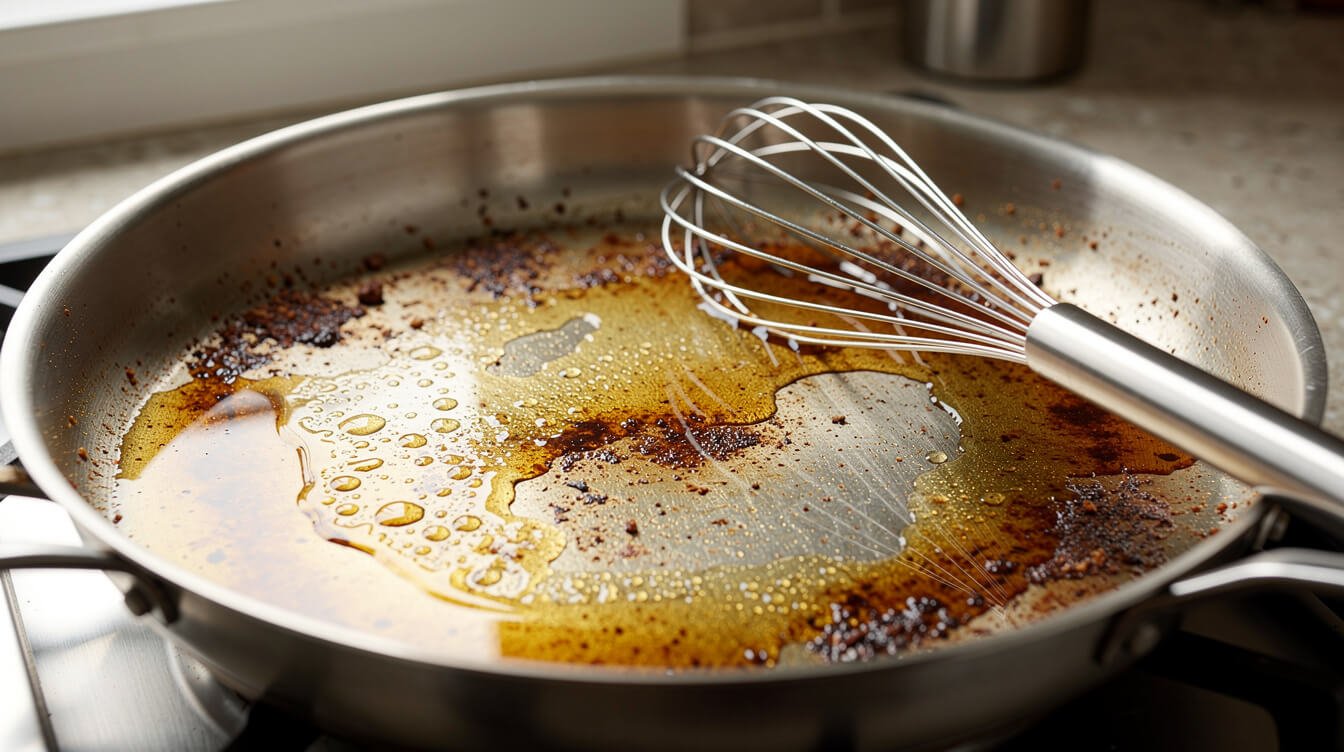
Before you start adding thickener, take ten seconds to figure out why the gravy’s thin. The fix depends on the cause.
- More liquid than the recipe planned for. This is the usual one. Juicy turkeys, especially brined ones, can leave two or three cups of juice in the pan. Add stock on top of that and a recipe built for 2 cups of liquid is now handling 4. Measure what’s in the pan and scale the thickener to match, using the table above.
- It never got hot enough. Flour and cornstarch don’t work until the gravy simmers. A gravy kept warm at the back of the stove looks thin because the starch hasn’t done anything yet. Turn up the heat and let it bubble.
- The roux went too dark. A dark brown roux tastes great, but browning breaks down the starch, so dark roux thickens less than blond roux. If you like it dark, use a little extra flour.
- The cornstarch got overworked. Cornstarch thickens fast, and then it can thin out again if you keep it at a hard boil for a long time or whisk it hard after it sets. Once it’s thick, turn the heat down and stir gently.
- Too much fat, not enough flour. If you see a slick of fat on top and the gravy underneath is watery, the flour couldn’t soak up all that fat. Skim some off. You’ll find the fix for greasy gravy further down.
Most thin gravy has the first cause. That’s good news, because it means you have plenty of flavor and just need a bit more thickener.
Thicken gravy with flour: roux, slurry, or butter paste
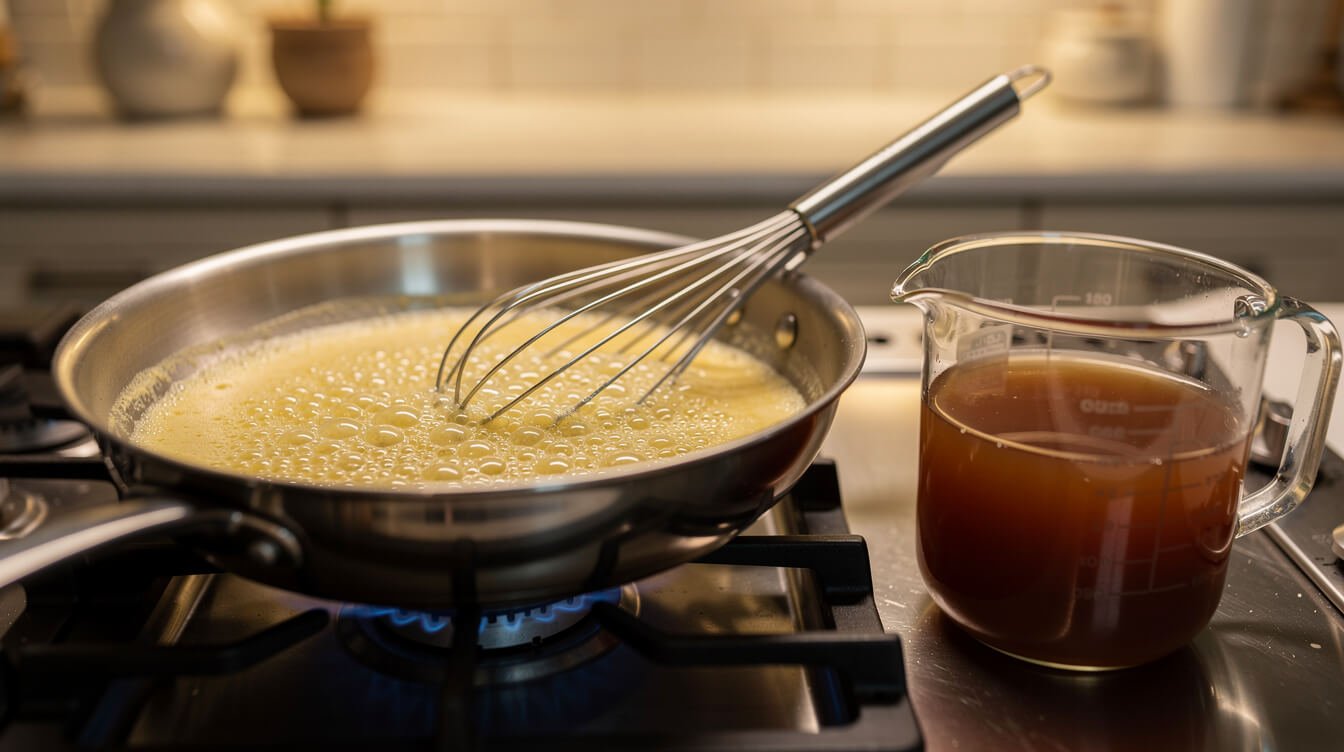
Flour is the classic gravy thickener. It gives you the opaque, velvety, holiday-table gravy most of us grew up eating. It also holds up best when you make it ahead and reheat it. There are three ways to use it, depending on when you realize you need it.
1. Roux, if you’re starting from scratch
A roux is equal parts fat and flour cooked together before any liquid goes in. Use it when you’re building gravy from the beginning.
- Pour the pan drippings into a fat separator or a glass measuring cup and let the fat rise. For every cup of gravy you want, spoon 2 tablespoons of that fat into a saucepan. Make up any shortfall with butter.
- Over medium heat, whisk in 2 tablespoons of flour per cup. Cook it, whisking, for 2–3 minutes until it smells toasty and looks like wet sand. This step cooks out the raw flour taste.
- Slowly whisk in warm stock and the defatted drippings, about a cup at a time. Whisk each addition smooth before you add the next.
- Bring it to a simmer and let it bubble gently for 5 minutes. Taste it, then salt at the very end.
For a Thanksgiving-sized batch, make 4 cups of gravy with ½ cup fat, ½ cup flour, and 4 cups of liquid. Butter makes a fine fat. If you’re wondering which kind, unsalted is the safer pick for gravy, because the drippings are already salty.
2. Flour slurry, if the gravy’s already made
If the gravy’s made and still thin, don’t dump dry flour into it. It’ll clump instantly. Shake or whisk 1½ tablespoons of flour into ¼ cup of cold water or stock until it’s completely smooth, with no dry pockets. Whisk it into the simmering gravy. Then let it bubble for a full 5 minutes. Skip that and the gravy will taste faintly of raw flour.
3. Beurre manié, the last-minute fix
Beurre manié is French for “kneaded butter.” It’s just soft butter and flour mashed together in equal parts. The butter coats each bit of flour so it can’t clump. Drop in a teaspoon-sized piece at a time, whisking, and let the gravy simmer for 2–3 minutes between additions. This is the fix to use when dinner’s on the table and you need the gravy a bit thicker right now. It also adds a little richness that a cornstarch slurry won’t.
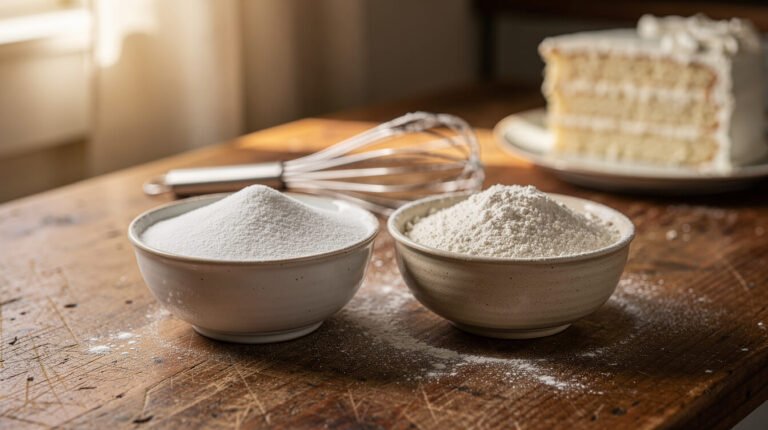
Out of all-purpose flour? Cake flour and bread flour both work here. Bread flour has a little less starch per spoonful, so it thickens a bit less. Our cake flour vs all-purpose flour guide explains why flours behave differently.
Thicken gravy with cornstarch (or arrowroot and potato starch)
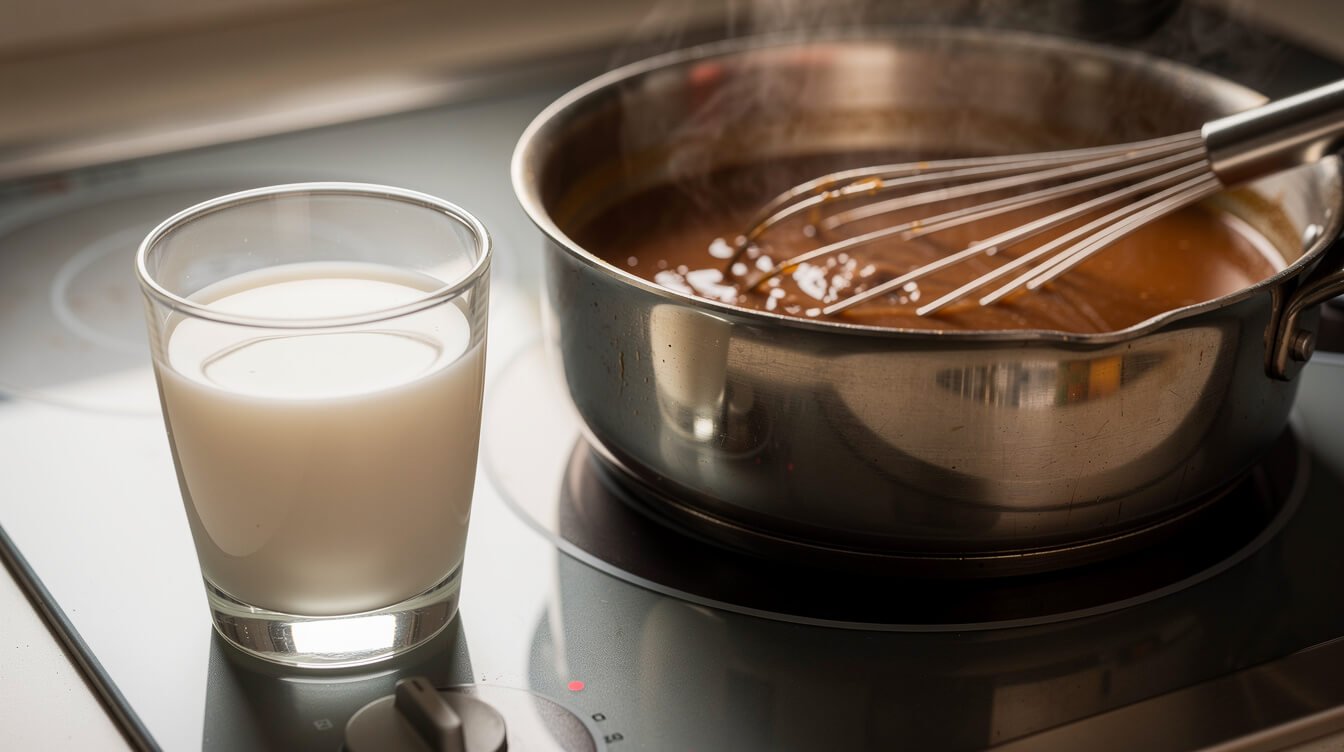
When a friend texts “how do you thicken gravy, fast?” at 5:45 on Thanksgiving, the answer is cornstarch. It’s the fastest way to thicken gravy. It’s also what most people have in the pantry. It’s pure starch, so it thickens with half the amount of flour, it doesn’t need cooking out, and the gravy comes out glossy rather than matte.
How to do it
- Bring the gravy to a steady simmer, with bubbles breaking all over the surface.
- In a small glass, stir 1 tablespoon of cornstarch into 2 tablespoons of cold water or stock until it looks like skim milk. Hot liquid makes it seize into lumps before it ever reaches the pan.
- Whisk the gravy and pour in about half the slurry. Let it bubble for a minute and check it with the spoon test. Add more only if you need it.
- Once it’s thick, lower the heat and stop whisking hard. Cornstarch can lose its grip if you keep beating it.
Here’s the honest tradeoff. Cornstarch gravy is great tonight, but it’s less happy tomorrow. It can turn slightly spongy and watery when it’s chilled and reheated, and more so after freezing. If you’re making gravy ahead, use flour.
Arrowroot and potato starch
Both work like cornstarch, at about the same amount, and both give a very clear, glossy finish. They thicken at a lower temperature, so add them right at the end and take the pan off the heat once the gravy’s thick. Long boiling makes them thin out again. Arrowroot can turn a little slippery in milk-based gravies, so save it for brown gravy.
All three are a good start if you’re cooking gluten-free. Then check the rest of the pot: some stocks, bouillon cubes, and browning sauces contain wheat. Read every label, and if you’re cooking for someone with celiac disease or an allergy, ask them what they need.
One tool makes all of this easier: a flat whisk or a small balloon whisk that reaches into the corners of the pan. If you’re kitting out a kitchen, our 100 Essential Tools guide covers what’s worth buying first.
From the Eat Cafe kitchen
One good recipe a week, straight to your inbox
The recipe we're actually cooking this week, plus the one tip that saves it when it goes sideways. No spam. Unsubscribe anytime.
No-starch fixes: reduce it, blend it, or raid the pantry
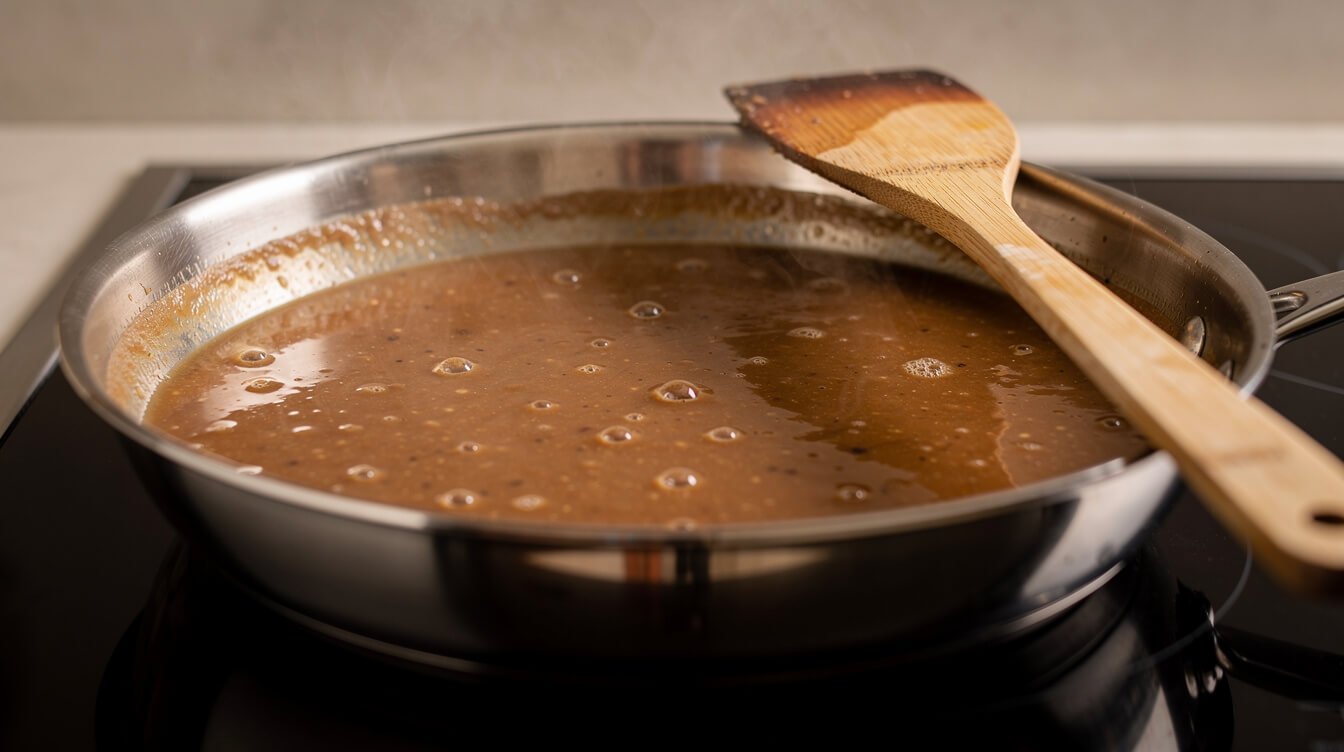
You don’t always need a thickener. Sometimes the best gravy is the one you just cook a little longer.
Reduce it
Pour the gravy into the widest pan you have and simmer it, uncovered, stirring now and then. More surface means faster evaporation, so a big skillet will reduce gravy in half the time a saucepan takes. Depending on how thin it started, plan on 10–20 minutes.
Reducing concentrates everything, including the salt. That’s why so many reduced gravies end up too salty. Build the gravy with low-sodium stock, and don’t salt it until it’s as thick as you want it. If it ends up too salty anyway, add unsalted stock and thicken that with a little slurry.
Blend in the vegetables
If you roasted the turkey or a pot roast on onions, carrots, and celery, those soft vegetables are a free thickener. Fish them out, purée them with a ladle of the liquid, and whisk the purée back in. It adds body and a lot of flavor. With an upright blender, fill it no more than halfway with hot liquid, take the center cap out of the lid, and hold a folded towel over the opening. Hot liquid expands as it blends. An immersion blender right in the pot avoids all that. It’s the same trick that thickens our slow cooker beef stew at the end.
Pantry fixes that actually work
- Instant mashed potato flakes. Whisk them in one tablespoon at a time and wait a minute between additions. They’re tasty in turkey or beef gravy, slightly rustic, and nearly impossible to clump.
- Wondra or other “quick-mixing” flour. It’s made to dissolve without lumps, so you can sprinkle it straight into the simmering gravy. Simmer a couple of minutes.
- A spoonful of gravy mix. No shame in it. A tablespoon of a packet mix, whisked in, thickens and seasons at the same time. Taste before you add salt.

The whisk, the strainer, and the rest of the short list
Our 100 Essential Tools eBook walks through the whisks, strainers, pans, and thermometers that actually earn their spot in a home kitchen, so you buy the useful stuff first. PDF or Kindle.
Lumpy, gluey, greasy, or too thick: how to rescue it
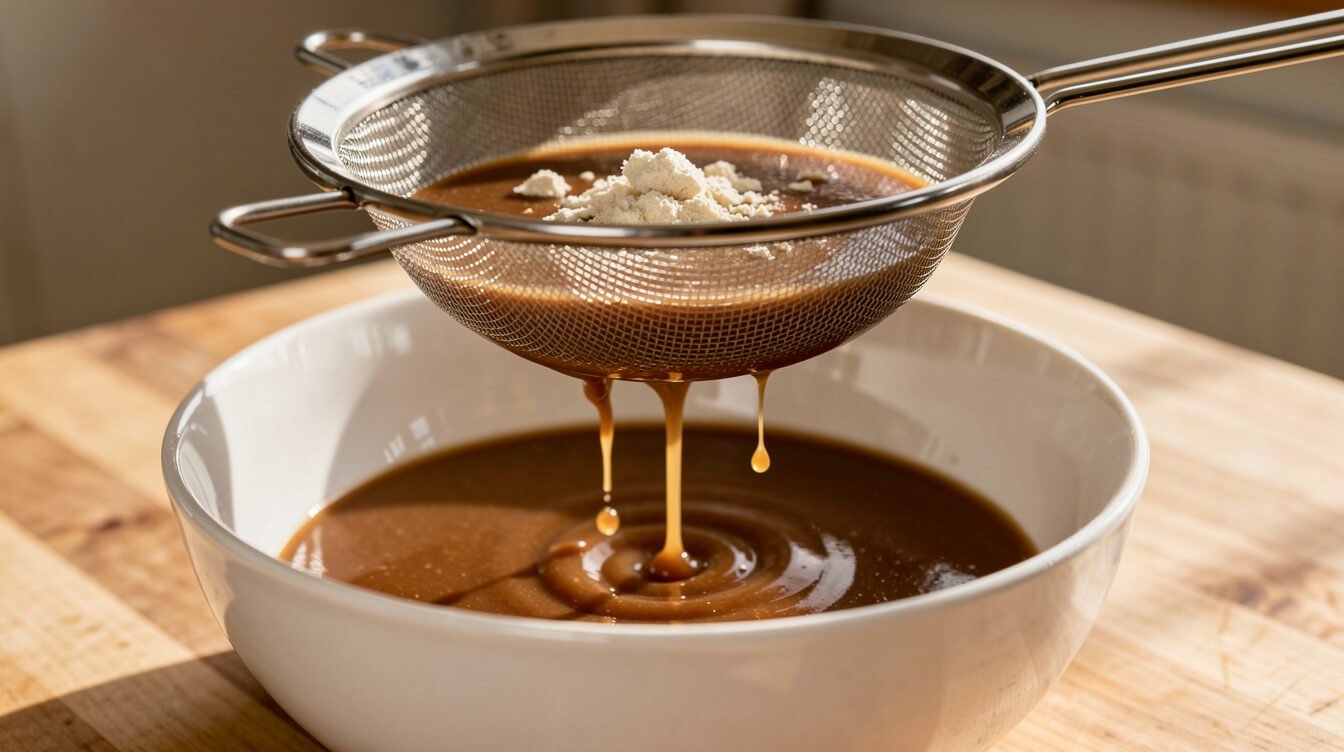
Almost every gravy problem can be fixed. Here’s what to do for each one.
Lumpy
Lumps happen when dry starch hits hot liquid. The outside of each clump cooks into a seal, and the inside stays dry powder. First, whisk hard for 30 seconds. Small lumps often break up. If they don’t, pour the gravy through a fine-mesh strainer and press the liquid through with the back of a spoon. Toss what stays in the strainer, which is mostly raw flour anyway. For a big batch, an immersion blender smooths it in seconds. Then put the strained gravy back on the heat and check it with the spoon test. You threw out some thickener, so it may need a little more.
Gluey or too thick
You added too much starch, or it sat and set. Whisk in warm stock, a few tablespoons at a time, until it pours again. Then taste it. More liquid means it’ll probably need a pinch more salt. Water works in a pinch, but stock keeps the flavor up.
Greasy or separated
A layer of fat on top means there’s more fat than the flour could hold. Tilt the pan and spoon it off, or lay a paper towel flat on the surface for a second to blot it. If the gravy has fully split and looks broken, whisk in a splash of hot stock. Usually the gravy comes back together. Next time, defat the drippings before you start. A fat separator is the easiest way.
Tastes like raw flour
The flour didn’t cook long enough. Simmer it for another 5 minutes. If the gravy gets too thick while it simmers, thin it with stock.
Pale and flat-tasting
This one’s about color and flavor, not texture, but it comes up a lot. Scrape the browned bits off the roasting pan into the gravy. A small splash of soy sauce or browning sauce deepens both color and flavor (check the label if you’re cooking gluten-free). A spoonful of the turkey drippings’ jellied bottom layer helps too.
Thanksgiving gravy: make it ahead, hold it, reheat it safely
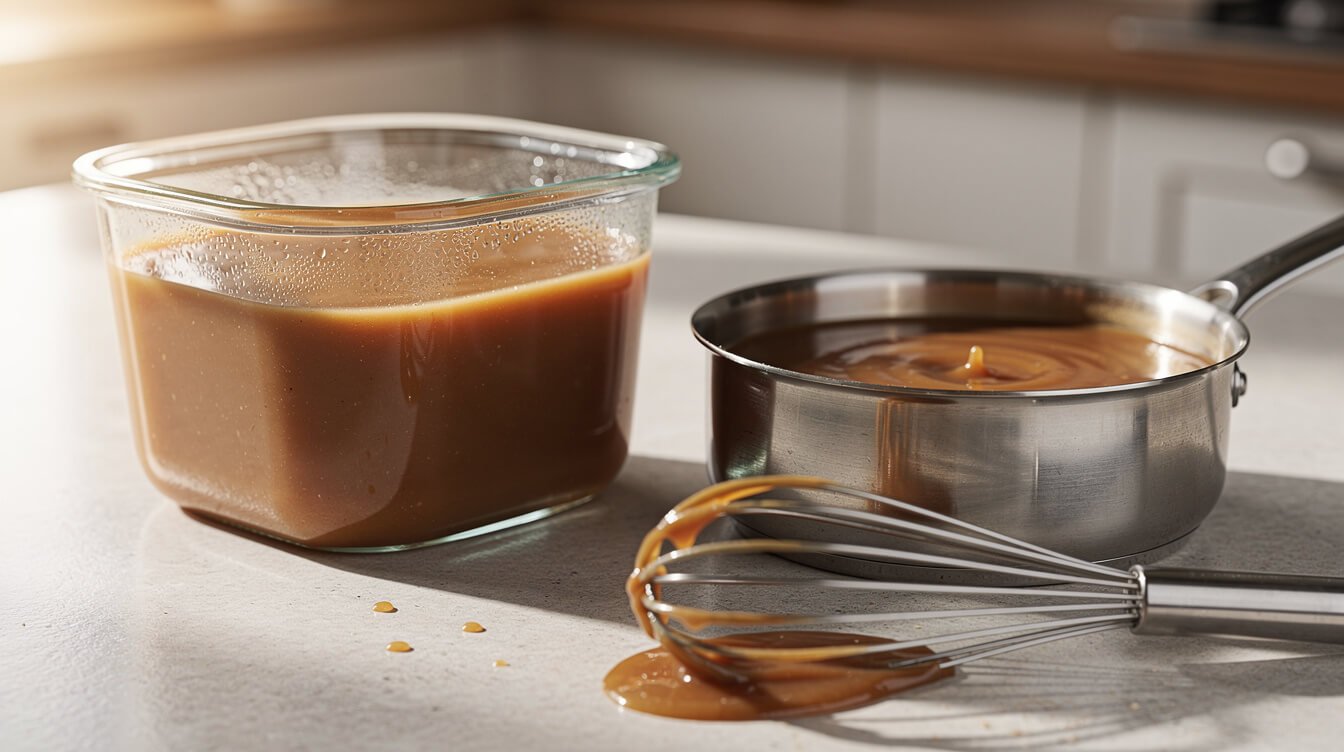
The calmest Thanksgiving cooks make most of their gravy before the bird even goes in. The last 10 minutes before dinner are chaos. If the gravy’s already made, all you do then is whisk in some drippings for flavor.
The make-ahead plan
- A day or two before: make a flour-based gravy with stock (roasted turkey wings make a great one). Use flour, not cornstarch, because flour reheats smoothly. Cool it and refrigerate it within 2 hours of cooking.
- On the day: while the turkey rests, put the gravy in a saucepan over medium heat. Defat the pan drippings and whisk them in, along with any browned bits from the pan.
- Bring it to a rolling boil, then lower the heat and check the thickness.
Chilled gravy sets almost like jelly. That’s normal, and it’s the gelatin from the stock and drippings. It loosens as it heats, but it usually comes back thicker than it went in, so keep some warm stock nearby to thin it.
The food-safety part (no shortcuts here)
Gravy is made with meat drippings and stock, so treat it like any other perishable leftover. The USDA’s leftovers guidance is clear on the parts that matter here:
- Refrigerate within 2 hours of cooking. That’s 1 hour if the room is above 90°F. Gravy that sat on the table all afternoon goes in the trash, not the fridge.
- Reheat gravy to a rolling boil, not just warm. That goes for make-ahead gravy and leftovers both.
- To keep it hot on the table, it needs to stay at 140°F or above. A small slow cooker on “warm” or a preheated thermos works well. Or just reheat it in batches.
Spread the gravy in shallow containers so it cools fast in the fridge, rather than leaving it in one deep pot. And don’t try to can gravy at home. The National Center for Home Food Preservation says not to add flour or other thickeners to home-canned soups, and there’s no tested home-canning process for thickened gravy. If you have extra, freeze it.
Planning the rest of the meal? Our crock pot green bean casserole frees up the oven, our all-butter pie crust can be made days ahead, and there are more ideas in our Thanksgiving dinner roundup.
How do you thicken gravy without flour, in a slow cooker, or with cream? Your questions
How do you thicken gravy without flour or cornstarch?
Reduce it in a wide pan, blend in roasted vegetables, or whisk in instant potato flakes a tablespoon at a time. Arrowroot and potato starch also work if you have them. They’re just different starches.
How do you thicken gravy in a slow cooker?
A slow cooker on low often isn’t hot enough to set cornstarch quickly. The easiest fix is to ladle the liquid into a saucepan, bring it to a simmer, and thicken it there with a cornstarch slurry. If you’d rather stay in the slow cooker, turn it to high, stir in the slurry, and leave the lid off for 15–20 minutes. The same idea works for chili and stew.
Can I thicken gravy with cream?
Cream adds richness and a little body, but it won’t make thin gravy thick by itself. Thicken the gravy first, then stir in a splash of cream at the end and let it heat through without boiling hard. Out of cream? Our heavy cream substitute guide covers what works in a simmered sauce. And if you’re adding milk or cream to a hot pot, the same no-curdle rules from our white bean chicken chili apply.
Why did my gravy get thinner after I reheated it?
That’s usually cornstarch. Its grip weakens after chilling and reheating. Bring the gravy to a simmer and whisk in a small fresh slurry, or a little beurre manié.
Can I freeze gravy?
Yes. Flour-based gravy freezes best. Thaw it in the fridge, then reheat it to a rolling boil, whisking. If it looks a bit grainy at first, a minute of whisking or a quick buzz with an immersion blender smooths it out.
How much gravy do I need?
Plan on about ⅓ to ½ cup per person, plus extra if you want leftovers for sandwiches. For 8 people, a 4-cup batch is about right.
The short version
Thin gravy is a liquid problem, not a talent problem, and you can fix it in a couple of minutes. So, how do you thicken gravy? Get it to a real simmer. Whisk in a cornstarch slurry (2 teaspoons to 1 tablespoon per cup) for a quick glossy fix, or butter-flour paste (1 tablespoon each per cup) for something richer. Stop when it’s slightly looser than you want, since it thickens as it cools. If you’re making it ahead, use flour, refrigerate it within 2 hours, and bring it to a rolling boil when you reheat it.
That’s the whole thing. Now go pour it over everything.

Before you go
Want the next one?
We post a new recipe or kitchen guide every day. The best of the week lands in one short email, no life story attached.