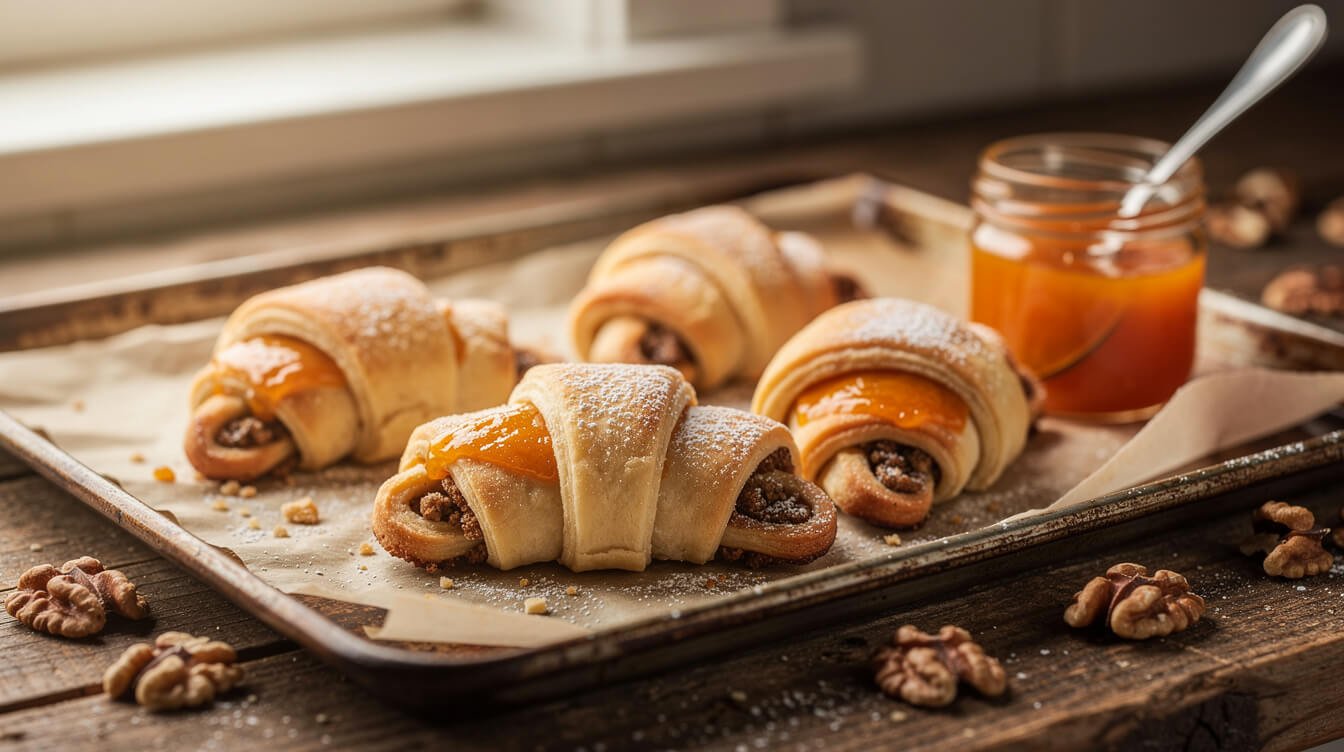
Rugelach recipe: tender cream cheese dough, and how to keep the filling from leaking and burning
You rolled them carefully, they went into the oven looking perfect, and twenty minutes later half the jam had run out onto the pan and turned to black glue. That’s the classic rugelach failure, and almost no rugelach recipe talks about it. This one does. Below is a tender cream cheese dough that’s hard to mess up, the five filling rules that keep jam inside the cookie, and a make-ahead plan so you can have a tray ready for Hanukkah or a Christmas cookie swap without a marathon baking day.
Here’s the order: the full recipe first, so you can just bake if you want to. After that, why the dough has to stay cold, how to choose and layer fillings, crescents vs logs, a troubleshooting table for leaking and burning, and how to freeze, store, and pack them.
The rugelach recipe (makes 48 small crescents)
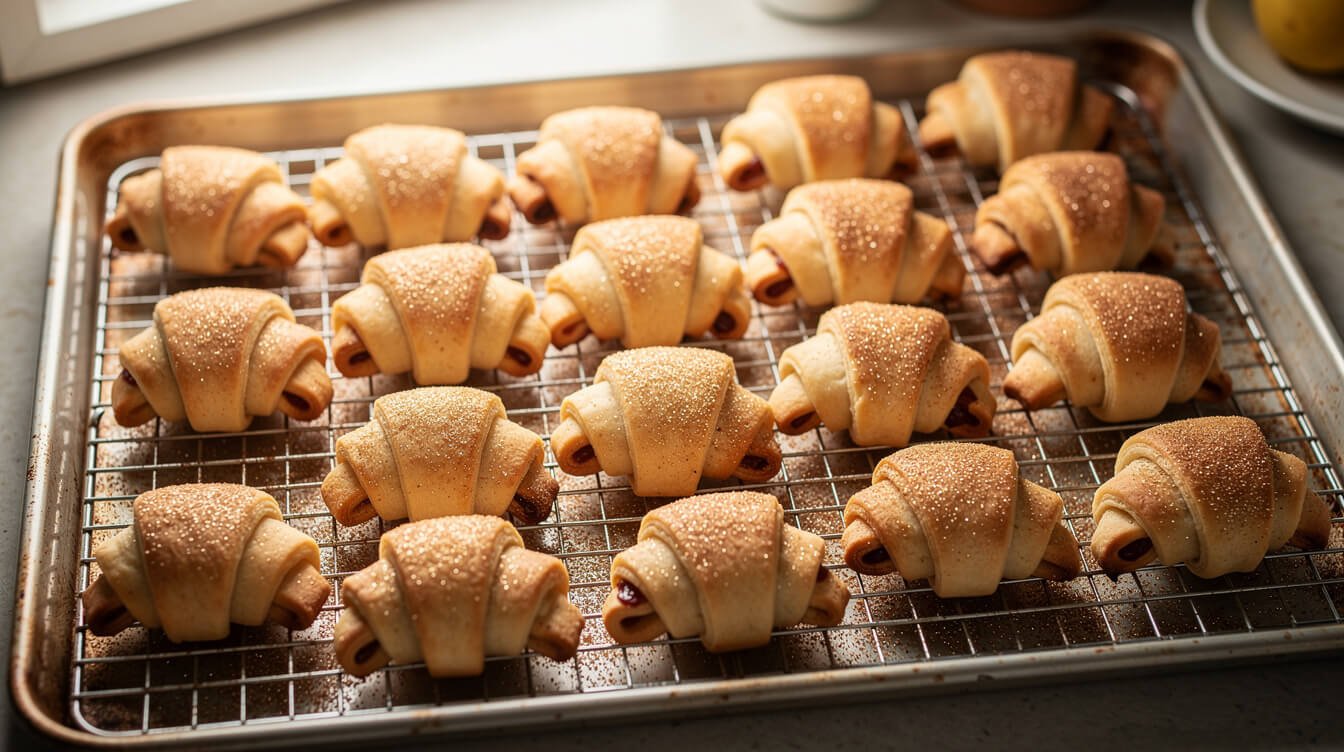
This rugelach recipe makes four discs of dough, and each disc gives you 12 cookies. Hands-on time is about 45 minutes, spread across two sessions with a chill in between. You can make the dough today and bake tomorrow, or the day after.
For the cream cheese dough
- 2 cups (250g) all-purpose flour, spooned and leveled
- 2 tablespoons (25g) granulated sugar
- 1/2 teaspoon fine salt (or 3/4 teaspoon kosher salt)
- 1 cup (2 sticks, 226g) cold unsalted butter, cut into 1/2-inch cubes
- 8 ounces (226g) cold full-fat brick cream cheese, cut into 1/2-inch cubes
- 1 teaspoon vanilla extract
For the cinnamon-walnut and apricot filling
- 1/2 cup (160g) apricot jam, or preserves blitzed smooth (thick, not runny; see the filling section)
- 1/2 cup (100g) granulated sugar
- 1/4 cup (50g) packed light brown sugar
- 2 teaspoons ground cinnamon
- 1 cup (115g) walnuts, chopped very fine
- 1/3 cup (55g) mini chocolate chips or currants (optional)
For the top
- 1 egg beaten with 1 tablespoon milk (or just milk)
- 2 tablespoons sugar mixed with 1/2 teaspoon cinnamon
Steps
- Make the dough. In a food processor, pulse the flour, sugar, and salt to mix. Scatter the cold butter and cream cheese cubes over the top and add the vanilla. Pulse in 1-second bursts until the dough forms large, moist clumps, about 15 to 20 pulses. Stop before it becomes a smooth ball. No food processor? Use the by-hand method in the next section.
- Divide and chill. Tip the dough onto the counter, press it together, and divide it into 4 equal pieces (about 180g each). Flatten each into a 5-inch disc, wrap tightly, and refrigerate for at least 2 hours, or up to 2 days.
- Mix the filling. Stir together the granulated sugar, brown sugar, cinnamon, walnuts, and chocolate chips or currants if you’re using them. Keep the jam separate.
- Get set up. Heat the oven to 350°F (175°C) with a rack in the middle. Line two light-colored rimmed baking sheets with parchment. If you have a spare sheet, set one lined sheet inside the other (more on why in the troubleshooting section).
- Roll. Take out one disc. If it cracks when you press it, let it sit for 5 to 10 minutes. On a lightly floured surface, roll it into a 9-inch circle, about 1/8 inch thick.
- Fill. Spread 2 tablespoons of jam in a thin layer, leaving a bare 1/2-inch border around the outside and a bare circle about 1 inch across in the middle. Sprinkle a quarter of the nut-sugar mixture (a scant 1/2 cup) evenly over the jam, then press it down firmly with your palm or the bottom of a measuring cup.
- Cut and roll. With a pizza cutter or sharp knife, cut the circle into 12 wedges: cut it into quarters, then cut each quarter into thirds. Roll each wedge from the wide outer edge toward the point. Set them on the sheet with the point tucked underneath, about 1 inch apart. Curve the ends slightly if you like a crescent shape.
- Chill again. Refrigerate the shaped tray for 30 minutes while you roll the next disc. This is the step that stops leaking. Please don’t skip it.
- Top and bake. Brush the tops lightly with egg wash and sprinkle with cinnamon sugar. Bake for 20 to 25 minutes, until golden brown all over, including the underside of the outer curl.
- Move them off the pan. Let them sit for 2 to 3 minutes, then move them to a wire rack while any escaped sugar is still soft. If you wait until it cools, it hardens into a candy shell glued to the parchment.
One food-safety note: the dough contains raw flour (and raw egg, if you taste the egg wash). FDA guidance is not to eat raw dough or batter, so skip the scrap-nibbling. Bake the scraps instead.
The cream cheese dough: why it has to stay cold
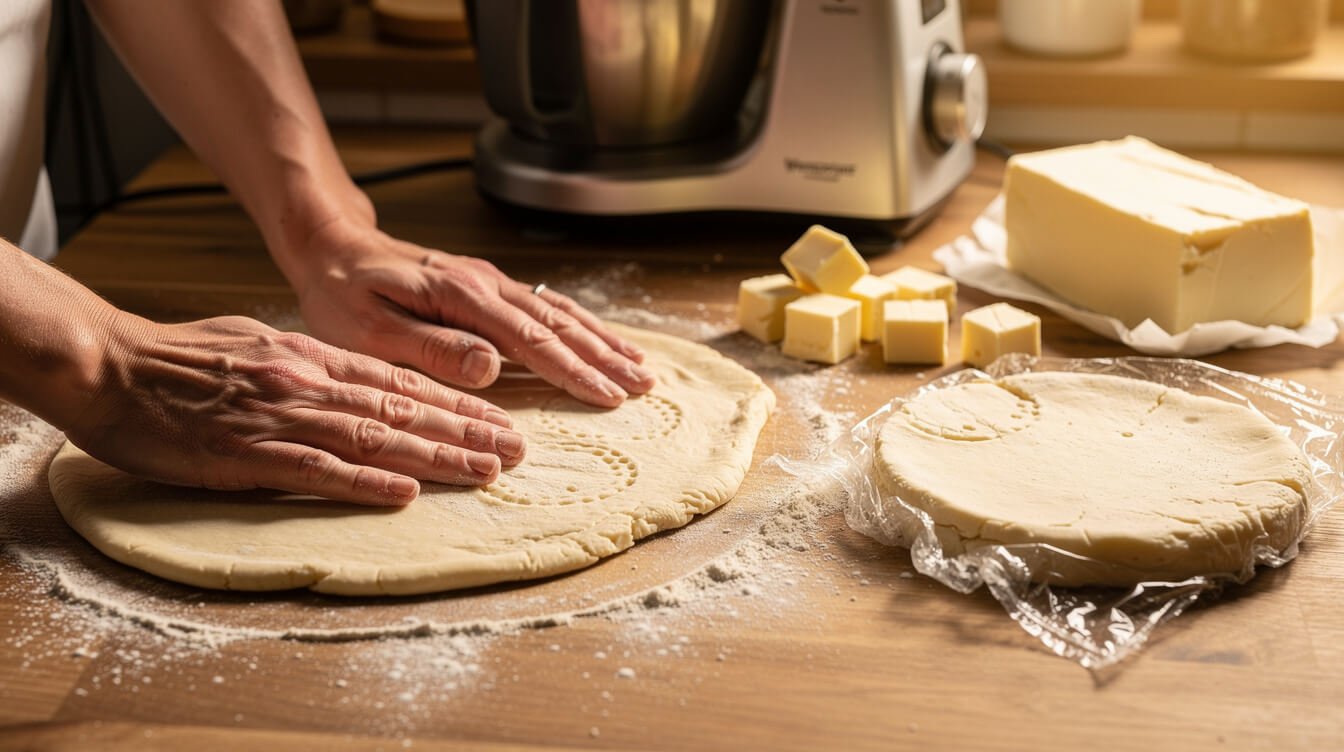
Rugelach dough has only a handful of ingredients: flour, butter, cream cheese, a little sugar, and salt. There’s no water, no yeast, and no baking powder. The flakiness comes from small pieces of cold fat spread through the flour. In the oven those pieces melt and release steam, and that leaves thin layers behind. The cream cheese brings tang and a soft, tender bite, and it also makes the dough far more forgiving than pie crust.
Temperature is the whole game. If the butter and cream cheese go soft before baking, they blend into the flour instead of staying as separate bits. You end up with a dough that’s sticky to roll, tears when you shape it, and bakes up more like a cookie than a pastry. Warm dough is also the main reason filling leaks, which we’ll get to.
Food processor or by hand?
A food processor is the easy route. The blade cuts cold fat into flour in about 20 seconds, before your hands can warm anything up. The mistake is processing until it forms one smooth ball. By then the fat is too blended in. Stop at big damp clumps that hold together when you squeeze them.
By hand works too. It’s the same method as our all-butter pie crust. Whisk the dry ingredients, add the cold cubes, and use a pastry cutter or your fingertips to work the fat into pea-size pieces. Then press and fold the shaggy mix together a few times until it holds. A stand mixer works in a pinch (cream the butter and cream cheese, then mix in the flour on low), but the result is a bit less flaky. It’s still a good cookie.
How long to chill
- Minimum 2 hours in the fridge, so the fat firms up and the flour hydrates.
- Up to 2 days in the fridge, tightly wrapped.
- Up to 3 months frozen. Thaw overnight in the fridge before rolling.
Cold dough straight from the fridge can crack at the edges when you roll it. Give it 5 to 10 minutes on the counter, or a few firm whacks with the rolling pin to loosen it, then roll. A few small edge cracks are fine. They end up on the outside curl and nobody sees them.
Use full-fat brick cream cheese, not the whipped tub kind. Tub cream cheese has more air and water and makes a softer, stickier dough. Reduced-fat brick will work, but the dough is noticeably less tender.
Fillings that stay put
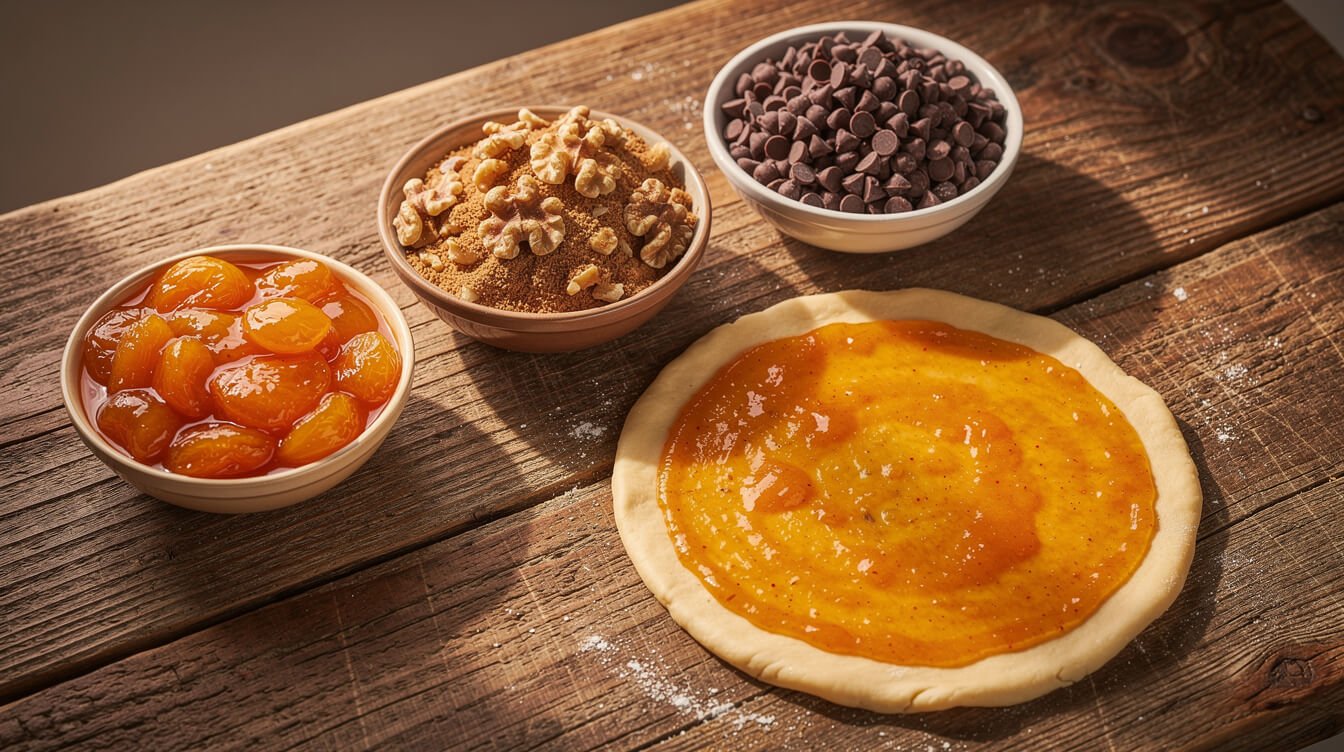
Almost any filling works in rugelach, but some stay inside the cookie much better than others. The difference is mostly about moisture and sugar. Wet, runny filling boils in the oven, pushes out through the seams, and the sugar in it scorches on the hot pan.
The five filling rules
- Use thick jam, and use less of it. If your jam slides off a tilted spoon, it’s too loose. Preserves or a thick jam work best. Blitz chunky preserves smooth so they spread thin. Two tablespoons per 9-inch round is plenty. More jam doesn’t make a better cookie, just a stickier pan.
- Leave bare dough where it needs to seal. Keep a 1/2-inch border around the outside and a bare circle about 1 inch across in the middle. The middle matters most. It becomes the tip of every wedge, and a jam-free tip sticks down and seals the roll.
- Put the dry layer on top of the jam. The nut-sugar mix soaks up some of the jam as it bakes, so it behaves like a sponge. Press it in firmly so it doesn’t fall out when you roll.
- Chop nuts fine. Big walnut pieces poke holes in thin dough, and filling leaks out through the holes. Aim for the size of coarse breadcrumbs.
- Keep sugar in proportion. Loose sugar melts into syrup and runs. The amounts above give you about 1/2 cup of filling per round, which bakes into the dough rather than out of it.
Filling ideas
- Classic cinnamon-walnut with apricot (the recipe above). The traditional favorite: tart jam, warm spice, and crunch.
- Raspberry and chocolate: seedless raspberry jam with mini chips and a little sugar. Skip the nuts.
- Chocolate: spread 2 tablespoons of chocolate hazelnut spread (or melted, cooled chocolate) thinly, then add 1/4 cup mini chips and a spoonful of sugar. Chocolate spreads leak less than jam because they don’t boil the same way.
- Cinnamon-raisin or cranberry: use currants, or chopped raisins or dried cranberries, in place of chocolate chips. Chop larger dried fruit so it doesn’t tear the dough.
- Nut-free: leave out the walnuts and add 1/2 cup more mini chips or finely chopped dried fruit, plus 2 tablespoons of graham cracker crumbs to soak up jam. One caution: if you’re baking for someone with a nut allergy, check every label and keep shared tools and pans in mind. Cross-contact is real. This is a swap for taste, not an allergy-safe guarantee.
If you made a batch of sweetened condensed milk fudge for the same tray, avoid using it as a filling. It melts and runs right out.
Shaping rugelach: crescents vs logs
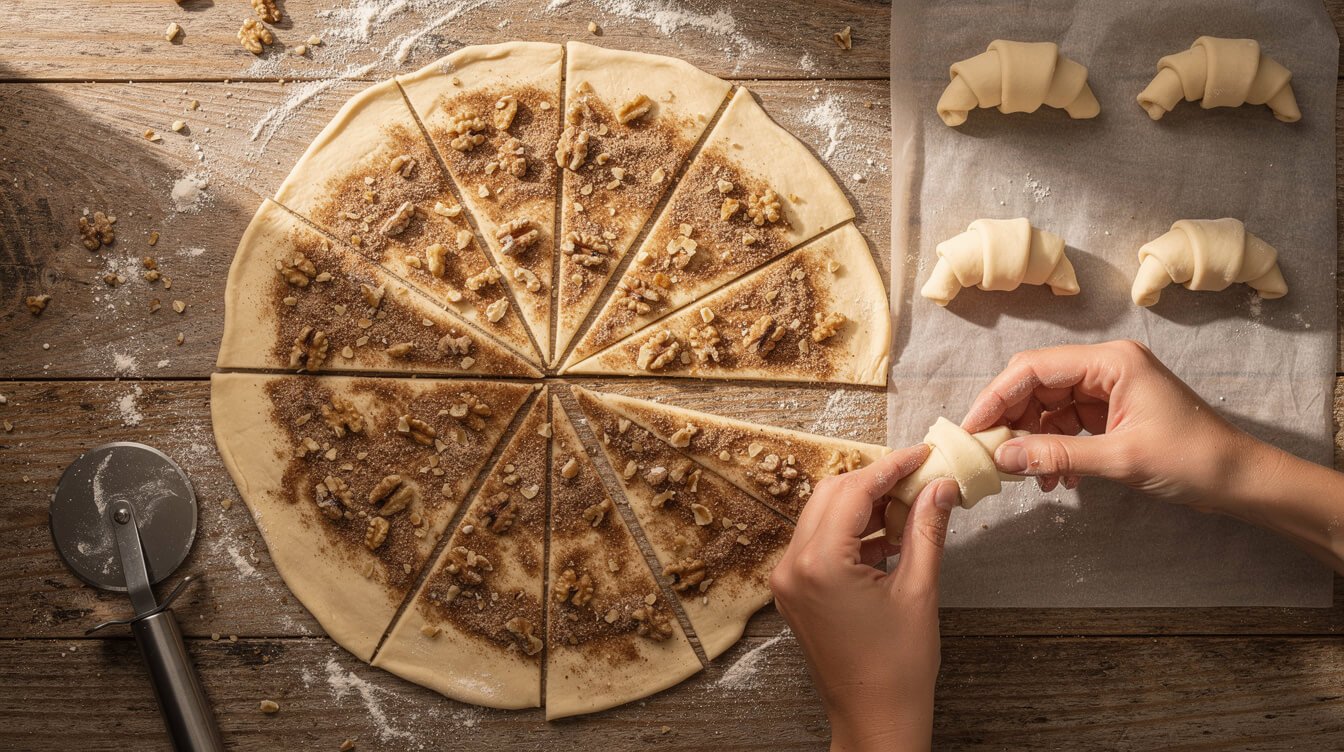
There are two common ways to shape rugelach, and both are correct. Pick based on how much time you have and how the cookies need to look.
Crescents (the recipe above)
Cut the round into wedges and roll each one from the wide end toward the point. You get the classic little croissant shape, with more spirals of filling in each bite and a crisp, flaky outside curl. They take longer because each one is rolled by hand, but rolling 12 wedges goes faster than you’d think once you get going.
- Best for: gifting, cookie swaps, and anything that’s going on a pretty tray.
- Tip: roll snugly but don’t stretch the wedge. Stretched dough thins out at the seams, and that’s where it leaks.
Logs (slice-and-bake)
Roll each disc into a rectangle about 12 by 8 inches. Spread the filling, leaving a 1-inch strip bare along the far long edge. Roll it up tightly from the near long side and finish seam-side down. Chill the log for 30 minutes, then slice it into 1-inch pieces and bake them cut-side up or lying flat. Logs are faster, and you get pinwheel-style cookies with a spiral on the cut face.
- Best for: big batches and weeknight baking. Unbaked logs also freeze beautifully.
- Tip: the cut faces expose filling, so jam bubbles more on logs. Use the drier fillings (nut-sugar, chocolate) for logs and save jam for crescents.
Both shapes bake at the same temperature. Pinwheel slices usually need a few minutes less than crescents, so start checking at 18 minutes. Either shape makes a nice gift paired with something. If you’re bringing a box to a friend who bakes, our Eat Cafe Support Our Charities T-shirt is a soft, easy add-on.
From the Eat Cafe kitchen
One good recipe a week, straight to your inbox
The recipe we're actually cooking this week, plus the one tip that saves it when it goes sideways. No spam. Unsubscribe anytime.
Why rugelach leak and burn, and the fixes
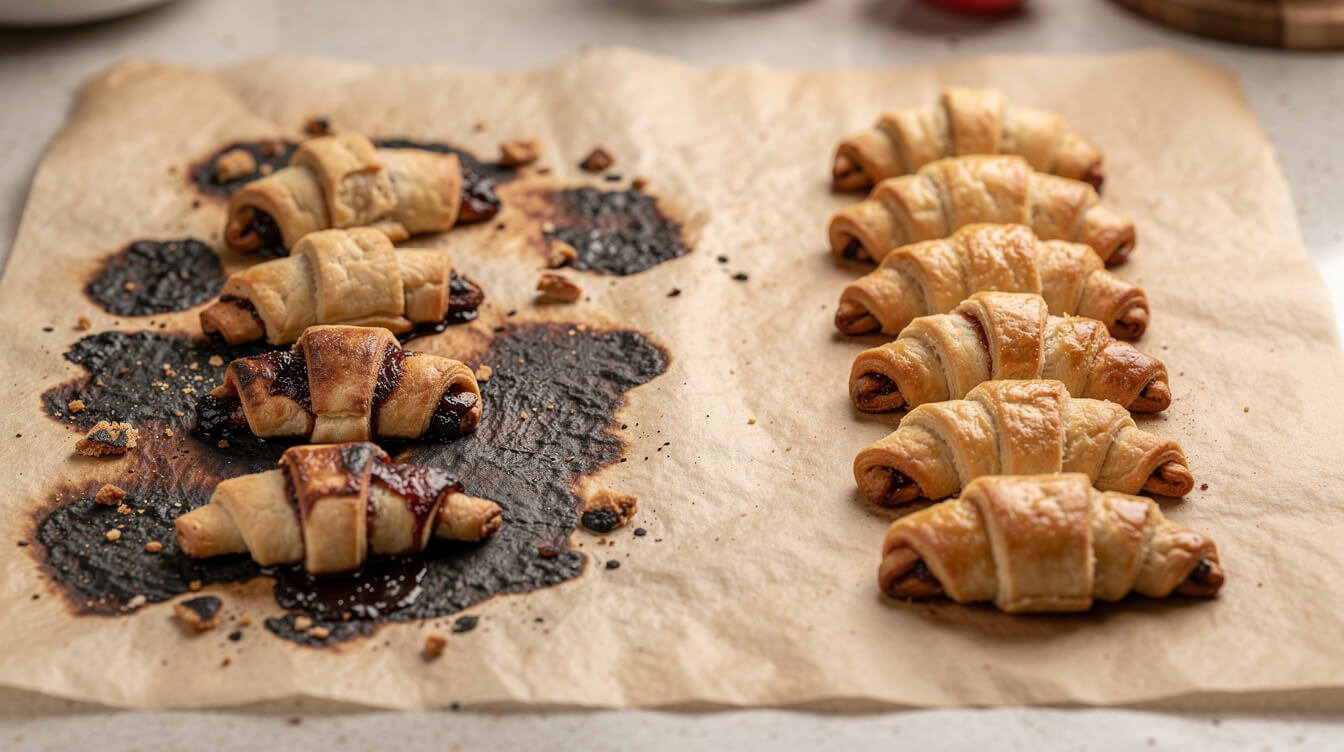
Some recipes say a bit of leaking is part of the charm. A little caramelized sugar at the edge is fine. A puddle of burnt jam is not. It smokes, it tastes bitter, and it glues the bottoms to the pan. Most of the time, leaking comes from one of a few causes, and they’re all easy to fix.
| What you see | Likely cause | Fix |
|---|---|---|
| Jam runs out and scorches on the pan | Too much jam, jam too runny, or dough went in warm | Use 2 tablespoons of thick jam per round, keep the borders bare, and chill shaped cookies for 30 minutes before baking |
| Bottoms burn before the tops brown | Dark pan, rack too low, or escaped sugar sitting on hot metal | Use a light-colored aluminum sheet on the middle rack, stack two sheets together, and bake on parchment |
| Cookies unroll or flatten in the oven | Point not tucked under, or dough too warm | Set each one point-side down and chill before baking |
| Filling falls out when you roll | Nut-sugar layer not pressed in, or nuts chopped too coarse | Press the dry layer firmly into the jam and chop nuts to breadcrumb size |
| Dough tears or sticks while rolling | Dough too warm, or tub cream cheese | Put it back in the fridge for 15 minutes, flour lightly, and use brick cream cheese |
| Pale, soft, doughy inside | Pulled too early, or rolled too thick | Roll to 1/8 inch and bake until the underside of the curl is golden |
| Tough, not flaky | Overworked dough, or fat blended in too far | Stop the processor at large clumps, and handle the dough as little as you can |
| Cookies welded to the parchment | Left on the pan until the sugar hardened | Move them to a rack after 2 to 3 minutes, while any leaked sugar is still soft |
The pan matters more than you’d think
Leaked sugar burns because it sits directly on the hottest surface in the oven. A light aluminum half-sheet heats more gently than a dark nonstick pan, and nesting one sheet inside another adds an air gap that keeps the bottoms from scorching. If you’re shopping for one, our guide to the best baking sheet explains why light aluminum is the safer bet for sugary cookies. Parchment or a silicone mat underneath means any sugar that escapes lifts off instead of welding on.
Rescuing a batch that already leaked
If one tray leaks, don’t panic. Move the cookies to the rack right away, and snap off any burnt sugar edges once they’ve cooled. Then chill the next tray a little longer and use a bit less jam. The second tray almost always comes out cleaner.

A shirt for holiday baking days
The Eat Cafe Support Our Charities tee is a soft black cotton shirt with a small logo over the heart and a big one on the back. It’s comfortable for a long day of rolling and baking, and it makes an easy gift for the baker on your list.
Make-ahead rugelach: freezing unbaked, baked, and dough discs
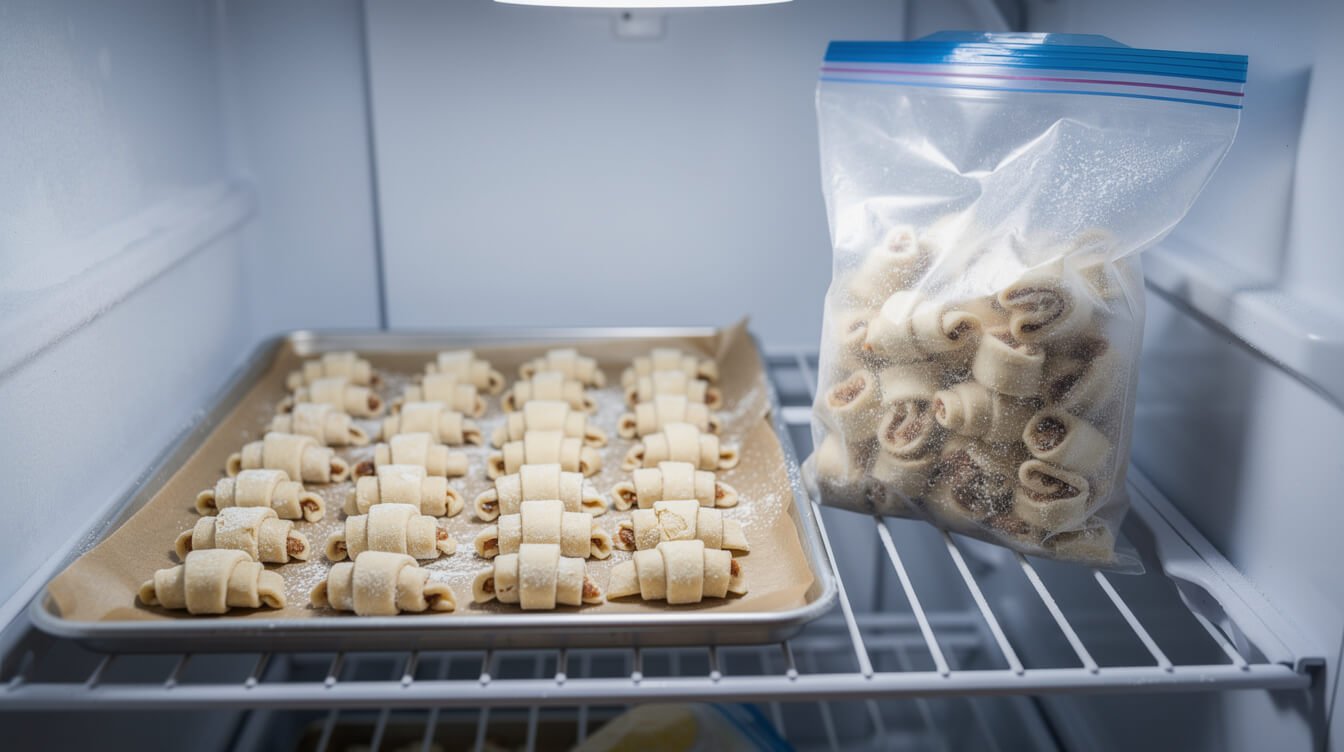
This rugelach recipe is one of the easiest holiday bakes to make ahead. Freezing actually helps, because a frozen cookie goes into the oven ice-cold, and cold dough leaks less. Here are your three options, from most to least fresh-tasting.
1. Freeze shaped, unbaked cookies (our favorite)
Shape the crescents or slice the logs, then set them on a parchment-lined sheet without touching. Freeze until solid, about 2 hours, then move them to a freezer bag or container. They keep well for up to 3 months. Bake straight from frozen (no thawing), adding 3 to 5 minutes to the bake time. Add the egg wash and cinnamon sugar just before baking. This way you can bake a dozen fresh cookies the morning of a party.
2. Freeze the dough discs
Wrapped discs keep for up to 3 months in the freezer. Thaw them overnight in the fridge, then roll, fill, and bake as usual. This is the most flexible option if you haven’t decided on fillings yet.
3. Freeze baked cookies
Cool completely, then freeze in an airtight container with parchment between the layers for up to 2 months. Thaw at room temperature, still covered, so condensation forms on the container instead of on the cookies. A few minutes in a 325°F oven brings back the crisp edges.
A simple holiday plan
- Two to three weeks out: make two batches of dough. Shape one batch into crescents and freeze them unbaked. Freeze the other batch as discs.
- The weekend before: thaw the discs in the fridge overnight, then roll them as logs with a second filling.
- The day before, or that morning: bake from frozen, cool, and pack.
Hanukkah 2026 begins the evening of Friday, December 4. Freeze your shaped rugelach the last weekend of November and you’ll bake fresh ones for the first night without a scramble. The same plan fits a Christmas tray. For the rest of your baking lineup, our easy Christmas cookies ideas post has a full two-weekend schedule.
Storing rugelach and packing them for a cookie tray

Once baked, the cream cheese is part of the pastry, like butter in a croissant. Baked rugelach keep in an airtight container at room temperature for up to 5 days, and they taste best in the first 2 or 3. For anything longer, freeze them. Fillings with fresh fruit, cheese, or cream are a different story. Those belong in the fridge, so stick to the shelf-stable fillings above for a tray that sits out.
Packing a tin so nothing goes soft
- Cool them all the way before packing. Warm cookies steam up the tin and go soft.
- Keep crisp and soft cookies apart. Rugelach are crisp and flaky. If they share a tin with soft cookies like chewy gingerbread molasses cookies, the moisture moves around and the rugelach lose their snap. Use separate tins, or at least separate sealed bags.
- Use parchment between layers so jam doesn’t stick cookie to cookie.
- Pack strong flavors separately. Peppermint and anise rub off on everything nearby.
- Iced cookies go on top. If your tray includes decorated sugar cookies, set them last so nothing sits on the icing.
Shipping rugelach
Rugelach ship well because they’re small and sturdy. Pack them snugly in a tin with crumpled parchment filling the gaps, then put the tin inside a box with padding. Ship early in the week so they don’t sit in a warehouse over a weekend. Leave out powdered-sugar dusting until serving, because it turns blotchy in transit.
For a rounded tray, pair rugelach with something buttery and something spiced. Snickerdoodles and gingerbread both freeze well alongside them.
Rugelach recipe FAQ
What is rugelach?
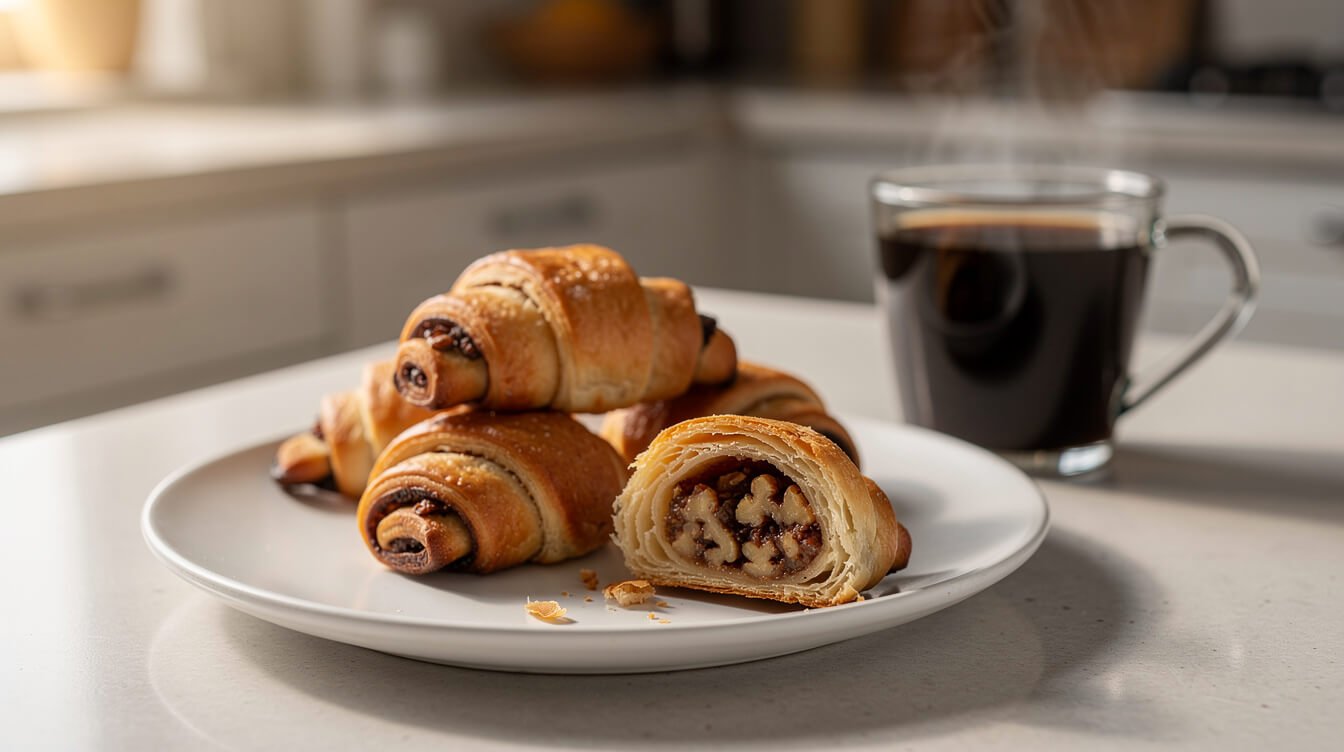
Rugelach (say it RUG-uh-lukh) are small rolled pastries from Ashkenazi Jewish baking. The name is usually translated from Yiddish as “little twists.” The cream cheese dough version in this rugelach recipe is the one most American home bakers know. Bakeries in Israel often sell a yeasted, more bread-like version. Both are delicious, and they’re baked very differently.
Can I make rugelach without cream cheese?
You can, but it becomes a different pastry. Some recipes swap in sour cream, and those work well. Cream cheese gives the most tender, forgiving dough, which is why we use it here.
Do I need a food processor?
No. Cut the cold fat into the flour by hand with a pastry cutter or your fingertips, the same way you’d make pie dough. It takes about 5 minutes longer.
Why did my rugelach come out flat?
Almost always warm dough. When the butter softens before baking, the cookies spread and lose their layers. Chill the shaped cookies for 30 minutes before they go in, and bake on the middle rack at 350°F.
Can I use jelly instead of jam?
Jelly is thinner and more likely to run. If it’s all you have, use 1 tablespoon per round instead of 2, and rely more on the nut-sugar layer for flavor.
How far ahead can I make rugelach?
Up to 3 months if you freeze the shaped, unbaked cookies or the dough. Baked rugelach keep for 5 days at room temperature in an airtight container, or 2 months in the freezer.
Are rugelach dairy-free?
No. This dough is built on butter and cream cheese. Dairy-free rugelach exist, but they use a different dough, and we haven’t tested one we’d stand behind yet.
Can I halve the recipe?
Yes. Use 4 ounces of cream cheese, 1 stick of butter, and 1 cup of flour, with half of everything else. You’ll get 2 discs and 24 cookies.
The short version
If you only remember five things from this rugelach recipe, make them these:
- Keep everything cold. Use cold butter and cold cream cheese, and chill the dough at least 2 hours.
- Go light on thick jam. Two tablespoons of thick jam per round, with bare borders and a bare center.
- Put the dry layer on top and press it in.
- Chill the shaped cookies 30 minutes before baking, or bake them straight from the freezer.
- Bake on a light pan with parchment at 350°F, and move them to a rack after 2 to 3 minutes.
That’s it. Make a double batch, freeze half, and you’ll have fresh, flaky rugelach whenever the cookie tray needs filling.

Before you go
Want the next one?
We post a new recipe or kitchen guide every day. The best of the week lands in one short email, no life story attached.