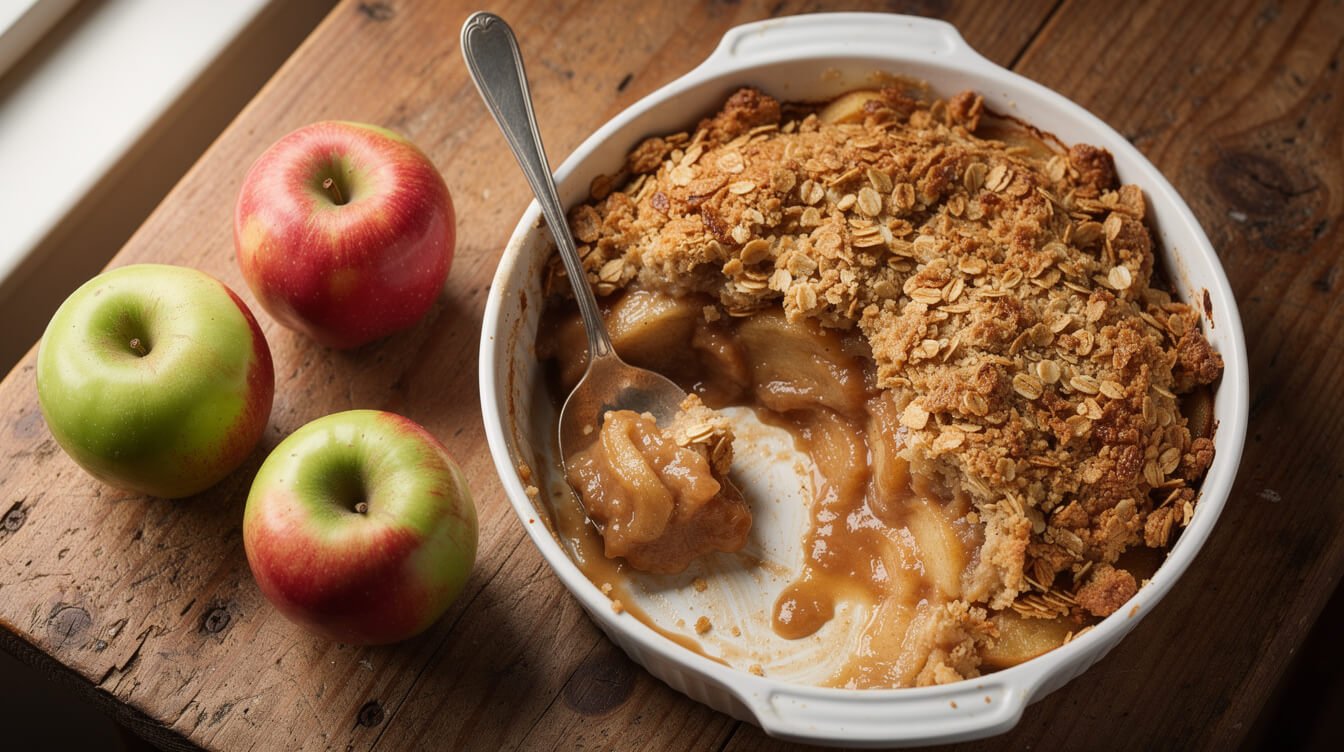
Good apples for apple crisp: 8 that bake up right (and 3 to skip)
You pulled the apple crisp out of the oven and something’s off. Either the filling slumped into applesauce soup under the topping, or the slices are still crunchy and raw-tasting while the crumble is already dark brown. Nine times out of ten it’s the apple, not you. This guide covers the good apples for apple crisp, ranked by how they actually behave in the oven, the three to skip, and the one habit that gets you a better crisp than any single variety: mix two kinds.
Here’s the short version. For one apple that does it all, buy Honeycrisp, Pink Lady, or Braeburn. For the best texture on a budget, use half Granny Smith and half Golden Delicious, a firm tart apple plus one that melts a little to make its own sauce. Skip Red Delicious entirely, and don’t use McIntosh or Gala on their own. Everything below explains why, then gives you a simple recipe built around the mix, so you can cook from this page tonight.
Good apples for apple crisp: the short answer
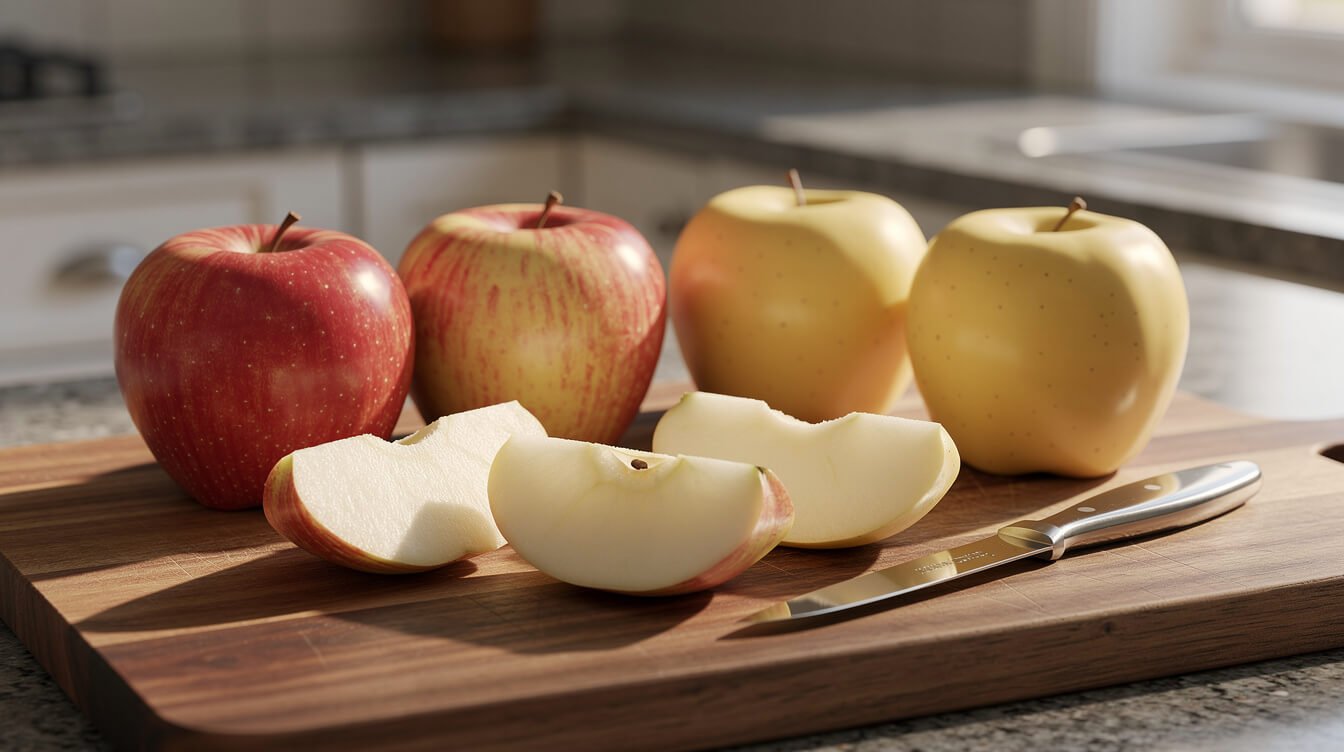
If you’re standing in the produce aisle right now, this is the whole answer in one list. The rest of the post is the why and the how.
- Best all-rounder: Honeycrisp. Holds its shape, sweet-tart, juicy without flooding the pan. The catch is the price.
- Best value all-rounder: Pink Lady (sometimes sold as Cripps Pink). Firm, tangy, slow to brown while you slice.
- Best for a thick, not-runny filling: Braeburn. It gives up less juice than most, so the topping stays crisp.
- Best tart apple: Granny Smith. Sharp, firm, everywhere, all year.
- Best “saucy” partner: Golden Delicious. Softens into a honeyed, jammy layer that ties firmer slices together.
- Best early-fall find: Jonagold. Juicy and full of flavor, but it doesn’t store well, so buy it in September and October.
- Worth grabbing if you see it: Mutsu (also called Crispin), plus orchard varieties like Northern Spy and Cortland.
- Skip or fix: Red Delicious (skip), McIntosh and Gala (only as part of a mix).
The one rule that matters more than the variety
A great crisp filling has two textures at once: tender slices you can still recognize, and a glossy, spoonable sauce around them. One apple rarely gives you both. A firm apple keeps the shape. A softer apple breaks down and becomes the sauce. So when people argue online about which apple is “the best,” they’re often both right. They just want different textures.
That’s why our default is two varieties, roughly half and half: one firm and tart, one sweeter and softer. Granny Smith plus Golden Delicious is the classic, cheap pairing. Honeycrisp plus Golden Delicious is a sweeter version. Pink Lady plus Jonagold is lovely in early fall. If you only have one kind, pick from the top three in the list and you’ll still get a very good crisp.
Why the apple makes or breaks a crisp
A pie has a bottom crust and gets sliced, so it needs apples that stay firm. A crisp is scooped with a spoon, so you can afford a softer, saucier filling. That sounds like good news, and it is, but it also means a crisp shows off every flaw in the fruit. There’s no crust to hide a puddle of juice or a pile of mush.
The three ways a crisp goes wrong
- Mush. The apples collapse into applesauce and you lose all texture. Cause: an apple with soft, watery flesh, like McIntosh, used on its own, or slices cut too thin.
- Soup. A pool of thin liquid under the topping, and the bottom of the crumble goes soggy. Cause: a very juicy apple without enough thickener, or not baking long enough for the juices to bubble and thicken.
- Crunch. The topping is done but the apples still squeak. Cause: a very firm apple cut too thick, or an oven that runs cool.
Every one of these is fixable, and most of the fixes come down to which apples you buy and how thick you slice them.
What actually makes an apple hold up
Two things. The first is firmness: apples with dense flesh and less water keep their shape in the heat, while soft, airy apples fall apart. The second is acid. Tart apples hold their structure better when cooked, and that tartness also keeps a crisp from tasting flat and sugary under a sweet brown-sugar topping. This is why sweet, low-acid apples like Gala and Fuji taste a little dull baked unless you add lemon.
One thing that trips people up: the crunchiest apple to eat raw isn’t automatically the best to bake. Grower rankings of “crisp” apples are about the bite out of hand. Some of those apples stay firm in the oven, like Honeycrisp, and some don’t. Judge baking apples by how they behave hot, not cold.
The thumb test for apples you don’t recognize
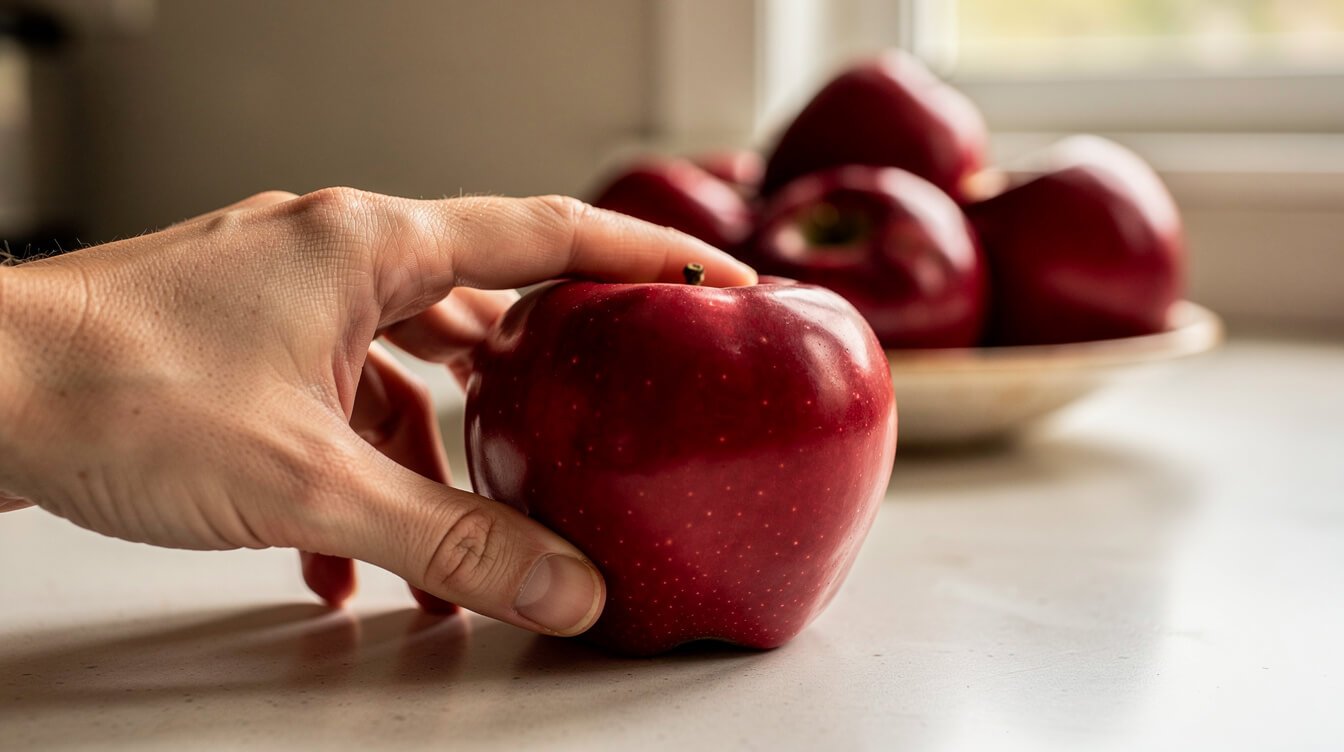
Farmers markets and orchards are full of varieties no list covers. Here’s a quick way to judge them: press your thumb firmly into the side of the apple. If it barely gives and leaves no dent, it’s firm enough to hold shape in a crisp. If it leaves a soft dent, it’ll break down, which makes it a good “sauce” apple to mix in at about a third of the total. Then take a bite. If it’s very sweet with little tang, plan on an extra squeeze of lemon in the filling.
Age matters too. An apple that’s been sitting in the fruit bowl for two weeks gets softer and mealier than the same variety bought fresh. If your apples feel soft or a little wrinkly, treat them as a sauce apple and pair them with something firm.
The 8 good apples for apple crisp, ranked
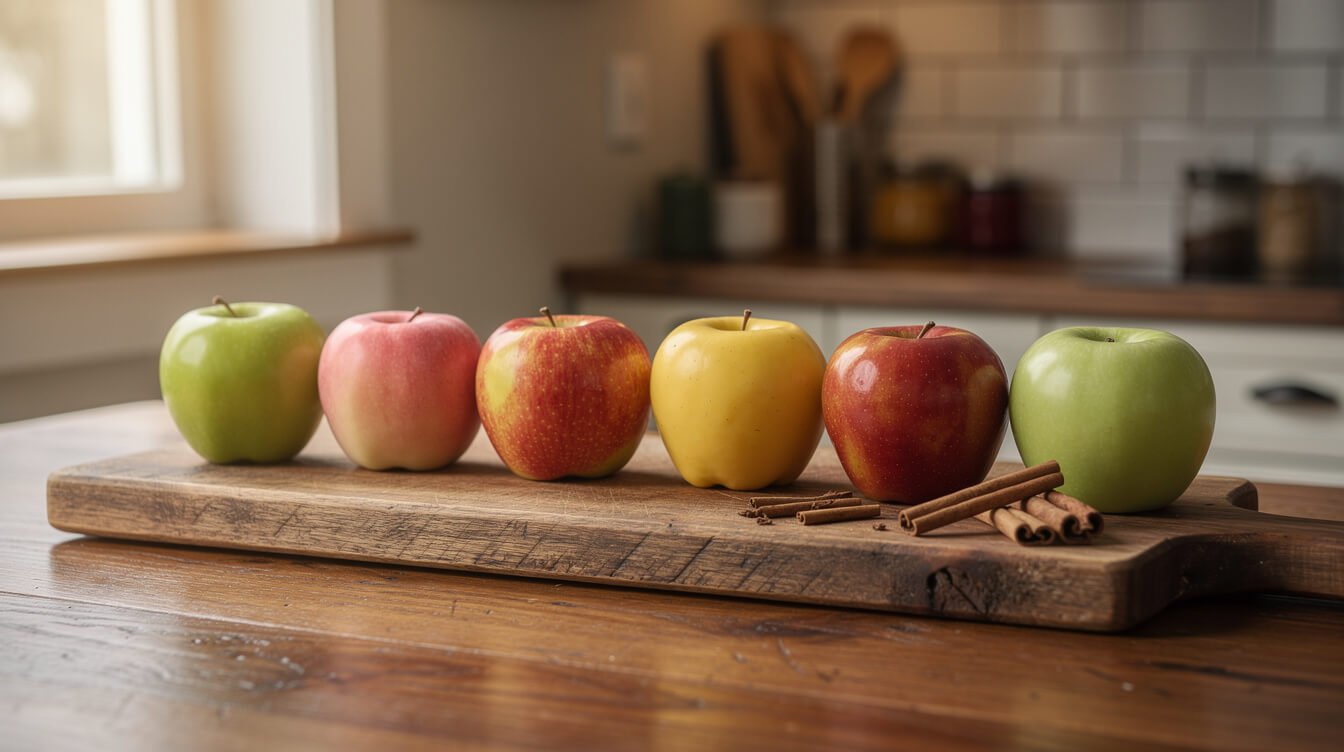
These are the good apples for apple crisp we’d reach for, ranked for a classic oat-topped crisp and judged on three things: does it keep some shape, does it taste good baked, and can you actually find it. Price and availability count, because an apple you can’t buy doesn’t help you on a Tuesday.
1. Honeycrisp
The best single apple for a crisp if you only buy one kind. It holds its shape without staying hard, its sweet-tart flavor survives the oven, and the juice it releases turns syrupy instead of thin. It’s in nearly every grocery store year-round. The downside is cost, since it’s usually one of the priciest apples in the bin. A good compromise is half Honeycrisp, half something cheaper.
2. Pink Lady
Our value pick for an all-in-one crisp apple. Firm, tangy, and a little floral, with flesh that’s slow to brown, so it won’t turn gray while you peel and slice the rest. It keeps its shape well, so pair it with a softer apple if you like a saucier filling. Wide availability through fall and winter.
3. Braeburn
The apple for people who hate a runny crisp. Braeburns bake up tender with a rich, almost spicy flavor, and they give off less liquid than most apples. That means a thicker filling and a topping that stays crunchy on the bottom. They’re less common than Honeycrisp, but worth grabbing when you see them.
4. Granny Smith
The classic, and still a great choice. Granny Smith is tart, firm, cheap, and in every store all year. On its own it can taste sharp and a little one-note, and in some bakes it softens more than you’d expect. It really shines as the firm, tart half of a mix. Granny Smith plus Golden Delicious is the budget pairing we’d make most often.
5. Jonagold
A cross of Jonathan and Golden Delicious, with big apple flavor and a honeyed tang. Jonagolds are juicy, so your filling will be looser. Add a little extra flour or cornstarch (more on that below). They’re at their best early in the season and don’t store well, so they’re a September-to-October apple, often easiest to find at farmers markets and orchards.
6. Golden Delicious
The most underrated crisp apple, as long as you use it the right way. Raw, it’s mild and a little soft. Baked, it turns sweet and honeyed and softens into a jammy layer. On its own that’s too soft for some people, but as the “sauce” half next to Granny Smith or Honeycrisp it’s perfect. Buy firm, fresh ones with no bruises. Older Golden Delicious go mealy fast. It’s also low in acid, so add lemon.
7. Mutsu (Crispin)
A big, greenish-yellow apple, related to Golden Delicious but much firmer. It’s juicy, mildly sweet, and holds up well in the oven. It’s a great swap for Honeycrisp if your store has it, and usually cheaper.
8. Orchard picks: Northern Spy, Cortland, and Jonathan
If you live near apple country, these are worth hunting for. Northern Spy is firm and tart and an old favorite for baking. Cortland is tender but holds together and stays white when sliced. Jonathan is small, tangy, and bakes up bright. You won’t find them in every supermarket, but at an orchard stand in October they’re among the best baking apples there are.
Quick pairing guide
- Cheap and classic: Granny Smith + Golden Delicious
- Sweeter, crowd-pleasing: Honeycrisp + Golden Delicious
- Thick, not runny: Braeburn + Pink Lady
- Early fall, orchard haul: Jonagold + Northern Spy (or Cortland)
- Whatever’s in the fruit bowl: one firm apple + one soft apple, plus lemon if both are sweet
The apples to skip (and how to rescue the ones you already bought)
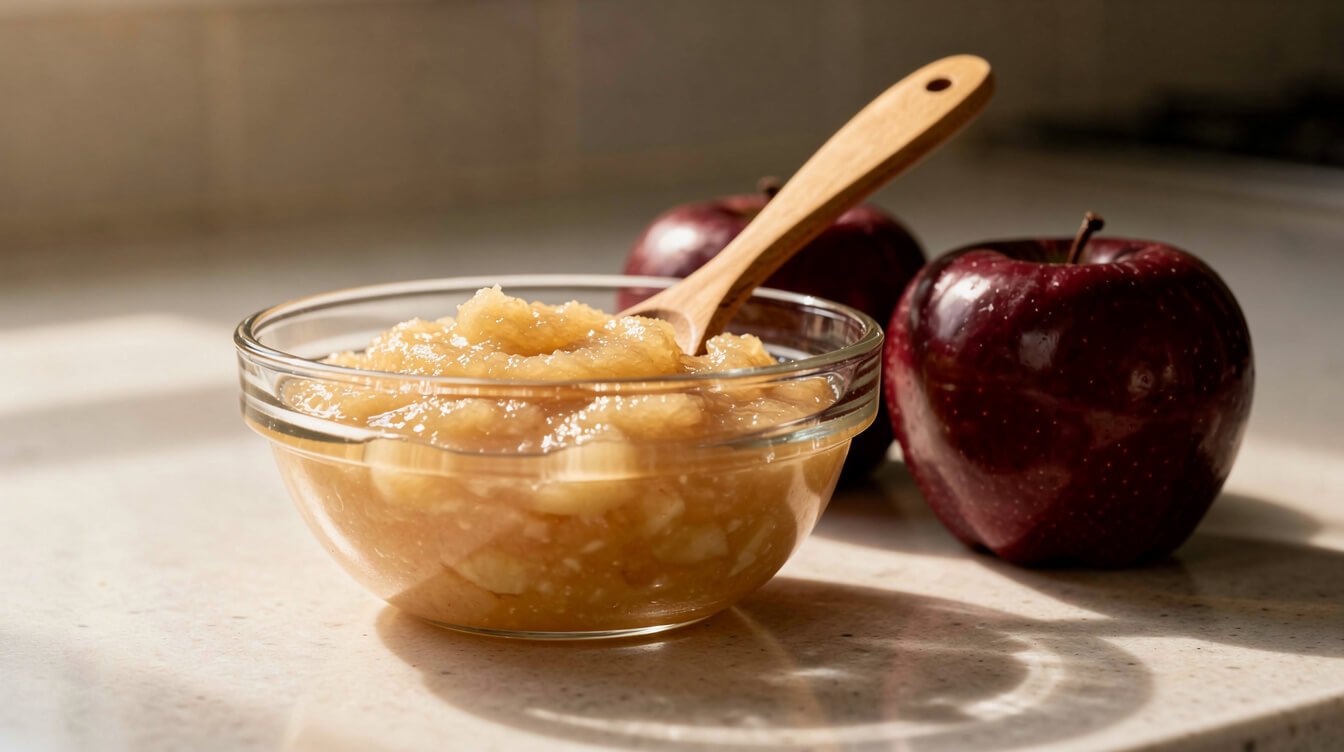
Not every apple in the bin belongs on a list of good apples for apple crisp. Some just aren’t happy in a hot oven. Here are the ones that cause the most mushy, soupy, or bland crisps, and what to do if they’re what you’ve got. Nobody’s grading you on the fruit bowl. Most of these can still make a good dessert with a small tweak.
Red Delicious: skip it
The one apple we’d tell you not to bake. The skin is thick and a bit bitter, the flesh goes mealy and grainy when heated, and the flavor fades to almost nothing. If it’s all you have, slice it into a salad or eat it with peanut butter, and buy something else for the crisp.
McIntosh: great in a mix, mush on its own
This is where advice online really contradicts itself. Some guides call McIntosh a top crisp apple, others say it turns to mush. Both are true. McIntosh has soft, tender flesh with lovely tart flavor, and it collapses into sauce in the oven. Used alone, you get apple pudding under a topping. Used as about one-third of the filling next to a firm apple, it makes a silky, flavorful sauce around the slices. Cut McIntosh thicker than your firm apple (about ½ inch) so some pieces survive.
Gala: mild and soft, so give it backup
Gala is sweet and pleasant raw, but baked it’s soft and a bit bland. If it’s what you have, use it as the soft half of a mix with Granny Smith, cut it thick, and add an extra tablespoon of lemon juice to wake it up.
Fuji: fine, with a squeeze of lemon
Fuji holds its shape reasonably well, but it’s very sweet and low in acid, so a Fuji-only crisp can taste flat and sugary. Cut the sugar in the filling down a bit and add lemon juice, or pair it with a tart apple. It’s not a bad crisp apple, just not a great one on its own.
Already got a bag of soft apples?
- Cut them thicker, about ½ inch, so they don’t disappear.
- Add a little extra thickener: 1 more tablespoon of flour or 1 teaspoon of cornstarch.
- Add 1 to 2 tablespoons of lemon juice for brightness.
- Mix in even one or two firm apples if you can. A little structure goes a long way.
- Bake in a wider dish so the filling is shallower and the juices reduce faster.
From the Eat Cafe kitchen
One good recipe a week, straight to your inbox
The recipe we're actually cooking this week, plus the one tip that saves it when it goes sideways. No spam. Unsubscribe anytime.
How to prep apples for apple crisp
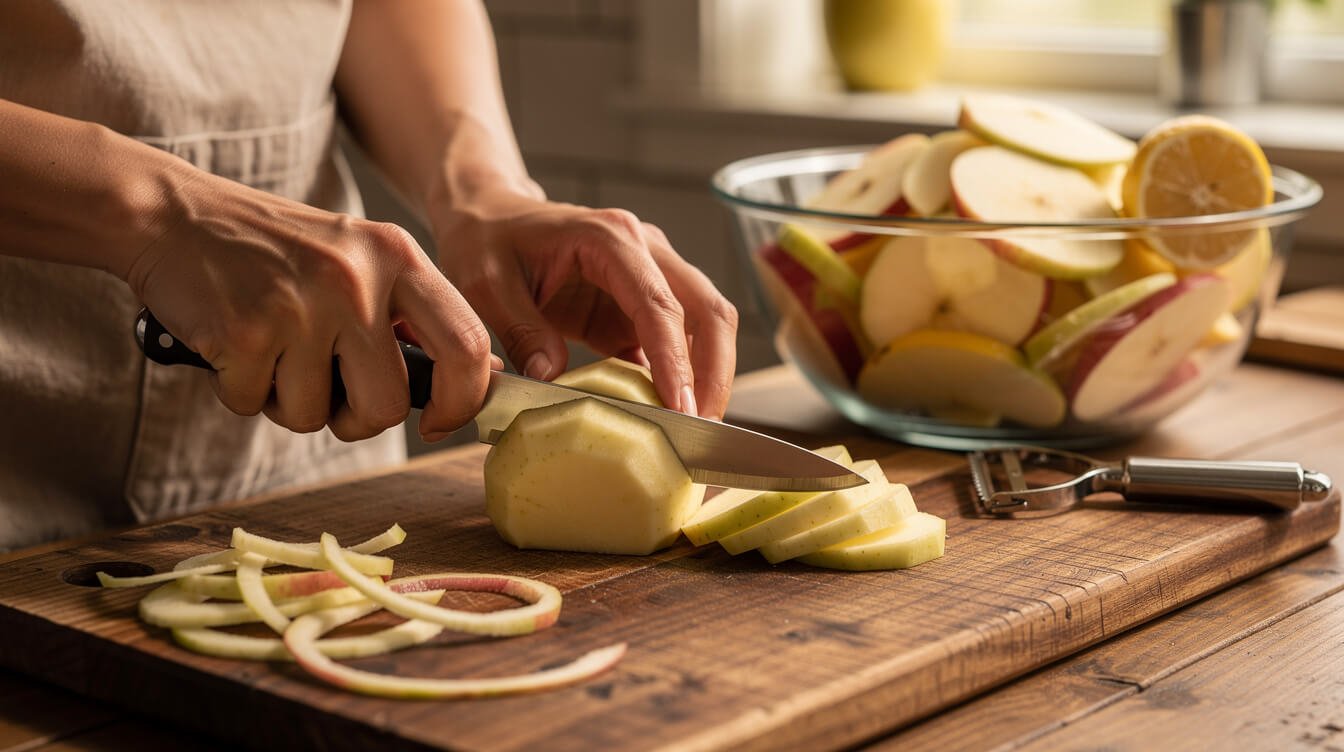
Once you’ve picked good apples for apple crisp, a few minutes of prep decides whether they bake evenly. Here’s what matters and what doesn’t.
How many apples you need
Apples shrink as they bake, so pile them high. Rough guide by pan:
- 8×8-inch or 9-inch round/deep dish (about 2 quarts): 2½ pounds (about 1.1 kg), roughly 5 to 6 medium apples, about 7 cups sliced.
- 9×13-inch (about 3 quarts): 4½ to 5 pounds (about 2.1 kg), roughly 10 to 12 medium apples.
If the raw apples come right to the rim, that’s fine. They’ll settle down about an inch as they cook.
Slice thickness (the fix for “some mushy, some crunchy”)
Aim for about ¼ inch (6 mm) slices for firm apples like Granny Smith, Honeycrisp, and Braeburn. Cut softer apples like Golden Delicious, McIntosh, and Gala thicker, around ½ inch. That way the firm slices finish softening at the same time the soft ones turn saucy. Keep each variety’s slices consistent, so you don’t get one fat wedge that stays hard in a pan of tender ones.
To peel or not to peel
Peeling gives you the silkiest filling, and it’s what most people expect. Leaving the skin on is fine for thin-skinned apples like Golden Delicious and saves time. You’ll get a little more chew and a rustic look. Thick, tough skins, like Red Delicious, are another reason to skip that apple.
A sharp peeler and a decent paring knife make this go fast, and they’re two of the cheapest tools in a kitchen that earn their keep. If you’re kitting out a kitchen, our 100 Essential Tools Every Chef Has in Their Kitchen guide covers what’s worth buying first.
Lemon, sugar, and thickener: adjust to your apples
This is the step most recipes skip. They give you one fixed amount of sugar and flour no matter which apples you use, and that’s why the same recipe comes out perfect one week and soupy the next.
- Lemon juice: 1 tablespoon for a tart mix, 2 tablespoons if your apples are sweet (Gala, Fuji, Golden Delicious). It brightens the flavor and slows browning while you work.
- Sugar in the filling: start with ¼ cup for an 8×8 pan. Go up to ⅓ cup for an all-Granny Smith crisp. Go down to 2 tablespoons for very sweet apples. The topping is already sweet.
- Thickener: 1 tablespoon of flour for firm, less-juicy apples (Braeburn, Pink Lady). 2 tablespoons of flour, or 1 tablespoon of cornstarch, for juicy ones (Jonagold, Honeycrisp, McIntosh-heavy mixes). Cornstarch gives a clearer, glossier sauce.
Toss everything together in a big bowl and let it sit while you make the topping. If a puddle of juice forms in the bowl in those 10 minutes, you’ve got juicy apples. Add another teaspoon of cornstarch.

Kitting out your kitchen for fall baking?
Our 100 Essential Tools Every Chef Has in Their Kitchen eBook and Guide is a plain-English rundown of the gear that’s worth owning, so you can skip the gadget drawer clutter and buy what you’ll actually reach for.
A simple apple crisp recipe built for the two-apple mix
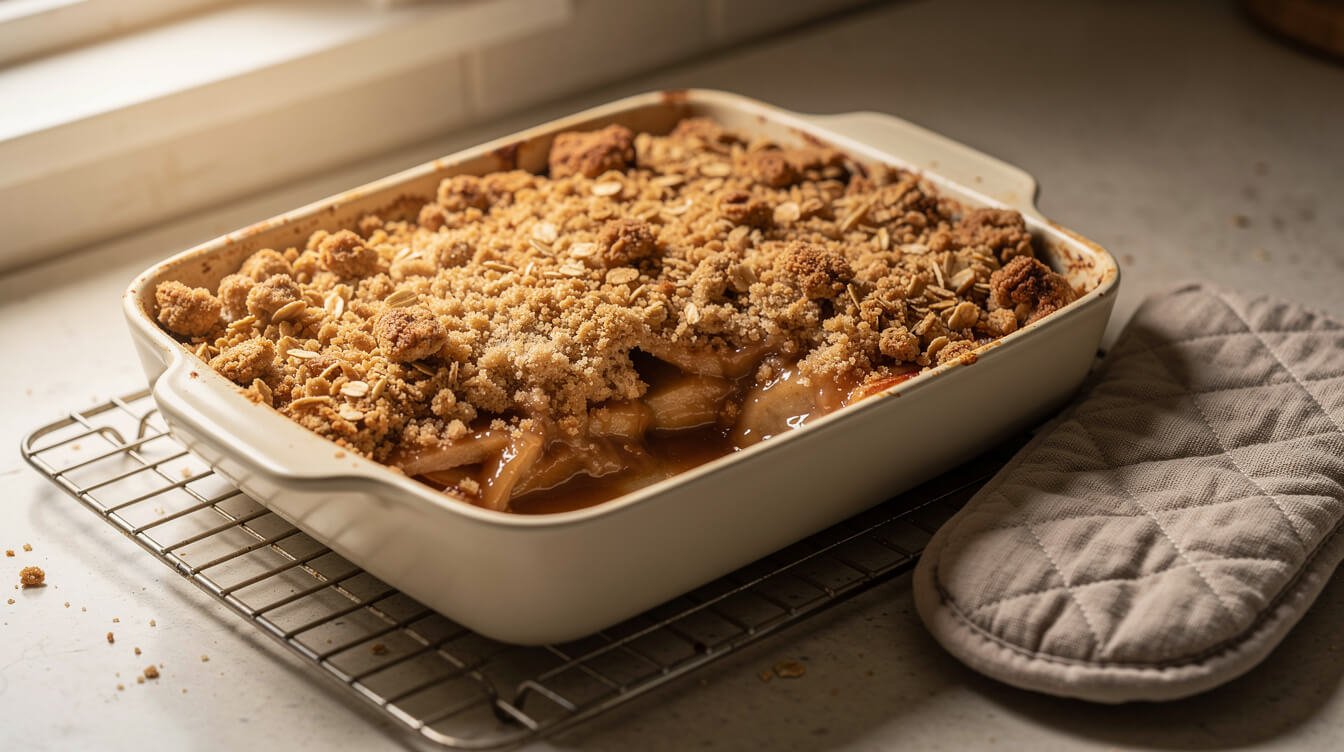
Here’s the crisp we make with whatever good apples we’ve got. It’s one bowl for the filling, one for the topping, and about an hour total, most of it hands-off. It’s written for an 8×8-inch pan. Double everything for a 9×13 and add 10 to 15 minutes to the bake.
Ingredients
For the filling:
- 2½ lb (1.1 kg) apples, about 5 to 6 medium: half firm-tart (Granny Smith, Honeycrisp, Pink Lady, or Braeburn) and half softer (Golden Delicious, Jonagold, or McIntosh)
- ¼ cup (50 g) granulated or light brown sugar (adjust as above)
- 1 to 2 tablespoons lemon juice
- 1 to 2 tablespoons all-purpose flour, or 2 to 3 teaspoons cornstarch
- 1 teaspoon ground cinnamon
- Pinch of nutmeg (optional)
- Pinch of salt
For the topping:
- ¾ cup (95 g) all-purpose flour
- ¾ cup (70 g) old-fashioned rolled oats
- ⅔ cup (135 g) packed light brown sugar
- ½ teaspoon ground cinnamon
- ¼ teaspoon salt
- ½ cup (113 g, 1 stick) cold unsalted butter, cut into small cubes
- ⅓ cup chopped pecans or walnuts (optional)
Steps
- Heat the oven to 375°F (190°C), with a rack in the middle. Butter an 8×8-inch baking dish. Set a sheet pan on the rack below to catch drips.
- Make the filling. Peel, core, and slice the apples, firm ones about ¼ inch thick and soft ones about ½ inch. Toss in a large bowl with the sugar, lemon juice, thickener, cinnamon, nutmeg, and salt. Let it sit while you make the topping.
- Make the topping. In another bowl, stir together the flour, oats, brown sugar, cinnamon, and salt. Add the cold butter and rub it in with your fingertips (or a pastry cutter) until it looks like damp sand with some pea-sized lumps. Squeeze a few handfuls to make clusters. Stir in nuts if using.
- Assemble. Pour the apples and all their juices into the dish and spread them level. Scatter the topping loosely over the top. Don’t pack it down, because loose topping bakes crisper.
- Bake 40 to 50 minutes, until the topping is deep golden and the juices are bubbling thickly at the edges and in the center. A knife should slide into an apple slice with almost no resistance. If the topping is browning before the apples are tender, lay a piece of foil loosely over the top.
- Rest 15 to 20 minutes. The juices thicken as it cools a little. Cut in right away and it’ll be runnier.
The doneness tell most people miss
Bubbling at the edges isn’t enough. The edges heat first, and the center of the pan can still be thin, starchy juice. Wait until you see slow, thick bubbles breaking through the topping in the middle. That’s when the flour or cornstarch has fully cooked and thickened the sauce. Pull it too early and you get soup, even with perfect apples.
Topping tips
- Cold butter makes a crunchy, clumpy topping. Melted butter makes a sandier, flatter one. Both taste good, but cold gives you those big crunchy clusters.
- Use old-fashioned oats. Quick oats work in a pinch, but the topping will be softer.
- Out of butter? Our guide to butter substitutes in baking covers what works in a crumble topping.
- For a gluten-free crisp, use certified gluten-free oats and a 1:1 gluten-free flour blend. Regular oats are often processed alongside wheat.
Storing and reheating
Let leftovers cool, then cover and refrigerate within 2 hours of baking. We follow the USDA’s general guidance for leftovers here: they’ll keep 3 to 4 days in the fridge, or 3 to 4 months in the freezer. To bring back the crunch, reheat uncovered at 350°F (175°C) for 10 to 15 minutes from the fridge, or longer from frozen. The microwave works for a single bowl, but the topping will soften.
Apple crisp FAQ
What are good apples for apple crisp if I can only buy one kind?
Honeycrisp, Pink Lady, or Braeburn. All three hold their shape, taste balanced when baked, and don’t flood the pan. If budget matters, Pink Lady is usually the best value of the three.
Can I make apple crisp with only Granny Smith apples?
Yes. It’s a classic for a reason. Expect a tart, firm filling. Bump the filling sugar up to about ⅓ cup and consider an extra pinch of cinnamon. If you want it saucier, add one Golden Delicious or McIntosh to the mix.
How many kinds of apples should I mix?
Two is the sweet spot: one firm and tart, one softer and sweeter. Three is fine too if you’re using up a bag of odds and ends. Just keep at least half of the total firm, so the filling doesn’t collapse.
Why is my apple crisp watery?
Usually one of three things: very juicy apples (Jonagold, McIntosh, Honeycrisp) without enough thickener, pulling it before the center is bubbling thickly, or cutting in before it rests. Add an extra teaspoon of cornstarch next time, bake until the middle bubbles, and give it 15 to 20 minutes on the counter.
Why are my apples still crunchy?
The slices were too thick for a firm variety, or the oven runs cool. Slice firm apples about ¼ inch thick. If the topping browns first, tent it with foil and keep baking until a knife slides in easily. An inexpensive oven thermometer will tell you if your oven is off.
Can I use frozen apples?
You can. Don’t fully thaw them. Toss them frozen with the filling ingredients plus an extra tablespoon of flour (or 1 teaspoon cornstarch), since frozen apples release more liquid. Plan on an extra 10 to 15 minutes of baking.
Are apples for apple pie the same as apples for apple crisp?
Mostly, but a crisp can handle softer apples because it’s scooped, not sliced. A pie needs firm apples that won’t make the bottom crust soggy. If you’re baking both this season, our guide on how to blind bake a pie crust covers which pies need a pre-baked shell.
What’s the difference between apple crisp and apple crumble?
In the US, a crisp usually has oats in the topping and a crumble usually doesn’t. In practice the words get used for the same thing. Everything about choosing apples here applies to both.
Final thoughts on good apples for apple crisp
If you remember one thing, make it this: mix a firm, tart apple with a softer one, and you’ll get tender slices in a glossy sauce almost every time. Honeycrisp, Pink Lady, and Braeburn are the best single picks. Granny Smith plus Golden Delicious is the best budget pairing. Red Delicious stays in the lunchbox. Then slice firm apples thinner than soft ones, adjust the thickener to how juicy your apples are, and bake until the center bubbles, not just the edges.
Apple crisp is one of the most forgiving desserts there is, which makes it a great place to start if you’re new to baking. If you want a few more fundamentals under your belt, our baking basics for beginners are a good next read. And if you’re planning a fall menu, this crisp sits nicely next to our pumpkin dump cake on a dessert table, or after a pot of easy basic chili on a chilly weeknight. For a bigger spread, our Thanksgiving dinner ideas cover the rest of the table.
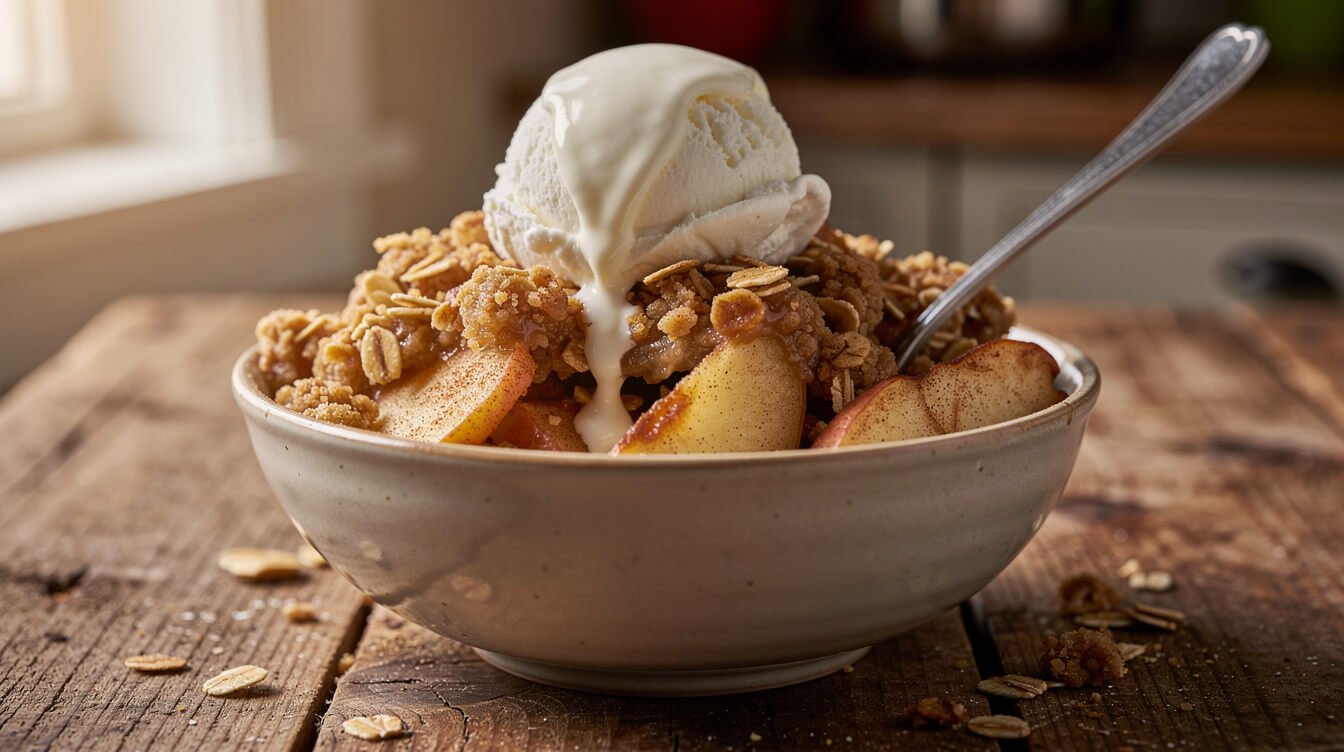
Grab two kinds of apples this week, try the mix, and see which pairing becomes your favorite. Scoop it warm, add a scoop of vanilla ice cream, and that’s a very good night.

Before you go
Want the next one?
We post a new recipe or kitchen guide every day. The best of the week lands in one short email, no life story attached.