The difference between whipping cream and heavy cream (and when it actually matters)
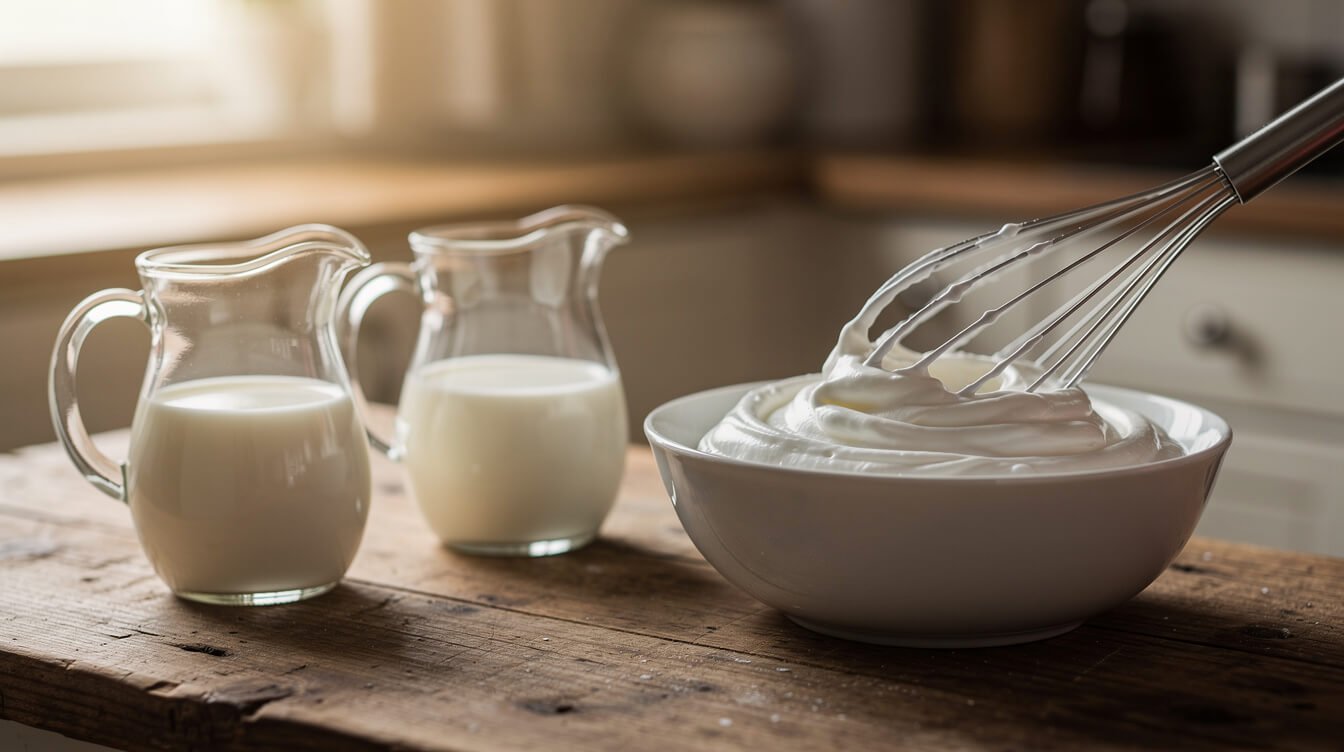
The difference between whipping cream and heavy cream is a few points of fat: heavy cream has at least 36% milkfat, and whipping cream has 30% up to just under 36%. That small gap is why heavy cream whips into firmer peaks that hold longer and why it stands up better to a hard simmer. For most recipes, though, you can use either one, cup for cup, and nobody at the table will know.
The real confusion is in the dairy aisle, where “heavy whipping cream” sits right next to both and sounds like a mix of the two. It isn’t. Below: the short answer with a chart, how to read the carton (including the nutrition-label shortcut), which one to whip, which one to cook with, a recipe-by-recipe swap guide, and how to make whipped cream a day ahead for Thanksgiving pie without it going flat.
The difference between whipping cream and heavy cream, in one minute
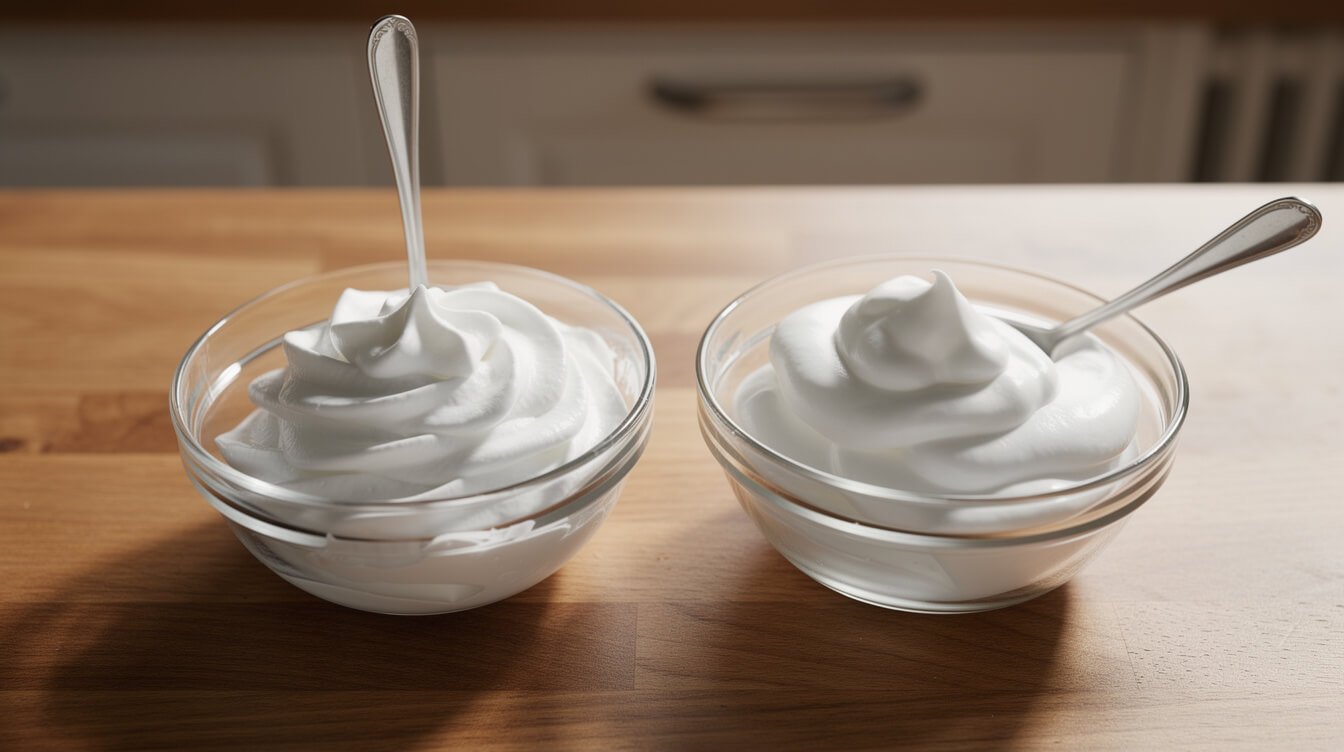
US cream names aren’t marketing. They’re federal standards of identity, and each one comes down to a milkfat range. Here’s the whole lineup, from richest to lightest:
| What the carton says | Milkfat | Whips? | Handles a simmer? |
|---|---|---|---|
| Heavy cream / heavy whipping cream | 36% or more | Yes, firm peaks that hold | Yes, very forgiving |
| Whipping cream / light whipping cream | 30% to under 36% | Yes, softer peaks | Mostly; gentler with acid |
| Light cream | 18% to under 30% | No | Gently; can split |
| Half-and-half | 10.5% to under 18% | No | Gently; splits easily with acid |
Three things to take from that chart:
- “Heavy whipping cream” is heavy cream. The federal rule for heavy cream lists “heavy whipping cream” as an official alternate name for the exact same product. Same 36% floor, different words on the front. Buy whichever is cheaper.
- “Whipping cream” is the lighter one. Its official name is “light whipping cream,” and “whipping cream” is the allowed short version. If the carton doesn’t say heavy, it’s in the 30–36% band.
- The gap is small, but it shows up in two places: how long whipped cream holds its shape, and how much abuse a sauce can take before it curdles. Everywhere else, the two are interchangeable.
You’ll see some guides say whipping cream is “sometimes called heavy whipping cream.” That’s backwards, and it’s the source of most of the mix-ups. If you want to check it yourself, the rule is 21 CFR 131.150 for heavy cream (and 131.157 right after it for light whipping cream).
If you landed here because you don’t have either one, our guide to what can substitute heavy cream sorts the swaps by job: whipping, simmering, or baking.
Reading the carton: names, “ultra-pasteurized,” and the label shortcut
Most of the difference between whipping cream and heavy cream is printed right on the front of the carton, but a couple of things hide on the side panel.
The name tells you the fat band
“Heavy cream” or “heavy whipping cream” means 36% or more. “Whipping cream” or “light whipping cream” means 30% to just under 36%. Plenty of heavy creams go above the 36% floor, and some smaller dairies sell 38–40% cream. That’s still heavy cream, just richer, and it whips even faster.
The nutrition label is the tiebreaker
Store brands don’t always print a fat percentage, and the cartons can look nearly identical. Flip to the nutrition panel and look at one tablespoon:
- Heavy cream: usually 5 g fat and 50 calories per tablespoon (more if it’s a richer cream).
- Whipping cream: usually 4.5 g fat and about 45 calories per tablespoon.
Half a gram doesn’t sound like much. But it’s the same 36%-versus-31% difference from the chart, shrunk down to a spoonful and rounded to fit on the label. If you’re comparing two cartons side by side, the one with more fat per tablespoon is the one that’ll whip firmer.
“Ultra-pasteurized” and the ingredient list
All cream sold in the US is pasteurized. “Ultra-pasteurized” means it was heated hotter for a shorter time, and the label has to say so on the front. The upside is shelf life: an unopened ultra-pasteurized carton lasts weeks longer than regular pasteurized cream, which is why it’s most of what you’ll find at the grocery store.
The trade-off is in the whipping. In our kitchen, ultra-pasteurized cream takes a little longer to reach peaks, and the peaks are a touch less sturdy than with regular pasteurized cream. It still whips fine. Just give it an extra minute and keep it cold.
The ingredient list is the other thing worth a glance. The standard allows emulsifiers, stabilizers, and sweeteners, so you’ll often see things like carrageenan, gellan gum, or mono- and diglycerides. They’re there to keep the cream smooth in the carton and help it whip. Cream that’s just “cream” works great too. It’s the kind you want if you’re making butter, and it’s what many cooks prefer for flavor.
Whipping: which holds peaks longer (and how to rescue over-whipped cream)
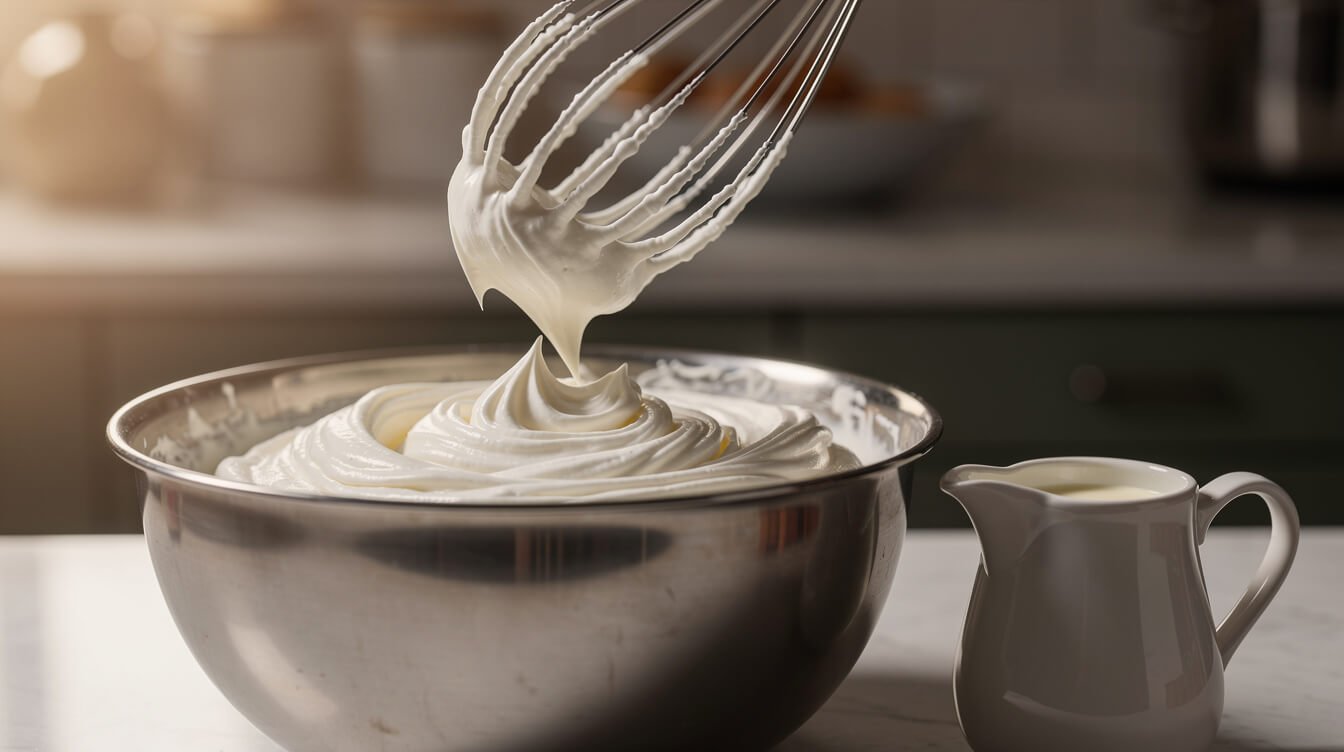
Here’s where the few points of fat matter most. When you whip cream, the fat droplets partly stick together around the air bubbles and hold them in place. More fat means a stronger network.
- Heavy cream whips into firm, glossy peaks that hold their shape for hours in the fridge. It’s the one to use for piping, frosting a cake, filling layers, or topping a pie that won’t be eaten right away.
- Whipping cream whips into softer, more billowy peaks. It’s lovely spooned onto pie or berries right before serving, but it starts to slump and leak liquid sooner.
Either way, 1 cup of liquid cream gives you about 2 cups of whipped cream.
How to whip it
- Start cold. Use cream straight from the fridge. On a warm day, or if your kitchen is crowded with oven heat, put the bowl and whisk (or beaters) in the freezer for 10–15 minutes first. Warm cream whips slowly and turns greasy.
- Use a deep bowl. A metal or glass bowl, deeper than you think you need, keeps the splatter in.
- Add sugar at soft peaks. For 1 cup of cream, 1–2 tablespoons of powdered sugar and ½ teaspoon vanilla. Powdered sugar dissolves instantly, and the little bit of cornstarch in it helps a touch with stability.
- Slow down at the end. With a hand mixer, go medium-high until the cream thickens, then drop to medium and check often. With a balloon whisk, it takes a few minutes of steady work, and it’s very hard to overdo by hand.
Learn the three stages and you’ll always know when to stop:
- Soft peaks: lift the whisk and the peak flops right over. Good for folding into mousse or spooning onto cocoa.
- Medium peaks: the tip curls over a little. This is the sweet spot for topping pie.
- Stiff peaks: the peak stands straight up. Use this for piping and layer cakes. Stop here.
A stand mixer gets you there in about a minute, which is great for big batches and also how most over-whipped cream happens. If you’re weighing whether one is worth the counter space, we broke it down in our guide to the best stand mixer for home cooks.
The over-whip rescue
Go past stiff peaks and the cream turns grainy and slightly yellow, like cottage cheese. That’s the fat clumping. It isn’t ruined yet.
The fix: stop the mixer. Pour in 2–3 tablespoons of cold liquid cream (or milk, if that’s all you have) for every cup you started with, and fold it in gently by hand with a spatula. Don’t turn the mixer back on. Within a few folds it smooths back out into soft, usable whipped cream.
If you kept going and it split into yellow clumps sloshing in thin liquid, you’ve made butter. Honestly, that’s not a bad outcome. Pour off the liquid (that’s real buttermilk, good in pancakes), press the butter under cold water, add a pinch of salt, and keep it in the fridge. Then start a fresh batch of whipped cream and watch it a little closer.
Cooking: which one won’t curdle in sauces and soups
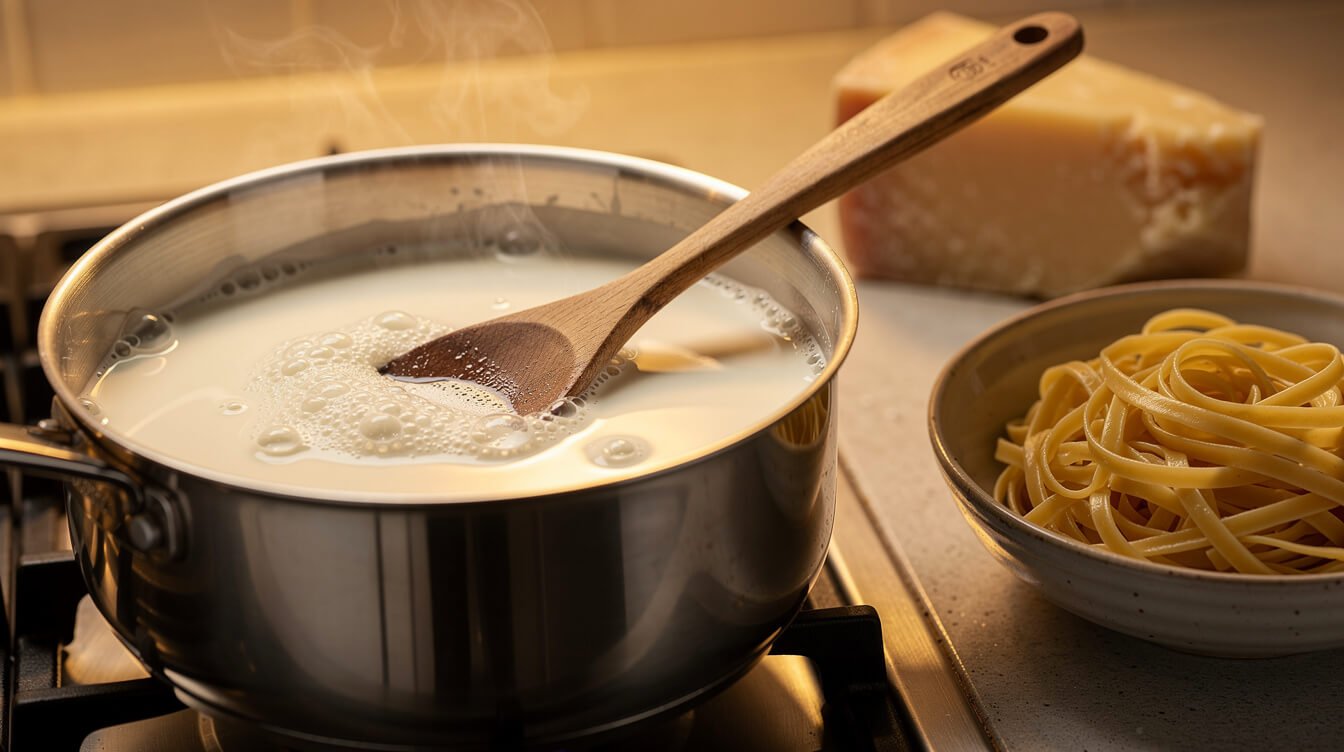
Fat also protects cream from heat and acid. The milk proteins in cream are what curdle when they’re boiled hard or hit with something sour, and in a high-fat cream there’s more fat around them and relatively less protein to clump. That’s why heavy cream can boil and reduce into a sauce, while half-and-half poured into hot tomato soup can turn grainy in seconds.
- Heavy cream is the safe bet for anything that simmers hard or reduces: a pan sauce, Alfredo-style pasta, a vodka sauce, gratins, or a soup that’s going to bubble for a while. It also thickens as it reduces, so a cup of heavy cream simmered for a few minutes turns into a sauce that coats a spoon.
- Whipping cream handles most cooking fine. It just has less margin. It takes longer to reduce, ends up a little thinner, and is more likely to split if you add a lot of lemon, wine, or tomato and then crank the heat.
Four habits that keep any cream smooth
- Add it near the end. In a soup or stew, stir the cream in during the last few minutes rather than boiling it the whole time.
- Take acidic sauces off the boil first. For a tomato cream sauce, simmer the tomatoes until they’re done, lower the heat, then stir in the cream.
- Temper cold cream. Whisk a ladle of the hot liquid into the cream first, then pour it all back in.
- Keep it at a simmer, not a rolling boil, when you’re using whipping cream or anything lighter.
Our white bean chicken chili uses the same habits to get creamy without curdling, if you want to see them in a real recipe.
From the Eat Cafe kitchen
One good recipe a week, straight to your inbox
The recipe we're actually cooking this week, plus the one tip that saves it when it goes sideways. No spam. Unsubscribe anytime.
Can you swap one for the other? A recipe-by-recipe guide
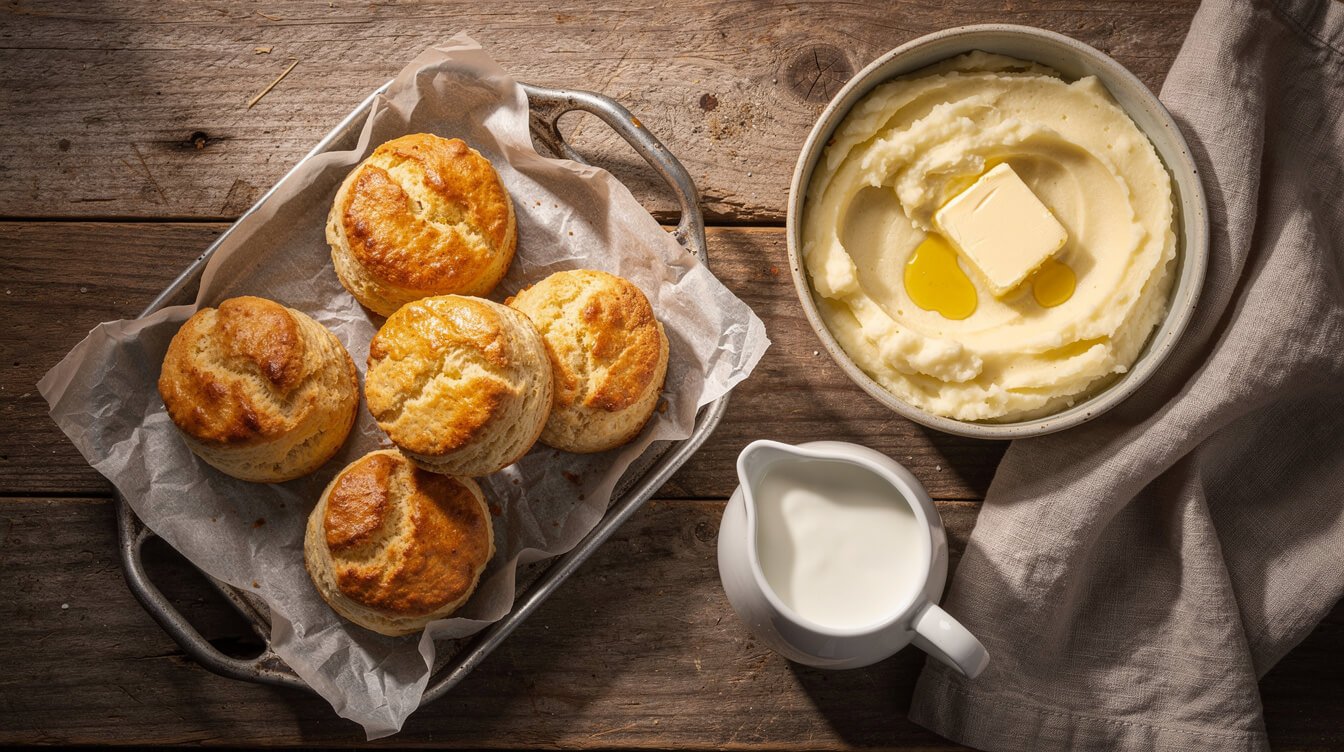
Yes, almost always, 1 cup for 1 cup. In most recipes, the difference between whipping cream and heavy cream won’t show up at all. Here’s where it’s a straight swap and where it’s worth buying the heavy stuff:
| What you’re making | Heavy cream | Whipping cream |
|---|---|---|
| Whipped cream you’ll serve right away | Great | Great, a little lighter and fluffier |
| Whipped cream that has to hold (piping, pie made ahead, icebox cake, frosting) | Best choice | Works only with a stabilizer (see below) |
| Chocolate ganache | Best for a ganache that sets firm | Fine for a softer glaze or drizzle |
| Pan sauces, Alfredo, reduced cream sauces | Best choice | Works with gentle heat; reduces more slowly |
| Soups and stews | Great | Great; add near the end |
| Scones, biscuits, cakes, quick breads | Great | Great |
| Quiche, custards, pumpkin pie filling | Great, slightly richer | Great |
| Mashed potatoes, gratins | Great | Great |
| Homemade ice cream | Richer, denser scoop | Lighter, scoops a bit softer |
| Coffee | Rich | Rich, slightly lighter |
The pattern: anything that bakes, gets stirred into something, or is eaten right away doesn’t care which one you used. The two jobs that do care are whipped cream that has to stand up for hours and sauces that boil hard or reduce. For those two, reach for heavy cream.
A quick note on going the other direction: half-and-half and light cream aren’t swaps for either one when you’re whipping. They don’t have enough fat to hold air. For baking and gentle soups, they’ll do in a pinch, and our heavy cream substitute guide has the ratios. For a dairy-free route, chilled full-fat coconut cream whips into soft peaks. Our coconut milk guide explains how to tell coconut cream and coconut milk apart on the shelf.
None of this takes special gear. A balloon whisk, a cold metal bowl, and a heavy saucepan cover everything on this page. If you’re figuring out which tools are worth owning, our 100 Essential Tools guide covers what’s worth buying first.

Whisk, mixer, or both? Start here
Our 100 Essential Tools eBook walks through the bowls, whisks, pans, and small tools that earn their spot in a home kitchen, so you buy the useful stuff first. PDF or Kindle.
Make-ahead whipped cream for Thanksgiving pies
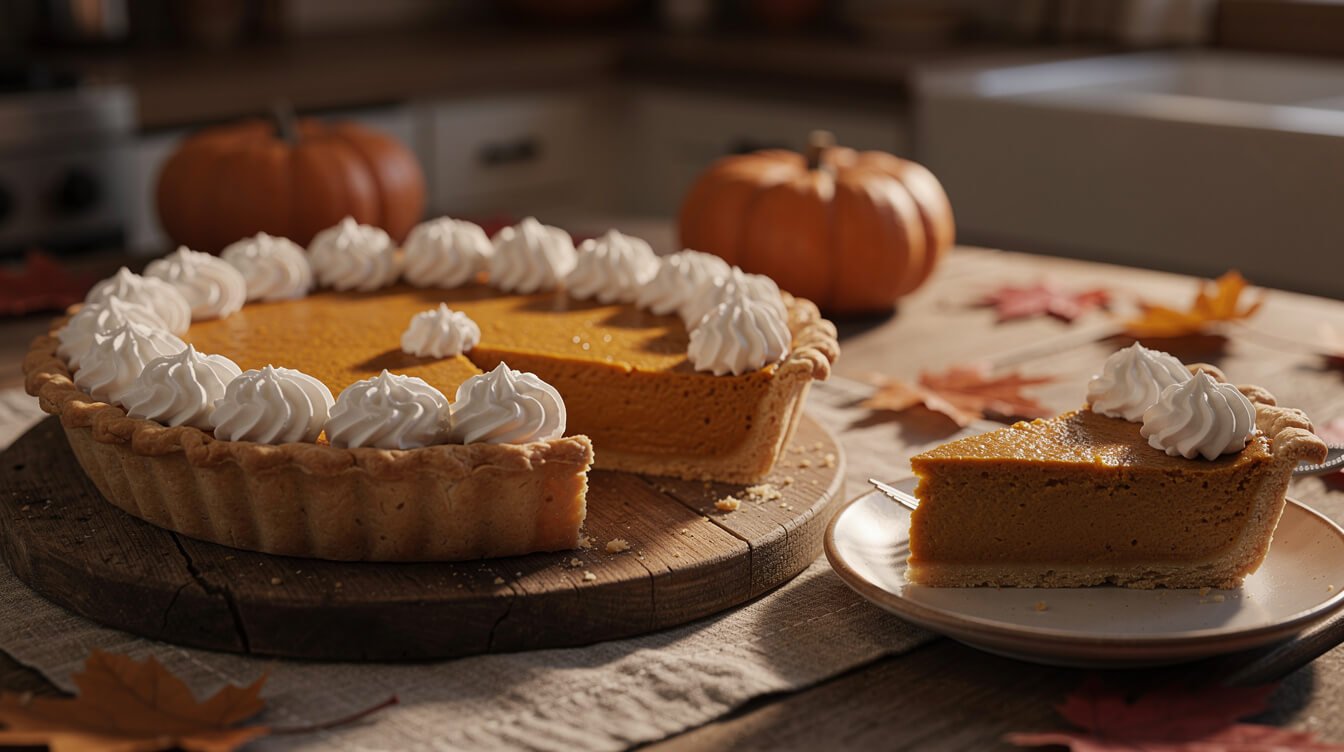
Thanksgiving is the one day of the year when everyone wants whipped cream and nobody wants to stand at a mixer while the coffee’s brewing. Plain whipped cream made with heavy cream holds up for a few hours in the fridge before it starts to slump and leave a puddle in the bowl. Made with whipping cream, it gives out sooner. If you want to make it the day before, add a stabilizer.
Stabilizers, from easiest to sturdiest
All amounts are for 1 cup of cold heavy cream (or whipping cream, if that’s what you have):
- Powdered sugar (2 tablespoons). The cornstarch in it gives a small boost. Fine for whipped cream made in the morning and served that evening.
- Nonfat dry milk powder (2 tablespoons). Whisk it into the cold cream before you start. It adds protein that helps the foam hold, and you can’t taste it.
- Instant vanilla pudding mix (1 tablespoon). Add at soft peaks. Very sturdy, slightly sweeter, with a faint vanilla-pudding flavor that’s nice on pumpkin pie.
- Mascarpone (¼ cup, about 2 ounces). Beat it smooth with the sugar, then add the cream and whip together. It makes a rich, thick whipped cream that pipes beautifully and holds in the fridge for a day or more. Don’t over-whip it, because mascarpone tips over to grainy faster than plain cream. (Out of mascarpone? Our mascarpone substitute guide covers what works here.)
- Unflavored gelatin (1 teaspoon). The sturdiest option and the one bakeries use for piped decorations. Sprinkle the gelatin over 1 tablespoon of cold water and let it sit 5 minutes. Warm it just until it turns liquid (a few seconds in the microwave), then let it cool until it’s barely warm. Whip the cream to soft peaks, then pour the gelatin in a thin stream with the mixer running, and finish whipping to medium-stiff peaks. Pipe or spread it right away, because it sets as it sits.
A simple Thanksgiving timeline
Thanksgiving is Thursday, November 26 this year. Here’s an easy plan:
- Wednesday: bake the pie. A good crust makes the whole thing easier, and our all-butter pie crust recipe walks through it, with a blind-baking guide for the pies that need it. Pumpkin pie is a custard pie, so once it’s cool it goes in the fridge.
- Wednesday evening: make a stabilized whipped cream (mascarpone, pudding, or gelatin) and store it covered in the fridge. Or pipe dollops onto a parchment-lined sheet pan and freeze them, then move them to a freezer bag. Frozen dollops thaw on a slice of pie in about 10 minutes.
- Thursday: top the pie or the slices shortly before dessert. Plain whipped cream can be whipped up to 2–3 hours ahead and kept cold. If it slumps a little, a few strokes with a whisk brings it back.
Keep it cold
Whipped cream, whipped-cream-topped desserts, and pumpkin pie all belong in the fridge. Like other perishable foods, they shouldn’t sit out at room temperature for more than 2 hours, or 1 hour if it’s above 90°F. That matters most on a long holiday afternoon, when dessert sits on the buffet while everyone digs into seconds. Put leftovers back in the fridge, loosely covered, once everyone’s had a slice. Need more ideas for the table? Our pumpkin dump cake is another dessert that’s even better with a big spoonful of whipped cream.
Quick questions about the difference between whipping cream and heavy cream

Is heavy whipping cream the same as heavy cream?
Yes. “Heavy whipping cream” is an official alternate name for heavy cream under the federal standard. Both have at least 36% milkfat. Use them interchangeably.
Can I use whipping cream instead of heavy cream?
Yes, 1 for 1, in almost every recipe. The two places you’ll notice the difference are whipped cream that has to hold its shape for hours (add a stabilizer) and sauces that boil hard or reduce (keep the heat gentler).
Can I use heavy cream instead of whipping cream?
Always. It’s richer, it whips a little faster, and it holds better. If a recipe calls for whipping cream specifically for a lighter texture, like a delicate mousse, whip the heavy cream only to soft peaks.
Is whipping cream the same as whipped cream?
No. Whipping cream is the liquid in the carton. Whipped cream is what you get after you beat air into it. Canned whipped cream is real cream with a propellant, and the frozen non-dairy whipped topping in the freezer aisle is a different product altogether, made mostly from vegetable oil and sweeteners.
Can you whip half-and-half or milk?
Not into whipped cream. They don’t have enough fat to trap air and hold it. Very cold evaporated milk will whip into a light foam that fades fast. For more workable swaps, see what can substitute heavy cream.
What about double cream and single cream in British recipes?
UK creams use different bands. Double cream is at least 48% fat, richer than any standard US cream. It whips very fast and over-whips easily. Use US heavy cream in its place and it’ll work. UK “whipping cream” is at least 35%, close to our heavy cream, and single cream (18%) is closest to US light cream.
Which is better in coffee?
Either one. Both are much richer than half-and-half, so start with less than you’d think. Heavy cream makes coffee a little more velvety, and whipping cream a bit lighter.
Is one healthier than the other?
Whipping cream has slightly less fat and fewer calories per spoonful, and that’s the whole story. The difference is small enough that it’s best to pick based on what you’re cooking.
The bottom line
The difference between whipping cream and heavy cream is a few points of milkfat: 36% and up for heavy cream (which is the same thing as heavy whipping cream), and 30% to just under 36% for whipping cream. For baking, soups, mashed potatoes, and whipped cream you’ll eat right away, use whichever is in your fridge.
Buy heavy cream when the whipped cream has to hold its shape for hours or the sauce has to boil and reduce. If you’re making dessert ahead, add a stabilizer, keep everything cold, and pipe it on just before serving.
And if you over-whip it? Fold in a splash of cold cream. If it went all the way, you made butter. That still counts as a win.

Before you go
Want the next one?
We post a new recipe or kitchen guide every day. The best of the week lands in one short email, no life story attached.