Simple beef stew recipe in slow cooker (and why your beef is still tough)
You put the stew on before work, came home to a house that smelled amazing, and then bit into beef that was chewy, dry, or both. That’s the most common slow cooker stew complaint, and it’s almost always fixable. Below is our simple beef stew recipe in slow cooker form: about 20 minutes of hands-on work, then the cooker does the rest. After the recipe, we’ll get into the one thing most recipes get backward about tough beef, plus how to thicken it, store it, and reheat it safely.
Short version: use chuck, cut it into big chunks, put the potatoes and carrots on the bottom, and cook it on LOW for 8 to 9 hours with the lid on. If the beef is still tough when the time’s up, it needs more time, not less. That’s the whole trick.
Simple beef stew recipe in slow cooker: the full recipe
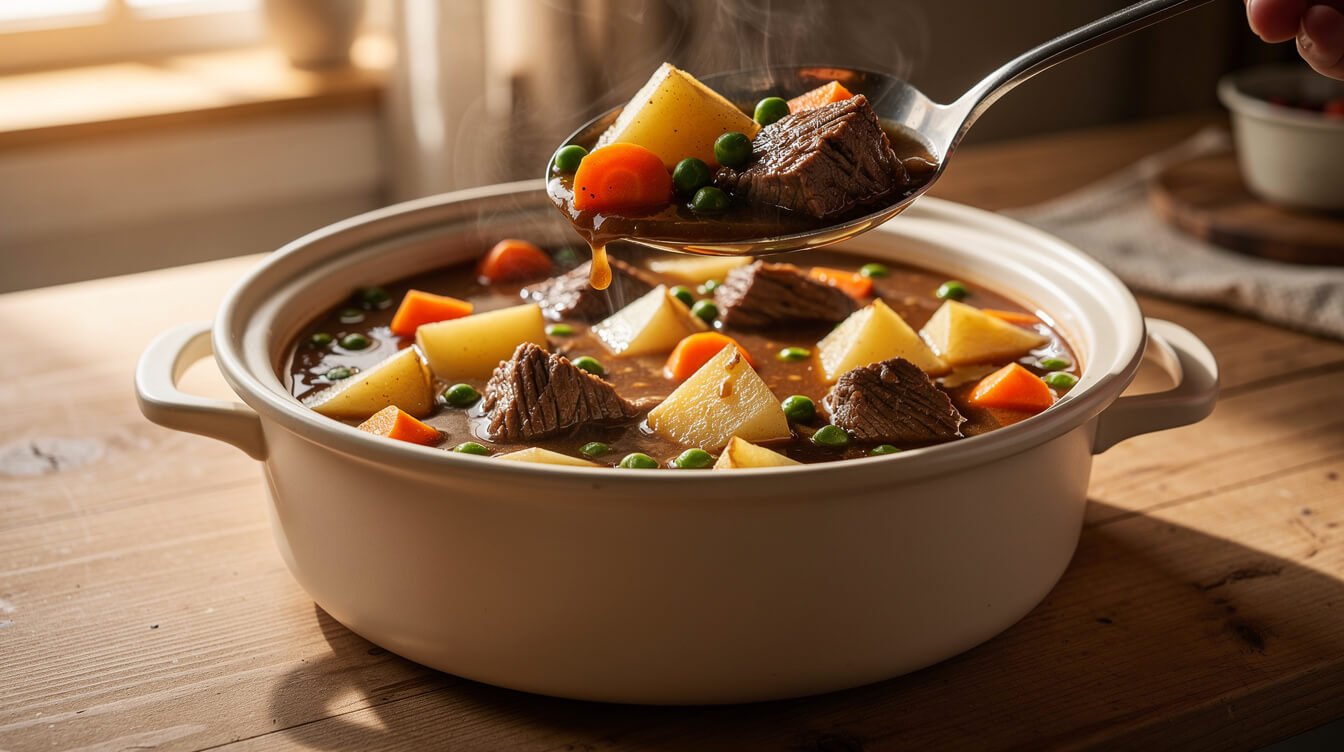
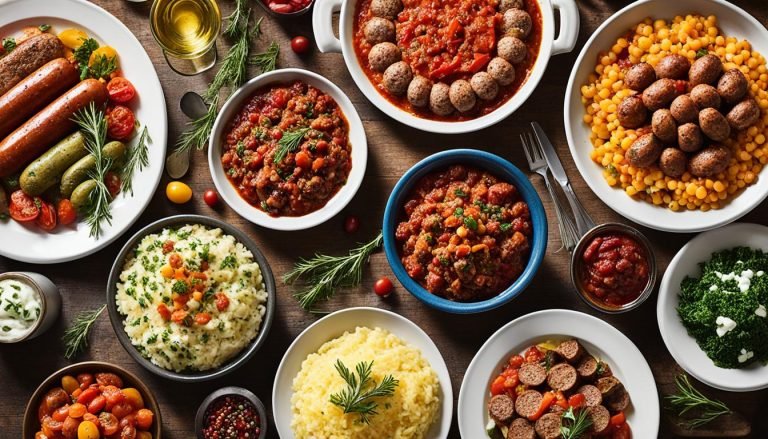
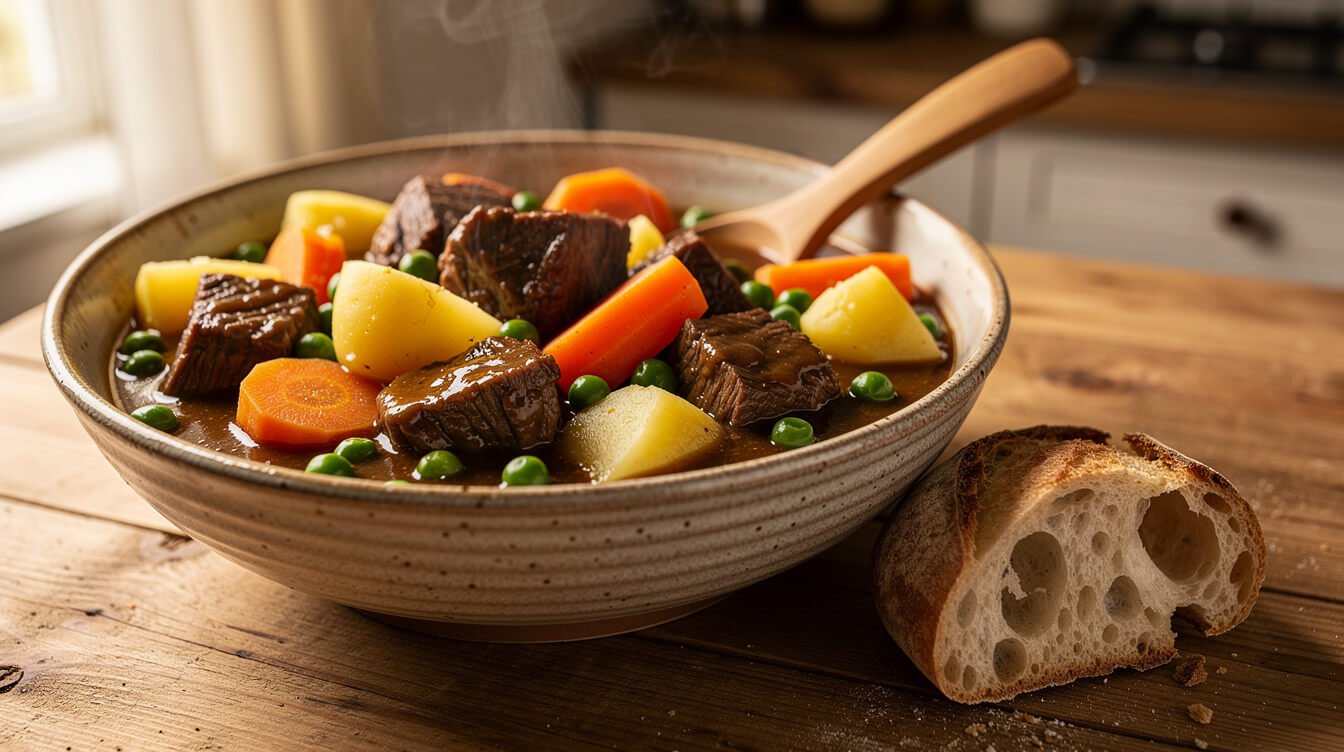
This simple beef stew recipe in slow cooker form is a classic, no-surprises stew: big tender chunks of beef, potatoes, and carrots in a rich brown gravy, with peas stirred in at the end. It makes about 6 generous servings and fills a 6-quart slow cooker about two-thirds of the way, which is right where you want it (more on that below). It’s even better the next day.
Ingredients
- 2½ to 3 pounds boneless beef chuck roast, cut into 1½- to 2-inch chunks, big pockets of hard fat trimmed off
- 1 teaspoon kosher salt, plus more to taste
- ½ teaspoon black pepper
- 3 tablespoons all-purpose flour
- 2 tablespoons neutral oil (vegetable, canola, or light olive oil)
- 1 large yellow onion, chopped
- 3 cloves garlic, minced
- 2 tablespoons tomato paste
- 2½ cups low-sodium beef broth (or swap ½ cup of it for dry red wine)
- 1 tablespoon Worcestershire sauce
- 1½ pounds Yukon Gold potatoes, cut into 1½-inch chunks (no need to peel)
- 4 medium carrots (about 1 pound), peeled and cut into 1-inch pieces
- 2 bay leaves
- 1 teaspoon dried thyme
- 1 cup frozen peas
Method
- Season the beef. Pat the chunks dry, then toss them in a bowl with the salt, pepper, and flour until everything is lightly coated. The flour helps the browning and thickens the gravy as it cooks.
- Brown the beef (optional, but worth it). Heat the oil in a large skillet over medium-high heat. Brown the beef in two or three batches, about 3 to 4 minutes per batch, turning once or twice. Don’t crowd the pan; crowded meat steams instead of browning. Move each batch to a plate.
- Build the flavor base. Turn the heat to medium. Add the onion to the same skillet and cook 4 to 5 minutes, until soft. Add the garlic for 30 seconds, then the tomato paste for 1 minute, stirring until it darkens a shade. Pour in ½ cup of the broth and scrape up all the brown bits stuck to the pan.
- Layer the cooker. Put the potatoes and carrots in the bottom of the slow cooker. Vegetables cook more slowly than meat in a slow cooker, so they go in first, closest to the heat. Set the beef on top. Pour in the onion mixture, the rest of the broth, and the Worcestershire, then tuck in the bay leaves and sprinkle over the thyme. The liquid should come most of the way up, but it doesn’t need to cover everything.
- Cook. Cover and cook on LOW for 8 to 9 hours (best) or HIGH for 5 to 6 hours. Keep the lid on.
- Check the beef. A chunk should fall apart when you press it with a fork. If it fights back, give it another 30 to 60 minutes and check again.
- Finish. Stir in the frozen peas, cover, and let them warm through for 10 to 15 minutes. Fish out the bay leaves. Taste, and add salt until the gravy tastes savory and full, not flat. Thicken it if you like (see below).
Before you start, thaw the beef. The USDA’s guidance is to always thaw meat before it goes into a slow cooker. Frozen chunks keep the whole pot cold for too long at the start, before it gets hot enough to be safe. Thaw it overnight in the fridge. If you prep the night before, store the cut beef and the cut vegetables separately in the fridge, then layer everything in the morning.
Serve it with something to drag through the gravy. Our buttermilk cornbread is a great match, and so is a loaf of homemade French bread. If you’re out of yeast, this simple no-yeast bread is ready in about an hour.
The best cut of beef for stew (and what’s really in “stew meat”)
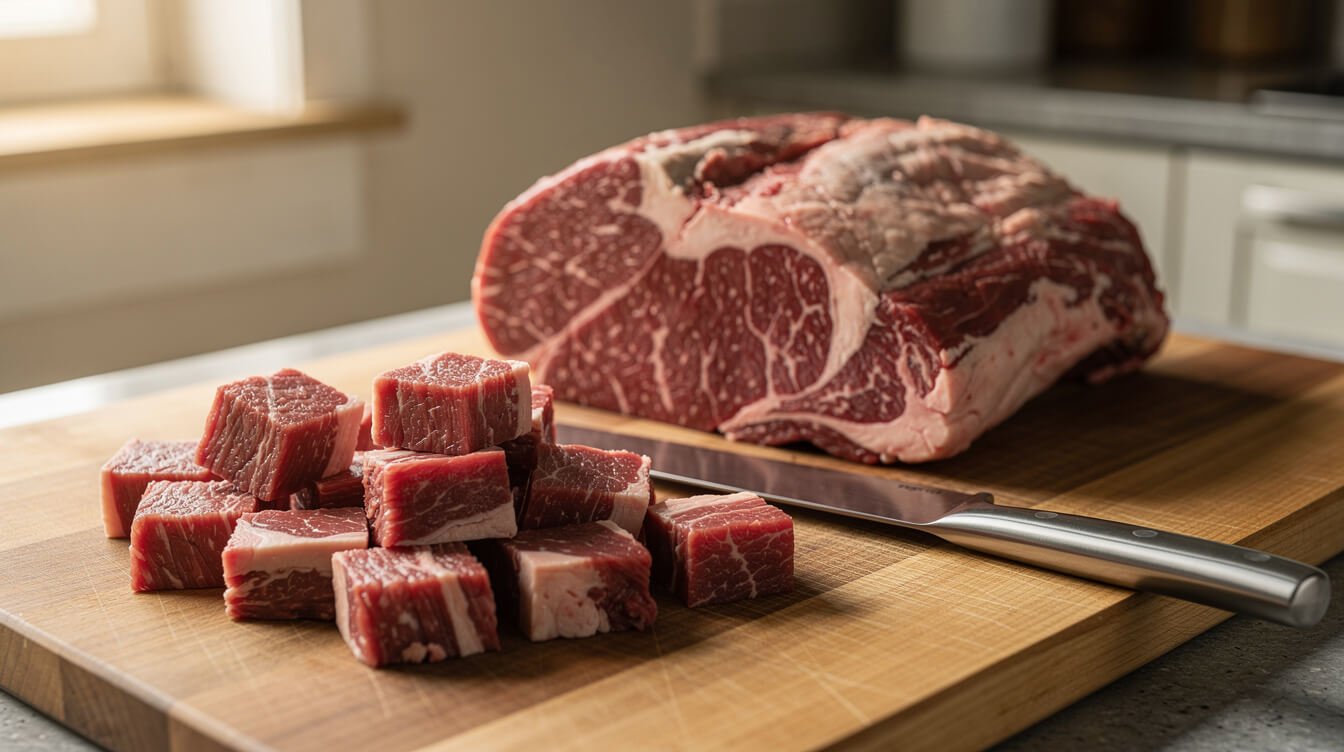
Buy a chuck roast and cut it yourself. That’s the single biggest upgrade you can make to slow cooker beef stew, and it usually costs about the same as a pack of pre-cut stew meat.
Chuck comes from the shoulder, a hard-working muscle with lots of marbling and connective tissue. That connective tissue is mostly collagen, and long, gentle, moist heat melts it into gelatin. That’s what makes the beef silky and the gravy rich. A lean cut doesn’t have much collagen to melt, so it just dries out.
Why packaged “stew meat” is hit or miss
Packs labeled “stew meat” or “beef for stew” are often trimmings from more than one part of the animal. You might get some chuck mixed with lean round. The chuck pieces turn tender, and the round pieces turn into dry little bricks, all in the same pot. If you’ve ever had a stew where some bites were great and some were stringy, that’s usually why. Stew meat isn’t bad. It’s just unpredictable. If it’s all you have, go ahead. Cut the pieces to a similar size and cook on LOW.
Other cuts that work
- Boneless short rib: very rich and very tender, but pricey. Great for a special occasion.
- Brisket (the fattier “point” end): works well and shreds nicely.
- Bottom round or rump: leaner and cheaper, but it turns out drier. If you use it, cook it on LOW only and don’t push past the point where it’s tender.
Cut big
Aim for 1½- to 2-inch chunks. Small cubes cook faster than the vegetables and dry out before the potatoes are done. Bigger chunks stay juicy over a long cook. Trim off any thick, hard pieces of fat, but leave the marbling. That’s flavor.
Do you have to brown the beef first?
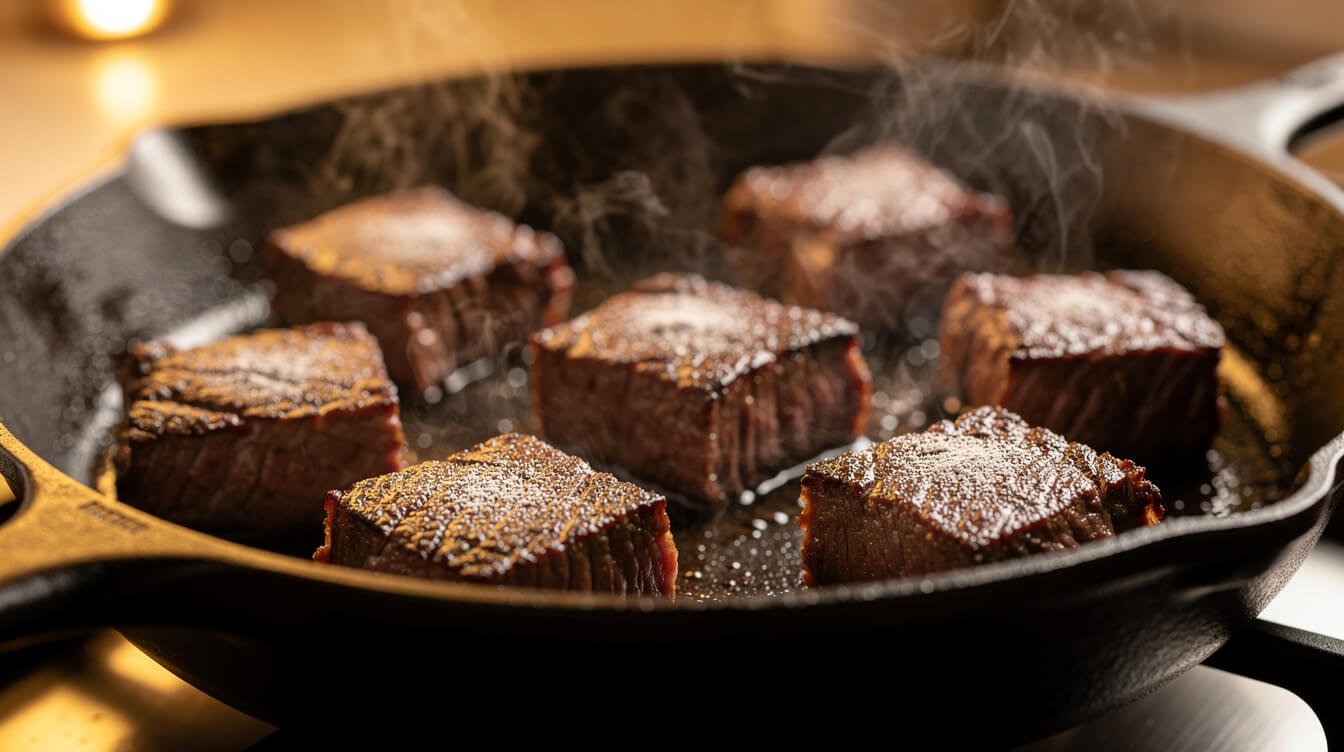
No. You don’t have to. But here’s the honest trade-off, because “simple” is in the name, and plenty of mornings don’t have 15 spare minutes in them.
What browning gives you
Browning creates a deep, savory crust on the outside of the beef and leaves brown bits stuck to the pan. When you scrape those bits up with a splash of broth, all that flavor goes into the gravy. The result is a darker, richer, more “roasty” stew. It doesn’t make the beef more tender, and it doesn’t “seal in juices.” That’s a myth. It’s purely about flavor, but it’s a lot of flavor.
A heavy skillet that holds its heat makes browning faster and less splattery. If you’re shopping for one, we compared the options in our best cast iron skillet guide.
The no-brown version
Skipping the browning still makes a good stew. It’s just lighter in color and a bit milder. To make up most of the difference:
- Still toss the beef in the seasoned flour. It thickens the gravy as it cooks.
- Stir the tomato paste and Worcestershire into the broth before you pour it in. Both add the savory depth that browning would.
- Add the raw onion and garlic straight to the pot.
- Taste at the end and be generous with salt. Unbrowned stew needs a little more seasoning.
Our rule: brown on a weekend, skip it on a Tuesday. Nobody’s grading you.
Low or high: how long to cook beef stew in a slow cooker
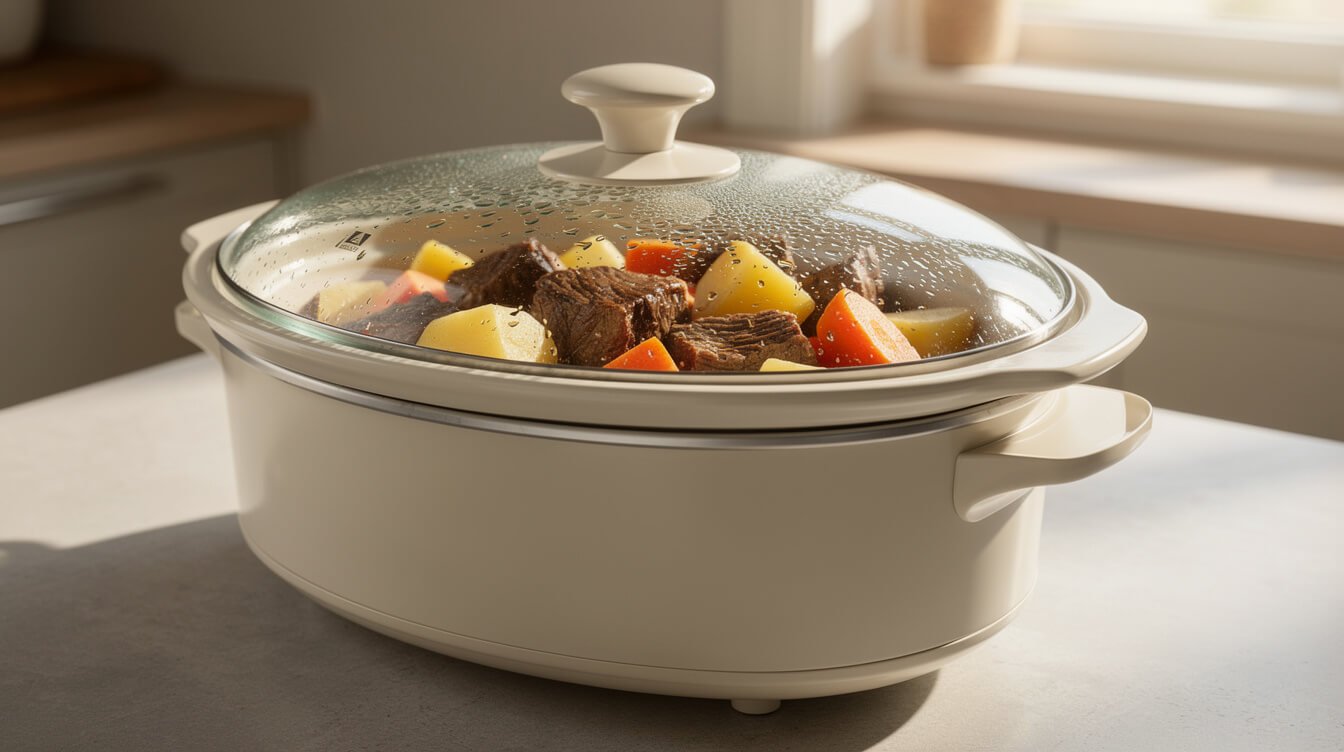
For chuck, LOW for 8 to 9 hours gives the most tender beef. HIGH for 5 to 6 hours works when you started late, but the beef tends to come out a bit firmer and drier. Collagen needs time to melt, and gentle heat over a long stretch does it best.
| Setting | Time for chuck | What to expect |
|---|---|---|
| LOW | 8 to 9 hours (up to 10) | Most tender, juiciest beef. Best for all-day cooking. |
| HIGH | 5 to 6 hours | Fine, a bit firmer. Check tenderness at 5 hours. |
| HIGH for 1 hour, then LOW | About 7 to 8 hours total | The USDA suggests starting on high for the first hour when you can. Cooking on low the whole time is also safe. |
Every slow cooker runs a little differently. Newer models often run hotter than older ones, so treat these times as a starting point, and trust the fork test over the clock.
Keep the lid on
A slow cooker works by trapping heat and steam. Every time you lift the lid, a lot of that heat escapes, and it takes a while to build back up. The USDA’s advice is to keep the lid in place and only remove it to stir or check doneness. This stew doesn’t need stirring, so leave it alone until the end.
How full should the slow cooker be?
Most slow cooker manufacturers recommend filling the cooker between about half and two-thirds full. If it’s too empty, the food can cook too fast and scorch. If it’s packed to the brim, it can take too long to heat through. This recipe fills a 6-quart cooker about two-thirds of the way. If you have a 4-quart cooker, halve the recipe. Your cooker’s manual has the exact range for your model.
Can you leave it on while you’re at work?
Yes. That’s what it’s for. According to the USDA, it’s safe to cook on LOW the whole time, and food stays safe while the cooker is running. The one exception is a power outage. If the power goes out while you’re not home, throw the food away, even if it looks done. If you’re home, finish cooking it right away another way, like on a gas stove.
If this stew turns into your Sunday thing, our Support Our Charities Donor Membership T-Shirt is a comfy one to cook it in, and it’s a nice way to support the kitchen.
From the Eat Cafe kitchen
One good recipe a week, straight to your inbox
The recipe we're actually cooking this week, plus the one tip that saves it when it goes sideways. No spam. Unsubscribe anytime.
Why your beef is still tough (or the vegetables turned to mush)
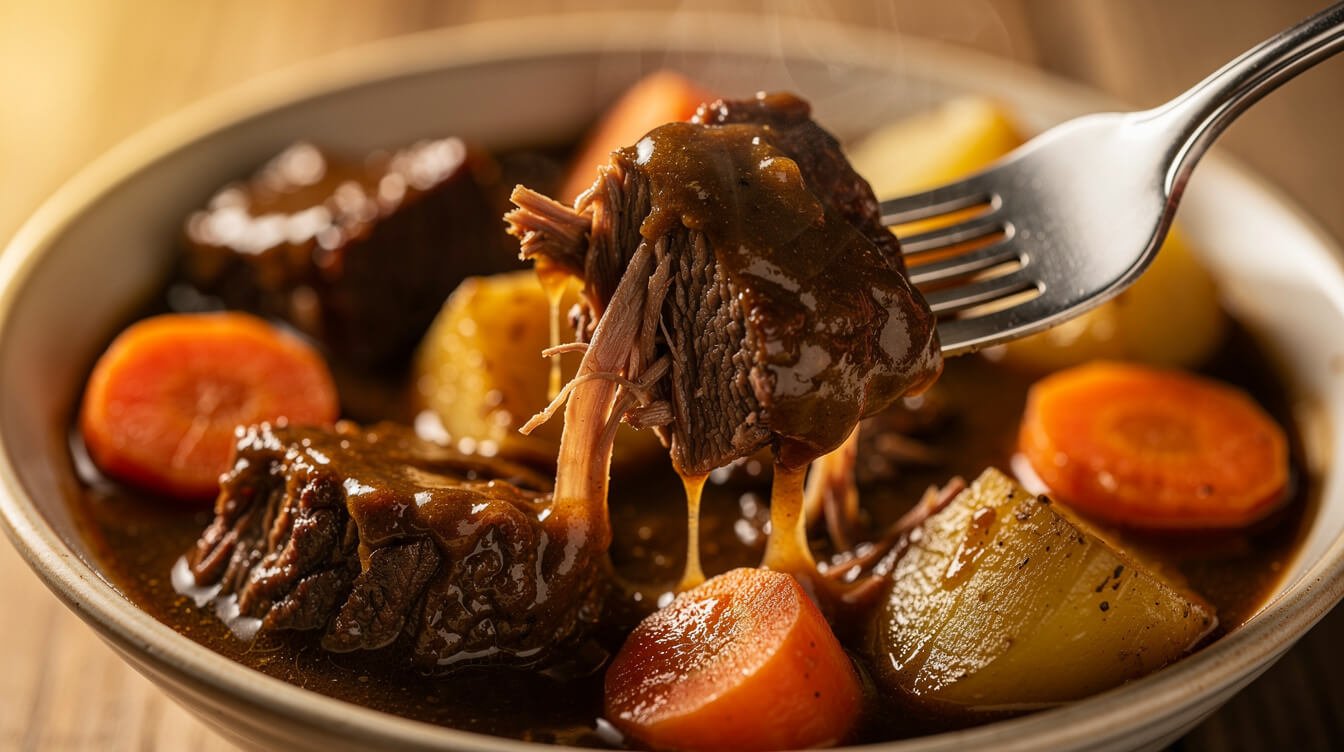
This is the section most recipes get backward. People find tough beef, assume they overcooked it, and cook the next batch for less time. With chuck, that usually makes it worse.
Chuck gets tough before it gets tender
As beef heats up, the muscle fibers tighten and squeeze out moisture. That’s why a half-cooked stew has firm, chewy beef. The collagen around those fibers takes much longer to soften. Once it melts into gelatin, the fibers fall apart easily and the meat feels juicy again. In between, there’s a stretch where the beef is fully cooked but still tough. Pull the stew during that stretch and you get chewy beef. Give it another hour and it relaxes.
So if the beef is tough and the time is up, the fix is almost always: put the lid back on and keep cooking. Check every 30 to 60 minutes on LOW.
Quick diagnosis
| What you see | Most likely cause | Fix |
|---|---|---|
| Beef chewy and springy, veg done | Not cooked long enough for the collagen to melt | Keep cooking on LOW, check every 30–60 min |
| Beef falls apart but tastes dry and stringy | A lean cut, or long hours on HIGH | Shred it into the gravy and serve. Next time, use chuck on LOW. |
| Some bites tender, some dry | Mixed “stew meat,” or uneven chunk sizes | Buy a chuck roast and cut even 1½–2 inch chunks |
| Potatoes still hard | Sitting above the liquid on top of the beef | Put root veg on the bottom, under the beef |
| Vegetables mushy | Cut too small, or tender veg added at the start | Cut veg into bigger chunks; add peas in the last 15 minutes |
| Gravy thin and watery | Slow cookers barely evaporate anything | See “How to thicken” below |
| Tastes flat | Under-salted, or skipped browning | Salt at the end, plus a splash of Worcestershire or red wine vinegar |
Keeping the vegetables intact
Waxy potatoes like Yukon Gold or red potatoes hold their shape better than russets, which break down and cloud the gravy. (If you want a thicker stew, a few russet chunks can help on purpose.) Cut potatoes and carrots big, put them on the bottom, and add anything delicate, like peas, green beans, or fresh herbs, near the end.

Something comfy for stew day
The Eat Cafe Support Our Charities Donor Membership T-Shirt is a sturdy, comfortable black tee with a small logo over the heart and a big one on the back. Good for a long, lazy cooking day, and an easy way to show some love for the kitchen.
How to thicken slow cooker beef stew
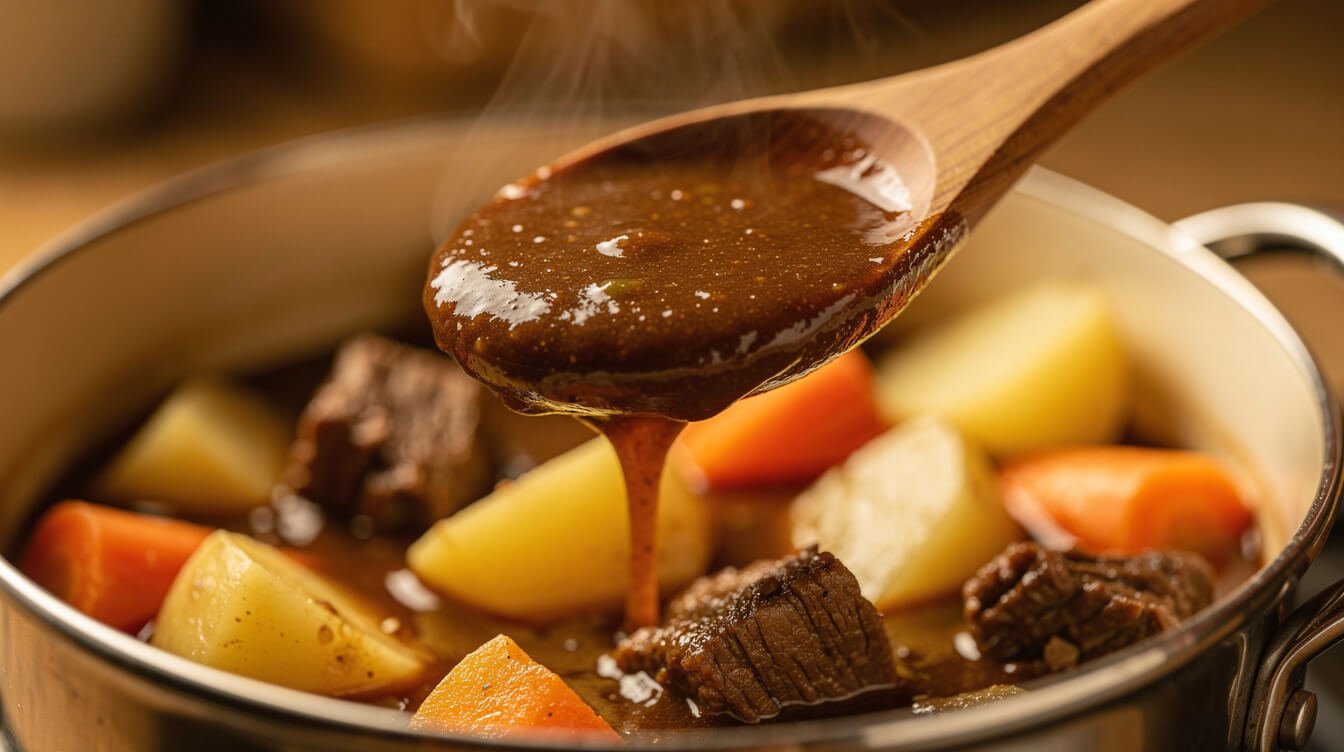
A slow cooker’s lid traps almost all the steam, so the liquid you start with is roughly the liquid you end with. Plus, the beef and vegetables release their own juices. That’s why slow cooker stew often comes out thinner than stovetop stew. The flour on the beef helps, but if you want a thicker, spoon-coating gravy, pick one of these.
Cornstarch slurry (fastest, most reliable)
Stir 2 tablespoons cornstarch into 2 tablespoons cold water until smooth. Stir it into the stew, turn the cooker to HIGH, and cook with the lid on for 15 to 20 minutes, until the gravy turns glossy and thickens. Need more? Repeat with a smaller amount. Always mix cornstarch with cold liquid first. Dumped straight into hot stew, it clumps.
Mash some potatoes
Press 5 or 6 chunks of cooked potato against the side of the cooker with a fork or spoon and stir them in. The starch thickens the gravy naturally. This adds nothing but potato, so it’s a good choice if you’re avoiding cornstarch.
Flour slurry
Whisk 3 tablespoons flour into ½ cup of the hot stew liquid (or cold broth) until smooth, then stir it back in and cook on HIGH for 20 to 30 minutes. That gives the raw flour taste time to cook out. It makes a more opaque, classic-looking gravy than cornstarch.
Lid off at the end
Leave the lid off or ajar on HIGH for the last 30 to 45 minutes. It reduces a little, but slow cookers don’t get hot enough to boil much off, so it works best combined with one of the methods above. For a big reduction, ladle off a few cups of liquid, boil it in a saucepan for 10 minutes, and pour it back.
Gluten-free? Use the cornstarch or potato methods, and skip the flour toss at the start. Check that your broth and Worcestershire are labeled gluten-free too, since some brands aren’t.
Storing, freezing, and reheating beef stew
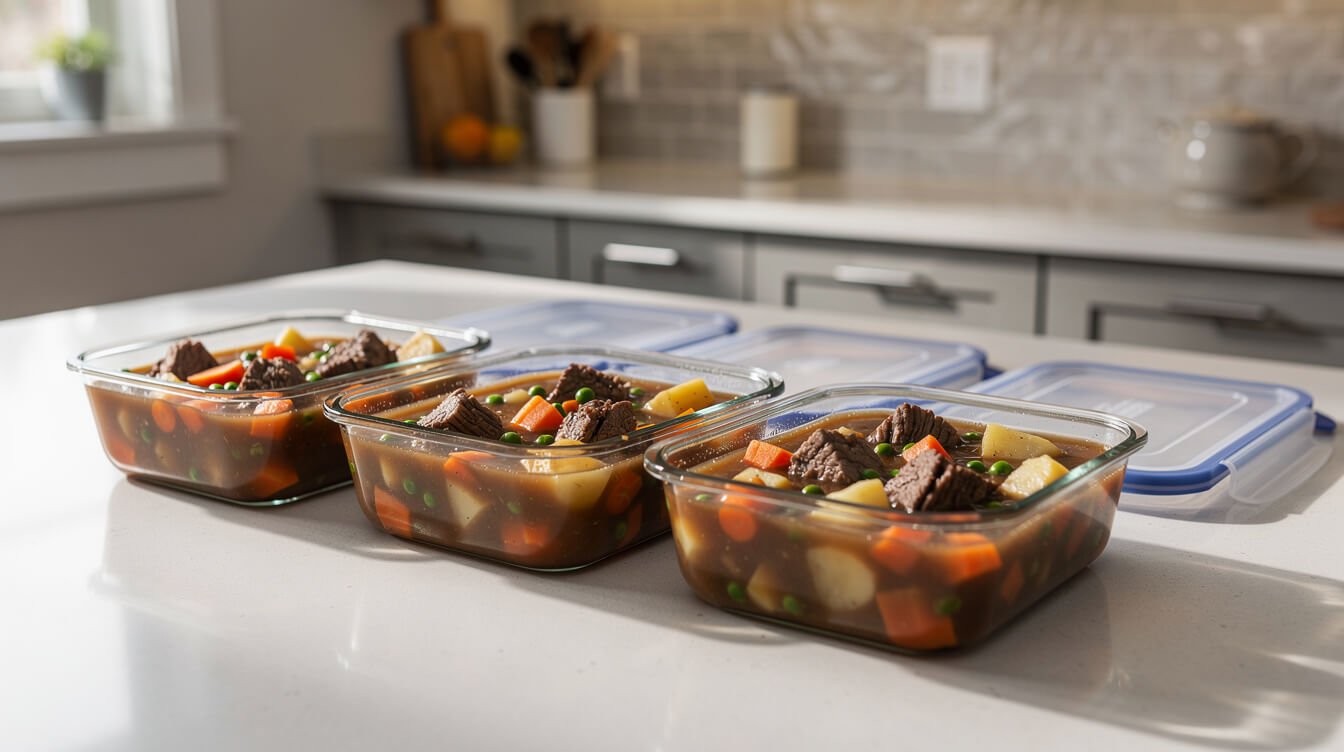
Beef stew is one of the best leftovers there is. The flavors settle overnight and the gravy thickens. You just need to cool it and reheat it the right way.
Cool it fast, in shallow containers
Get leftovers into the fridge within 2 hours of cooking (1 hour if it’s above 90°F where it’s sitting). Don’t put the whole hot crock or a big deep pot straight into the fridge. A large mass of stew cools slowly in the middle. The USDA recommends dividing it into shallow containers so it chills quickly. Put the lids on and refrigerate.
How long it keeps
- Fridge: 3 to 4 days.
- Freezer: 3 to 4 months for best quality. Leave about an inch of headspace in each container, since stew expands as it freezes. Heads up: potatoes can turn a little grainy after freezing. If you’re cooking specifically to freeze, you can leave them out and add freshly cooked potatoes when you reheat.
Reheat on the stove or in the microwave, not in the slow cooker
The USDA doesn’t recommend reheating leftovers in a slow cooker, because it warms them up too slowly. Reheat stew in a saucepan over medium heat until it’s bubbling all the way through (a rolling boil is the USDA’s guidance for soups and stews), or in the microwave, stirring halfway, until it’s steaming hot throughout and reaches 165°F on a food thermometer. A splash of broth or water loosens gravy that’s gotten thick in the fridge. To keep it hot for a party, reheat it first, then move it to a preheated slow cooker set to WARM.
From frozen, either thaw overnight in the fridge, or reheat it straight from frozen in a covered saucepan over low heat, stirring now and then, until it’s bubbling all the way through. It just takes longer.
Stew is a great make-ahead lunch too. If you’re planning a week of food, our meal prep ideas for the week covers what reheats well and what doesn’t.
Frequently asked questions
Can I put frozen beef in the slow cooker?
No. The USDA says to always thaw meat before it goes into a slow cooker. Frozen meat keeps the pot in the temperature range where bacteria grow for too long at the start of cooking. Thaw it overnight in the fridge. Frozen vegetables, like the peas, are fine to add at the end.
Is this simple beef stew recipe in slow cooker form OK to leave all day?
Yes. It’s safe to cook on LOW the entire time, and the food stays safe while the cooker is on. Chuck is happy anywhere from 8 to 10 hours on LOW. The only exception is the power-outage rule above.
Can I assemble it the night before?
Cut everything the night before, but store the beef and the vegetables in separate containers in the fridge. Layer them into the cooker in the morning. It takes about 5 minutes.
Do I need to add wine?
No. It’s optional. Half a cup of dry red wine in place of half a cup of broth adds depth. Without it, the tomato paste and Worcestershire carry the flavor just fine.
Why is my stew greasy on top?
Chuck renders fat as it cooks. Lay a paper towel across the surface for a second and lift it off, or skim with a wide spoon. If you’ve made it ahead, the fat hardens in the fridge and lifts right off.
Can I make it in an Instant Pot or on the stove instead?
Yes. On the stove, use a Dutch oven, keep it at a gentle simmer with the lid on, and expect 2 to 2½ hours until the beef is tender. Add the vegetables for the last hour. For more braises in that style, see our favorite cozy braises.
What else can I make in the slow cooker on a busy week?
The slow-cooker shredded beef tacos in our lazy dinner ideas for family use the same “set it and forget it” approach. For more nights like this, see our easy weeknight dinners for family.
Final thoughts on this simple beef stew recipe in slow cooker style
Most of what makes a great stew happens before you turn the dial: buy chuck, cut it big, put the potatoes and carrots on the bottom, and thaw the beef first. After that, it’s patience. LOW and slow, lid on, and if the beef is chewy when the timer goes off, give it more time, not less. Brown the beef when you have a few extra minutes, skip it when you don’t, and salt it properly at the end either way.
Make a full batch of this simple beef stew recipe in slow cooker style. Tomorrow’s bowl, with the gravy thickened overnight and a hunk of bread for dunking, is the best part.

Before you go
Want the next one?
We post a new recipe or kitchen guide every day. The best of the week lands in one short email, no life story attached.