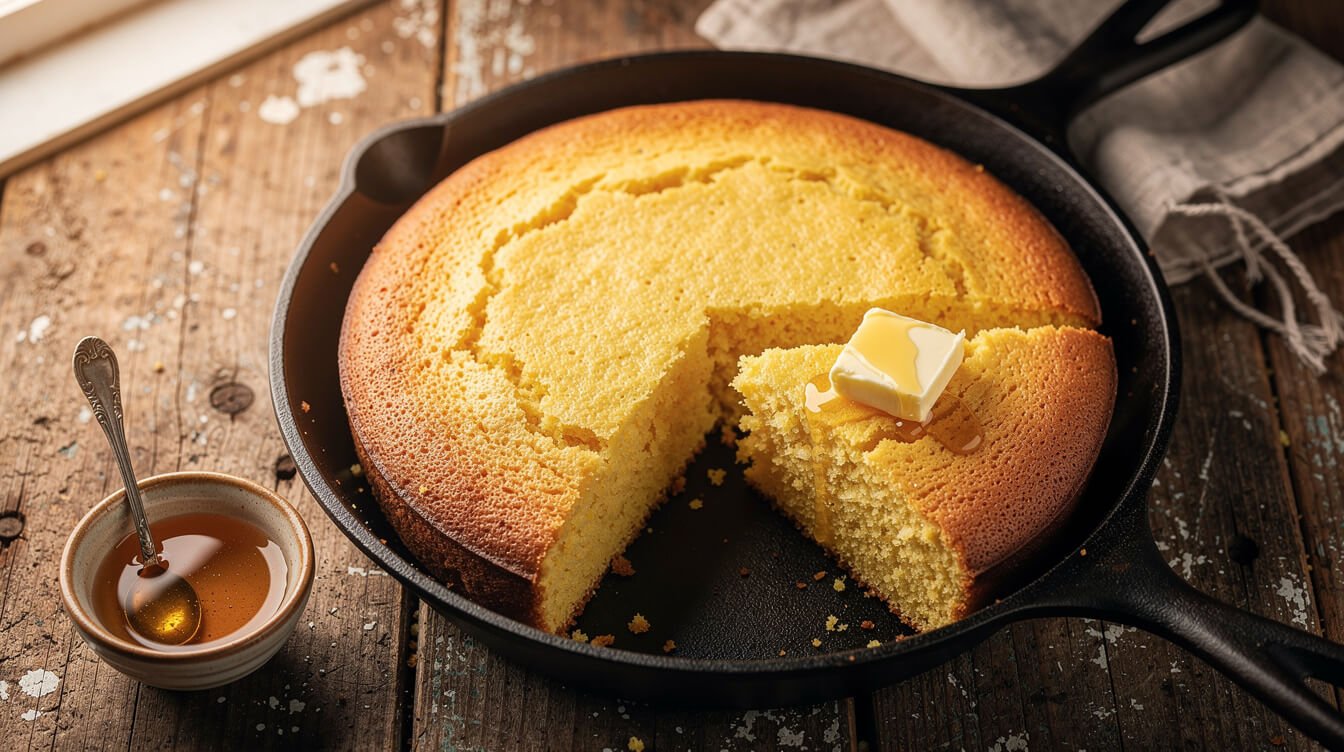
A recipe for cornbread using buttermilk (and why yours comes out dry and crumbly)
You followed the recipe, the top came out golden, and then you cut a wedge and it fell apart into dry, sandy crumbs. That’s the most common cornbread complaint there is, and it’s almost never your fault. Most recipes just skip the two or three details that keep cornbread moist. This is our recipe for cornbread using buttermilk: crisp-edged, tender in the middle, and sturdy enough to hold a pat of butter without crumbling. It bakes in a cast iron skillet or an 8×8 pan, and it’s ready in about 35 minutes.
Short version: soak the cornmeal in the buttermilk while the oven heats, mix everything only until it’s just combined, pour it into a screaming-hot buttered skillet, and pull it out of the oven a couple of minutes earlier than you think. Below you’ll find the recipe, why buttermilk matters, which cornmeal to buy, and a section on fixing dry, crumbly, or dense cornbread.
Our recipe for cornbread using buttermilk (skillet or 8×8 pan)
This is a middle-of-the-road cornbread: half cornmeal and half flour, lightly sweet, with a real corn flavor and a crumb that’s tender but not cakey. It goes with chili, beans, greens, and barbecue, or just with butter and honey. If you like it more Southern (less sugar, more crumble) or more Northern (sweeter, softer), there are easy dials for both further down.
Ingredients (one 10-inch skillet or 8×8 pan, 8 servings)
- 1 cup (140 g) plain yellow cornmeal, fine or medium grind. Not self-rising, and not a cornbread mix (more on that below).
- 1 1/4 cups (300 ml) buttermilk, full-fat or low-fat
- 1 cup (125 g) all-purpose flour, spooned and leveled
- 2 to 4 tablespoons sugar (2 for barely sweet, 4 for gently sweet)
- 2 teaspoons baking powder
- 1/2 teaspoon baking soda
- 1 teaspoon kosher salt (or 3/4 teaspoon table salt)
- 2 large eggs
- 6 tablespoons (85 g) unsalted butter, melted, plus 2 tablespoons for the pan
Steps
- Heat the oven and the pan together. Put a 10-inch cast iron skillet on the middle rack and heat the oven to 425°F (220°C). If you’re using a metal 8×8 pan, just grease it well. You don’t need to preheat it.
- Soak the cornmeal. In a large bowl, stir the cornmeal into the buttermilk and let it sit for 10 minutes while the oven heats. This is the step most recipes leave out, and it’s the biggest single fix for dry, gritty cornbread.
- Mix the dry ingredients. In a second bowl, whisk the flour, sugar, baking powder, baking soda, and salt.
- Finish the wet ingredients. Whisk the eggs into the soaked cornmeal, then whisk in the 6 tablespoons of melted butter. If the butter clumps a little because the buttermilk is cold, that’s fine.
- Combine gently. Add the dry ingredients to the wet and fold with a spatula until you no longer see dry flour, about 15 strokes. A few small lumps are fine. Stop there.
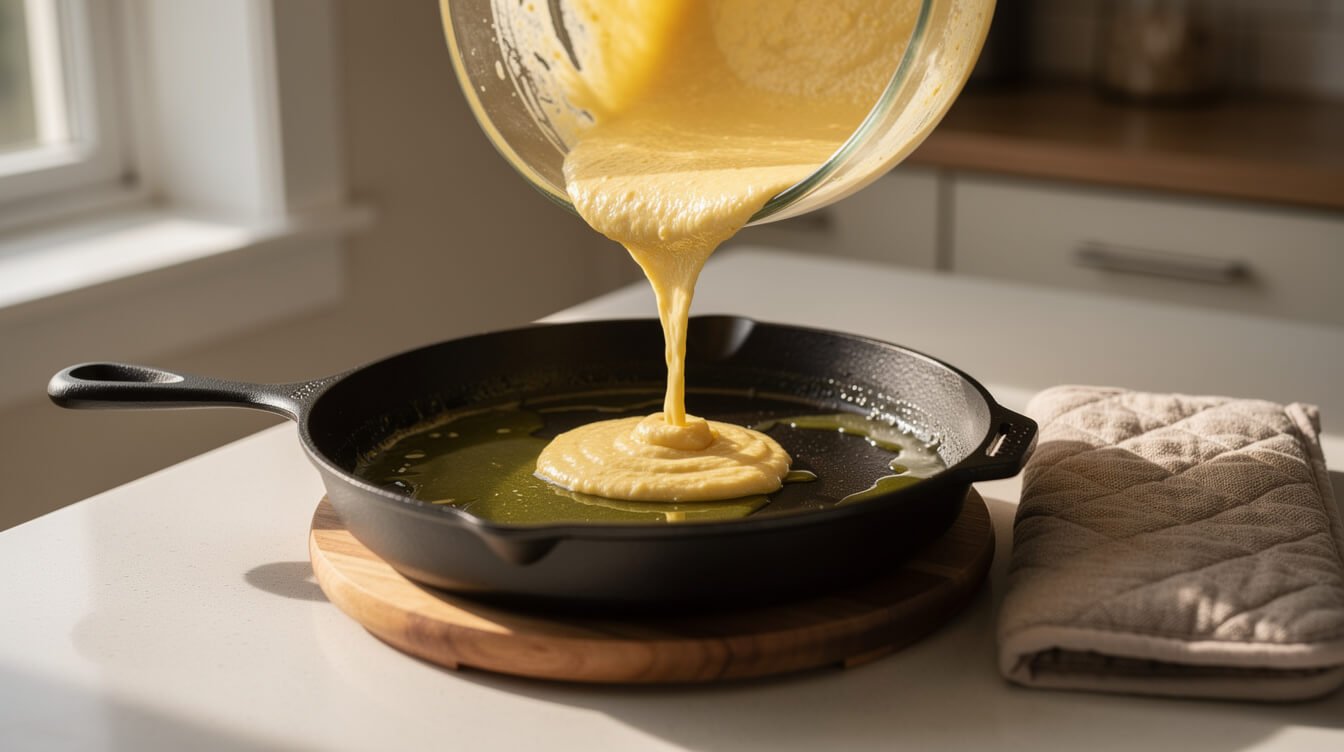
- Butter the hot pan. Using a thick oven mitt, pull the skillet out, add the 2 tablespoons of butter, and swirl until it melts and foams. That takes about 30 seconds in a hot pan.
- Pour and bake. Scrape the batter into the skillet. It should sizzle at the edges. Bake 18 to 22 minutes in a 10-inch skillet, or 22 to 26 minutes in an 8×8 pan.
- Check early. It’s done when the edges are deep golden and pulling away from the pan, the center springs back when you press it lightly, and a toothpick comes out with a few moist crumbs but no wet batter. Cool 10 minutes in the pan, then slice.
The one tip: start checking at 18 minutes. Cornbread goes from moist to dry in about three minutes of extra baking, and the hot skillet keeps cooking it after it comes out of the oven.
Why buttermilk makes better cornbread
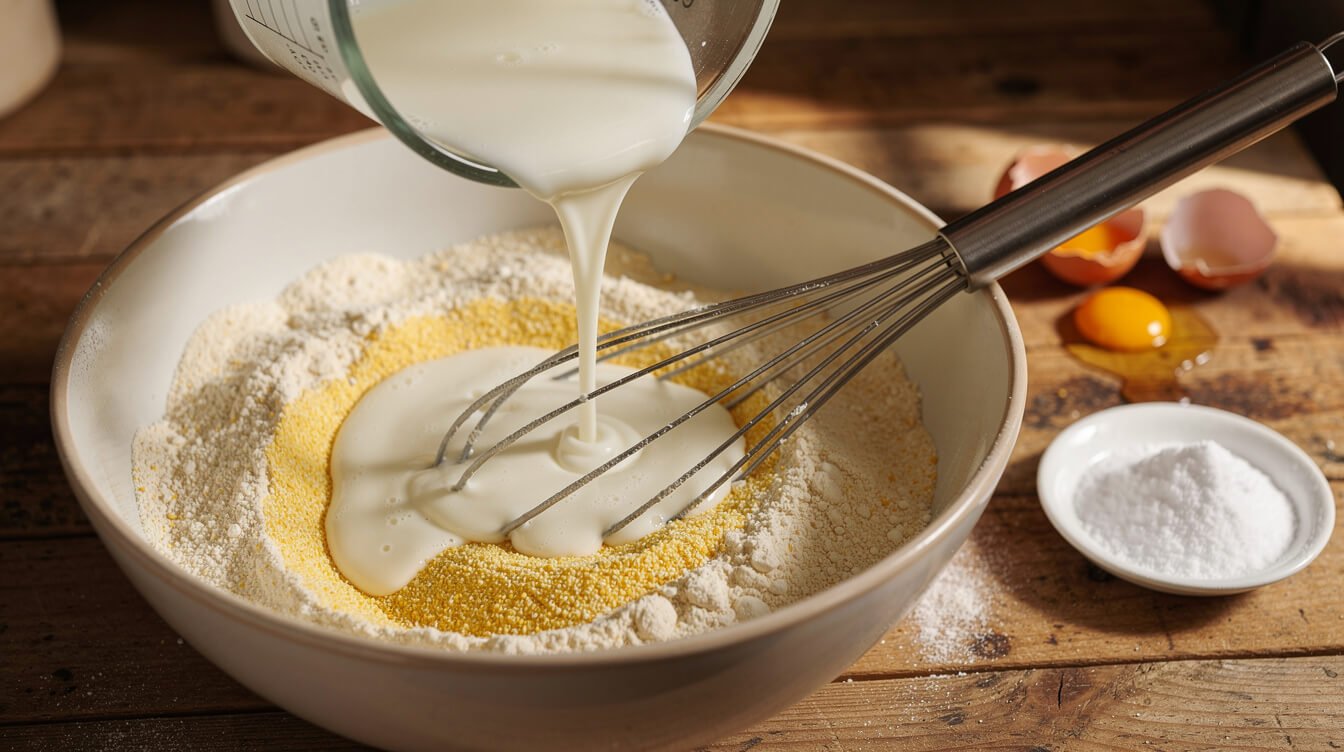
Buttermilk does three jobs in cornbread, and plain milk can only do one of them.
1. It powers the rise
Buttermilk is acidic. Baking soda is a base. When they meet in the batter, they react and make carbon dioxide, which is what lifts the cornbread. That’s why this recipe uses both baking soda and baking powder. The soda reacts with the buttermilk, and the baking powder brings its own acid for a second push of lift in the oven. Swap in plain milk without adjusting anything and the soda has nothing to react with. You get a flatter, denser cornbread, and sometimes a faint soapy or metallic aftertaste from the unreacted soda.
2. It makes the crumb tender
Acid softens the gluten in the flour, so the crumb stays soft instead of bready. Cornmeal has no gluten of its own, but the flour in a half-and-half recipe does, and buttermilk keeps it in check. That’s a big part of why buttermilk cornbread holds together without turning tough.
3. It adds flavor
That light tang balances the sweetness of the corn and the richness of the butter. Unsweetened Southern cornbread especially depends on it. Without buttermilk it can taste flat.
No buttermilk? Here’s what works
- Soured milk: put 1 1/4 tablespoons of lemon juice or white vinegar in a measuring cup, add milk to the 1 1/4-cup line, and let it sit 5 to 10 minutes. It won’t be as thick, but it does the chemistry.
- Thinned yogurt: 3/4 cup plain yogurt whisked with 1/2 cup milk. It gives you a slightly richer, moister crumb.
- Plain kefir: use it one-for-one. It works almost exactly like buttermilk.
Store-bought buttermilk is worth buying if you bake with it often. Leftovers keep in the fridge until the date on the carton, and our guide to baking substitutes explains how dairy swaps change texture more generally.
Which cornmeal to use (fine, medium, or stone-ground)
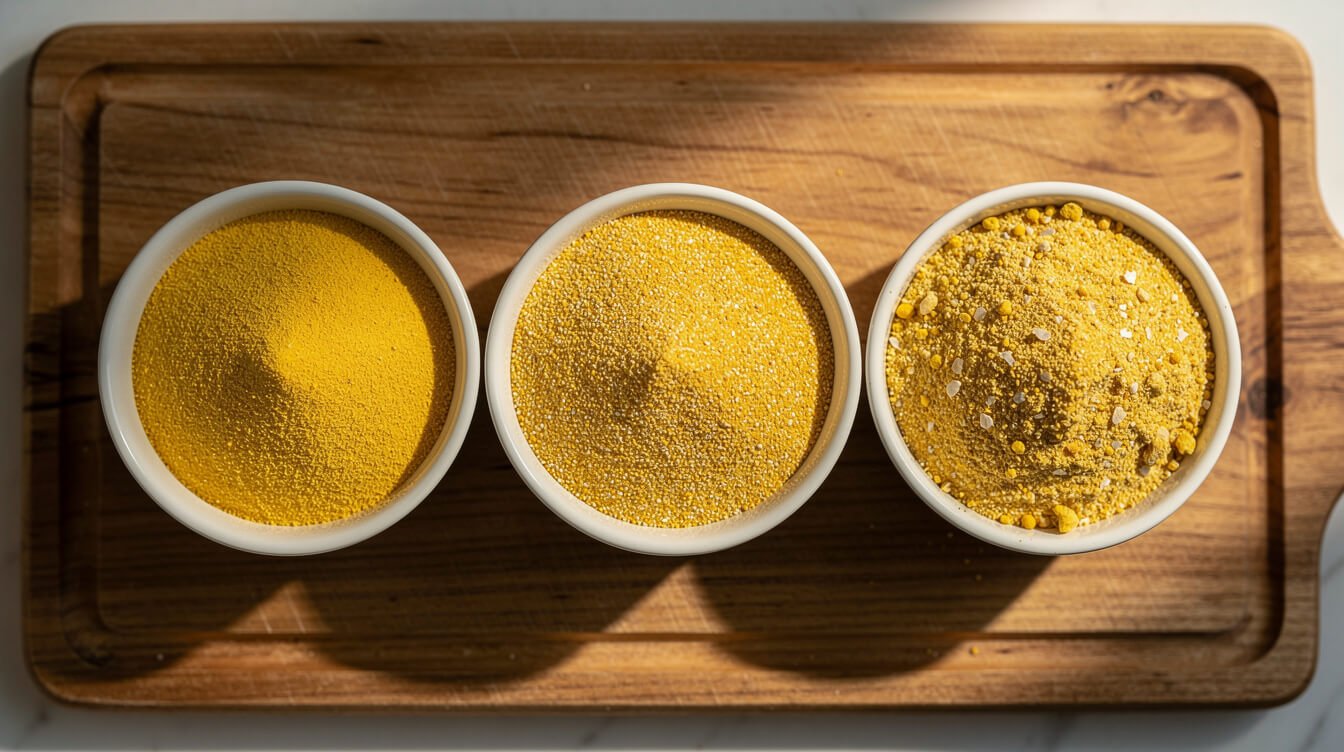
This is the ingredient choice most people don’t realize they’re making. “Yellow cornmeal” on the shelf can mean very different things, and it changes how your cornbread turns out more than anything else in the bowl.
Grind: how fine it is
- Fine grind feels almost like flour. It gives a softer, more cake-like crumb and absorbs liquid quickly. It’s a good pick if you or your kids don’t like a gritty texture.
- Medium grind is what most supermarket cornmeal is. It gives a classic texture with a little bite. This recipe is built for it.
- Coarse or stone-ground cornmeal has more texture and much more corn flavor. It’s also the “thirstiest”. If you don’t soak it, it stays gritty and the cornbread tastes dry even when it isn’t overbaked. If you love stone-ground, soak it for the full 10 minutes, or up to 30.
Whole-grain vs degerminated
Most big-brand cornmeal is degerminated, meaning the oily germ of the corn kernel has been removed so it keeps on the shelf for a long time. Whole-grain or stone-ground cornmeal keeps the germ, which brings flavor and a little extra moisture. It also means it can go stale and bitter in the pantry. Keep whole-grain cornmeal in the fridge or freezer, and give it a sniff before you bake. It should smell sweet and corny, not like old crayons.
Plain vs self-rising (this one matters)
Self-rising cornmeal and “cornbread mix” already contain baking powder and salt, and some contain flour too. If you use one in this recipe, you’re doubling the leavening and the salt. The cornbread rises fast, collapses, and tastes bitter and salty. Check the bag. If it says self-rising or mix, either follow the recipe on the bag or use plain cornmeal here.
Yellow or white?
They bake the same way. Yellow tastes a little more buttery and corny; white is milder and traditional in a lot of Southern kitchens. Use whichever you like, or whichever your store has.
The hot-skillet trick for a crisp crust
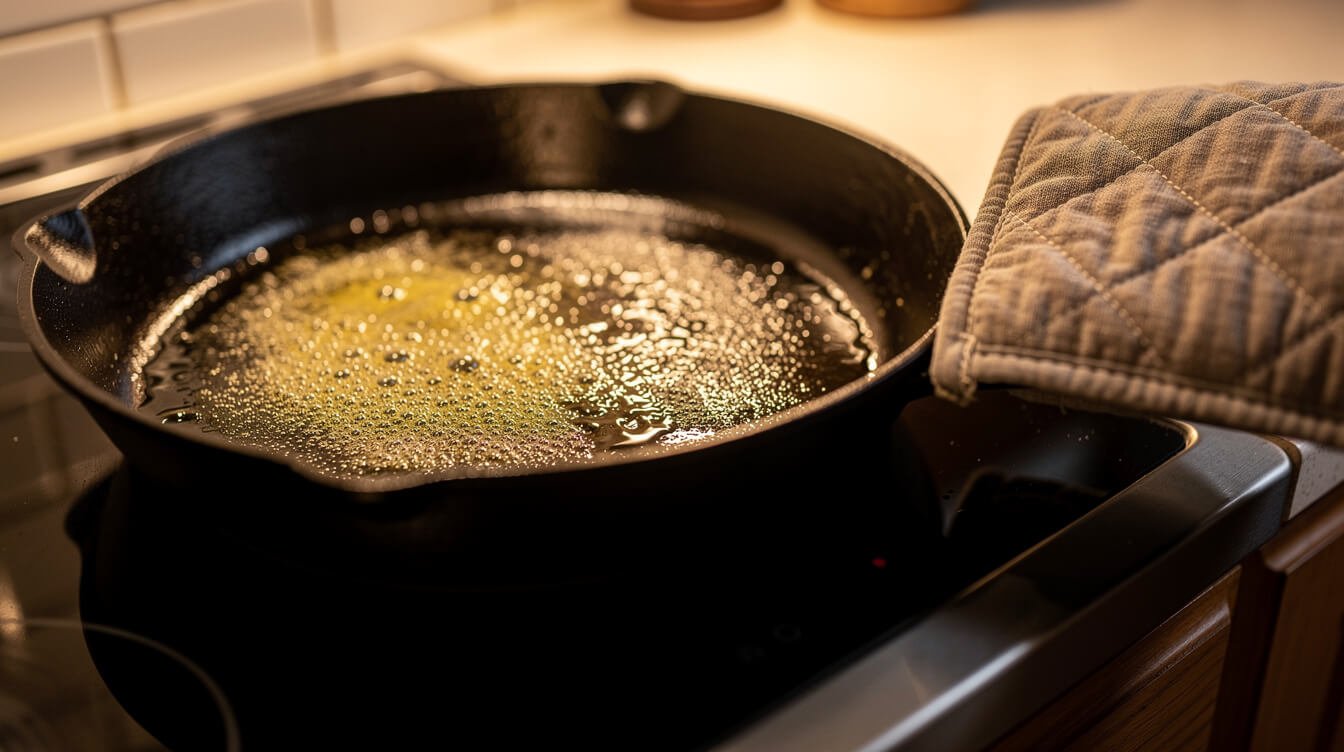
If you’ve ever had cornbread with a crunchy, almost-fried golden bottom and edges, it was baked in a preheated pan. When cold batter hits hot fat, the outside sets immediately into a crust, the way a pancake does on a hot griddle. It also keeps the cornbread from sticking.
How to do it safely
- Heat the empty skillet in the oven for the whole preheat, at least 10 minutes once the oven hits 425°F.
- Add the butter only when the batter is ready to go, so it melts and foams without burning. If you want an even crunchier crust, use bacon drippings or a neutral oil instead, since they handle the heat better.
- That handle is as hot as the pan. Use a thick, dry oven mitt, and drape a towel or a handle cover over it as soon as the skillet comes out so nobody grabs it by accident.
Which pan to use
A 10-inch cast iron skillet is the classic, because it holds heat like nothing else. A 9-inch skillet works too, but the cornbread will be thicker and need 3 to 5 extra minutes. A metal 8×8 pan gives softer edges and doesn’t need preheating. If you only have a glass baking dish, don’t preheat it empty in the oven (glass can crack with sudden temperature changes). Grease it, fill it, and add about 5 minutes to the bake time.
If you don’t own cast iron yet, our honest guide to cast iron skillet brands covers what’s worth paying for, and this one on seasoning oil keeps the pan non-stick. After baking, wipe it out and see how to clean cast iron without wrecking it.
And if cornbread night turns into a regular thing at your house, our Support Our Charities Donor Membership T-Shirt is a comfy black tee to wear while you bake.
From the Eat Cafe kitchen
One good recipe a week, straight to your inbox
The recipe we're actually cooking this week, plus the one tip that saves it when it goes sideways. No spam. Unsubscribe anytime.
Why your cornbread is dry or crumbly (and how to fix it)
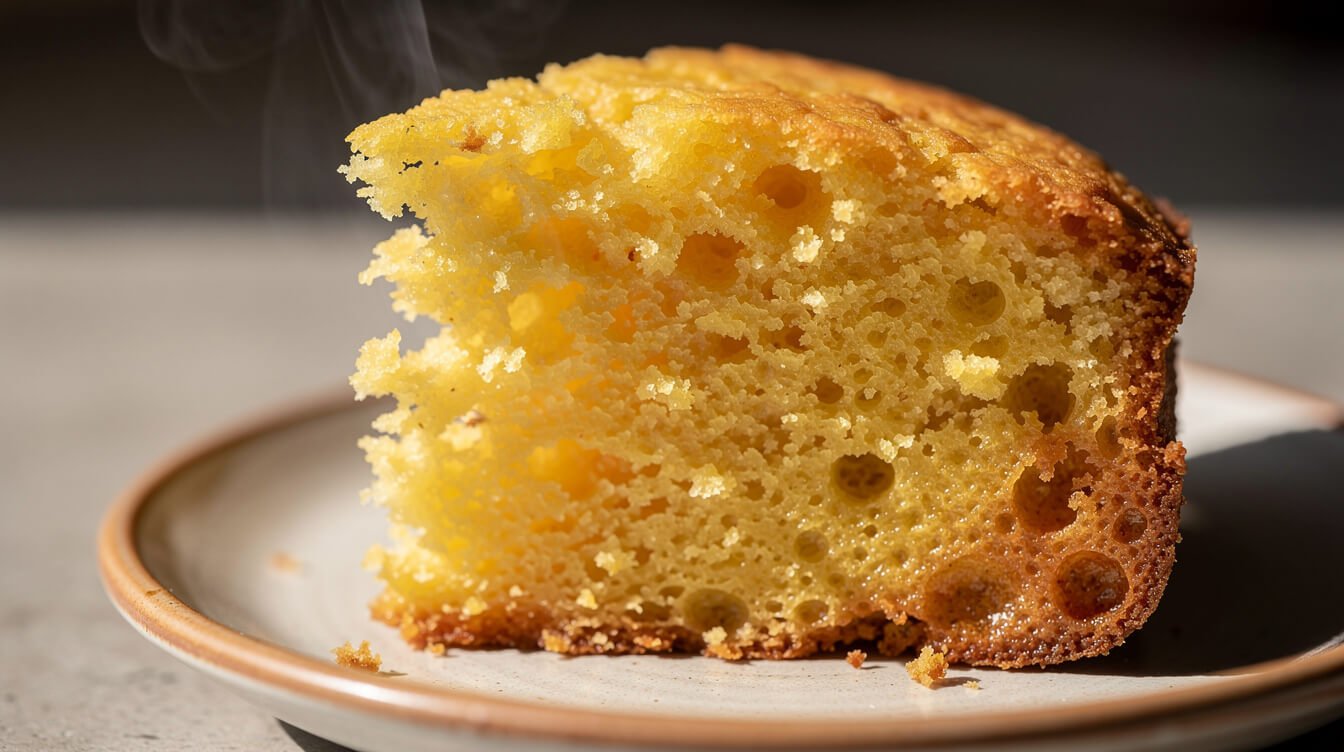
Even a good recipe for cornbread using buttermilk can come out dry if one small thing slips. Cut a slice and look at it. The crumb tells you what went wrong. Here are the most common problems, what causes them, and the fix for next time.
Dry and sandy, falls apart when you cut it
- It baked too long. This is the most common cause by far. Ovens run hot, and a hot skillet keeps cooking after it comes out. Start checking at 18 minutes and pull it out when a toothpick has a few moist crumbs on it.
- The cornmeal didn’t hydrate. Coarse cornmeal especially needs that 10-minute soak in the buttermilk. Without it, the grains stay hard and the bread feels dry no matter what.
- Too much flour. Scooping the measuring cup straight into the bag can pack in 20 to 30 percent extra flour. Spoon it in and level it, or weigh it (125 g).
- Not enough fat. Cutting the butter way back makes cornbread dry faster. If you want it extra moist, swap 1/4 cup of the buttermilk for sour cream.
Crumbly but moist
That’s usually just cornbread being cornbread, especially if you sliced it hot. Let it cool 10 to 15 minutes in the pan first, because the crumb firms up as it cools. A higher cornmeal-to-flour ratio also makes it crumblier, which is how a lot of Southern cornbread is meant to be. For a sturdier slice, stick with the 1:1 ratio here.
Dense, flat, or heavy
- Overmixed. Once the flour is wet, extra stirring builds gluten and knocks out air. Fold just until the flour disappears.
- Old baking powder. Test it: a spoonful in hot water should fizz right away. If it doesn’t, replace it.
- Plain milk instead of buttermilk without the lemon or vinegar fix, so the soda never reacted.
Dense quick breads all fail in similar ways. Our guide to fixing dense banana bread walks through the same mixing and leavening mistakes in more detail.
Gummy or wet in the middle
It’s underbaked, or the pan was too small for the batter. If the edges are done and the center isn’t, tent the top loosely with foil and give it 3 to 5 more minutes. A cold pan can also leave the bottom pale and pasty, which is another reason to preheat.
Stuck to the skillet
The pan wasn’t hot enough, or there wasn’t enough fat in it. Next time, use the full 2 tablespoons and wait until it foams before you pour.
Already baked a dry one?
It’s not wasted. Brush the warm top with melted butter (or honey butter), wrap it in foil, and warm it at 300°F for 10 minutes. Or crumble it into chili, or let it go stale and turn it into cornbread dressing. Dry cornbread is actually the best kind for that.

For the cornbread-and-chili crowd
The Eat Cafe Support Our Charities Donor Membership T-Shirt is a soft, sturdy black tee with a small logo on the front and a big one on the back. Wear it to the potluck and show a little love for the kitchen.
Sweet or savory: easy ways to change it up
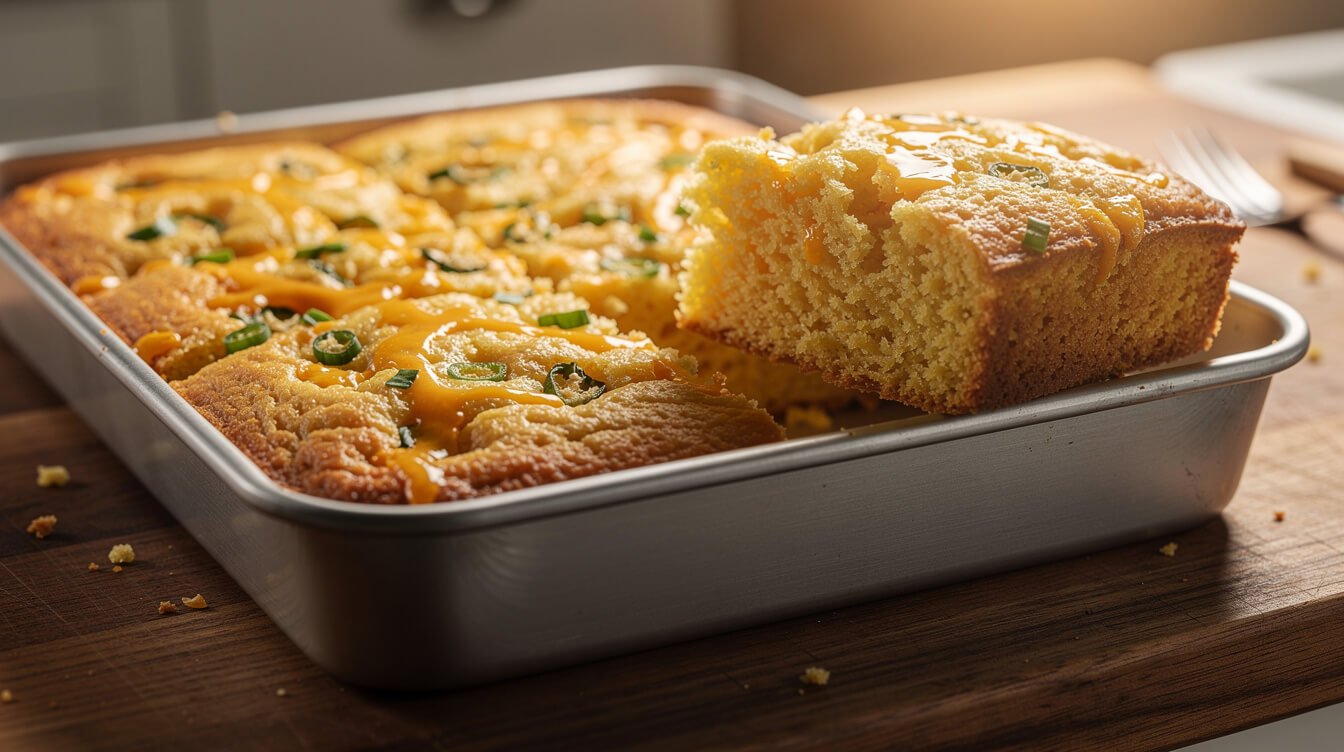
Cornbread is easy to change up. Once you’ve got the base recipe for cornbread using buttermilk down, these are the changes we make most often. Stir any mix-ins into the batter at the very end, in the last two or three folds.
Sweeter (Northern-style)
Raise the sugar to 1/4 or 1/3 cup, or swap 2 tablespoons of it for honey. Use fine-grind cornmeal for a softer, more cake-like crumb. It’s great with butter and jam at breakfast.
Not sweet (Southern-style)
Leave the sugar out completely and use bacon drippings in the skillet instead of butter. Many Southern cooks use more cornmeal and less flour, too. Try 1 1/2 cups cornmeal to 1/2 cup flour for a crumblier, cornier bread that’s perfect for crumbling into a bowl of beans.
Jalapeño cheddar
Fold in 1 cup (4 oz) of shredded sharp cheddar and 1 to 2 seeded, finely chopped jalapeños. Save a handful of cheese to sprinkle on top before baking. This is the one to serve with chili.
Corn kernel
Add 1 cup of corn kernels. Frozen is fine; thaw it and pat it dry with a paper towel first so the extra water doesn’t make the center gummy.
Muffins
Divide the batter among 12 greased or lined muffin cups and bake at 400°F (200°C) for 14 to 18 minutes, until the tops spring back. Muffins dry out faster than a skillet, so check at 14 minutes.
Doubling it
Double everything and bake in a greased 9×13 pan for 25 to 30 minutes. It’s an easy way to feed a crowd, and it goes straight onto a Thanksgiving dinner menu.
Storing, reheating, and making cornbread ahead
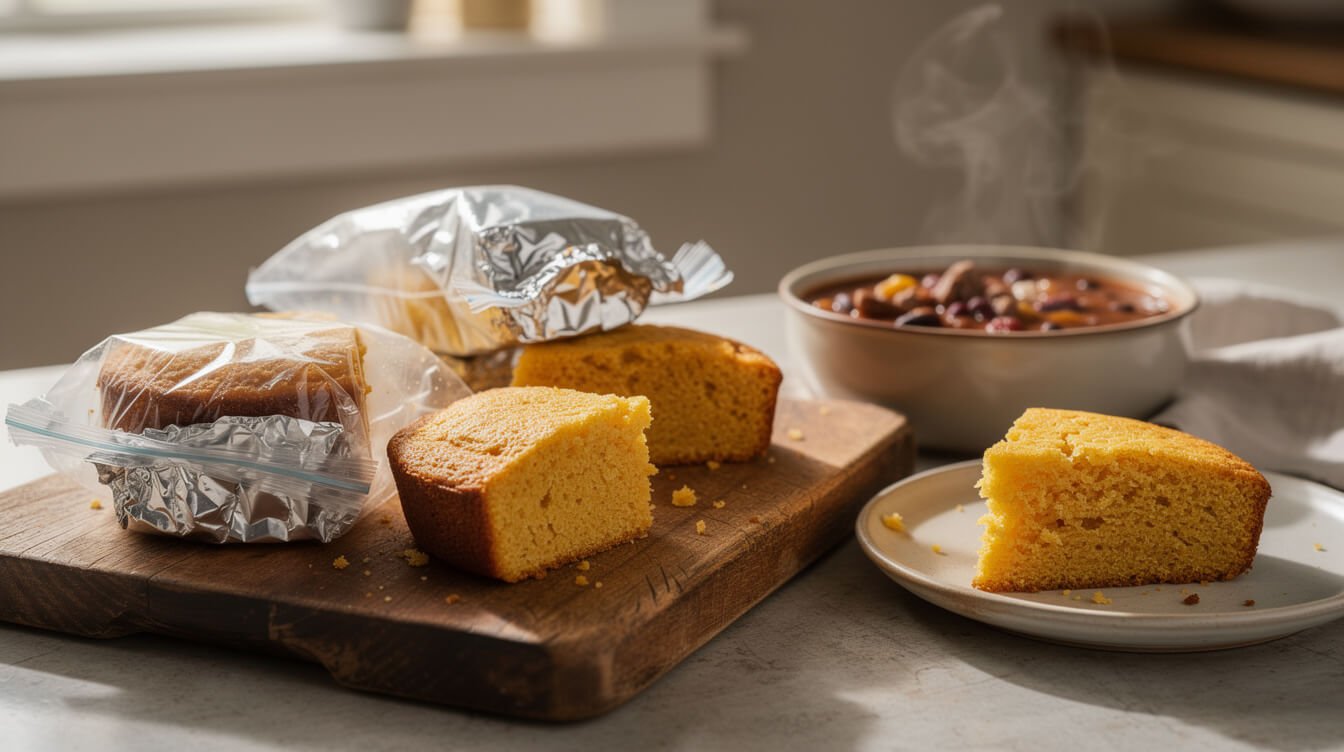
Cornbread is best the day you bake it, but this recipe for cornbread using buttermilk keeps well if you wrap it tightly. Air is what dries it out.
- Room temperature: let it cool completely, then wrap it in plastic wrap or keep it in an airtight container for up to 2 days. Plain cornbread is fine on the counter. If you added cheese, bacon, or other meat, store it in the fridge within 2 hours of baking.
- Fridge: up to 5 days, tightly wrapped. It firms up in the cold, so always warm it before serving.
- Freezer: wrap individual wedges in plastic wrap, then foil or a freezer bag. They keep their best texture for about 3 months. Thaw overnight in the fridge or on the counter for an hour.
Reheating
Wrap wedges in foil and warm them at 350°F (175°C) for 10 to 12 minutes. For a crisp edge, warm a slice in a skillet with a little butter for a minute or two per side. In the microwave, cover the cornbread with a damp paper towel and use 15-second bursts, since it toughens quickly.
Making it ahead
Whisk the dry ingredients together and keep them in a jar for up to a week. On baking day, all you need to do is soak the cornmeal, add the wet ingredients, and bake. If you’re making cornbread for dressing, bake it one or two days ahead and leave it loosely covered so it dries out a bit, or cube it and toast it at 300°F until dry.
Cornbread questions we get asked a lot
Can I use this recipe for cornbread using buttermilk without eggs?
The eggs hold it together. Without them, cornbread tends to crumble. Replacing each egg with 1/4 cup of plain yogurt works reasonably well, but expect a more delicate slice.
Why does my cornbread taste bitter or soapy?
Usually it’s too much baking soda, soda that didn’t have enough acid to react with (plain milk instead of buttermilk), or self-rising cornmeal plus extra leavener. Measure the soda carefully with a level teaspoon. Old, stale whole-grain cornmeal can taste bitter too.
Do I need a cast iron skillet?
No. A metal 8×8 or 9-inch round cake pan works fine. You’ll get softer edges instead of a crunchy crust, and that’s it.
Can I use low-fat buttermilk?
Yes. Most buttermilk sold in the US is low-fat, and the recipe is written for it. Full-fat buttermilk makes the crumb a little richer.
Can I make it dairy-free?
Use unsweetened soy or oat milk soured with lemon juice (same ratio as above) and a neutral oil or plant butter in place of the butter. The crumb will be a bit less tender, but it still works.
Is cornbread gluten-free?
Not this one. It has all-purpose flour. All-cornmeal recipes can be, but only if the cornmeal is labeled gluten-free, since many brands are processed alongside wheat. If you’re baking for someone with celiac disease, check every label.
Final thoughts on this recipe for cornbread using buttermilk
Good cornbread comes down to three things: let the cornmeal soak, don’t overmix, and don’t overbake. A hot buttered skillet gets you the crunchy edges. Pick a grind you like, keep the buttermilk (or its stand-in), and start checking early.
Make it once as written and taste it. Then adjust: more sugar or less, cheese and jalapeño, or a coarser cornmeal. Once you’ve got the basics down, cornbread is one of the easiest things in your rotation. It’s done before the chili finishes simmering. If you’re just getting into baking, our 10 baking basics every beginner should know covers the measuring and mixing habits that make every quick bread better. And when you want bread without waiting on yeast, our simple no-yeast bread is the next one to try.

Before you go
Want the next one?
We post a new recipe or kitchen guide every day. The best of the week lands in one short email, no life story attached.