Linzer cookies recipe: tender jam sandwich cookies that don’t crack or go soggy
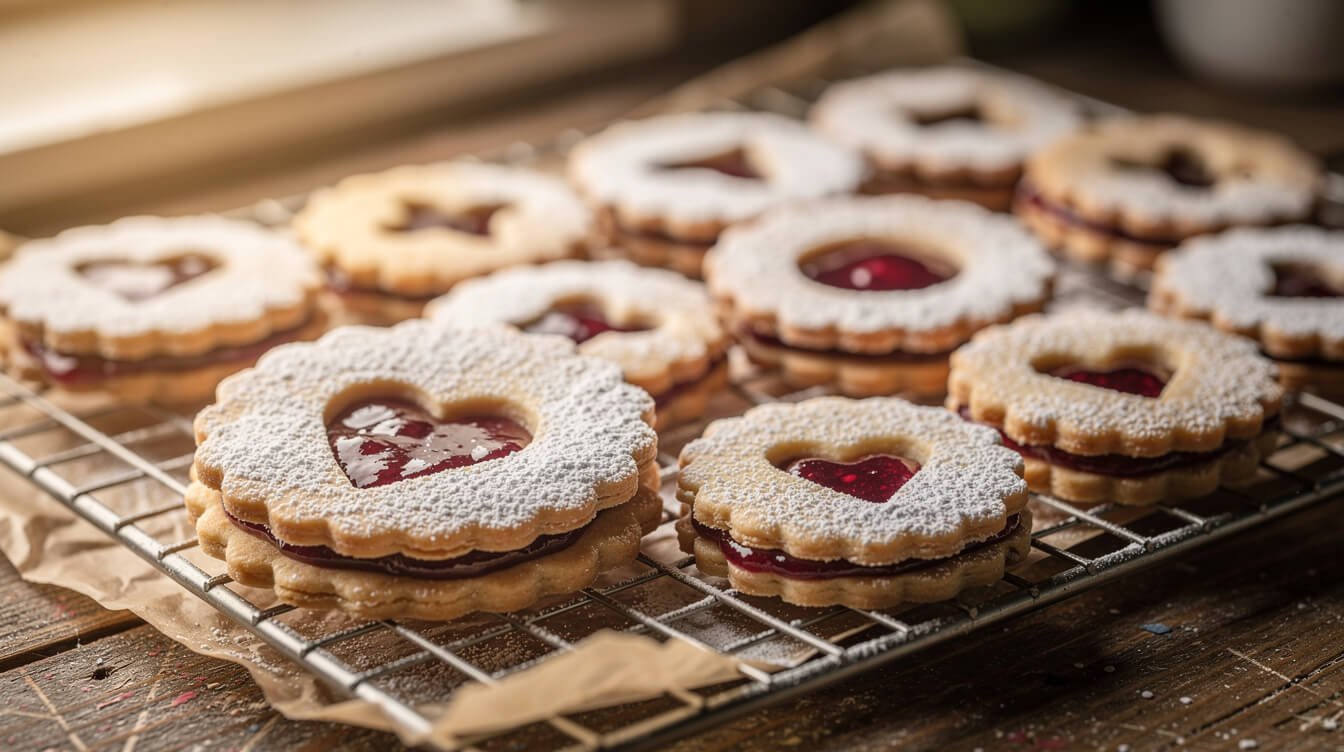
Linzer cookies look like they came from a bakery case: a crisp, nutty cookie, a little jam window, and a snowy dusting of sugar. Then you try to make them at home, and the tops crack when you lift them, the windows tear, and by day two the sugar has melted into the jam and the cookies have gone soft. This Linzer cookies recipe fixes all of that. It comes down to four habits: toast the nuts, roll the dough between parchment and chill it flat, bake the tops and bottoms on separate pans, and assemble on the day you serve them.
The recipe comes first, so you can just bake if you’d like. After that you’ll find how to pick the nuts, jam, and dusting sugar, a troubleshooting table for cracked, spread, or soggy cookies, when to sandwich them, and a make-ahead plan for cookie trays and swaps.
Linzer cookies recipe: the ingredients (and the one step most recipes skip)
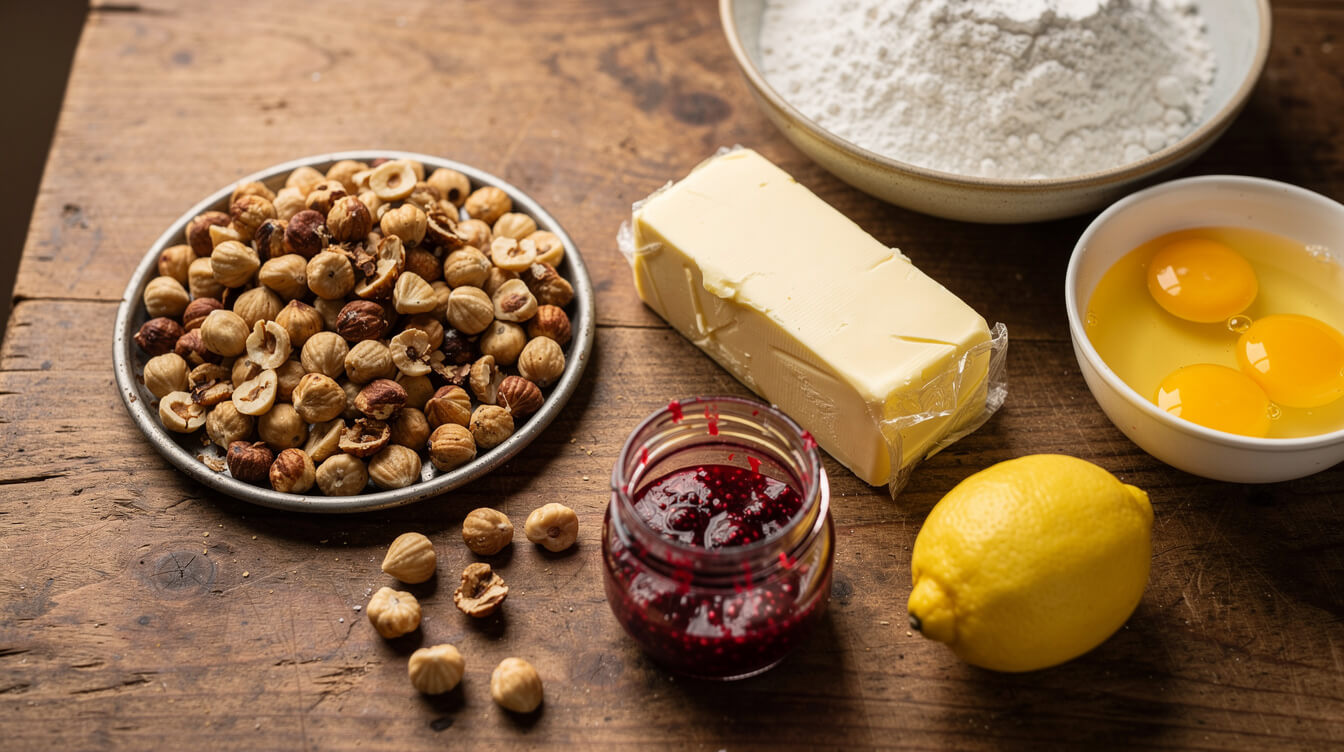
This makes about 30 sandwich cookies with a 2 1/2-inch round cutter. Hands-on time is about 45 minutes, plus an hour of chilling. The cookie is a tender, buttery nut shortbread with a little cinnamon and lemon, which is what a Linzer should taste like. It shouldn’t taste like a plain sugar cookie with jam in it.
For the cookies
- 1 cup (about 130g) whole hazelnuts or whole almonds, or 1 1/3 cups (130g) almond flour
- 1/2 cup (100g) granulated sugar
- 2 cups (260g) all-purpose flour, spooned and leveled
- 1/2 teaspoon ground cinnamon
- 1/2 teaspoon fine salt (use 1/4 teaspoon if your butter is salted)
- 1 cup (2 sticks, 226g) unsalted butter, softened but still cool
- 2 large egg yolks, at room temperature
- 1 teaspoon vanilla extract
- 1 teaspoon finely grated lemon zest (optional, but it makes the jam taste brighter)
For filling and finishing
- About 1/2 cup (160g) thick, seedless raspberry jam (apricot and red currant are classic too)
- Powdered sugar or non-melting powdered sugar, for dusting (more on which one below)
The step that makes them taste like a Linzer: toast the nuts
Most recipes stir in almond flour straight from the bag. It works, but raw nut flour tastes mild and a little grassy, so the cookie ends up tasting mostly of butter. Toasting the nuts first gives you the warm, roasty, almost praline flavor that sets Linzers apart. It takes 10 minutes and it’s the biggest flavor upgrade in this recipe.
- Whole hazelnuts: spread on a sheet pan and toast at 350°F (175°C) for 10 to 12 minutes, until the skins crack and the nuts smell toasty. Wrap them in a clean kitchen towel and rub to knock off most of the papery skins. A few stubborn bits are fine.
- Whole almonds: toast at 350°F for 8 to 10 minutes, until lightly golden inside when you snap one in half.
- Almond flour: spread it thin on a parchment-lined sheet and toast at 325°F (165°C) for 6 to 8 minutes, stirring halfway, until it’s pale golden and fragrant. It goes from golden to scorched fast, so stay close.
Let the nuts cool completely before you grind them. Warm nuts turn into nut butter in the food processor, and you want a dry, sandy meal.
Allergen note
These cookies contain tree nuts (hazelnuts or almonds), plus wheat, eggs, and dairy. If you’re baking for a cookie swap or a shared tray, label them “contains hazelnuts” or “contains almonds.” For a nut-free cookie, see the FAQ below. That swap changes the flavor and texture, and it isn’t a promise that a cookie is safe for someone with a nut allergy. Shared bowls, pans, and tins can carry traces, so ask the person what’s safe for them.
How to make Linzer cookies, step by step
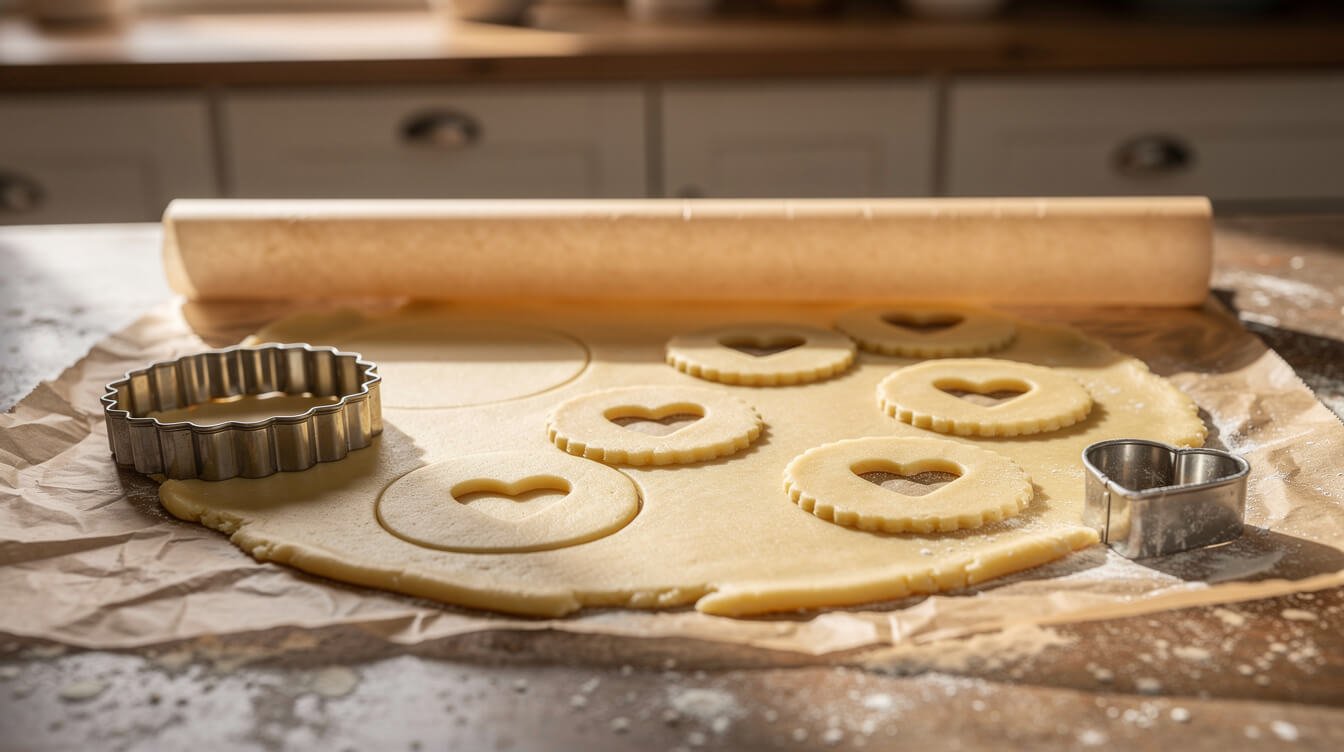
The trick to neat Linzers is handling the dough as little as possible while it’s soft. You roll it once, while it’s still soft and easy, between two sheets of parchment. Then you chill it flat and cut it cold. No flouring the counter, no wrestling a hard disc with a rolling pin, and no cracked edges.
Make the dough
- Grind the nuts. Put the cooled toasted nuts and the 1/2 cup sugar in a food processor. Pulse in 1-second bursts until the mixture looks like fine sand, about 20 to 30 pulses. The sugar keeps the nuts from turning oily. Stop before it clumps. If you’re using toasted almond flour, just whisk it with the sugar.
- Whisk the dry ingredients. In a medium bowl, whisk the flour, cinnamon, and salt.
- Beat the butter. In a large bowl, beat the butter with the nut-sugar mixture on medium speed for about 2 minutes, until creamy and a shade lighter. You don’t need it fluffy. Too much air makes the cookies puff and lose their sharp edges.
- Add the yolks and flavor. Beat in the yolks one at a time, then the vanilla and lemon zest. Scrape the bowl.
- Add the flour. Mix on low just until no dry streaks remain. The dough will be soft, like a thick frosting that holds its shape.
Roll, chill, and cut
- Roll between parchment. Divide the dough in half. Put one half between two sheets of parchment and roll it 1/8 inch (3mm) thick. Repeat with the other half. If your dough is uneven, two chopsticks or paint stirrers on either side of the dough make good thickness guides.
- Chill flat. Slide both sheets, still in their parchment, onto a baking sheet and refrigerate for at least 1 hour, or freeze for 20 minutes, until firm. You can leave them in the fridge for up to 2 days.
- Heat the oven to 350°F (175°C) with a rack in the center. Line two baking sheets with parchment.
- Loosen and cut. Take out one sheet of dough. Peel off the top parchment, lay it back on loosely, flip the whole thing, and peel off the other sheet. Now the dough isn’t stuck to either side. Cut 2 1/2-inch rounds as close together as you can. Then cut a 1-inch window (heart, star, or circle) in the center of half the rounds. Those are your tops.
- Move them while they’re cold. Either peel away the scraps and slide the whole parchment onto a baking sheet, or move the cold rounds with a thin spatula, 1 inch apart. Keep tops on one pan and bottoms on another. If the dough gets soft and sticky, chill it again for 10 minutes. That’s the fix for torn windows.
Bake and cool
- Bake one pan at a time. Tops take 8 to 10 minutes, and bottoms take 10 to 12. Pull them when the edges are just turning light golden. Tops have less dough, so they finish first. That’s why they get their own pan.
- Cool. Let them sit on the pan for 5 minutes, then move them to a rack and cool completely before filling. Warm cookies melt the jam and the sugar.
- Use the scraps. Press the scraps together, roll them once between parchment, chill, and cut again. The second roll is a little firmer, so don’t roll a third time.
Don’t taste the raw dough. It has raw flour and raw egg yolks, and the FDA’s advice is to never eat raw flour, dough, or batter. Wait for the baked cookie.
If you want more cut-out practice, our sugar cookie recipe for decorating uses the same roll-between-parchment method.
Choosing the nuts, the jam, and the sugar on top
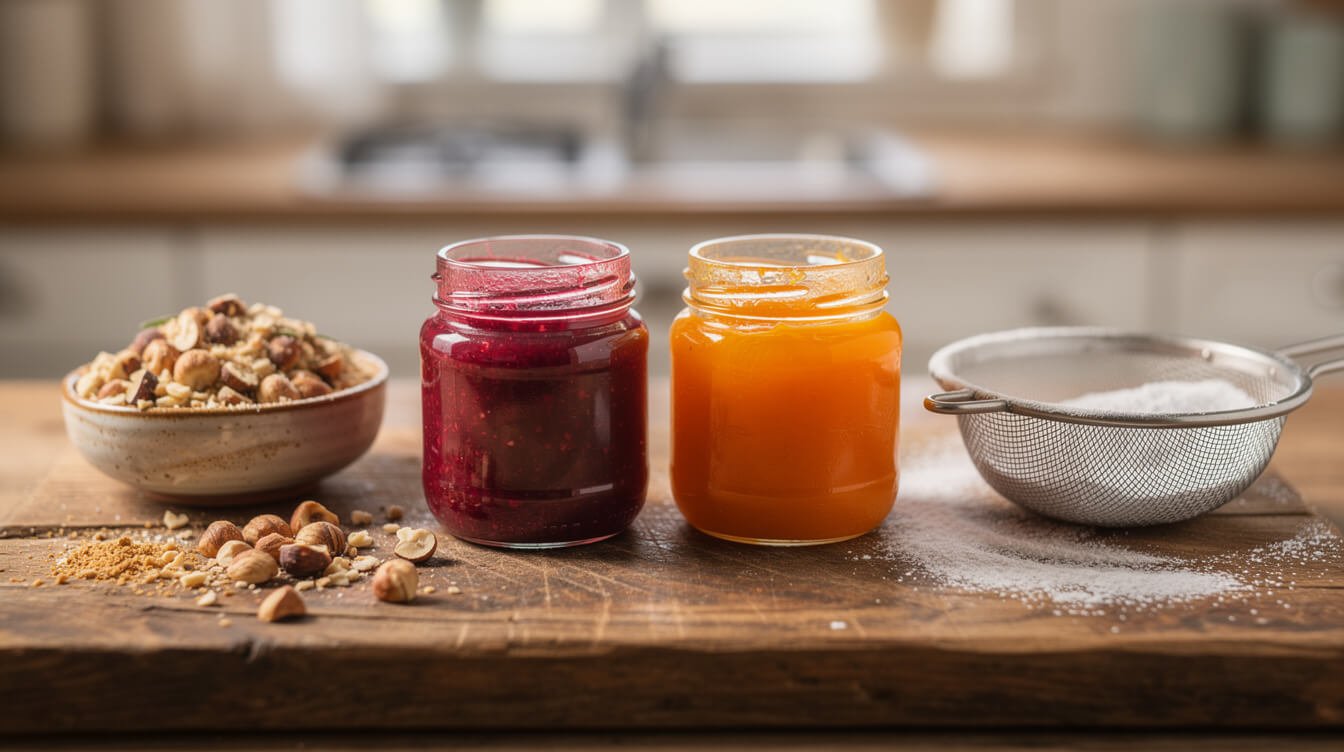
Three ingredient choices in any Linzer cookies recipe decide how your cookies taste and how they look on day three. None of them is expensive. They just matter more here than they do in most cookies.
Hazelnut or almond?
Both are traditional. Hazelnut gives a deeper, toastier, almost chocolatey flavor, and it’s the one to pick if you want that classic Austrian bakery taste. Almond is milder and a little sweeter, and it lets a bright jam stand out more. Almond flour is the easy shortcut since there’s no skinning or grinding. Just toast it first. You can also mix them, half and half.
Jam that sets (and stays put)
The jam needs to be thick enough to stay inside the cookie and glossy enough to look good in the window.
- Seedless raspberry is the classic. Its tartness is the right contrast to the buttery cookie, and it doesn’t have seeds that look gritty in the window.
- Apricot gives you a golden window and a mellower, honeyed flavor that goes well with almond dough.
- Red currant is the original Linzer torte filling. It’s tart and jewel-bright, but harder to find.
- Skip runny jams and spreads labeled “fruit spread.” They often have less sugar and more water, so they soak into the cookie faster.
To thicken a loose jam: simmer it in a small saucepan for 3 to 5 minutes, stirring, until it coats a spoon thickly. Cool it completely before you fill. It thickens more as it cools. A spoonful that holds its shape on a cold plate is just right.
Which sugar to dust with
Regular powdered sugar looks lovely for a few hours. Then it slowly draws moisture from the cookie and the jam, turns translucent, and seems to disappear by the next day. You have two good options:
- Dust right before serving. Plain powdered sugar is fine if the cookies get eaten the same day.
- Use non-melting powdered sugar. Some stores call it “snow sugar” or “doughnut sugar.” It’s powdered sugar blended with a little starch and fat, so it doesn’t soak up moisture the same way and stays white for days. It’s a little less sweet and slightly drier on the tongue, which most people never notice on a cookie. It’s worth it for cookie trays, swaps, and gift tins. Look for it at baking supply shops or online.
Why Linzer cookies crack, spread, or go soggy (and how to fix each)
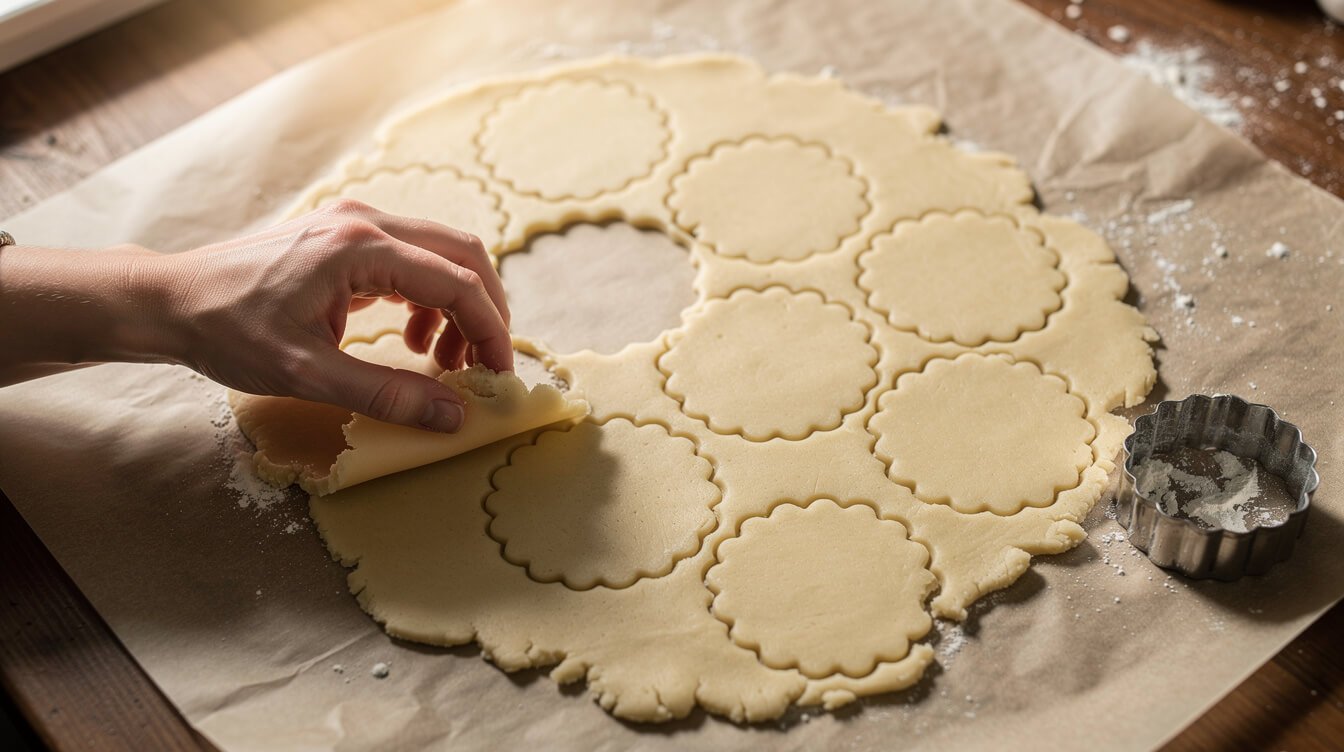
Almost every Linzer problem traces back to the dough’s temperature, the dough’s thickness, or the jam’s moisture. Here’s what each one looks like and what to do about it.
| What happened | Most likely cause | Fix |
|---|---|---|
| Dough cracks at the edges when you roll it | Dough is too cold and stiff, or the flour was over-measured | Roll it while soft, between parchment, before chilling. If you’re rolling a chilled disc, let it sit 5 to 10 minutes first. Weigh the flour if you can. |
| Tops crack or break when you lift them | Lifting thin, soft dough, or cookies rolled thinner than 1/8 inch | Cut cold dough, peel away the scraps, and bake right on the parchment. Use a thin spatula, not your fingers. |
| Windows tear or smear | Dough warmed up while you were cutting | Chill the cut sheet 10 minutes, then pop out the windows. Dip the small cutter in flour between cuts. |
| Cookies spread and lose their shape | Butter too warm, dough over-beaten, or a warm pan | Use butter that’s soft but cool. Chill cut cookies 10 minutes before baking. Always start on a cool sheet. |
| Tops too brown, bottoms pale | Tops and bottoms baked together | Bake them on separate pans. Tops finish 2 or so minutes sooner. |
| Cookies taste flat or “just buttery” | Raw nut flour, no salt, no zest | Toast the nuts. Don’t skip the salt. Add the lemon zest. |
| Cookies soggy by day two | Sandwiched too early, too much jam, or a thin jam | Store unfilled and assemble the day you serve. Use 1/2 teaspoon of thick jam per cookie. |
| Sugar disappeared | Regular powdered sugar absorbing moisture | Dust right before serving, or use non-melting powdered sugar. |
| Top slides off the bottom | Jam too thin, or cookies still warm | Thicken the jam and cool it fully. Fill only completely cool cookies. |
A note on “soft” Linzers
Here’s the honest part. A filled Linzer is supposed to soften a little. Plenty of bakers sandwich them a day ahead on purpose so the cookie mellows and the flavors blend. If you like a tender, almost cakey bite, that’s not a mistake. If you want a crisp cookie with a clean snap, assemble them on the day you serve. Both are right. You just get to choose.
Thickness is everything
Thicker cookies don’t break as easily, but at 1/4 inch a sandwich gets bready and hard to bite. This Linzer cookies recipe calls for 1/8 inch, which gives you a delicate cookie that’s still sturdy enough to handle when cold. The parchment-rolling step is what makes it easy to hit that thickness evenly, so the edges don’t over-brown while the middle stays pale.
Your pan matters too. A light-colored aluminum sheet bakes these evenly, while a dark pan browns the bottoms before the centers set. Our guide to the best baking sheet covers what to look for. And if you’re baking a few dozen of these for friends this year, our Eat Cafe Support Our Charities Donor Membership T-Shirt is a comfortable black tee to bake in, and buying one supports the cause.
From the Eat Cafe kitchen
One good recipe a week, straight to your inbox
The recipe we're actually cooking this week, plus the one tip that saves it when it goes sideways. No spam. Unsubscribe anytime.
When to assemble Linzer cookies (and how much jam)

Assembly takes about 10 minutes, and the order matters more than you’d think.
- Dust the tops first. Set the window cookies on a rack or sheet of parchment and sift sugar over them. If you dust after sandwiching, the sugar lands in the jam window and covers the color you worked for.
- Jam the bottoms. Turn the solid cookies flat side up. Spoon about 1/2 teaspoon of jam into the center of each one and spread it slightly, leaving a 1/4-inch border. The jam spreads to the edge when you press.
- Sandwich gently. Set a top on each bottom and press lightly at the edges, not the middle. Pressing the center is how tops crack.
- Top up the windows. If a window looks sparse, use a small spoon or a piping bag to add a drop of jam through the hole. It gives you that glossy, full bakery look.
The best time to sandwich them
- Serving today? Assemble up to a few hours ahead.
- Want them softer and more mellow? Assemble the day before.
- Baking for a party or a cookie swap later in the week? Bake and store them unfilled, then fill them the morning of. This is the single biggest fix for soggy Linzers.
Love jam cookies but short on time? Our thumbprint cookies with jam give you that same buttery-cookie-and-jam combination with no rolling or cutting at all.

A shirt for a long afternoon of rolling and cutting
The Eat Cafe Support Our Charities tee is a sturdy, comfortable black cotton shirt with a small logo over the heart and a big one on the back. It holds up to a dusting of powdered sugar, and it’s a nice add-on to a tin of Linzers for the baker on your list.
How to store, make ahead, and freeze Linzer cookies
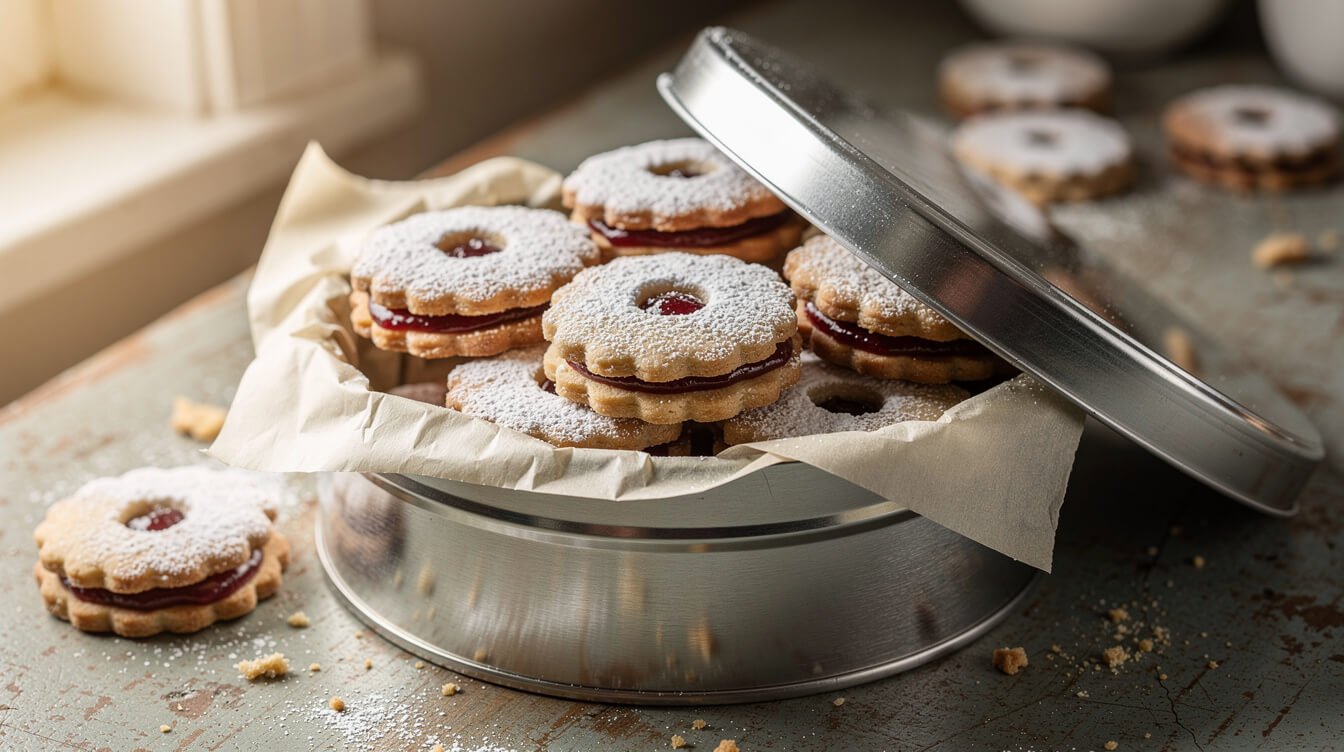
This Linzer cookies recipe is a great make-ahead project, as long as you store the parts in the right order. Here’s the plan that keeps them looking fresh for a holiday tray.
Storing
- Unfilled baked cookies: airtight container at room temperature for up to 1 week. They stay crisp, so this is your best make-ahead form.
- Filled with jam: store in a single layer, or with parchment between layers, in an airtight tin at room temperature. They’re best within about 3 days. They’ll get softer each day.
- Filled with lemon curd, ganache, or anything with cream or cream cheese: those fillings belong in the fridge. Store them covered in the refrigerator and let them sit out briefly before serving.
Making ahead
- Dough: rolled sheets can stay in the fridge in their parchment for up to 2 days.
- Freezing dough: wrap the rolled sheets well and freeze for up to 3 months. Let them sit in the fridge for an hour before cutting.
- Freezing baked cookies: freeze the plain, unfilled cookies in an airtight container for up to 3 months. Thaw them at room temperature in the container (so condensation doesn’t make them soggy), then dust and fill.
- Freezing filled cookies: you can, but the sugar usually dissolves and the tops can get a little sticky. If you do, skip the dusting and add it after thawing.
A sample holiday plan
- Up to a month ahead: make, roll, and freeze the dough sheets.
- Up to a week ahead: cut and bake. Store unfilled at room temperature.
- The day you serve or gift: dust, fill, and pack.
Linzers keep good company on a cookie tray. Try them next to our gingerbread molasses cookies, cookie press spritz cookies, and rugelach. For more ideas, browse our easy Christmas cookie ideas.
Linzer cookies recipe FAQ
Do Linzer cookies need to be refrigerated?
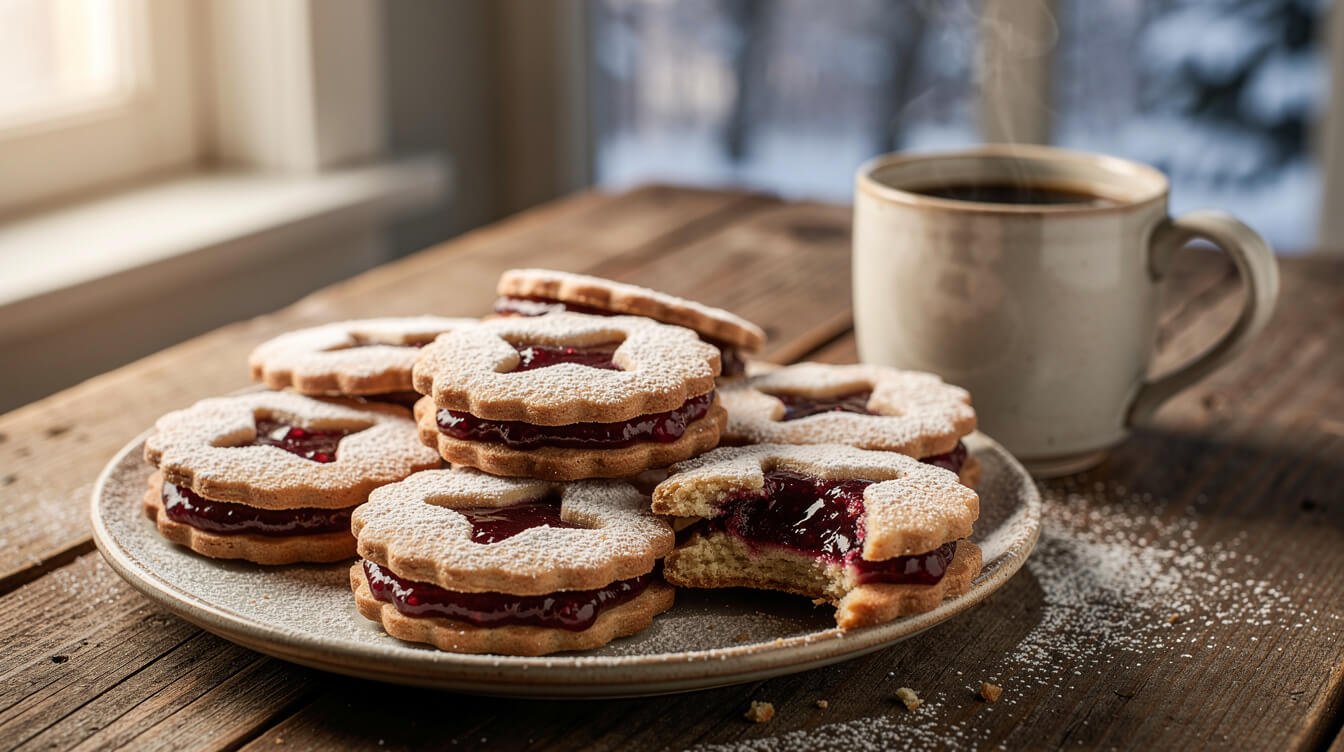
Not when they’re filled with jam. Store them in an airtight tin at room temperature for about 3 days. Fillings like lemon curd, ganache, or anything with cream or cream cheese do need the fridge. Unfilled cookies keep at room temperature for up to a week.
What do Linzer cookies taste like?
A tender, buttery nut shortbread with a hint of cinnamon and lemon, a tart-sweet jam center, and a sweet, powdery top. With toasted hazelnuts, they have a warm, roasty flavor that’s a bit like a praline.
Can I make them with only all-purpose flour?
Not with this recipe as written. The nuts make up a big part of the dough’s structure and flavor. For a nut-free jam sandwich cookie, use our sugar cookie dough, roll it to 1/8 inch, and cut windows the same way. It’s a different cookie, a sweeter and plainer one, but it’s reliable. Remember the allergen note above, too.
What’s the best jam for Linzer cookies?
Thick, seedless raspberry is the classic for flavor and color. Apricot and red currant are traditional too. Whatever you choose, it should be thick enough to hold its shape on a spoon.
Why are my Linzer cookies hard?
Usually they’re over-baked or rolled too thick. Pull them when the edges are just turning light golden, and roll to 1/8 inch. Linzers also soften a bit after they’re filled.
Can I use salted butter?
Yes. Just cut the added salt to 1/4 teaspoon. Our guide to salted vs unsalted butter explains when it matters.
Do I need a stand mixer?
No. A hand mixer works well, and you can even mix this dough with a sturdy spoon if your butter is soft. A stand mixer just makes big holiday batches easier.
Do I need a special Linzer cutter?
No. Any 2 to 2 1/2-inch round cutter (or a glass) works for the base. For windows, use a small heart or star cutter, or the wide end of a piping tip.
The short version
Here’s the whole Linzer cookies recipe in seven lines:
- Toast the nuts, cool them, and grind them with the sugar into a fine meal.
- Roll the soft dough 1/8 inch thick between parchment, then chill it flat.
- Cut it cold, cut windows in half the cookies, and chill again if it gets soft.
- Bake tops and bottoms on separate pans at 350°F: tops 8 to 10 minutes, bottoms 10 to 12.
- Dust the tops first, use about 1/2 teaspoon of thick jam per cookie, and press at the edges.
- For crisp cookies, store them unfilled and assemble on the day. For soft ones, assemble the day before.
- Never eat the raw dough. Label them “contains tree nuts” on a shared tray.
Then put the kettle on. These are worth sitting down for.

Before you go
Want the next one?
We post a new recipe or kitchen guide every day. The best of the week lands in one short email, no life story attached.