Cake flour vs all purpose flour: which one your recipe needs (and how to swap by weight)
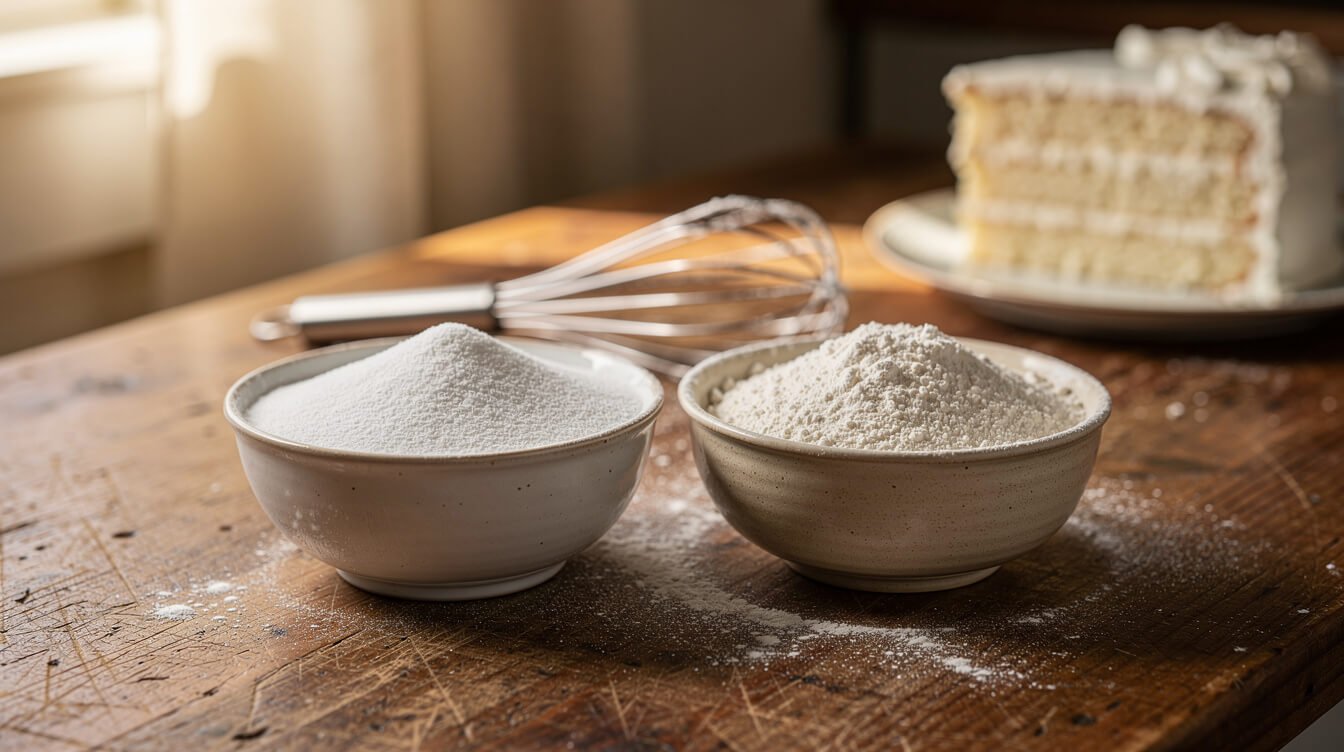
Cake flour vs all purpose flour comes down to one thing: protein. Cake flour has less of it (about 7 to 9 percent) and is milled finer, so it builds less gluten and bakes up softer, finer, and more tender. All-purpose flour sits in the middle (about 10 to 12 percent), so it gives more structure and a little more chew. Use cake flour for light, high-rising cakes like angel food, chiffon, and classic white layer cake. Use all-purpose for nearly everything else, including most everyday cakes, cookies, brownies, muffins, and bread.
And if a recipe calls for cake flour and you don’t have any, you can get close with all-purpose flour and cornstarch. Below is the chart by bake, the swap by weight (the part every other guide skips), when the swap falls short, and how to tell from a finished cake which flour mistake you made.
Cake flour vs all purpose flour: which one to use, by what you’re baking
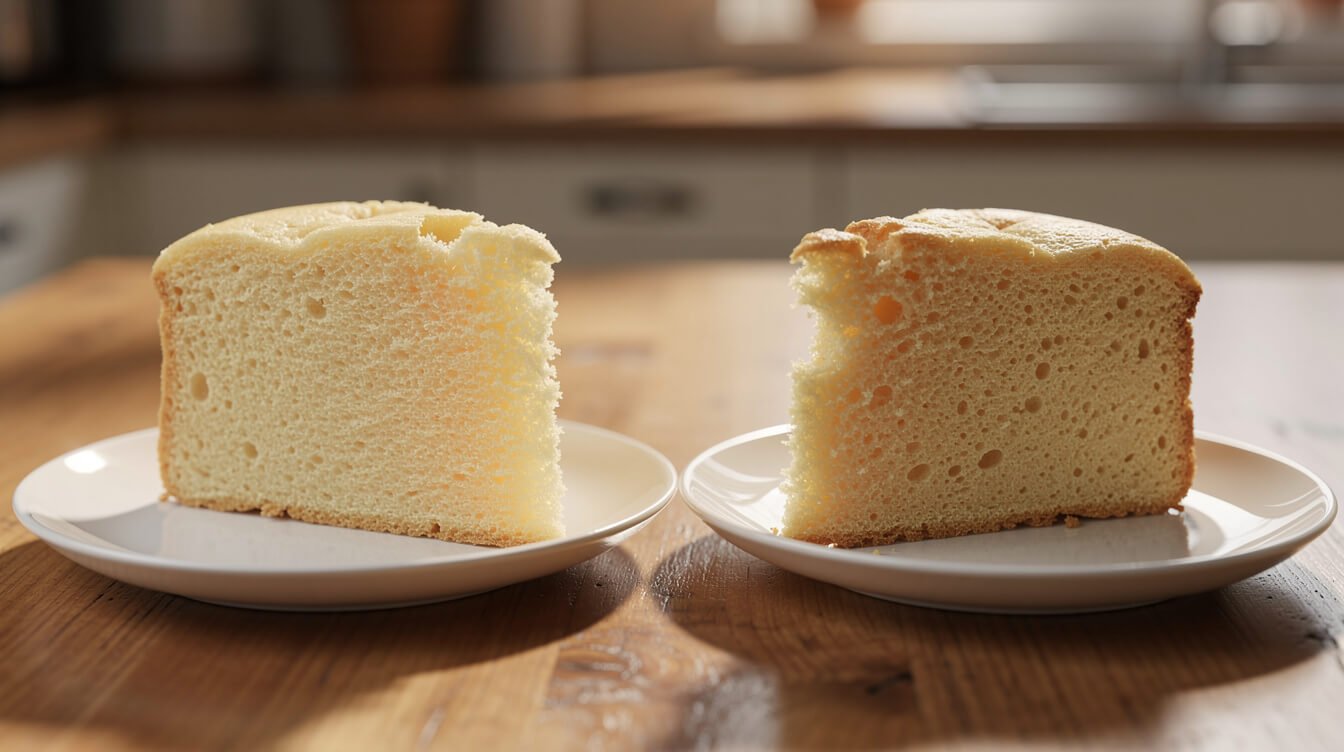
Here’s the chart to save. “Best” is what the bake really wants. “Fine” means you can use it without much fuss, and nobody at the table will notice.
| What you’re baking | Best flour | Can you use the other? |
|---|---|---|
| Angel food and chiffon cake | Cake flour | DIY cake flour works; straight all-purpose makes it shorter and chewier |
| White or yellow layer cake, cupcakes | Cake flour, if the recipe calls for it | DIY cake flour is fine |
| Chocolate, carrot, and banana cake | All-purpose (most recipes are written for it) | Cake flour makes them softer but more fragile |
| Pound cake and bundt cake | Either; follow the recipe | Yes |
| Cookies and brownies | All-purpose | Cake flour gives puffier, softer, more cake-like cookies |
| Muffins, pancakes, and quick breads | All-purpose | Cake flour works by weight and makes them extra tender |
| Biscuits and pie crust | All-purpose (or pastry flour) | Cake flour is tender but crumbly and hard to handle |
| Yeast bread and pizza dough | All-purpose or bread flour | No. Cake flour can’t build enough gluten |
The one rule behind the chart
The lighter and taller the bake, and the more sugar and liquid it carries, the more cake flour helps. Angel food cake is mostly egg whites and sugar with very little flour, and that little bit of flour has to be soft and absorbent or the cake comes out chewy. A banana cake is heavy with fruit and fat and needs more structure to hold it up, so all-purpose is the better fit.
Everything else on the chart is that rule applied. And when a tested recipe names a flour, use it. The recipe writer balanced the sugar, fat, liquid, and leavening around that flour, which matters more than any general rule.
What’s actually different: protein, grind, and bleaching
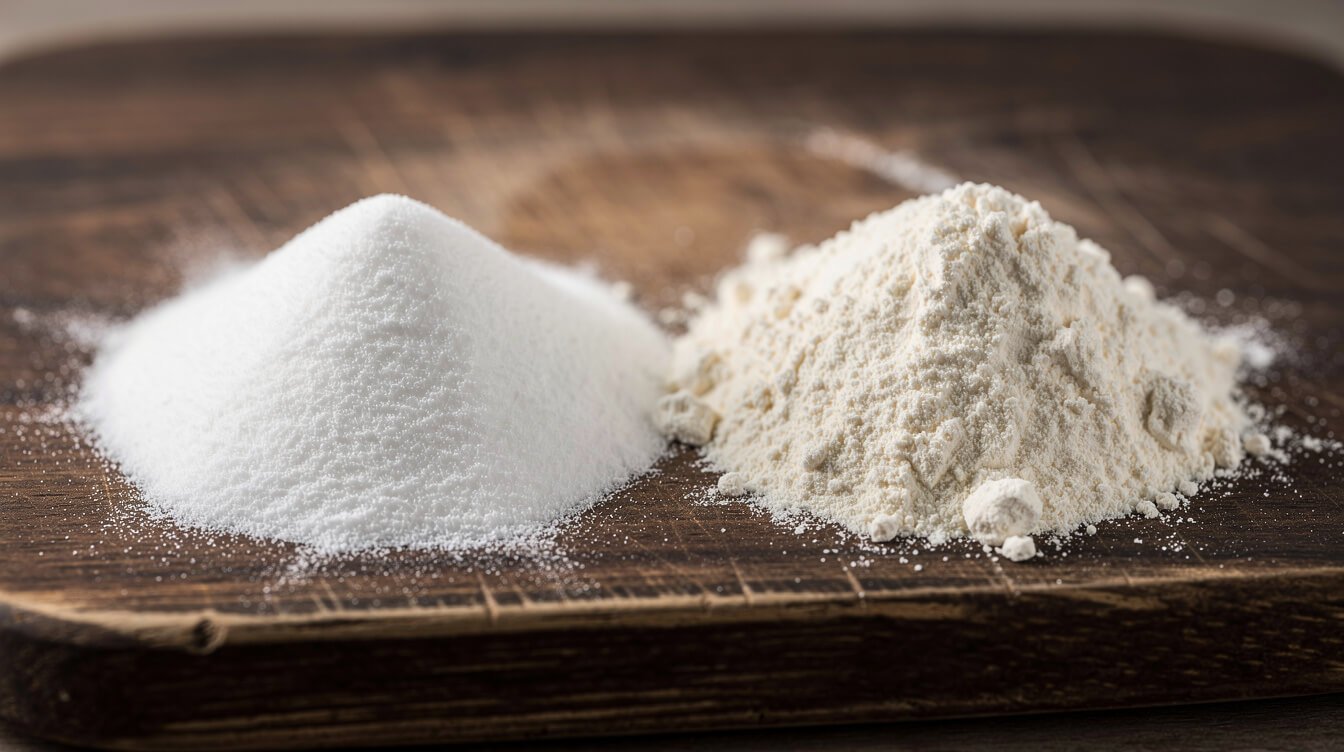
Three differences separate cake flour vs all purpose flour, and they all point the same way.
1. Protein, which turns into gluten
When flour meets water and gets stirred, two of its proteins link up into gluten, a stretchy network that gives baked goods their structure and chew. More protein means more potential gluten. That’s great in bread, where you want chew, and the opposite of what you want in a soft birthday cake.
- Cake flour: roughly 7 to 9 percent protein, milled from soft wheat
- Pastry flour: roughly 8 to 10 percent
- All-purpose flour: roughly 10 to 12 percent, usually a blend of hard and soft wheat
- Bread flour: roughly 12 to 14 percent, from hard wheat
The numbers vary by brand and by who’s measuring, which is why you’ll see slightly different ranges on every site. The order never changes.
2. Grind
Cake flour is milled finer. Rub a pinch between your fingers and it feels silky, almost like cornstarch, and it clumps when you squeeze it. All-purpose feels a touch sandier. A finer flour mixes into a batter more evenly and makes a finer, tighter crumb.
3. Bleaching (the part the DIY swap can’t copy)
Most cake flour in American grocery stores is bleached, usually with chlorine. That isn’t about color. The treatment changes the starch so it soaks up more liquid and sets up firmer in the oven. That’s what lets a batter carry a lot of sugar and liquid and still rise tall instead of collapsing. Bakers call these high-ratio cakes, meaning the sugar weighs as much as or more than the flour. Classic white cake and many fluffy yellow cakes are built this way.
Unbleached cake flour exists too, and it works well in most cakes. It just doesn’t get the starch boost. Whether you buy bleached or unbleached is your call. Both are sold in regular grocery stores.
“All-purpose” isn’t one flour, either
Here’s something most guides leave out. All-purpose flours aren’t all the same. King Arthur’s all-purpose runs close to 12 percent protein. National supermarket brands tend to land around 10 to 11 percent. Southern soft-wheat brands like White Lily are lower, closer to 9 percent, which is part of why Southern biscuits come out so tender.
So if a cake recipe calls for all-purpose and your cake keeps coming out a little tough, your bag may be on the high end. And if you bake with a Southern soft-wheat all-purpose, you’re already partway to cake flour.
How to make cake flour from all-purpose flour (and the swap by weight)
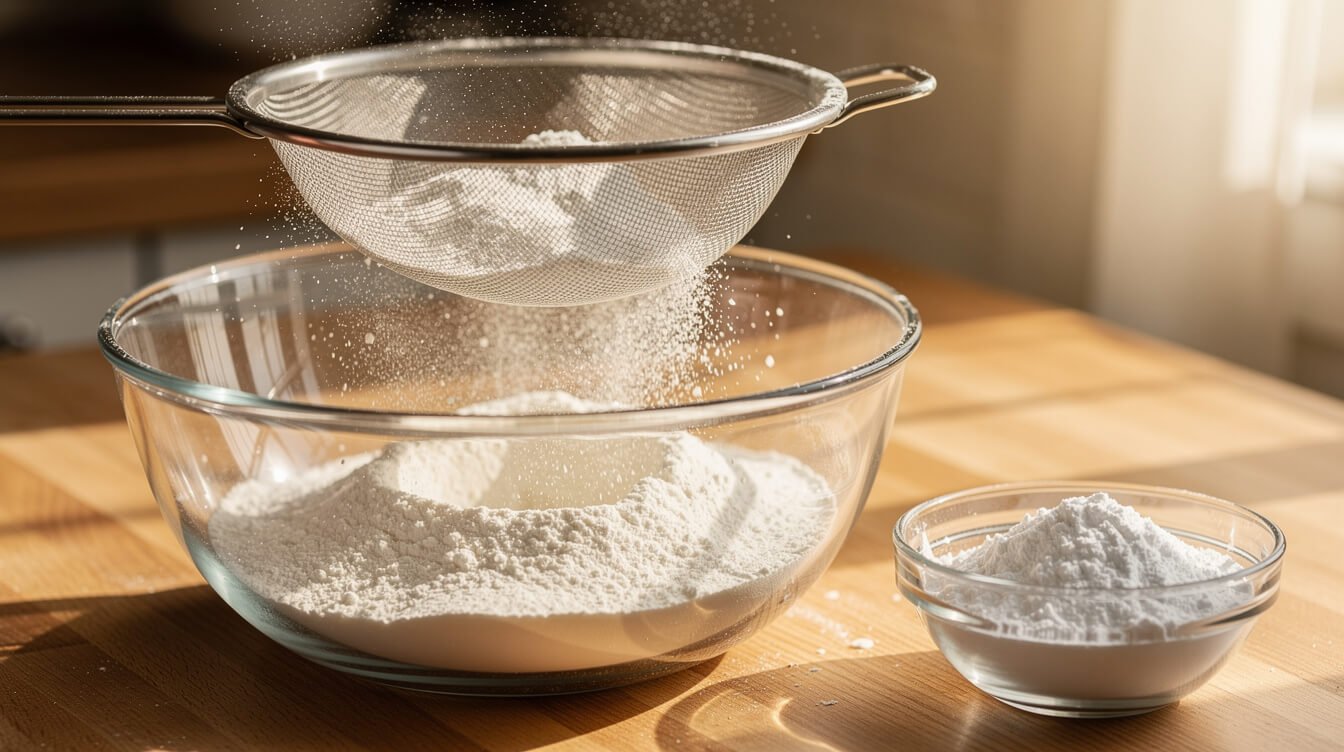
This is the swap every recipe site gives, and it does work. The cornstarch dilutes the protein and adds the soft, absorbent starch that makes cake flour behave the way it does.
The cup method
- Measure 1 level cup of all-purpose flour (spoon it in, don’t scoop; more on that below).
- Take out 2 tablespoons of the flour and put them back in the bag.
- Add 2 tablespoons of cornstarch.
- Sift or whisk the two together really well. Sifting twice is plenty. You’re mixing them, not performing a ritual.
Repeat for every cup of cake flour the recipe needs. Cornstarch is the standard choice. Arrowroot or potato starch work the same way if that’s what you have.
The weight method (more accurate)
If your recipe lists cake flour in grams, keep the total weight the same and make it 7 parts all-purpose flour to 1 part cornstarch. That’s the same ratio as the cup method, just without the measuring guesswork.
- 120 grams cake flour = 105 g all-purpose + 15 g cornstarch
- 240 grams cake flour = 210 g all-purpose + 30 g cornstarch
- 360 grams cake flour = 315 g all-purpose + 45 g cornstarch
Why does weight matter so much here? Because a cup of cake flour and a cup of all-purpose don’t weigh the same. Cake flour is lighter and fluffier, so a cup of it usually weighs a little less. When a recipe was written in cups of cake flour and you fill those cups with packed all-purpose, you can easily end up with 15 to 20 percent more flour than intended. That alone makes a cake dry and dense, no matter what the protein says.
When the DIY version falls short
Homemade cake flour is a good stand-in for cupcakes, everyday layer cakes, and most recipes that call for cake flour. Where you’ll notice the difference is in the high-ratio cakes from the last section: very tall white cakes, and recipes with more sugar than flour. Without the bleached starch, those can bake up a little shorter, or dip in the middle as they cool.
So here’s the honest rule of thumb. If you bake angel food, chiffon, or a from-scratch white cake more than a couple of times a year, a box of real cake flour is worth the shelf space. If cake flour shows up in one recipe a year, make it at home and don’t think twice.
One safety note while you’re mixing: don’t taste the flour mix or the raw batter. Flour is a raw ingredient and can carry bacteria like E. coli until it’s baked, the same as raw eggs. Save the tasting for the finished cake.
Using cake flour in place of all-purpose: cookies, muffins, and bread
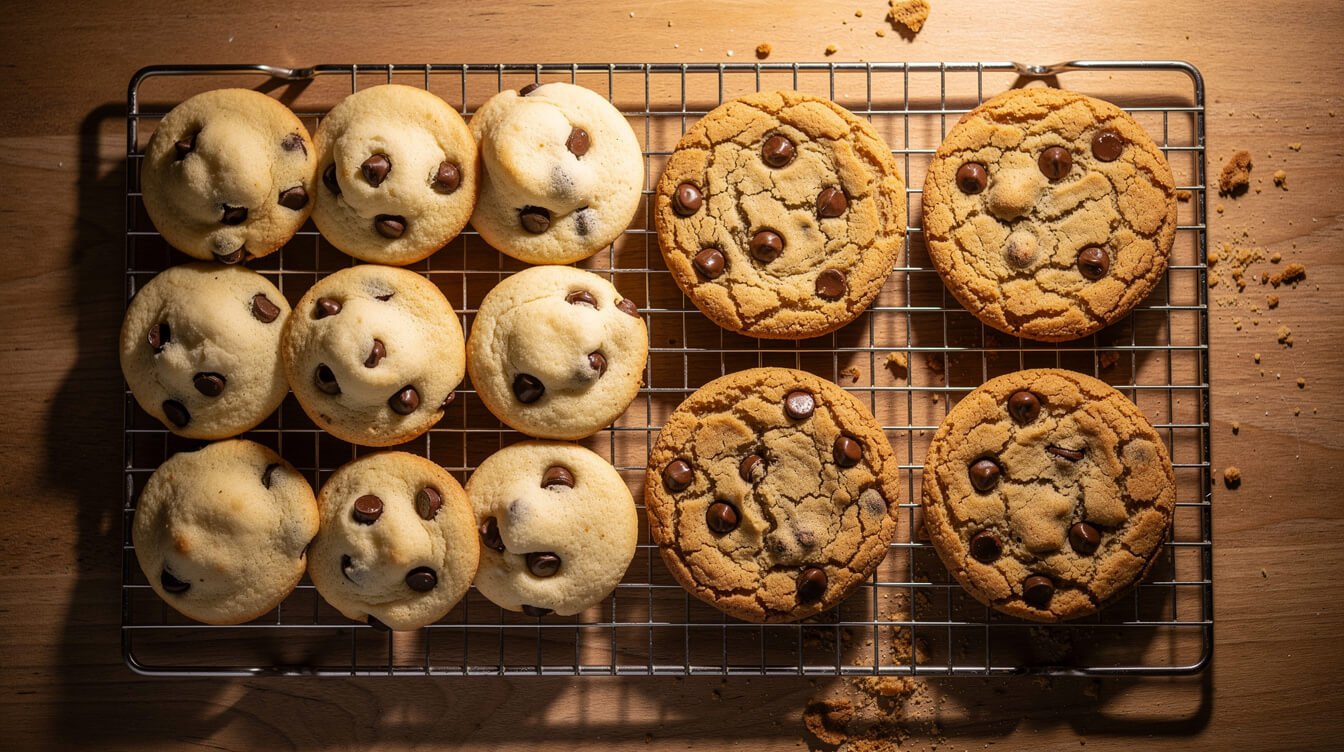
Going the other way gets asked about just as often: you have a box of cake flour and a recipe that wants all-purpose. Whether it works depends on how much the bake relies on structure.
The conversion
By weight, swap gram for gram. By volume, use 1 cup plus 2 tablespoons of cake flour for each cup of all-purpose, because cake flour is lighter per cup. Measuring by weight is the easier way to get this right, and it’s the reason a kitchen scale is the first tool we tell new bakers to buy. If you’re stocking a kitchen from scratch, our 100 Essential Tools guide covers the scale, measuring cups, and the rest of what’s worth buying first.
What happens bake by bake
- Cookies: they come out softer, puffier, and more cake-like, often paler, with less chew. If you love a soft, pillowy cookie, try a half-and-half mix. If you’re chasing a chewy, crackly-edged cookie like our best chocolate chip cookies, stick with all-purpose.
- Muffins, pancakes, and quick breads: a good swap. You’ll get a more tender, delicate crumb. Banana bread made with cake flour can be a bit more fragile when you slice it warm, so let it cool fully.
- Chocolate, carrot, or banana cake: softer and lighter, but heavy add-ins like nuts, carrots, or chocolate chips are more likely to sink. If the batter is loaded, stay with all-purpose.
- Biscuits and pie crust: extremely tender but crumbly. The dough tears easily, and a pie crust may not hold a crimp. A 50/50 mix with all-purpose behaves a lot like pastry flour, which is a nice middle ground. For pie crust, our butter pie crust recipe is written for all-purpose and explains why.
- Yeast bread and pizza dough: don’t. These need a strong gluten network to trap gas and rise, and cake flour can’t build one. Expect a flat, dense, crumbly loaf. If you’re choosing flour for bread, our guide to the best flour for sourdough bread goes the opposite direction, toward more protein.
From the Eat Cafe kitchen
One good recipe a week, straight to your inbox
The recipe we're actually cooking this week, plus the one tip that saves it when it goes sideways. No spam. Unsubscribe anytime.
Measuring matters more than the flour you pick
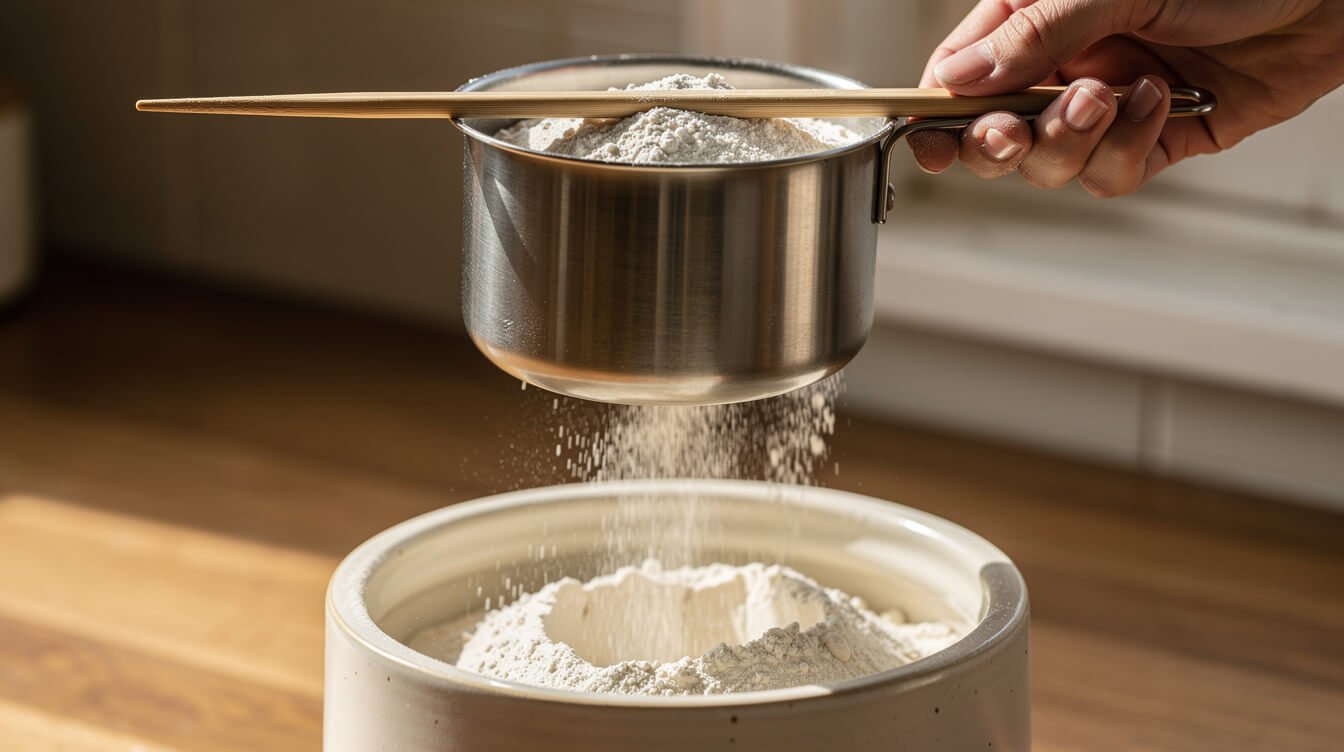
Here’s the part nobody tells you when you’re comparing cake flour vs all purpose flour: how you measure can change a cake more than which bag you used. A recipe that says “1 cup flour” assumes a certain weight, and the way you fill the cup can swing that weight a lot.
Spoon and level, don’t scoop
Dipping the measuring cup straight into the bag packs the flour down. A scooped cup of all-purpose can weigh 20 to 30 grams more than a spooned one. Across 2 or 3 cups in a cake recipe, that’s like adding an extra half cup of flour you never meant to, and the result is a dry, dense, tight cake that you’d probably blame on the flour.
The fix takes ten extra seconds:
- Fluff the flour in the bag or canister with a spoon.
- Spoon it lightly into the measuring cup until it’s heaped.
- Sweep the excess off with a straight edge, like the back of a knife or a chopstick. Don’t tap or shake the cup.
Sift before or after measuring?
Read the wording. “1 cup sifted cake flour” means sift first, then spoon into the cup, which gives you less flour. “1 cup cake flour, sifted” means measure first, then sift. With a scale, you skip the whole question, because 120 grams is 120 grams no matter how fluffy it is.
Weigh it if you can
If a recipe gives grams, use them. A basic digital scale costs about as much as a couple of bags of good flour and fixes more baking problems than any ingredient swap. It also makes the DIY cake flour swap above a one-bowl job: tare the bowl, add the flour, tare again, and add the cornstarch.

Bake with the right tools, not more of them
Our 100 Essential Tools eBook walks through the scale, sifter, measuring cups, and pans that actually earn their spot in a home kitchen, so you buy the useful stuff first. PDF or Kindle.
Troubleshooting: dense, tough, crumbly, or sunken cakes
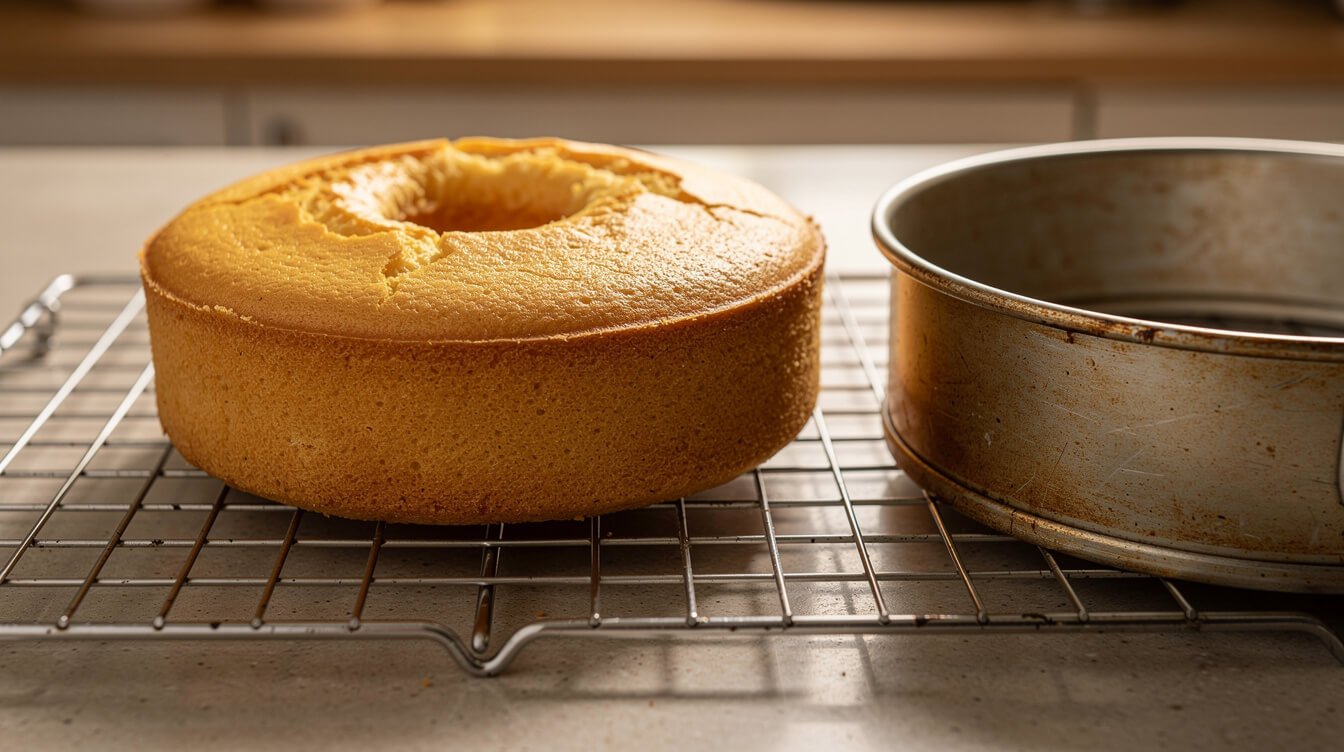
Slice the cake and look at it. The crumb usually tells you which flour mistake happened, or whether flour was the problem at all.
Dense, heavy, and dry
Most likely: too much flour, from scooping instead of spooning. Second most likely: overmixing after the flour went in.
Fix: spoon and level, or weigh. Once the flour is in, mix on low or by hand just until you can’t see dry streaks. This is the most common cake problem we hear about, and it’s rarely about which flour you used. Our guide on how to bake a cake walks through the whole mixing order.
Tough, chewy, or bready
Most likely: all-purpose flour, probably a higher-protein brand, in a recipe built for cake flour, plus a long mix that built gluten.
Fix: use the DIY cake flour swap, and mix less. If you use a stand mixer, drop to the lowest speed once the flour goes in. Our stand mixer guide covers why a strong motor makes overmixing easy.
Crumbly, falling apart, or the layers crack when you stack them
Most likely: cake flour (or a heavy hand with cornstarch) in a recipe written for all-purpose, especially one with heavy add-ins or a dense frosting.
Fix: go back to all-purpose for that recipe. Chill the layers before stacking, which firms up the crumb either way.
Sunken in the middle
Several things can cause a sunken center: underbaking, opening the oven too early, or too much leavening. Flour plays a part when a high-sugar cake doesn’t have enough structure to set. That’s the high-ratio case from earlier, and it happens most with straight all-purpose or the DIY swap in a recipe built for bleached cake flour.
Fix: first check doneness. A toothpick in the center should come out with a few moist crumbs, not wet batter. Then measure your leavening with level spoons. If it still sinks and the recipe calls for cake flour, try a box of the real thing.
Cookies came out puffy and cakey
Most likely: cake flour (or a lot of extra flour from scooping) in a cookie recipe. Our bakery-style chocolate chip cookies show how much size and flour amount change texture.
Fix: all-purpose, measured by spooning or weight.
The same slice-and-read approach works for quick breads too. Our guide on how to fix dense banana bread covers it loaf by loaf.
Cake flour vs all purpose flour: quick questions
Can I use all-purpose flour instead of cake flour?
Yes. For the closest result, use the DIY swap: 2 tablespoons of cornstarch in place of 2 tablespoons of flour per cup, or 7 parts flour to 1 part cornstarch by weight. Straight all-purpose works too, especially in sturdy cakes. Expect a slightly coarser, chewier crumb.
Is cake flour the same as self-rising flour?
No. Self-rising flour has baking powder and salt already mixed in. If you swap it in for cake flour without cutting the recipe’s own leavening and salt, the cake can over-rise and then collapse, and it may taste salty. Check the bag. If the ingredients list baking powder, it’s self-rising.
What about pastry flour, or “cake and pastry flour”?
Pastry flour sits between cake flour and all-purpose. It’s great for pie crust, tart shells, and biscuits. The “cake and pastry flour” sold in Canada is a single soft flour meant for both jobs, and it works well in most recipes that call for cake flour. If a US recipe calls for pastry flour, a 50/50 mix of cake flour and all-purpose gets you close.
Does cake flour make a cake more moist?
Not really. It makes a cake more tender, which reads as soft in your mouth. Moisture comes from the fat, sugar, and liquid in the recipe, and from not overbaking. A cake made with cake flour can still be dry if you scoop the flour or bake it too long.
Is bleached flour worth avoiding?
That’s a personal choice. Both bleached and unbleached flour are standard grocery items. For baking, the difference is the one above: bleached cake flour handles high-sugar batters better. If you prefer unbleached, it’ll be great in everything except the tallest, sweetest cakes, where you may see a little less rise.
How should I store cake flour?
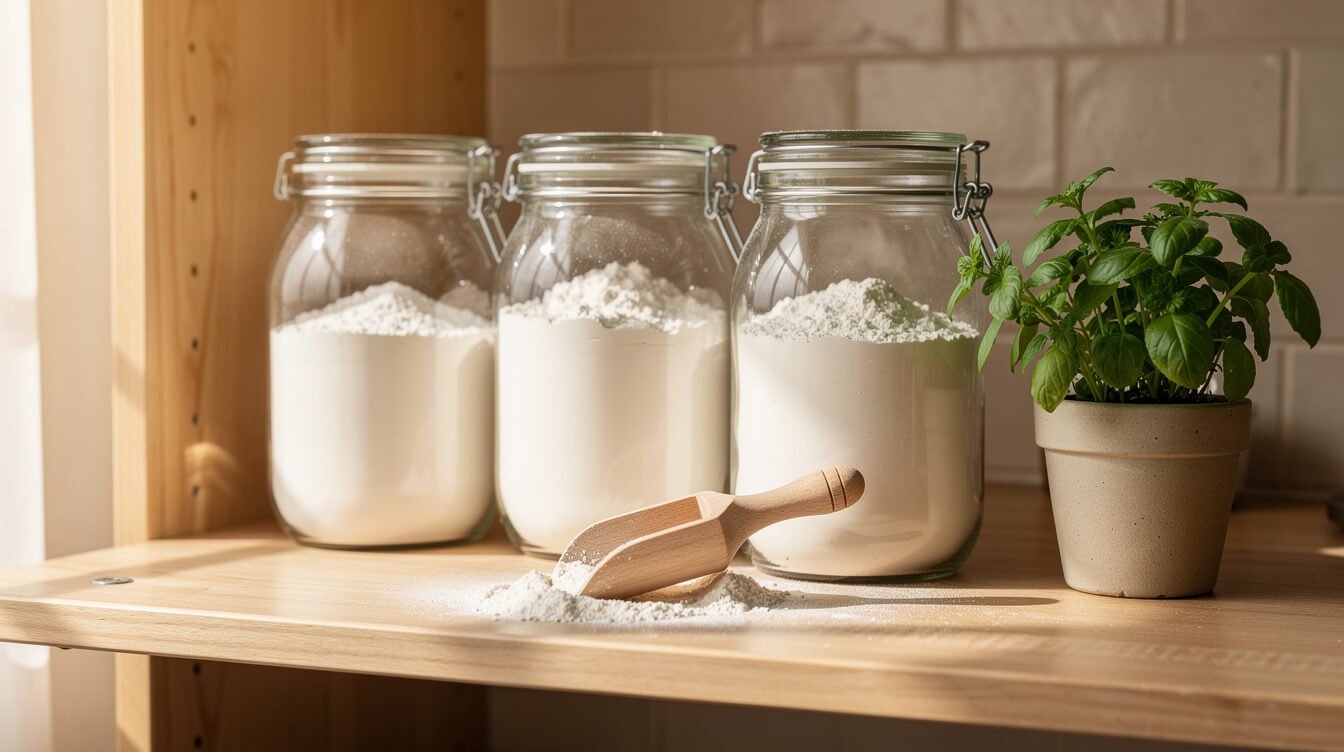
Keep it in an airtight container in a cool, dry spot, and go by the date on the box. Flour picks up smells and moisture easily, so a sealed jar beats a folded-over bag. If it smells sour or musty, toss it.
Do I need to sift cake flour?
Cake flour tends to clump, so a quick sift or a good whisk with the other dry ingredients is worth it, especially in light cakes where lumps don’t have a chance to break up. For DIY cake flour, sifting or whisking is what mixes the cornstarch in, so don’t skip it.
The bottom line
When you’re stuck between cake flour vs all purpose flour, use whichever one the recipe was written with. Most of the time that’s all-purpose, and that’s fine. It’s the right call for cookies, brownies, muffins, quick breads, most chocolate and fruit cakes, and anything with yeast.
Reach for cake flour when you want a light, tall, tender cake, especially angel food, chiffon, and from-scratch white cake. If you don’t have it, 2 tablespoons of cornstarch per cup of all-purpose, or 7 parts flour to 1 part cornstarch by weight, gets you most of the way there. Measure by spooning or by weight either way, because the amount of flour matters more than the type.
Then go bake something. If it comes out a little dense the first time, slice it, read the crumb, and tweak one thing next time. That’s how every good baker learned. And if you’re swapping other ingredients in the same cake, our buttermilk substitute guide and salted vs unsalted butter explainer cover the next two questions you’re likely to have.

Before you go
Want the next one?
We post a new recipe or kitchen guide every day. The best of the week lands in one short email, no life story attached.