Mascarpone substitute: what to use, and how to keep it from splitting
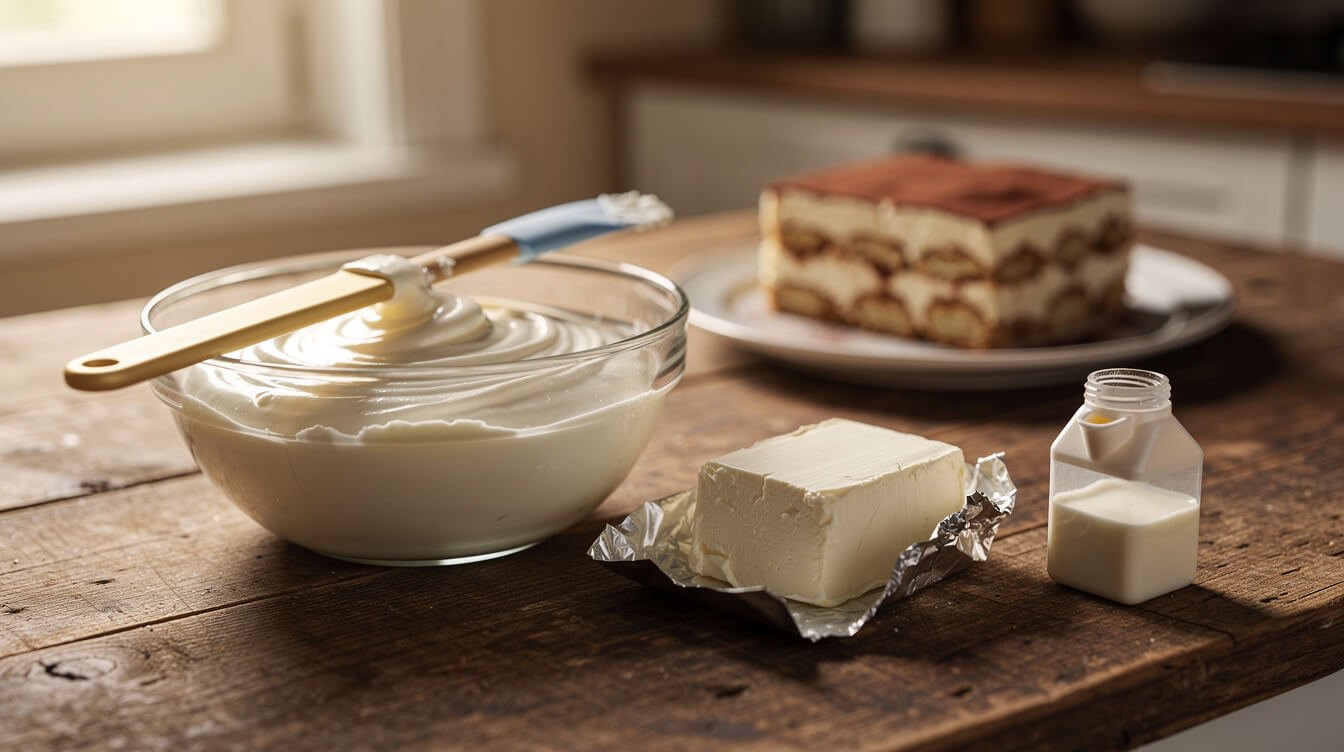
The recipe says mascarpone. The store either doesn’t carry it or wants eight dollars for a little tub, and you’ve got a brick of cream cheese in the fridge. Good news: that brick is the best mascarpone substitute there is, as long as you do two small things to it. The bad news, which nobody tells you until your tiramisu is sitting in a puddle the next morning, is that the swap can split, weep, or go grainy if you mix it the way you’d mix real mascarpone.
So here’s the plan. The quick ratio first. Then the right swap for what you’re actually making, because a no-bake tiramisu, a baked cheesecake, and a pan of pasta need three different things from that tub. Then the one mixing order that keeps a cream cheese swap from falling apart overnight.
The short answer: the best mascarpone substitute is cream cheese plus heavy cream
For every 8-ounce tub of mascarpone your recipe calls for, use:
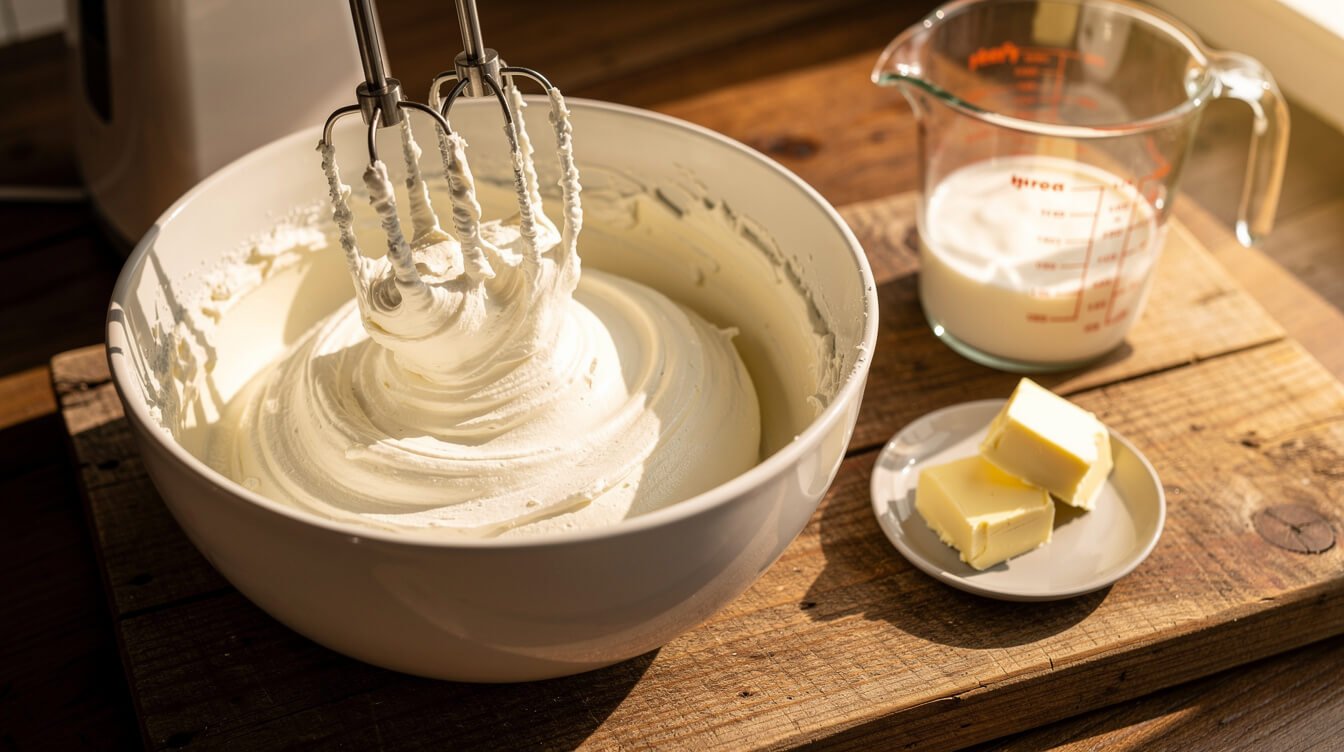
- One 8-ounce (227 g) brick of full-fat cream cheese, softened to room temperature
- ¼ cup (60 ml) heavy cream
- Optional, for richness: 2 tablespoons very soft unsalted butter
Beat the cream cheese on its own until it’s completely smooth, about a minute. Then beat in the cream a splash at a time (and the butter, if you’re using it). That’s it. You’ll end up with about 1¼ cups instead of the tub’s 1 cup. For tiramisu, frosting, or pasta, the extra just goes in. If you’re baking something where amounts matter, measure out 1 cup and save the rest for toast.
Why the cream and the butter matter
Mascarpone and cream cheese look the same in the bowl, but they’re built differently. Mascarpone is heavy cream thickened with a little acid. Nothing else. Cream cheese starts with milk and cream and is cultured, a bit like yogurt. That’s where its tang comes from. So cream cheese is three things mascarpone isn’t: tangier, firmer, and leaner.
Here’s the fat math, since it explains the whole recipe. Mascarpone runs roughly 40 to 45 percent fat by weight. Regular cream cheese is about a third fat. (You’ll sometimes see mascarpone listed at 60 to 75 percent fat. That number is measured on the dry solids after the water’s removed, not on the tub you’re holding, so don’t let it scare you.)
- The heavy cream barely moves the fat number, since it’s in the same range as cream cheese. Its job is texture. It loosens a stiff brick into something soft and spoonable, and it dilutes the tang.
- The butter is what closes the fat gap. At about 80 percent fat, two tablespoons bring the whole mix up to roughly 39 percent, close enough to mascarpone that the two are hard to tell apart in a finished dessert. It also makes the mixture firm up nicely in the fridge, which helps tiramisu slice cleanly.
Use the brick, not the tub
Buy the foil-wrapped block, full-fat. Spreadable tub cream cheese has more water and stabilizers so it can spread straight from the fridge, and whipped cream cheese is mostly air. Both make a looser substitute that’s more likely to weep. Low-fat and “Neufchâtel” style cheeses are leaner still. They’re fine on a bagel, but they’re the main cause of runny tiramisu.
Mascarpone substitute for tiramisu and no-bake desserts
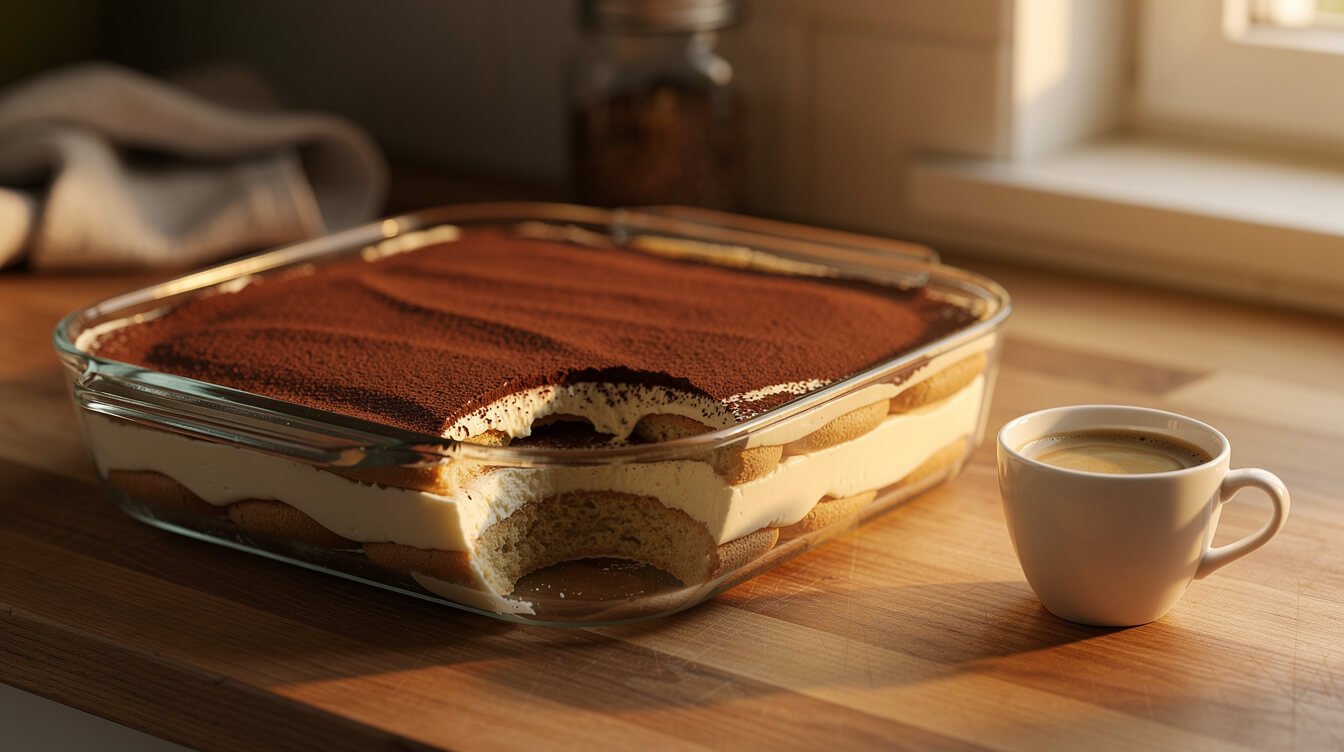
This is where the swap matters most. In a baked dessert the oven sets everything. In tiramisu, a no-bake cheesecake, or a cream filling, the only thing holding the shape is the dairy itself. So for no-bake, you want a mascarpone substitute that’s stable: high in fat, smooth, and whipped with enough air to stand up but not so much that it breaks.
Use the cream cheese and cream base above, with the butter if you have it. Don’t use straight Greek yogurt, ricotta, or sour cream here. Each of them is too wet or too loose to hold a layer, and they’ll leak liquid into your ladyfingers overnight.
The egg-free tiramisu cream (replaces 16 oz mascarpone)
Most tiramisu recipes for an 8×8-inch pan call for 16 ounces of mascarpone, two tubs. Here’s our swap for that amount. It also skips the raw eggs, so there’s nothing to worry about there.
- 16 oz (454 g) full-fat brick cream cheese, at room temperature
- ¾ cup (90 g) powdered sugar
- 1 teaspoon vanilla extract
- A small pinch of salt
- 1½ cups (360 ml) cold heavy cream
- Optional: 3 to 4 tablespoons very soft unsalted butter
- Beat the cream cheese alone first. Medium speed, 1 to 2 minutes, until there isn’t a single lump. Scrape the bowl. This step is the whole trick, and the failure section below explains why.
- Beat in the powdered sugar, vanilla, salt, and butter, if you’re using it, until smooth and glossy.
- In a separate, cold bowl, whip the heavy cream to medium-firm peaks. It should hold its shape when you lift the beaters, with the tip folding over slightly. Stop there. Past that point it starts turning grainy.
- Stir about a third of the whipped cream into the cheese with a spatula to loosen it. Then fold in the rest gently, by hand, until no streaks remain.
- Layer with your coffee-dipped ladyfingers and chill at least 6 hours. Overnight is better. It slices cleanest the next day.
We use powdered sugar instead of granulated because it dissolves straight into the cheese with no grit, and the bit of cornstarch in it helps the cream set.
Two more tiramisu notes. Dip the ladyfingers fast, about a second per side, in coffee that’s cooled to room temperature. Soggy ladyfingers leak coffee into the cream, and that shows up as a wet layer at the bottom of the dish. And if the tiramisu recipe you love uses raw egg yolks, use pasteurized eggs. Or whisk the yolks and sugar over a pot of barely simmering water until the mixture reaches 160°F on an instant-read thermometer, then let it cool before folding it in. Either way, it’s a dairy dessert, so keep it in the fridge and don’t leave it out for more than 2 hours.
For frosting and cream fillings
Mascarpone frosting is really whipped cream with backbone. For a cake’s worth, beat 8 oz softened cream cheese smooth, beat in 4 tablespoons soft butter and ½ cup powdered sugar, then fold in 1 cup heavy cream whipped to medium peaks. It pipes, it holds, and it tastes a lot like the real thing. If you’re frosting a layer cake, our guide to how to bake a cake that comes out level will get you a flat surface to work on.
For cheesecake and baked desserts (the forgiving category)
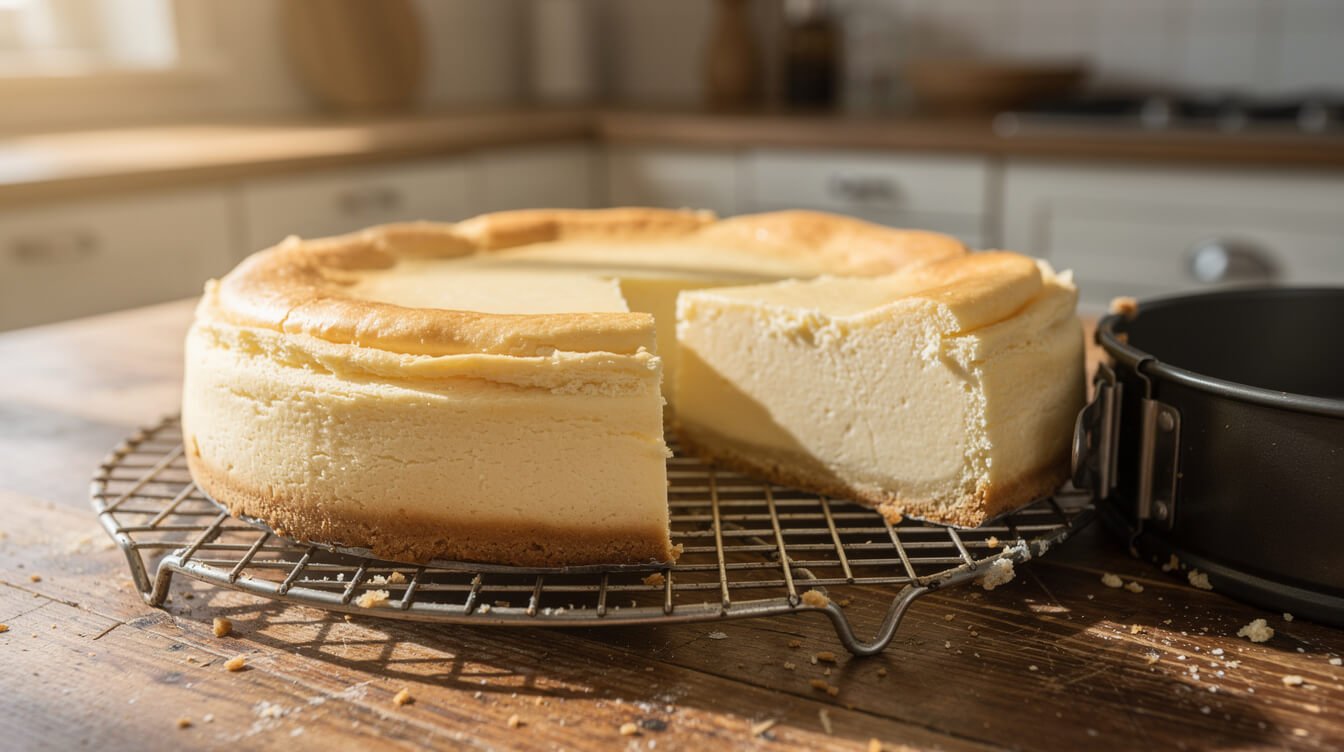
Relax, this one’s easy, and almost any mascarpone substitute will do. A baked mascarpone cheesecake is already very close to a regular American cheesecake, which is made entirely of cream cheese. The eggs and the oven do the setting, so the substitute doesn’t have to hold anything up on its own.
- Swap cream cheese for mascarpone 1:1 by weight. Then, for every 8 ounces, add 2 tablespoons of heavy cream or full-fat sour cream to get back some of mascarpone’s softness. Bake exactly as written.
- Expect a slightly denser, tangier cheesecake than the mascarpone version. Plenty of people prefer it.
- The usual cheesecake rules still apply. Room-temperature cheese, low mixing speed once the eggs go in, and cooling slowly in the turned-off oven. That keeps it from cracking.
Ricotta, if that’s what you’ve got
Whole-milk ricotta works in baked desserts, but it changes the dish. It gives you a lighter, slightly drier, Italian-style crumb rather than a dense, silky one. To get it as close as you can:
- Drain it. Spoon it into a fine sieve over a bowl and let it sit in the fridge for an hour or two.
- Blend it. A minute in a food processor or blender takes away the graininess.
- Add 1 tablespoon of heavy cream per cup to put back a little richness.
Ricotta is great in baked fillings, crostatas, and ricotta-style cheesecakes. Skip it for no-bake work. Even drained, it keeps weeping.
In cakes, muffins, and quick breads
When mascarpone goes into a batter, it’s there for fat and moisture, and full-fat sour cream does that job almost as well. Swap 1:1. It works the same way in a moist quick bread. If you’re tinkering with a batter’s fat in general, our guide to butter substitutes in baking walks through what each swap does to the crumb.
For savory cooking: pasta, risotto, and a spread

In a pan, mascarpone has one job: melt into something silky without splitting. Tang barely matters here, and some brightness is often welcome next to Parmesan and pasta water. What matters is what happens when the dairy hits heat.
Best savory swaps, in order
- Crème fraîche. This is the best savory mascarpone substitute. It’s high in fat and stands up to a simmer without curdling, so you can stir it into a hot sauce and let it bubble. Use the same amount.
- Cream cheese. Whisk it into the pan off the heat with a splash of starchy pasta water, and it melts into a smooth, slightly tangy sauce. Use a little less than the recipe’s mascarpone (about three-quarters as much) and loosen with pasta water or cream until it coats a spoon.
- Heavy cream, reduced. Simmer it for a few minutes until it thickens, then finish with butter and Parmesan. You’ll lose the “cheese” body, but the sauce will be lovely.
What to avoid over heat
Sour cream and Greek yogurt both split into little curds if they boil. You can still use them, but take the pan off the heat first, stir a spoonful of the hot sauce into the yogurt to warm it, then stir it all back in. Don’t let it bubble again. Ricotta stays grainy in a sauce. It’s better dolloped on top of baked pasta than melted into it.
Risotto and spreads
A spoonful of mascarpone stirred into finished risotto is really just extra fat and creaminess. You’ll get the same thing from a knob of cold butter and a big handful of Parmesan beaten in at the end. For a spread on toast, crackers, or a sandwich, anything soft and rich works: cream cheese, crème fraîche, whole-milk Greek yogurt, or blended ricotta. If you’ve got good bread around, our homemade Italian bread is exactly what you want under it, and the soft fresh cheese ideas in our burrata sandwich roundup carry over just as well.
A word on gear, since nearly every swap on this page comes down to a mixer, a fine sieve, and a good spatula. If you’re kitting out a kitchen, our 100 Essential Tools guide covers what’s worth buying first.
From the Eat Cafe kitchen
One good recipe a week, straight to your inbox
The recipe we're actually cooking this week, plus the one tip that saves it when it goes sideways. No spam. Unsubscribe anytime.
Dairy-free mascarpone swaps
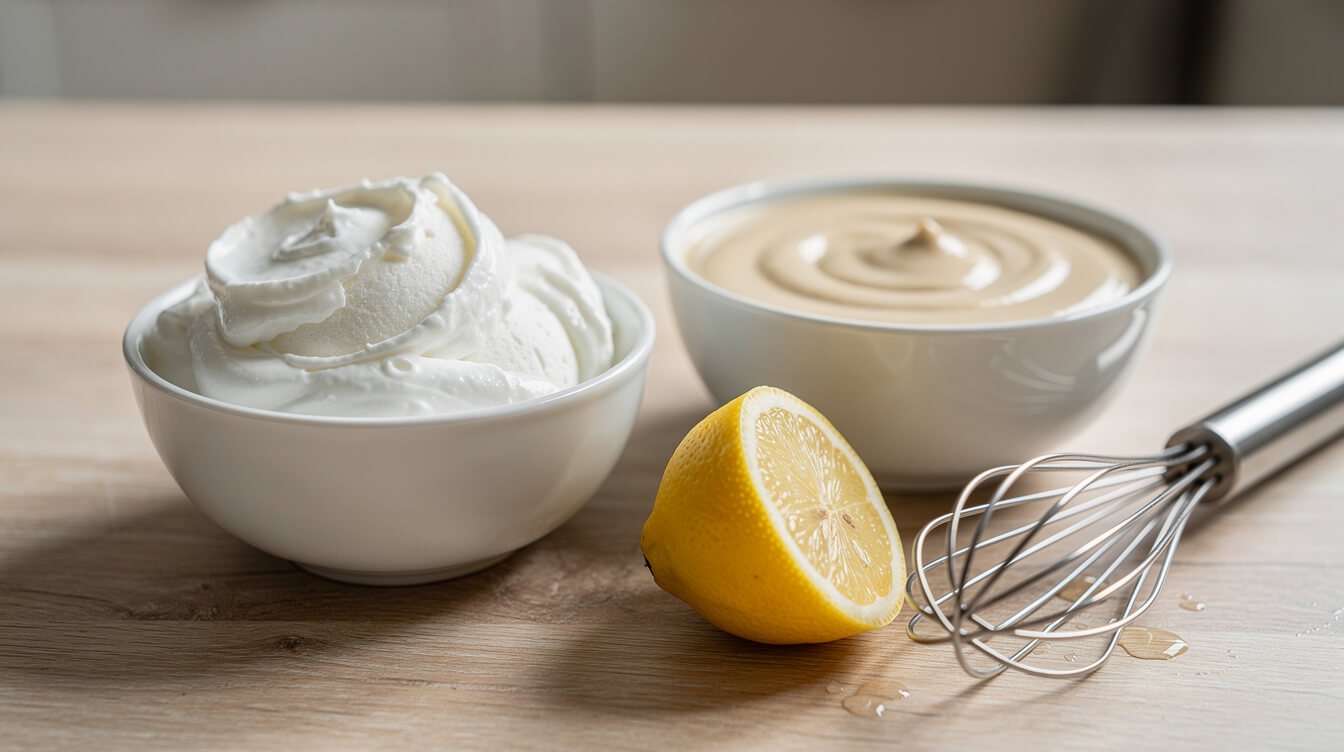
First, a quick distinction. Lactose-free cream cheese is still made from milk. It works for some people who are lactose intolerant, but it isn’t safe for anyone with a milk allergy. If you’re cooking for a dairy allergy, you need a truly plant-based mascarpone substitute, and it’s worth reading every label, since some “vegan-style” spreads still contain milk ingredients.
- Vegan cream cheese plus coconut cream. This is the closest match and it follows the same formula as the dairy version. Beat a plant-based cream cheese smooth, then loosen it with a few tablespoons of the thick cream from a chilled can of coconut milk. It works for tiramisu and frosting.
- Whipped coconut cream. Chill a can of full-fat coconut milk or coconut cream overnight. Scoop off the thick, solid top and whip it with a little powdered sugar. It’s rich and firm, and it holds tiramisu layers well. It does taste like coconut, which is lovely with coffee and less lovely in a savory sauce.
- Cashew cream. Soak raw cashews, then blend them with a squeeze of lemon, a pinch of salt, and a little melted coconut oil until completely smooth. It’s mild, rich, and good in both sweet and savory dishes. Cashews are a tree nut, so it’s off the table for anyone with a nut allergy.
- Blended silken tofu. Use it only for fillings that get blended and baked, like a dairy-free baked cheesecake. It’s the leanest option here, so it won’t whip and won’t hold a no-bake layer.
For savory dairy-free cooking, a thick cashew cream or an unsweetened plant-based cooking cream stirred in at the end gets you closest to that silky finish.

The tools behind every swap on this page
A hand mixer, a fine sieve, a good spatula, and an instant-read thermometer cover nearly everything here. Our 100 Essential Tools guide walks through what earns its drawer space, what to skip, and what to buy first, written for a home kitchen, not a restaurant one.
Make a mascarpone-style cheese at home
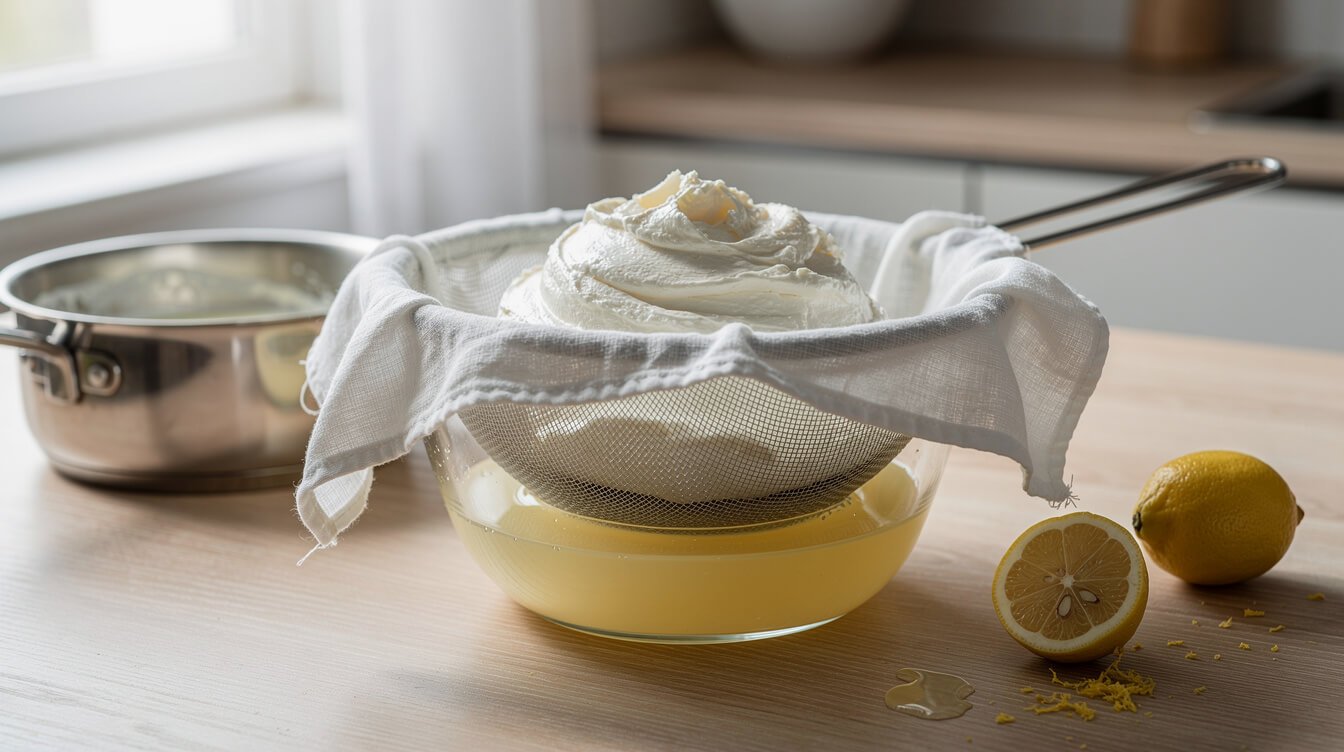
If you’ve got a day’s notice, skip the mascarpone substitute and make something very close to the real thing. Since mascarpone is just cream thickened with acid, all you need is heavy cream and lemon juice.
- 2 cups (480 ml) heavy cream
- 1 tablespoon fresh lemon juice
- Heat the cream gently in a heavy saucepan over medium-low heat, stirring now and then, until it reaches about 185°F on an instant-read thermometer. That’s steaming and shivering, with small bubbles at the edge, but not boiling.
- Stir in the lemon juice and keep it at that temperature for about 5 minutes, stirring, until it thickens enough to coat the back of a spoon.
- Take it off the heat and let it cool for about 30 minutes. Then cover and refrigerate it right in the pan until it’s fully cold.
- Line a fine sieve with a double layer of cheesecloth or a clean coffee filter and set it over a bowl. Pour in the cream, cover, and let it drain in the fridge overnight, 8 to 12 hours.
- Scrape the thick cheese into a clean, covered container. Discard the thin liquid in the bowl.
You’ll get about a cup. If your cream won’t thicken in step 2, it’s usually ultra-pasteurized cream, which sets softer. Give it a few more minutes. It’ll still strain into a thick cheese, just a slightly looser one.
What it is, what it isn’t, and how long it keeps
What you’ve made is a fresh, mild, acid-set cream cheese. It’s thick, rich, and spreadable, and it’s lovely in tiramisu or on toast. It isn’t quite as dense and satiny as commercial mascarpone, which is made with tighter temperature control. Beat it for a few seconds before using it and it’ll smooth right out.
It’s also fresh cream with no preservatives, so treat it that way. Keep it covered in the fridge and use it within 3 to 4 days. Don’t leave it at room temperature for more than 2 hours. If it smells sour or shows any mold, throw it out.
Why your mascarpone substitute split, wept, or tasted too tangy
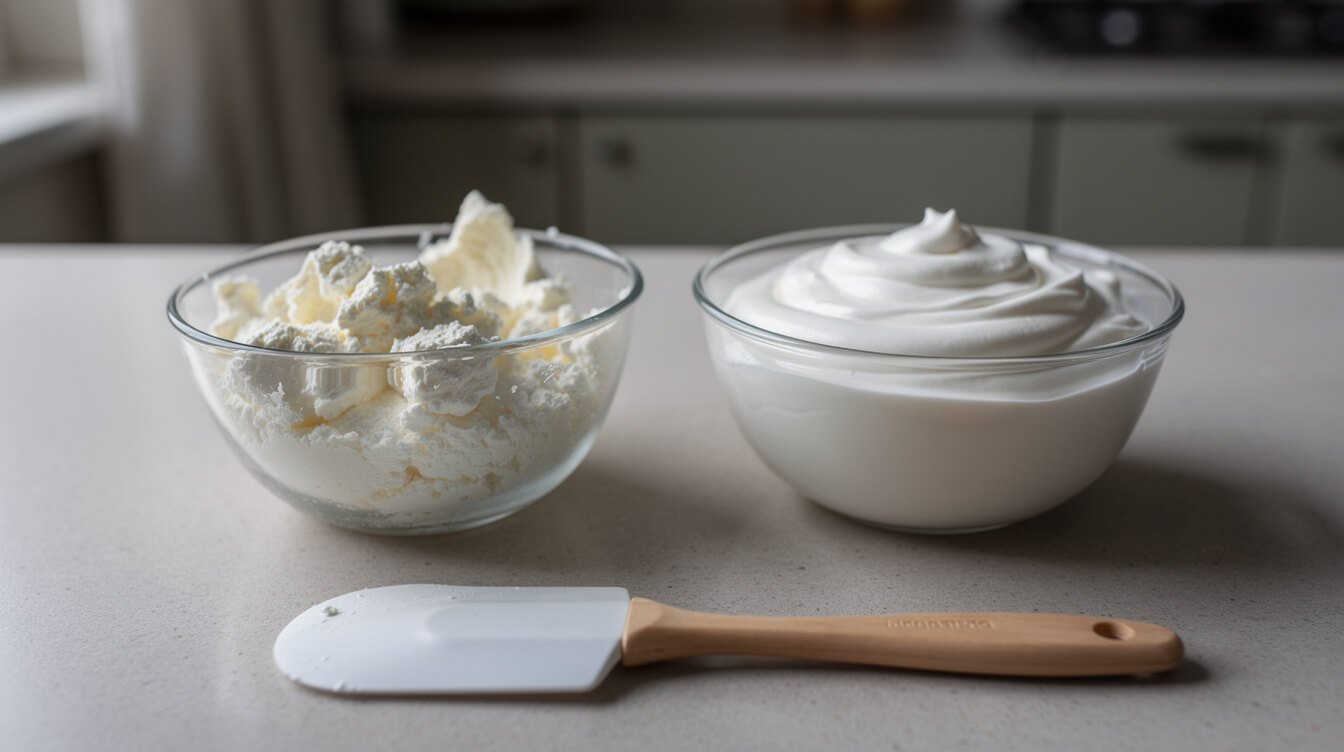
Almost every failed swap comes down to one of these, and nearly all of them are about the order you mix things in.
It went grainy or lumpy
Cause: the cream cheese was cold, or you poured cold cream into cold cheese. Cold cream cheese won’t take in liquid smoothly. It breaks into tiny curds that never quite mix back in.
Fix: always beat room-temperature cream cheese alone until smooth before anything else goes in. If you’re already lumpy, set the bowl over a pot of warm (not hot) water for 30 seconds and beat again, or give it a quick blitz in a blender before you fold in any whipped cream.
It split, curdled, or turned greasy
Cause: over-whipped cream. Once heavy cream goes past stiff peaks, the fat starts clumping on its way to becoming butter, and that graininess spreads through everything you fold it into. Over-beating the finished mixture with a mixer does the same thing.
Fix: whip the cream separately, stop at medium-firm peaks, and fold it in by hand. If it’s only slightly grainy, gently fold in 2 to 3 tablespoons of liquid heavy cream. That often brings it back. If it’s fully broken, it’s still delicious. Use it in a baked dessert, where nobody will see it.
It wept or went runny overnight
Cause: too much water somewhere. The usual culprits:
- Tub, whipped, or low-fat cream cheese instead of the full-fat brick
- Under-whipped cream that never really held air
- Ladyfingers soaked too long
- Undrained ricotta or Greek yogurt in the mix
- Liquid sweeteners like honey or syrup in place of powdered sugar
Fix: brick cheese, cream whipped properly, a fast dip, powdered sugar, and an overnight chill. If a tiramisu is already weeping, tip off what you can, give it another few hours in the fridge, and serve it with a spoon instead of a spatula.
It tasted too tangy
Cause: that’s just cream cheese being cream cheese.
Fix: add the butter, add another tablespoon or two of heavy cream, and use a little vanilla. A small pinch of salt and a spoonful of powdered sugar round it out too. Or go the other way and lean into it. A little lemon zest makes the tang taste intentional.
It set rock-hard in the fridge
Cause: cream cheese, and especially the butter version, firms up more than mascarpone does when cold.
Fix: let the dessert sit on the counter for 15 minutes before serving. Then put it straight back in the fridge.
Frequently asked questions about mascarpone substitutes
Can I use cream cheese instead of mascarpone 1:1?
In baked recipes, yes, swap by weight. For no-bake desserts and frostings, loosen it first with ¼ cup heavy cream per 8 ounces, or it’ll be stiff and tangy.
Is ricotta a good mascarpone substitute?
It’s good in baked desserts and fillings if you drain it and blend it smooth. It’s a poor choice for tiramisu or anything no-bake, because it keeps releasing liquid.
Can I use Greek yogurt instead of mascarpone?
For a dollop on fruit or pancakes, sure. Use whole-milk and expect it to be tangier. It’s too wet and too lean to hold a dessert layer, and it splits over heat.
What’s the difference between mascarpone and cream cheese?
Mascarpone is cream thickened with acid: mild, rich, and soft. Cream cheese is cultured milk and cream: tangier, firmer, and lower in fat. That’s why the cream and butter in the swap work. They push cream cheese back toward mascarpone.
Is crème fraîche the same as mascarpone?
No. Crème fraîche is cultured cream, so it’s thinner and tangier. It’s the best stand-in for savory cooking, but too loose to hold a tiramisu on its own.
Do I need a stand mixer for any of this?
No. A hand mixer does every recipe on this page, and a whisk and some patience will get you there too. If you’re shopping for one anyway, our stand mixer guide for home cooks is honest about when one is worth it.
That’s the whole thing. The best mascarpone substitute is a brick of cream cheese, a splash of cream, and a little butter if you have it. Beat the cheese smooth before anything else touches it. Your tiramisu will hold its layers, and nobody at the table will know you didn’t spend eight dollars on a tub.

Before you go
Want the next one?
We post a new recipe or kitchen guide every day. The best of the week lands in one short email, no life story attached.