Christmas shortbread cookies: one buttery dough, three easy shapes (and how to keep them from spreading)
Christmas shortbread cookies should be the easiest thing on the cookie tray: butter, sugar, flour, and a pinch of salt. So why do they come out flat and greasy one year and so crumbly the next that the dough won’t hold together? It’s almost never the recipe. It’s the butter temperature, the way the flour got measured, and how long the dough spent in the fridge before it hit the oven. Get those three right and shortbread is the most forgiving cookie you’ll bake all December.
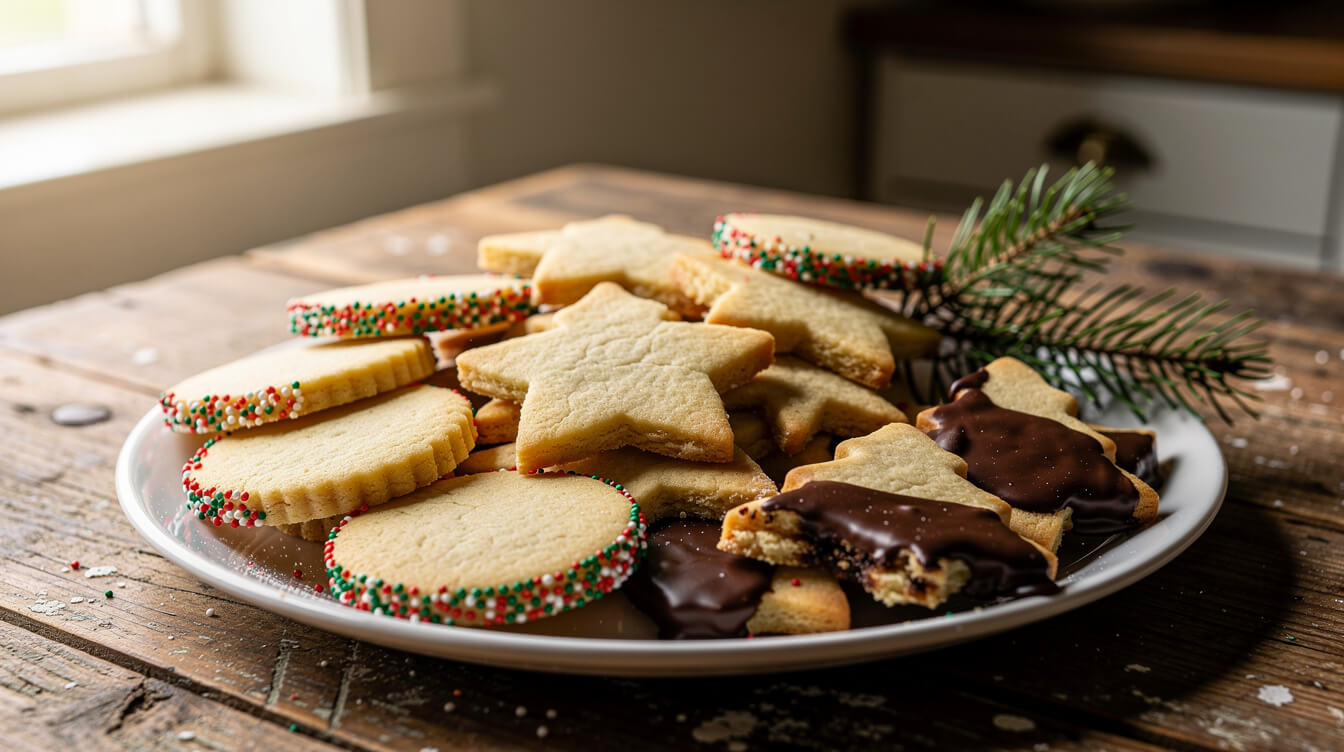
Below is one buttery, melt-in-your-mouth dough you can shape three ways: slice-and-bake rounds rolled in sprinkles, cut-outs that keep their points, or a single pan scored into wedges. The recipe comes first. After that you’ll find easy decorating ideas, a fix-it guide for spreading, crumbling, and hard cookies, and a make-ahead plan so the baking doesn’t all land on December 23.
Christmas shortbread cookies recipe: the ingredients
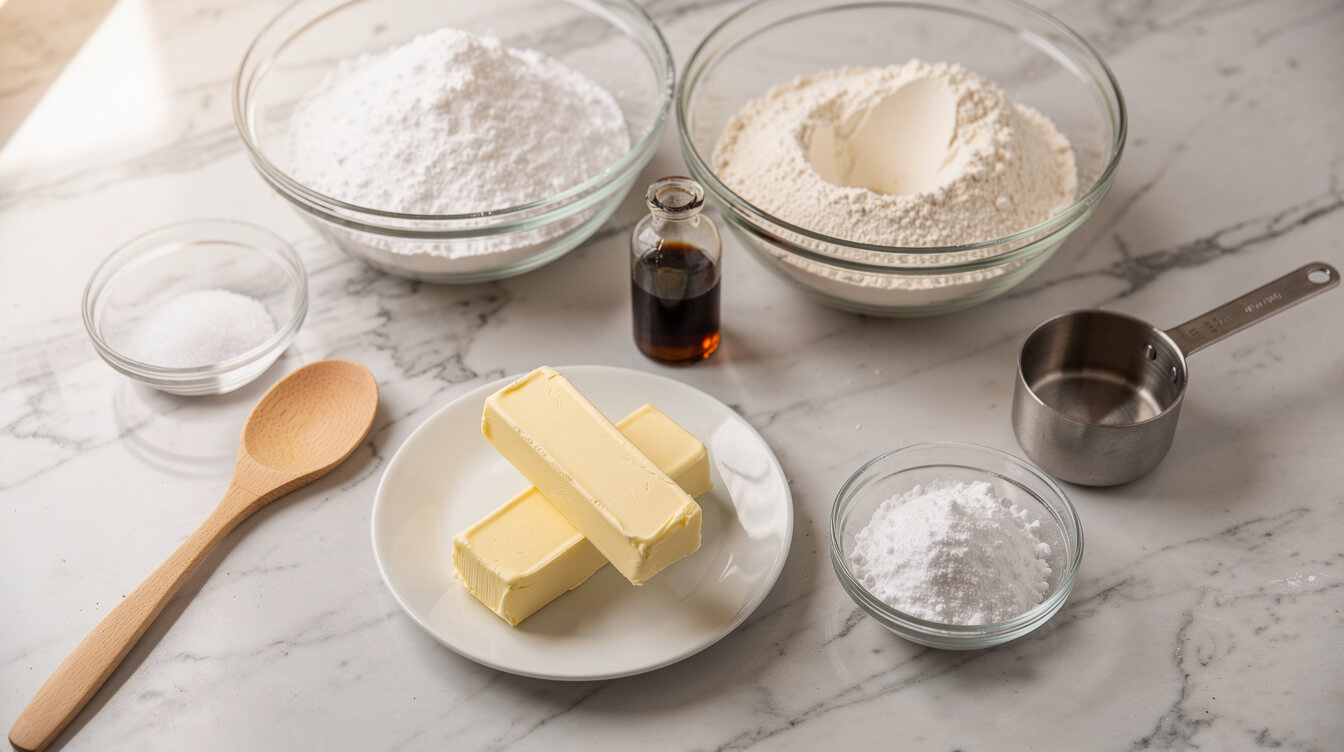
This makes about 48 slice-and-bake cookies, about 32 cut-outs with a 2 1/2-inch cutter, or one 9-inch pan (12 to 16 wedges). Hands-on time is about 20 minutes, plus at least an hour of chilling. No eggs, no leavening, and no special equipment beyond a bowl and a baking sheet.
For the dough
- 1 cup (2 sticks, 226g) unsalted butter, softened but still cool
- 3/4 cup (90g) powdered sugar
- 1/2 teaspoon fine salt (use 1/4 teaspoon if your butter is salted)
- 1 1/2 teaspoons vanilla extract
- 2 cups (250g) all-purpose flour, spooned and leveled
- 1/4 cup (30g) cornstarch
For finishing (pick any)
- 1/3 cup red and green sprinkles (jimmies) or coarse sanding sugar, for rolling the logs
- 4 ounces (115g) dark, semisweet, or white chocolate, for dipping
- Crushed candy canes, chopped pistachios, or more sanding sugar, for topping
Why these ingredients (and what you can swap)
Butter is the flavor, so it’s worth the good stuff. Shortbread has nowhere to hide. If you only have salted butter, use it and cut the salt to a pinch. Our salted vs unsalted butter guide has the exact swap.
“Softened but still cool” is the most important line in this recipe. The butter should dent when you press it but not feel greasy or shiny, about 65°F if you like to check. Butter that’s gone soft and slick from sitting next to the stove is the number one reason Christmas shortbread cookies spread into puddles.
Powdered sugar gives you the tender, melt-in-your-mouth texture most people picture when they think of holiday shortbread. Granulated sugar works too. It makes a crisper, sandier cookie that’s closer to the Scottish style. If you switch, use 1/2 cup (100g) granulated.
Cornstarch is optional, but it’s the reason these taste bakery-soft. It has no gluten, so it softens the flour and keeps the cookie from going tough. No cornstarch? Use 2 cups plus 1/4 cup (280g) of flour instead. The cookies will be a touch firmer and still very good.
Measure the flour the gentle way. Spoon it into the cup and level it off, or weigh it. Scooping straight from the bag packs in an extra 2 to 4 tablespoons, and that’s the difference between a dough that holds and one that falls into crumbs. (More on flour by weight in our cake flour vs all-purpose flour guide.)
How to make Christmas shortbread cookies, step by step
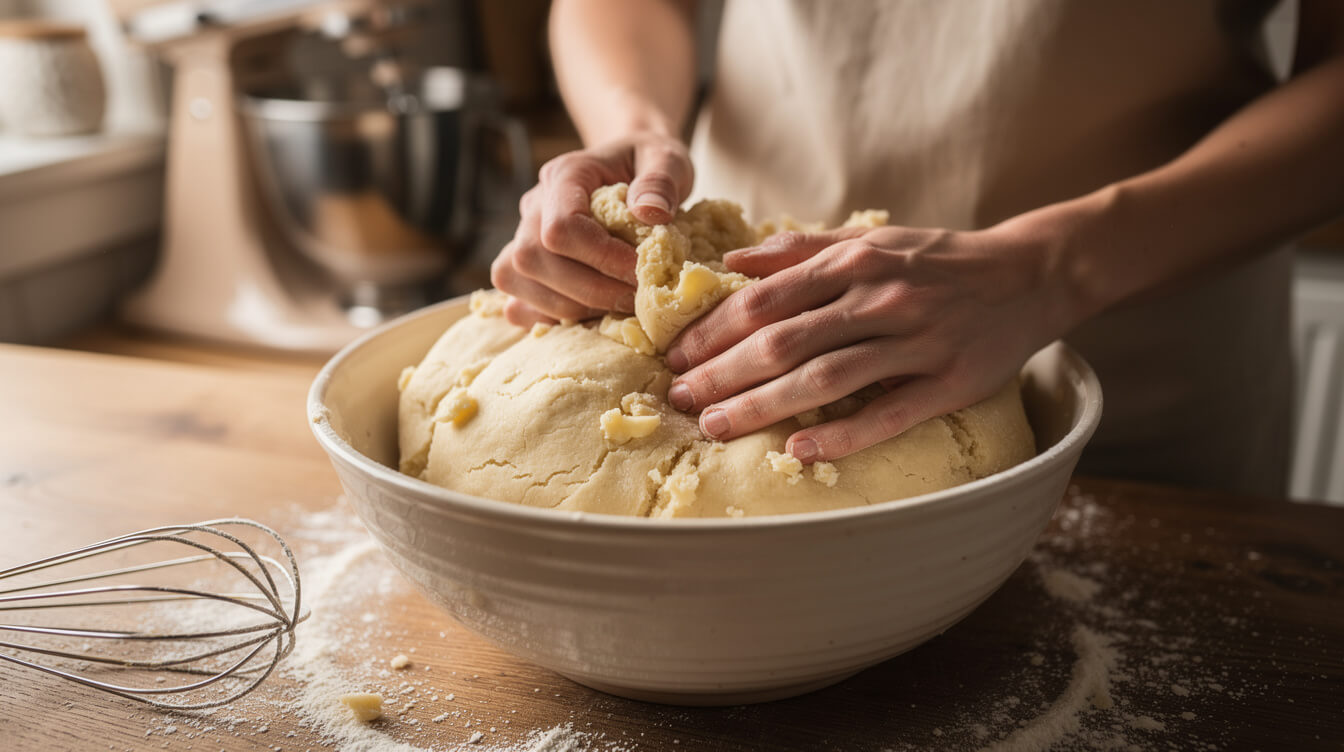
You can do this with a stand mixer, a hand mixer, or a wooden spoon and some elbow grease. Shortbread doesn’t need a lot of air beaten into it. It needs the butter and sugar smooth and the flour mixed in gently.
- Cream the butter and sugar. Beat the butter, powdered sugar, and salt on medium speed for 2 to 3 minutes, until smooth, pale, and creamy. Scrape the bowl once. Beat in the vanilla. Stop there. If you keep beating for 5 or more minutes, the dough gets airy and the cookies puff, then sink and spread.
- Add the dry ingredients. Whisk the flour and cornstarch together in a separate bowl. Add them to the butter on the lowest speed (or with a spatula), mixing just until the dough looks like damp, clumpy sand and no dry flour is left.
- Bring it together by hand. Tip the clumps onto the counter and press them together with your hands for 20 or 30 seconds, until you have a smooth dough. The warmth of your hands does what more mixing would do, without making the cookies tough. If it still won’t come together, see the fix-it section below.
- Shape and chill. Shape the dough one of the three ways in the next section, wrap it, and chill for at least 1 hour (or 30 minutes in the freezer). Cold dough is what keeps the edges sharp.
- Heat the oven to 325°F (165°C) with a rack in the center. Line light-colored metal baking sheets with parchment. Don’t grease them: grease makes shortbread slide and spread.
- Bake until the bottoms are light golden. The tops should stay pale, with the edges just barely starting to color. Times are in the next section, because they depend on the shape.
- Cool on the pan for 5 minutes, then move the cookies to a rack. Warm shortbread is fragile. It firms up as it cools.
Why 325°F? You’ll see shortbread recipes baked anywhere from 275°F to 350°F. Lower temperatures keep the cookies pale but take 30 minutes or more and can leave them pasty. At 350°F the edges brown before the middle bakes through. 325°F is the sweet spot for home ovens: fully baked, tender, and only lightly golden underneath.
One food-safety note: skip the taste of raw dough. The FDA advises never eating raw flour, dough, or batter, and that includes egg-free doughs like this one. The baked cookie is the reward.
Three ways to shape the dough: slice-and-bake, cut-outs, or one pan
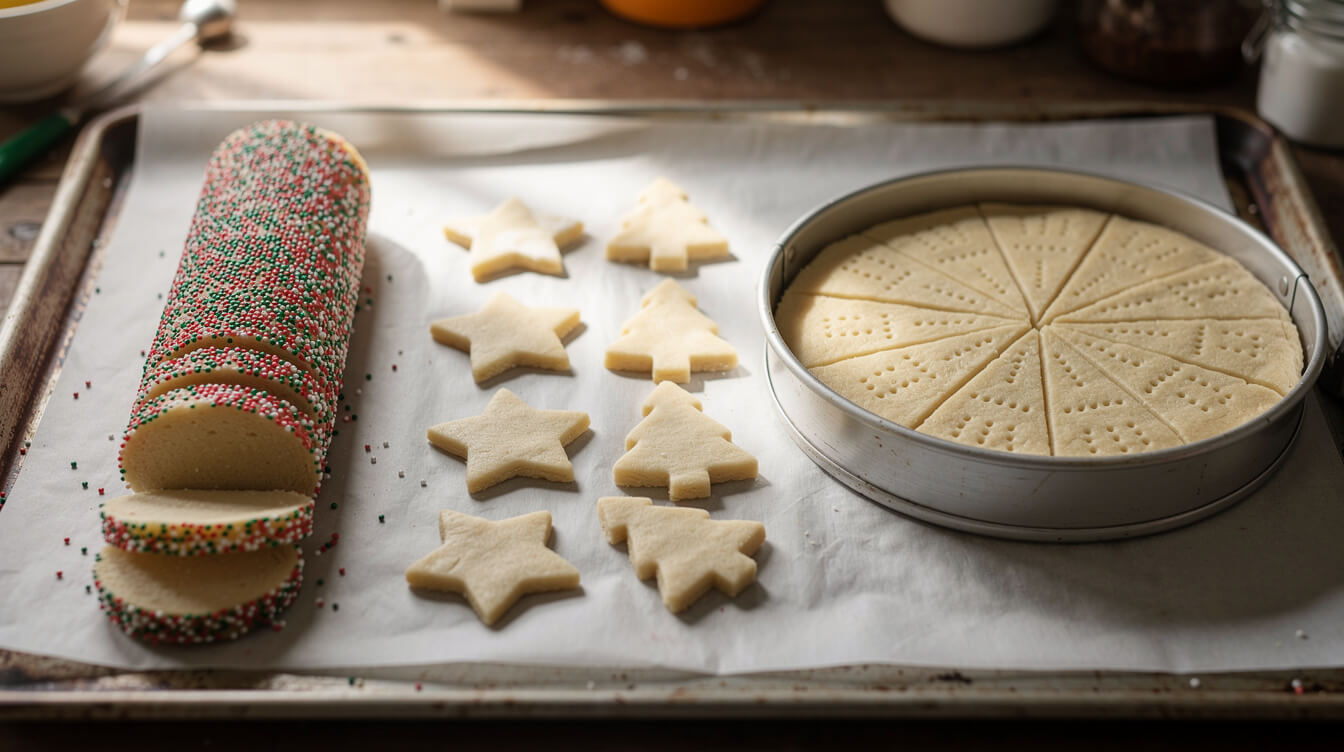
Same dough, three different looks for your Christmas shortbread cookies. Pick by how much time you have and what the cookies are for.
1. Slice-and-bake rounds (easiest, best for big batches)
Divide the dough in half. Roll each half into a log about 1 3/4 inches across and 8 inches long. Spread the sprinkles or sanding sugar on a plate, brush the logs very lightly with water (or just press firmly), and roll them through so the outside is coated. Wrap tightly and chill at least 1 hour, or freeze for later.
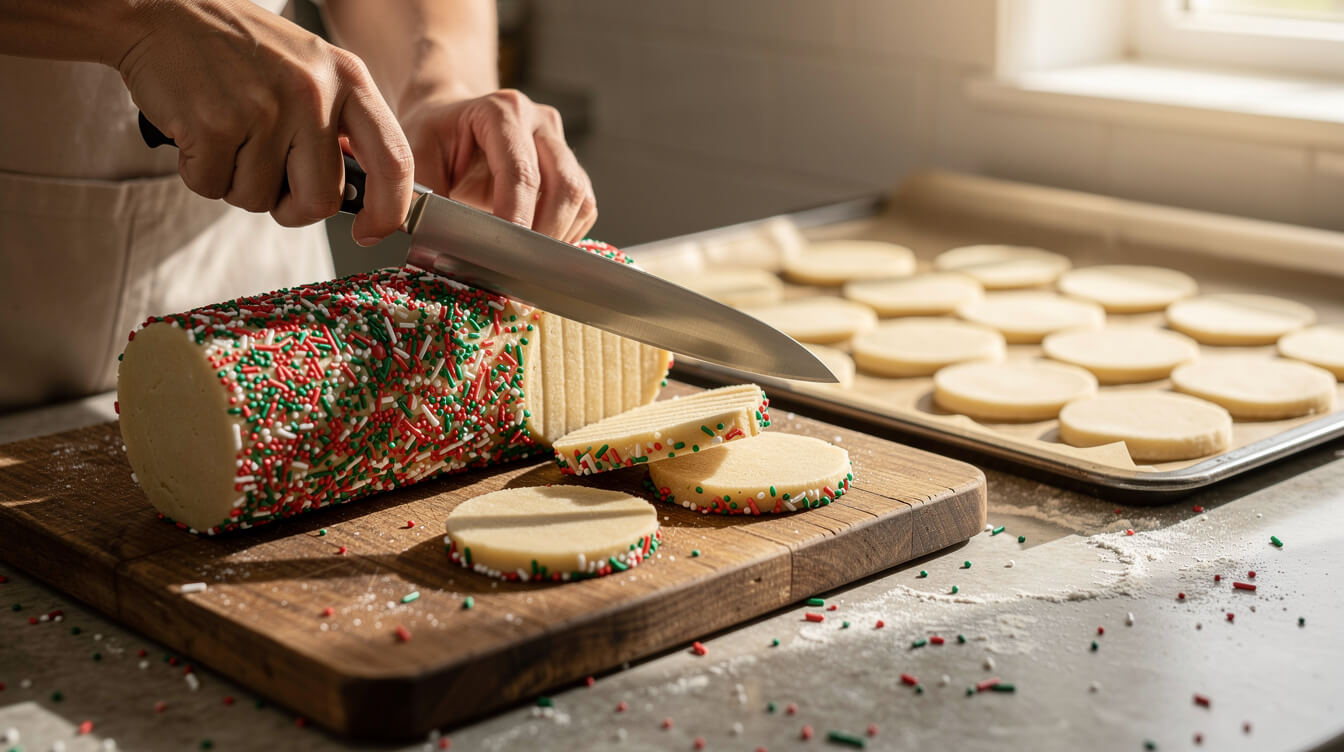
Slice the cold log 1/3 inch thick with a thin, sharp knife, giving the log a quarter turn every few slices so the rounds don’t flatten on one side. Space them 1 inch apart. Bake 15 to 18 minutes.
Use jimmies or sanding sugar rather than tiny nonpareils. Nonpareils tend to bleed their color into the dough, so your neat red and green rim turns pinkish.
2. Cut-outs (stars, trees, and snowflakes)
Divide the dough in half and flatten each piece into a disk. Chill 1 hour. Roll between two sheets of parchment to 1/4 inch thick. Rolling between parchment means you don’t need extra flour, and extra flour is what makes rerolled scraps tough. Cut your shapes, move them to the baking sheet, and slide the whole sheet into the freezer for 10 to 15 minutes before baking. Bake 13 to 16 minutes.
If you want cut-outs with lots of fine detail for icing, our sugar cookie recipe for decorating holds sharper points. Shortbread cut-outs are softer around the edges and richer, and they’re best with simple shapes.
3. One pan, scored into wedges (least work)
Press all the dough evenly into an ungreased 9-inch round or square pan (a springform or a pan lined with a parchment sling makes it easy to lift out). Smooth the top, prick it all over with a fork, and score it into 12 to 16 wedges or fingers with a knife, cutting about halfway down. Chill 20 minutes. Bake 35 to 45 minutes, until pale golden all over and golden at the edges. Re-cut along the score lines while it’s still warm, then let it cool completely in the pan before you lift it out.
A thick pan shortbread is the classic version, sturdy and great for gifting. Sprinkle it with a little granulated sugar right out of the oven for a sparkly top.
Decorating Christmas shortbread cookies without the fuss
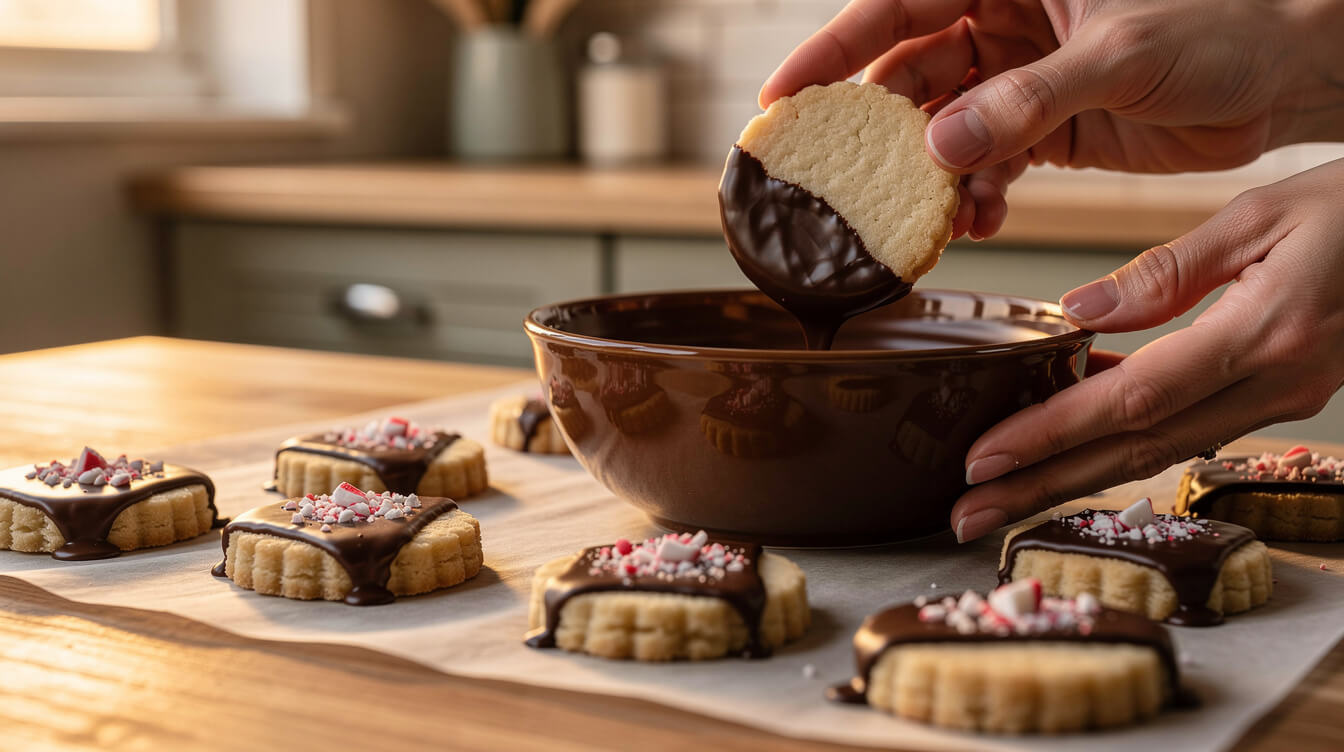
Shortbread is rich enough that it doesn’t need much. A little finish makes it look like Christmas and still lets the butter shine.
- Sprinkle edges. Rolling the logs in sprinkles (above) is the easiest festive look there is. You do it once, and every slice comes out decorated.
- Sanding sugar on top. Press the tops of unbaked cut-outs or rounds into coarse sanding sugar before baking. It stays crunchy and sparkly and won’t melt.
- Chocolate dip. Melt 4 ounces of chopped chocolate in short microwave bursts, stirring between each, until smooth. Dip half of each cooled cookie, let the extra drip off, and set it on parchment. Top right away with crushed candy canes, chopped pistachios, or flaky salt. The chocolate sets at room temperature in about an hour (chilled chocolate bars set firmer than chips).
- A simple glaze. Stir 1 cup powdered sugar with 1 1/2 to 2 tablespoons milk and a drop of peppermint or almond extract. Spoon it over the tops and let it dry. For crisp piped details that dry hard and stack well, use meringue powder royal icing instead.
- Jam centers. Press a thumbprint into rounds of this dough and fill with jam after baking. For a version built for that, see our thumbprint cookies with jam.
Easy flavor twists
Add these with the vanilla. Each one is for the full batch:
- Orange-cranberry: 1 tablespoon orange zest plus 1/2 cup finely chopped dried cranberries.
- Almond: swap 1/2 teaspoon of the vanilla for 1/4 teaspoon almond extract. Go easy, because a little goes a long way.
- Peppermint: 1/4 teaspoon peppermint extract, then dip in dark chocolate and candy cane.
- Brown butter: brown the butter, chill it until it’s firm again, then use it as normal. Nutty and deep.
- Espresso chocolate chip: 2 teaspoons instant espresso powder plus 1/2 cup mini chocolate chips.
Planning a full afternoon of rolling, dipping, and tray-filling? Our Eat Cafe Support Our Charities Donor Membership T-Shirt is a comfortable black tee to bake in, and buying one supports the cause.
From the Eat Cafe kitchen
One good recipe a week, straight to your inbox
The recipe we're actually cooking this week, plus the one tip that saves it when it goes sideways. No spam. Unsubscribe anytime.
Why shortbread spreads, crumbles, or turns hard (and how to fix each)
Shortbread has four ingredients, so when something goes wrong, the cause is usually easy to find. Here are the common problems, from most to least common.
The cookies spread and lost their shape
The butter was too warm, the dough was beaten too long, or the dough wasn’t cold when it went in the oven. Sometimes it’s a warm baking sheet straight from the last batch, or a greased pan.
Fix: Start with cool butter and stop creaming at 2 to 3 minutes. Chill the shaped cookies on the sheet for 10 to 15 minutes in the freezer right before baking. Rotate between two or three baking sheets so each one cools completely, and use parchment instead of grease. A sturdy, light-colored aluminum sheet bakes the most evenly (we compare a few in our best baking sheet guide).
The dough is too crumbly to come together
Too much flour (usually from scooping), or butter that was still cold from the fridge.
Fix: Knead it with your hands for 30 seconds. The warmth often does it. If not, add milk 1 teaspoon at a time, up to 1 tablespoon, and press again. Next time, spoon and level the flour or weigh it.
The cookies are hard or tough instead of tender
The dough was mixed too much after the flour went in, the scraps were rerolled several times with extra flour, or the cookies were baked too long.
Fix: Mix just until no dry flour shows, then finish by hand. Roll between parchment so you don’t add flour, and reroll scraps only once. Pull the cookies when the bottoms are light golden, not brown.
The cookies are greasy
The butter was melted or too soft, or the kitchen was warm and the dough sat out too long.
Fix: If the dough looks shiny and feels oily, chill it for 30 minutes before shaping, and keep the unused dough in the fridge between batches.
The middles taste pasty or raw
They’re underbaked. Pale tops are right for shortbread, but pale bottoms mean the cookie needs more time.
Fix: Lift one cookie with a spatula and check the bottom. It should be light golden. Bake 2 minutes more if it isn’t.
The edges browned too fast
Your oven runs hot, the pan is dark, or the rack is too low.
Fix: Bake on the center rack on a light-colored pan. A cheap oven thermometer will tell you if your oven runs hot. Plenty do, by 25 degrees or more.
The log cracks when you slice it
The dough is too cold, usually straight from the freezer.
Fix: Let the log sit on the counter for 5 to 10 minutes, then slice with a thin, sharp knife and a firm, single downward press. Don’t saw back and forth. If a round cracks, just press it back together on the sheet.

A shirt for a long afternoon of baking
The Eat Cafe Support Our Charities tee is a sturdy, comfortable black cotton shirt with a small logo over the heart and a big one on the back. It shrugs off a dusting of flour and sprinkles, and it pairs nicely with a tin of shortbread for the baker on your list.
How to store, make ahead, freeze, and ship shortbread
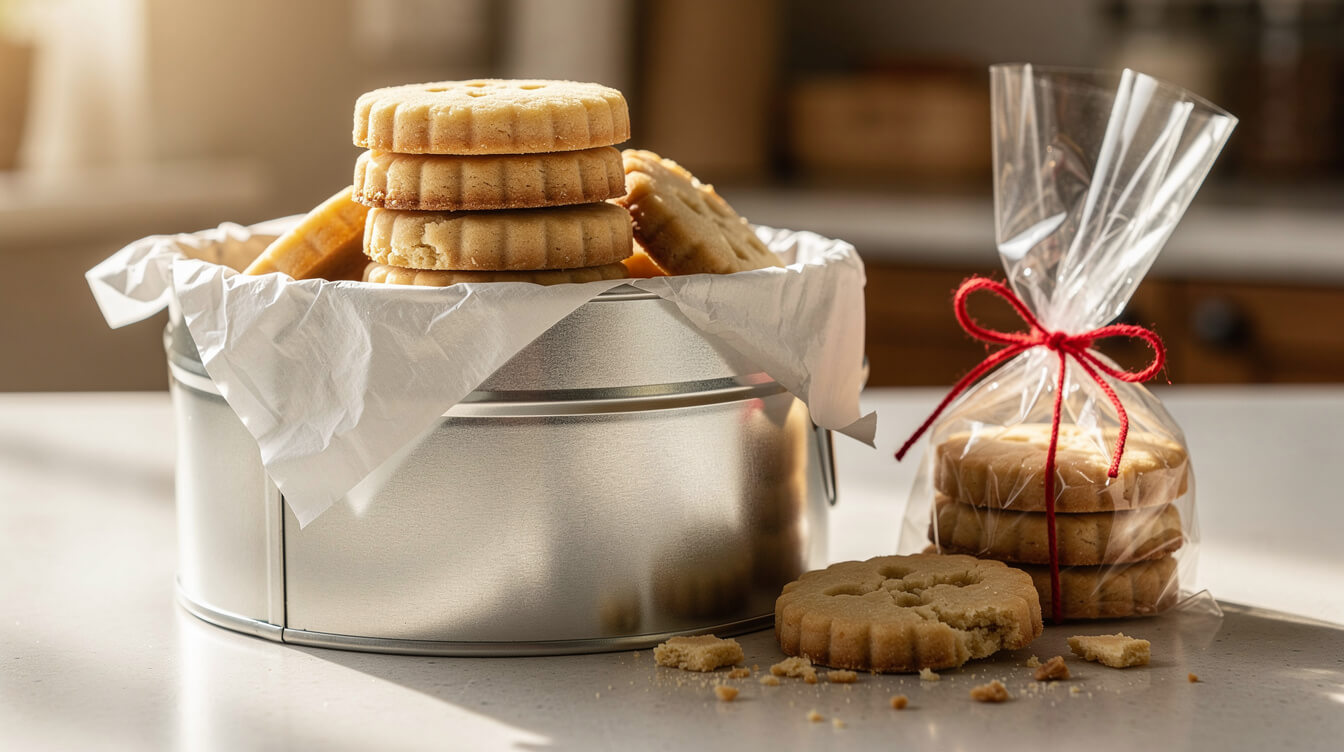
Christmas shortbread cookies are some of the best make-ahead cookies there are. With no eggs or leavening to go stale, it keeps its texture longer than most of the cookie tray. Here’s how to spread the work across the season.
Storing baked cookies
Let them cool completely, then keep them in an airtight tin or container at room temperature for up to 2 weeks. A metal tin keeps them crispest. Put chocolate-dipped or glazed cookies in single layers with parchment between them. Keep shortbread in its own tin, away from soft cookies like gingerbread molasses cookies, because soft cookies give off moisture and the shortbread will soften.
Making the dough ahead
- Fridge: wrapped logs or disks keep up to 5 days.
- Freezer: wrap logs and disks tightly, then put them in a freezer bag, for up to 3 months. Slice logs straight from the freezer after 5 to 10 minutes on the counter, and add a minute or two to the bake time. Thaw disks in the fridge overnight before rolling.
- Frozen cut-outs: freeze cut, unbaked shapes on a sheet until solid, then bag them. Bake straight from frozen, adding 2 to 3 minutes.
Freezing baked cookies
Plain baked shortbread freezes well for up to 3 months in an airtight container. Thaw at room temperature with the lid on, so any condensation forms on the container and not the cookies. Dip or glaze after thawing, not before.
A make-ahead plan for the holidays
- Early December: make two batches of dough, roll into logs, and freeze.
- A week before a swap or party: slice and bake. Store in tins.
- The day before: dip in chocolate and top. Pack them up.
Doing a full cookie spread? Our easy Christmas cookies ideas has a complete make-ahead baking plan, and the cookie press spritz cookies and Linzer cookies recipe both use butter doughs that fit the same schedule.
Shipping and gifting
Shortbread is sturdy, which makes it one of the best cookies to mail. Slice-and-bake rounds and pan wedges travel better than thin cut-outs with skinny points. Stack them in cellophane sleeves or in short stacks wrapped in parchment, pack them snugly in a tin, and fill the gaps with crumpled parchment so nothing slides. Skip chocolate-dipped cookies if they’re headed somewhere warm.
Christmas shortbread cookies FAQ
What makes shortbread different from sugar cookies?
Shortbread is mostly butter and flour, with no eggs and no baking powder or soda. That makes it denser, richer, and more crumbly-tender. Sugar cookies have eggs and usually leavening, so they’re lighter and hold sharper edges.
Should I use powdered sugar or granulated sugar?
Powdered sugar makes a finer, melt-in-your-mouth cookie, which is what most people want in Christmas shortbread cookies. Granulated makes a crisper, sandier cookie with a little crunch. Both are traditional, so use what you like (1/2 cup granulated in place of 3/4 cup powdered).
Do I need a mixer?
No. Mash the softened butter, sugar, and salt together with a sturdy spatula or wooden spoon until smooth, then stir in the vanilla and dry ingredients and finish with your hands. A food processor works too: pulse the butter and sugar until smooth, then pulse in the dry ingredients just until crumbly. If you’re shopping for a mixer anyway, our best stand mixer for home cooks guide covers what’s worth the money.
Why are my shortbread cookies so pale?
That’s normal. Good shortbread is pale on top and only lightly golden on the bottom and edges. If you’d like more color, bake 1 to 2 minutes longer, or sprinkle the tops with sanding sugar, which catches the light.
Can I use salted butter?
Yes. Reduce the added salt to a pinch. Many bakers actually prefer the flavor salted butter gives shortbread.
Can I double the recipe?
Yes, this dough doubles easily. Mix it in a stand mixer if you have one, since it’s a lot of butter to cream by hand. Shape it into four logs or disks so it chills quickly.
How far ahead can I bake Christmas shortbread cookies?
Baked and stored airtight, about 2 weeks at room temperature, or up to 3 months in the freezer. The dough also freezes for up to 3 months, so you can bake fresh whenever you need a tray.
Can I add nuts?
Yes. Stir in 1/2 cup finely chopped toasted pecans or pistachios with the flour, or roll the logs in chopped nuts instead of sprinkles. Chop them fine, because big pieces make the logs hard to slice. If you’re baking for a cookie swap, label the tin so anyone avoiding nuts knows.
The short version
Cool butter, flour measured gently, and a cold dough going into a 325°F oven. That’s the whole secret to Christmas shortbread cookies that hold their shape and melt in your mouth. Cream the butter and sugar just until smooth, mix the flour in gently, finish by hand, and chill before baking. Roll the dough into sprinkle-edged logs for an easy big batch, cut out stars and trees, or press it into one pan and score it into wedges. Bake until the bottoms are light golden, and keep the dough in the freezer so a fresh tray is never more than 20 minutes away.
Make a batch this weekend and stash the logs. Future you, on December 23rd, will be very glad you did. And if you’re building a whole holiday tray, the gifts for bakers guide might give you an idea or two for the baker who’s been asking for your recipe.

Before you go
Want the next one?
We post a new recipe or kitchen guide every day. The best of the week lands in one short email, no life story attached.