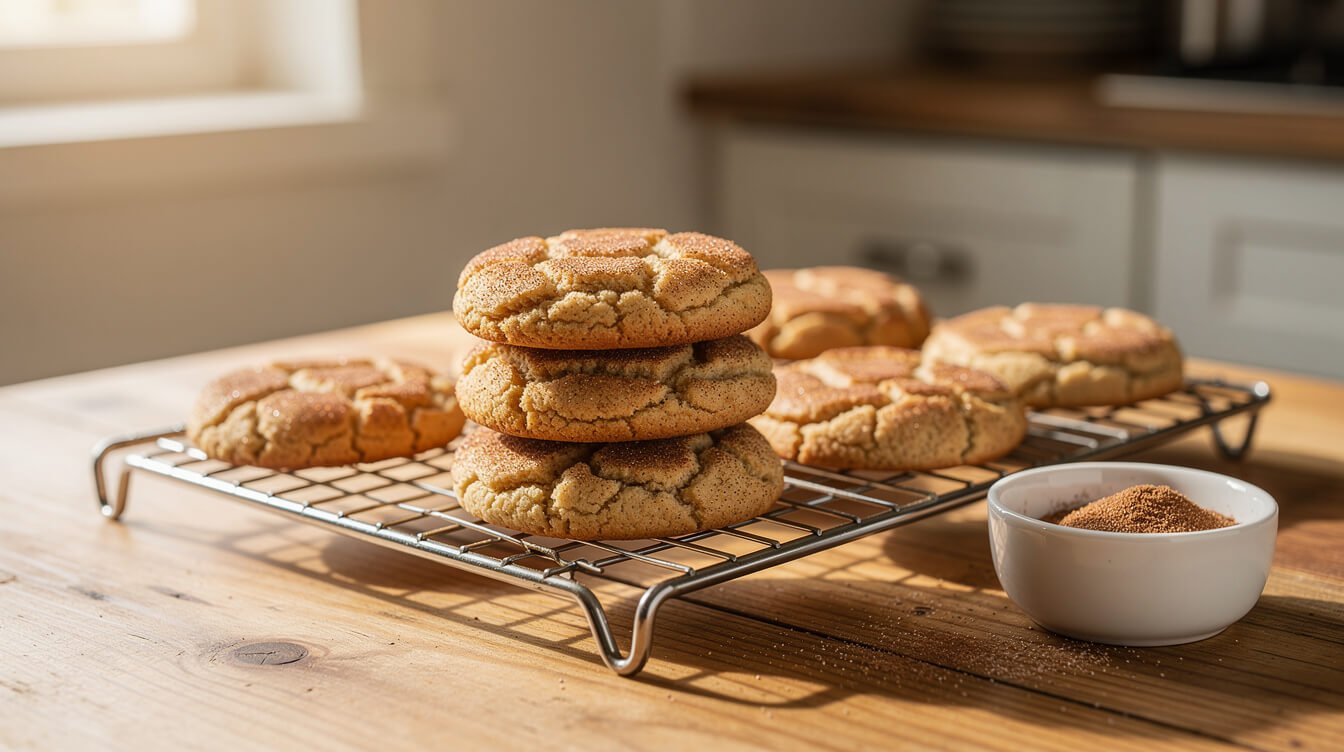
Snickerdoodle recipe without cream of tartar (the swap that matches your pantry, and how to get the tang back)
Out of cream of tartar and halfway into a snickerdoodle craving? You don’t need to run to the store. This snickerdoodle recipe without cream of tartar uses baking powder instead, and it bakes up soft, thick, and crinkly under a heavy coat of cinnamon sugar. The swap takes one line of the ingredient list. The part people get wrong is the amount: if you add baking powder and keep the baking soda, you end up with too much leavening, and the cookies come out puffy and taste a little off.
So here’s the recipe first. After that: why the swap works, what to use if you don’t have baking powder either, how to get some of the classic tang back, the doneness cue that keeps them soft, and a fix-it table organized by what your cookies actually look like.
Snickerdoodle recipe without cream of tartar
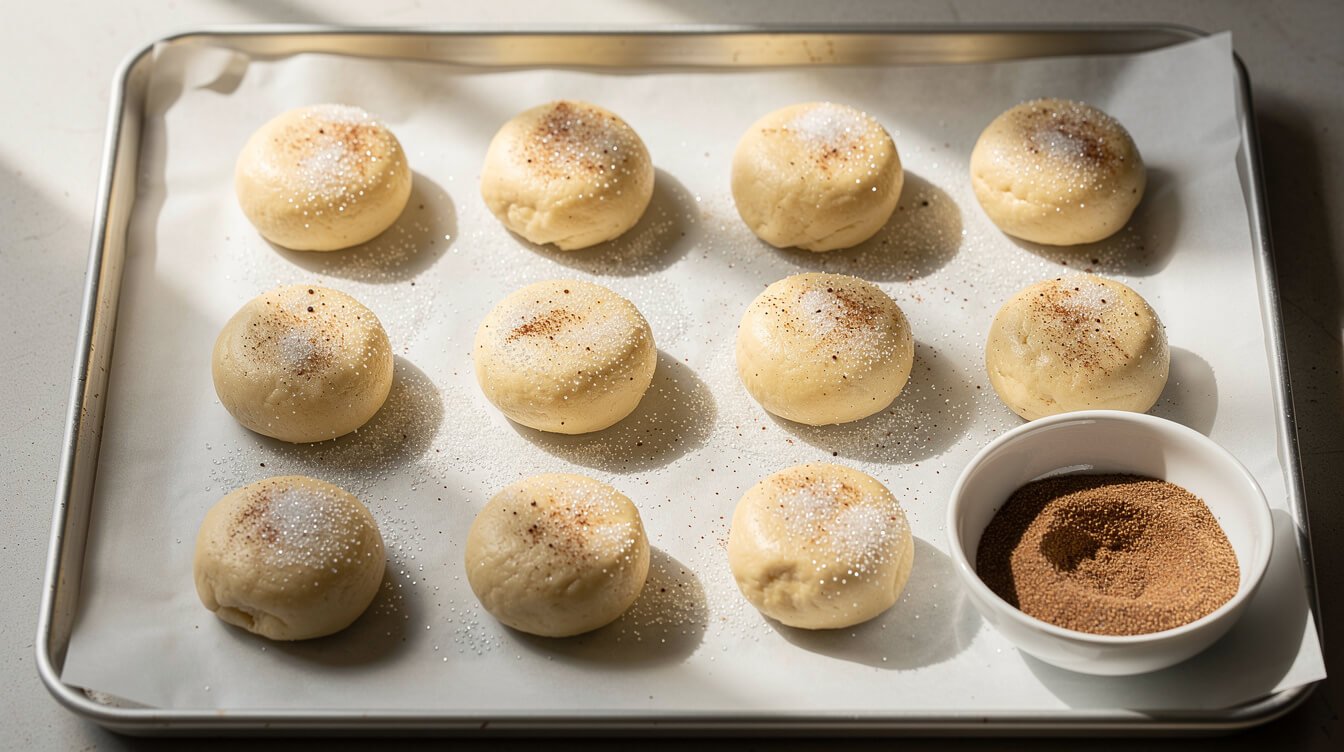
This makes about 3 dozen cookies. It’s an all-butter dough, which tastes better than shortening but spreads a bit more, so there’s an optional 30-minute chill if your dough feels soft. A classic recipe uses 2 teaspoons of cream of tartar plus 1 teaspoon of baking soda. Here, both are replaced by 2 teaspoons of baking powder in total. That’s the same swap King Arthur gives in its own snickerdoodle recipe: “2 teaspoons total, not 3.”
Ingredients
For the cookies:
- 2¾ cups (330 g) all-purpose flour, spooned into the cup and leveled (or weighed)
- 2 teaspoons baking powder
- ½ teaspoon table salt (¼ teaspoon if you’re using salted butter)
- 1 cup (2 sticks / 226 g) unsalted butter, softened. It should be soft enough to dent easily, but not shiny or melting
- 1½ cups (300 g) granulated sugar
- 2 large eggs, at room temperature
- 2 teaspoons vanilla extract
For rolling:
- ¼ cup (50 g) granulated sugar
- 1 tablespoon ground cinnamon
Steps
- Heat the oven to 375°F (190°C). Line two baking sheets with parchment.
- Whisk the dry ingredients. In a medium bowl, whisk the flour, baking powder, and salt so the baking powder is evenly spread out. Clumps of leavening leave bitter spots.
- Cream the butter and sugar. Beat them together on medium speed for 2 to 3 minutes, until pale and fluffy. A hand mixer is fine. So is a wooden spoon and some patience.
- Add the eggs and vanilla. Beat in the eggs one at a time, then the vanilla. Scrape down the bowl.
- Add the flour mixture. Mix on low just until no dry flour is left. Stop there. More mixing makes the cookies tougher.
- Check the dough. It should be soft but scoopable, like playdough. If it’s sticky or greasy (a warm kitchen does this), cover the bowl and chill it for 30 minutes.
- Roll. Stir the rolling sugar and cinnamon together in a shallow bowl. Scoop the dough into 1½-tablespoon balls, roll them between your palms until smooth, then roll them in the cinnamon sugar until they’re completely coated. Set them 2 inches apart on the sheets.
- Bake one sheet at a time for 9 to 11 minutes. Pull them when the edges are set but the centers still look puffy and slightly underdone (more on this below, because it’s the most important step).
- Cool on the sheet for 5 minutes. They finish setting there and the tops fall into crinkles. Then move them to a rack.
One food-safety note: raw cookie dough has raw flour and raw egg in it, and both can carry bacteria. It’s not for snacking, no matter how good it smells.
What cream of tartar actually does (and why baking powder covers it)
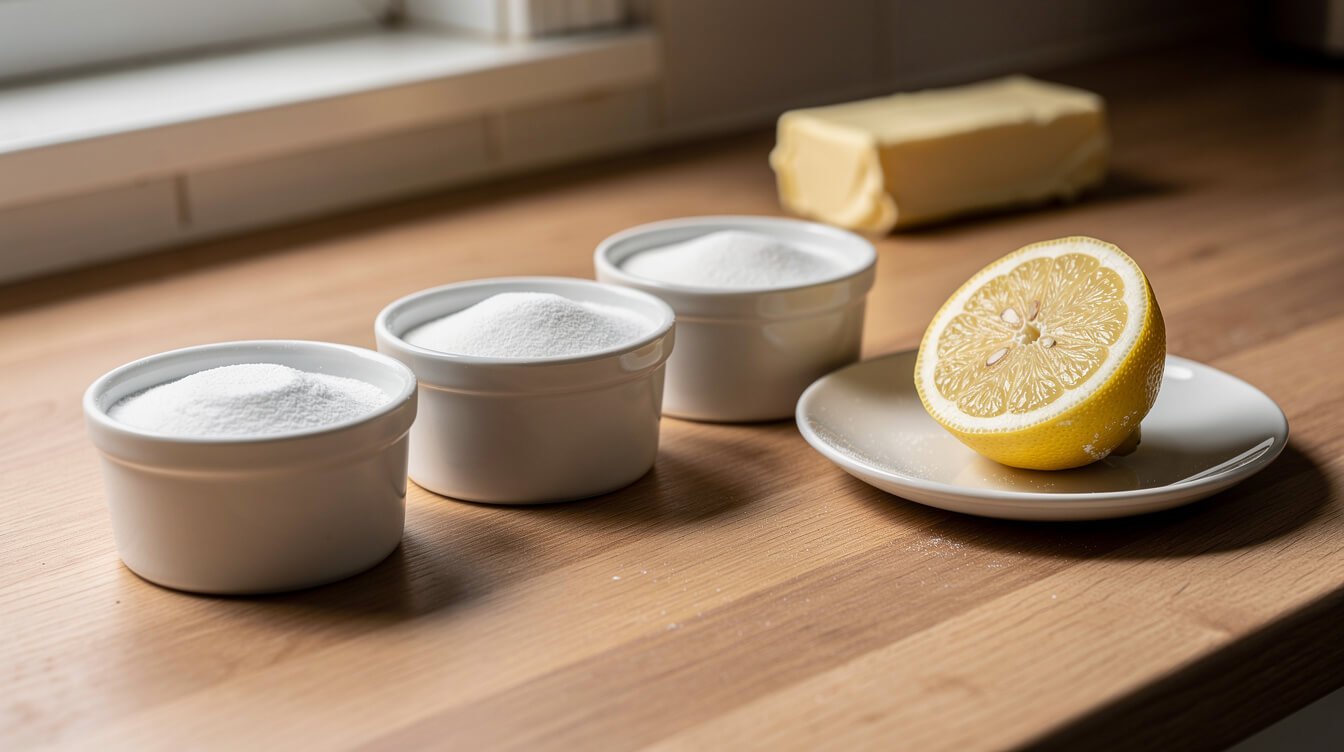
Cream of tartar sounds fancy, but it’s just a dry acid. McCormick describes it as potassium bitartrate, a byproduct of winemaking. In a classic snickerdoodle, it does two jobs:
- It reacts with the baking soda. Baking soda is a base. On its own it doesn’t do much except taste a little soapy. Add an acid and moisture, and it gives off carbon dioxide, which puffs the cookie.
- It adds a faint tang. That slightly sour edge under the cinnamon sugar is what makes a snickerdoodle taste like a snickerdoodle instead of a sugar cookie rolled in cinnamon.
Baking powder is baking soda with the acid already mixed in. Cream of tartar is one of the acids commonly used. That’s why the swap works for lift: you’re not losing the reaction, you’re just buying it premixed. King Arthur’s homemade baking powder is literally ¼ teaspoon baking soda plus ½ teaspoon cream of tartar (plus a little cornstarch to keep it dry) for every teaspoon.
Why it’s 2 teaspoons, not 3
This is where most swaps go sideways. A classic recipe lists 2 teaspoons of cream of tartar and 1 teaspoon of baking soda. It’s tempting to swap the cream of tartar for baking powder and leave the soda in, or to add the two numbers together and use 3 teaspoons of baking powder. Both give you more leavening than the dough needs. The cookies rise high, then slump. They come out cakey, and they can taste bitter or metallic. King Arthur’s note on its own recipe is blunt about it: 2 teaspoons of baking powder total, and no soda.
What you lose
Let’s be honest about this. Baking powder handles the lift, but its acid is all used up reacting with the soda, so there’s none left over to taste. The baking powder version is a softer, sweeter cookie, more cinnamon-sugar than tangy. Most people never notice. If you grew up on the classic and miss the tang, there’s a section on getting some of it back below.
If you’ve used our buttermilk substitutes, this is the same idea in reverse. There, you add an acid so the baking soda has something to react with. Here, the acid comes built into the baking powder.
The cream of tartar swap for what’s in your pantry
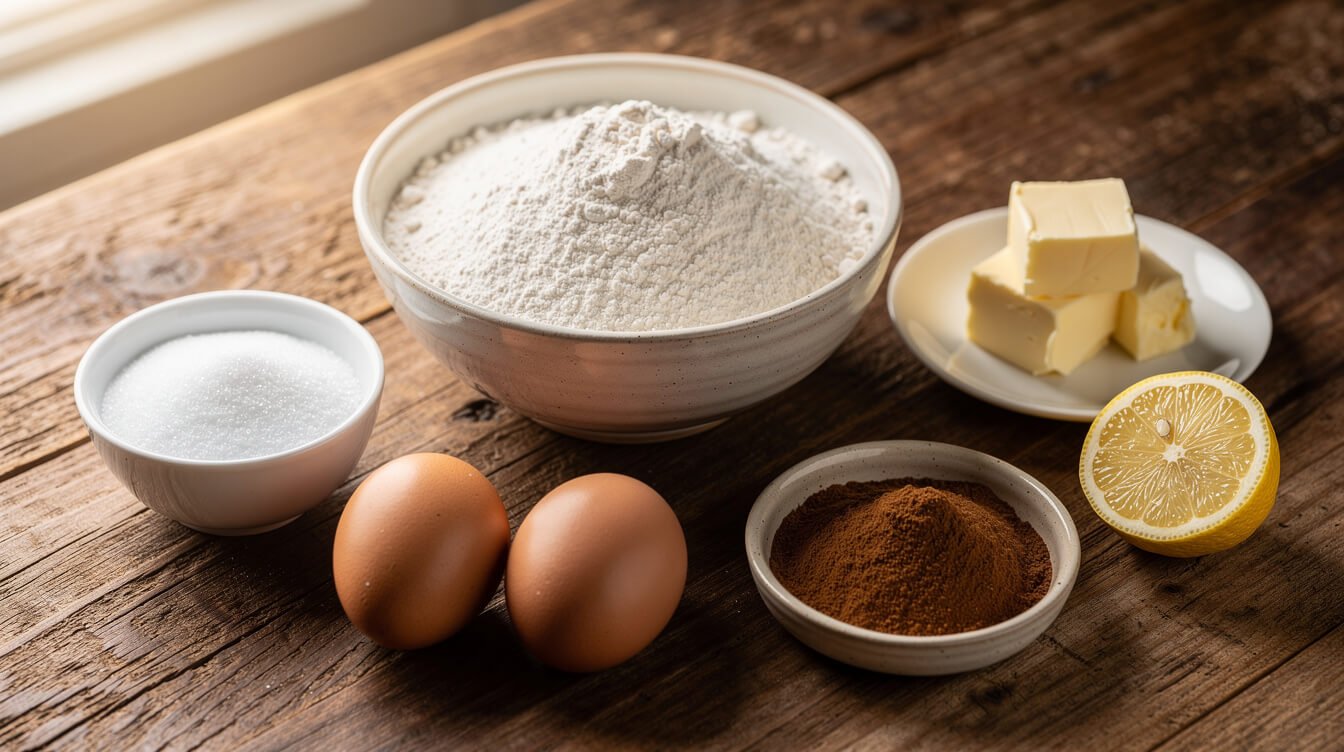
Every recipe online assumes you have baking powder. You might not. Find your row. The amounts are for a full batch like the one above (about 2¾ cups of flour). The ratios come from King Arthur’s leavening substitutions, which put 1 teaspoon of baking powder equal to ¼ teaspoon of baking soda plus ½ teaspoon of lemon juice or white vinegar.
| What you have | Use this in place of 2 tsp cream of tartar + 1 tsp baking soda | What to expect |
|---|---|---|
| Baking powder | 2 tsp baking powder. No soda. | Soft, thick, mild. The easiest swap. It’s what the recipe above uses. |
| Baking soda + lemon juice | ½ tsp baking soda (in the flour) + 1 tsp lemon juice (with the vanilla) | Same lift as 2 tsp baking powder. Fresh or bottled juice both work. |
| Baking soda + white vinegar | ½ tsp baking soda + 1 tsp white vinegar | Works the same as lemon. Plain white vinegar keeps the flavor neutral. |
| Baking soda only, no acid at all | Don’t. Find a lemon or some vinegar first. | Soda with no acid doesn’t react fully. You get a flatter cookie with a soapy, metallic edge. |
| Baking powder + lemon juice | 2 tsp baking powder, plus 1 tsp lemon juice for brightness | Same lift as row one, with a little brightness. See the tang section. |
A few notes on the swaps
- Add the soda to the flour and the liquid acid to the wet ingredients. Once they meet, the reaction starts. Scoop and bake without letting the dough sit around on the counter for an hour. A short chill in the fridge is fine.
- Check that your baking powder still works. Old baking powder is a quiet cause of flat cookies. Stir ½ teaspoon into a little hot water. If it fizzes right away, it’s good. If it barely does anything, replace it.
- Don’t try a straight 1-for-1 using a general swap chart. Generic charts (McCormick’s, for one) say to use 1½ teaspoons of baking powder for each teaspoon of cream of tartar. Apply that to a classic snickerdoodle and you’d end up with 3 teaspoons of baking powder plus the baking soda, which is far too much. Stick to the table.
Measuring the flour right matters just as much as the leavening. Packed flour is the most common reason snickerdoodles turn out dry. If your cookies are always a bit thick and dry, try weighing the flour once. Our baking basics for beginners covers spoon-and-level if you don’t have a scale.
Getting the tang back
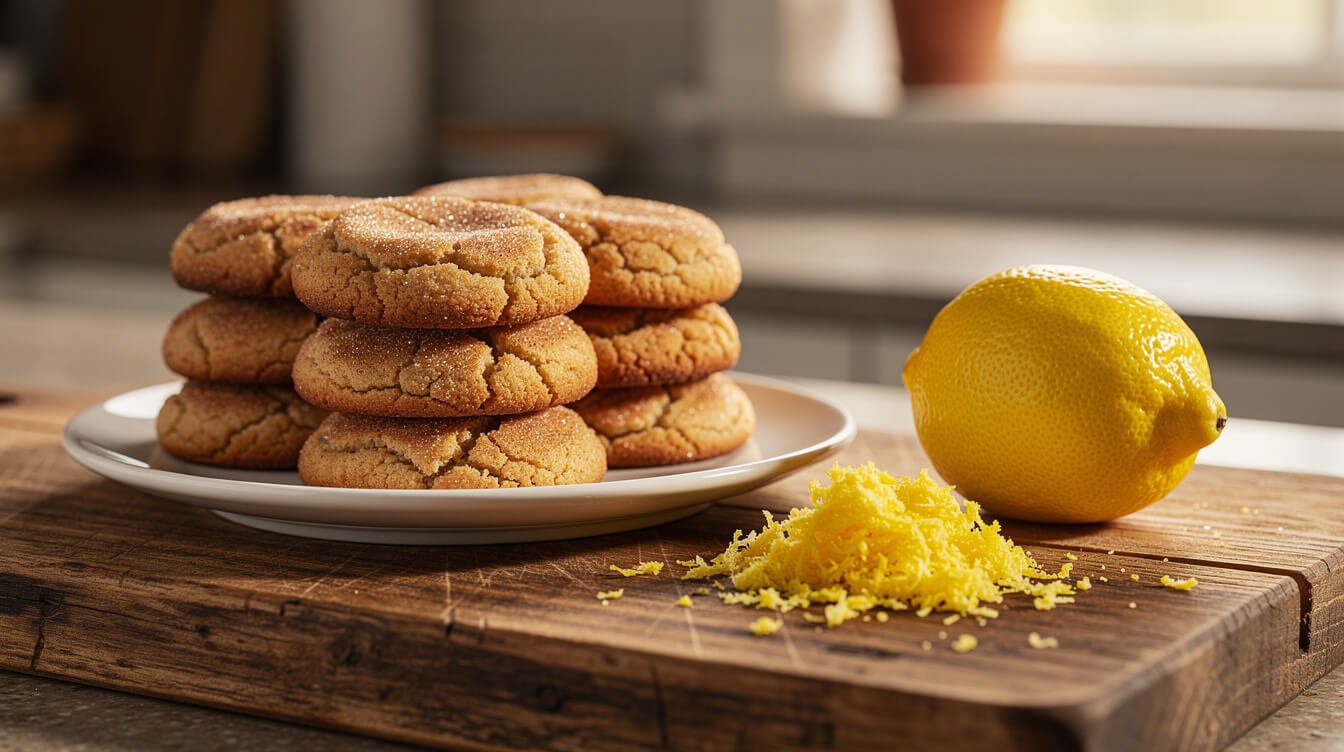
Most recipes stop at “they won’t be quite as tangy.” Here’s what you can actually do about it, and what each option does and doesn’t fix:
Option 1: Buy a jar of cream of tartar for next time
Honestly, this is the only way to get the exact classic flavor. A small jar is cheap and keeps for a long time, because it’s a dry, stable powder. It’s also useful for whipping egg whites. If you have it next time, the classic swap is simple: skip the baking powder and use 2 teaspoons of cream of tartar plus 1 teaspoon of baking soda.
Option 2: A teaspoon of lemon juice
Adding 1 teaspoon of lemon juice with the vanilla (row five in the table) gives the cookie a bit of brightness that reads close to tang. Even at that small amount, a little lemon can come through, as King Arthur points out when it talks about using lemon juice in place of cream of tartar. Most people read it as “brighter.” Don’t go above a teaspoon. More acid starts to change the texture and make the flavor taste lemony.
Option 3: Lemon zest (flavor, not tang)
Half a teaspoon of finely grated zest rubbed into the sugar is lovely, but be clear-eyed about it: zest adds lemon flavor, not acidity. It makes a cinnamon-lemon cookie, which is great. It’s just a different cookie.
Option 4: A pinch of citric acid (if you already have it)
If you’ve got citric acid from canning or cheesemaking, some bakers add a small pinch to the dry ingredients for that sour edge. Treat it as an experiment. It’s much stronger than cream of tartar, so start with about ¼ teaspoon per batch and taste one cookie before you change anything else. Don’t buy it just for this. Option 1 is cheaper and more reliable.
One thing that doesn’t help: adding more baking powder. Extra baking powder doesn’t add tang. It adds lift and that bitter, metallic note.
From the Eat Cafe kitchen
One good recipe a week, straight to your inbox
The recipe we're actually cooking this week, plus the one tip that saves it when it goes sideways. No spam. Unsubscribe anytime.
When to pull them out (the tip that keeps them soft)
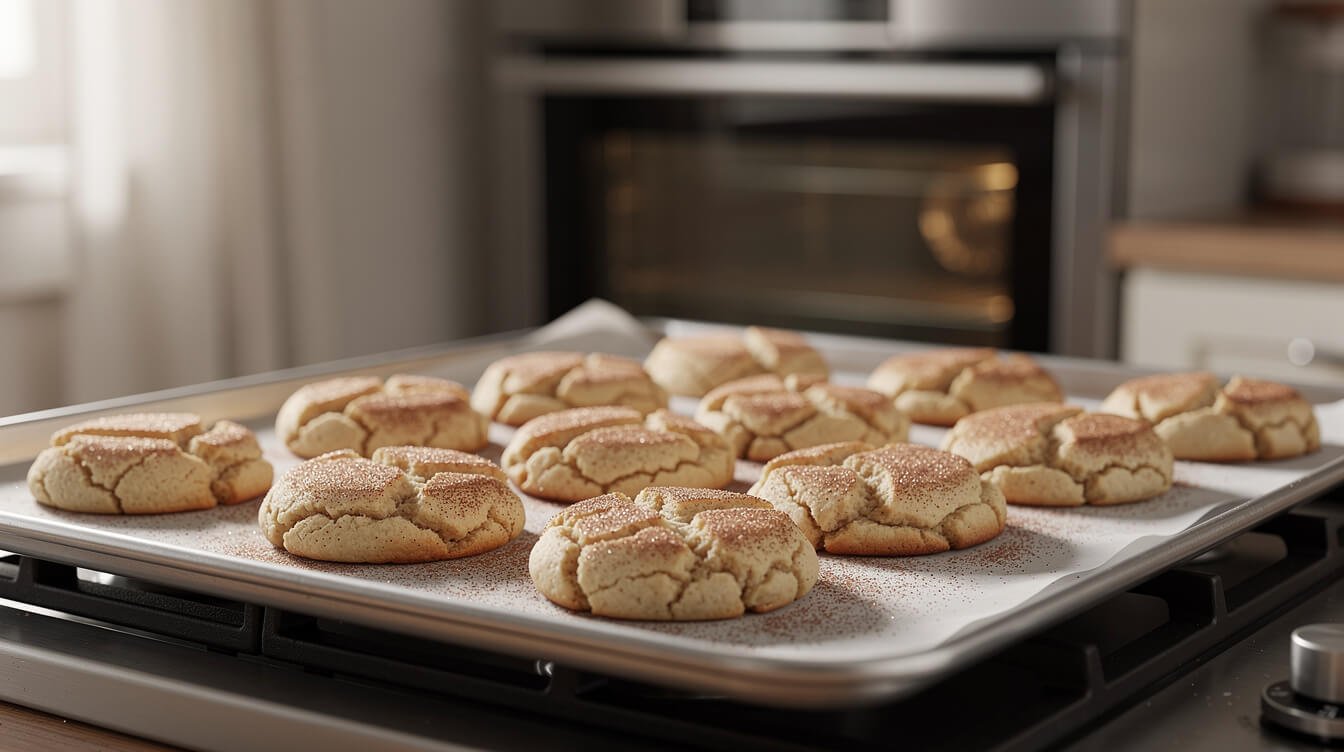
If your snickerdoodles keep turning out dry and hard, this is almost certainly why. With chocolate chip cookies, you can watch for golden edges. Snickerdoodles stay pale, and the cinnamon sugar hides the color. By the time they look done, they’re overbaked.
Here’s what to look for instead:
- The edges are set. Nudge one cookie with a spatula. It should hold its shape and slide as one piece instead of smearing.
- The centers look puffy, soft, and a little underdone. They might look shiny or wet in the very middle. That’s right.
- The bottoms are just barely golden, if you lift one to check. Deep brown bottoms mean they went a minute too long.
Then leave them alone on the hot sheet for 5 minutes. They keep cooking from the pan’s heat, the puffed centers sink, and the tops crack into those classic crinkles. Baker Bettie gives the same cue in her snickerdoodle recipe: they should look slightly underbaked but set around the edges.
Timing that changes the bake
- Bigger cookies (2-tablespoon scoops) need 11 to 13 minutes. Use the same visual cue.
- Dark pans brown the bottoms faster. Check a minute early, or use a light-colored sheet.
- Two sheets at once bake unevenly. If you have to, swap them top to bottom halfway through.
- Chilled dough may need an extra minute.
If you’re baking for a cookie swap or a big holiday tray this year, our Support Our Charities Donor Membership T-Shirt is a comfy one to bake in, and it’s a nice way to support the kitchen.

A shirt for cookie-swap season
The Eat Cafe Support Our Charities tee is a soft, sturdy black cotton shirt with a small logo over the heart and a big one on the back. Wear it to bake, and help support the kitchen.
Flat, puffy, or hard? Fix it by what you see
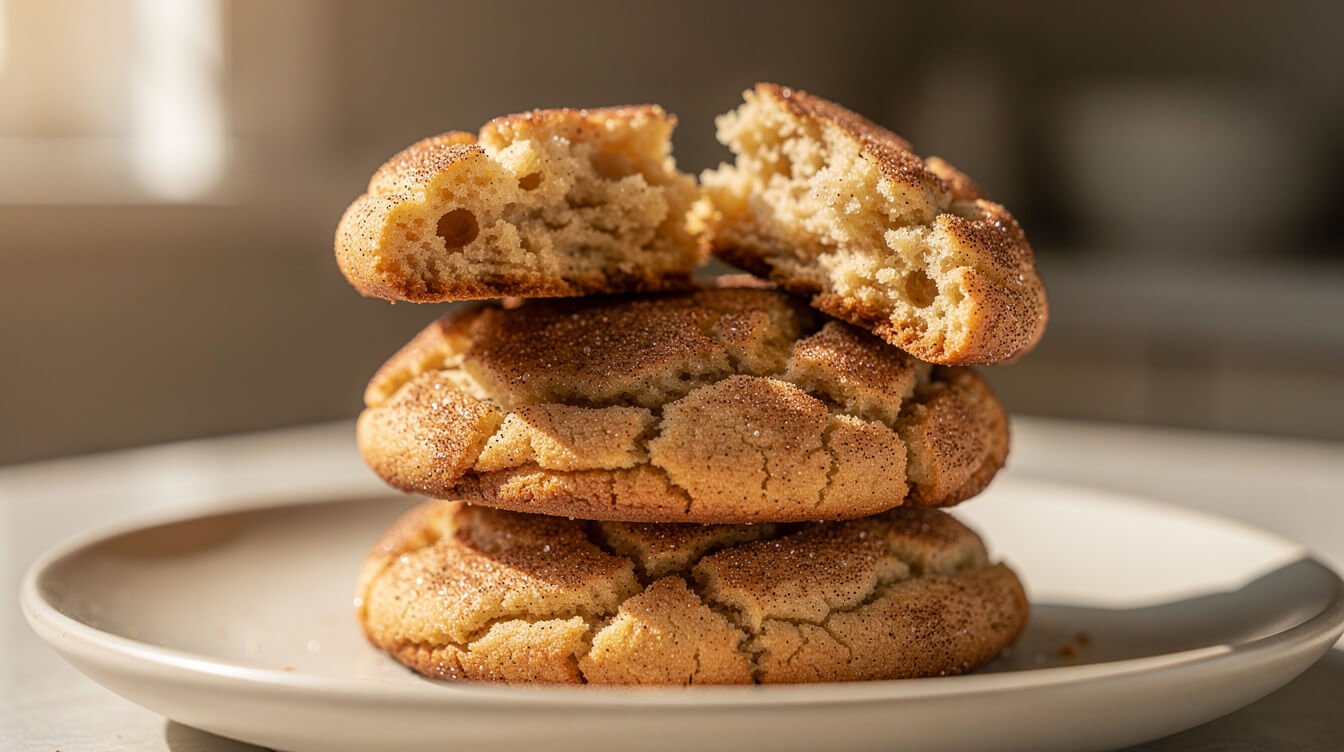
Look at the cookie you’ve got, find it in the table, and fix that one thing next batch.
| What you see | Most likely cause | Fix |
|---|---|---|
| Flat, spread-out, greasy edges | Butter too soft or melty, or a warm kitchen | Chill the dough 30 minutes before rolling. Butter should dent, not smear. |
| Flat and dense, didn’t rise at all | Old baking powder, or soda with no acid | Do the hot-water fizz test. Use a swap from the pantry table. |
| Tall, cakey, puffy domes | Too much leavening (soda kept in, or 3 tsp baking powder), or too much flour | 2 tsp baking powder total, no soda. Spoon and level the flour, or weigh it (330 g). |
| Bitter or metallic aftertaste | Too much leavening, or a clump of it that didn’t mix in | Measure level teaspoons, and whisk the leavening into the flour before it meets the butter. |
| No crinkles, smooth tops | Overbaked, dough too stiff, or not enough coating | Pull them earlier, check the flour, and roll the balls in the cinnamon sugar until fully coated. |
| Dry and crumbly | Packed flour, or overbaked | Weigh the flour. Pull them when the centers still look underdone. |
| Soft on day one, hard on day two | Overbaked slightly, or stored uncovered | Airtight container. Add a slice of bread to keep them soft (see storage). |
| Coating slid off or melted into a puddle | Dough balls too warm and greasy | Chill the dough, then roll. The sugar should stick to a cool, slightly tacky ball. |
The one-cookie test bake
Not sure your dough is right? Bake one cookie by itself first. If it spreads into a puddle, chill the rest of the dough. If it stays a tall ball, flatten the rest slightly with your palm before baking. Ten minutes of checking saves a whole tray. It’s the same trick we use on chocolate chip cookies that keep going flat.
Butter matters more than you’d think
Butter that’s too warm causes most snickerdoodle spreading. “Room temperature” in a recipe means about 65°F: cool to the touch and soft enough to dent with a finger. If it’s glossy or leaving grease on the wrapper, it’s too warm. Pop it back in the fridge for 10 minutes. If you only have salted butter, it works fine. Just cut the salt in the recipe to ¼ teaspoon (our salted vs unsalted butter guide has the full swap).
Make-ahead, freezing, and storing snickerdoodles
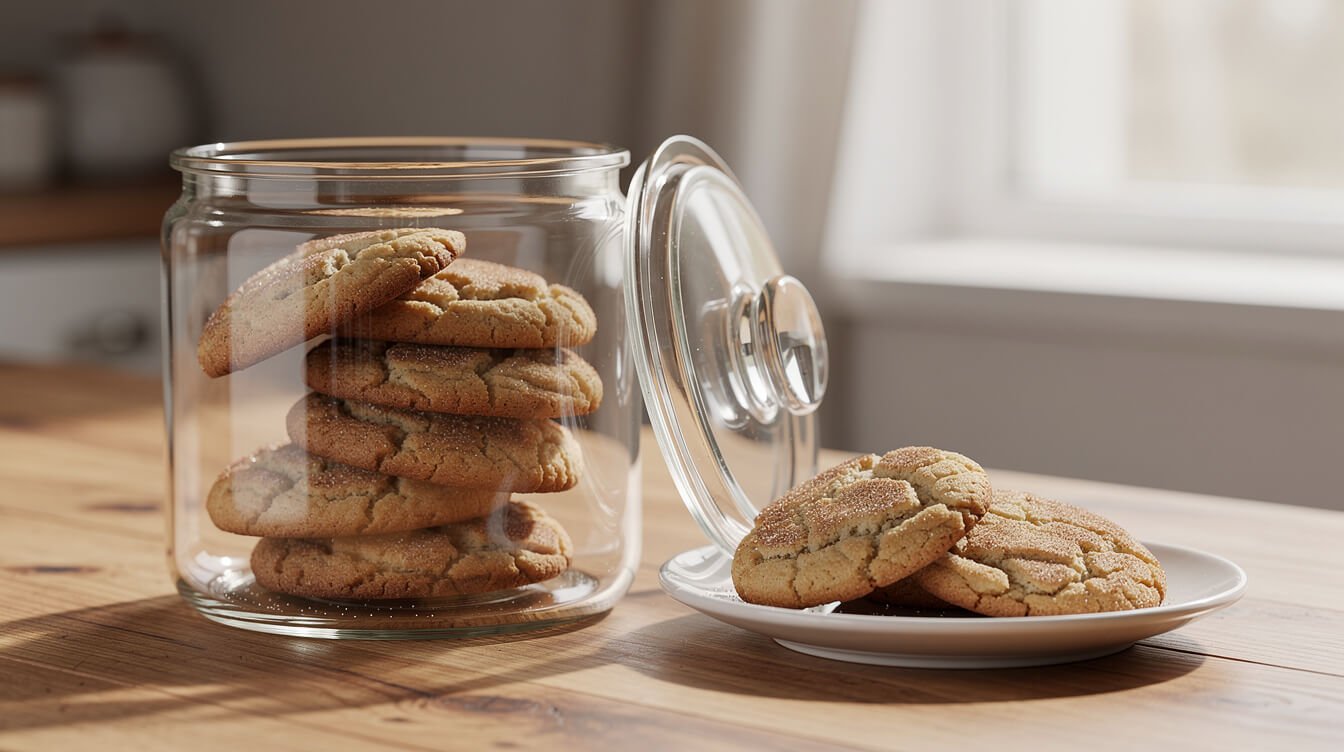
This snickerdoodle recipe without cream of tartar makes a great make-ahead cookie, which matters in December when your oven is booked solid.
Baked cookies
- Room temperature: in an airtight container for several days, up to about a week. Let them cool completely before you close the lid, or trapped steam makes the tops sticky.
- Keeping them soft: tuck a slice of plain sandwich bread into the container. The cookies pull moisture from it. Swap it out when it goes stiff.
- Freezer: freeze in a single layer until firm, then bag them. They keep for up to 3 months. Thaw at room temperature, still in the bag, so condensation forms on the bag and not the cookies.
Dough
- Fridge: wrapped tightly, the dough keeps for up to 2 days. Let it sit out for 10 to 15 minutes if it’s too firm to scoop.
- Freezer: scoop the dough into balls, freeze them on a sheet until hard, then bag them. They keep for up to 3 months. Roll them in cinnamon sugar right before baking. A quick 15-minute thaw helps the sugar stick. Bake from nearly frozen and add 1 to 2 minutes.
Scaling the batch
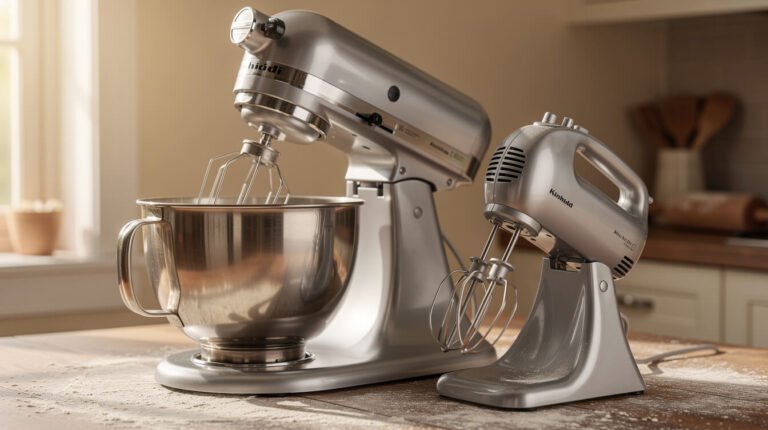
The recipe halves cleanly: 1⅓ cups plus 1 tablespoon (165 g) of flour, 1 teaspoon of baking powder, 1 egg. If you double it for a cookie swap, a stand mixer really earns its counter space. Our stand mixer guide covers how much mixer you actually need. And if you’re decorating sugar cookies for the same tray, our meringue powder royal icing dries hard enough to stack with these.
Frequently asked questions
Can you make snickerdoodles without cream of tartar?
Yes. Replace the cream of tartar and the baking soda with 2 teaspoons of baking powder total. The cookies rise and crinkle the same way. They’re just a little milder and less tangy.
What can I use instead of cream of tartar in snickerdoodles?
Baking powder is the easiest choice. If you don’t have it, use ½ teaspoon of baking soda plus 1 teaspoon of lemon juice or white vinegar for a full batch. See the pantry table above.
What happens if I just leave the cream of tartar out?
If you leave it out and keep the baking soda, the soda has nothing acidic to react with. The cookies spread flatter and can taste soapy or metallic. Don’t just delete it. Swap it.
Are snickerdoodles without cream of tartar just sugar cookies?
Close cousins. What still makes them snickerdoodles is the thick, crinkly, soft-centered texture and the cinnamon-sugar coating. Without cream of tartar, you lose some of the tang. Lemon juice (option 2 above) brings back a bit of brightness.
What’s the secret to soft snickerdoodles?
Pull them while the centers still look underdone, and let them finish on the hot pan. After that, measure the flour correctly and store them airtight.
Can I use self-rising flour?
Not in this recipe as written. Self-rising flour already has leavening and salt in it, so the amounts no longer line up. Use all-purpose. And if you’re wondering about cake flour, our cake flour vs all-purpose flour guide explains why it makes a more fragile, cakey cookie here.
Snickerdoodle recipe without cream of tartar: the short version
Swap 2 teaspoons of cream of tartar plus 1 teaspoon of baking soda for 2 teaspoons of baking powder, total. No baking powder? Use ½ teaspoon of soda plus 1 teaspoon of lemon juice or vinegar. Chill the dough if it’s soft, roll it heavy in cinnamon sugar, and pull the cookies when the edges are set and the centers still look a little underdone. That’s the whole snickerdoodle recipe without cream of tartar, and it holds up just fine without a special trip to the store.
Save this one for cookie swap season. And if you bake a batch, tell a friend who’s about to give up on snickerdoodles because the pantry’s out of cream of tartar. They don’t have to.

Before you go
Want the next one?
We post a new recipe or kitchen guide every day. The best of the week lands in one short email, no life story attached.