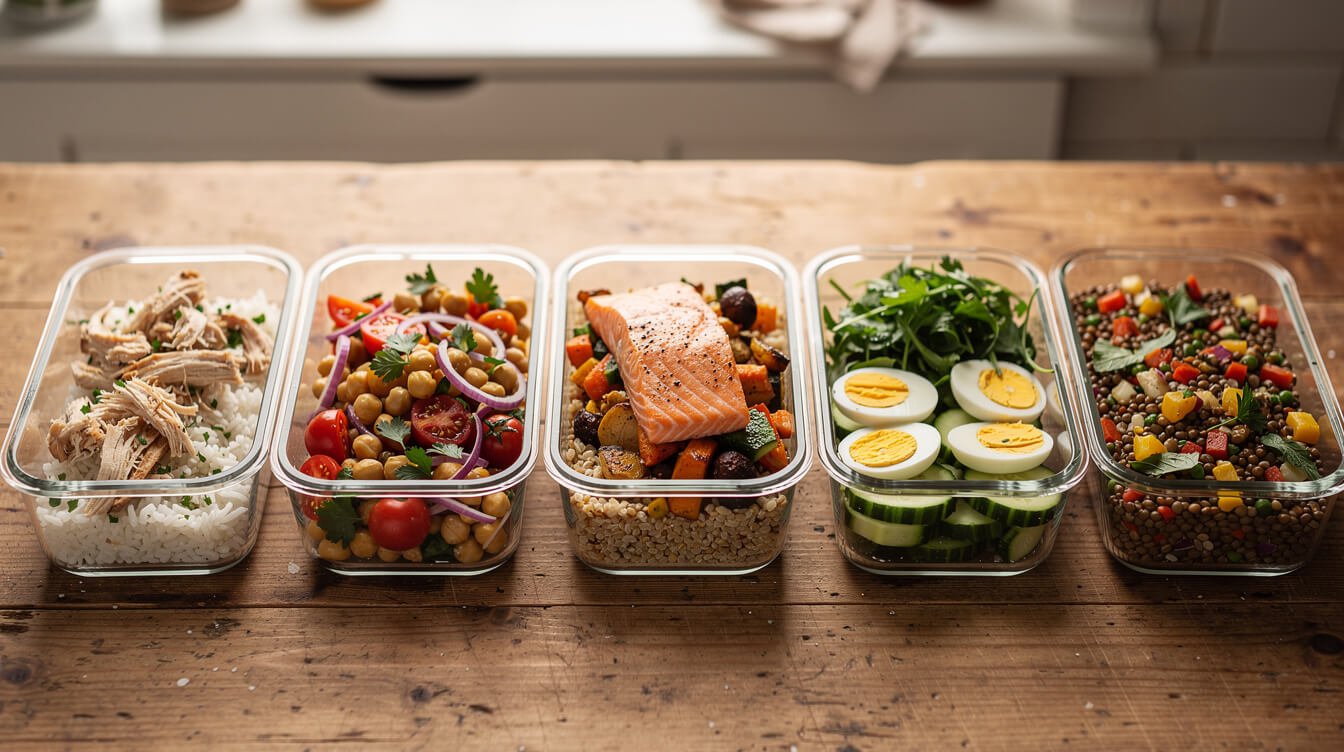
Lunch meal prep ideas, high-protein and still good on Thursday
You did the right thing on Sunday. You cooked four pounds of chicken breast, portioned it into five containers, and felt great about it. By Wednesday the chicken is gray and squeaky. By Thursday you’re buying a sandwich.
That’s the real problem with lunch meal prep ideas, high-protein ones especially — not the macros, not the planning. The food stops being good. Almost every guide to this topic is a list of recipe links with a protein number beside each one, and not one of them tells you why Thursday’s lunch tastes like a punishment.
So that’s what this is. The reason prepped protein goes dry, the proteins that genuinely survive four days in a fridge, five complete recipes you can cook from without clicking anywhere else, and the storage and reheating rules that keep it safe to eat. No diet plan, no calorie math, no opinions about your body.
Why your meal-prepped lunch is dry by Thursday
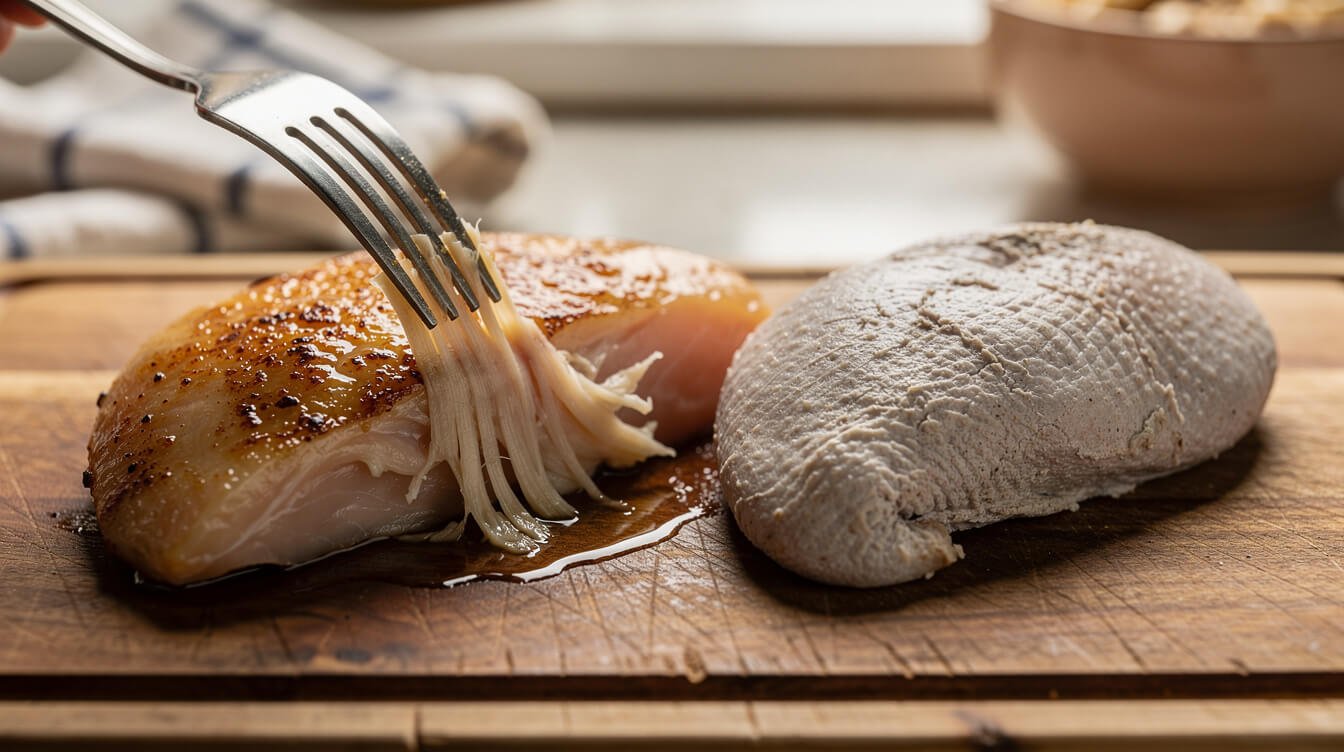
Here’s the whole thing in one sentence: meal-prepped protein gets cooked twice. Once in the pan on Sunday, and again in the microwave on Thursday. Most recipes are written for food you eat immediately, so they only account for the first cook.
Lean protein is where this hurts most. Chicken breast is roughly three-quarters water, and the muscle fibers tighten and squeeze that water out as they heat. Cook it to done, chill it, then blast it a second time, and you’ve wrung it out twice. That’s the squeak. That’s the gray.
Now, the tempting fix is the wrong one, so let’s kill it here: do not deliberately undercook chicken and let the microwave “finish” it. Poultry needs to reach 165°F (74°C) before it goes in the fridge, full stop — reheating is not a reliable substitute, because a microwave heats unevenly and leaves cold pockets. Undercooking on purpose is how you turn a meal prep habit into a food safety problem.
The real fix is three things, none of which involve cutting a corner:
- Stop at done, not past it. 165°F is the floor, not a target to overshoot. Most dry prepped chicken was taken to 180°F or beyond because someone cooked by time and color instead of temperature. An instant-read thermometer is the single cheapest upgrade to your lunches.
- Pick cuts that forgive a second heating. Fat and collagen are insurance. More on this in the next section.
- Store it in liquid. Sauce, braising juice, dressing, stock — anything that gives the meat something to sit in. Naked protein in a dry container is the thing that dries out.
Once you see it this way, the whole exercise changes. You’re not cooking lunch on Sunday. You’re cooking something that has to survive until lunch, which is a different job with different rules.
Lunch meal prep ideas, high-protein: the proteins that survive the fridge
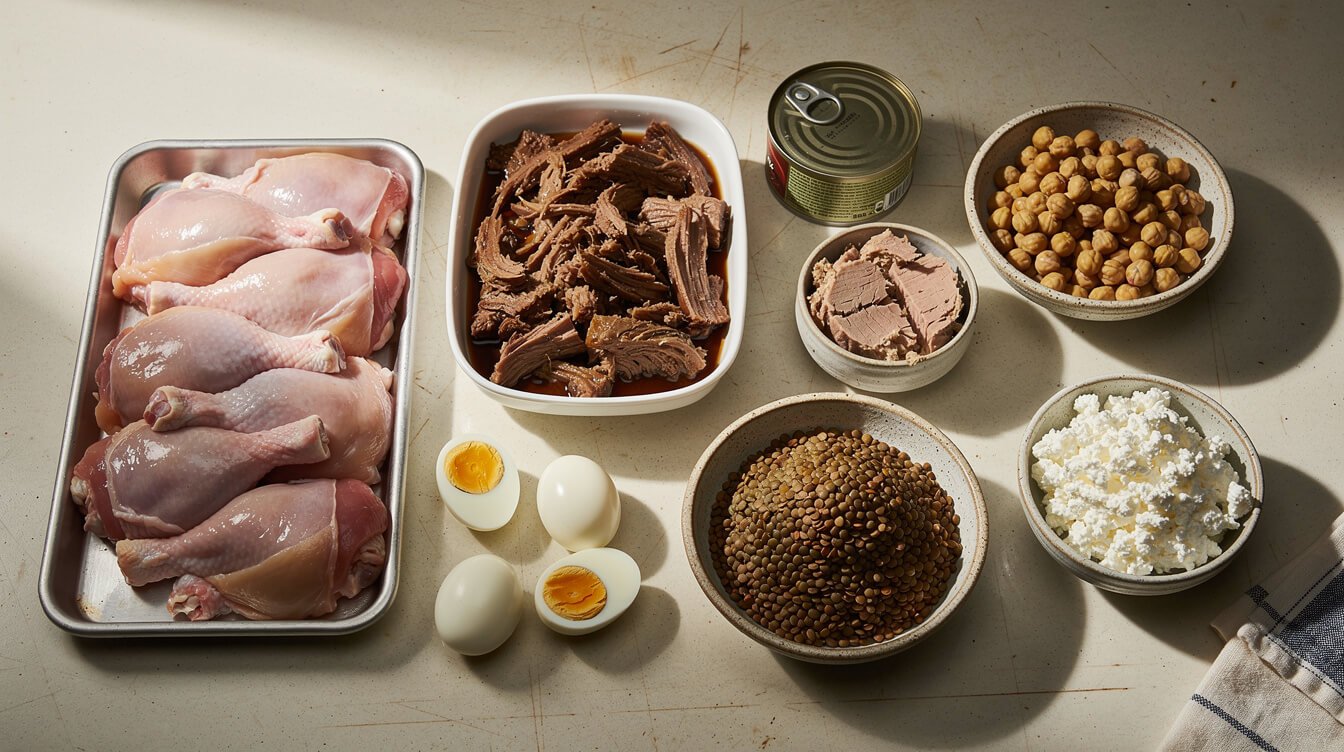
Not all protein reheats equally, and nobody tells you that before you’ve wasted a Sunday. Here’s the honest sorting, from a few years of packing these.
Reheat beautifully
- Chicken thighs — roughly 25 g protein per 4 oz cooked. More fat and connective tissue than breast, which means a much wider margin between done and ruined. If you change one thing after reading this, change breast to thighs.
- Braises, stews, and chili — anything cooked low and slow in liquid is genuinely better on day three. The meat is already sitting in its own sauce, which is exactly the storage condition we’re after.
- Beans and lentils — cooked lentils run about 18 g per cup, canned chickpeas around 14 g. They don’t have muscle fibers to seize up, so they simply don’t suffer. Cheap, too.
- Ground beef and turkey in sauce — about 25 g per 4 oz cooked for 90/10 beef. Fine on its own, excellent in a tomato or chili base.
Hold up fine, with help
- Chicken breast — roughly 30 g per 4 oz cooked, the highest return per ounce, which is why everyone reaches for it. Workable if you stop at 165°F, slice it across the grain, and store it coated in pan juices or sauce.
- Salmon — around 25 g per 4 oz. Reheats poorly but eats beautifully cold, flaked over grains or greens. Prep it to be eaten cold on purpose.
- Firm tofu — about 10 g per 4 oz. Press it, roast it hard, sauce it at the end.
Don’t bother
- Breaded or fried anything — the coating goes to cardboard in a sealed container. Your air fryer can revive some of it, but you won’t have one at your desk.
- Thin fish fillets and shrimp — already cooked through in minutes, so a reheat takes them straight to rubber.
- Delicate eggs — scrambled eggs reheat into something weeping and gray. Hard-cooked eggs, on the other hand, are perfect, and they keep about a week in the fridge in their shells.
Cold protein deserves more credit than it gets. Canned tuna (about 25 g per 5 oz can), cottage cheese (roughly 25 g per cup), Greek yogurt (about 20 g per cup), and hard-cooked eggs (about 6 g each) are all high-protein lunch material that never needs a microwave. If your workplace has a queue for one shared microwave, that is a bigger quality-of-life win than any recipe.
One thing we’re not going to do here: tell you how many grams you personally need. That depends on your body, your activity, and your health, and it’s a conversation for your doctor or a registered dietitian — not a cooking site. The numbers above are rough food facts so you can build a lunch that actually has protein in it. What you do with them is yours.
Prep components, not finished lunches
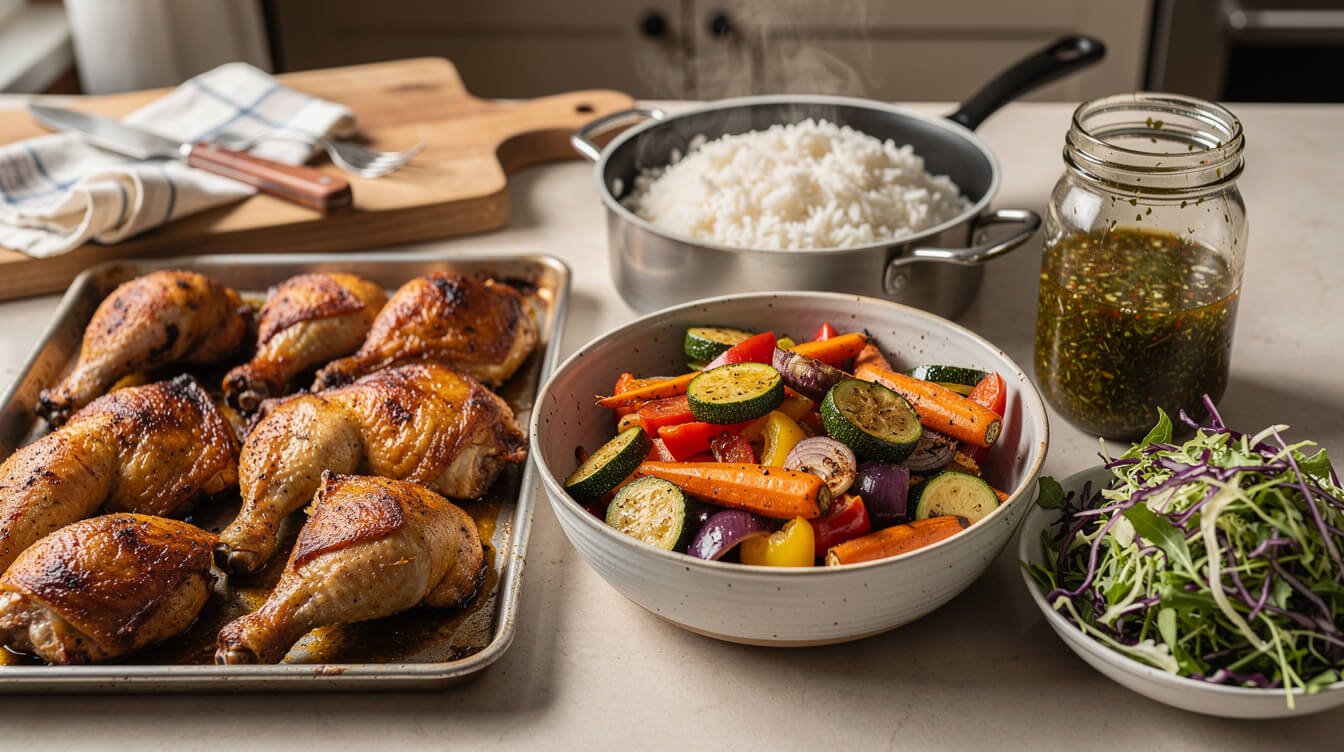
The five-identical-containers approach has a flaw nobody admits: by Wednesday you are sick of it, and a lunch you don’t want to eat isn’t a lunch. The fix is to stop prepping meals and start prepping parts.
Cook three or four components on Sunday, then spend two minutes each morning combining them differently:
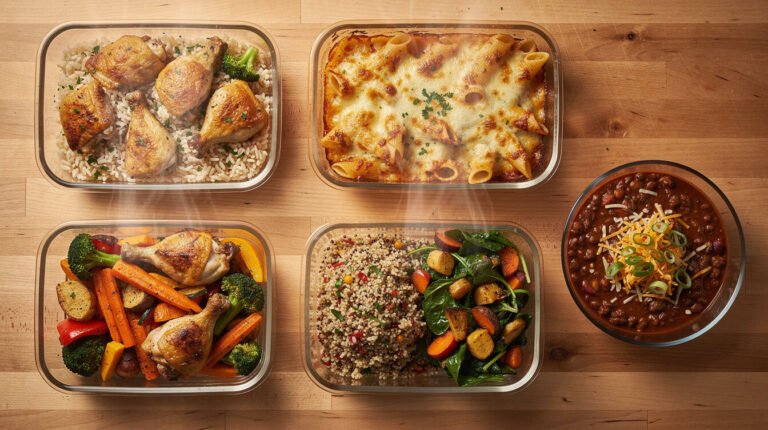
- One protein, cooked in bulk — a tray of thighs, a pot of chili, a batch of lentils.
- One starch — rice, farro, quinoa, potatoes. Cooked and cooled properly (see the storage section — rice has its own rule).
- One roasted vegetable — a sheet pan of whatever was cheap. Broccoli, sweet potato, cauliflower, peppers.
- One raw, crunchy thing — shredded cabbage, cucumber, a bag of greens. This is the part that makes day four taste like food instead of leftovers.
- Two sauces — a vinaigrette and something with a kick. Sauce is what makes the same chicken feel like a different lunch.
Keep the wet things separate until the morning. Dressing on greens overnight gives you a slick, wilted mess. Sauce on a crisp vegetable does the same. Small jars, or just a corner of the container, and you’ve solved the sogginess that drives most people back to buying lunch.
If this component idea clicks for you, it’s the same engine behind our meal prep ideas for the week, which is aimed at reheated dinners rather than packed lunches — the batch-cooking logic carries over almost unchanged. And on the nights you’re cooking fresh anyway, making a double batch is the cheapest prep there is. Our easy weeknight dinners for family and lazy dinner ideas are both built to scale up without extra work.
5 high-protein lunch meal prep ideas, with complete recipes
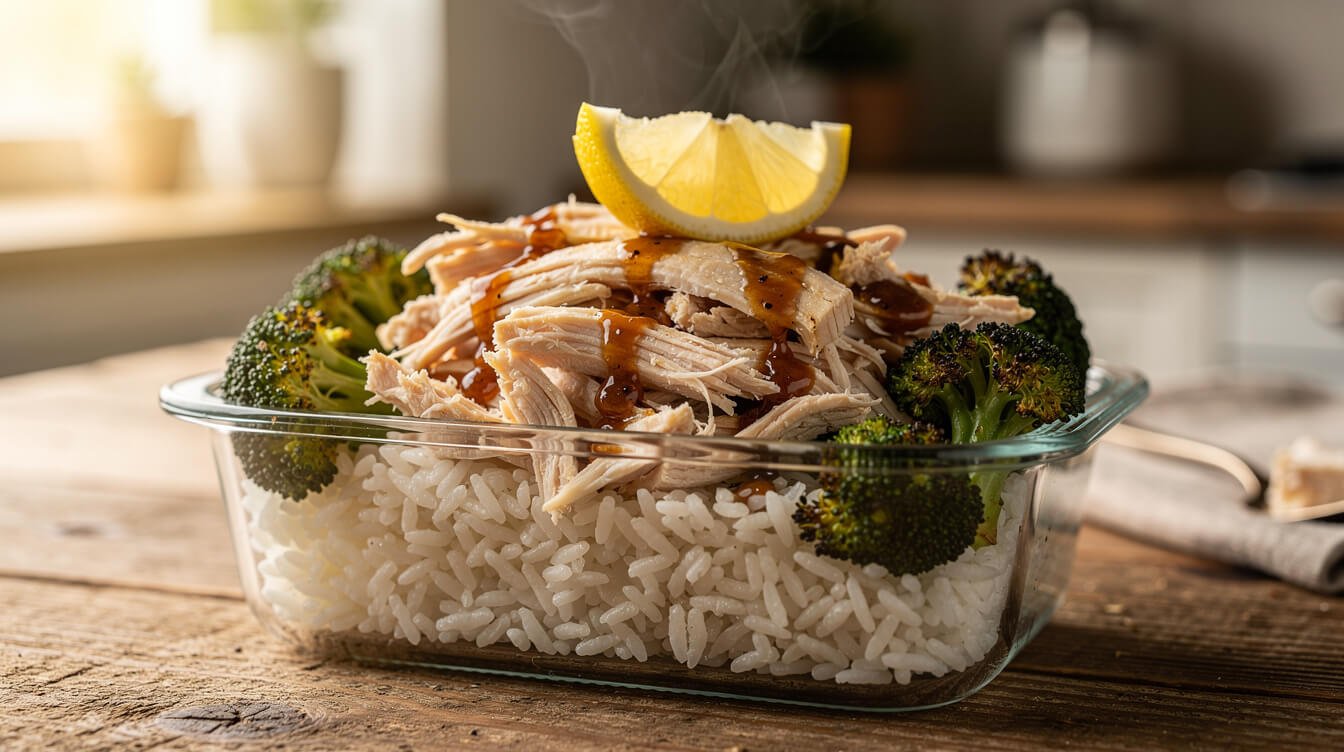
Full recipes, right here, no link-hopping. Protein figures are rough per-serving estimates, rounded. Every one of these is built to be made on Sunday and eaten through Thursday.
1. Soy-ginger chicken thighs with rice (serves 4, about 35 g protein)
The default. Thighs forgive you, and the sauce doubles as the moisture that keeps them good all week.
- 2 lb (900 g) boneless skinless chicken thighs
- 1/3 cup soy sauce
- 2 tbsp honey
- 2 tbsp rice vinegar
- 4 garlic cloves, grated
- 1 tbsp fresh ginger, grated
- 1 tsp toasted sesame oil
- 1 tbsp cornstarch mixed with 2 tbsp cold water
- 2 cups jasmine rice, cooked
- Scallions and sesame seeds, to finish
Heat the oven to 425°F (220°C). Whisk the soy sauce, honey, vinegar, garlic, ginger, and sesame oil. Toss the thighs in half of it and spread them on a foil-lined sheet pan. Roast 22–25 minutes, until an instant-read thermometer in the thickest thigh reads 165°F (74°C). Meanwhile, simmer the reserved sauce in a small pan, stir in the cornstarch slurry, and cook one minute until it coats a spoon. Slice the thighs, toss them in the thickened sauce, and portion over rice. Scallions and sesame on top.
Why it lasts: the sauce clings to every slice, so nothing is sitting there naked and drying out.
2. Lemon, chickpea, and tuna salad (serves 4, about 30 g protein)
No cooking at all, no microwave needed, and genuinely better on day two once the onion mellows.
- 2 × 15 oz cans chickpeas, drained and rinsed
- 3 × 5 oz cans tuna in olive oil, drained
- 1/2 red onion, sliced paper thin
- 1 English cucumber, diced
- 1 cup flat-leaf parsley, roughly chopped
- 1/3 cup olive oil
- Juice of 2 lemons
- 1 tsp Dijon mustard
- Salt and plenty of black pepper
Soak the sliced onion in cold water for 10 minutes and drain — this takes the harsh edge off without losing the crunch. Whisk the olive oil, lemon juice, Dijon, salt, and pepper. Fold everything together, taste, and add more lemon than feels right. Divide into containers.
Why it lasts: there’s nothing in here that wilts. The acid keeps it bright all week, and the chickpeas soak up the dressing instead of being ruined by it.
3. Beef and black bean chili (serves 5, about 32 g protein)
The one that improves in the fridge. Make it Sunday, eat it Thursday, and it’ll be the best lunch of the week.
- 1 1/2 lb (680 g) ground beef, 90/10
- 1 large onion, diced
- 4 garlic cloves, minced
- 2 tbsp chili powder
- 1 tbsp ground cumin
- 1 tsp dried oregano
- 1 × 28 oz can crushed tomatoes
- 2 × 15 oz cans black beans, drained
- 1 cup beef or chicken stock
- Salt, and a squeeze of lime at the end
Brown the beef in a wide heavy pot over medium-high heat, breaking it up, until no pink remains and it reaches 160°F (71°C). Add the onion and cook 5 minutes until soft, then the garlic and spices for one minute more — you want to smell the cumin. Add the tomatoes, beans, and stock. Simmer uncovered 30 minutes, stirring now and then, until it thickens. Salt to taste, finish with lime.
Why it lasts: everything is suspended in sauce, so reheating warms it rather than drying it. A heavy pan helps you get a proper brown on the beef, which is where most of the flavor comes from.
4. Cottage cheese and roasted vegetable grain bowls (serves 4, about 28 g protein)
Assembled cold, eaten cold, zero microwave queue.
- 1 lb (450 g) sweet potato, cut into 3/4-inch cubes
- 1 large head broccoli, cut into florets
- 3 tbsp olive oil, salt, pepper
- 2 cups cooked farro or quinoa
- 3 cups (about 24 oz) cottage cheese
- Chili crisp, harissa, or hot honey
- 1 lemon
Heat the oven to 425°F (220°C). Toss the sweet potato and broccoli with oil, salt, and pepper, spread on two sheet pans so nothing steams, and roast 25 minutes until the edges are properly browned. Cool, then layer: grain on the bottom, vegetables next, cottage cheese in its own corner. Keep the chili crisp and lemon separate and add them at your desk.
Why it lasts: nothing here depends on being hot. The cottage cheese does the protein work without any cooking at all.
5. Set eggs with smashed white beans and greens (serves 4, about 25 g protein)
The cheapest lunch on this list and the one that needs the least equipment.
- 8 large eggs
- 2 × 15 oz cans cannellini beans, drained
- 1/4 cup olive oil, plus more for the beans
- 2 lemons
- 2 garlic cloves, grated
- 5 oz arugula or baby spinach
- 4 oz feta, crumbled
- Salt, black pepper, chili flakes
Lower the eggs into boiling water and cook 9–10 minutes, then straight into ice water. A 7-minute jammy egg is lovely the same day, but for food you’re storing and carrying, cook the yolk through — it keeps better and it’s the safer call. Smash the beans roughly with olive oil, garlic, the juice of one lemon, salt, and chili flakes. Pack the beans, the peeled eggs, and the feta together; keep the greens and the second lemon separate and add them in the morning.
Why it lasts: hard-cooked eggs keep about a week, and the smashed beans are essentially a dip — they can’t dry out.
A word on these recipes and the shop: Eat Cafe runs a charity side, and the Support Our Charities Donor Membership T-Shirt is the plain way readers chip in if the recipes here have earned a place in your week. It’s a black Gildan tee with a small logo on the front and a large one on the back.
From the Eat Cafe kitchen
One good recipe a week, straight to your inbox
The recipe we're actually cooking this week, plus the one tip that saves it when it goes sideways. No spam. Unsubscribe anytime.
Reheating it without ruining it
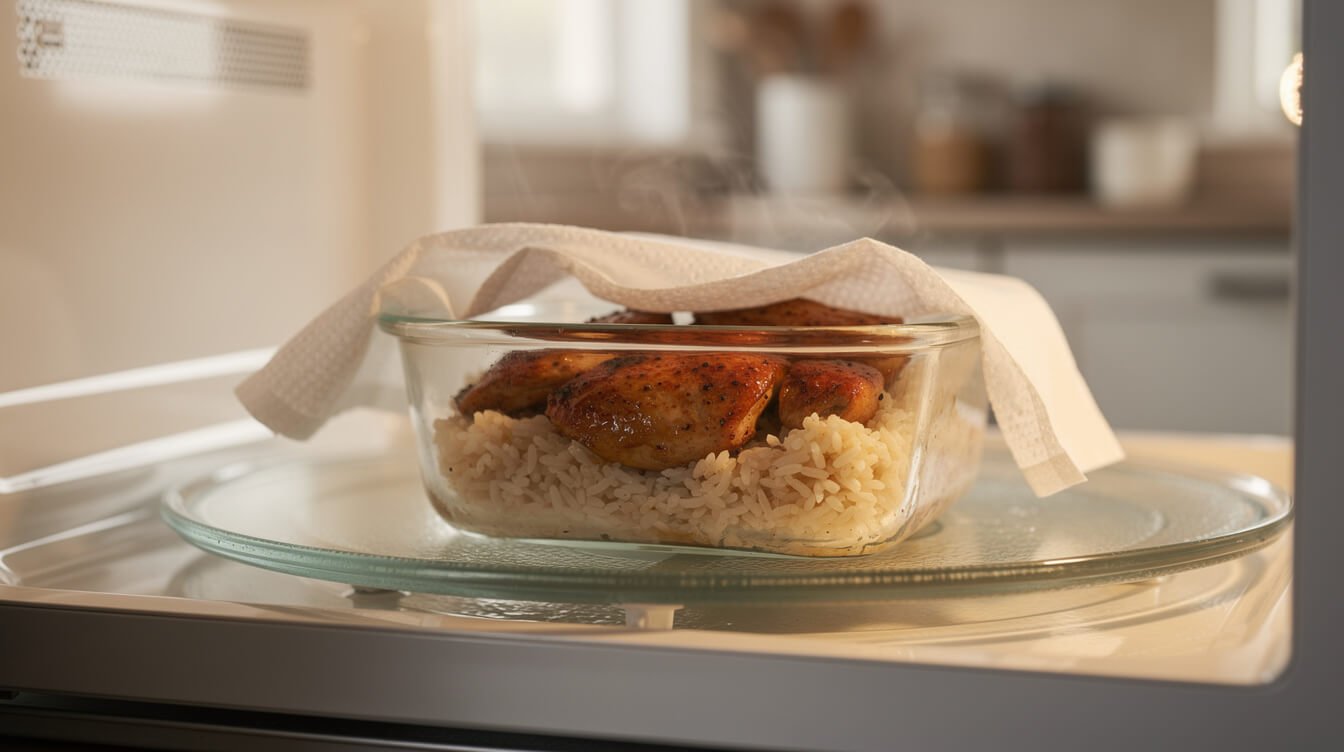
You cooked it right. Don’t lose it in the last ninety seconds.
Use 50–70% power, not full blast. This is the single biggest improvement available to you and it costs nothing. A microwave on high drives the outside of your lunch to boiling while the middle is still cold, which overcooks the protein and leaves cold spots. Lower power, longer time, stir halfway.
Cover it, and add a splash of water. A damp paper towel or a vented lid traps steam and gently rehydrates rice and chicken instead of desiccating them. A tablespoon of water over rice makes a genuinely surprising difference.
Heat it all the way through. Leftovers should reach 165°F (74°C) before you eat them. Stir and let it stand a minute afterward — standing time lets the heat even out, which is how you get rid of the cold pockets a microwave leaves behind.
Where possible, reheat the protein separately. If you’ve packed components, give the chili or the chicken its time and add the greens and sauce after. Hot wilted arugula helps nobody.
The no-microwave route
If there’s no microwave, or the queue is ten people deep, build for cold from the start. Recipes 2, 4, and 5 above are designed exactly for this. Flaked salmon over grains, a tuna and bean salad, cottage cheese with roasted vegetables, hard-cooked eggs with anything — these aren’t consolation prizes, they’re just lunch. Add a good crusty roll (a slice of homemade French bread is a fine use of a Sunday) and nobody’s missing the microwave.

From the Eat Cafe shop
Support Our Charities Donor Membership T-Shirt
A black Gildan tee with a small Eat Cafe logo over the heart and a large one on the back. It’s the simplest way to back the charity side of what we do, and it’s $24.99.
Storing and carrying it safely
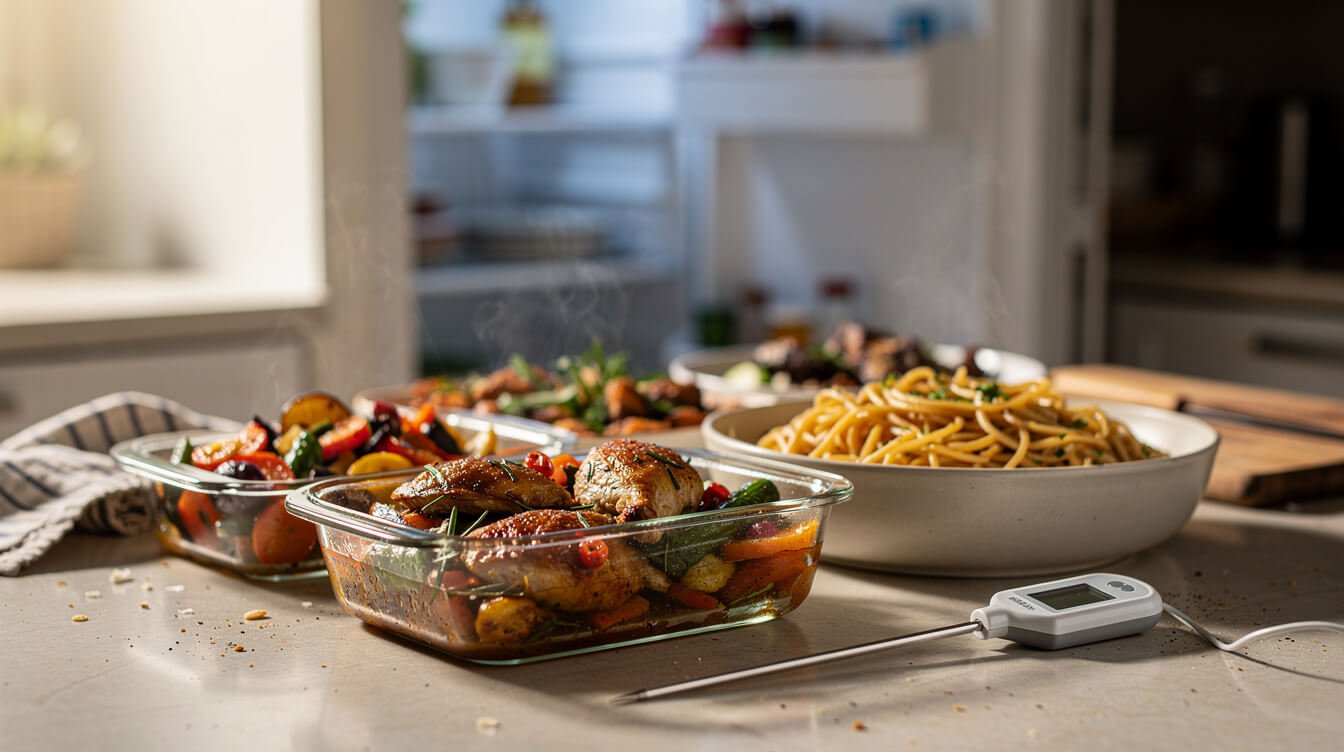
This is the part the rest of the internet skips, and it matters most here, because meal prep is the one kind of cooking where food sits for days and then rides to work in a bag. These aren’t fussy rules — they’re the short list, and they’re worth knowing properly.
Cool it fast, in shallow containers
Bacteria multiply fastest between 40°F and 140°F (4°C and 60°C) — the range usually called the danger zone. The goal is to get hot food through it quickly. Don’t leave a pot on the counter to come down to room temperature on its own; divide the food into shallow containers and refrigerate it while it’s still warm. A big deep pot of chili can sit in the danger zone for hours in the middle even when the edges feel cool.
Perishable food shouldn’t be out at room temperature for more than two hours total — and only one hour if the room is above 90°F (32°C). That clock includes the time it spent cooling on the counter.
Rice has its own rule
Cooked rice deserves a specific mention, because it’s in half the lunches on this list. Uncooked rice can carry Bacillus cereus spores that survive boiling, and if cooked rice sits at room temperature they can grow and produce a toxin that reheating won’t destroy. So: spread it out, cool it quickly, and get it in the fridge within that two-hour window. Treat it like meat, not like a dry pantry food.
Four days, and then it’s over
Cooked leftovers keep three to four days in a fridge held at 40°F (4°C) or below. That’s the whole working week minus Friday, which is exactly why Monday-to-Thursday is the honest shape for lunch prep. If you want Friday covered, freeze two portions on Sunday and move one to the fridge on Wednesday night. Chili and braises freeze especially well; salads don’t.
Hard-cooked eggs are the generous exception — about a week in the fridge, still in their shells.
The bag between home and lunch
A container of chicken sitting in a warm bag from 8 a.m. to 1 p.m. is five hours in the danger zone, and that’s the step everyone forgets. If there’s a fridge at work, use it the moment you arrive. If there isn’t, use an insulated bag with a real ice pack — not a token one — and aim to keep things at 40°F or below. On a hot day, or in a car, this stops being optional.
And the temperatures worth memorizing
- Chicken and all poultry: 165°F (74°C)
- Ground beef, pork, lamb: 160°F (71°C)
- Whole cuts of beef, pork, lamb: 145°F (63°C), then rest 3 minutes
- Fish: 145°F (63°C)
- Reheating any leftover: 165°F (74°C)
One thermometer handles all of it. And if you’re prepping this volume weekly, a blade that actually cuts makes it faster and safer — our guide to the best kitchen knife brands for home cooks is honest about how little you need to spend.
Frequently asked questions
How far ahead can I actually prep lunches?
Sunday for Monday through Thursday, because cooked food keeps three to four days. Either freeze Friday’s portion in advance or make Friday the day you eat something else. Anyone telling you to cook seven days ahead is quietly ignoring the storage limit.
Do I need special containers?
No. Glass holds up better to reheating and doesn’t hold onto chili smell, and anything with a genuinely sealing lid beats anything without one. Beyond that, matching containers are a nice-to-have. Mismatched takeout tubs have fed a lot of people perfectly well.
Why does my prepped chicken taste fine on Monday and awful by Wednesday?
Two things compounding. It was probably taken past 165°F on Sunday, and it’s being reheated on full power. Fix the first with a thermometer, the second by dropping to 50–70% power and covering the container. If it’s still happening, switch from breast to thighs and store the meat in its sauce.
Can I prep salads without them turning to slime?
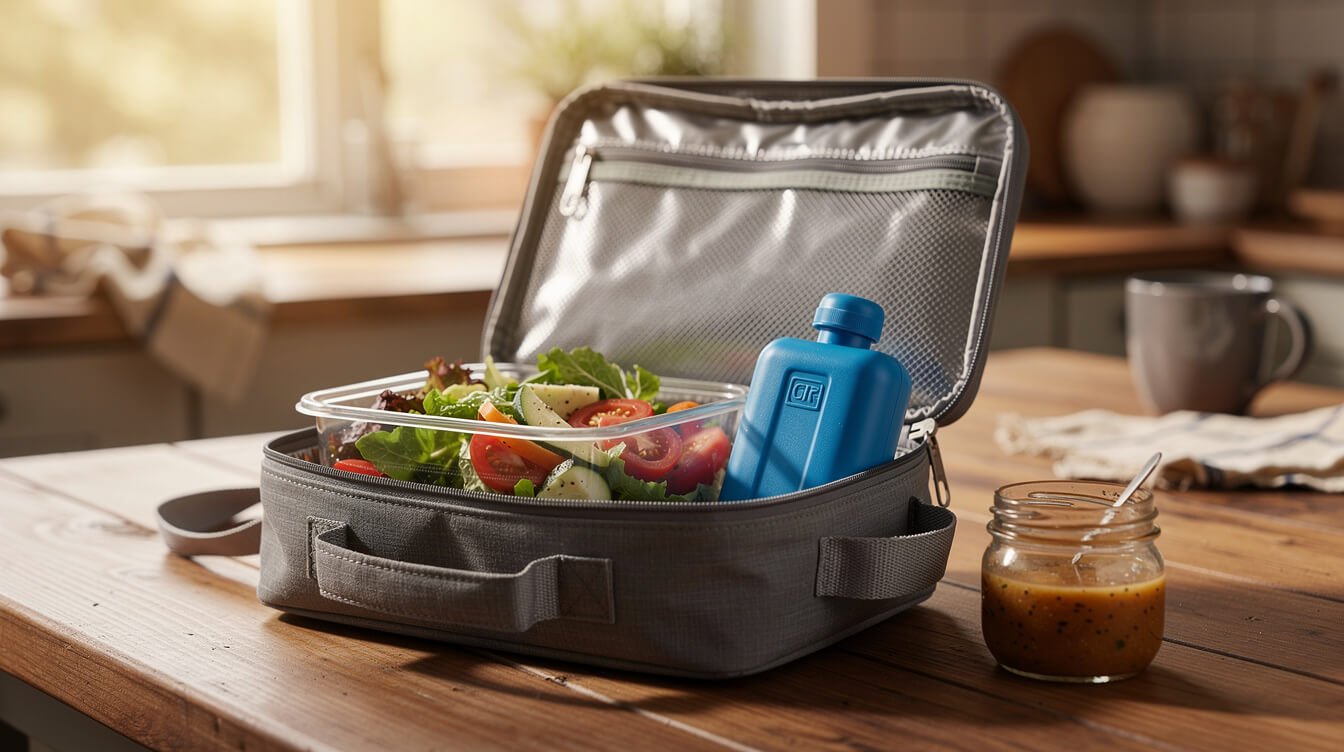
Yes — keep every wet component separate until the morning. Dressing in a small jar, soft or watery vegetables like tomato and cucumber in their own corner, greens added last. Sturdy things (cabbage, kale, carrot, fennel, chickpeas, grains) can be dressed a day ahead and are often better for it. Tender leaves can’t.
Is a high-protein lunch better than any other lunch?
That’s a nutrition question rather than a cooking one, and it depends entirely on the person asking — worth raising with your doctor or a registered dietitian rather than a recipe site. What we can say honestly: a lunch built around a protein you enjoy eating is a lunch you’ll keep making, and the recipes above are designed so it stays good enough that you don’t give up by Thursday.
I’m only cooking for myself. Does this still work?
It works better, if anything — one person is exactly four lunches out of a batch that serves four. Halving recipes is usually more trouble than it’s worth, so cook the full batch and freeze what you won’t reach in four days. The same scaling logic is in our easy weeknight dinners for two if you’d rather not deal with leftovers at all.
Final thoughts
Lunch meal prep ideas, high-protein ones included, fail for cooking reasons far more often than planning reasons. People don’t quit because they ran out of recipes. They quit because Thursday’s container was dry and sad, and a sandwich from downstairs is right there.
So the fix isn’t more discipline. It’s thighs instead of breast, a thermometer instead of a guess, sauce in the container, dressing kept separate, and a microwave at half power. That’s the whole thing. Pick one of the five recipes above, make it this Sunday, and see whether Thursday feels different.
It usually does.

Before you go
Want the next one?
We post a new recipe or kitchen guide every day. The best of the week lands in one short email, no life story attached.