How to make sourdough bread without a starter (what you actually get, honestly)
You want a loaf with a crackly crust and that faint sour tang, and you would rather not spend a week raising a jar of flour paste first. Fair enough. So here is the straight answer on how to make sourdough bread without a starter: you can bake a genuinely good, genuinely tangy loaf by tomorrow afternoon using flour, salt, water, a pinch of yeast, and a spoonful of vinegar. What comes out of the oven is sourdough-style bread, though. It is not sourdough.
That difference matters, and almost nobody searching this gets told the truth about it. Most of page one either hands you a plain yeast loaf under a sourdough headline, or promises you will get “the same results as classic sourdough.” Neither is honest, and the second one is just wrong. Here is what you actually get, the recipe that gets you closest, the two tricks doing the real work, and — if you decide you want the real thing after all — how little a starter actually asks of you.
The honest answer: sourdough bread without a starter is sourdough-style bread
Bread is called sourdough when it is leavened by a culture — a living mix of wild yeast and lactic acid bacteria that you keep alive in a jar of flour and water. That culture does two jobs at once. It lifts the dough, and while it lifts, the bacteria produce acid. Lactic acid is the mild, creamy, yogurt-adjacent side of the flavor. Acetic acid is the sharp, vinegary side. Together, over hours, they build the taste people mean when they say sourdough.
Commercial yeast does exactly one of those jobs. It lifts, it lifts fast, and it produces almost no acid worth tasting. So the moment you swap a starter for a quarter teaspoon of instant yeast, the sour has to come from somewhere else, or it simply is not there.
Here is the part worth being clear about, because it decides whether you will be happy with the loaf:
- What you can genuinely match: the crust. The chew. A proper open-ish crumb. The deep brown, blistered, dutch-oven look. The way the house smells at the forty-minute mark. Honestly, all of this.
- What you can get most of the way to: tang. Real, noticeable tang — just a flatter, more one-note version of it.
- What you cannot fake: the layered, slightly fruity complexity of a mature culture, and the way a good starter loaf keeps getting more interesting as it cools and sits.
If a recipe tells you a tablespoon of vinegar and a packet of yeast delivers the same results as a four-year-old starter, close the tab. What it does deliver is a very good loaf of bread on a Tuesday, which is not a consolation prize. And if what you actually want is bread tonight with no planning at all, our simple no-yeast bread is the honest version of that — it is not pretending to be sourdough either.
What a sourdough starter actually gives you (and what you can fake)
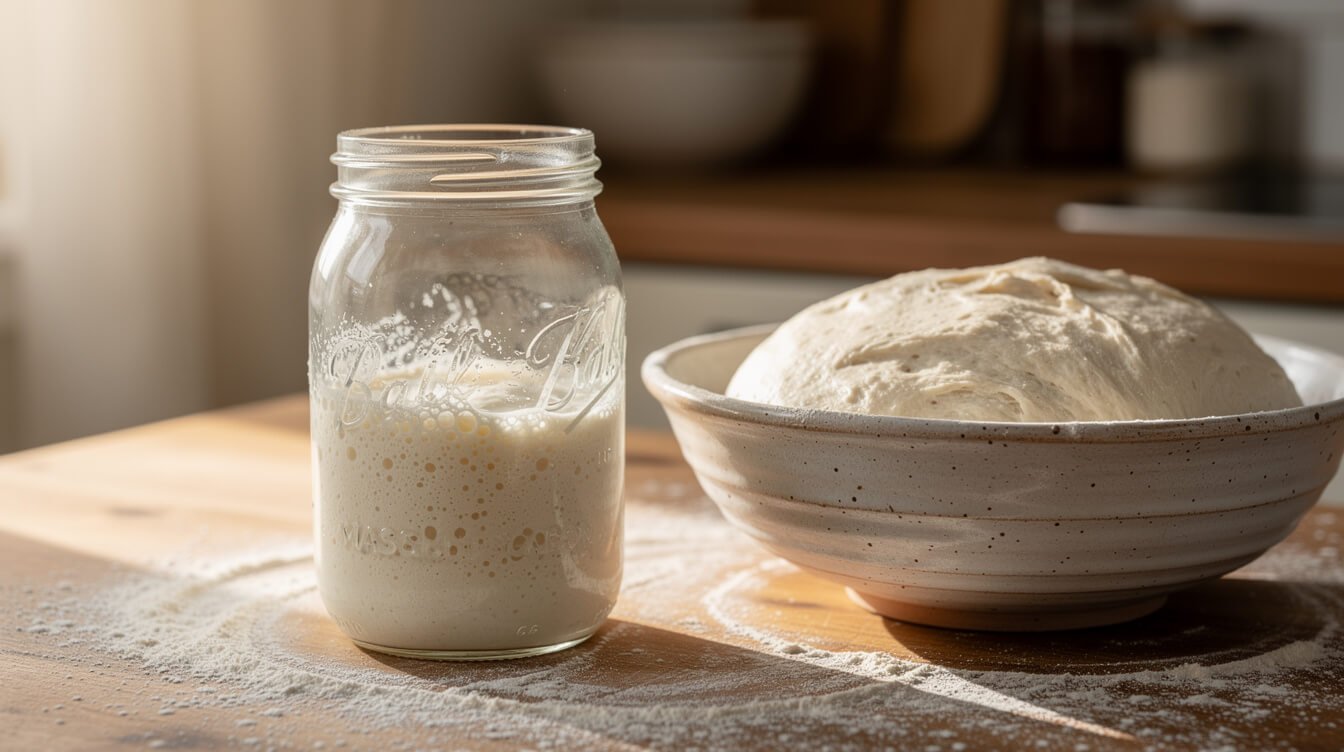
It helps to break a starter into the four jobs it is doing, because three have decent substitutes and one does not.
1. Leavening. It makes the dough rise. This one is fully replaceable — a quarter teaspoon of instant yeast does the same job, more predictably, and on your schedule rather than its own. No compromise here at all.
2. Acidity. This is the flavor. A starter builds acid slowly over the whole fermentation. You can get a real chunk of this back by adding acid directly and by fermenting long and cold, which is what the next two sections are about. Call it two-thirds of the way there on a good day.
3. Dough strength and depth. Long fermentation lets enzymes break starch into sugars and protein into amino acids. That means more flavor and better browning. Here is the good news: this comes from time, not from the culture specifically. A yeasted dough given eighteen hours gets most of this benefit too. You are not faking it — you are just doing the same thing by a different route.
4. Keeping quality. Acid slows staling, which is why a real sourdough is still decent on day three. A sourdough-style loaf stales faster. It is good for about two days, and after that it is croutons and toast, which is a perfectly fine fate for a loaf.
So: one thing fully replaced, two things largely replaced, one thing partly. That is the honest scorecard, and it is a lot better than the “you cannot do it at all” crowd suggests.
The recipe: tangy sourdough bread without a starter, mixed tonight and baked tomorrow
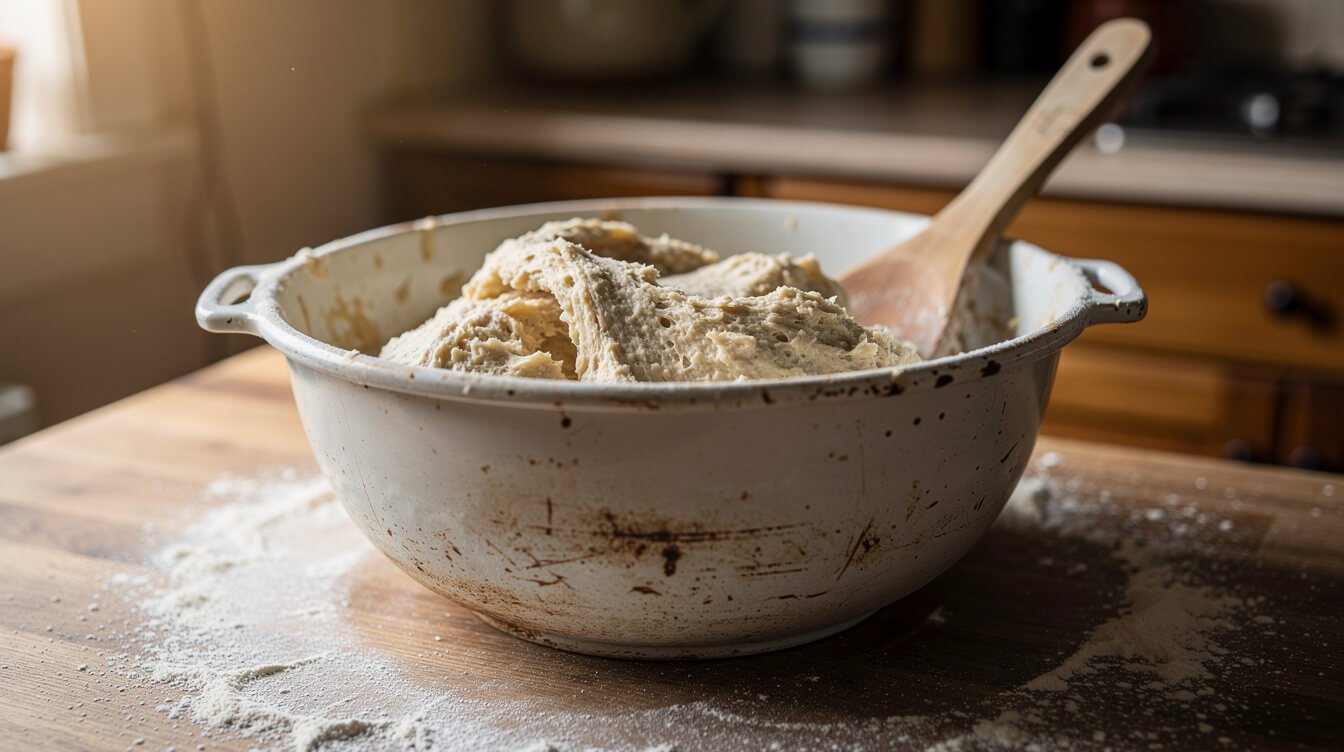
Ten minutes tonight, twenty tomorrow, and the oven does the rest. No kneading, no stand mixer, no schedule to babysit.
Ingredients
- 500 g bread flour (about 4 cups, spooned and leveled)
- 10 g fine sea salt (1½ teaspoons)
- 1 g instant yeast (¼ teaspoon — yes, a quarter, that is not a typo)
- 375 g cool water (1½ cups plus 1 tablespoon), around 65–70°F
- 1 tablespoon white vinegar or apple cider vinegar
Use bread flour if you can. The higher protein is what holds a wet dough together over a long rise, and all-purpose will give you a slacker, flatter loaf. If you want the full reasoning, we went deep on it in our guide to the best flour for sourdough bread.
Method
- Tonight (10 minutes). Whisk the flour, salt, and yeast together in a big bowl. Add the water and the vinegar. Stir with a wooden spoon or a wet hand until there is no dry flour left at the bottom. It will be shaggy, sticky, and ugly. That is correct — do not be tempted to knead it or add flour. Cover the bowl.
- Leave it 12–14 hours at room temperature (about 68–72°F). If your kitchen runs warm, check at 10 hours. It is ready when the surface is domed, bubbly, and smells faintly beery.
- Tomorrow morning. Scrape the dough onto a well-floured counter. Fold it over itself four or five times — lift an edge, pull it up, fold it to the middle, turn the bowl, repeat. Still no kneading. Then drag it toward you a few times with cupped hands to pull a tight skin across the top and form a ball. It stays sticky; flour your hands, not the dough. (If sticky dough makes you nervous, the handling notes in our ciabatta recipe are the same skills.)
- Into the fridge, seam side up, in a floured cloth-lined bowl or a banneton. Cover loosely. Leave it 4 to 24 hours. This is where the flavor is made — more on that below.
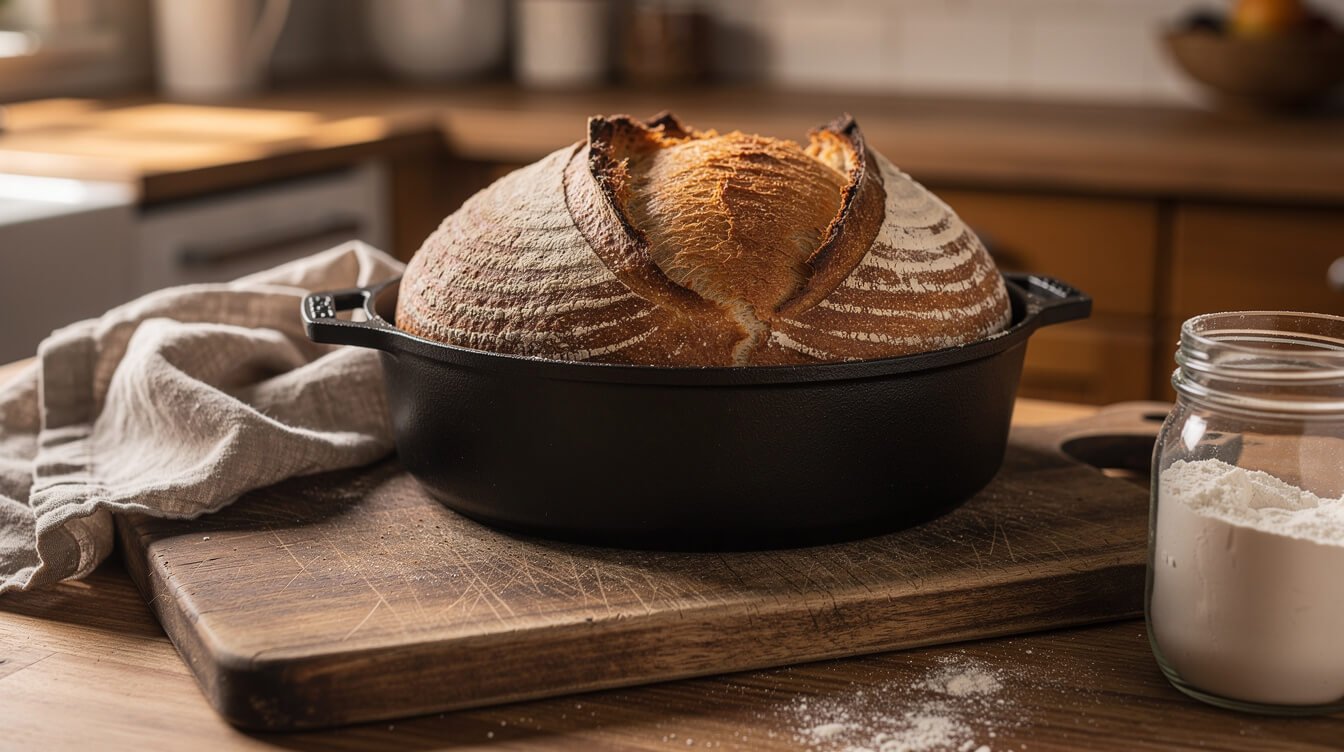
- Bake. Put your dutch oven in with the lid on and preheat to 475°F for 45 minutes. A fully heated pot matters more than the exact temperature. Tip the cold dough onto parchment, score it about ½ inch deep with a sharp knife or a blade, lower it in, lid on. 25 minutes with the lid on at 475°F, then lid off, drop to 450°F, and 20–25 minutes more until it is properly dark brown. Pull it at an internal temperature of 205–210°F.
- Cool it on a rack for at least an hour before you cut it. This one is not negotiable. The crumb is still setting, and slicing a hot loaf is how you get a gummy, pasty middle on bread that was perfect ten minutes earlier.
One real caution: a preheated dutch oven is heavy, and at 475°F it will burn you through a damp towel without noticing. Two dry mitts, both hands, and clear a landing spot on the counter before you open the oven.
The acidity trick that gets it genuinely closer
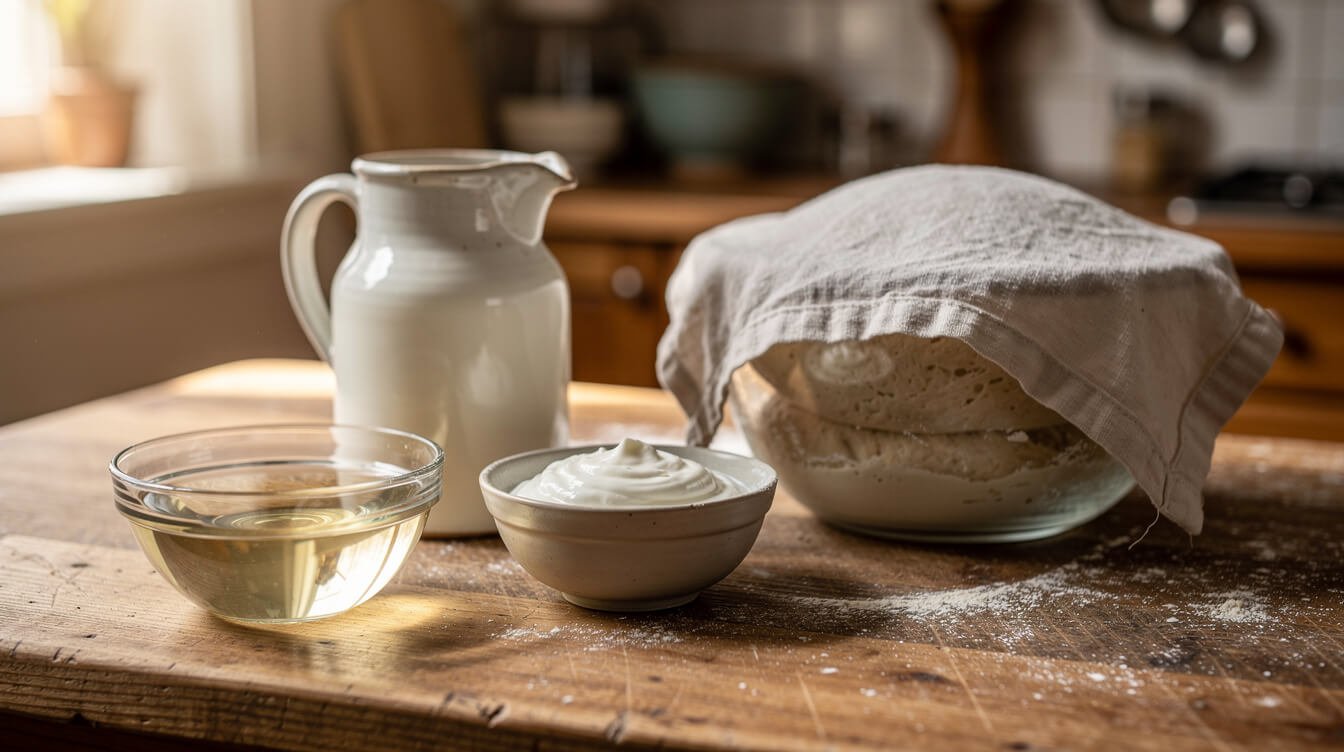
If the sour in sourdough is two acids and you have no culture to make them, the obvious move is to add the acid yourself. It works better than it has any right to.
Vinegar — the sharp side. One tablespoon per 500 g of flour. White vinegar is cleanest; cider vinegar brings a faint fruitiness. This is pure acetic acid, so it hits the sharp, bright note. Do not go past two tablespoons: too much acid tightens and then slackens the gluten, and it drags the rise down noticeably.
Buttermilk or thinned plain yogurt — the round side. Swap out 100 g of the water for 100 g of buttermilk, or for yogurt loosened with a splash of water. This leans lactic, so you get the creamier, mellower tang instead of the sharp one. It also softens the crumb slightly.
Both — the closest you will get. One tablespoon of vinegar plus 100 g of buttermilk, in the same dough. Sharp and round together is much nearer to what a starter does than either on its own. If you only try one variation from this whole page, try this one.
A food-safety note, and it is a real one: if you use the buttermilk or yogurt swap, do the long rise in the fridge rather than overnight on the counter. A plain flour-water-salt dough sitting out for 12–14 hours is standard, safe bread practice. A dairy-enriched dough left out that long is not something to guess about. Mix it, give it two hours at room temperature, then straight into the fridge for 18–24 hours. You lose nothing by doing it this way — the cold rise is where the flavor was coming from anyway.
One myth to put down while we are here. You will see “raw, unfiltered, unpasteurized” vinegar recommended for its live cultures. The acid is what is doing the work in your dough, not the cultures, and nothing living in that bottle survives a 475°F oven. Whatever vinegar is already in your cupboard is the right vinegar.
If you want to push the tang further — including on loaves you make with a real starter later — the levers are all in our guide to making sourdough bread more sour.
From the Eat Cafe kitchen
One good recipe a week, straight to your inbox
The recipe we're actually cooking this week, plus the one tip that saves it when it goes sideways. No spam. Unsubscribe anytime.
Why a long cold rise does more for flavor than anything else
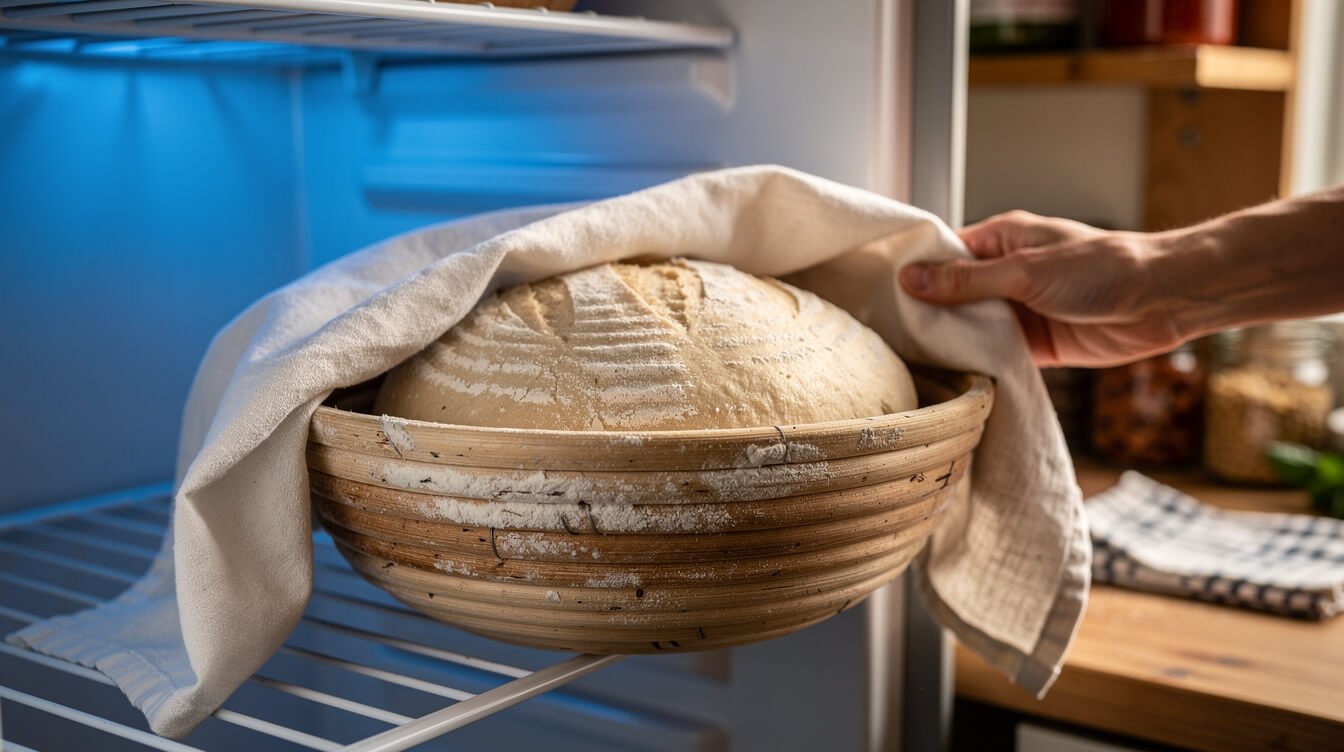
If you change only one thing about how you bake bread, change how long it sits in the fridge. It outperforms every ingredient trick on this page, including the vinegar.
Cold slows the yeast to a crawl but does not stop the enzymes, which keep breaking starch into sugars and protein into amino acids the whole time. More sugar means deeper browning; more amino acids mean more flavor. A little acid builds up too, from the bacteria living on the flour whether you invited them or not. The dough also firms up, which makes it easier to score cleanly and gives better oven spring.
Roughly what to expect:
- 4 hours: mild. Easier to handle than warm dough, but the flavor is not there yet.
- 12 hours: noticeably better. Crust browns deeper, there is a real background tang.
- 24 hours: the sweet spot. This is the loaf to aim for.
- 48 hours: still excellent, slightly sharper.
- Past 72 hours: it turns boozy and the gluten starts giving up. The loaf spreads instead of rising.
The practical version: mix Friday night, fold Saturday morning, bake Sunday for lunch. Nothing about that is hard, and none of it is hands-on time.
Honestly, none of this needs special gear — a bowl, a fridge, and a pot with a lid covers it. And since baking this way is mostly waiting, the waiting is a decent time to do something else. Our Support Our Charities Donor Membership T-Shirt is the one piece of Eat Cafe you can wear while the dough gets on with it in the fridge.

Wear the kitchen, support the cause
A sturdy black Gildan tee with the Eat Cafe logo small on the front and large across the back. Good for flour-dusted Saturdays, and it supports the charities we work with.
The old-dough shortcut: save a fistful of this loaf for the next one
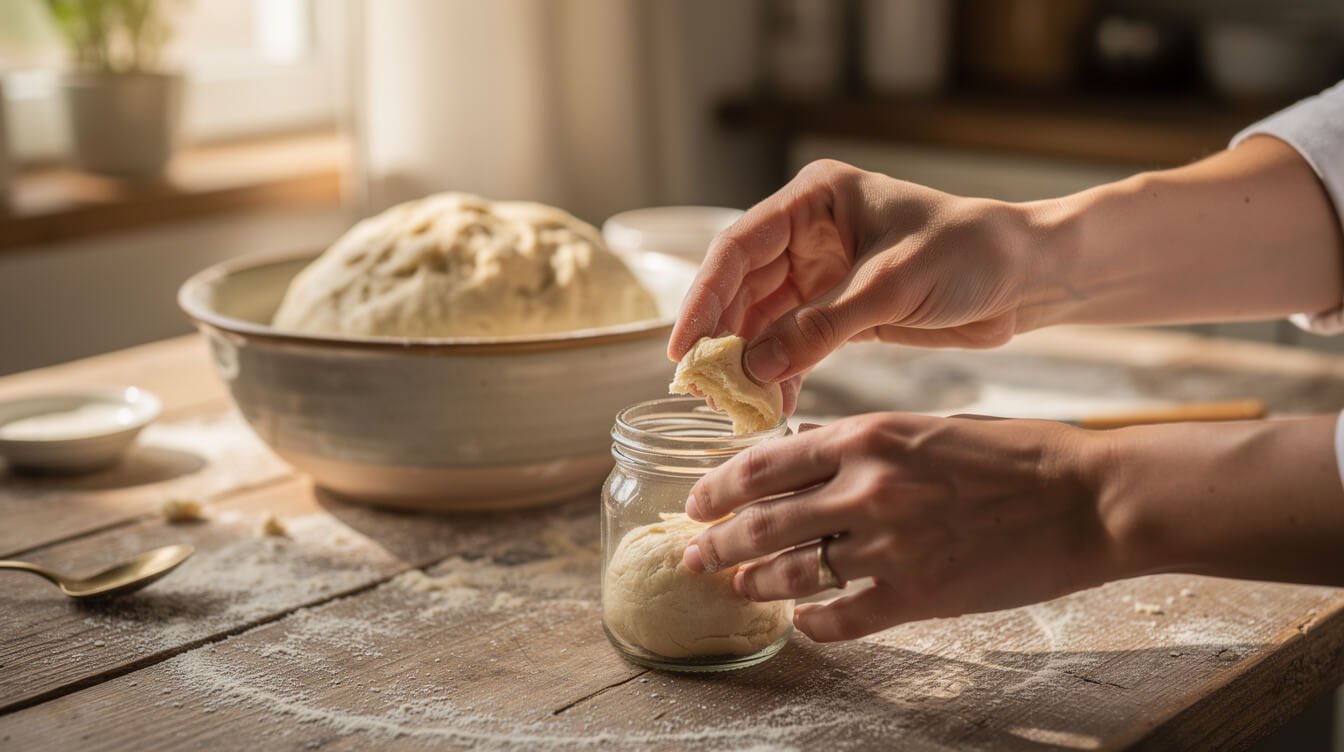
This is the trick that top results skip entirely, and it is the one that compounds.
Before you shape tomorrow’s loaf, pinch off about 100 g of the fermented dough — a piece the size of a small lemon — and put it in a jar in the fridge. That is pâte fermentée, or just “old dough,” and bakers have been carrying it forward for as long as there have been bakeries. Next time you mix, add that piece along with everything else and cut the yeast down to a bare pinch. You are starting the new dough with flour that has already fermented for a day, which means it arrives with acid and flavor already built in.
Do it every bake and each loaf starts a little further along than the last. It is the cheapest flavor upgrade in bread.
Being straight about the limits: old dough is not a starter and will not become one. It still contains commercial yeast, it will not develop a wild culture, and it has a short life — use it within a week, or freeze it. Past that it turns sharply sour and alcoholic and drags the rise down. You refresh it by doing it again next bake, not by feeding it.
Want the real thing? A starter is five minutes a week, not a pet
A lot of people land on this search because the internet convinced them a starter is a demanding animal that needs feeding twice a day and dies if you go away for a weekend. That reputation comes from people baking three times a week with a big jar on the counter. It has little to do with how most of us would actually use one.
Here is the low-effort version. Keep it small — 50 g is plenty for a loaf a week. Keep it in the fridge, not on the counter. Feed it once a week, which takes about five minutes: tip most of it out, add a spoonful of flour and a spoonful of water, stir, back in the fridge. The night before you want to bake, take it out and give it one proper feed so it wakes up. That is the whole job.
Going away for two weeks? It will be sluggish and there will be a layer of gray liquid on top. Both are fine. Pour the liquid off, feed it twice, and it comes back.
If you want to raise one, the full walkthrough — including why it stalls around day five, which is the point most people quit — is in our guide to making a sourdough starter from scratch.
The free shortcut nobody mentions: ask for a piece of someone else’s
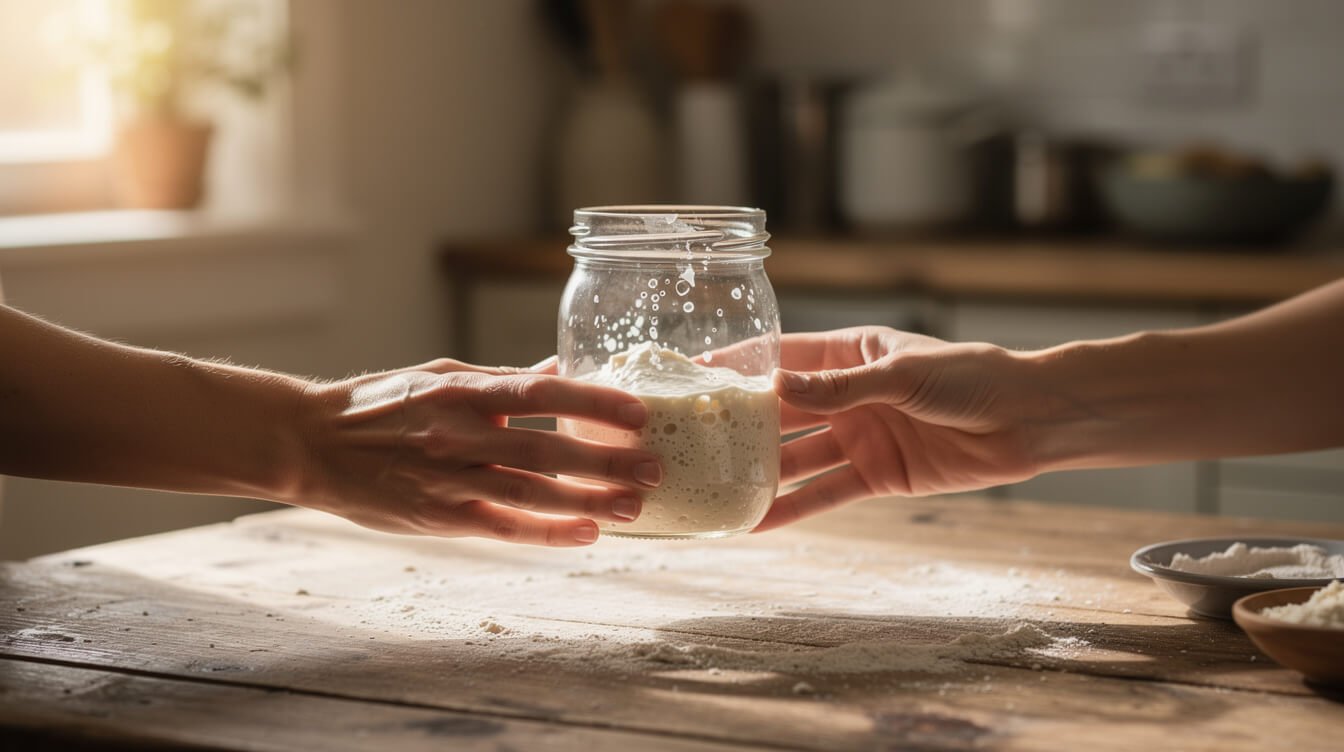
You do not have to grow a starter. You can just be given one, and a mature culture is substantially better than one you raised last week.
Raising a starter from flour and water takes two to four weeks to get genuinely strong. Someone’s established starter is strong the day you get it. Ask at a bakery that makes its own sourdough — a surprising number will hand you a spoonful at a quiet hour if you bring a jar. Ask in a local baking or buy-nothing group, or on r/Breadit and r/Sourdough, where people mail dried starter for the cost of a stamp. Ask the friend who will not stop posting photos of their loaves; they have been waiting for this.
Nobody minds — starters double constantly, and most bakers throw some away every week. It is how cultures have always traveled, hand to hand rather than bought. Bring a clean jar with a loose lid, keep it cool on the way home, and give it two feeds before you bake so it adjusts to your flour.
Troubleshooting: flat loaf, tight crumb, no tang
It spread into a frisbee instead of rising
Almost always over-fermented, or flour that is too soft. If the dough was full of bubbles and smelled strongly of alcohol, it went too long on the counter — pull it back to 10 or 12 hours next time, especially in a warm kitchen. If it was more than 24 hours in the fridge on top of that, the gluten had simply run out. The other common cause is all-purpose flour in a 75% hydration dough, which cannot hold that much water. Switch to bread flour.
Dense, tight crumb with no holes
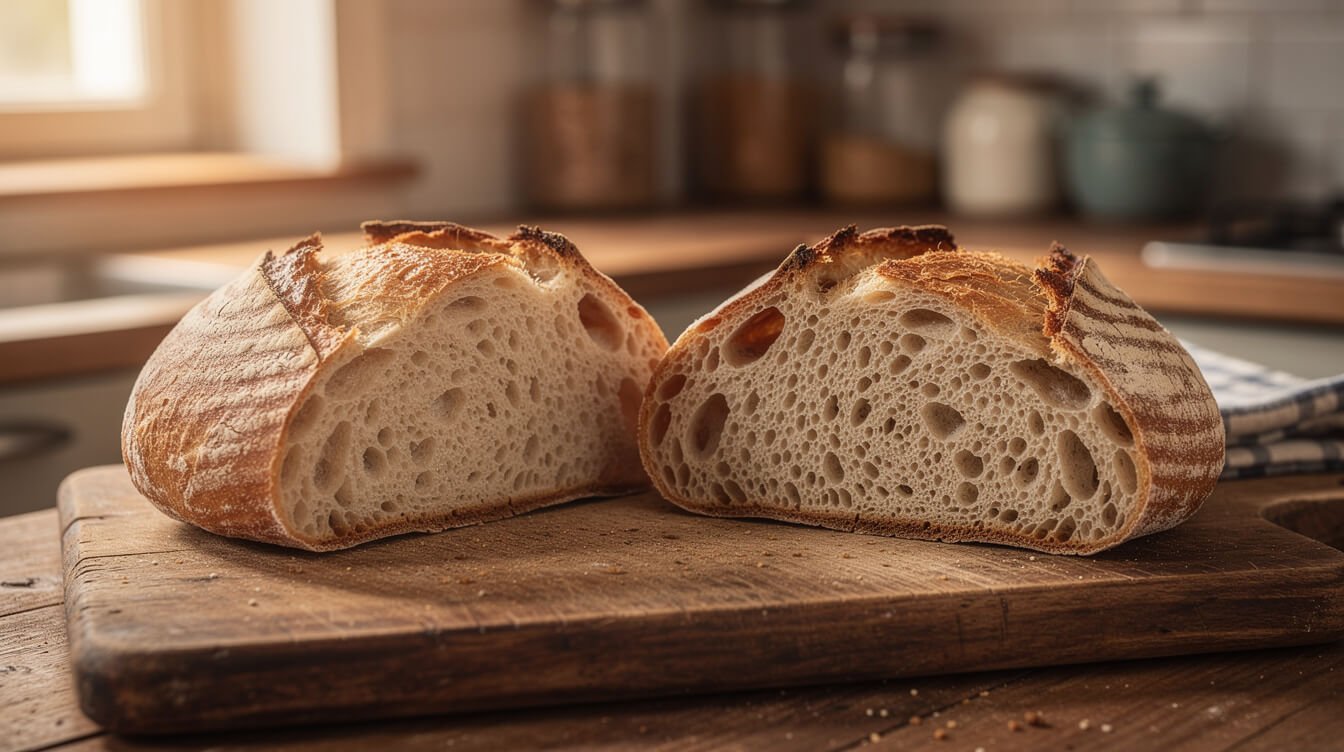
Usually under-fermented, or too much flour worked in during shaping. The first rise must get genuinely domed and bubbly — if it looks much the same as when you mixed it, it is not ready, and the clock means nothing. The other culprit is flouring the dough instead of your hands and the counter, which laminates dry flour into the crumb.
No tang at all
You skipped the acid, the cold rise, or both. Add the tablespoon of vinegar, and give it a full 24 hours in the fridge rather than four. If you have done both and still want more, add the buttermilk swap on top.
Gummy, pasty middle
You cut it too soon — that is the cause the overwhelming majority of the time. Give it a full hour on a rack, ideally more. If you waited and it was still gummy, it was underbaked: check with a thermometer and take it to 205–210°F rather than going by color alone.
Pale, soft crust
Either the pot was not properly preheated, or you did not take the lid off long enough. Give the dutch oven the full 45 minutes to heat, and be braver about the color at the end — “a bit too dark” is almost always where crusty bread actually tastes best. A longer cold rise helps here too, since it leaves more sugar available for browning.
It tastes flat, like plain bread
Check your salt. 10 g for 500 g of flour is 2%, which is right. Under-salting is the quiet reason a lot of homemade bread tastes of nothing, and it also lets the dough ferment too fast. Our homemade Italian bread post covers the same balance on a leaner, faster loaf.
Frequently asked questions
Can you really make sourdough bread without a starter?
You can make excellent sourdough-style bread without a starter — crusty, chewy, and properly tangy. You cannot make true sourdough, because the definition of sourdough is bread leavened by a wild culture rather than commercial yeast. Any recipe claiming otherwise is selling you something.
What can I use instead of a sourdough starter?
A quarter teaspoon of instant yeast for the lift, a tablespoon of vinegar or 100 g of buttermilk for the acid, and a long cold rise for the depth. Those three together are the substitute. A piece of saved dough from your last bake gets you closer still.
Does adding vinegar actually make bread taste like sourdough?
It genuinely adds tang, yes, and it is the sharp acetic side of sourdough flavor specifically. What it cannot do is the layered complexity of a real culture, because that comes from dozens of compounds produced over many hours, not one acid added at the start.
How long does the dough need to sit?
12–14 hours at room temperature, then 4–24 hours in the fridge. Twenty-four in the fridge is the sweet spot. You can stretch to 48 hours, but past about 72 the dough starts breaking down.
Can I use active dry yeast instead of instant?
Yes. Use the same quarter teaspoon and dissolve it in the water first with a pinch of the flour, then wait five minutes before mixing in the rest. With a rise this long, the difference between the two is almost academic.
Do I need a dutch oven?
No, but it genuinely helps — the lid traps steam, and steam is what gives you a thin, crackly crust and good oven spring. Any heavy oven-safe pot with a lid works. Without one, bake on a preheated tray and cover the loaf with a large metal bowl for the first 25 minutes.
Is it safe to leave dough out overnight?
A plain dough of flour, water, salt, and yeast is standard, safe practice to ferment at room temperature overnight — this is how no-knead bread has always worked. If you add dairy, like the buttermilk or yogurt variation above, do the long rise in the fridge instead.
How should I store the loaf?
Cut side down on a board, or in a paper bag, at room temperature. Not plastic, which softens the crust, and not the fridge, which stales bread faster than the counter. Best for about two days.
Final thoughts
You came here asking whether you could skip the starter, and the real answer has two halves. No, you cannot make true sourdough without one. Yes, you can make a loaf with a dark crackly crust, an open chewy crumb, and a real tang, using a quarter teaspoon of yeast, a spoonful of vinegar, and a day in the fridge — and it will be better than most of the bread you can buy.
Bake it a few times, saving a piece of dough each round. If you then decide you want the deeper flavor only a culture gives, you will already know how to handle a wet dough and read a rise — which is most of what makes starters hard for beginners. The jar will be the easy part by then. Either way, you are getting bread out of the oven this weekend.

Before you go
Want the next one?
We post a new recipe or kitchen guide every day. The best of the week lands in one short email, no life story attached.