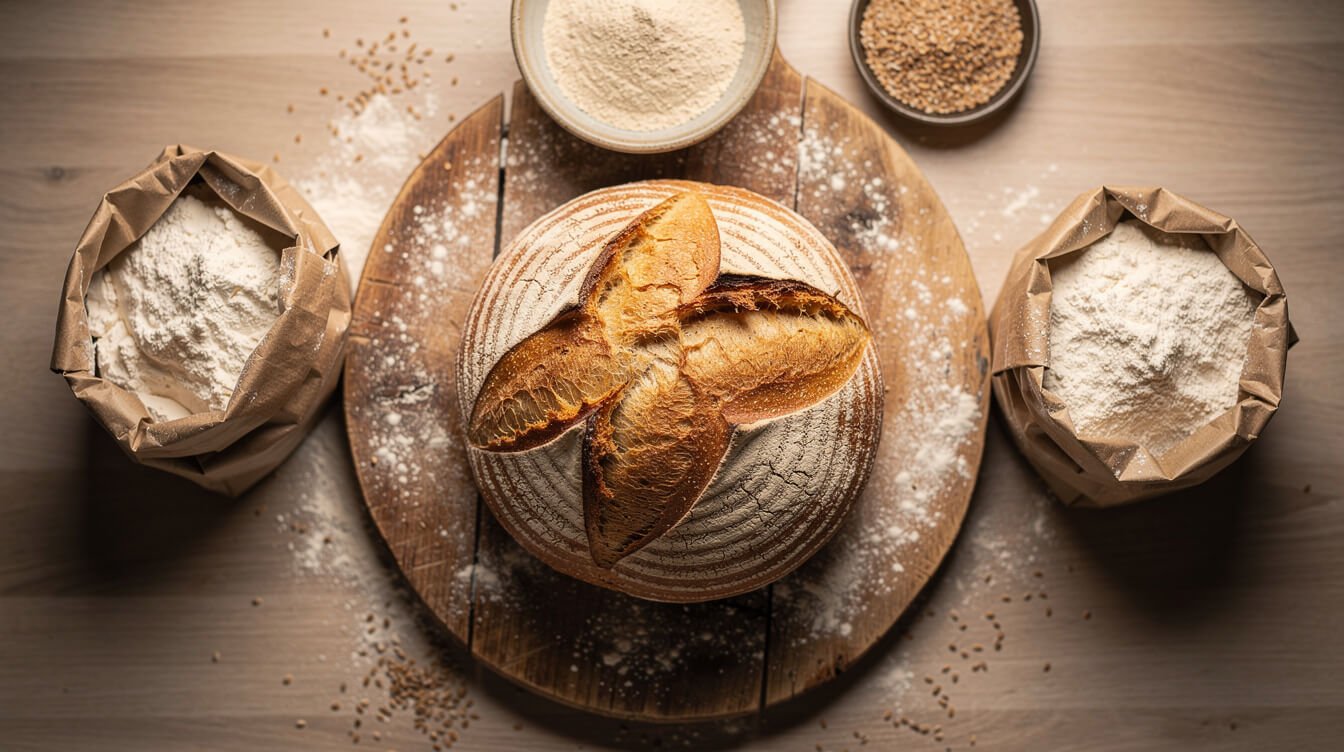
Best Flour for Sourdough Bread (and the Mistake That Makes It Flat and Pale)
Standing in the baking aisle wondering about the best flour for sourdough bread? You don’t need a dozen bags and a kitchen scale obsession to get this right. You need one good all-purpose bread flour, a couple of things to know about what’s actually in the bag, and one mistake to avoid — because that one mistake is the reason so many home sourdough loaves come out flat, pale, and dense instead of tall with a crackly crust.
Here’s the short version, then I’ll walk you through it: reach for an unbleached bread flour first, keep it fresh, and don’t overthink the fancy stuff until your basic loaf is working. Let’s get into why, what to actually buy, and the mistake that trips up more home bakers than a bad starter ever does.
What Actually Matters When You’re Choosing Sourdough Flour
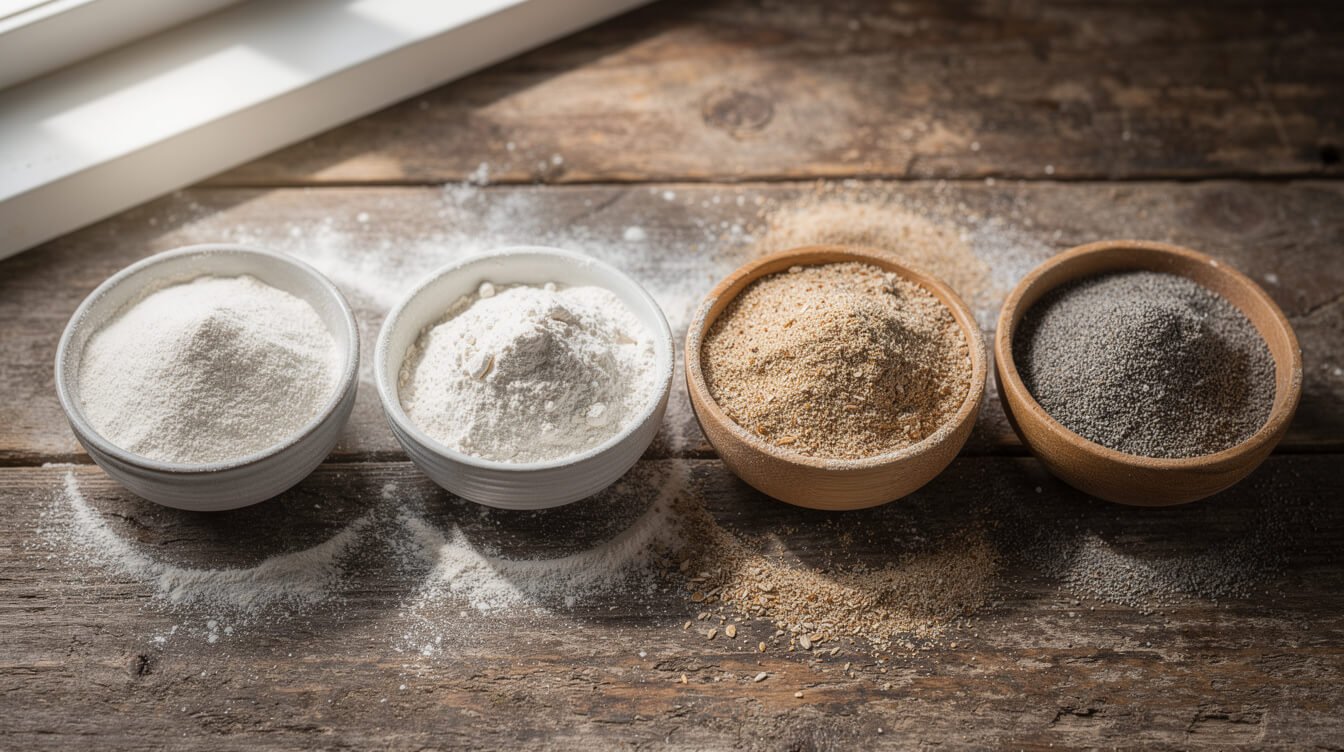
Every sourdough flour question really comes down to three things: protein content, whether it’s bleached, and how fresh it is. Everything else — brand, packaging, the pretty mill story on the bag — matters a lot less than people assume.
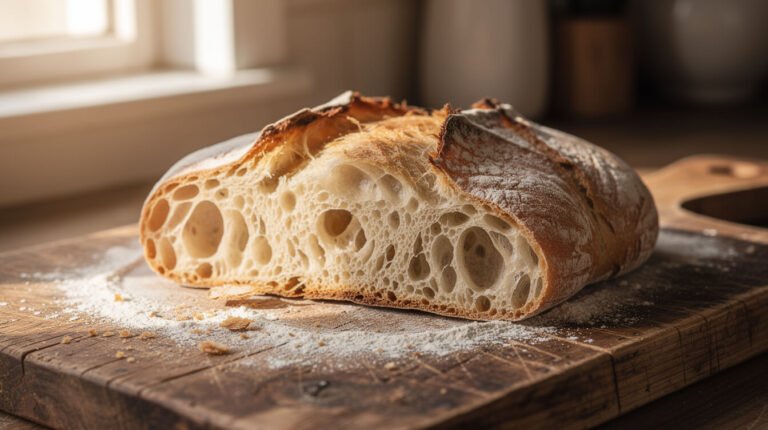
Protein content is the big one. Sourdough dough needs strong gluten to trap the gas your starter produces, which is what gives you that open, chewy crumb and good oven spring. Bread flour runs about 12–13% protein, which is why it’s the default recommendation. All-purpose flour, usually 10–11%, still works — your loaf will just be a little denser and less dramatic in the rise. You can find the protein number yourself even when a bag doesn’t print it outright: check the nutrition label, take the protein grams in a 30g serving, and divide by 30. Anything landing around 3.6–4g per 30g serving is in bread-flour territory.
Bleached vs. unbleached matters more than most people realize. Bleached flour has been treated with chemical agents to whiten it and speed up aging, which is a shortcut millers use so the flour doesn’t need weeks to mature naturally. Those same agents can dull the activity of the wild yeast and bacteria in your starter, and they can also make dough feel a little slack and harder to shape. You don’t need organic for good sourdough, but unbleached is worth insisting on every single time you buy flour, no exceptions.
Freshness is the one nobody talks about, and it’s the one that causes the most heartbreak — more on that a little further down, because it’s the actual answer to why some loaves just won’t perform no matter how careful the technique is. Flour is a living-ish ingredient in the sense that it has natural oils and active enzymes, and both fade with time and exposure to air, heat, and light.
The Best Flour for Sourdough Bread, for Everyday Baking
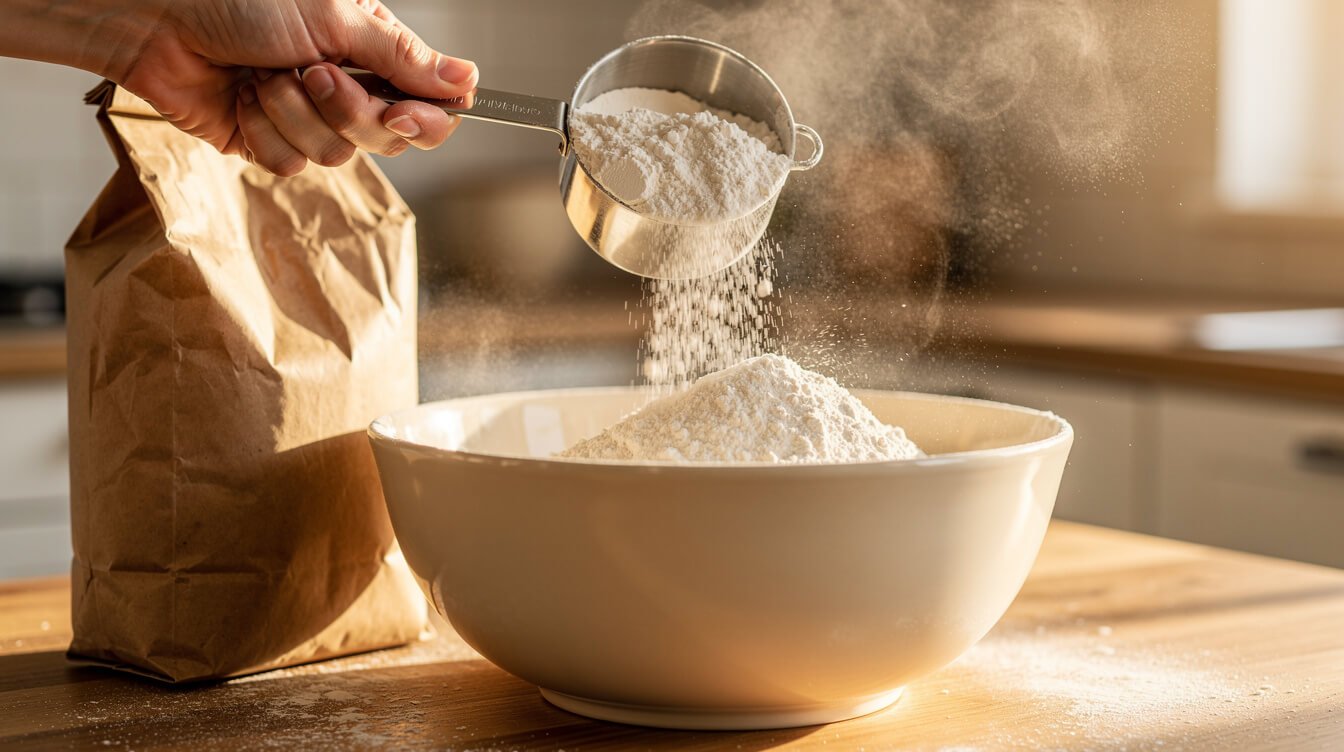
If you want one answer and you want to stop reading and go bake: an unbleached bread flour from a major mill — King Arthur, Bob’s Red Mill, or your grocery store’s own unbleached bread flour — will make you a genuinely good loaf. I’ve used all three in the same week and could not tell you which loaf came from which bag once they were out of the oven.
Here’s roughly how they stack up in real, non-scientific home use:
- King Arthur Unbleached Bread Flour — the most consistent bag-to-bag, protein always lands right around 12.7%, a little pricier. Great default if you bake often and want predictable results every time.
- Bob’s Red Mill Artisan Bread Flour — very close in performance, sold in smaller bags at most grocery stores, a solid choice if you’re not baking weekly and don’t want a big bag going stale on you.
- Store-brand unbleached bread flour — genuinely fine. The protein content is usually printed right on the bag, and as long as it’s unbleached and reasonably fresh, it will make good sourdough. This is where most of your grocery budget should go before a specialty flour does.
What you’re paying extra for with the pricier bags is usually consistency and a slightly higher, more reliable protein number, not some secret ingredient. If you’re just getting into sourdough, buy the mid-priced unbleached bread flour at your regular store and put your energy into your starter and your fold technique instead. That’s where the real gains are.
How much to buy: a standard sourdough loaf uses roughly 3½–4 cups (about 500g) of flour, so a 5-pound bag gets you somewhere around eight to nine loaves. If you’re baking once a week, a 5-pound bag is the right size — you’ll use it up well within the two-to-three-month freshness window instead of it going stale on the shelf. Save the 25-pound bulk bags for once you’re baking multiple times a week and can freeze the overflow, which we’ll get to below.
Once your basic loaf is solid, that’s when it’s fun to try a specialty flour — a stone-ground or a locally milled bag from a regional mill — and taste the difference for yourself. Stone-ground and heritage-grain flours tend to have a slightly lower, less consistent protein number than commercial roller-milled bread flour, along with more of the bran and germ left in, so your dough may feel a little different in your hands: a touch stickier, and it may need a slightly longer bulk rise. That’s not a flaw, it’s just a different flour with a different personality, and it’s part of the fun once you know what to expect. Do that step second, not first, though. A fancy flour won’t fix a sluggish starter or an underdeveloped dough, and it’ll just mean an expensive disappointing loaf instead of a cheap one.
Do You Need Organic Flour for Sourdough Bread?
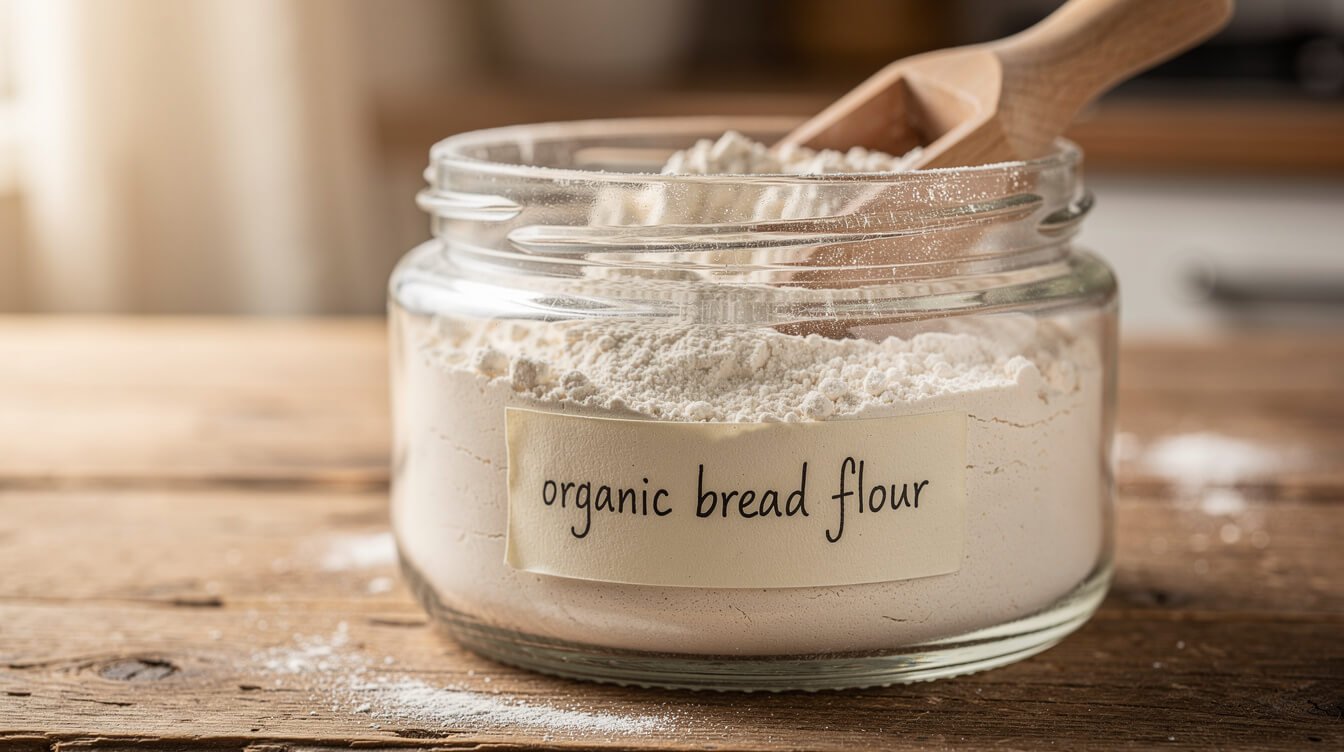
Short answer: no, you don’t need organic flour for sourdough to work. Plenty of great loaves come out of a bag of regular unbleached bread flour that never saw an organic label in its life.
Longer answer: some home bakers do notice their starter seems a little more active on organic flour, and a slightly deeper flavor in the finished bread. The most likely reason isn’t the “organic” label itself doing something magical — it’s that organic flours are less likely to be bleached or heavily processed, which circles right back to the point above. Organic is often a proxy for “gentler processing,” not a special ingredient on its own.
If you already have a favorite organic flour and it fits your budget, keep using it — you’re not leaving anything on the table. If you don’t, don’t feel like you’re cutting corners by skipping it. It’s a nice-to-have, not a requirement.
Where organic flour genuinely shines is in a starter that’s just getting going from scratch — a little extra microbial activity from less-processed grain can help a sluggish new starter find its feet in the first week or two. After that, once your starter is established and reliably doubling, it’s optional, not essential.
Bread Flour vs. All-Purpose vs. Whole Wheat (What Each One Actually Does)
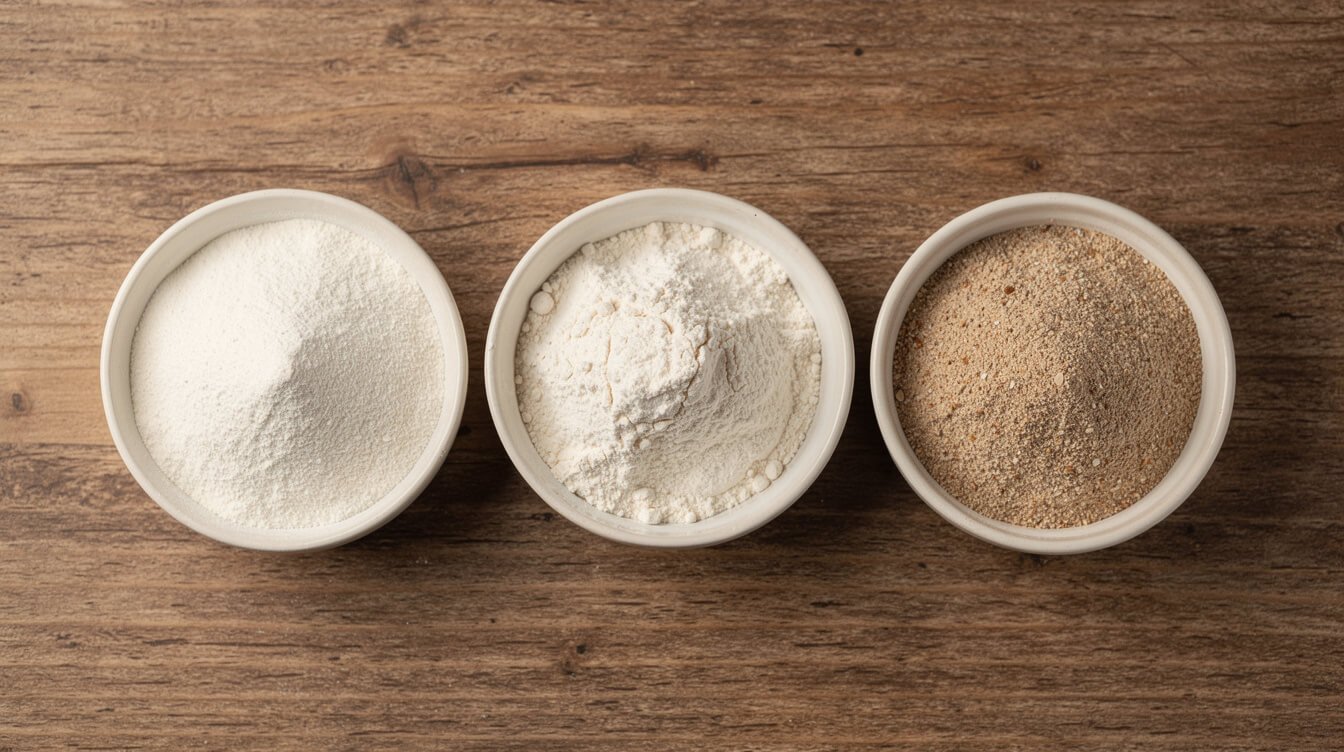
Bread flour is your default. Higher protein, strong gluten network, the tall-and-open crumb people picture when they think “sourdough.” Use it as the base of almost every loaf you bake.
All-purpose flour isn’t a downgrade so much as a different result — a slightly tighter, softer crumb, closer to a sandwich loaf than an artisan boule. If it’s all you have, use it, one-for-one, no recipe math needed. Your loaf will still taste like sourdough; it just won’t have quite the same dramatic rise or those big irregular holes.
Whole wheat flour (and rye, which behaves similarly) adds flavor, feeds your starter more actively, and speeds up fermentation — which is also why it tends to make your bread more sour. If you want a tangier loaf, swapping in 10–20% whole wheat or rye is the easiest lever to pull, and it’s exactly the trick covered in our guide to making sourdough more sour. Go much higher than that and you’ll need to adjust your water, since whole grain flours are thirstier and will soak up more liquid than white flour does.
A lot of experienced home bakers land on a blend — 80–90% bread flour, 10–20% whole wheat — because it gets you the structure of bread flour with a little more of the flavor and starter activity that whole grain brings. It’s a good place to start experimenting once your all-bread-flour loaf is working reliably. If you eventually get serious about baking a wider rotation of breads, cakes, and pizza dough, it’s also worth checking how your cake flour needs differ from your bread flour needs — cakes want the opposite of what sourdough wants, a lower-protein flour for a tender, soft crumb instead of a chewy one.
If you’re kitting out your kitchen for more baking projects like this one, our Support Our Charities Donor Membership T-Shirt is a small way to back the Eat Cafe kitchen (and the charities we support) while you’re at it — comfortable, no strings attached, and it helps keep new recipes and guides like this one coming.
From the Eat Cafe kitchen
One good recipe a week, straight to your inbox
The recipe we're actually cooking this week, plus the one tip that saves it when it goes sideways. No spam. Unsubscribe anytime.
Why Even the Best Flour for Sourdough Bread Still Goes Flat and Pale
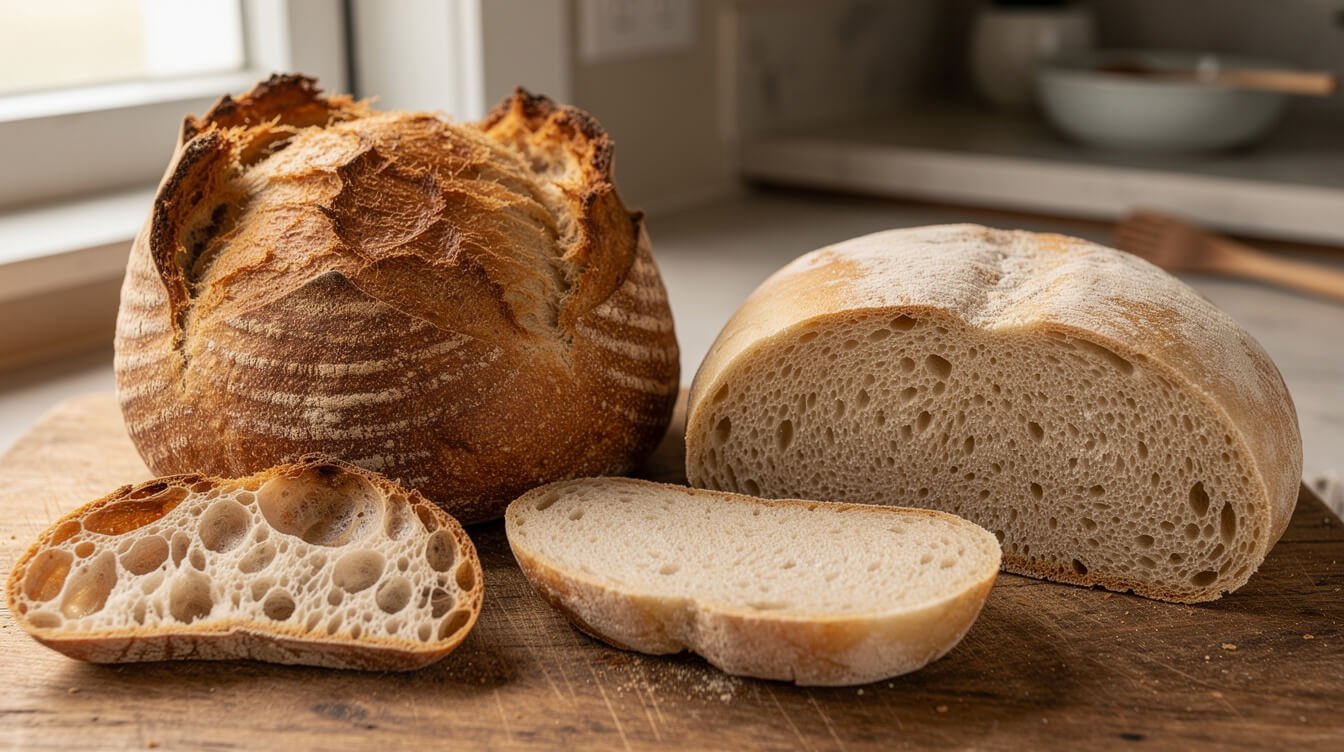
Here’s the mistake that trips up more home bakers than any brand choice ever will: using flour that’s gone stale or been sitting open too long. Flour doesn’t spoil the way milk does, but it does lose potency. The natural oils in the wheat germ go rancid slowly, and the enzyme activity that feeds your starter and helps your dough rise weakens over time.
The symptoms are exactly the ones that send people down a rabbit hole of blaming their starter, their oven, or their technique: a pale crust that never blisters or browns properly, a flat loaf with barely any oven spring, and a dough that feels slack and sticky no matter how much extra flour you work in. If that sounds familiar and you’ve had that bag of flour in the pantry for six months, the flour is very likely your actual problem, not your process.
The fix is simple. Buy flour in a quantity you’ll actually use within two to three months rather than the giant bulk bag that looked like a good deal. Store it in an airtight container, in a cool, dark spot — not on an open shelf near the stove where heat and light break it down faster than they should. If you bake infrequently or buy in bulk anyway, keep your main supply in the freezer in a sealed bag and only pull out what you need for the week; flour keeps well for up to a year that way, and you can measure it straight from frozen since it doesn’t clump.
Before you blame your starter, your kneading, or your oven for a disappointing loaf, do the cheap test first: buy a fresh small bag of unbleached bread flour and bake with that, using the exact same recipe and schedule you always use. If the new bag gives you a taller, more blistered, better-risen loaf with no other changes, you’ve found your answer. It fixes more sourdough problems than almost anything else on this list, and it costs less than a specialty flour experiment that might not even be the real issue.

Support Our Charities Donor Membership T-Shirt
A comfortable everyday tee that puts a little back into the charities Eat Cafe supports. If you’ve been getting good use out of our recipes and guides, this is a simple way to say thanks.
Frequently Asked Questions
Can I use all-purpose flour instead of bread flour for sourdough?
Yes. It’ll give you a slightly denser, softer loaf with less dramatic oven spring, but it still makes real sourdough bread. Don’t let not having bread flour stop you from baking today.
What protein percentage is best for sourdough bread?
Around 12–13% is the sweet spot for a classic open, chewy crumb. Check the nutrition label — protein grams per 30g serving divided by 30 gives you a rough percentage if it’s not listed directly on the bag.
Does bleached flour ruin sourdough starter?
It won’t necessarily ruin it, but it can slow it down. The chemical bleaching agents can dampen the wild yeast and bacteria activity your starter depends on. Unbleached is the safer default every time you shop.
Is King Arthur flour worth the extra cost for sourdough?
It’s a reliable, consistent unbleached bread flour, and plenty of bakers swear by it. But side by side, a good store-brand unbleached bread flour will get you a very similar loaf. Spend the extra money if it’s within your budget and you like supporting that brand — not because your bread needs it to work.
Can I mix different flours in one sourdough loaf?
Yes, and many experienced bakers do — a blend of mostly bread flour with a smaller portion of whole wheat or rye is a common way to add flavor and sourness without losing structure. Start around 10–20% whole grain and adjust from there.
How long does flour actually last once opened?
Around two to three months at room temperature in an airtight container for best baking performance, or up to a year in the freezer. It’s still safe to use well past that, but your rise and crust will suffer, which is the whole point of this guide.
Do I need a kitchen scale to measure flour for sourdough?
You don’t need one to get started, but it helps a lot with consistency, since a cup of flour can vary by quite a bit depending on how it’s scooped. If you bake more than once or twice, a cheap kitchen scale is one of the best upgrades you can make.
Final Thoughts
You don’t need to chase down a rare flour or spend a fortune to bake great sourdough. The best flour for sourdough bread is almost always the boring answer: a fresh, unbleached bread flour, stored well, from whichever brand fits your budget. Let your starter and your technique do the rest of the work. If a loaf ever comes out flatter and paler than you expected, check the flour date before you second-guess anything else — it’s the fix that solves more sourdough disappointments than people expect, and it’s the cheapest one to try.

Before you go
Want the next one?
We post a new recipe or kitchen guide every day. The best of the week lands in one short email, no life story attached.