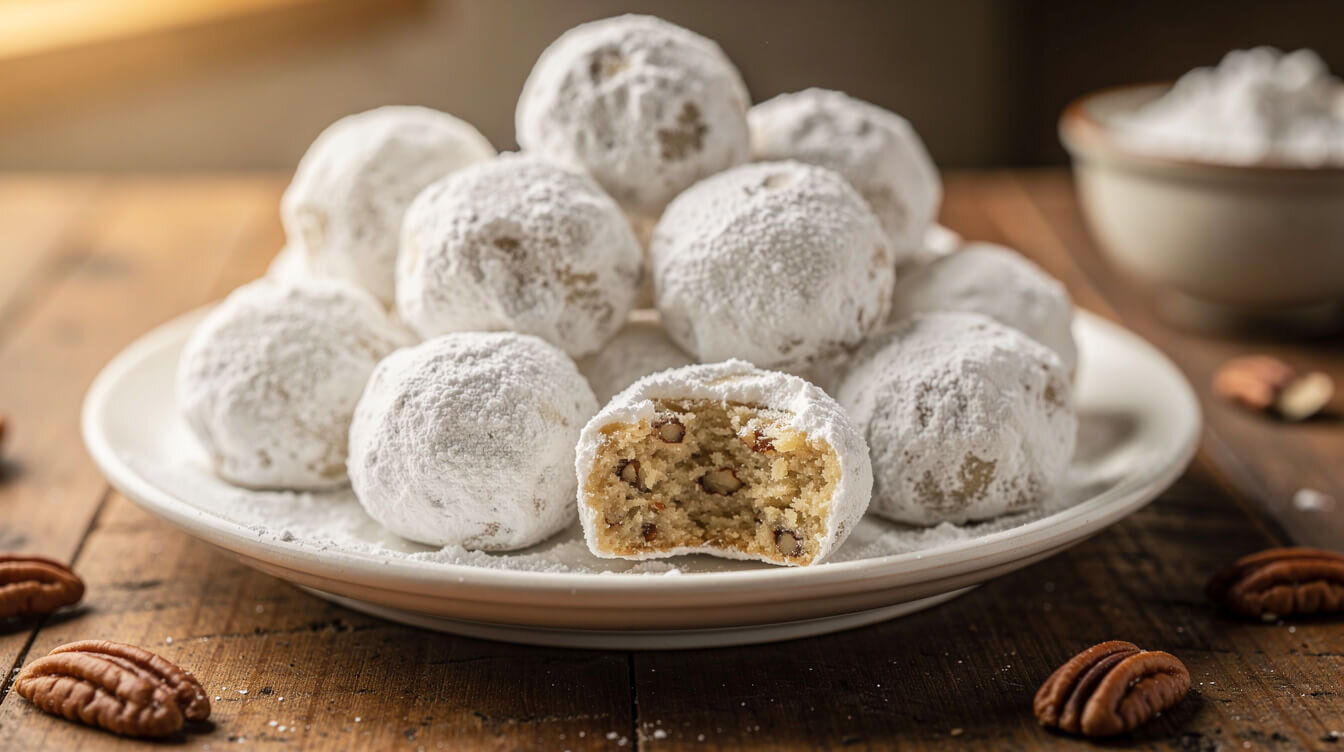
Recipe for snowball cookies with pecans: round, buttery, and actually snowy (plus fixes for flat or patchy ones)
This recipe for snowball cookies with pecans makes the classic holiday cookie: a buttery, nutty little ball that melts in your mouth under a thick coat of powdered sugar. It has six ingredients and needs no eggs or mixer skills. Snowballs still go wrong in a few predictable ways. They flatten into discs, crumble when you roll them, taste dry, or lose their snowy coat by the time the tin gets opened. Each of those has a simple cause and a simple fix.
The recipe comes first, by cups and by weight. After it you’ll find the part most recipes skip: why some say 325°F and others say 375°F, and how to tell when yours are done no matter what your oven does. Then the double sugar roll that keeps them white, a fix-it guide, easy variations, and a make-ahead plan for cookie season.
Recipe for snowball cookies with pecans: what you need
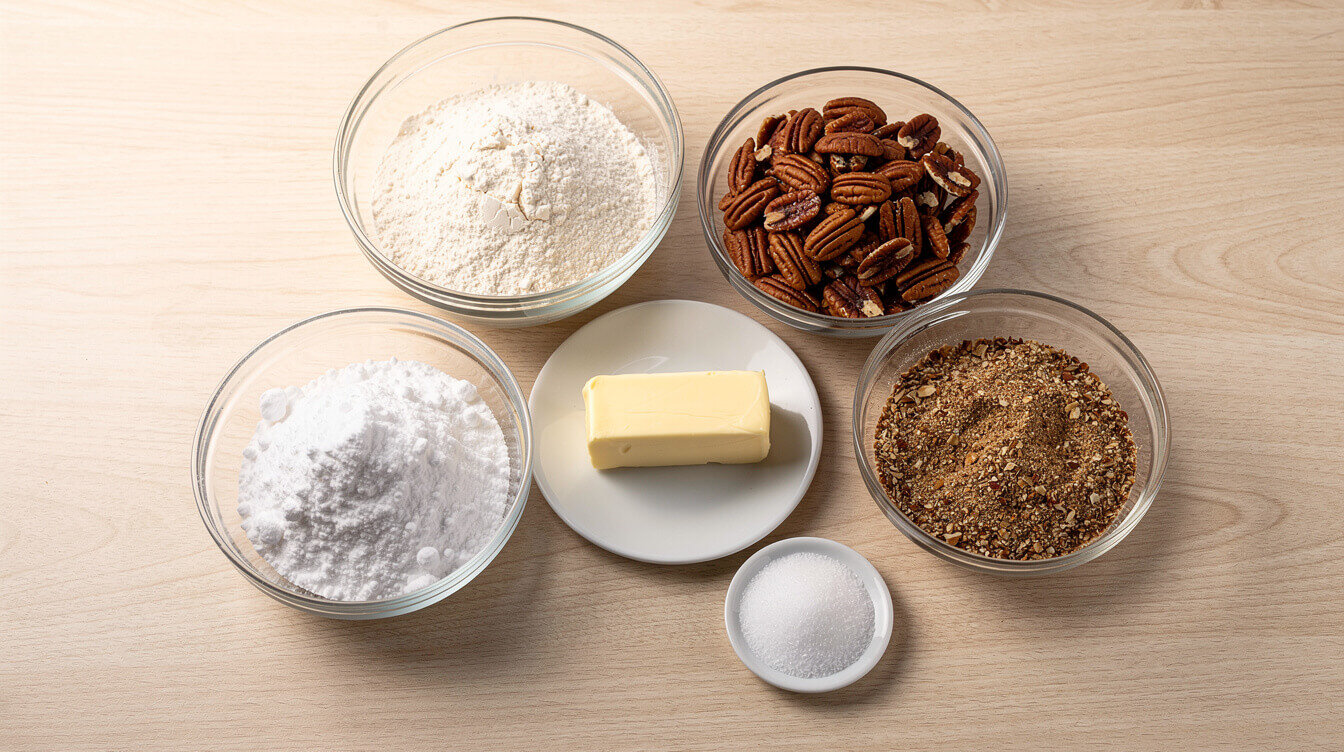
This makes about 40 cookies, each about 1 inch across. Hands-on time is about 30 minutes, including toasting the pecans. Bake time is about 15 minutes per sheet.
For the dough
- 1 cup (about 110g) pecan halves
- 1 cup (2 sticks, 226g) unsalted butter, softened but still cool
- 1/2 cup (60g) powdered sugar
- 2 teaspoons vanilla extract
- 1/4 teaspoon fine salt (or 1/2 teaspoon kosher salt)
- 2 1/4 cups (280g) all-purpose flour, spooned and leveled
For rolling
- About 1 1/2 cups (180g) powdered sugar
Why these ingredients (and the amounts that matter)
One cup of pecans, chopped fine. Every recipe for snowball cookies with pecans seems to call for anywhere from 3/4 cup to 2 full cups of nuts. More isn’t better here. Past about a cup, there’s not enough dough to hold the nuts together, and the cookies crumble when you roll them in sugar. Chop them very fine, down to bits about the size of a grain of rice. Big pieces make the balls lumpy and give them weak spots where they break.
Toast the pecans first. It takes 8 minutes and it’s the biggest flavor upgrade in the recipe. Raw pecans taste mild and a little waxy inside a butter cookie. Toasted pecans taste like pecans.
Butter that’s softened but still cool. It should dent when you press it but not look shiny or feel greasy, about 65°F if you like to check. Butter that’s gone warm and slick is the number one reason snowballs flatten. Use real butter, not tub spread. Spreads have more water and less fat, and the cookies come out flat and pale.
Powdered sugar in the dough, not granulated. It dissolves into the butter and gives you the fine, tender, melt-away texture. Granulated sugar makes a crisper, sandier cookie. That’s good, but it isn’t a snowball. The dough is only lightly sweet on purpose. The coating brings the sweetness.
Salted butter is fine. Leave out the added salt. Our salted vs unsalted butter guide explains the swap if you want to be exact.
Measure the flour gently. Spoon it into the cup and level it, or weigh it. Scooping straight from the bag can pack in an extra 1/4 cup or more, and that’s how you get dry, crumbly snowballs. (There’s more on measuring by weight in our cake flour vs all-purpose flour guide.)
How to make pecan snowball cookies, step by step
You can use a stand mixer, a hand mixer, or a sturdy spatula and some arm work. This dough doesn’t need air beaten into it. It just needs to come together.
- Toast the pecans. Heat the oven to 350°F (175°C). Spread the pecan halves on a baking sheet and toast for 6 to 8 minutes, until they smell nutty and look a shade darker. Let them cool completely. Warm nuts turn oily and pasty when you chop them.
- Chop them fine. Use a knife, or pulse them in a food processor with 2 tablespoons of the measured flour. The flour keeps them from turning into pecan butter. Stop when the pieces are about rice-sized, with some fine crumbs mixed in.
- Cream the butter and sugar. Beat the butter, 1/2 cup powdered sugar, and salt on medium speed for about 2 minutes, until smooth and creamy. Beat in the vanilla. Don’t keep going for 5 minutes. Too much air makes the balls puff and then slump.
- Add the flour and pecans. On low speed (or with a spatula), mix in the flour just until no dry streaks remain, then the pecans. The dough will look thick and a little crumbly. That’s right. Press a bit in your hand. If it holds together, you’re set.
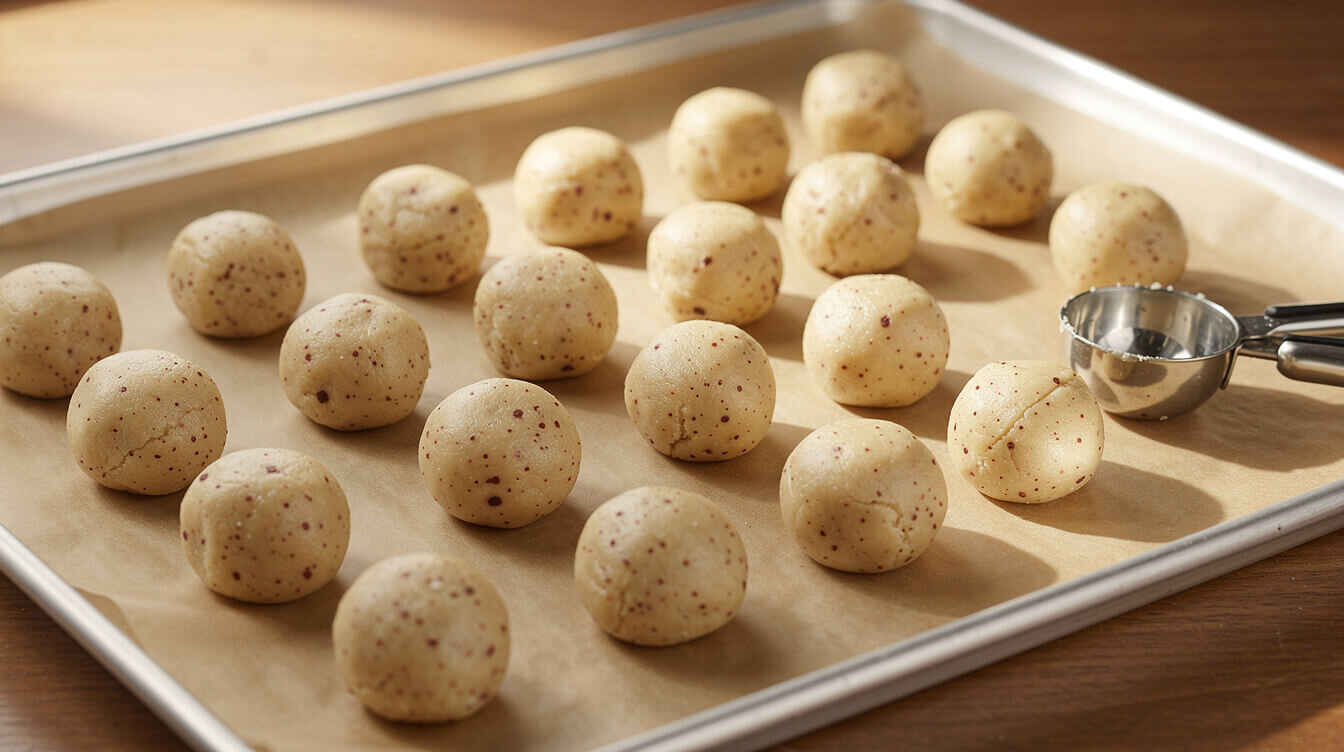
- Scoop and roll. Scoop level tablespoons of dough (a 1-tablespoon cookie scoop makes this quick) and roll each one between your palms into a smooth ball. Set them about 1 inch apart on a parchment-lined, light-colored baking sheet. They barely spread, so 20 fit on a sheet.
- Chill for 20 to 30 minutes. Put the whole sheet in the fridge. This is the step that keeps snowballs round, especially in a warm kitchen or when your hands warmed the dough. In a cool kitchen with firm dough, you can skip it.
- Bake at 350°F (175°C) for 14 to 17 minutes on the center rack, one sheet at a time. They’re done when the tops are set and still pale, and the bottoms are light golden. The next section shows how to check.
- Cool 5 minutes on the pan. Hot snowballs are fragile and will crumble if you move them right away.
- Roll in powdered sugar twice. Roll them while they’re still warm, let them cool completely on a rack, then roll them again. This double roll gets its own section below, because it’s the difference between snowy and patchy.
One food-safety note: don’t snack on the raw dough. Even without eggs, the FDA advises not eating raw flour, dough, or batter, because raw flour isn’t treated to kill germs. The baked cookie is worth the wait.
325°F, 350°F, or 375°F? How to tell when snowballs are done
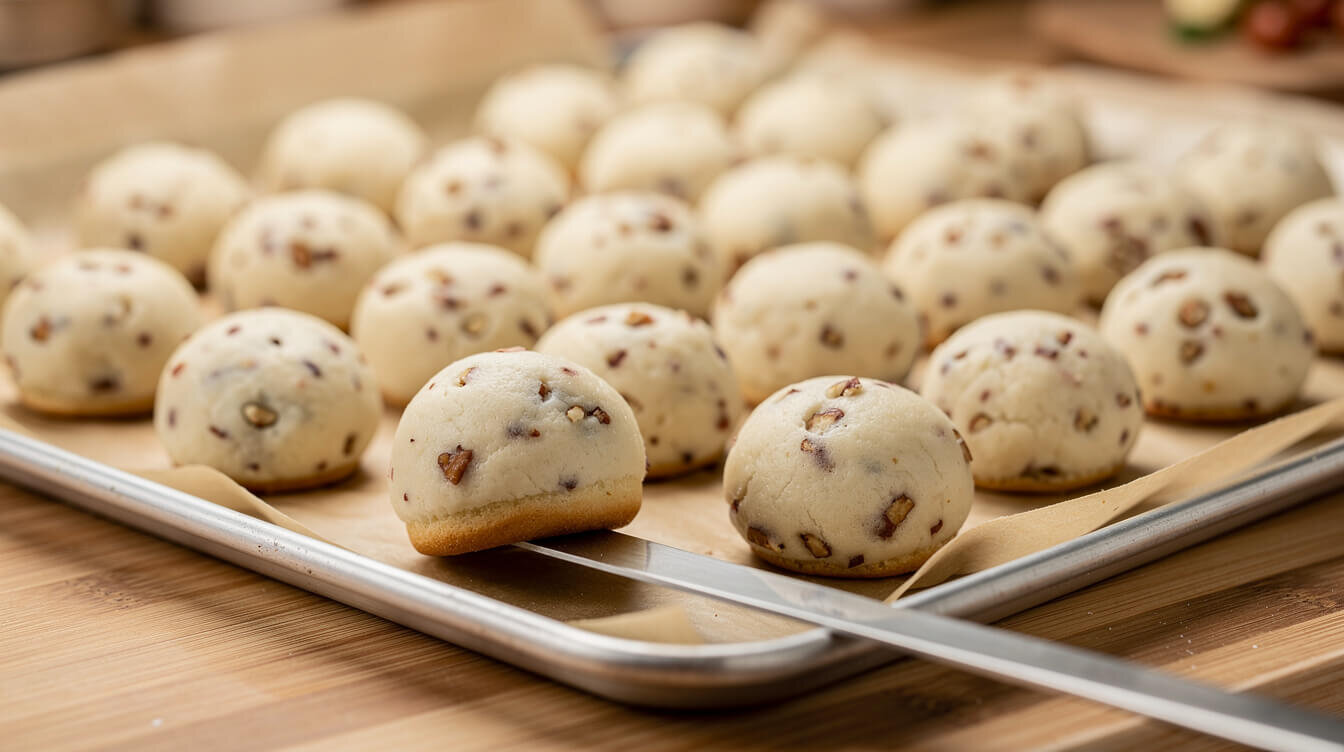
Look at a few recipes for snowball cookies with pecans and you’ll see oven temperatures from 325°F to 375°F, with bake times from 7 minutes to 18. That’s confusing, but it makes sense once you know what each one is going for.
- 375°F for 7 to 10 minutes works for small balls, and it gives a very pale cookie. The risk is that the outside sets before the middle bakes through, so the centers can taste pasty. If your oven runs hot, the bottoms brown fast.
- 325°F for 16 to 20 minutes is gentle and hard to burn. It’s slower, though, and the longer bake can dry the cookies out.
- 350°F for 14 to 17 minutes is the middle ground. It’s fully baked, still pale on top, lightly golden underneath, and tender in the middle. It’s what we use and recommend.
The doneness test that works in any oven
Ignore the clock and look at three things:
- The tops are set and matte, not shiny. They’ll still be pale cream. Snowballs don’t really brown on top. If you wait for golden tops, they’re overbaked.
- The bottoms are light golden. Tip one over with a spatula. Pale bottoms need 1 to 2 more minutes. Deep brown means pull the next sheet sooner.
- A gentle press on the side feels firm, not soft. Hot cookies are still a little delicate, but the dough shouldn’t give like it did raw.
Start checking at 13 minutes on your first sheet, and note the time that works. The second sheet will be the same, as long as the pan has cooled in between.
The pan matters more than you’d think
Dark pans run hotter, and snowballs sit on the pan the whole time, so the bottoms brown before the middles finish. A light-colored aluminum sheet lined with parchment bakes them the most evenly. If you only have dark pans, drop the oven to 325°F, check early, or stack two pans together. We compare a few options in our best baking sheet guide. And if you’ve never checked your oven’s real temperature, a cheap oven thermometer is worth it. Plenty of home ovens run 25°F off, which is the whole gap between two of those recipe temperatures.
The double sugar roll: how to keep snowball cookies snowy
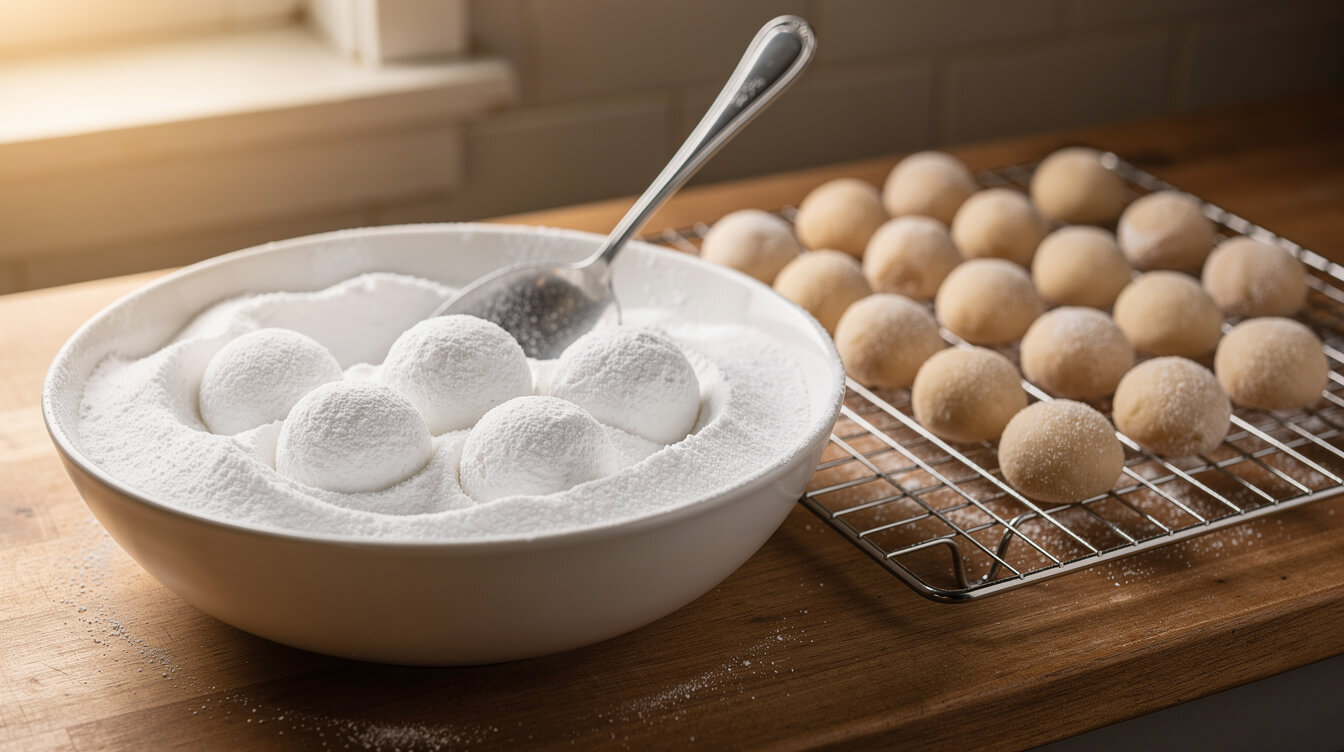
Snowballs get rolled in powdered sugar twice, and each roll does a different job.
Roll 1: while they’re warm
After the cookies have cooled on the pan for about 5 minutes, they should be warm but firm enough to pick up. Drop a few at a time into a wide bowl of powdered sugar and roll them gently with a spoon or your fingers. The warmth melts the sugar a little, so it soaks in and makes a thin, slightly see-through base coat. This layer seals the surface and gives the second coat something to grip.
Too hot and the sugar melts into a sticky, pasty glaze, and the soft cookies can break. Too cold and the sugar has nothing to melt into. It mostly falls off. Five minutes on the pan is about right for 1-inch balls.
Roll 2: once they’re completely cool
Let the cookies cool all the way on a rack, about 30 minutes. Then roll them again. This time the sugar stays powdery and white, and that’s the snow you see. Shake off the extra.
Roll 3 (optional): right before serving
After a day or two in a tin, the butter in the cookie slowly soaks into the coating and it looks thinner and duller. Give them a quick third roll before you set them out or hand over a gift, and they’ll look freshly made.
Little things that help
- Use a wide, shallow bowl. A pie plate works well. You want room to roll, not to dig.
- Sift lumpy sugar first, or the coat will be spotty.
- Swap in fresh sugar for the second roll. The first bowl gets damp and full of crumbs. Use it to sweeten your coffee, or toss it.
- Don’t cover warm cookies. Trapped steam turns the coating gummy. Store them only once they’re fully cool.
Rolling 40 cookies in powdered sugar is a messy, cheerful job. Our Eat Cafe Support Our Charities Donor Membership T-Shirt is a comfy dark tee to bake in. Yes, the sugar will show, but it brushes right off.
From the Eat Cafe kitchen
One good recipe a week, straight to your inbox
The recipe we're actually cooking this week, plus the one tip that saves it when it goes sideways. No spam. Unsubscribe anytime.
Snowball cookie problems: flat, crumbly, dry, or patchy (and the fixes)
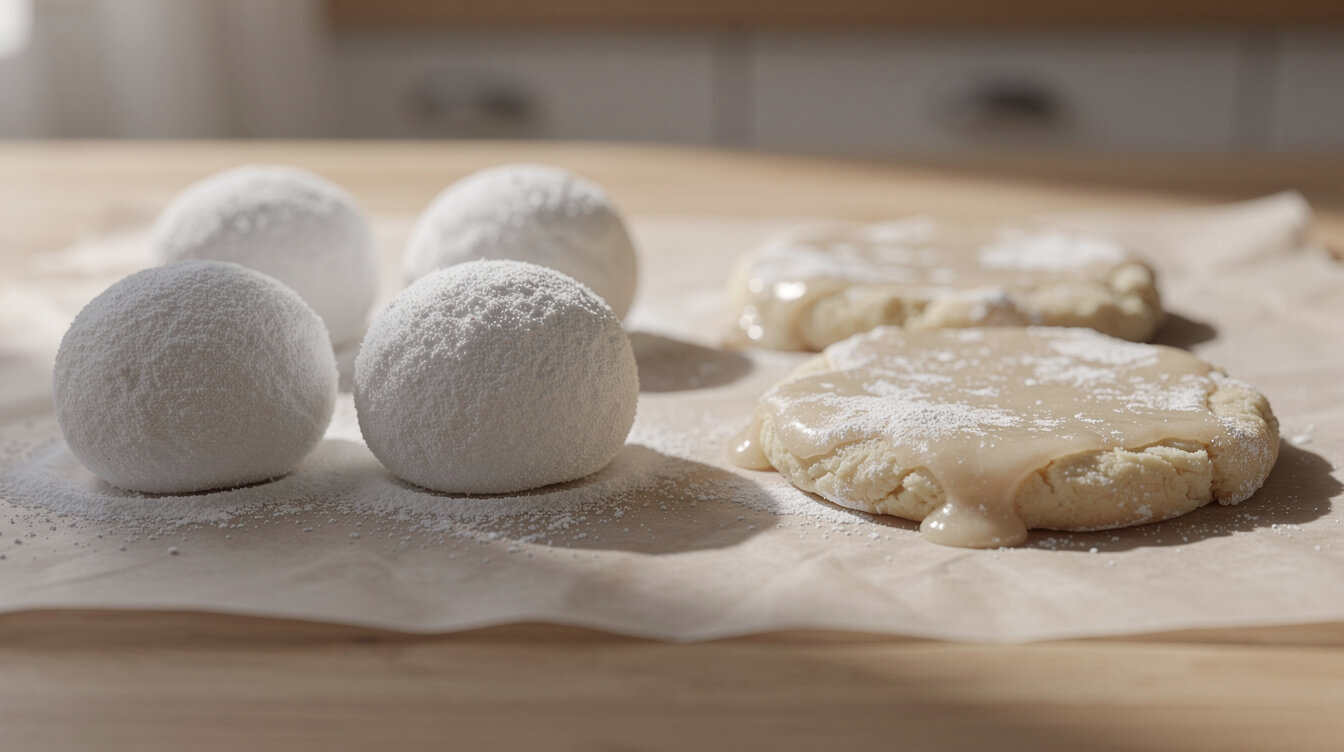
With so few ingredients, the cause is usually easy to find. Here are the common problems, from most to least common.
They flattened into discs
The butter was too warm, the dough wasn’t cold going into the oven, the pan was still warm from the last batch, or the flour was under-measured. Greased pans and tub spreads make it worse.
Fix: Chill the rolled balls on the sheet for 20 to 30 minutes, bake on parchment instead of grease, and let pans cool completely between batches. Use real stick butter. If a whole batch spreads, add 2 tablespoons of flour to the rest of the dough.
The dough is too crumbly to roll
Too much flour, too many nuts, or butter that was still fridge-cold.
Fix: Squeeze and knead the dough with your hands for 30 seconds. The warmth usually brings it together. If not, add milk 1 teaspoon at a time, up to 1 tablespoon. Next time, spoon and level the flour, and keep the nuts to about a cup.
They fall apart when you roll them in sugar
They’re too hot, the nuts are chopped too coarse, or there are too many nuts.
Fix: Give them the full 5 minutes on the pan first, and roll gently. Chop the pecans finer next time.
They taste dry or sandy
Overbaked, or too much flour. Golden tops are the giveaway.
Fix: Pull them when the tops are set but pale and the bottoms are just golden. Weigh the flour if you can.
The sugar coat is sticky, pasty, or melted
They were rolled straight out of the oven, or covered while still warm.
Fix: Let them cool completely, then give them a fresh roll. Once the cookie is cool, the coating dries back out.
The sugar coat looks thin or disappeared
They only got one roll, or they’ve been in the tin a few days.
Fix: Roll again in fresh powdered sugar. It takes a minute and they look new.
The bottoms are too brown
A dark pan, a hot oven, or the rack too low.
Fix: Use a light-colored pan on the center rack, check early, and see the pan tips in the doneness section above.
They taste bland
Untoasted nuts, no salt, or not enough vanilla.
Fix: Toast the pecans, and don’t skip the salt. It’s only a pinch, but it’s what makes butter and pecans taste like themselves.

A tee for cookie-baking weekends
The Eat Cafe Support Our Charities tee is a sturdy, comfortable dark cotton shirt with a small logo over the heart and a big one on the back. It’s an easy one to pull on for a long afternoon of rolling, baking, and packing tins.
Easy variations on pecan snowball cookies
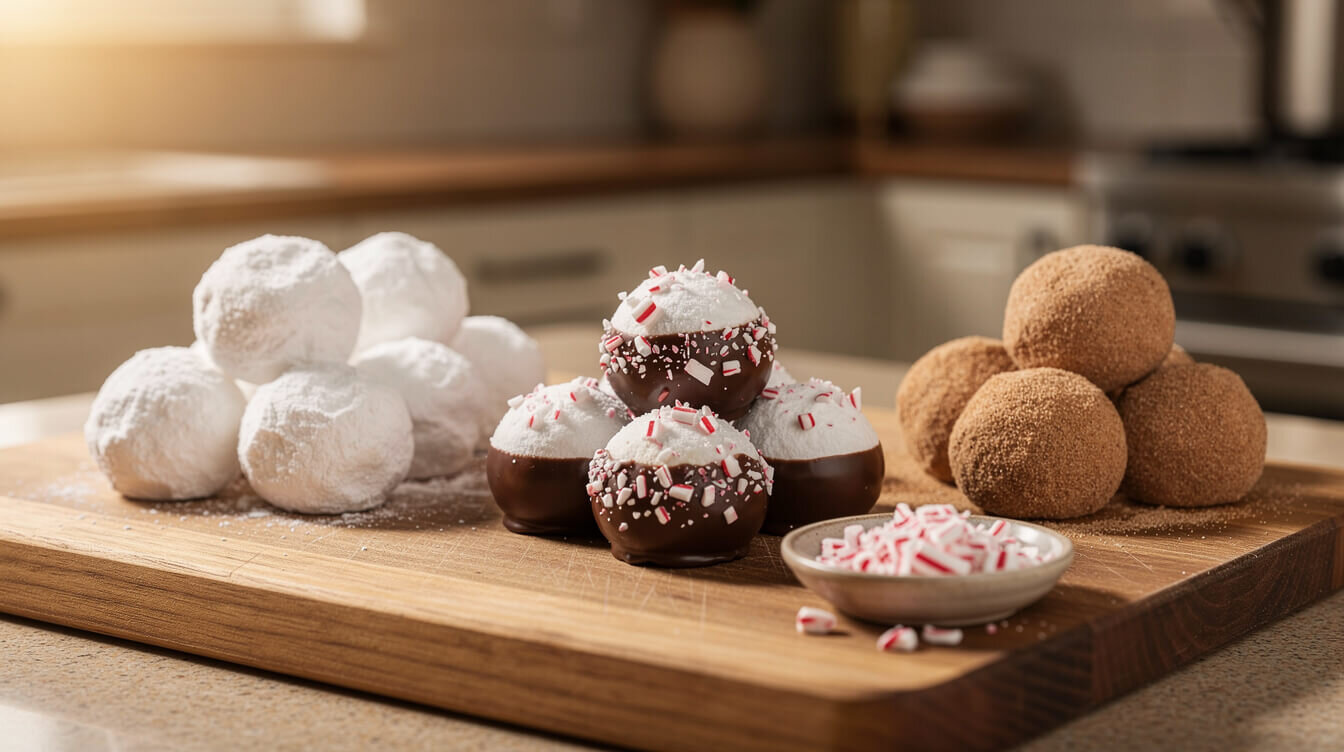
The base dough takes flavors well. Each change below is for the full batch.
- Other nuts. Swap the pecans for the same weight (about 110g) of walnuts, almonds, or hazelnuts. Toast and chop them the same way. Walnuts taste closest to pecans. Toasted almonds with 1/4 teaspoon almond extract are lovely.
- Chocolate-dipped peppermint. After the second roll, dip the bottom of each cookie (up to about halfway) in melted dark or white chocolate and sprinkle it with crushed candy cane. Let them set on parchment.
- Cinnamon sugar coat. Stir 1 1/2 teaspoons ground cinnamon into the rolling sugar. Warm and cozy, great with coffee.
- Mini chocolate chip. Cut the pecans to 3/4 cup and add 1/2 cup mini chocolate chips. Keep the chips mini, because regular chips make the balls lumpy and hard to roll.
- Orange. Add 2 teaspoons finely grated orange zest with the vanilla.
- Maple pecan. Swap 1 teaspoon of the vanilla for 1/2 teaspoon maple extract.
- Brown butter. Brown the butter, chill it until it’s firm again (about an hour), then use it as normal. It’s deeper and toastier, and it’s great with pecans.
If you like this kind of buttery, no-egg cookie, the same dough family also makes our Christmas shortbread cookies and thumbprint cookies with jam. For another round, sugar-coated holiday bite with no baking at all, try our rum balls recipe, which has an alcohol-free version too.
Storing, making ahead, freezing, and gifting
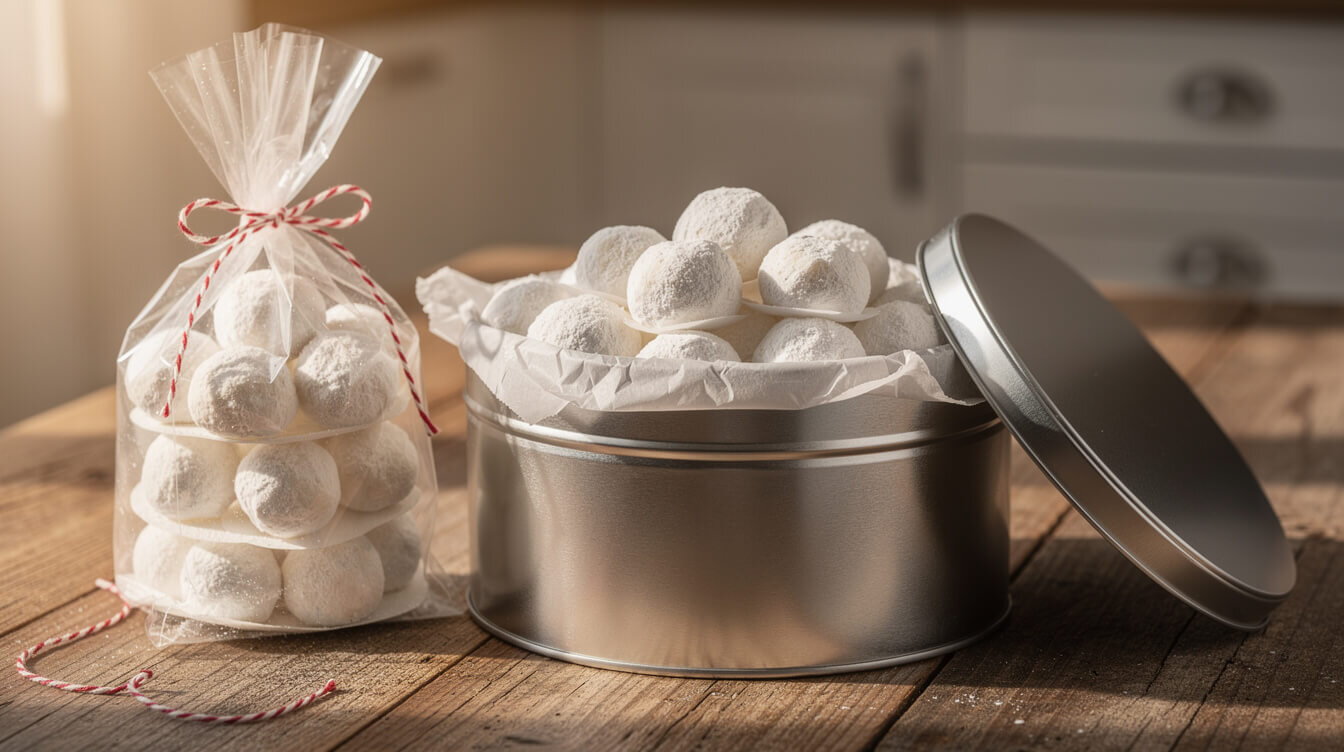
This recipe for snowball cookies with pecans is one of the best make-ahead bakes on the holiday tray. They hold their texture well, and the dough freezes beautifully.
Storing baked cookies
Keep fully cooled cookies in an airtight tin or container at room temperature for up to 1 week. Layer them with parchment so the coating doesn’t rub off. Keep them away from soft, moist cookies like gingerbread molasses cookies, which will soften them. Give them a fresh sugar roll before serving.
Making the dough ahead
- Fridge: wrap the dough and chill up to 3 days. Let it sit out 20 to 30 minutes, until it’s soft enough to roll without cracking.
- Freezer (best option): roll the dough into balls, freeze them on a sheet until hard, then bag them for up to 3 months. Bake straight from frozen, adding 1 to 2 minutes. Frozen balls hold their round shape better than fresh ones.
Freezing baked cookies
Give them only the first, warm sugar roll, let them cool, and freeze them airtight for up to 3 months. Thaw them in the closed container at room temperature, so any condensation forms on the container and not on the cookies. Then give them the second roll. The coating looks fresh and doesn’t go patchy in the freezer.
A make-ahead plan for cookie season
- Early December: toast and chop the pecans, mix a double batch, roll it into balls, and freeze.
- A few days before you need them: bake from frozen, give them the warm roll, and cool.
- The day of: roll them again, pack them up, and you’re done.
Building a whole cookie tray? Our easy Christmas cookies ideas has a two-weekend baking plan, and snowballs fit right into it. Seven layer cookies and Linzer cookies make good tin-mates too.
Gifting and shipping
Snowballs travel well because they’re small and sturdy once cool. Nest them in mini paper cups or pack them snugly in short stacks with parchment, and fill any gaps so nothing rolls. The coating will rub a bit in the mail. Tuck a small bag of powdered sugar in the box with a note to re-roll, and they’ll arrive looking just baked. If you’re giving them to someone, label the tin “contains pecans” so anyone avoiding nuts knows.
Recipe for snowball cookies with pecans: FAQ
Are snowball cookies the same as Mexican wedding cookies or Russian tea cakes?
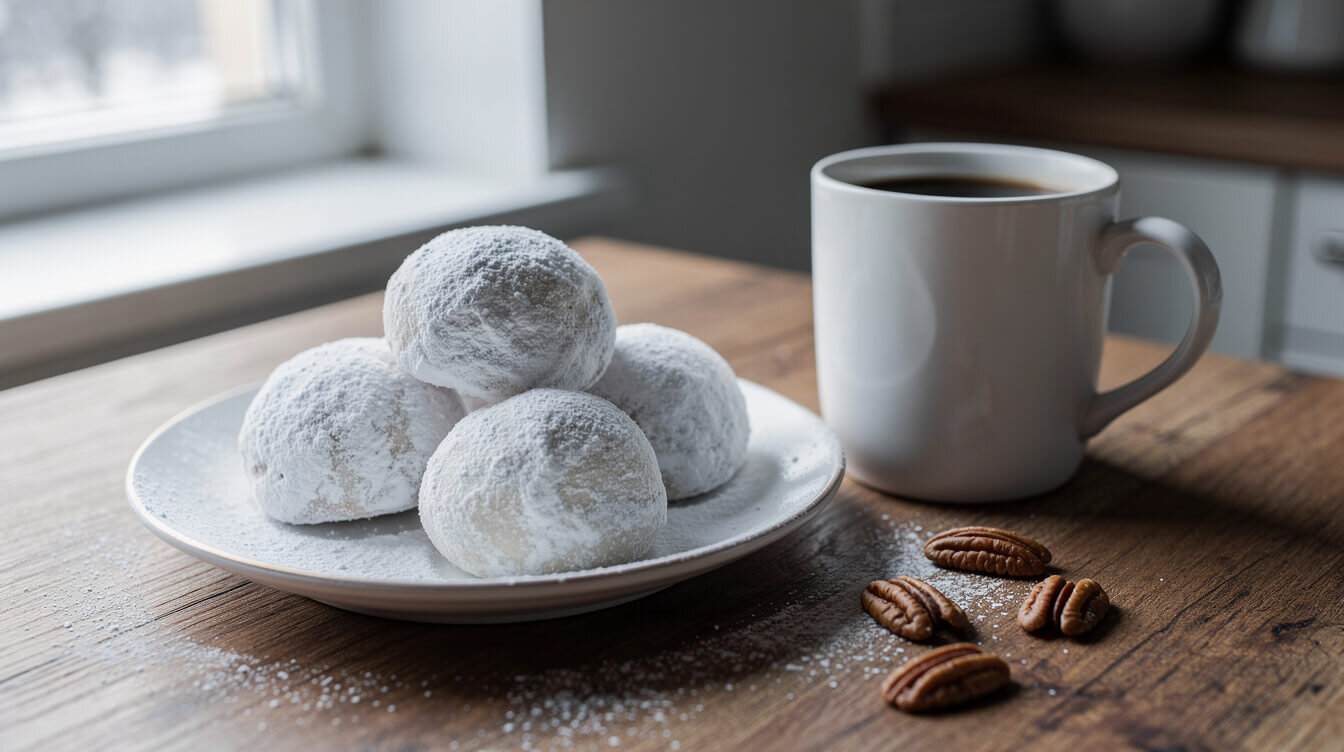
Pretty much. Snowballs, Mexican wedding cookies, Russian tea cakes, and butterballs are all names for very similar cookies: butter, flour, a little powdered sugar, ground nuts, and a powdered sugar coat. The nut changes from family to family (pecans, walnuts, or almonds), and so do the shape and size. The method in this recipe works for all of them.
Can I make snowball cookies without nuts?
Yes. Leave out the pecans and add 2 tablespoons more flour. You’ll get a smaller, richer, shortbread-like ball. One honest caution: a cookie made without nuts isn’t automatically safe for someone with a nut allergy. Other ingredients, shared bowls, and tins can carry traces. If you’re baking for someone with an allergy, ask them what’s safe for them before you bake.
Do I have to toast the pecans?
No, but it’s the easiest way to make these taste like more than butter and sugar. If you skip it, the recipe still works. They’ll just be milder.
Can I make them without a mixer?
Yes. Mash the softened butter, sugar, and salt together with a sturdy spatula until smooth, stir in the vanilla, then the flour and nuts, and finish by squeezing the dough together with your hands. If you’re shopping for a mixer anyway, our best stand mixer for home cooks guide covers what’s worth paying for.
Why do my snowballs have flat bottoms?
A slightly flat bottom is normal. They sit on a hot pan, and the butter softens before the dough sets. Very flat, spread-out bottoms mean the dough was too warm. Chill the rolled balls for 20 to 30 minutes, or bake them from frozen.
Can I use granulated sugar for rolling?
You can, but you won’t get the snowy look. It makes a sparkly, crunchy coat instead. Powdered sugar is what makes them snowballs.
How big should I make them?
A level tablespoon of dough rolls into a 1-inch ball, which makes a two-bite cookie and about 40 per batch. Bigger balls (2 tablespoons) take 18 to 22 minutes, are more likely to crack, and are harder to roll in sugar while warm.
Can I double the recipe?
Yes, it doubles easily. Bake one sheet at a time, and keep the waiting dough in the fridge so it stays cool.
The short version
Toast a cup of pecans and chop them fine. Cream cool, soft butter with a little powdered sugar, mix in the flour gently, and roll level tablespoons into balls. Chill them for 20 minutes, then bake at 350°F until the tops are set and pale and the bottoms are just golden. Roll them in powdered sugar while they’re warm and again once they’re cool, and give them one more quick roll before serving.
That’s the whole recipe for snowball cookies with pecans that stay round and snowy. Roll a double batch into balls and freeze it this weekend, and you’ll have a fresh plate ready in 20 minutes whenever someone stops by. And if there’s a baker on your gift list, our gifts for bakers guide has ideas that pair nicely with a tin of these.

Before you go
Want the next one?
We post a new recipe or kitchen guide every day. The best of the week lands in one short email, no life story attached.