Gingerbread molasses cookies (soft and chewy, plus which molasses to buy and why yours went flat)
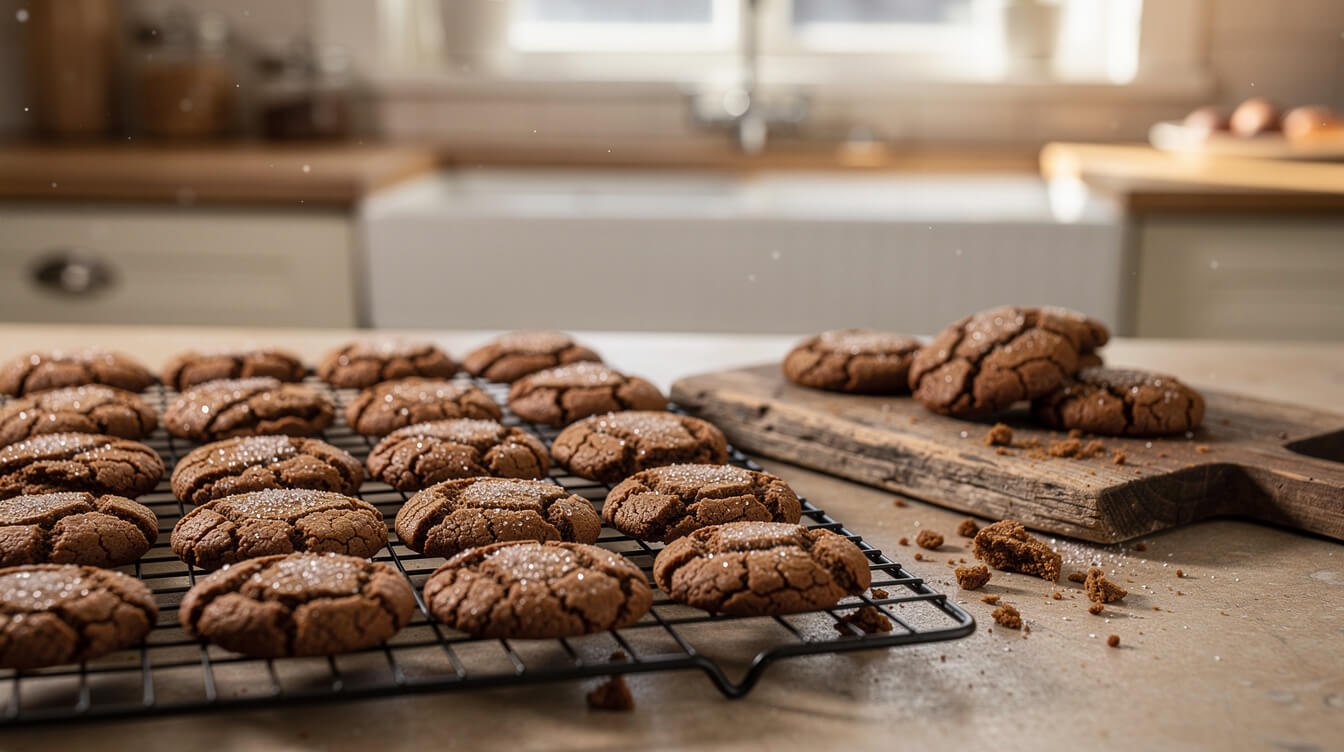
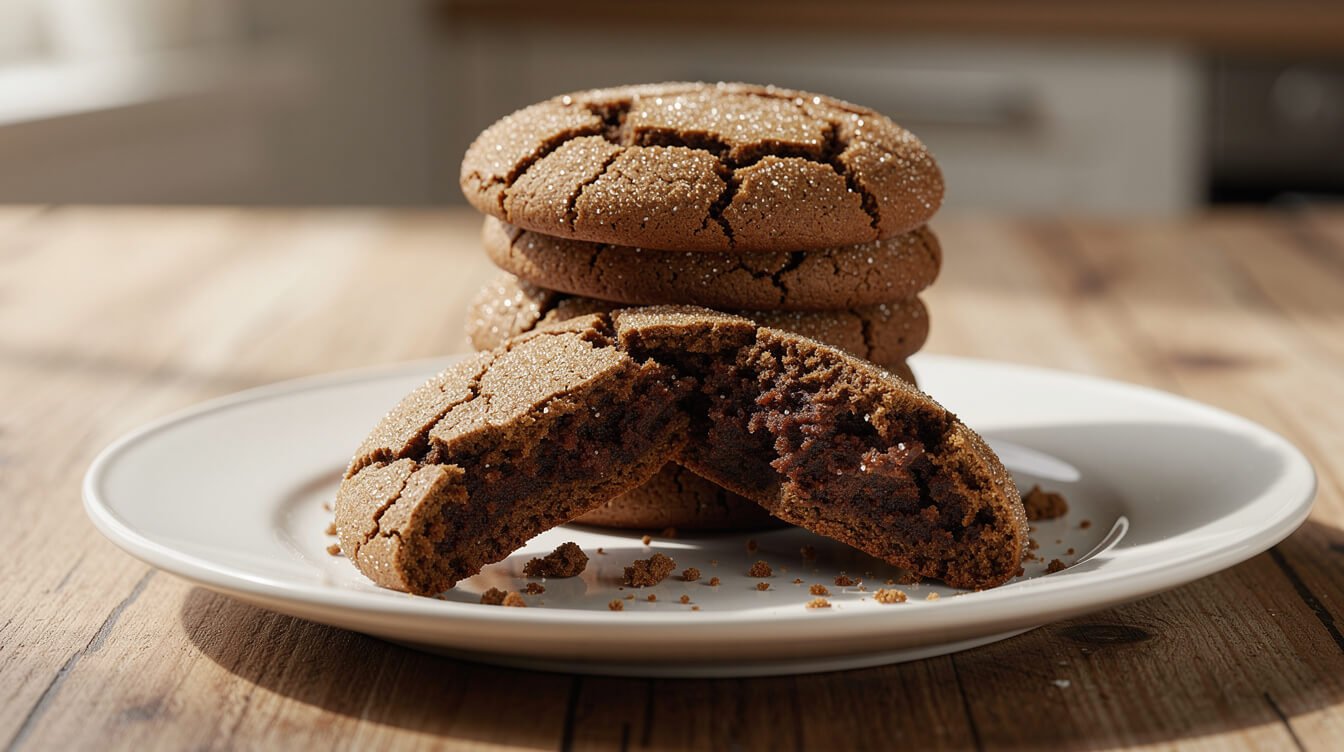
Gingerbread molasses cookies should come out of the oven with crackly, sugar-sparkled tops and soft, chewy middles that still bend a day later. If yours spread into thin, greasy discs, puffed up like little cakes, or turned hard by the next afternoon, the recipe usually isn’t the problem. It’s one of three things: the molasses you bought, how soft your butter was, or how long they stayed in the oven.
Here’s the recipe first. Then we’ll cover which jar of molasses to buy, how to tune the cookies softer or crisper, and a fix for every way they go wrong.
The gingerbread molasses cookies recipe
This is a classic drop cookie. You scoop the dough into balls and roll them in sugar, and the oven does the rest. There’s no rolling pin and no cookie cutters. The proportions follow King Arthur’s long-standing soft ginger-molasses cookies, made with all molasses and with the spices tilted toward gingerbread: more ginger, a little less clove.
Ingredients (makes about 3½ dozen 3-inch cookies)
- 1 cup (2 sticks / 227 g) unsalted butter, at room temperature. Soft enough to dent with a finger, not shiny or melting.
- 1 cup (198 g) granulated sugar
- ½ cup (170 g) molasses. Use light or “original” unsulphured, not blackstrap (more on that below).
- 2¼ teaspoons baking soda
- 1 teaspoon table salt
- 2 teaspoons ground ginger
- 1¼ teaspoons ground cinnamon
- ¾ teaspoon ground cloves (or allspice)
- 2 large eggs, at room temperature
- 3½ cups (420 g) all-purpose flour
- About ½ cup granulated or coarse sugar, for rolling
Steps
- Heat the oven to 350°F (175°C). Set a rack in the middle and line two baking sheets with parchment.
- Cream the butter and sugar for 2 to 3 minutes, until lighter in color and fluffy. A stand mixer or hand mixer both work. So does a wooden spoon and some patience.
- Beat in the molasses, baking soda, salt, and spices. Adding the soda and spices here, into the fat, spreads them evenly so you don’t get a bitter pocket of soda in one cookie.
- Beat in the eggs one at a time, and scrape down the bowl after each.
- Stir in the flour on low speed or by hand, just until no dry streaks remain. The dough will be soft and a little sticky. That’s right.
- Scoop and roll. Use a 1-tablespoon cookie scoop (about a 1½-inch ball), then roll each ball in the sugar until it’s fully coated.
- Space them 2½ inches apart. They spread to about 3 inches.
- Bake for 10 minutes. The edges should be set and the tops crackled. The centers will look soft, puffy, and a little underdone. Pull them anyway.
- Cool on the pan for 10 minutes, then move them to a rack. They finish setting as they cool, and that’s where the chew comes from.
The one tip: take gingerbread molasses cookies out when the centers still look underbaked. Dark dough hides browning, so by the time they look done, they’re on their way to hard.
Want a smaller batch?
The recipe halves cleanly because it uses two eggs. Use ½ cup (113 g) butter, ½ cup (99 g) sugar, ¼ cup (85 g) molasses, 1 teaspoon plus ⅛ teaspoon baking soda, ½ teaspoon salt, 1 teaspoon ginger, a generous ½ teaspoon cinnamon, a scant ½ teaspoon cloves, 1 egg, and 1¾ cups (210 g) flour. Bake time stays the same.
Before you lick the beaters: this dough has raw egg and raw flour, so save the tasting for the baked cookies.
Which molasses to buy for gingerbread molasses cookies (and the one to skip)
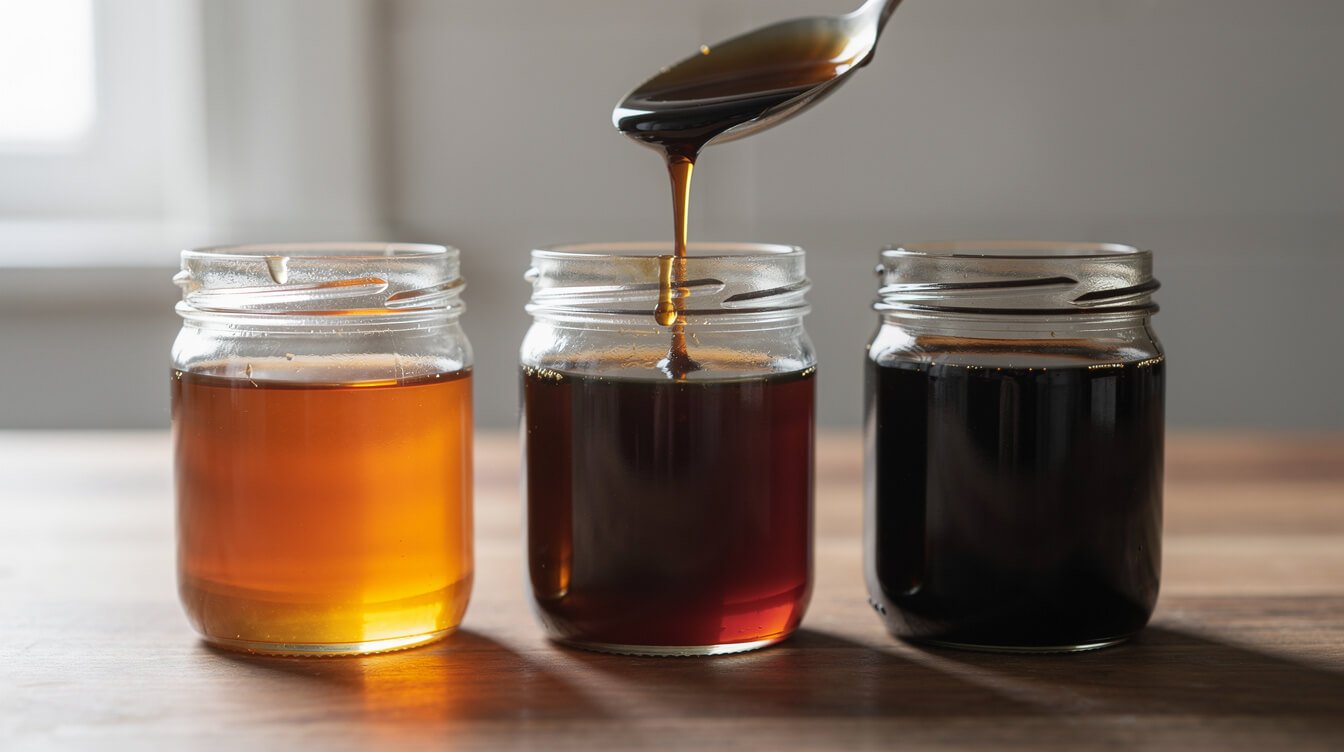
This is where a lot of batches go sideways before the oven is even on. Molasses is what’s left after sugar cane juice is boiled down and the sugar crystals are pulled out. How many times it’s boiled changes the flavor a lot. King Arthur’s guide to the types of molasses lays it out clearly:
| Type | Also labeled | Flavor | For these cookies? |
|---|---|---|---|
| Light (first boil) | Regular, original, mild, Barbados | Sweet, with a hint of bitterness | Yes, the best pick. Classic gingerbread flavor that lets the spices come through. |
| Dark (second boil) | Robust, full | Thicker, less sweet, more bitter edge | Yes, if you like a deep, bold cookie. Expect it to be darker and a little less sweet. |
| Blackstrap (third boil) | Blackstrap | Very dark, thick, and notably bitter | No. Use it only in recipes that call for it. |
A few things worth knowing at the store:
- Labels aren’t standardized. One brand’s “mild” can taste stronger than another’s “robust.” If you can, taste a drop before you bake. If it makes you wince, the cookies will too.
- Unsulphured is what you want, and it’s what most stores carry. Sulphured molasses comes from younger cane treated with sulfur dioxide, and some people taste a chemical note in it. Grandma’s, the brand you’ll see most in US grocery stores, is unsulphured in both of its grades. Its “Original” is the light one.
- Opened molasses doesn’t need the fridge. Keep the cap clean so it doesn’t glue itself shut.
Only have blackstrap?
Blackstrap on its own makes cookies that taste burnt and bitter, even when they aren’t. If it’s all you’ve got, cut it with a milder liquid sweetener. Two Cups Flour reports good results with equal parts honey and blackstrap in place of regular molasses. Expect a slightly different flavor, but it beats a bitter batch.
Out of molasses entirely?
Cane syrup, sorghum, honey, or dark corn syrup can stand in 1:1. Just know you’re making a ginger cookie, not a gingerbread molasses cookie. The color will be lighter and the deep, almost smoky flavor will be gone. This recipe has a lot of molasses in it, so you’ll notice the difference.
Soft, chewy, or crisp: how to get the cookie you want
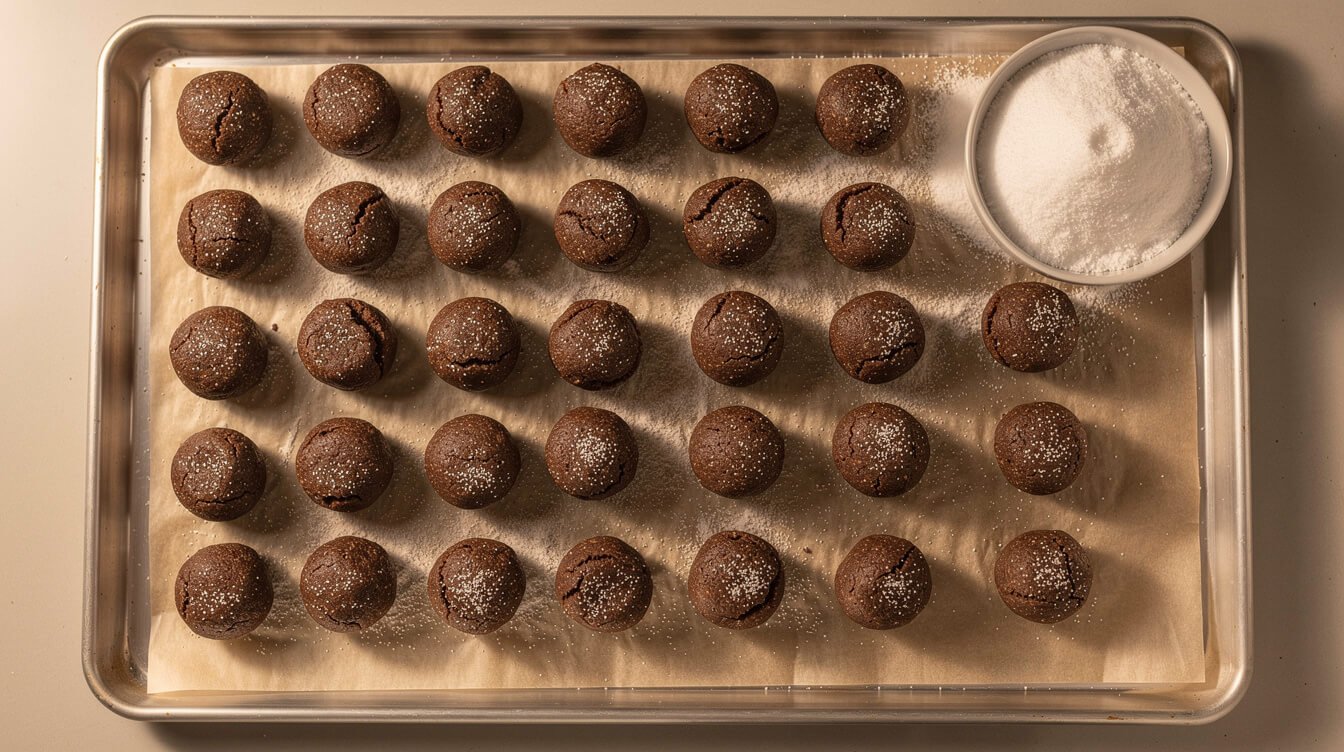
Everyone has a different perfect gingerbread molasses cookie. Some people want it thick and pillowy, others thin and bendy, and a few want it snappy enough to dunk. You don’t need a different recipe for each. You need to know which levers to pull.
For softer, chewier cookies
- Swap half the granulated sugar for packed brown sugar. Brown sugar holds onto moisture, so the cookies stay soft longer. They’ll be a shade darker.
- Pull them at 9 minutes instead of 10.
- Go bigger. A 2-tablespoon scoop gives you a wider soft center. Add a minute or two to the bake time and leave 3 inches between balls.
For thicker cookies
- Chill the scooped, sugared balls for 30 minutes before baking. Cold dough spreads less. Don’t chill overnight unless you want very tall domes. Super-cold dough doesn’t settle enough to crackle.
- Weigh your flour. 420 grams is 420 grams. Cups can swing by 15% depending on how you scoop.
For thinner, crisper cookies
- Flatten each ball slightly with the bottom of a glass before baking.
- Bake 12 to 13 minutes, until the centers look set. They’ll crisp as they cool.
- Use all granulated sugar (the recipe as written).
For the best crackly tops
Those crinkles happen when the sugar-coated outside dries and sets while the inside is still rising and falling. Roll generously so every ball is fully covered, and bake from room temperature or a short chill. Coarse sugar or turbinado gives you a crunchier, sparklier crust. Plain granulated mostly melts in, leaving just a little shimmer.
How to tell when gingerbread molasses cookies are done
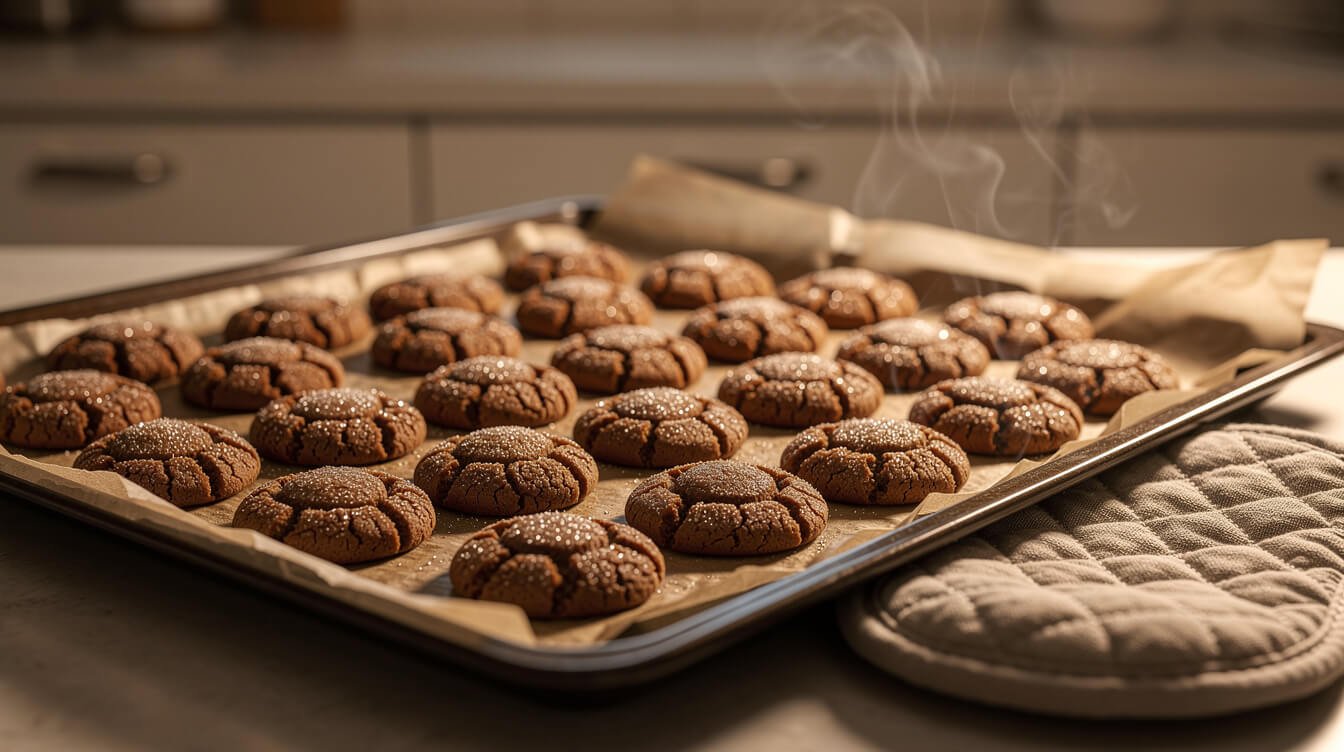
This is the hardest part of the whole recipe, and it’s why so many people end up with hard cookies. With a pale sugar cookie or a snickerdoodle, you watch for golden edges. Molasses dough starts out dark brown, so you can’t see it browning. By the time it looks “done,” it’s overbaked.
Use these cues instead:
- The edges look set and matte, not wet.
- The tops have cracked, and the cracks look a little dry.
- The centers still look puffy and soft, almost raw in the middle. They’ll sink a bit as they cool. That’s what you want.
- A gentle nudge at the edge with a spatula doesn’t squish the cookie out of shape.
Then let them rest on the hot pan for 10 minutes. This carryover time finishes the centers without drying them out. If you move them right away, the soft middles can tear.
Your oven matters more than the timer
Ovens run hot or cool all the time, and an oven that’s 25°F hot will turn a 10-minute cookie into a hard one. If your first tray comes out crisp, take the next one out a minute earlier. An inexpensive oven thermometer clipped to the rack will tell you the truth. Dark nonstick pans also bake faster than light aluminum ones, so knock a minute off if that’s what you’re using.
Bake one tray at a time
Two trays on two racks bake unevenly. The bottom one gets scorched bottoms, and the top one gets dry tops. One tray on the middle rack is slower but more reliable. While it bakes, scoop the next batch onto fresh parchment, and slide it onto a cooled pan. A warm pan melts the butter before the cookie sets, and you get spreading.
From the Eat Cafe kitchen
One good recipe a week, straight to your inbox
The recipe we're actually cooking this week, plus the one tip that saves it when it goes sideways. No spam. Unsubscribe anytime.
Why gingerbread molasses cookies go wrong (and how to fix each one)
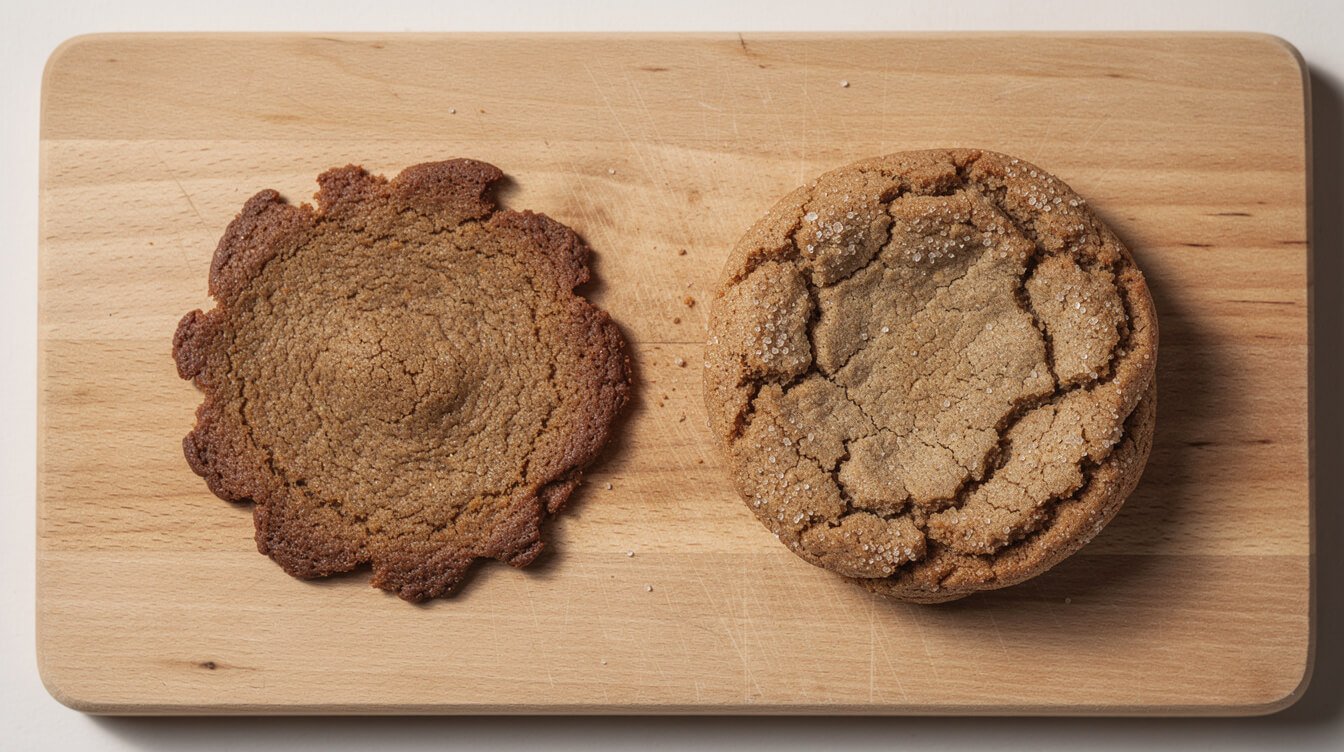
When a batch disappoints, it’s almost never bad luck. Find your problem in the left column.
| What happened | Most likely cause | The fix |
|---|---|---|
| Flat, thin, greasy | Butter too soft or partly melted; warm pans; flour measured light | Butter should dent, not smear. Chill the dough balls 30 minutes, use cool pans, and weigh the flour (420 g). |
| Puffy and cakey, no crackles | Too much flour (packed cups), or dough chilled too long | Weigh the flour, or spoon it into the cup and level it. Keep chilling to 30 minutes. |
| Hard by the next day | Overbaked, or stored uncovered | Pull them when the centers look underdone. Store them airtight once they’re completely cool. |
| Bitter or burnt-tasting | Blackstrap or a very strong dark molasses | Use light or “original” molasses. If you only have blackstrap, cut it with honey (see above). |
| Soapy or metallic aftertaste | Baking soda measured heavy, or not mixed in evenly | Level the measuring spoon and beat the soda into the butter mixture, not just the flour. |
| Bland, barely spiced | Old ground spices | If your ginger doesn’t smell sharp when you open the jar, replace it. Ground spices fade. |
| Dark, scorched bottoms | Dark pans, low rack, or two trays at once | Use parchment, the middle rack, and one tray at a time. |
| Dough too sticky to roll | Warm kitchen, soft butter | Chill the bowl of dough for 20 to 30 minutes. A lightly damp hand helps too. |
Flat cookies are the most common complaint, and the fix is the same as for any butter cookie. We cover the same failure in more depth in our post on chocolate chip cookies that went flat. If you’ve ever wondered why recipes are so fussy about the butter, our salted vs unsalted butter guide explains why we bake with unsalted and add salt ourselves.
These are the kind of cookies people bake by the dozen for cookie swaps, school bake sales, and charity tables. If you’re baking for a good cause this season, our Support Our Charities Donor Membership T-Shirt is a comfy one to bake in, and it helps support the kitchen.

A shirt for cookie-swap season
The Eat Cafe Support Our Charities tee is a soft, sturdy black cotton shirt with a small logo over the heart and a big one on the back. Wear it while you roll the dough, and help support the kitchen.
Spice it your way
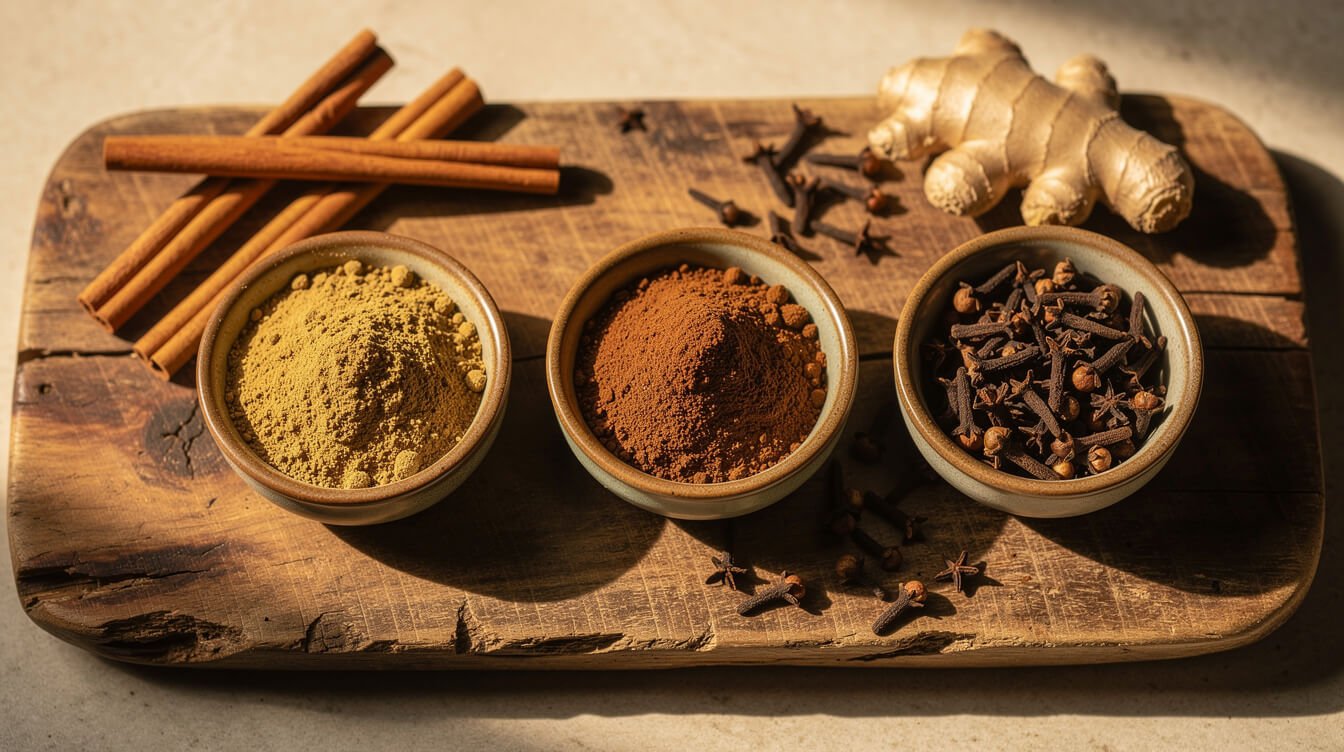
The recipe above is a middle-of-the-road gingerbread: warm and clearly gingery, but not hot. Spice is personal, so here’s how to move it in either direction.
More ginger kick
- Ginger sugar: stir 1 teaspoon of ground ginger into the rolling sugar. You get a sharp, fragrant first bite without changing the dough.
- Crystallized ginger: fold in ½ to ¾ cup finely chopped crystallized ginger with the flour. It adds chewy, spicy bits throughout.
- Fresh ginger: finely grate 1 tablespoon and beat it in with the butter. The fat carries the flavor, which gives you a brighter, zingier heat than ground ginger alone.
- A pinch of black pepper: ¼ teaspoon of finely ground black pepper sharpens the ginger without tasting peppery. Many older gingerbread recipes use it.
Milder, for kids or ginger skeptics
- Drop the ginger to 1 teaspoon and the cloves to ½ teaspoon. Add 1 teaspoon of vanilla with the eggs.
- Use all light molasses and swap half the granulated sugar for brown sugar. You’ll get a softer, more caramel-like cookie.
Other easy twists
- Orange: add the finely grated zest of one orange with the sugar.
- Cardamom: swap ½ teaspoon of the cinnamon for ground cardamom.
- Sandwich cookies: fill two cooled cookies with a thin layer of cream cheese frosting or lemon buttercream. Store these in the fridge.
- White chocolate dip: dip half of each cooled cookie in melted white chocolate and let it set on parchment.
Want gingerbread people instead?
This dough is meant to spread, so it won’t hold a crisp cut-out shape. For rolled, cut-out gingerbread people or stars, use a recipe built for it, like King Arthur’s gingerbread cookies. It uses a stiffer dough that keeps its edges. Then decorate with meringue powder royal icing, which dries hard enough to stack.
Make ahead, freeze, and store
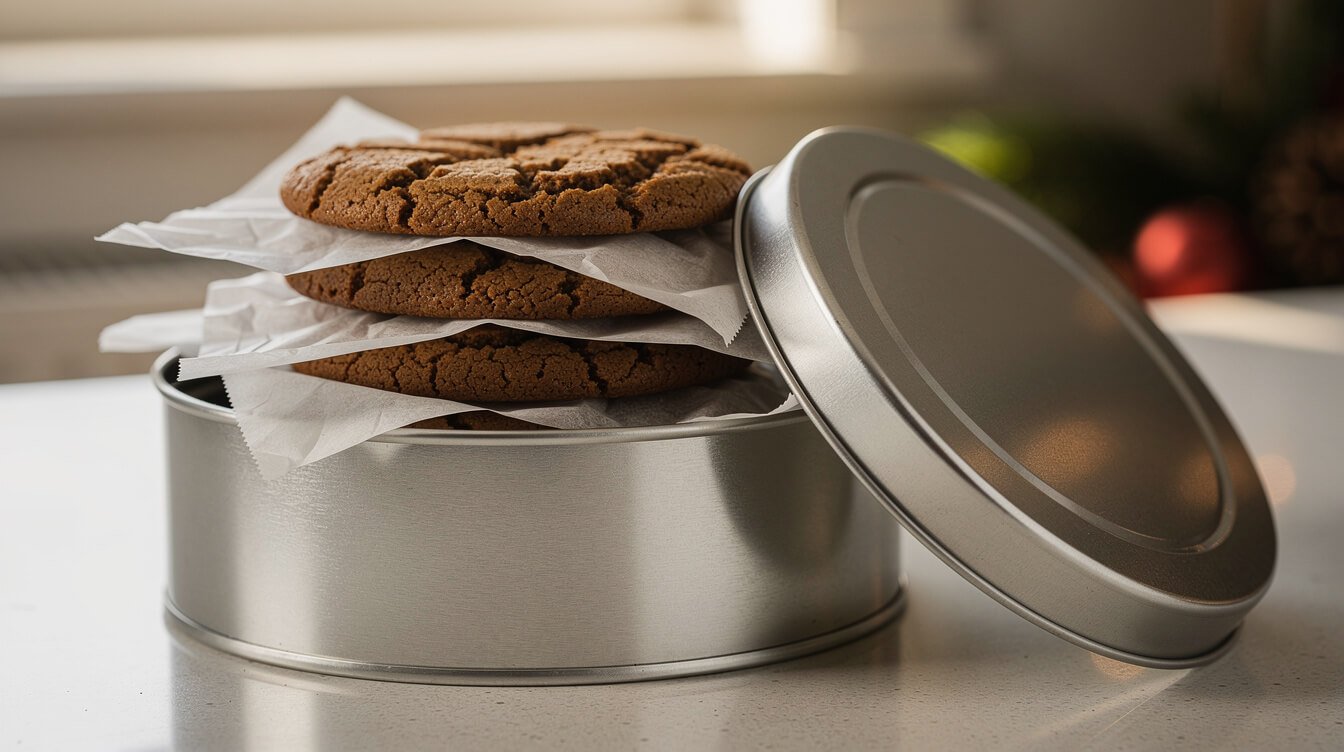
Gingerbread molasses cookies are one of the best make-ahead holiday cookies there is. The dough freezes well, and the baked cookies keep their chew for days if you store them right.
Make the dough ahead
- Fridge: cover the bowl of dough tightly and refrigerate for up to 2 days. Let it sit at room temperature for 15 to 20 minutes until it’s scoopable, then roll and bake.
- Freezer: scoop the dough into balls, but don’t roll them in sugar yet. Freeze them on a sheet until firm, then move them to a freezer bag for up to 3 months. When you’re ready, roll the frozen balls in sugar and bake straight from frozen, adding 1 to 2 minutes. Rolling them right before baking keeps the sugar from turning damp and sticky.
Store baked cookies
- Room temperature: once they’re completely cool, keep them in an airtight container or tin for up to about a week. Put parchment between the layers so the sugar crusts don’t stick together.
- Freezer: wrap stacks tightly and freeze them in a bag or container for up to 3 months. Thaw them at room temperature, still wrapped, so condensation doesn’t make the tops sticky.
- Keep them separate from crisp cookies. Soft cookies give off moisture, and crisp ones soak it up. Put them in the same tin and you end up with two kinds of soggy.
Soften cookies that went hard
Put a slice of plain sandwich bread in the container with the cookies, close the lid, and leave it overnight. The cookies pull moisture from the bread and soften back up. The bread goes stale, so toss it the next day.
Building a holiday cookie tray?
Gingerbread molasses cookies sit nicely next to snickerdoodles, sweetened condensed milk fudge, and bakery-style chocolate chip cookies. Spiced, sugared, chocolatey, and rich all on one plate. If you’re baking all of that in one weekend, it’s a good time to see whether a stand mixer makes sense for your kitchen. But a hand mixer handles this dough just fine.
A note for gifting: this recipe contains wheat, eggs, and milk (butter). If you use add-ins like white chocolate, check those labels too, and label your tin so friends with food allergies know what’s inside.
Frequently asked questions
What’s the difference between gingerbread cookies and molasses cookies?
They’re from the same family: molasses, ginger, cinnamon, and cloves. “Gingerbread cookies” usually means a stiffer, rolled dough cut into shapes. “Molasses cookies” or “ginger molasses cookies” usually means soft drop cookies rolled in sugar. Gingerbread molasses cookies, like these, give you gingerbread flavor in a soft, chewy drop-cookie form.
Can I use blackstrap molasses?
Not on its own. Blackstrap is boiled three times, so most of the sugar is gone and it’s strongly bitter. Use light (“original”) or dark (“robust”) molasses. If blackstrap is all you have, use half blackstrap and half honey.
Do I have to chill the dough?
No. This dough bakes fine right away. Chill the dough balls for 30 minutes if your kitchen is warm, the dough is too sticky to roll, or your first tray spread more than you’d like.
Can I use brown sugar instead of white?
Yes. Swapping half the granulated sugar for packed brown sugar makes the cookies softer and a little darker. Swapping all of it makes them softer still, but they’ll spread a bit more and lose some of the crackle.
Why didn’t my cookies crack on top?
The usual causes are too much flour (scooped cups instead of weighed), dough that was chilled for hours and went in very cold, or a thin sugar coating. Weigh the flour, keep chilling to 30 minutes or less, and roll each ball until it’s fully coated.
Why are my gingerbread molasses cookies hard?
They were almost always baked a minute or two too long. Molasses dough hides browning, so pull the cookies when the centers still look soft and puffy, and let them finish on the pan. If they’re already hard, the bread-slice trick above softens them overnight.
Can I make these with fresh ginger?
Yes, as an addition. Grate 1 tablespoon of fresh ginger into the butter and keep the ground ginger too. Fresh ginger gives the cookies a brighter heat, and ground ginger gives them the warm, classic gingerbread flavor.
The short version
For soft, chewy gingerbread molasses cookies with crackly tops, use light (“original”) unsulphured molasses, not blackstrap. Start with butter that’s soft but not melting, and weigh the flour. Roll the dough balls generously in sugar and bake at 350°F for about 10 minutes, pulling them while the centers still look underdone. Let them finish on the pan, store them airtight, and they’ll still bend days later.
Make a batch this weekend, and you’ll smell like gingerbread until Monday. Happy baking.

Before you go
Want the next one?
We post a new recipe or kitchen guide every day. The best of the week lands in one short email, no life story attached.