Salted vs unsalted butter: when it matters, and how to swap one for the other
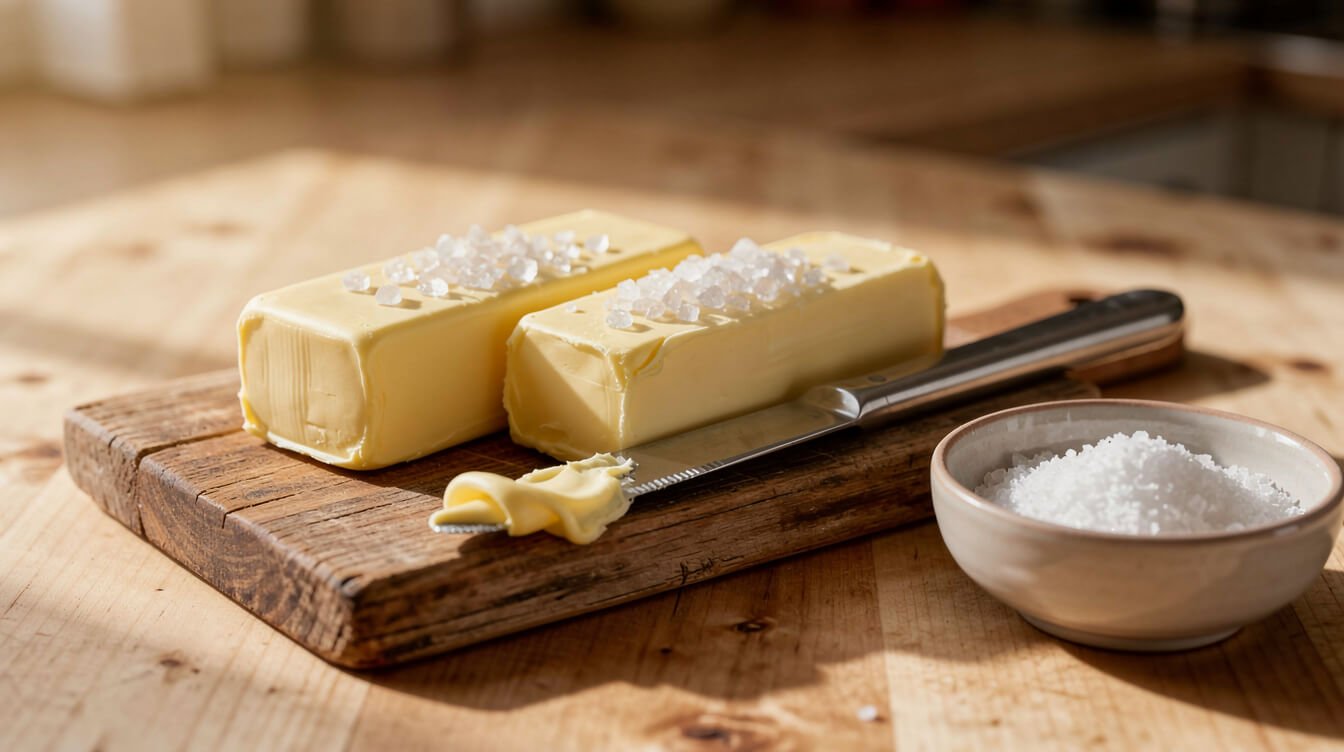
Salted vs unsalted butter comes down to one question: is the recipe in front of you counting on salt the butter doesn’t tell you about? Most of the time, you can use whichever butter is in your fridge. You just have to move a little salt around. A stick of salted butter carries a little under ⅓ teaspoon of table salt. Take about ¼ teaspoon out of the recipe for every stick and your cookies, pie crust, and banana bread will taste the way the recipe meant them to.
Below: the short answer, the exact salt math (including how to work it out from the label on your own box), a chart for swapping in either direction, the handful of recipes where it really does matter, and what “European,” “cultured,” and “sweet cream” mean on a butter label. No need to run to the store.
Salted vs unsalted butter: the short answer
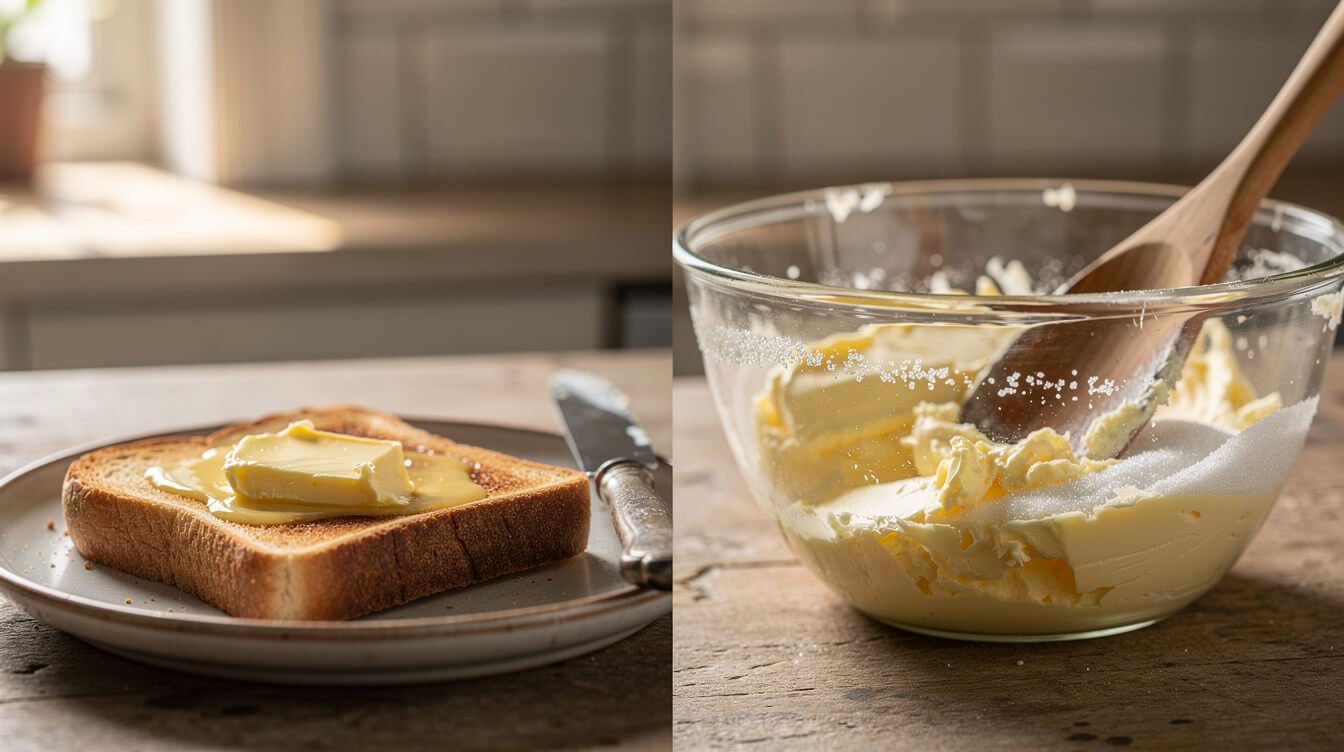
The only real difference between salted and unsalted butter is the salt. USDA’s nutrient data lists the two with the same fat and the same water. The salted one just has about 60 times the sodium. Federal law holds both to the same standard: at least 80% milkfat by weight, made from milk or cream, “with or without common salt.” Same butter, plus a pinch.
Here’s how that plays out in the kitchen:
- For baking, unsalted is the default. When a modern baking recipe says “butter” and also lists salt, it’s almost always written for unsalted. The recipe already knows how much salt it wants.
- For cooking, either one works. Pan sauces, sautéed vegetables, mashed potatoes, scrambled eggs: you’ll taste and season at the end anyway, so start with whatever you have and salt less at first.
- For the table, salted usually wins. Toast, corn on the cob, warm bread, pancakes. That’s what salted butter is for.
- Only have salted and the recipe wants unsalted? Use it. Cut the recipe’s salt by about ¼ teaspoon per stick (the chart is below). In cookies, cakes, pie crust, and biscuits, nobody will know.
The one place it’s worth buying unsalted on purpose is anything where butter is the flavor and there’s nowhere to hide: buttercream, caramel, butter cookies. We’ll get to those.
Why do bakers make such a fuss, then? Two reasons, and both are about control rather than taste. Brands salt their butter differently, so “one stick of salted butter” isn’t a fixed amount of salt. And you can’t taste cookie dough and fix it after it’s baked. Unsalted takes the guesswork out, which is why recipe writers use it. That doesn’t make salted butter wrong. It just means you do the small math the recipe writer skipped.
How much salt is actually in salted butter
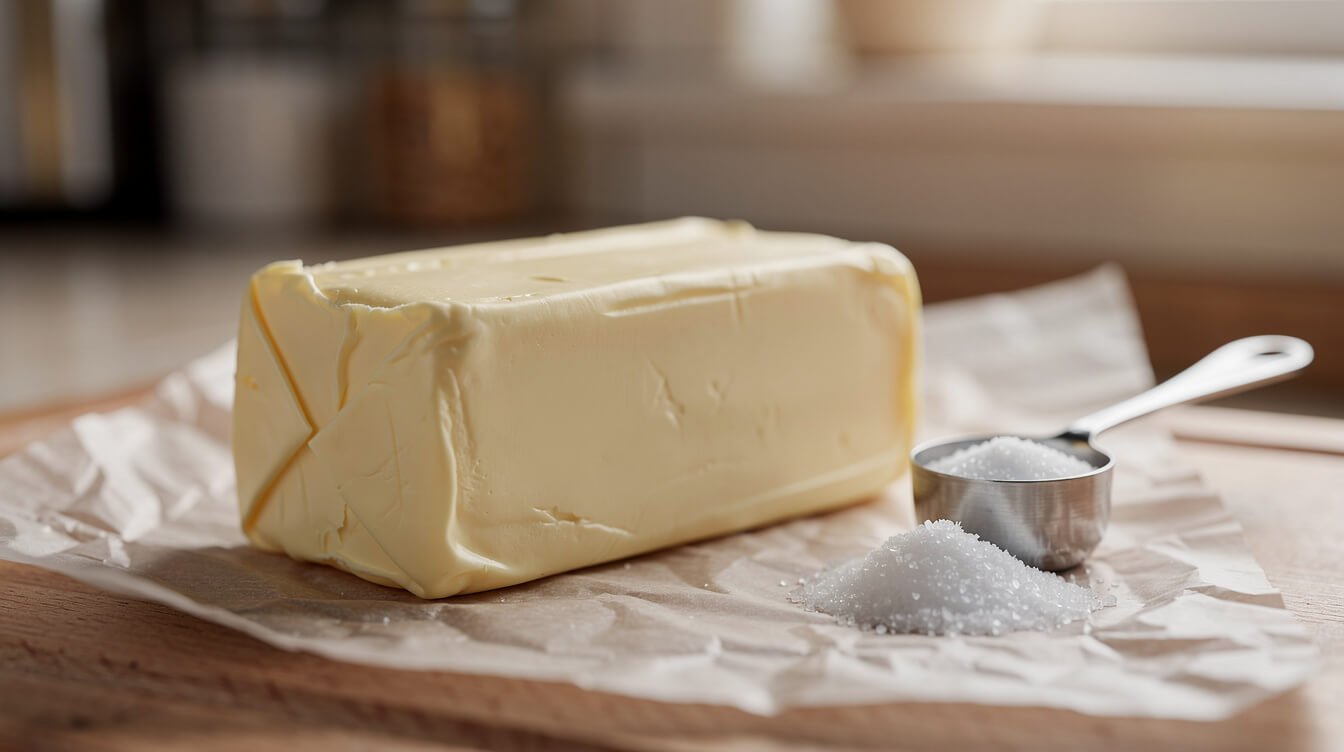
Here’s the number nobody puts in plain words. USDA FoodData Central lists salted butter at 643 mg of sodium per 100 grams, and unsalted at 11 mg. A stick is 113 grams (½ cup, 8 tablespoons), so:
- Salted stick: about 727 mg sodium
- Unsalted stick: about 12 mg sodium
- The difference: roughly 715 mg sodium per stick
Table salt runs about 2,325 mg of sodium per teaspoon (USDA again), so the salt in a stick of salted butter works out to just under ⅓ teaspoon of table salt, or about 1.8 grams. That’s around 1.6% of the butter’s weight. Most bakers round it to ¼ teaspoon per stick, which is easy to measure and close enough for nearly everything you’ll bake.
Do the math for your own box
Brands vary, so if you want to be exact, flip the box over. The nutrition label lists sodium per 1 tablespoon (14 g) serving. Then:
- Multiply the sodium per tablespoon by 8. That’s the sodium in one stick.
- Divide by 2,300. That’s how many teaspoons of table salt the stick is carrying.
Shortcut: sodium per tablespoon ÷ 300 ≈ teaspoons of table salt per stick. A box that says 90 mg per tablespoon carries about 0.3 teaspoon per stick (a generous ¼). A “lightly salted” butter at around 45 mg per tablespoon is closer to ⅛ teaspoon per stick. If your unsalted box says 0 to 10 mg, that’s the milk’s own sodium, and you can ignore it.
One heads-up: a few competing guides tell you to take “a teaspoon or two” of salt out of a recipe when you switch to salted butter. That’s far too much for a stick or two of butter. Your cookies would come out flat-tasting. Stick with the label math or the ¼ teaspoon rule.
How to swap salted for unsalted butter (and back)
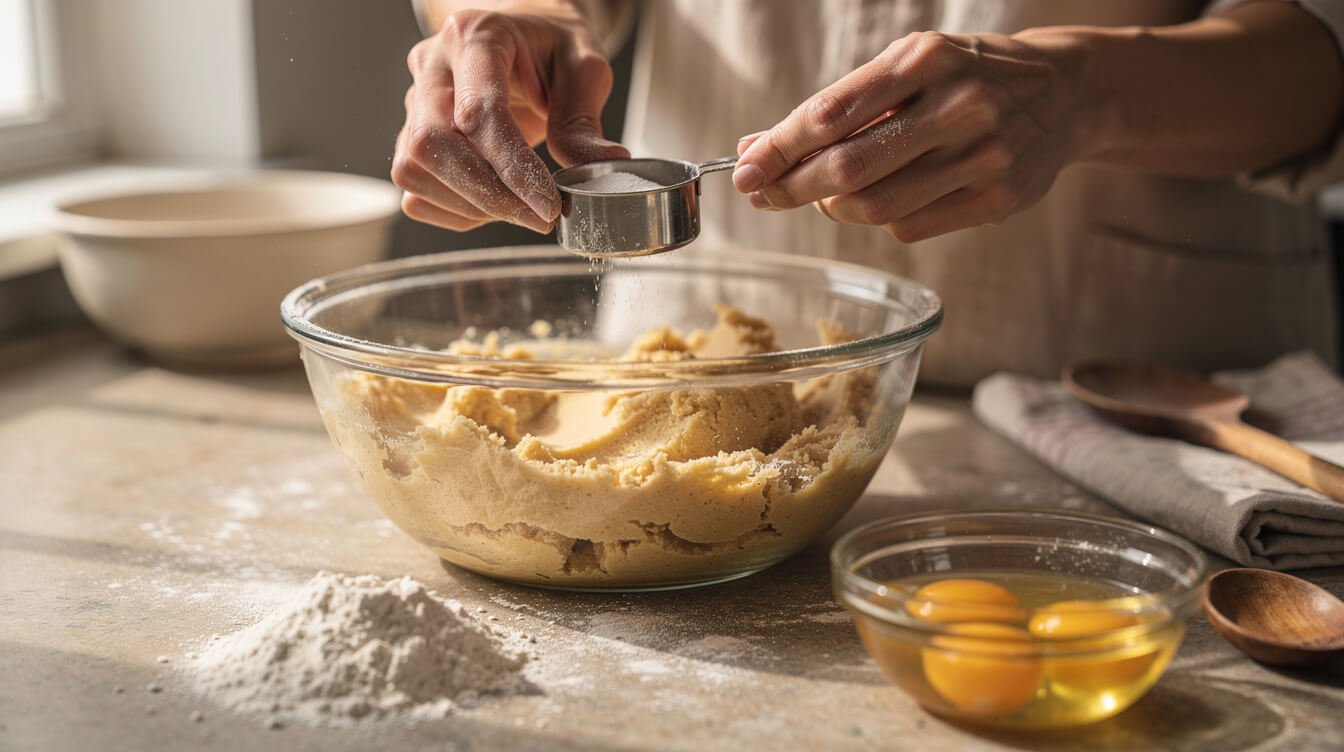
Here’s the whole rule: for every stick of salted butter you use in place of unsalted, take ¼ teaspoon of table salt out of the recipe. Going the other way, use unsalted in a recipe written for salted and add ¼ teaspoon of table salt per stick.
Use this chart for the amounts you’ll actually see in recipes. The two kosher columns are there because kosher salt grains are bigger, so a teaspoon holds less salt (more on that in a minute):
| Butter in the recipe | Table salt to take out (or add) | Diamond Crystal kosher | Morton kosher |
|---|---|---|---|
| ½ stick (4 Tbsp, 57 g) | ⅛ tsp | ¼ tsp | A generous ⅛ tsp |
| 1 stick (½ cup, 113 g) | ¼ tsp | ½ tsp | A scant ⅓ tsp |
| 1½ sticks (¾ cup, 170 g) | ⅜ tsp (¼ + ⅛) | ¾ tsp | A scant ½ tsp |
| 2 sticks (1 cup, 227 g) | ½ tsp | 1 tsp | A generous ½ tsp |
| 4 sticks (2 cups, 1 lb) | 1 tsp | 2 tsp | 1¼ tsp |
When the recipe has less salt than you need to take out
Say you’re making a cookie recipe with 1 stick of butter and ¼ teaspoon of salt. Swap in salted butter, and you’d take out ¼ teaspoon, so just leave the salt out entirely. If the recipe has less than the chart says to remove (a pinch of salt and 2 sticks of butter, for example), leave the salt out and accept that it’ll be a touch saltier than written. In anything sweet with chocolate, caramel, or peanut butter, that usually tastes like a feature, not a mistake.
A worked example
A classic chocolate chip cookie recipe calls for 2 sticks of unsalted butter and 1 teaspoon of table salt. You’ve got salted butter. Two sticks means take out ½ teaspoon, so add ½ teaspoon of salt instead of 1. That’s it. The dough, the bake time, and the spread don’t change. Our best chocolate chip cookies recipe works with either butter if you make that one adjustment. If yours went flat, the butter’s temperature is a far likelier culprit than its salt (we cover that in the bakery-style cookie post).
Don’t forget about whipped butter
Whipped butter in a tub has air beaten into it, so a cup of whipped butter is a lot less butter than a cup of stick butter. Fine for toast, but don’t swap it cup for cup in baking. If you have to use it, weigh it: 113 grams equals one stick no matter how much air is in it.
Where salted vs unsalted butter really matters (recipe by recipe)
Here’s the honest map. For most bakes, the choice between salted and unsalted butter is a two-second salt adjustment. For a few, it’s worth having unsalted on hand.
| What you’re making | Salted butter OK? | What to do |
|---|---|---|
| Chocolate chip cookies, brownies, blondies | Yes | Cut the salt per the chart. Plenty of people prefer the result. |
| Pie crust, biscuits, scones | Yes | Cut the salt. The flakiness comes from cold butter, not from which butter. |
| Cakes, cupcakes, muffins, quick breads | Yes | Cut the salt. Creaming works the same. |
| Everyday yeast bread and rolls | Usually | Most loaves use so little butter that the extra salt is tiny. For butter-heavy doughs like brioche, adjust per the chart. |
| Buttercream frosting | Prefer unsalted | Frosting is mostly butter, so salt shows. If salted is all you have, skip the recipe’s pinch of salt and taste before adding more. |
| Caramel, butterscotch, salted caramel | Prefer unsalted | Add salt at the end, to taste. That’s the only way to control it. |
| Shortbread, butter cookies, pound cake | Either, carefully | Butter is the main flavor. Salted works if you drop the added salt, but these are the bakes where you’ll taste the difference most. |
| Pan sauces, sautéing, mashed potatoes, eggs | Either | Taste and season at the end. |
| Garlic bread, compound butter | Either | Use salted and skip the added salt, or use unsalted and salt to taste. |
| Toast, corn, warm bread, pancakes | Salted wins | That’s its whole job. |
Pie crust: the question every recipe disagrees on
Open three pie crust recipes and you’ll find one that insists on unsalted, one that uses salted, and one that doesn’t say. They all work. A standard double crust uses 2 sticks of butter, so if you’re using salted, take ½ teaspoon of table salt out of the dough. What actually makes a crust tough or shrinky is warm butter and overworked dough, not the salt. If you’re blind baking for a custard or cream pie, our guide to blind baking a pie crust covers the shrinking problem.
Buttercream: the one to get right
American buttercream is mostly butter and powdered sugar, so the butter’s salt has nowhere to hide. A tiny pinch of salt in buttercream is a good thing. It cuts the sweetness. A whole stick’s worth of unexpected salt can tip it over. If you’re frosting a cake for an occasion, this is the time to buy unsalted. If you’re stuck with salted, leave out any salt the frosting recipe lists, mix, and taste before you add anything else.
Bread: less dramatic than you’ve heard
You’ll read that salted butter “ruins” bread because salt slows yeast. Salt does slow yeast, but look at the amounts. A sandwich loaf with 2 tablespoons of butter picks up about 1/12 of a teaspoon of extra salt from salted butter. That’s not enough to change your rise. It only matters in rich doughs where butter is a big share of the recipe. There, take the salt out per the chart, same as with cookies.
From the Eat Cafe kitchen
One good recipe a week, straight to your inbox
The recipe we're actually cooking this week, plus the one tip that saves it when it goes sideways. No spam. Unsubscribe anytime.
Kosher salt, table salt, and why your adjustment depends on the box
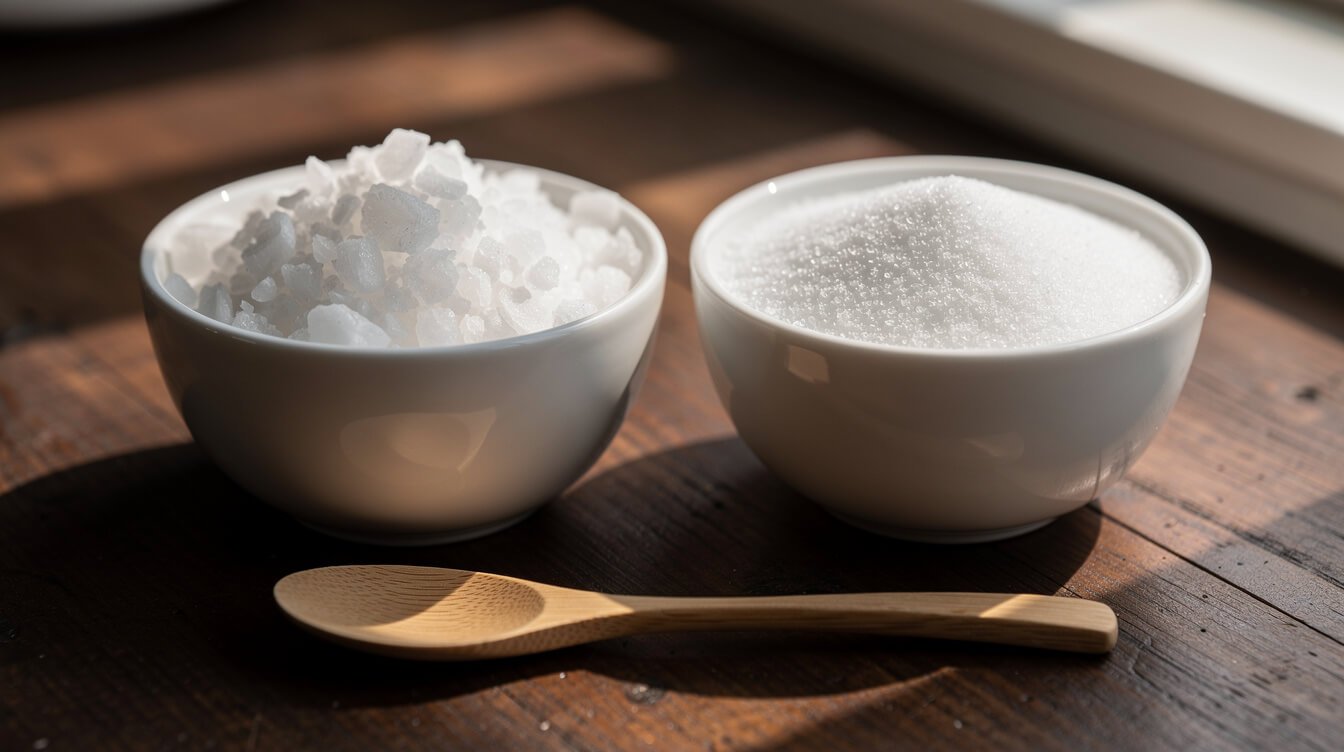
Every salted vs unsalted butter swap above is in table salt for a reason: salt measured by the spoon varies wildly. The salt is the same, but the grain sizes are different, so a teaspoon of big hollow flakes holds much less salt than a teaspoon of fine grains. Using the label weights listed in USDA’s branded-foods database:
- Table salt: about 1.5 grams per ¼ teaspoon
- Morton kosher salt: about 1.2 grams per ¼ teaspoon, or roughly 80% as salty by the spoon
- Diamond Crystal kosher salt: about 0.7 grams per ¼ teaspoon, or roughly half as salty by the spoon
So when a recipe says “1 teaspoon kosher salt” and you’re working out what to take out for salted butter, it matters which box the recipe writer had. If it doesn’t say, check the author’s notes. A lot of recipe developers say which brand they use. When in doubt, take out the table-salt amount and you’ll be close.
Weigh it if you can
The easiest way around all of this is a kitchen scale. Salt is salt by weight: 1.8 grams is 1.8 grams whether it’s fine, flaky, or coarse. If you bake a lot, a scale that reads in single grams pays for itself in fewer “why does this taste off” moments. If you’re kitting out a kitchen, our 100 Essential Tools Every Chef Has in Their Kitchen guide covers what’s worth buying first.
It’s also the reason your mashed potatoes taste different at someone else’s house. Two cooks can follow the same recipe with the same butter and end up worlds apart because one used table salt and the other used Diamond Crystal. Butter gets blamed for a lot of salt problems that are really spoon problems.

Kitting out your kitchen? Start here
Our 100 Essential Tools eBook walks through the pans, knives, and small tools that are worth owning, so you buy the useful stuff first. PDF or Kindle.
European, cultured, and “sweet cream” butter: what the labels mean
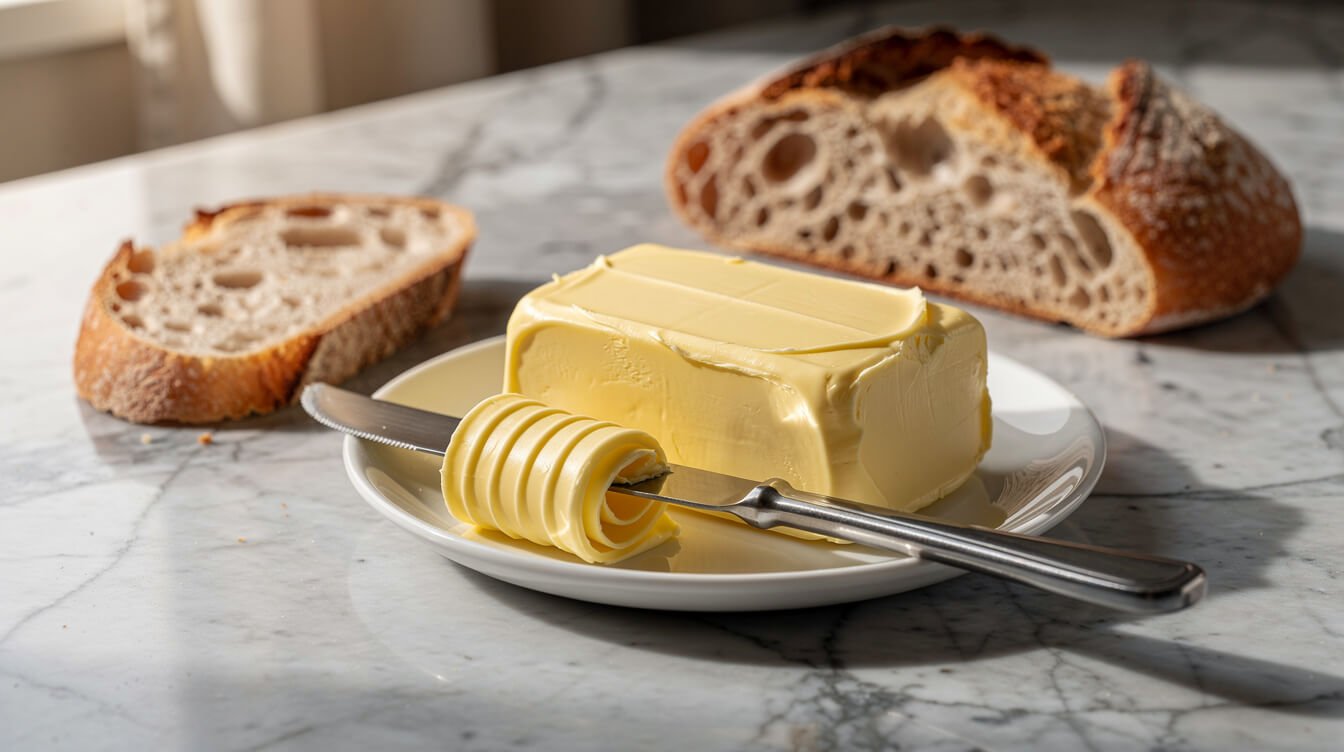
The butter aisle has more words on it than it used to. Here’s what they mean, and whether any of them changes the salted vs unsalted swap.
“Sweet cream butter”
This one trips people up. “Sweet cream” doesn’t mean unsweetened, and it doesn’t mean unsalted. It means the butter was made from fresh cream rather than cultured cream. Most American butter is sweet cream butter, and it comes both salted and unsalted. Look for the word “unsalted” on the box. That’s the only word that tells you.
European-style butter
American butter has to be at least 80% fat. European-style butters typically run around 82% or higher. The rest of butter is mostly water, so a little more fat means a little less water. You’ll notice it in flaky pastry and pie crust (fewer steam pockets fighting the layers, richer taste) and on toast. For cookies and cakes, it’s a nice upgrade but not a different recipe. Most European-style butters come salted and unsalted, and the same ¼ teaspoon per stick rule applies. Check the label, though: some are salted more heavily, and the label math will tell you.
Cultured butter
Cultured butter is made from cream that’s been ripened with live cultures before churning, like the step that makes sour cream. It tastes faintly tangy and nutty, more “butter” than plain sweet cream butter. It’s wonderful on bread and in shortbread. It behaves the same in baking, so you swap it the same way.
Is fancy butter worth it?
For everyday cookies, muffins, and weeknight cooking, regular grocery-store butter is completely fine. Nobody’s grading you. Save the good stuff for where you’ll taste it: spreading, shortbread, pie crust, and finishing a pan sauce. If you’re after a dairy-free option instead, that’s a different question, and our butter substitute in baking guide sorts the swaps by what you’re making.
Which butter to keep on hand, and how to store it
The salted vs unsalted butter question gets easier once you know your own habits. If you’re only going to buy one, buy the one you use most. Then use this page for the other.
- You bake a lot: keep unsalted as your main butter, plus a small salted stick for the table if you like it on toast.
- You mostly cook and spread: keep salted, and use the chart when you bake.
- You want just one: unsalted is the more flexible choice. You can always add salt, and a sprinkle of flaky salt on buttered toast tastes better than salted butter anyway.
Storing it so it tastes like butter
Salt helps salted butter keep its fresh taste longer. That’s why salt went into butter in the first place. Unsalted butter has nothing to cover off-flavors, so you’ll notice when it’s past its best. Either way, the basics are the same:
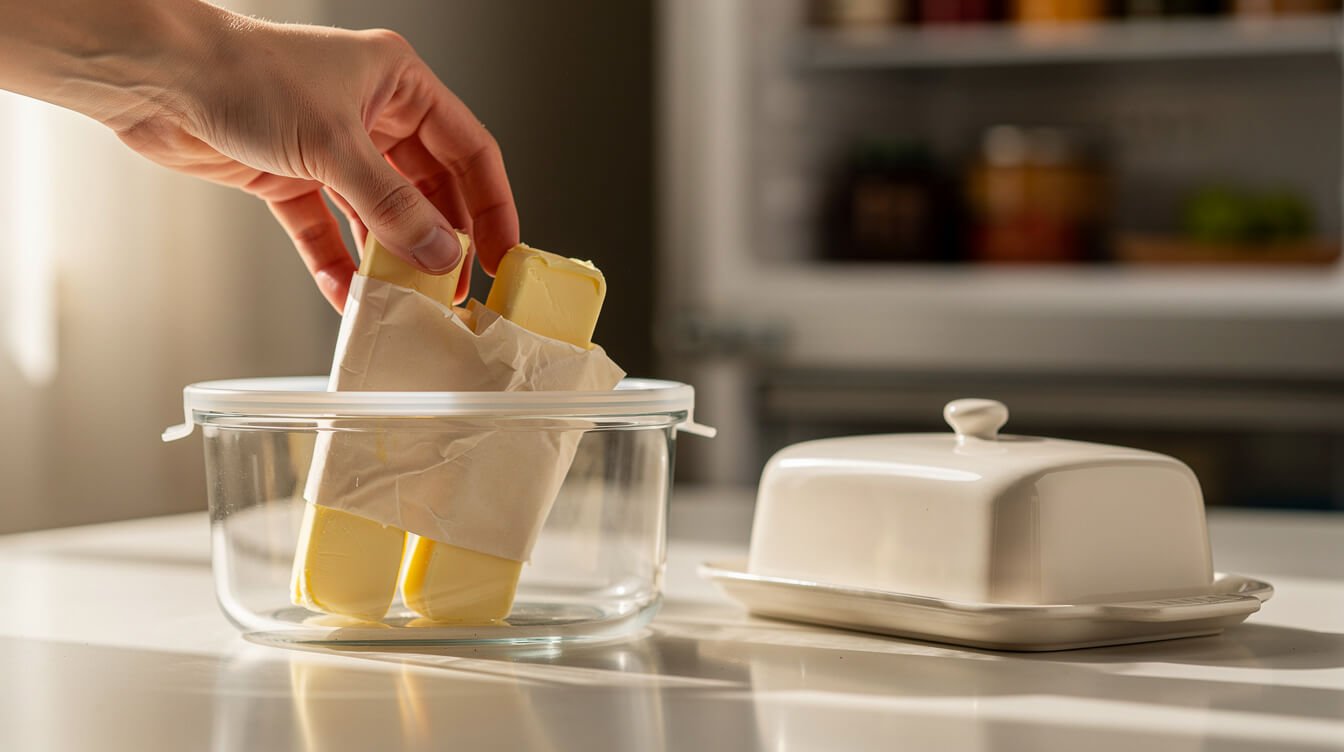
- Keep it in the fridge, wrapped, and check the date on the box.
- Butter soaks up smells. If yours tastes like the onion next to it, that’s why. Keep it in its wrapper, then in a covered dish or an airtight container.
- Freeze extras. Butter freezes well. Wrap the sticks tightly, bag them, and thaw overnight in the fridge before baking. This is the easy fix for stocking up on holiday baking butter when it’s on sale.
- Softening for baking: set it out on the counter until it’s soft enough to dent with a finger but still cool. Then use it.
- Trust your nose. Butter that smells sour, cheesy, or like old crayons has gone rancid. It won’t ruin your oven, but it’ll ruin your cookies. Toss it.
Salted vs unsalted butter FAQ
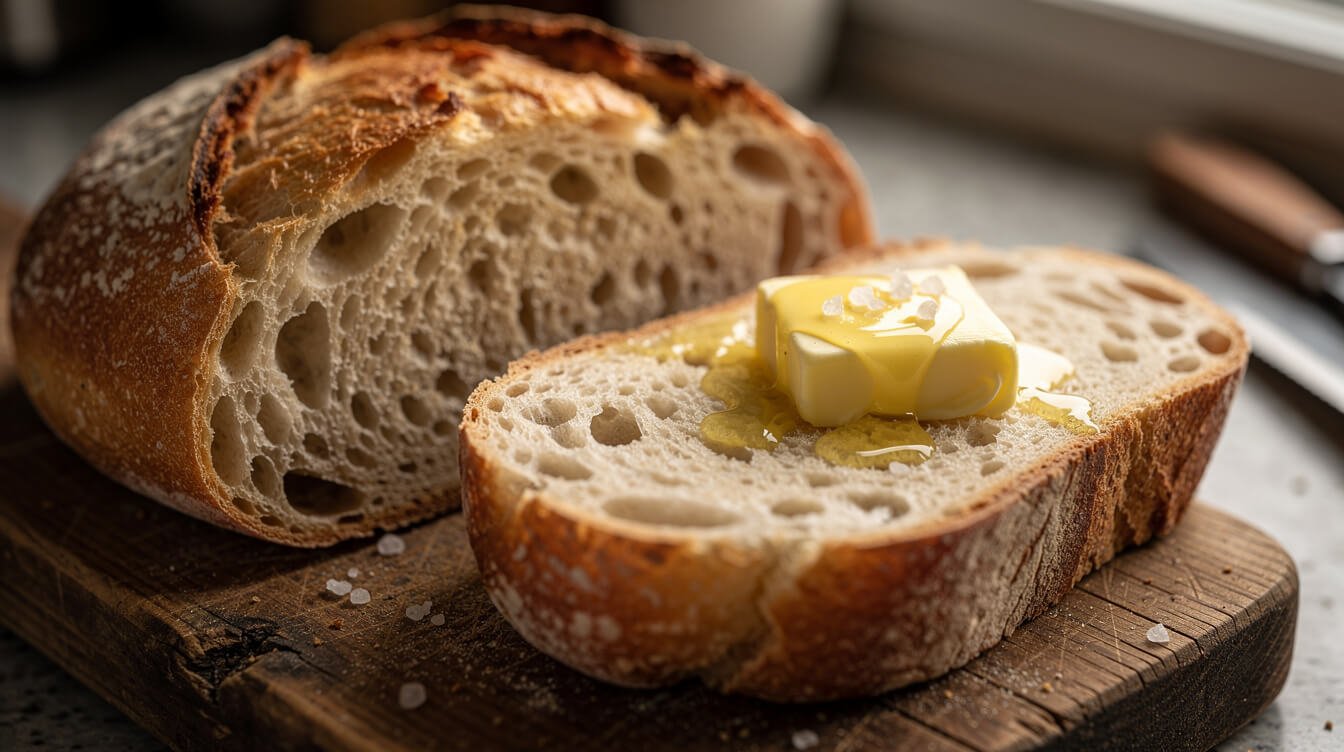
If a recipe just says “butter,” which kind does it mean?
In baking recipes, especially ones that list salt separately, assume unsalted. In cooking recipes, it usually doesn’t matter. Taste and season at the end. Older recipes (and plenty of family recipe cards) often meant salted, because that’s what was in the fridge. If the cookies from an old card tasted right before, they were probably made with salted.
Can I use salted butter in cookies?
Yes. Take ¼ teaspoon of table salt out per stick of butter. Most cookie recipes have more salt than that to give, so it’s an easy swap.
Can I make salted butter from unsalted?
Yes. Let a stick soften, mash in a scant ⅓ teaspoon of fine salt (or to taste), and chill it. For spreading, it’s even nicer to butter the bread with unsalted and sprinkle flaky salt on top.
Does salted butter have more water in it?
Not in any way you’ll notice. Both are held to the same 80% fat minimum, and USDA’s nutrient data lists the same fat and water for each. The bigger difference is between brands and between standard and European-style butter.
Is “sweet cream butter” the same as unsalted?
No. Sweet cream just means it was made from fresh, uncultured cream. It comes salted and unsalted. Look for the word “unsalted” on the box.
Why does my salted butter taste saltier than my friend’s?
Because brands salt differently. Check the sodium per tablespoon on both boxes and you’ll probably find the answer. It’s the same reason the label math above beats a one-size-fits-all rule when you want to be exact.
Can I use margarine or spread instead?
Spreads aren’t butter. Many have less fat and more water, which changes how cookies spread and how crusts flake. If you need a non-butter option, use one meant for baking and check our butter substitute guide for what to expect.
The bottom line
Salted vs unsalted butter isn’t a rule you can break. It’s a quarter teaspoon of salt per stick. Bake with unsalted when you can, especially for frosting and caramel. When you can’t, use salted, take the salt out of the recipe, and keep going. Spread salted butter on everything else and enjoy it.
If you’re still finding your feet with baking, our baking basics every beginner should know and how to bake a cake that doesn’t sink are good next reads. And if there’s a stick of salted butter and a bag of chocolate chips in your kitchen right now, you know what to make.

Before you go
Want the next one?
We post a new recipe or kitchen guide every day. The best of the week lands in one short email, no life story attached.