Best cast iron skillet brand for home cooks (what the extra $150 actually buys you)
You have typed best cast iron skillet brand into Google, and every result you got back is a roundup that puts a $25 pan and a $200 pan on the same list without ever telling you what the extra $175 does. So here is the plain answer first, before anything else: the brand on a cast iron skillet changes the surface finish, the weight, and the handle. It does not meaningfully change how the pan sears, browns, or holds heat.
That is the whole thing in one sentence. Cast iron is cast iron. Every brand pours essentially the same metal into essentially the same shape, and once a pan has a decent layer of seasoning on it, the expensive one and the cheap one cook about the same. What you are actually paying for, when you pay more, is a pan that is nicer to pick up and easier to clean.
That does not make the expensive pans a scam. It makes them a comfort purchase, which is a legitimate thing to buy — just not the thing the roundups are selling. Below is the brand-by-brand rundown, what milling actually changes, what to check on a vintage pan, and the answer to the question most people are really asking: I already own a Lodge, should I upgrade?
The short answer on the best cast iron skillet brand
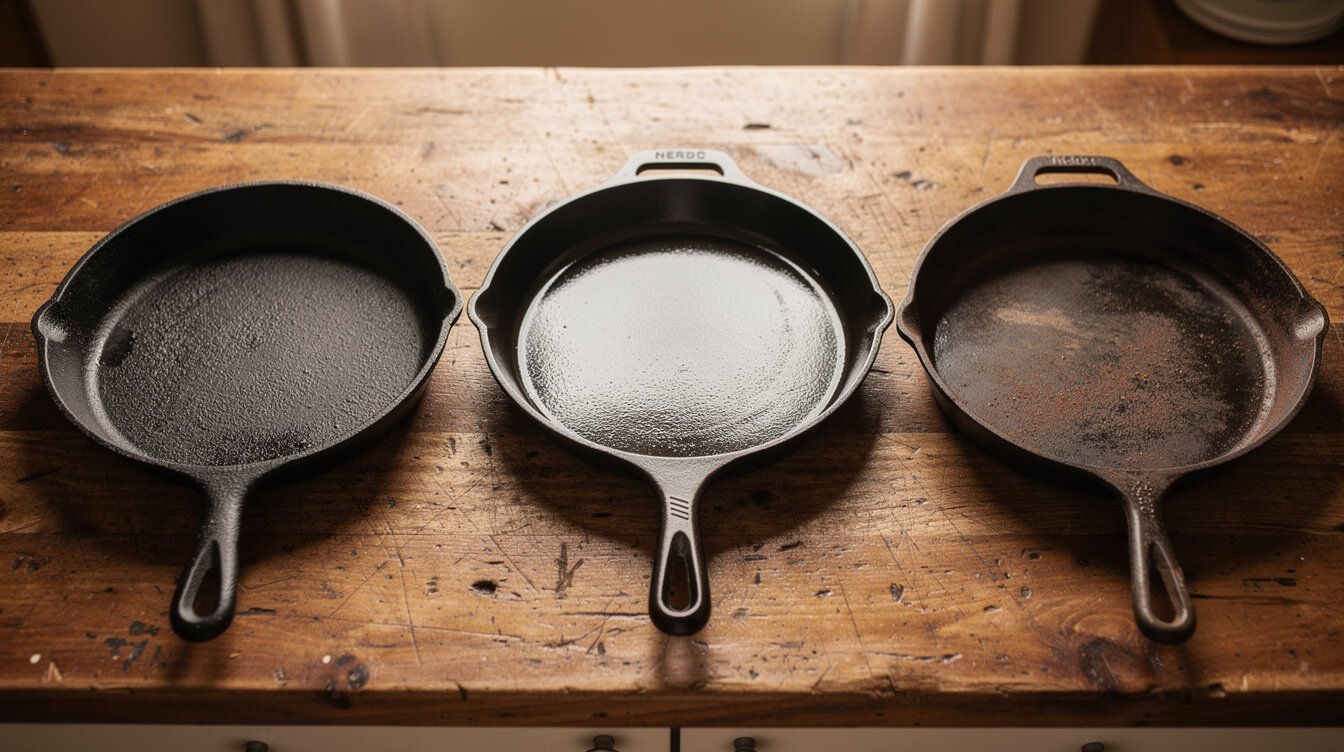
For most home cooks, the best cast iron skillet brand is the cheap one — Lodge or Victoria, somewhere around $20 to $40 for a 10-inch. Buy it, cook in it constantly, and you will have a pan that does everything a $200 pan does.
Three things genuinely differ between brands, and it is worth knowing exactly what they are so you can decide whether any of them matters to you.
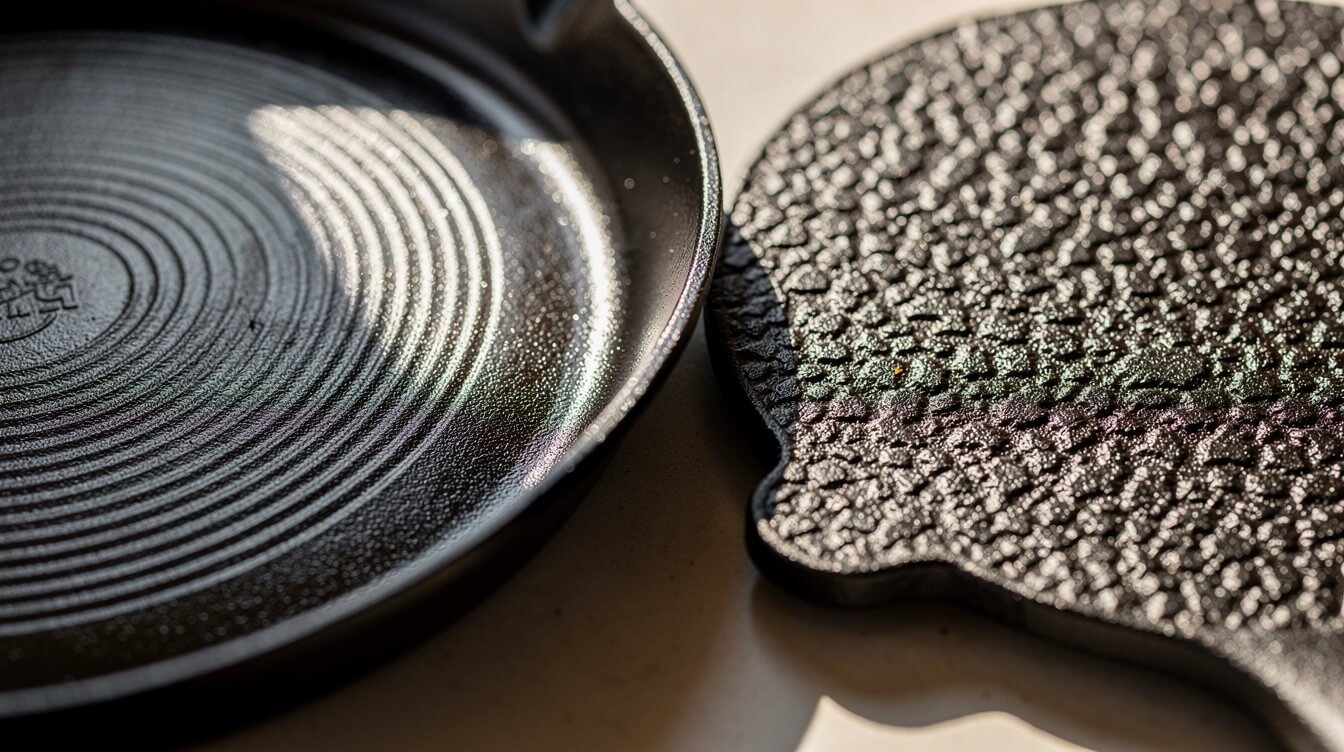
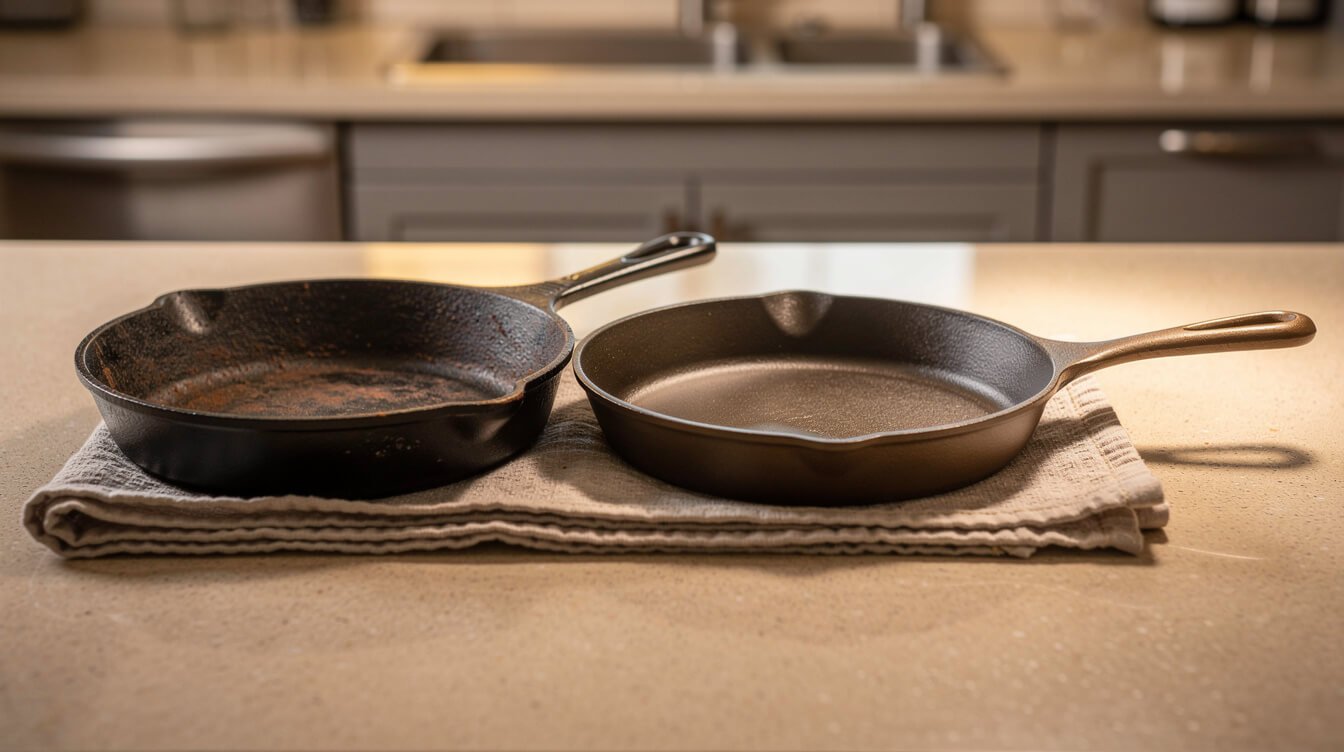
- Surface finish. Cheap pans come out of the sand mold with a slightly pebbled texture and get sold that way. Premium pans get machine-milled smooth after casting. Smooth is easier to wipe clean and holds a more even seasoning layer.
- Weight. This is the difference people underrate the most. A budget 10-inch skillet runs roughly 5 to 5.5 pounds. A milled pan is usually thinner and lands closer to 4 pounds. One pound does not sound like much until you are lifting a hot pan of chicken thighs out of the oven with one hand.
- Handle design. Longer handles, ergonomic shapes, and a properly useful helper handle on the far side. Comfort, not performance.
Notice what is not on that list: searing, heat retention, and browning. Those come from the mass of iron, which is roughly comparable across brands, and from your stove and your technique. Nobody has ever tasted a steak and identified the brand of the pan.
If this framing feels familiar, it is the same conclusion we landed on in our guide to kitchen knife brands for home cooks. With knives, the brand does change the steel and the geometry, so it matters more than it does here. With cast iron, the material is the material, and there is much less room for a brand to differentiate.
Lodge: the default, and why that is not a compromise
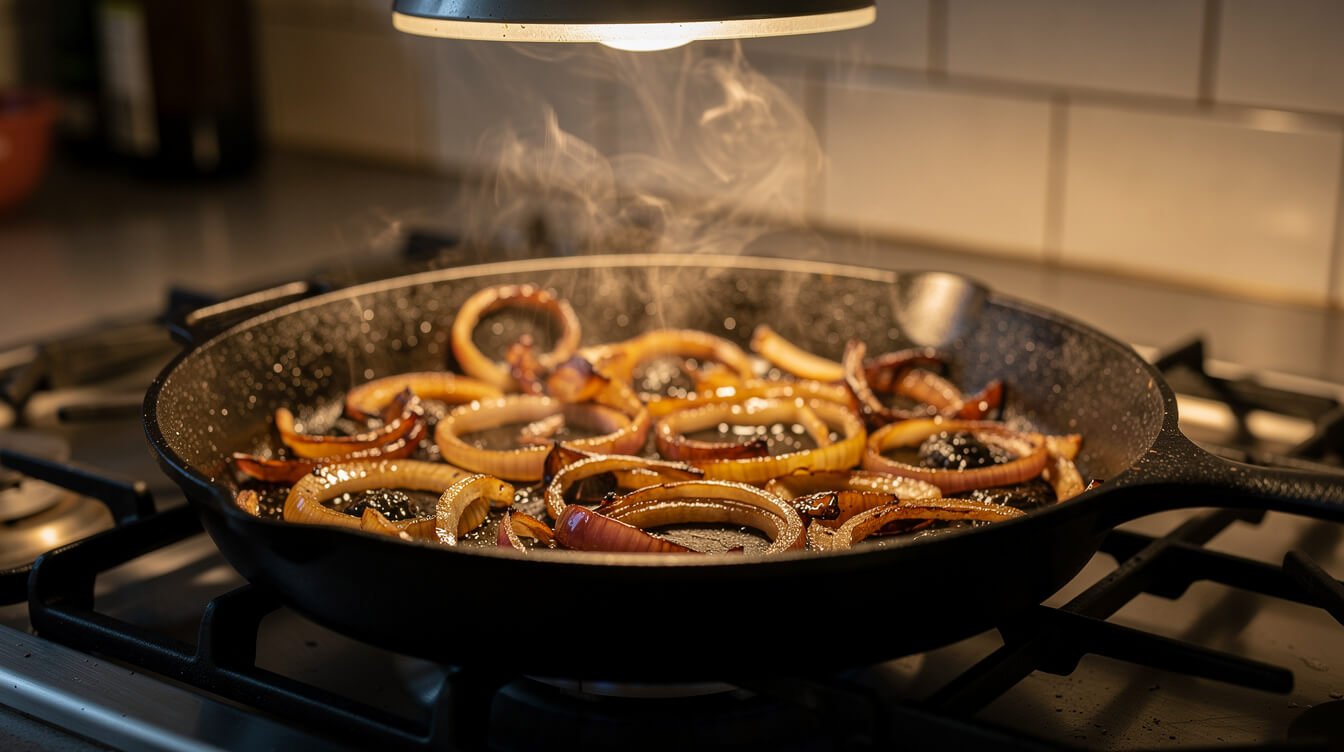
Lodge is the pan most American home cooks own, it costs around $20 for the 10.25-inch, and it is genuinely good. It arrives with a sturdy factory seasoning that survives real cooking from the first day, it is made in Tennessee, and it is close to indestructible.
It has two real drawbacks, and they are both about feel rather than cooking. The surface is rough, so food grabs at it more than it would on a milled pan until you have built up a few months of seasoning. And the handle is short, straight, and unapologetically utilitarian — fine for the stovetop, awkward when the pan is full and hot.
Worth knowing: the expert reviews genuinely split on Lodge. Serious Eats names it best overall because it sears deeply for around $20. Bon Appétit tested it and declined to make it either their winner or their budget pick, preferring Victoria for a slicker factory seasoning and a better handle. That disagreement is not a sign that one outlet is wrong — it is the clearest evidence going that past a certain floor of quality, the choice is preference rather than measurable performance.
Lodge also makes the Blacklock line, which sits in the middle: lighter than the standard pan, a smoother finish, a nicer handle, usually somewhere around $60 to $70. If the standard Lodge appeals to you but the weight and the stubby handle do not, Blacklock is the sensible next step and it costs a fraction of a boutique pan.
The milled brands: Stargazer, Field, Smithey, and Yeti
This is the tier that makes the brand question feel urgent. Stargazer runs around $135, Smithey around $170, Field somewhere in the $125 to $175 range depending on size, and Yeti’s skillet is about $200 — which, as a piece of trivia worth knowing, is the old Butter Pat pan under a new name after Yeti acquired the company. Same finish, same handle, same design, new logo.
These are all lovely objects. Here is the honest accounting of what they buy.
What milling actually changes
A smooth surface is easier to clean, because there is no pebbled texture for browned bits to hide in. It holds seasoning more evenly. And it cannot be scrubbed away in patches the way seasoning on a rough pan sometimes can, since the seasoning sits on a flat plane rather than in and around a texture.
It also fixes the single most common complaint about a new cast iron pan: things sticking during the break-in period. Epicurious tested twenty pans and found that food is more likely to stick to an under-seasoned rough pan than an under-seasoned milled one, because a smooth surface releases food on its own without needing seasoning to do the work. A milled pan is more forgiving in month one.
What milling does not change
The sear. In that same twenty-pan test, the reviewers found no discernible difference in sear quality between rough and milled pans once both were properly seasoned. Their conclusion was blunt, and it is worth quoting the shape of it: the surface alone is not enough to justify the price of a high-end pan. What makes those pans worth splurging on, if anything does, is all the design differences added together — thinner, lighter, better balanced, nicer handle — not the cooking.
There is also a cosmetic catch nobody mentions on the product page. A freshly milled pan goes through an awkward phase. For the first couple of months the seasoning builds unevenly and the surface looks mottled and blotchy, with lighter and darker patches. It is not damage and it does not affect performance — the same thing happens on a rough pan, it is just invisible against the texture. But if you just spent $170 and your pan looks streaky after three weeks, it helps a great deal to know that is normal.
Victoria and the budget pans worth knowing about

Victoria is the budget brand that cast iron people quietly rate above Lodge, and it is the one most roundups skip. It is made in Colombia, it costs about the same as a Lodge or slightly more, and the two things it does better are the factory seasoning, which arrives slicker, and the handle, which is longer and more comfortable. Bon Appétit picked it over Lodge as their cheap pan for exactly those reasons, and the recurring verdict in enthusiast forums is the same — a better finish than Lodge at a comparable price.
A few other budget names you will run into:
- Utopia Kitchen and the other unbranded pans — usually $15 to $20, heavier, and with a thinner factory seasoning that needs a couple of rounds in the oven before it behaves. They work, but they are not a bargain worth chasing when Lodge is $20.
- Camp Chef — solid, inexpensive, and often available in larger diameters for less than the equivalent Lodge.
- Le Creuset and Staub — worth naming only to set them aside. These are enameled cast iron, which is a genuinely different pan: no seasoning to maintain, no rust risk, safe with acidic and long-simmered food, but you cannot build a natural nonstick surface on enamel and you should not sear on it as aggressively. Different tool, different conversation.
The honest summary of this tier: Lodge and Victoria are both right answers. Pick Victoria if you care about the handle, and Lodge if you want a pan you can buy in any hardware store in America for twenty bucks and replace without a second thought.
If you are kitting out a kitchen from scratch rather than just buying one pan, our 100 Essential Tools Every Chef Has in Their Kitchen guide walks through what is worth buying first and what can wait — the same logic as this post, applied to the rest of the drawer.
From the Eat Cafe kitchen
One good recipe a week, straight to your inbox
The recipe we're actually cooking this week, plus the one tip that saves it when it goes sideways. No spam. Unsubscribe anytime.
Vintage Griswold and Wagner: what to check before you buy used
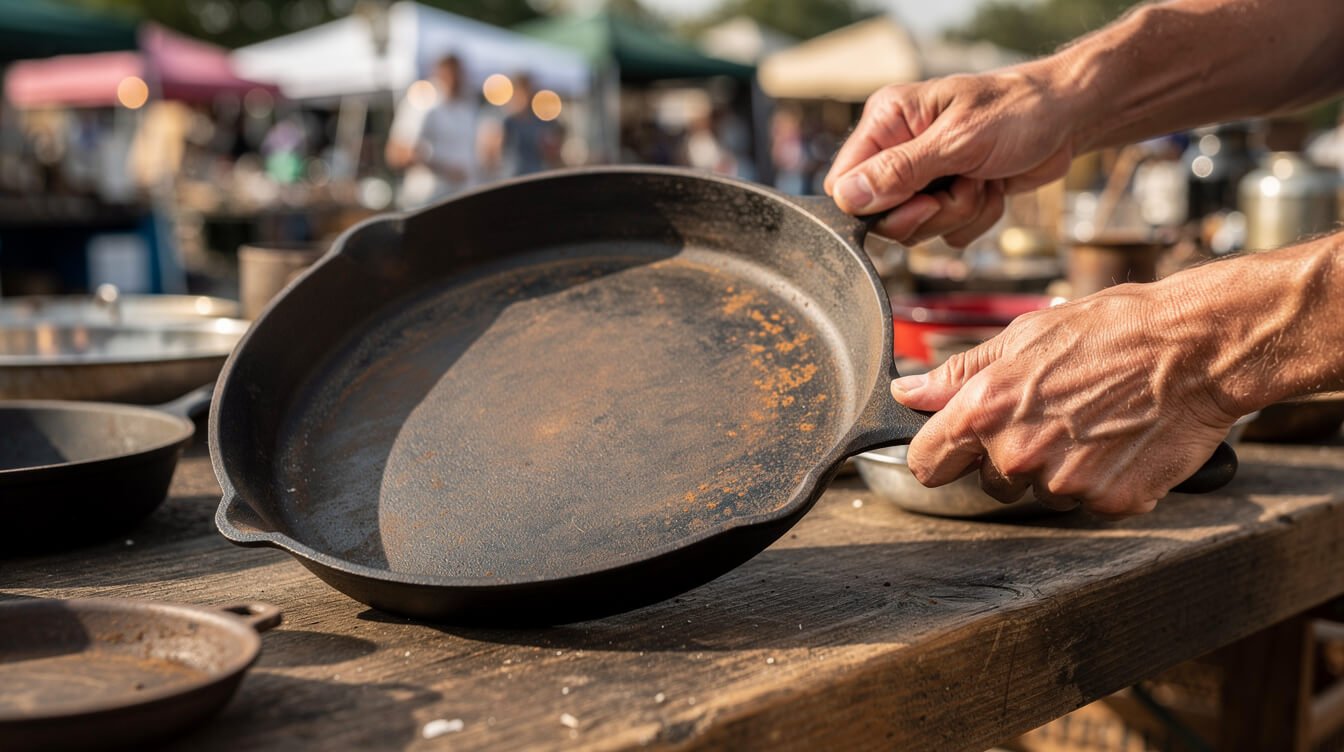
Here is the part no roundup covers, even though it is a real version of the brand question. When people ask which brand of cast iron is best, a good number of them are standing at an estate sale holding a pan with GRISWOLD or WAGNER WARE cast into the bottom, wondering whether it is the good stuff.
It usually is, and the reason is simple: mid-century American cast iron was routinely ground and polished smooth before it shipped. That is the finish the modern premium brands are recreating. Vintage pans also tend to be noticeably thinner and lighter than a modern Lodge. So a $30 Griswold from a flea market is, functionally, a $150 milled pan — which makes it the single best value in cast iron if you are willing to hunt and to do a little work.
What to actually check, in order:
- Lay it on a flat counter and press the rim. If it rocks or spins, the pan is warped. It will never sit flat on a glass or flat-top stove and oil will pool on one side. Walk away.
- Look for cracks, especially where the handle meets the body and anywhere along the rim. A hairline crack is a hard no. Cast iron is brittle, and a cracked pan can fail when it is hot and full. This is the one defect that is a safety issue rather than an inconvenience.
- Check for pitting. Surface rust cleans off and means nothing. Deep pits — little craters you can feel with a fingernail — are corrosion that has eaten into the metal, and they stay rough forever.
- Do not cook on a painted or powder-coated pan. Decorative cast iron gets hung on walls, and some of it has been painted. Strip it completely and re-season it before it ever sees food, or leave it on the wall.
- Ignore rust entirely as a reason not to buy. An orange pan looks alarming and is the easiest problem on this list to fix. Scrub it back to bare gray metal and re-season.
Rust worries people more than it should: it is iron oxide, not a contamination event, and the fix is mechanical. Scour it off, wash and dry the pan, and build the seasoning back up. Our guide to the best oil for seasoning a cast iron skillet covers which oil to use and the mistake that leaves the surface sticky instead of slick.
One brand note while you are hunting: the older Lodge pans, the ones from before the company moved to the rough pre-seasoned finish, are smooth too. They do not carry the collector premium that Griswold does, which makes them the best-value vintage pan on the table.

100 Essential Tools Every Chef Has in Their Kitchen
A skillet is one tool. If you are working out what else belongs in the drawer and what you can happily skip, this eBook and guide runs through the whole list the same way this post handles pans — what earns its place, and what is just nice to own.
You already own a Lodge. Is upgrading worth it?
This is the most common real form of the question, and almost nobody answers it directly. So: mostly no, with three specific exceptions.
No, if your complaint is that food sticks. That is a seasoning problem or a heat problem, and a new pan will not fix either — it will just hide the seasoning problem for a few weeks. Food sticks on cast iron for three reasons: the pan was not hot enough before the food went in, there was not enough fat, or you moved the food too early. A $170 pan punishes all three the same way a $20 pan does.
No, if your complaint is that it does not sear well. It does. That is what cast iron is best at, and the brand is not the variable. Dry the surface of your food properly, get the pan properly hot, and do not crowd it.
Now the exceptions, which are real:
- The weight genuinely bothers you. If you have wrist or grip issues, or you have stopped reaching for the pan because lifting it full is a two-handed job, a lighter milled pan or a Lodge Blacklock is not a luxury. It is the difference between owning a pan and using one.
- You cook eggs or fish in it constantly. These are the two foods where a smooth surface makes a real, daily, noticeable difference in release. Everything else — steak, cornbread, roasted vegetables, a whole chicken — does not care.
- You want the object. This is a legitimate reason and we are not going to pretend otherwise. A Smithey is beautiful, it will outlive you, and buying nice things for your kitchen because they make you want to cook is a perfectly good use of money. Just buy it knowing you are buying a nicer pan, not a better one.
If none of those three describe you, keep the Lodge. Spend the $150 on ingredients, or on the gear that actually changes what you can cook — the gap between no stand mixer and any stand mixer is far bigger than the gap between a rough pan and a milled one, which is why we put together a guide to the best stand mixer for home cooks.
What to ignore when you compare cast iron brands
Four things that take up space on the box and should take up none in your decision.
Proprietary seasoning claims
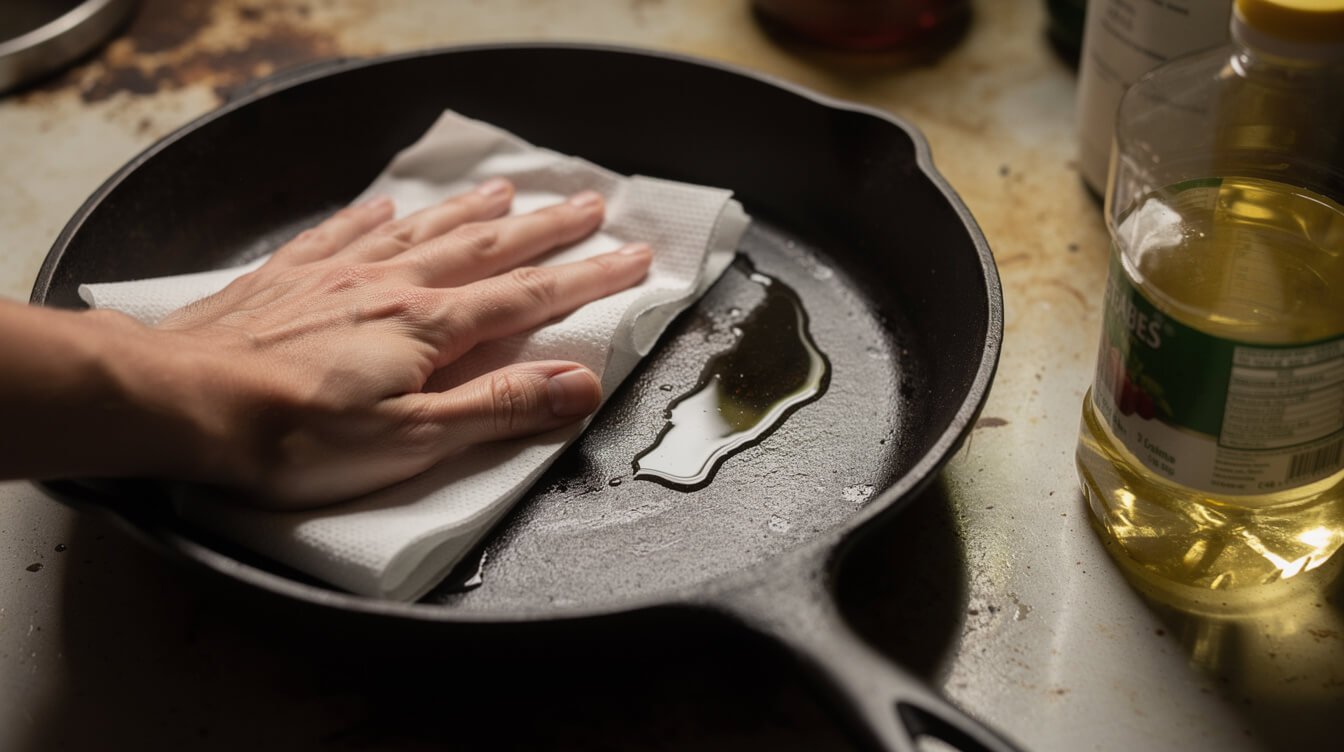
Every brand describes its factory seasoning as though it were a secret. It is oil, baked on. What varies is how many layers they applied and how evenly — worth something on a rough pan, where the seasoning does the anti-stick work from day one, and worth much less on a milled pan, where the smooth surface already does that job. Either way, within a couple of months of regular cooking the factory seasoning is gone, replaced entirely by yours.
Brand-branded conditioners and scrubbers
You do not need the tin of pan conditioner. It is oil in a small container, and any neutral cooking oil in your cupboard does the same job for pennies. A chainmail scrubber is genuinely useful, but it is a commodity item — the brand-stamped one is not better than the generic one.
“Stay cool” handle claims
Treat these as marketing regardless of who makes the pan. A cast iron handle is solid iron attached to a mass of hot iron, and given enough time on the heat it will get hot enough to burn you badly. Reviewers who test these pans reach the same conclusion and give the same advice: build the habit of always reaching for the handle with a mitt or a folded towel, and never rely on a claim on a box.
Anything framed as a test-lab verdict on the sear
We should be straight about our own footing here. Eat Cafe is a home kitchen, not a test lab — we have not run a dozen pans through a controlled side-by-side, and you should be skeptical of anyone claiming they can taste the brand of the pan. What we have is years of cooking on the cheap stuff, time on borrowed milled pans, and the published testing from outlets that did do the controlled work. All of it points the same direction, which is why we are comfortable stating it plainly.
One pan, or three? The honest answer for a home kitchen
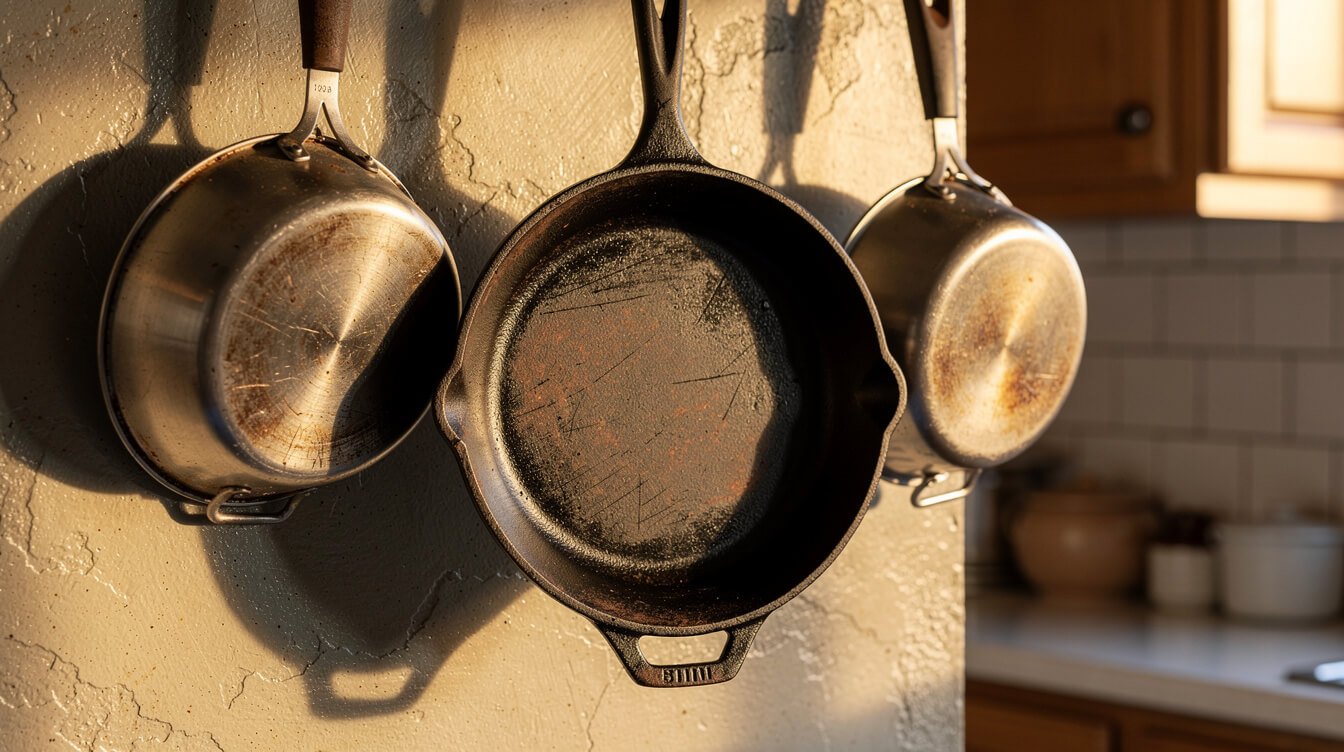
One, and make it a 10-inch or 12-inch.
The 10-inch is the size most recipes assume and the one you can still lift with one hand when it is full. The 12-inch is better if you regularly cook for four or more, or if you want to fit four chicken thighs without crowding them, and the trade-off is that a full 12-inch pan is a genuinely heavy object. If you only ever buy one, buy the size that matches how many people you feed, and buy it in the cheap brand.
A second pan earns its place when a specific job keeps colliding with the first — a small 8-inch for eggs and single portions, so you are not heating three pounds of iron for one omelet, or a second large one because you keep searing in batches. That is a need discovered through cooking, not one you can predict in a shop.
What is not worth it is the boxed set. Cast iron sets pad out the count with sizes you will use twice a year, and they are the same purchase pattern as a knife block where four of the slots never get touched. Start with one good piece and add deliberately — the same argument we make about Japanese kitchen knives, where one excellent knife beats a set of mediocre ones every time.
Best cast iron skillet brand: frequently asked questions
Is Lodge or Victoria better?
Victoria has the slicker factory seasoning and the better handle. Lodge has the heavier factory seasoning and is available everywhere for around $20. Neither will cook noticeably better than the other in a year’s time.
Are expensive cast iron pans worth it?
They are worth it if you specifically want a lighter pan, a better handle, or an easier-to-clean surface — and they are not worth it if you are expecting better cooking. Controlled testing across twenty pans found no discernible sear difference between rough and milled pans once both were well seasoned.
Does the brand affect how well cast iron sears?
No. Searing is a function of iron mass, how hot you get the pan, and how dry the surface of your food is. The pan’s logo is not a variable.
Which cast iron brand is made in the USA?
Lodge, Stargazer, Smithey, Field, and Lodge’s Blacklock line are all US-made. Victoria is made in Colombia. Vintage Griswold and Wagner were American. If domestic manufacturing matters to you, that is a real reason to choose a brand — it is just not a cooking reason.
Is a smooth cast iron pan really nonstick?
More release-y, not nonstick. No cast iron pan, at any price, behaves like a coated nonstick pan — you still need fat and a properly preheated surface. A smooth pan is more forgiving while your seasoning is young, which is its genuine advantage.
Is vintage cast iron better than new?
Often, yes, and cheaper. A sound Griswold, Wagner, or pre-1960s Lodge gives you a thin, light, smooth pan for a fraction of what a new milled pan costs. The catch is that you have to inspect it properly and you may have to strip and re-season it.
My new pan looks blotchy. Did I ruin it?
No. Uneven, mottled color for the first couple of months is the normal way seasoning builds, and it is just more visible on a smooth pan than a textured one. Keep cooking in it. It evens out.
Can I put a cast iron skillet in the dishwasher?
No — the detergent and the long wet cycle will strip the seasoning and leave you with a rusty pan. Wash it by hand and dry it immediately. A little dish soap, contrary to the myth, is completely fine, and we went through the whole argument in our guide to the best way to clean a cast iron skillet.
When should I throw a cast iron pan away?
Almost never — but retire it if it has a crack anywhere, or if it is warped badly enough to rock on a flat surface. Cracks are a safety problem, not a cosmetic one. Rust, dull seasoning, stuck-on food, and general grimness are all fixable.
Final thoughts
The reason this question is hard to research is that the honest answer is bad for business. “Buy the $25 pan and cook in it a lot” does not sustain a roundup with twelve affiliate links in it, so the comparison gets framed around finish and heritage, where the expensive pans win, instead of around cooking, where they mostly tie.
So buy the cheap pan, unless one of the three real reasons applies to you: the weight is keeping you from using it, you live on eggs and fish, or you simply want something beautiful on the stove. Those are all good reasons. “It will cook better” is not one of them.
Then stop researching pans and go cook in one. A $20 Lodge that gets used four nights a week will be a better pan in two years than a $200 Smithey that lives in a cupboard — and that, more than any brand, is what actually makes a cast iron skillet good.

Before you go
Want the next one?
We post a new recipe or kitchen guide every day. The best of the week lands in one short email, no life story attached.