Best Kitchen Knife Brands for Home Cooks (What Actually Matters, Not Just the Name)
You don’t need six knives. You need one good one — and the hardest part of buying it isn’t the price, it’s the wall of brand names staring back at you. Wüsthof, Zwilling, Victorinox, Shun, Global, Mercer: they all get pitched as the “best kitchen knife brand,” half of them are owned by the same parent companies, and a mall kiosk somewhere is currently trying to sell you a $400 set with a lifetime sharpening plan you’ll never use. Here’s the honest version: what these brands actually get right, which one fits your budget and how you cook, and the handful of specs that matter more than the logo stamped on the blade.
This isn’t a lab-tested, twenty-knife shootout. It’s what actually holds up in a normal home kitchen, from someone who has bought the cheap one, regretted it, and bought the right one instead.
Why the brand name matters less than you think
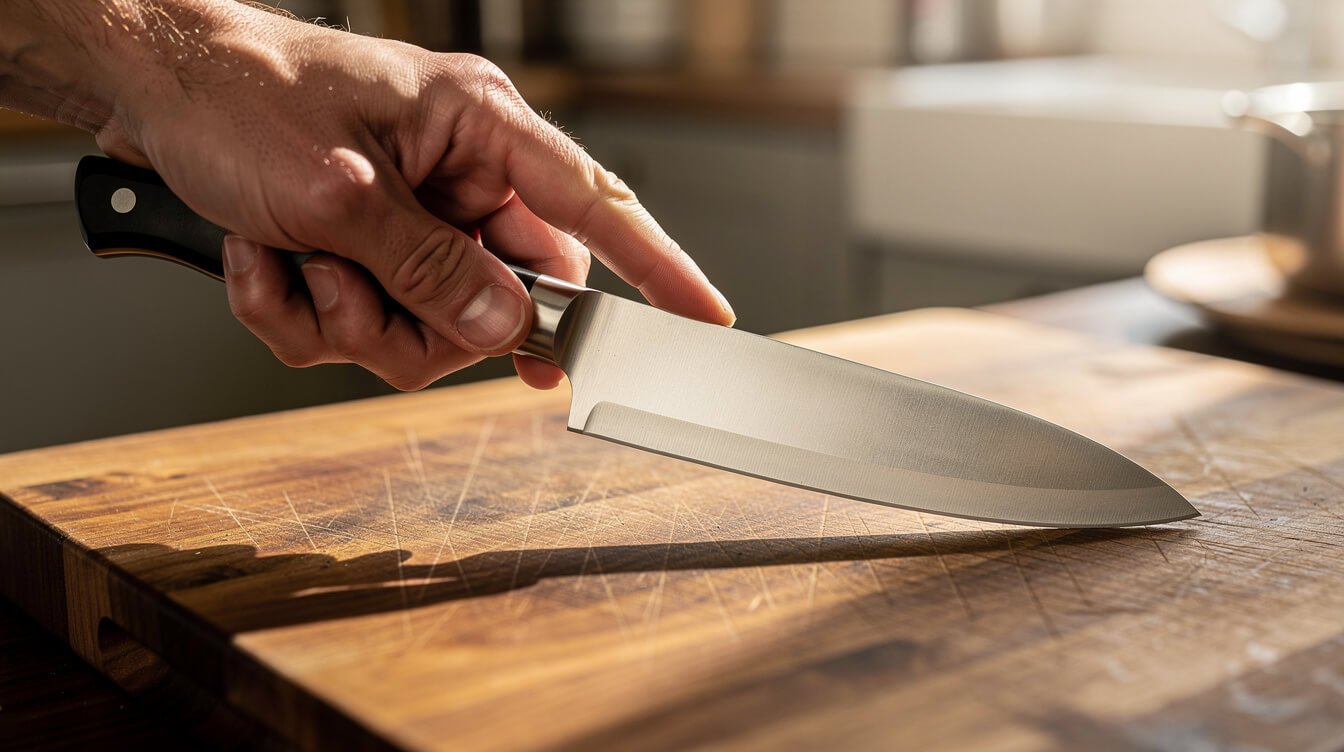
Here’s the thing nobody tells you at the store: most “best kitchen knife brands” lists are really comparing the same handful of design decisions wearing different names. Steel hardness, blade thickness, handle shape, and how the blade meets the handle (more on that in a minute) matter far more than whether the box says Wüsthof or Mercer. A brand’s reputation is really just a shortcut for “this company has made the same good decisions consistently for decades” — which is worth something, but it’s not magic, and it’s definitely not worth paying double for a name alone.
What actually separates a knife you’ll reach for every night from one that sits in the drawer is simpler than the marketing makes it sound: does it feel balanced in your hand, does it hold an edge through a few weeks of normal chopping, and can you get it sharp again yourself without a machine shop. Get those three right and the name on the blade barely matters — which is exactly why a $45 Victorinox outperforms plenty of $150 knives from brands you’ve never heard of.
If you already own a knife and it’s just not cutting well anymore, that’s usually not a knife problem — it’s a maintenance problem. Our guide to kitchen knife sharpeners for home cooks covers the honing-steel-vs-sharpener question, which fixes more “my knife is bad” complaints than buying a new one ever does. A great knife that’s gone dull feels worse than a cheap knife kept sharp.
German or Japanese? The two traditions behind most good knives
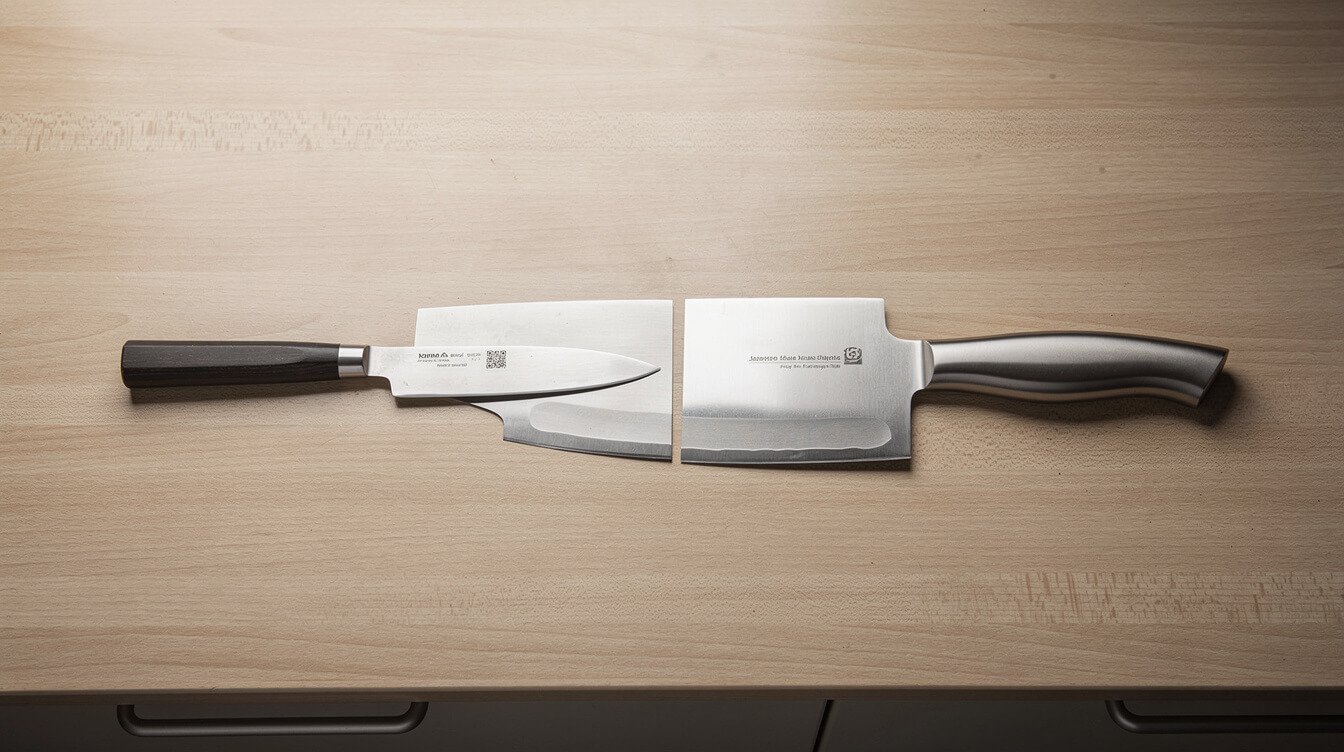
Nearly every well-regarded knife brand traces back to one of two traditions, and knowing which one you’re looking at explains almost everything about how a knife will feel and behave.
German-style (Wüsthof, Zwilling, Messermeister)
Heavier, thicker blades with a curved edge built for a rocking chop motion — point down, heel up, rocking through herbs or garlic without lifting the blade. The steel is softer, which sounds like a downside but actually means the edge is more forgiving: it chips less if it clips a bone or a frozen spot, and it’s far easier to bring back to sharp yourself with a basic sharpener. For most people buying their first “real” knife, this is the safer lane.
Japanese-style (Shun, Global, Mac)
Thinner, lighter blades, harder steel, and a straighter edge built more for push-cuts than rocking. They take — and hold — a noticeably sharper edge, but that hardness is a tradeoff: harder steel is also more brittle. Drop one on a tile floor or use it to break down a chicken and you risk a chip a German knife would have shrugged off. If this style interests you, our full guide to Japanese kitchen knives goes deep on the specific shapes (gyuto, santoku, nakiri) and why we recommend starting with one knife instead of buying a whole set at once.
Neither tradition is objectively “better” — they’re built for different habits. If you’re rough on your gear, want one tool that does everything, or you’re buying your first good knife, German-style wins. If you already cook a lot of vegetables and fish, care for your tools carefully, and want the sharpest possible edge, Japanese-style is worth the extra attention it demands.
Best budget kitchen knife brand: Victorinox
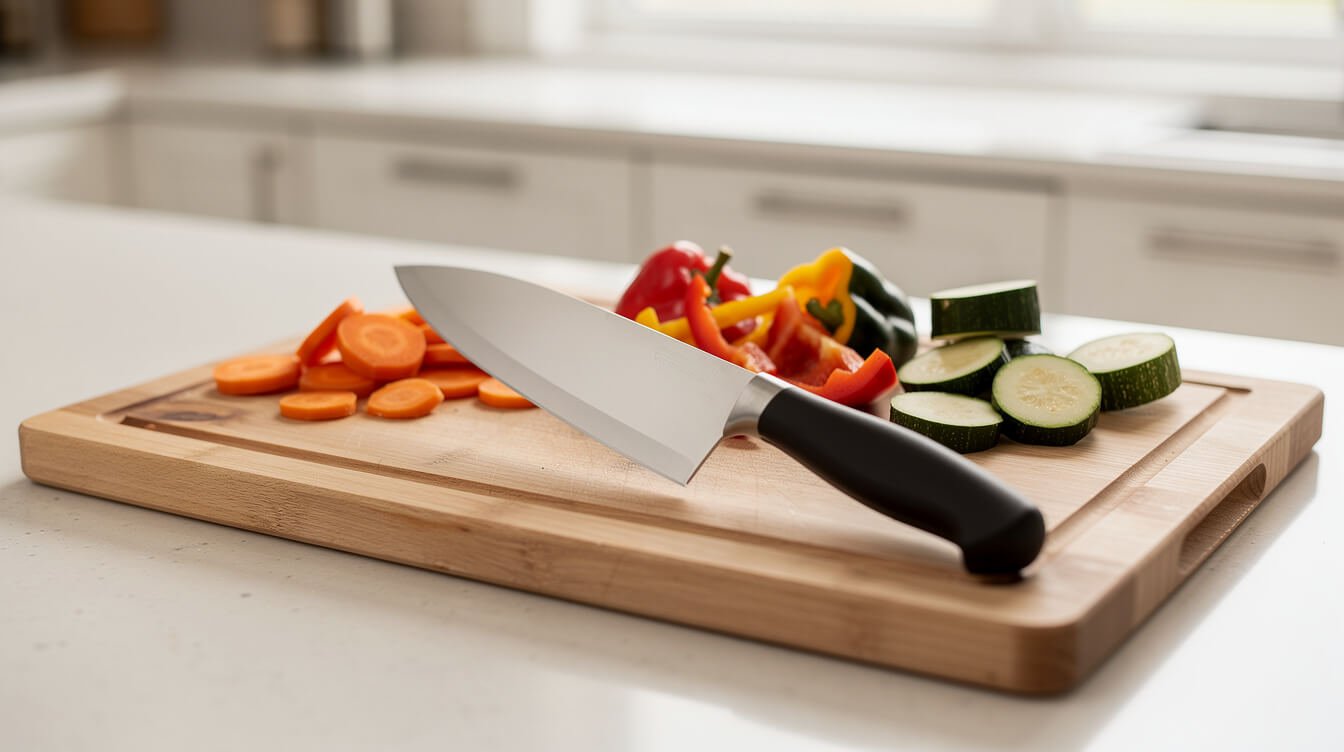
Victorinox — yes, the Swiss Army knife company — makes the chef’s knife that most working line cooks actually own off the clock, and it usually costs less than $50. The blade is stamped from a sheet of steel rather than forged, which sounds cheap, but stamped just means thinner and lighter, not worse. It takes an edge easily on a basic sharpener, the fibrox handle stays grippy even when your hands are wet or greasy, and it’s light enough to use for a long prep session without your wrist giving out.
The tradeoff: it won’t feel as substantial in your hand as a forged German knife, and the handle is plain black plastic — no polished bolster, nothing that photographs well on a knife block. If you want the cheapest genuinely good knife you can buy, not just the cheapest knife, period, this is it. Mercer Culinary’s Genesis line is the next honest step up, with a similar value-for-money case and a bit more heft.
Best everyday kitchen knife brand: Wüsthof
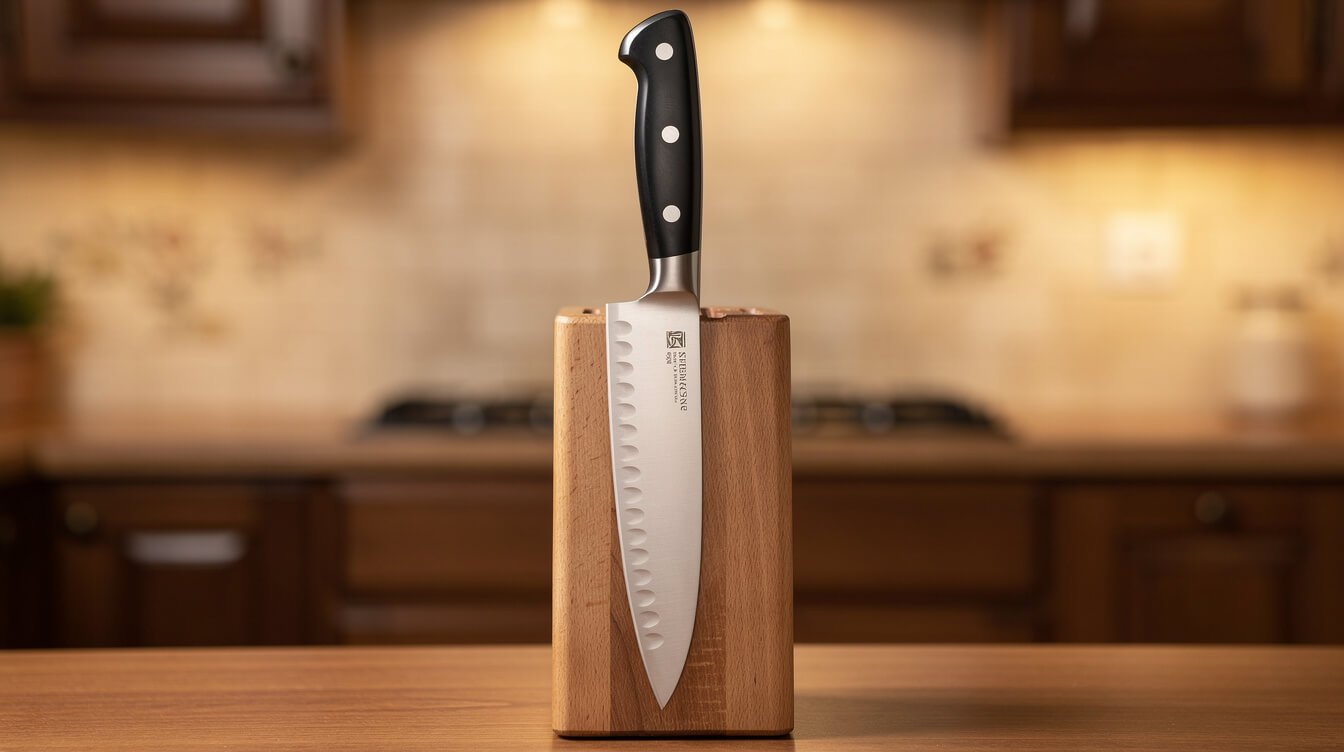
If you want one knife you buy once and stop thinking about for the next twenty years, Wüsthof — or its close rival Zwilling J.A. Henckels, the two are neck-and-neck — is the answer most professional and serious home kitchens land on. The full bolster gives it real heft and a natural pinch-grip balance, the blade is forged from a single piece of steel rather than stamped, and the edge, while softer than Japanese steel, is genuinely low-maintenance: a few strokes on a honing steel between uses keeps it working for weeks before it needs a real sharpening.
It costs more than Victorinox — usually $100 to $170 for an 8-inch chef’s knife — but the jump in feel is real, not just marketing. It sits differently in your hand, it doesn’t wobble when you’re breaking down a squash, and the warranty means you’re not gambling. This is the brand most “best kitchen knife” lists land on for a reason: it’s genuinely hard to go wrong with one.
Best splurge kitchen knife brand: Shun
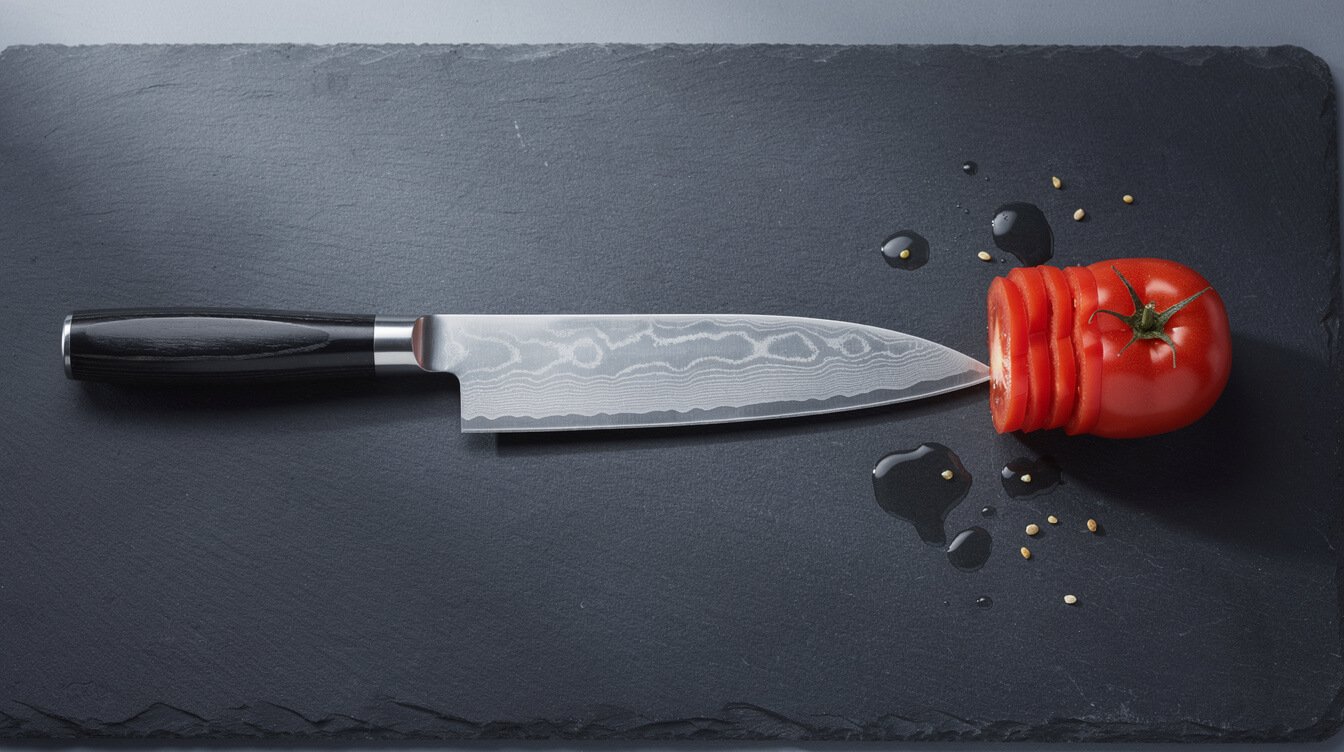
Shun knives are the ones that make people who don’t care about kitchen gear suddenly care about kitchen gear. The Damascus-pattern steel isn’t just decoration — it’s real layered steel folded around a harder core, and the result is a blade that’s noticeably lighter and sharper than anything German-style, with an edge that lasts longer between sharpenings and slides through a tomato without any sawing.
The catch is the tradeoff we covered above: harder steel is more brittle. Drop it, twist it prying apart a frozen block, or use it on something with bone, and you risk a chip that a German knife would have absorbed without a mark. This is the knife for someone who already has good habits — cutting board only, hand-wash and dry immediately, careful storage away from other blades — and wants the sharpest possible edge for everyday prep. It’s not the first knife to buy; it’s the one you upgrade to once you already know you’ll treat it well.
What actually makes a knife worth the brand name
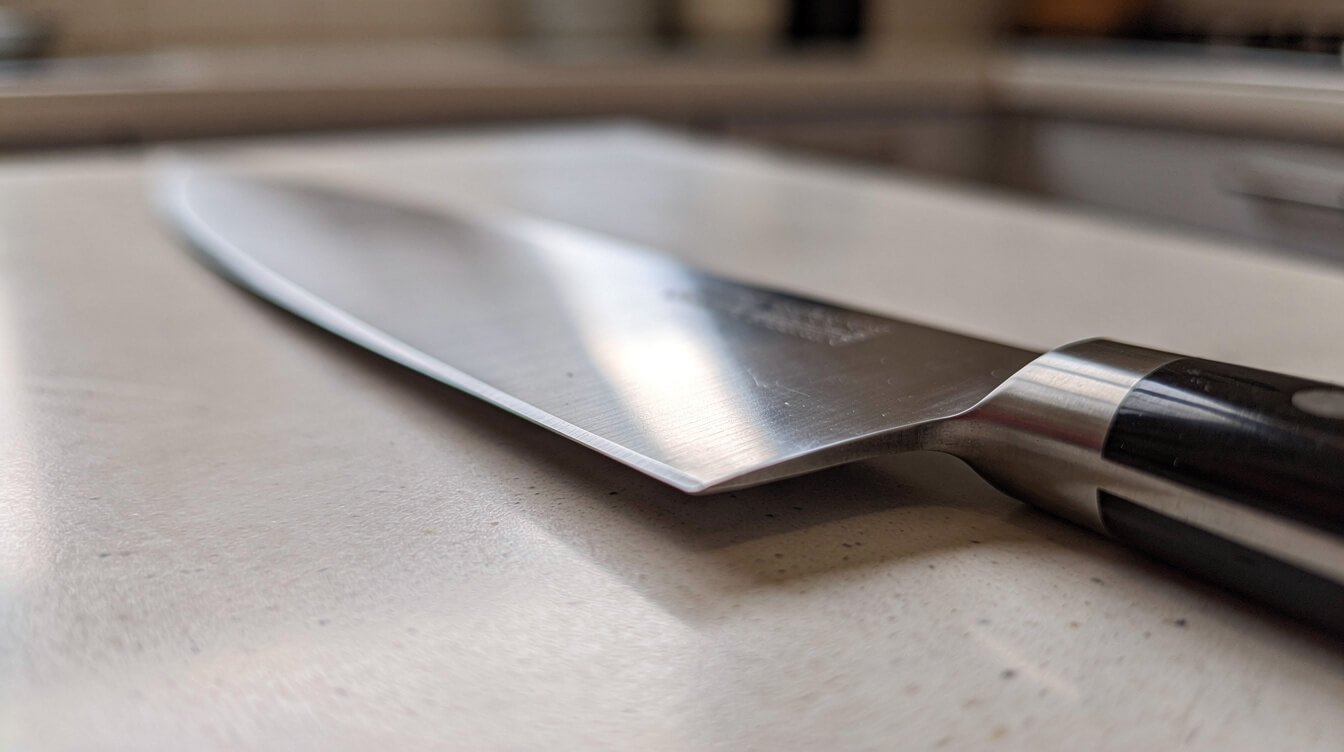
Skip the marketing copy and check these three things before you buy anything, from any brand:
- Full tang. The blade’s steel should run the entire length of the handle, not just a thin stub jammed into a plastic grip. You can usually see the metal along the top and bottom edge of the handle where it meets the grip. This is the single biggest predictor of a knife surviving years of real use versus loosening, wobbling, or snapping at the handle.
- One piece of steel, one hardness rating. Reputable brands publish a hardness number (Rockwell HRC). German knives typically run 54–58 HRC — softer, tougher, easier to sharpen. Japanese knives run 60–66 HRC — harder, sharper, more brittle. Neither number is “better”; match it to how careful you actually are with your gear, not to which one sounds more impressive.
- A warranty that means something. Wüsthof, Zwilling, Victorinox, and Shun all offer lifetime warranties against manufacturing defects. That’s a real signal — a company doesn’t back a product for life unless it trusts its own steel.
What doesn’t matter nearly as much: the block it comes in, whether it’s sold as a “set,” or how the handle looks in a product photo. A block of ten knives you’ll actually use three of is worse value than one good chef’s knife, full stop — and it takes up four times the counter space.
How much you actually need to spend
A genuinely good chef’s knife exists at every price point above about $40 — what changes as you spend more isn’t sharpness out of the box, it’s how long that sharpness lasts and how nice the knife feels over years of daily use.
- Under $50: Victorinox or Mercer Culinary. Perfectly sharp, perfectly serviceable, the choice almost every culinary school tells students to start with.
- $100–$180: Wüsthof or Zwilling. The upgrade you feel in balance and edge retention, not in how well it cuts on day one.
- $150–$250: Shun or Global. Worth it once you already cook enough to notice the difference and you’re willing to hand-wash and store it carefully.
- Skip entirely: unbranded 15-piece gift sets from big-box stores or mall kiosks, and any brand whose main sales pitch is a “lifetime sharpening” subscription instead of the knife itself. If a set includes steak knives, kitchen shears, and a block for less than one good chef’s knife costs alone, the steel is the part they cut corners on.
Buying one $120 Wüsthof chef’s knife and a $15 paring knife will serve you better, for longer, than any $300 twelve-piece set with a name you don’t recognize.
Frequently asked questions
Do I need to buy a matching set?
No. Most home cooks reach for one chef’s knife for 90 percent of everything and a paring knife for the small stuff. Buy those two well before you buy a block of eight you’ll barely touch.
Is a more expensive knife always sharper?
Not automatically — sharpness out of the box depends on how the edge was finished at the factory, not just the brand or price. But expensive knives generally hold that edge longer between sharpenings, which is the real benefit you’re paying for as the price climbs.
Can I put my kitchen knife in the dishwasher?
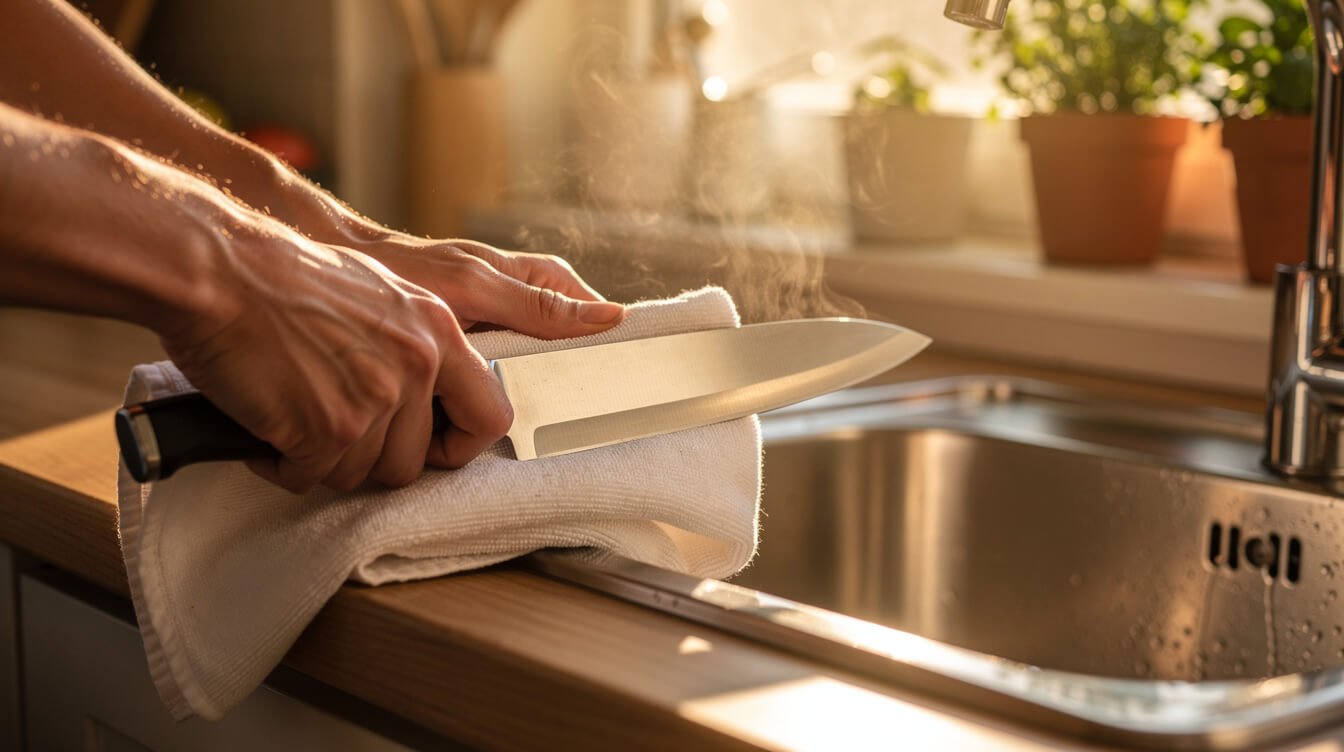
Please don’t, regardless of brand or price. Heat, moisture, and jostling against other dishes dull the edge and can pit the steel or crack the handle over time. A quick hand-wash and dry takes fifteen seconds and protects the investment for years.
Do German and Japanese knives need different care?
The basics are the same — hand-wash, dry immediately, store so the edge doesn’t knock against other utensils — but Japanese knives are less forgiving of hard cutting surfaces (glass or stone will chip them) and rough treatment like twisting or prying. If you’re not ready for that extra care, German-style is the safer everyday choice.
What size chef’s knife should I buy?
An 8-inch blade is the standard that fits most hands and most cutting boards. Go 6-inch if you have small hands or a small kitchen; only size up to 10-inch once you’re already comfortable with an 8-inch and want the extra length for large produce like squash or watermelon.
How do I store a good knife so it stays good?
A wooden block, an in-drawer knife tray, or a magnetic wall strip all work — what matters is that the edge never touches or slides against another knife or a hard surface. Tossing a good knife loose in a drawer with other utensils is the fastest way to dull an edge you just paid for.
Final thoughts
You don’t need to memorize every brand’s whole catalog to buy well — you need to know which tradition you’re looking at, check for a full tang, and match the steel’s hardness to how carefully you actually treat your gear. Victorinox if you want genuinely good for not much money, Wüsthof if you want one knife for the next twenty years, Shun if you’ve already got good habits and want the sharpest edge you can buy. Any of the three will outperform a mystery fifteen-piece set from a big-box store, no matter how nice the block looks.
Save this guide for the next time you’re standing in the knife aisle, and once you’ve got a knife worth keeping sharp, our sharpener guide is the natural next stop.