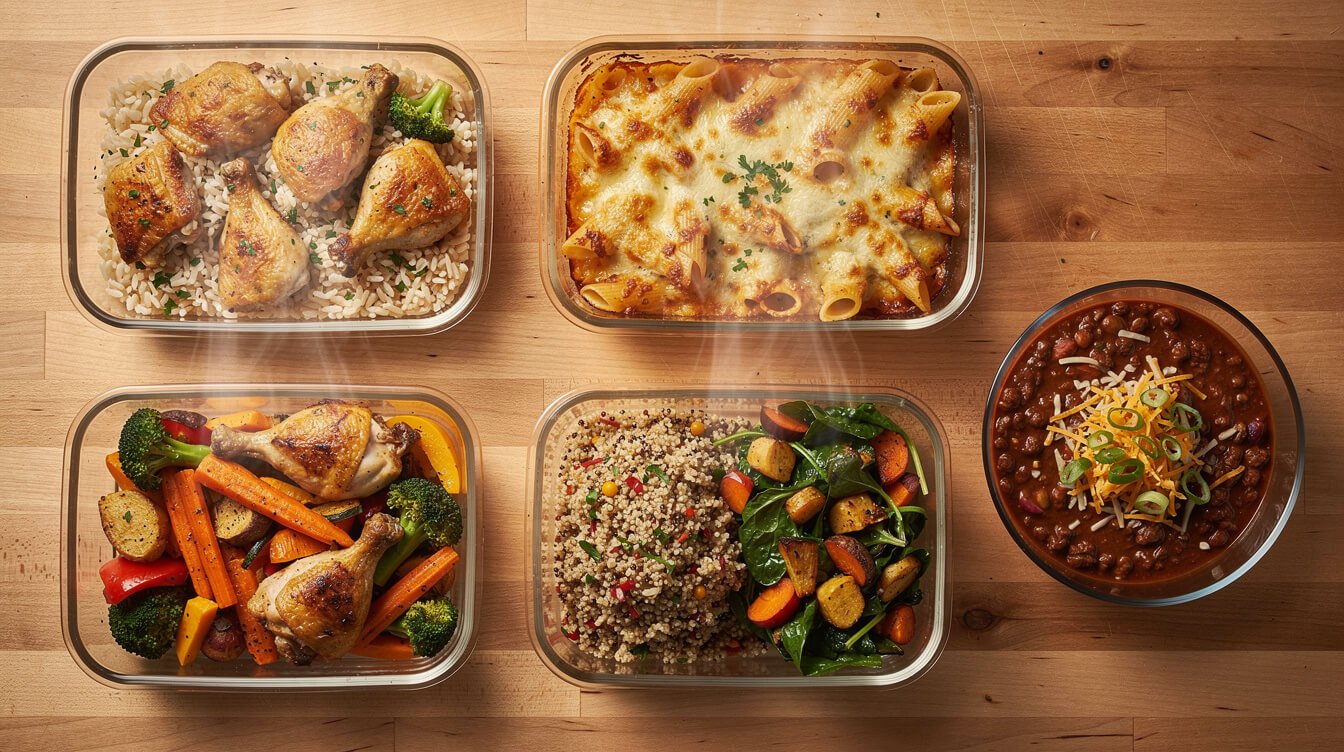
Meal prep ideas for the week — 5 real dishes, no diet plan required
If you’ve searched meal prep ideas for the week and landed on yet another 60-item roundup organized by macros, I get it — that’s exhausting before you’ve even turned on the stove. You don’t need 85 recipes. You need five dinners that actually taste good on day four, a Sunday routine that takes about an hour, and someone honest about what reheats well and what turns into sad, soggy mush by Wednesday. That’s what’s here. Real food, no diet plan, no protein-counting, no 40-item scroll to find the one dish you’d actually eat. Just dinner, handled.
Meal prep ideas for the week, without the diet plan
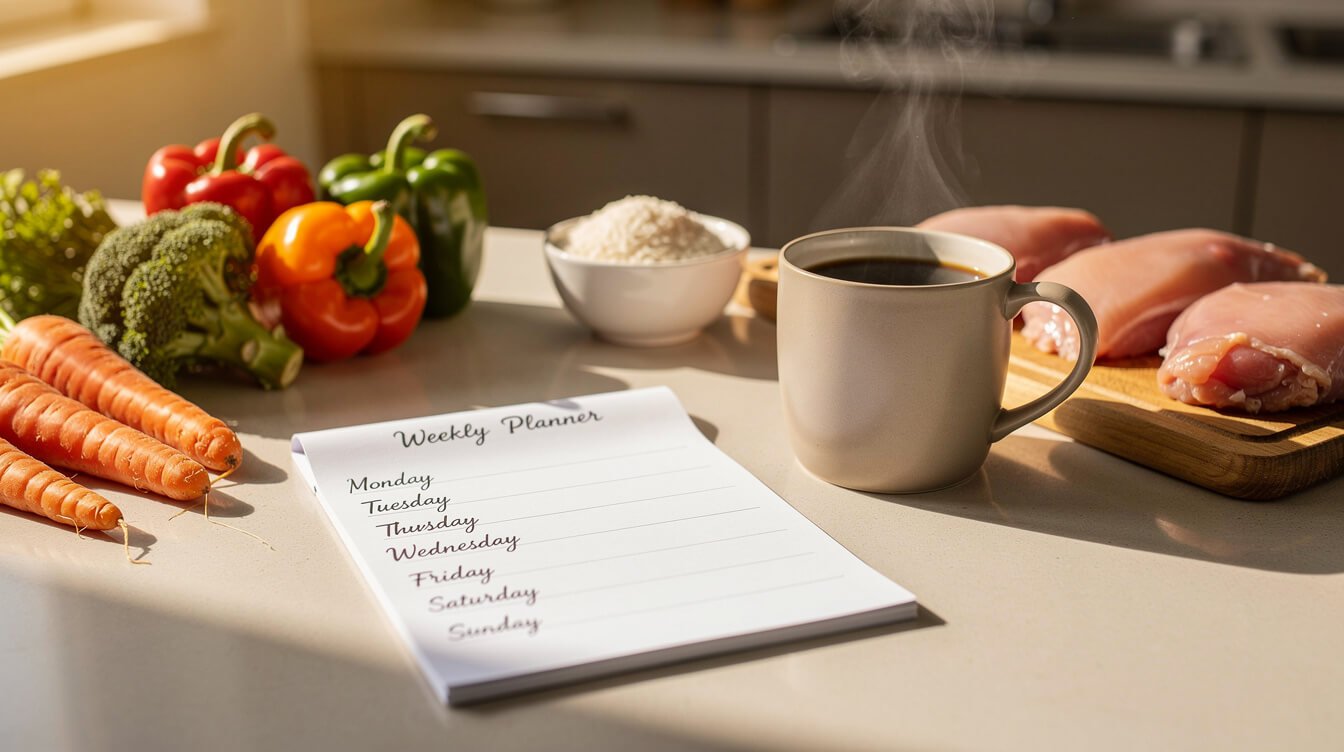
Most “meal prep” content is secretly diet content wearing a practical hat. Scroll through the big lists and you’ll notice the pattern fast: macros in the corner of every photo, “healthy swaps” for things that were fine to begin with, and 60+ recipes because the point is volume, not usefulness. Nobody needs 60 options for Tuesday. They need one good plan and a reason to trust it.
Meal prep, at its core, is just cooking ahead so future-you isn’t standing in front of the fridge at 6pm with nothing thawed and a takeout app already open. It doesn’t require counting anything. It doesn’t require a diet philosophy or a specific number of grams of anything. It requires five dishes that reheat well, a couple hours on a Sunday (or whenever your version of Sunday happens to fall — Monday night works too), and containers you already own.
That’s the whole idea behind this list: five real dinners, chosen specifically because they hold up in the fridge, a prep routine that doesn’t eat your whole weekend, and the honest storage details nobody bothers to nail down. No diet plan required — just dinner, ready when you need it, tasting like someone actually cooked it instead of assembled it from a spreadsheet.
What actually reheats well (and what doesn’t)
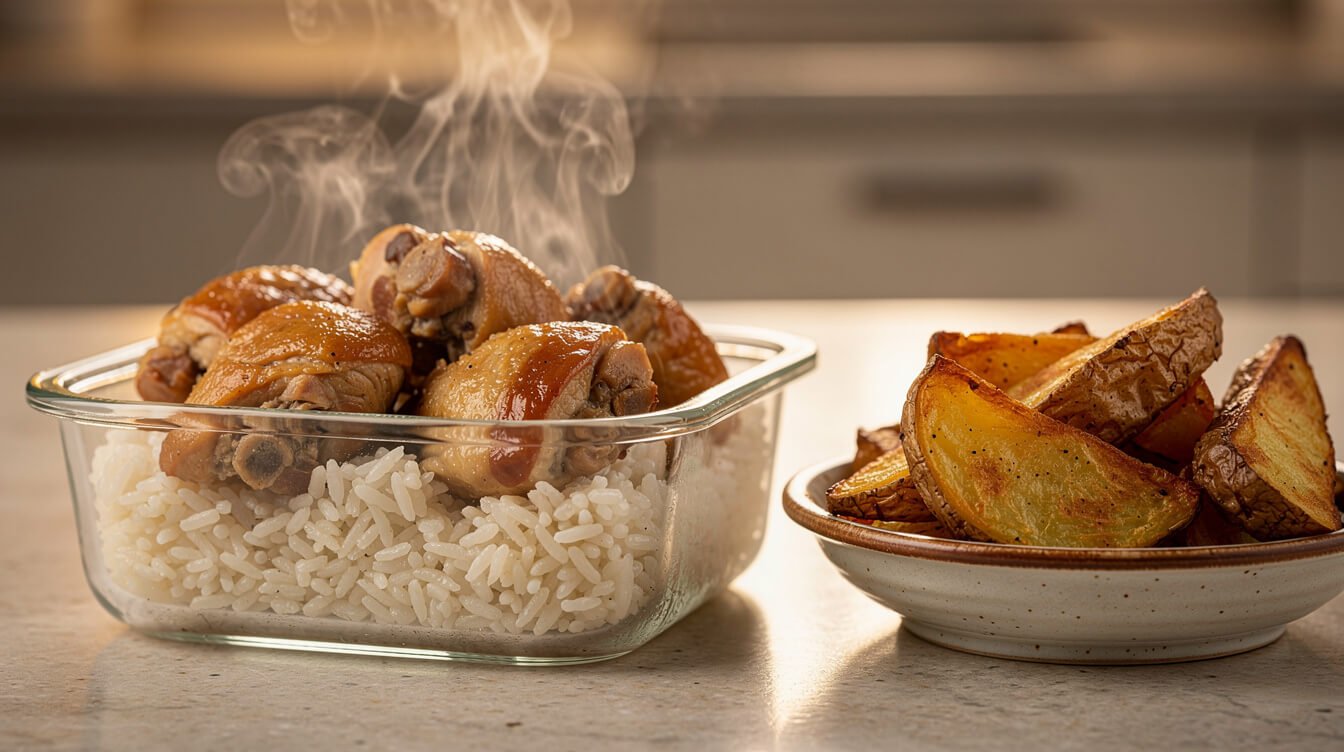
Before you pick what to cook, it helps to know which foods survive a few days in the fridge and which ones quietly fall apart. This is the part most meal prep ideas for the week skip entirely, and it’s the actual difference between a lunch you’re excited about and one you eat out of obligation, standing over the sink.
Reheats beautifully
- Braises, stews, and soups — they’re already wet and forgiving, and most actually taste better on day two once the flavors have had time to settle into each other.
- Rice and grain dishes cooked with sauce or broth — the grains keep absorbing moisture as they sit, instead of drying out and turning chalky the way plain steamed rice can.
- Roasted vegetables and meats, reheated gently — a covered dish in the microwave, or a few minutes in a low oven, brings them back close to fresh without drying out the edges.
- Chili, curry, and anything tomato- or coconut-milk-based — high moisture content is your friend here, and a splash of water or broth when reheating fixes any thickening that happens overnight.
Doesn’t hold up
- Anything fried or meant to be crispy — breaded cutlets, fries, and crispy-skin chicken all go soft and a little sad in a fridge container. If you want the crisp texture back, a few minutes in the air fryer does more than a microwave ever will — it’s genuinely the best reheating tool for anything that started out crunchy.
- Pasta already tossed in sauce — it keeps absorbing liquid over the days it sits and turns mushy by Wednesday. Cook pasta slightly under (a minute or two shy of the package time), and store the sauce separately if you have the patience for it.
- Delicate greens and fresh herbs — they wilt fast under any moisture or heat. Add them fresh after reheating, not before storing, even if it means keeping a small bag of spinach or basil separate from the main container.
- Anything meant to be eaten cold and crisp — salads should be assembled at the last minute, with dressing added right before eating, or the greens will be swimming and limp by the time you get to them.
Keep that list in your head and the five dishes below will make a lot more sense — every single one of them was picked because it lives in the “reheats beautifully” column, not because it looked good in a photo.
5 meal prep ideas for the week that actually hold up
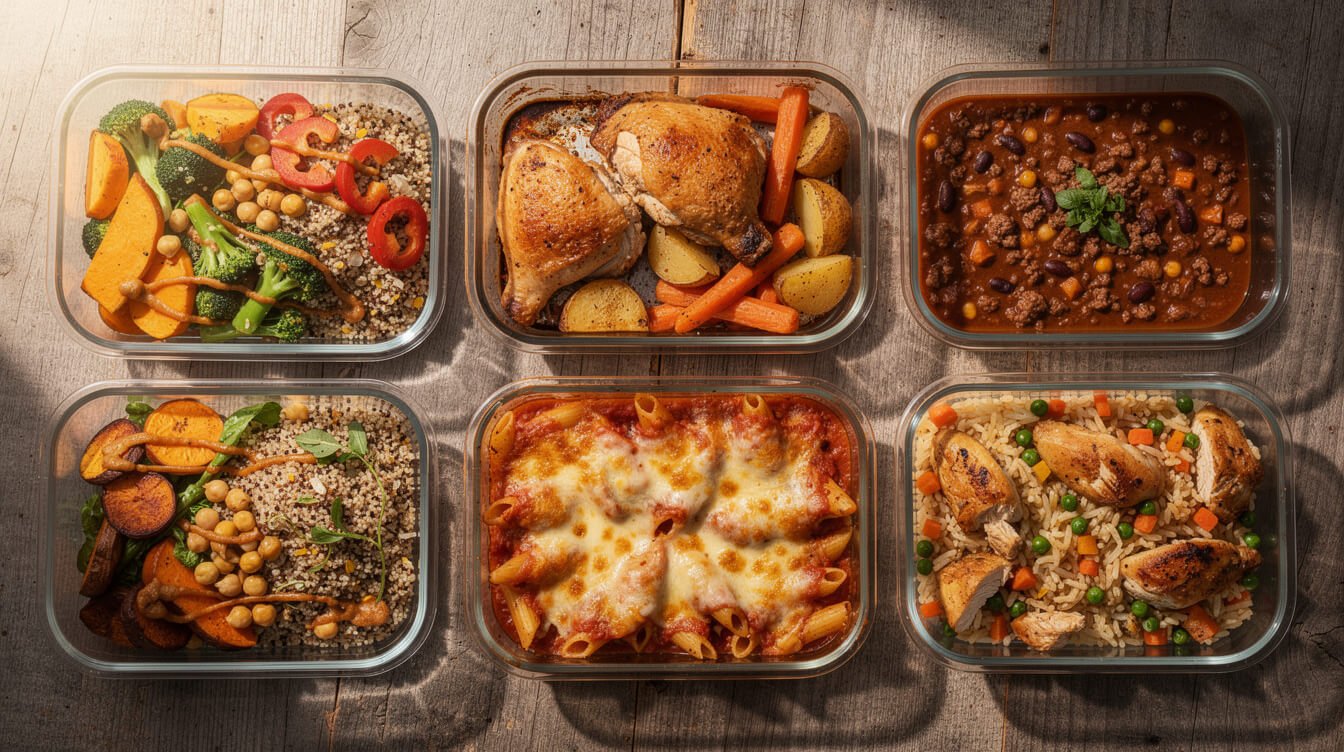
These five dishes were chosen for one reason: they taste as good on Thursday as they did on Sunday. Pick two or three for the week rather than trying to make all five — more variety just means more dishes to clean and more decisions to make, and the entire goal here is less work, not more.
1. One-pot chicken and rice
Chicken thighs, rice, and broth cooked together in one pot, with an onion and whatever vegetables you have around. The rice keeps drinking up moisture in the fridge instead of drying out, so it’s genuinely better reheated than it was fresh in some ways — the flavor has more time to work into every grain. The one tip: use bone-in, skin-on thighs for the first cook (they add more flavor to the broth than boneless), then pull the meat off the bone before portioning into containers — nobody wants to gnaw a cold thigh bone out of a container at their desk. One batch makes 4–5 dinners easily.
2. Baked pasta (ziti, not spaghetti)
Baked pasta shapes — ziti, penne, rigatoni — hold their texture far better over several days than long noodles, because the sauce bakes into the ridges and tubes rather than just coating the surface. The one tip: undercook the pasta by two minutes before baking. It’ll finish cooking in the oven, and then again slightly on reheat, so starting soft means ending up as mush by day three. A layer of cheese on top also helps seal in moisture when you reheat it covered.
3. Sheet-pan chicken thighs and vegetables
Roast chicken thighs and a sturdy vegetable — carrots, potatoes, broccoli stems, bell peppers — together on one pan. Sturdy vegetables reheat fine; delicate ones (asparagus tips, thin green beans) go limp and watery. The one tip: slightly undercook the vegetables on day one, pulling them while they still have a little bite. They’ll finish softening in the fridge and again on reheat, so what looks slightly underdone Sunday night is exactly right by Wednesday.
4. Big-batch grain bowls
Rice or farro, a roasted vegetable, and a protein, portioned into containers — but store the dressing or sauce separately, in tiny containers or even a folded piece of parchment paper. The one tip: this is the one dish on the list where keeping a component separate genuinely matters. Combine the bowl and dressing right before eating, not before storing, or you’ll get a soggy, dressing-logged bottom layer by day three that no amount of reheating fixes.
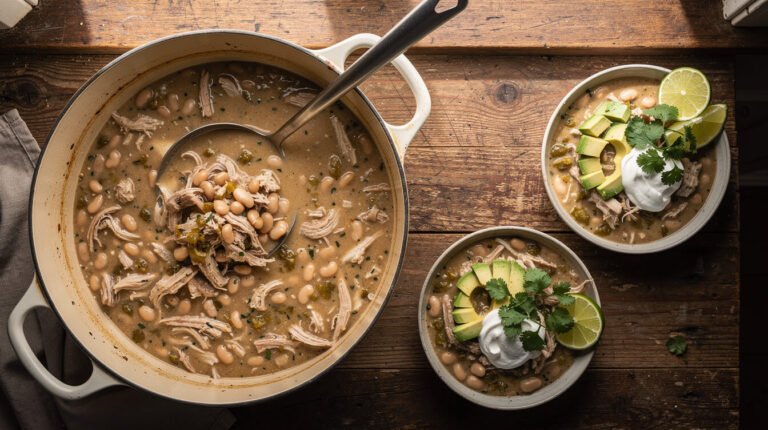
5. Turkey or beef chili
Chili is about as close to a perfect meal prep food as it gets — it’s wet, forgiving, freezes beautifully, and the flavor genuinely deepens after a day or two in the fridge as the spices settle. The one tip: cook it slightly thinner than you actually want to eat it. Chili thickens as it sits and as the beans keep absorbing liquid, so a pot that seemed perfectly saucy on Sunday can turn into something you need a fork and a knife for by Wednesday. A splash of broth on reheat brings it right back.
A simple Sunday prep routine
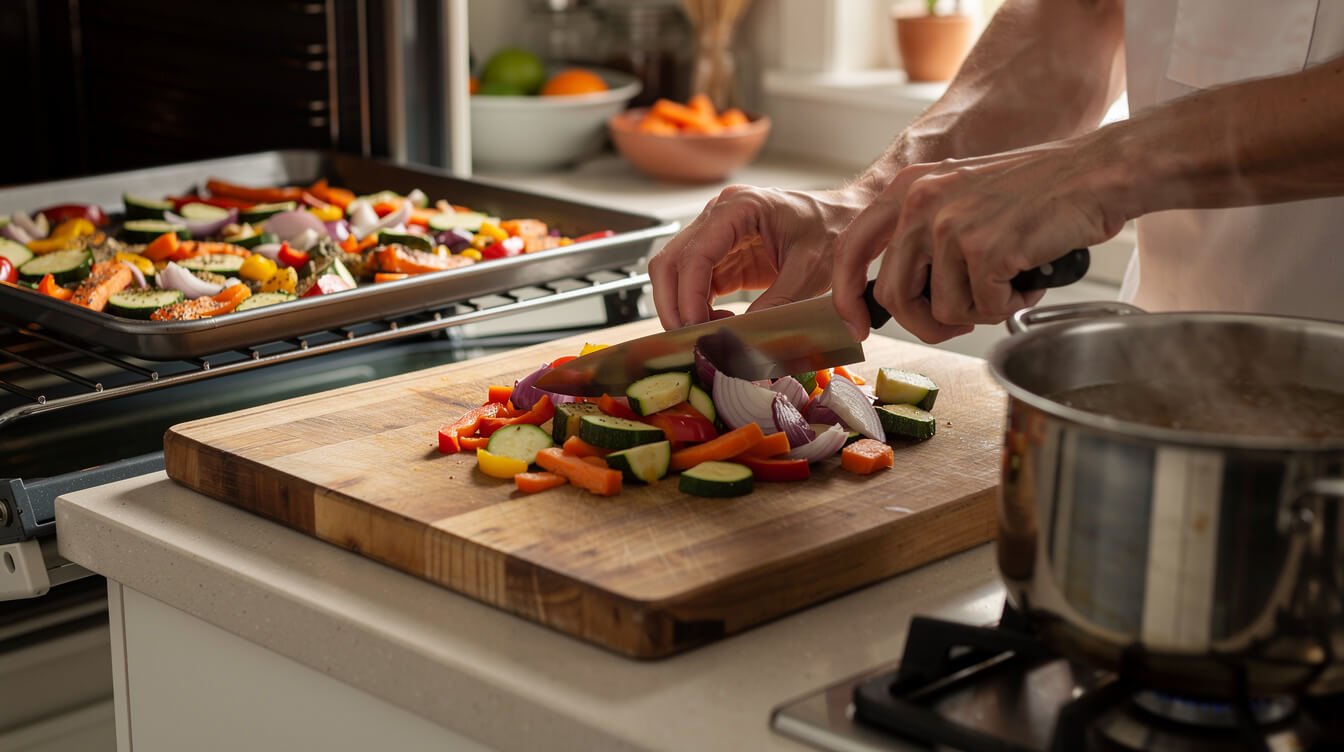
You don’t need to dedicate your whole Sunday to this, and you definitely don’t need to cook all five dishes above at once. Here’s the order that gets two or three dishes done in about an hour to ninety minutes, working in parallel instead of one dish at a time from start to finish.
- Preheat the oven first. Get it heating before you do anything else, so the sheet pan or baked pasta can go in the moment everything’s ready instead of you standing around waiting.
- Start anything that simmers. Chili or a pot of chicken and rice can cook mostly unattended on the back burner while you handle everything else.
- Chop while things cook. Do all your vegetable prep for the week in one pass, not dish by dish — it’s faster to chop three onions once with one cutting board out than to stop and chop one three separate times.
- Get the oven dish going. Sheet-pan chicken or baked pasta goes in once the oven’s hot and your stovetop dish is already simmering unattended.
- Cook grains last. Rice or farro for grain bowls can go on a back burner while everything else finishes — it needs the least hands-on attention of anything on the list.
- Let everything cool before you seal containers. This one matters for food safety more than any other step, and it’s covered in detail just below.
- Portion and label. A piece of masking tape with the date takes ten seconds and saves you from playing “how long has this actually been in here” roulette on Thursday night.
One more thing that makes the whole week easier: these five dishes share a shopping list. Onions, garlic, chicken thighs, canned tomatoes, and a couple of sturdy vegetables show up in nearly all of them, so picking three from the list rarely means a longer grocery run than picking one. If you’d rather build your prep list from a proven weeknight lineup instead of starting from scratch, these budget-friendly dinner ideas are an easy place to pull two or three more options from.
From the Eat Cafe kitchen
One good recipe a week, straight to your inbox
The recipe we're actually cooking this week, plus the one tip that saves it when it goes sideways. No spam. Unsubscribe anytime.
Storage & reheating, done right
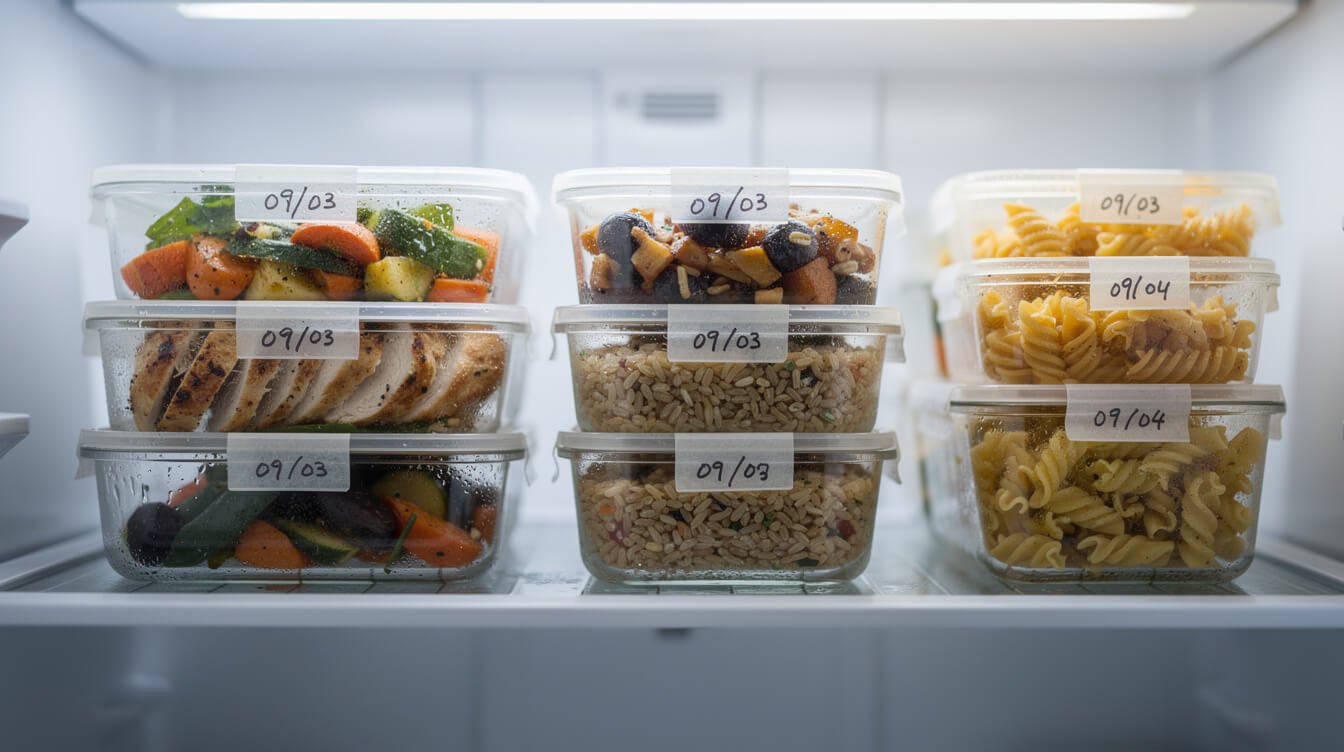
This is the part where I won’t guess, because food safety isn’t a place to wing it. Here’s what’s actually accurate, not just what sounds reasonable:
- Cool it down fast. Get cooked food into the fridge within 2 hours of cooking (1 hour if your kitchen is hotter than about 90°F). Bacteria grow fastest between 40°F and 140°F, so the longer food sits in that range on the counter, the less safe it is — splitting a big pot into smaller, shallower containers helps it cool through that range faster than one giant vat sitting out.
- Use refrigerated leftovers within 3–4 days. That’s the safe window for cooked food in the fridge, full stop. After that, freeze what’s left or let it go — it’s not worth the risk to stretch it another day or two.
- Freeze what you won’t eat in time. Cooked meals hold their best quality in the freezer for about 2–3 months. They stay technically safe well beyond that at 0°F, but texture and flavor start slipping, so label with the date and try to work through the oldest containers first.
- Reheat until it’s actually hot, not just warm. Leftovers should reach 165°F throughout — steaming and stirred through, not lukewarm in the center where a microwave often leaves cold spots. If you don’t have a food thermometer, look for steam rising consistently and give it an extra stir-and-minute if you’re unsure.
- Label everything. A container with a date on it is the single easiest food-safety habit to build, and it removes all the guessing come Thursday.
None of this is complicated — it’s just the kind of detail that gets skipped when a post is racing through 60 recipes instead of five.
Frequently asked questions
What if I’m cooking just for one?
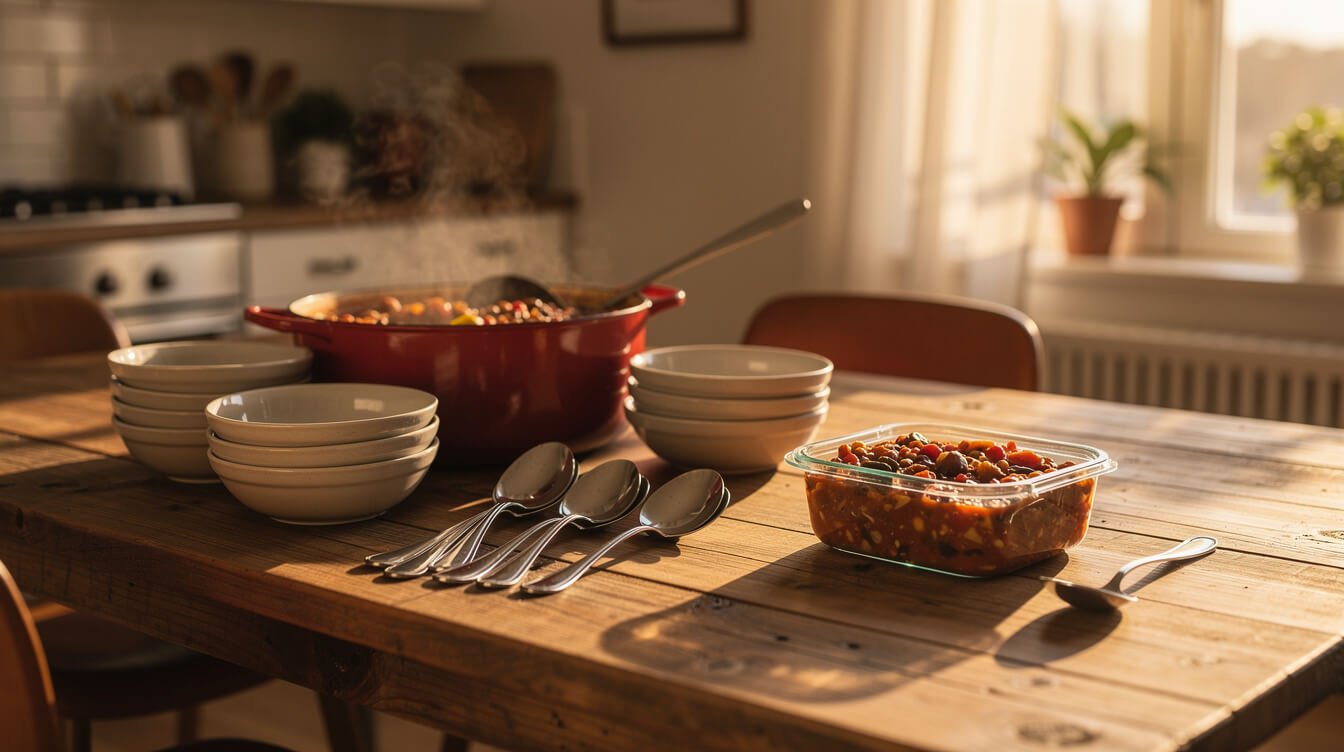
Make the full recipe anyway — that’s the entire point of meal prep for one person. A pot of chili or a sheet pan of chicken and vegetables takes almost the same effort whether it serves two or six, so cook the full batch and freeze half in single portions right away instead of trying to shrink the recipe down. Future-you gets a homemade dinner with zero extra work, pulled straight from the freezer on a night you don’t feel like cooking at all.
What if I’m feeding a family of four (or more)?
Scale the recipe up rather than making more separate dishes. One larger pot of chili, or a second sheet pan run through the oven, is easier to manage than juggling five different recipes for a crowd. Store it in a couple of larger containers instead of individual portions, and let everyone serve themselves at dinnertime — you still get the head start on cooking without the extra dishes to wash or the extra decisions to make.
Do I need matching containers?
No. Any container with a lid that seals works, glass or plastic. Glass reheats more evenly and doesn’t hold onto tomato-sauce stains the way plastic can, but a mismatched cabinet of hand-me-down containers does the job just fine. Don’t let “I need the right containers” be the reason you don’t start — the food doesn’t know what it’s sitting in.
How far ahead can I actually prep?
Plan on the 3–4 day fridge window for anything you’ll eat that week, and freeze the rest in the first day or two rather than waiting until it’s almost past the safe window to decide. If you’re prepping on Sunday for a Friday dinner, that portion should go straight into the freezer on Sunday night, not sit in the fridge all week hoping it holds up.

From the Eat Cafe shop
Chef Coat Costume Tee | Culinary Uniform T-Shirt
Price range: $24.99 through $26.99
See it in the shopFinal thoughts
You don’t need a diet plan, a color-coded spreadsheet, or 85 recipes to get ahead of the week. You need a handful of dishes that actually taste good on day four, an hour on a Sunday, and the honest details on what holds up and what doesn’t. Pick two or three from the list above, prep them together using the shared shopping list, and you’ve bought yourself several weeknights where dinner is already handled before you even walk in the door.
Save this one for your next prep day, and if you want another easy addition to the rotation, this pantry vinaigrette is the easiest way to turn any grain bowl or roasted vegetable into a real meal in under a minute.

Before you go
Want the next one?
We post a new recipe or kitchen guide every day. The best of the week lands in one short email, no life story attached.