Best Japanese kitchen knives for real home cooks — start with one, not a set
If you’ve ever sawed at a tomato with a dull blade, or wrestled an onion until your eyes gave out, you already know the truth: the knife matters more than almost anything else in your kitchen. And once people go looking for an upgrade, they land on the same question — what are the best Japanese kitchen knives, and do you really need to spend a small fortune to get one that changes how you cook?
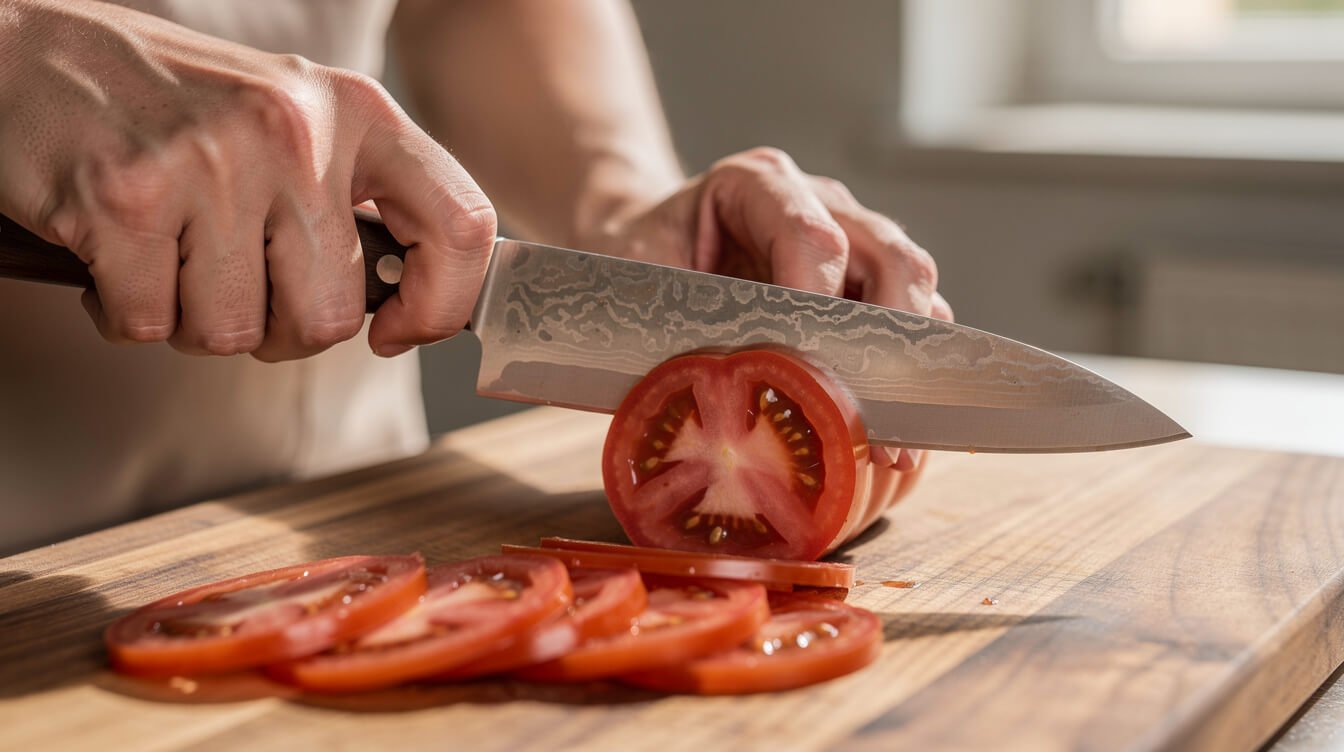
Here’s the short answer, from one home cook to another: no, you don’t. A good Japanese knife is thinner, harder, and sharper than the heavy German-style blade most of us grew up with, and that difference is real the first time you slice a tomato and it just falls open. But most guides bury that under a wall of premium brands and a pushy “buy the 15-piece block” energy. This one won’t. We’ll cover the knives actually worth owning, which single one to buy first, how to pick for your hand and your budget, and the care habits that keep any of them scary-sharp for years.
Start with one knife, not a block set
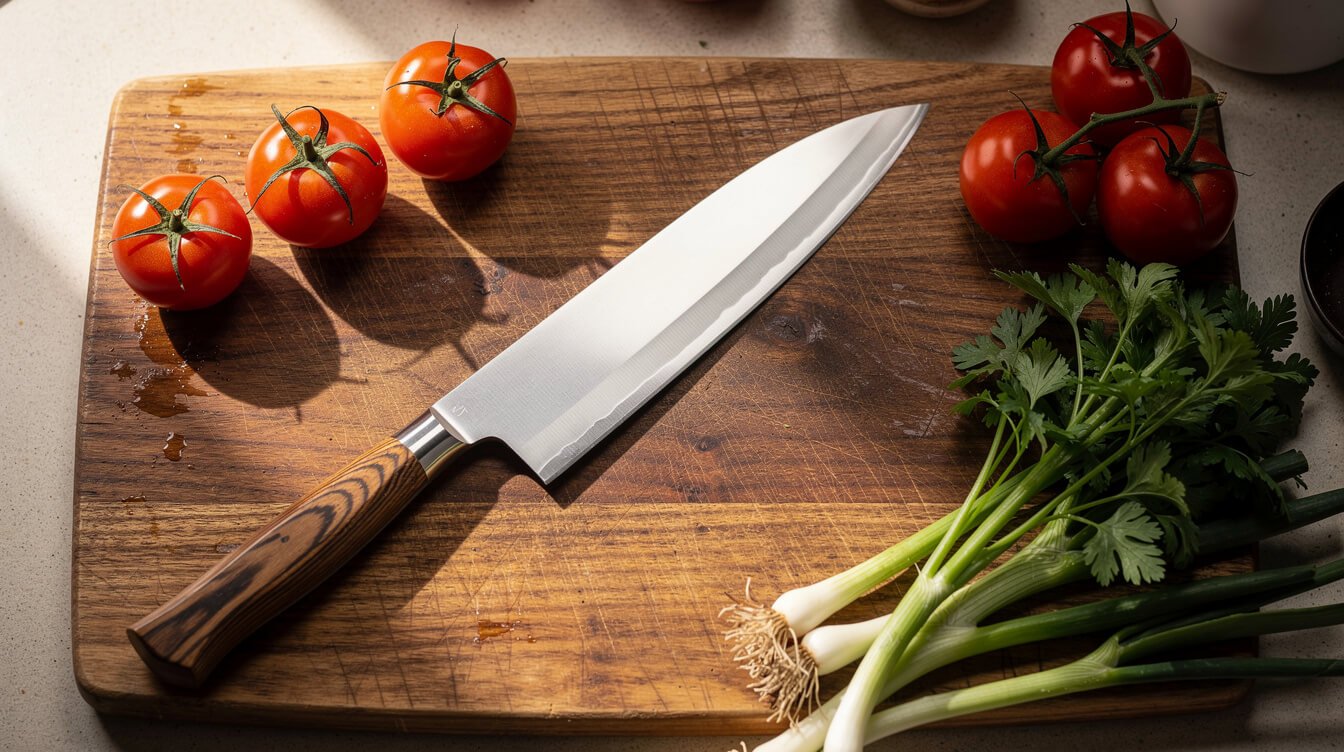
The block set is the biggest trap in the knife aisle. You pay for eight to fifteen pieces, and honestly? You’ll use two of them. The rest sit in the wood taking up counter space — the steak knives you forget you own, the utility knife that never comes out, the shears.
Spend that same money on one excellent knife instead. A single well-made Japanese chef’s knife will do 90% of everything you cook: onions, garlic, carrots, chicken, herbs, a Sunday squash. It’ll feel better in your hand and hold its edge longer than a whole drawer of mediocre blades. When you know you want more, you add a second knife for a specific job — not a box of fillers you’ll never touch.
So as you read the picks below, think in terms of your first knife, then maybe a second down the road. That’s the honest way to build a kitchen, and it’s a lot easier on your wallet.
The best Japanese kitchen knives for home cooks: the short list
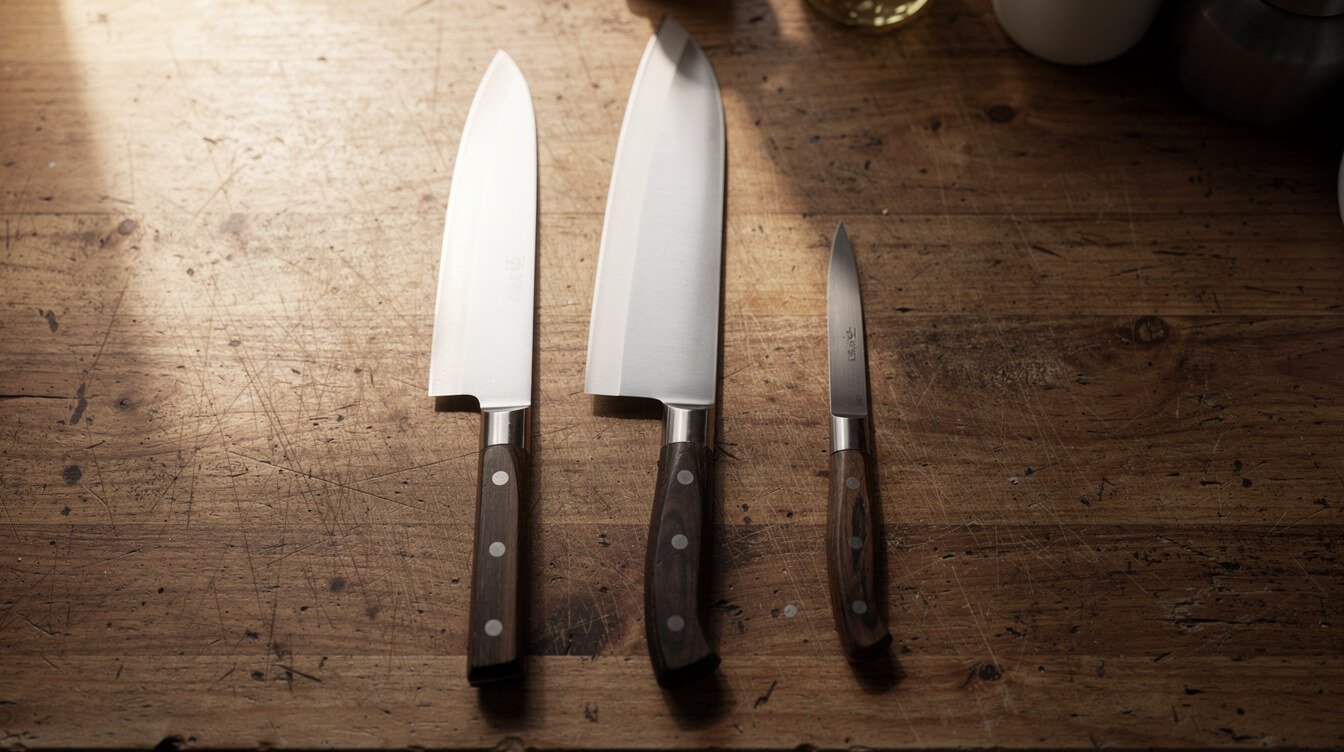
Japanese knives come in shapes with unfamiliar names, but you only need to know a few. Here are the ones that earn their place, roughly in the order most home cooks should buy them.
1. The gyuto — your do-everything first knife
The gyuto is the Japanese take on the Western chef’s knife: a long, gently curved blade, usually 180–240mm (a 210mm, about 8 inches, is the sweet spot for most home kitchens). If you buy one knife and nothing else, buy this. It rocks, it chops, it slices, it handles proteins and produce alike. A well-loved budget pick here is the Tojiro DP gyuto — a stainless-clad workhorse that usually runs around $60–75 and punches far above its price. Step up and the MAC MTH-80 (roughly $145) is the knife that wins a lot of head-to-head tests for good reason: light, sharp, and forgiving.
2. The santoku — great if you push-cut
The santoku is shorter (165–180mm) with a flatter edge and a blunt, sheep’s-foot tip. If you’re not a rock-chopper and you like a straight up-and-down or push-cutting motion, it can feel more natural than a gyuto — and its shorter length is less intimidating in a smaller kitchen. The Tojiro DP santoku and the Global G-48 are both honest, everyday picks.
3. The petty — the little one you’ll reach for constantly
A petty is a small utility knife, 120–150mm — bigger than a paring knife, smaller than a chef’s. It’s for the in-between jobs: trimming, peeling a shallot, slicing a single tomato without hauling out the big blade. It’s the natural second knife for most people.
4. The nakiri — a vegetable specialist worth it if you cook a lot of produce
The nakiri is a flat, rectangular vegetable knife. That squared-off shape means the whole edge hits the board at once, so it’s brilliant for clean, square cuts on carrots, cabbage, and squash with a simple down-and-forward motion. If you cook mostly plants, it’s a joy. If you don’t, skip it for now.
5. Splurge picks, if you want one
When you want a knife that’s also beautiful, the Shun Classic (around $150–170, a Damascus-clad blade with a comfortable D-shaped handle) and the Miyabi line (premium, generally $180 and up) are the ones people fall in love with. They’re not better at cutting an onion than a Tojiro — but they feel special, and there’s nothing wrong with that. Prices move around, so treat these as ballparks, not promises.
Cooking your way through a pile of vegetables tonight? A knife like this is exactly what makes a job like our roasted potatoes and Brussels sprouts quick instead of a chore — even, fast cuts, no crushing.
What makes a Japanese knife different (and better for you)
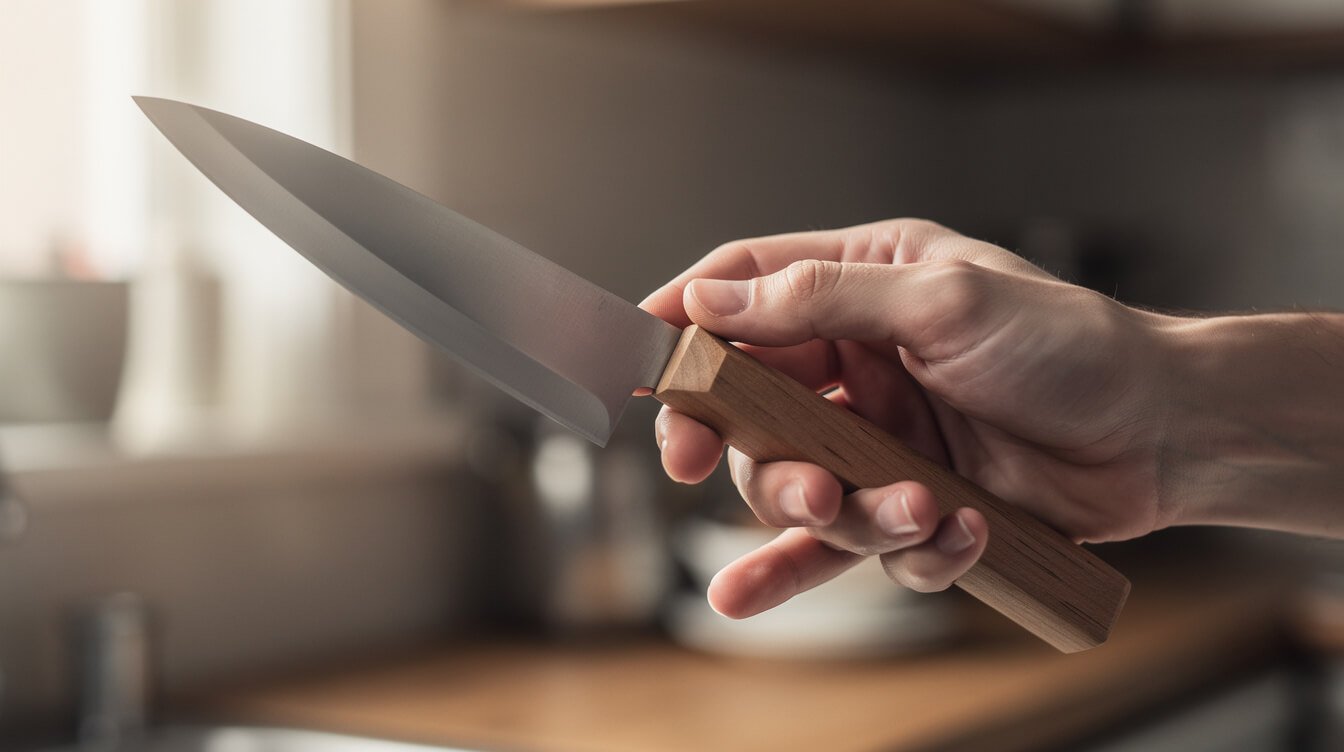
You don’t need to become a metallurgist, but a few real differences explain why these knives feel the way they do.
Harder steel, thinner blade. Japanese knives are typically ground thinner and made from harder steel (often around 60–63 on the Rockwell hardness scale, versus the mid-50s for a classic German knife). Harder steel takes a keener edge and holds it longer. The trade-off: it’s a little more brittle, so it can chip if you abuse it — no prying frozen food apart, no hacking through bones with a thin gyuto.
A sharper angle. Western knives are usually sharpened to about 20 degrees per side; many Japanese blades are ground to 15 degrees or less. Narrower angle, keener edge, less effort to cut. That’s the “it just fell open” feeling.
Wa vs. yo handles. A wa handle is the traditional Japanese style — light, often octagonal, with the balance sitting forward toward the blade. A yo handle is the Western style — riveted, heavier, more familiar. Neither is right or wrong; it’s what feels good in your hand. If you can, hold both before you commit.
Carbon vs. stainless steel. Carbon steel takes an unbelievable edge and develops a patina over time, but it will rust if you leave it wet, and it needs wiping dry the moment you’re done. Stainless (or stainless-clad) is a hair less keen but shrugs off moisture and forgives busy weeknights. For most home cooks, I’d point you at stainless — you want a knife that fits your life, not one that needs babysitting.
How to choose the best Japanese kitchen knives for your hand and budget
Standing in front of the options, run through this quick gut-check. It’ll get you to the right knife faster than any spec sheet.
- Buy the shape that matches how you cut. Rock-chopper who likes a pointed tip? Gyuto. Push-cutter who wants something shorter and less intimidating? Santoku. Mostly vegetables? Consider a nakiri as a second knife.
- Pick the size you can control. A 210mm (8-inch) gyuto suits most people. If your board is small or a big blade makes you nervous, a 165–180mm santoku is friendlier and still does the work.
- Choose stainless unless you enjoy upkeep. Carbon is wonderful and high-maintenance. Stainless or stainless-clad is the low-drama choice for a weeknight kitchen.
- Match the handle to your grip. Try a wa and a yo handle if you can. The best knife is the one that disappears in your hand.
- Set a real budget, then buy the best knife in it. Around $60–75 gets you a genuinely great first knife (hello, Tojiro DP). Around $150 gets you a lifetime workhorse or a beautiful one. Above that, you’re paying for finish and feel, not sharper cuts.
One honest note: don’t get so lost comparing steels that you forget the point. The best Japanese kitchen knife for you is the one you’ll actually reach for, keep sharp, and enjoy using — not the one with the highest spec on paper. If you’re the kind of cook who leans on quick, tested weeknight wins, pair your new knife with a few reliable dinners, like the ideas in our best air fryer recipes guide, and you’ll get your money’s worth fast.
What to add after your first knife (and what to skip)
Once your gyuto or santoku feels like an old friend, you’ll know when a second knife would actually help. Here’s how to grow the collection without sliding back into block-set territory.
Add a petty next. That little 120–150mm blade covers everything your big knife feels clumsy doing — peeling, coring a strawberry, slicing a single shallot, breaking down a lime. It’s the knife that lives on the board next to your chef’s knife, and it’s cheap. This is almost always the highest-value second buy.
Then a bread knife, if you bake or buy crusty loaves. A serrated knife is the one job your keen Japanese blade genuinely can’t do well — a straight edge crushes a soft loaf and slides off a hard crust. A good serrated bread knife (Japanese or not) is inexpensive and lasts forever, because you rarely need to sharpen a serrated edge.
Consider a nakiri only if you cook mountains of vegetables. It’s a treat for plant-forward kitchens and overkill for everyone else. No shame in waiting — or skipping it entirely.
And the things you can happily not buy: the giant cleaver you saw in a video (unless you actually butcher), the matching steak-knife set that comes with most blocks, and any “as seen on TV” gadget promising to sharpen and slice and julienne. A cook with one great knife, a petty, and a bread knife is better equipped than someone with a full block of dull ones. Build slowly, buy for real jobs, and your kitchen stays lean and genuinely useful.
Keeping them sharp: honing, sharpening, and the dishwasher rule
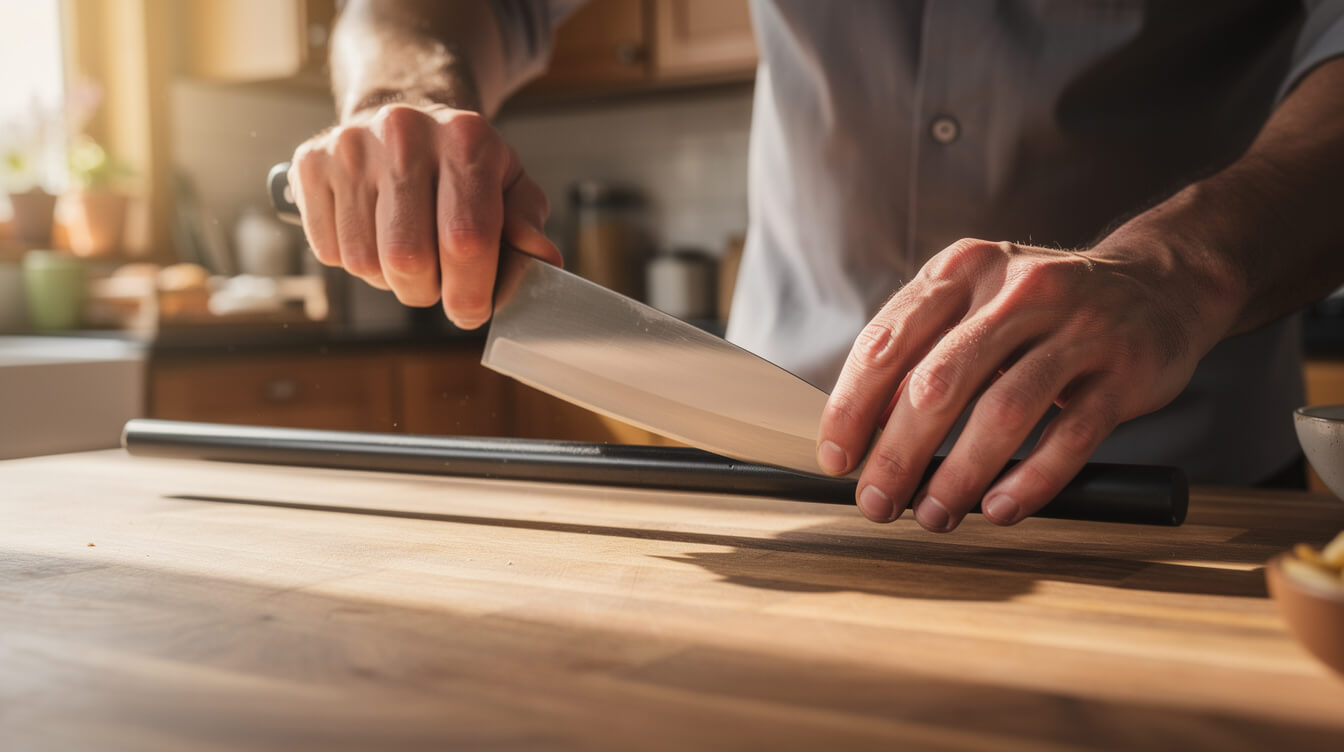
A sharp knife isn’t a one-time purchase; it’s a small habit. The good news is the habit is easy.
Honing realigns, sharpening removes metal. These are two different things. Honing straightens the edge that rolls over slightly with everyday use — do it often, and the knife feels sharp far longer. Because Japanese steel is hard, reach for a fine ceramic honing rod rather than a coarse steel one; it’s gentler on that keen edge. Sharpening actually grinds a new edge and you only need it every few months.
Learn a whetstone — it’s less scary than it sounds. A basic 1000/6000-grit combination stone and ten minutes on YouTube will keep your knife sharper than any pull-through gadget. Those V-shaped pull-through sharpeners are rough on thin Japanese edges; skip them. If a stone feels like too much right now, many good knife shops will sharpen for a few dollars.
The dishwasher rule: never. This is the single fastest way to ruin a good knife. The heat, the harsh detergent, and the banging around against other dishes will dull the edge, damage the handle, and can chip that hard steel. Hand-wash, always — it takes ten seconds.
Care and safety that makes a knife last
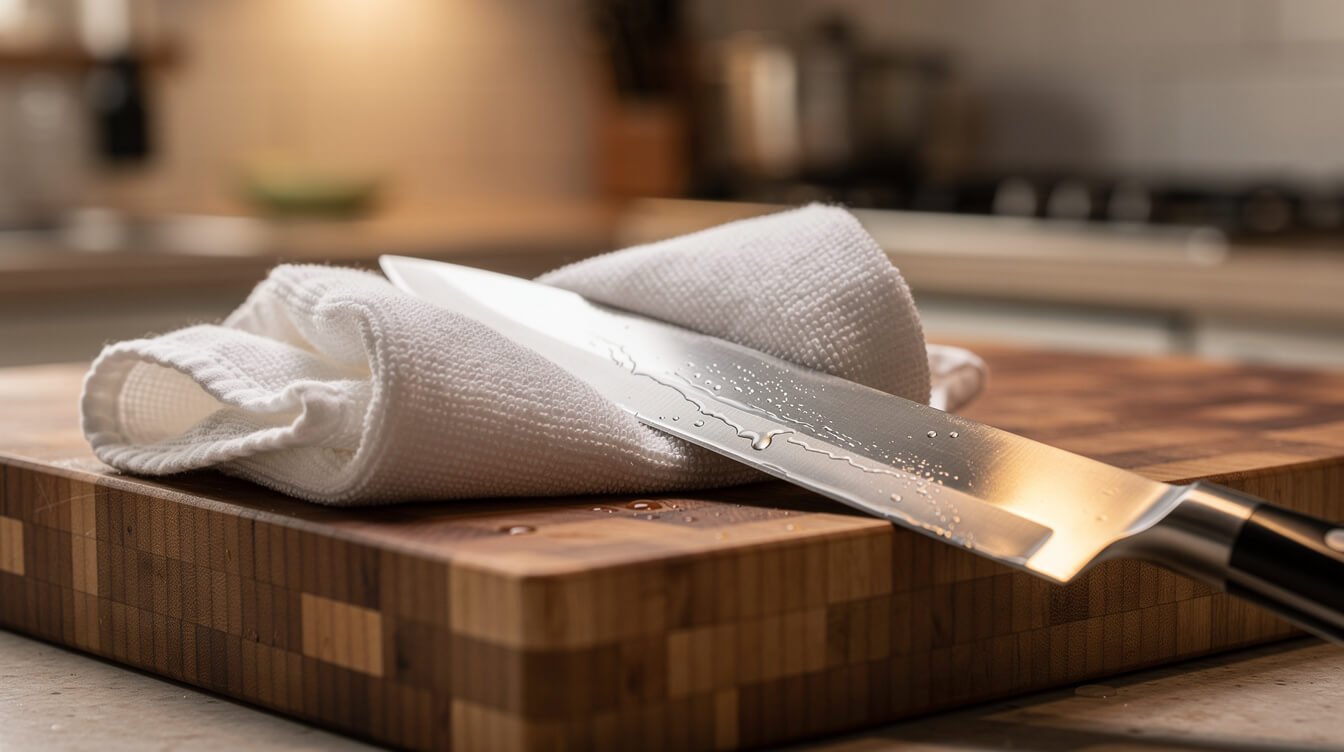
Treat a good knife well and it’ll outlast most things in your kitchen. None of this is fussy — it’s just a handful of habits.
- Wash and dry it right away. Hand-wash with a little soap, then dry it immediately — especially anything with carbon steel, which will spot or rust if it sits wet.
- Cut on wood or plastic, never glass or stone. Glass, granite, and ceramic boards will dull and chip your edge fast. A wooden or soft plastic board is kind to the blade. A damp towel under the board keeps it from sliding.
- Store it safely. Loose in a drawer, a good knife gets banged up (and so do your fingers). Use a magnetic strip, an in-drawer knife guard, or a blade sheath.
- Let the knife do the work. Thin Japanese blades aren’t for prying, twisting, or cutting through bone. Use a heavier knife or a cleaver for the tough stuff.
And the safety point people always get backwards: a sharp knife is safer than a dull one. A dull blade skids off a tomato skin or a carrot and into your finger; a sharp one bites where you aim it, so you use less force and stay in control. Keep a proper claw grip on the food — fingertips tucked, knuckles guiding the blade — and slow down until the motion feels natural. Careful, even cuts are exactly what make finishing touches like the garnishes in our cream soup topping ideas look tidy instead of ragged, and they’re a big part of why prepping a plate of easy side dishes feels calm instead of frantic.
Frequently asked questions
Which Japanese knife should I buy first?
A gyuto (Japanese chef’s knife), around 210mm. It handles almost everything you cook, so it’s the highest-value single purchase. If you prefer a shorter blade or a straight up-and-down cutting style, a 165–180mm santoku is an equally good first knife.
How much should I spend on a good Japanese knife?
You can get a genuinely excellent first knife for around $60–75 (the Tojiro DP is the classic example). About $150 buys a lifetime workhorse or a more beautiful one. Spending more mostly buys finish, materials, and feel — not sharper cuts. Prices vary by retailer, so shop around.
Are Japanese knives better than German knives?
Not better, different. Japanese knives are thinner, harder, and sharper, which most home cooks love for produce and everyday prep. German knives are heavier and tougher, better suited to heavy-duty tasks. Many kitchens happily keep one of each.
Can I put a Japanese knife in the dishwasher?
No. Heat, detergent, and knocking against other dishes will dull the edge, chip the hard steel, and damage the handle. Hand-wash and dry it right away — it takes seconds and adds years.
Do I need a whole set?
No. One great chef’s knife does the vast majority of the work. Add a small petty for little jobs and a serrated bread knife, and you’re covered for years. A block set is mostly pieces you won’t use — you’re paying for the wood and the filler blades, not for better cutting. Three knives you love beat twelve you tolerate.
Final thoughts
You don’t need a drawer full of blades or a four-figure budget to cook like the knife is on your side. Buy one good Japanese knife — a gyuto or a santoku, in a size your hand can control, in stainless if you’d rather not fuss — keep it sharp, hand-wash it, and cut on a kind board. That’s the whole game. Do that, and the most annoying part of dinner quietly becomes the best part.
Start with one. Learn its weight. You’ll be amazed how much better cooking feels when the tool finally works with you instead of against you.
Found this useful? Save this guide for your next kitchen upgrade, and if you’d like one genuinely good, tested recipe in your inbox each week, come cook along with us — no spam, just the good stuff.